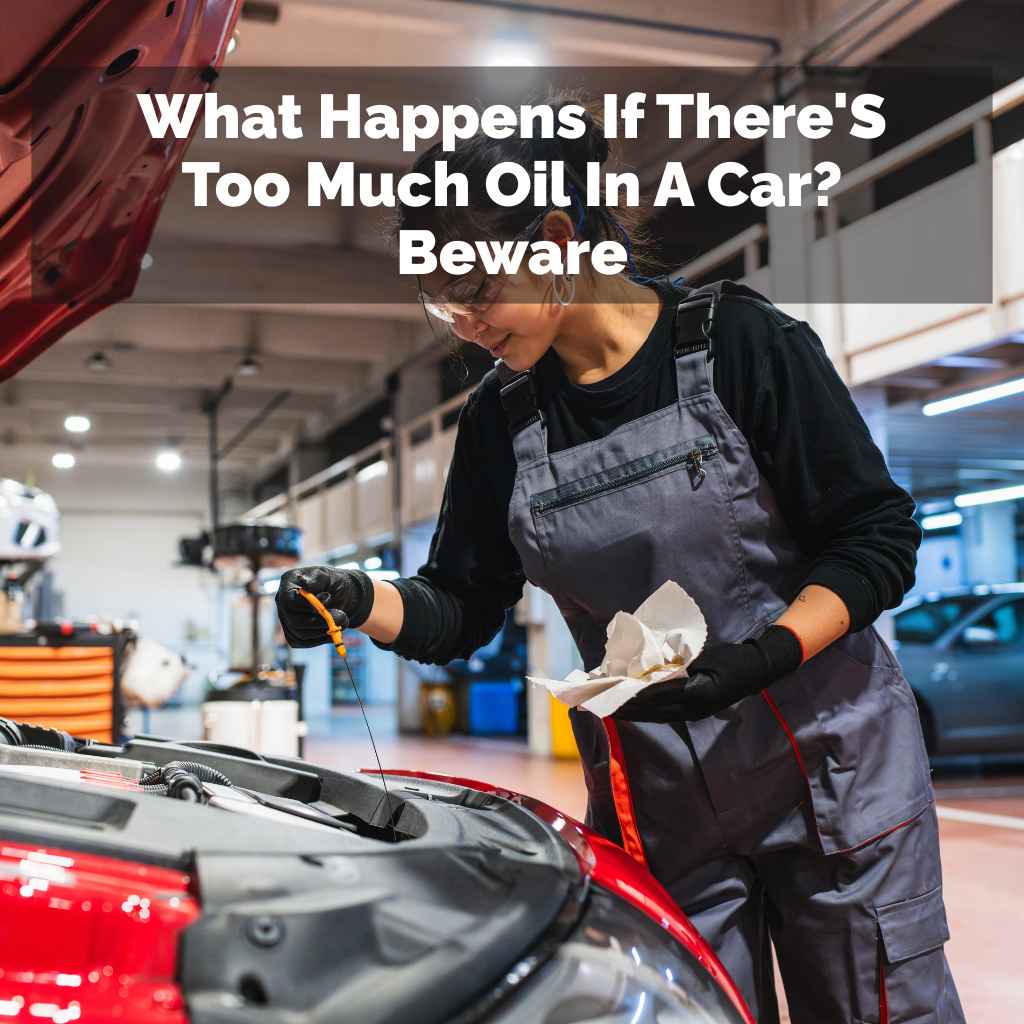
What Happens If There’S Too Much Oil In A Car? Beware
It’s a common task for many car owners. You pop the hood, pull out the dipstick, and check your engine oil. It’s a simple step that helps keep your car running smoothly.
But what if you add too much oil by mistake? It’s a mistake many people make, and it can cause real problems for your car’s engine. Let’s talk about what happens when your car has too much oil and how to spot the signs.
If there’s too much oil in your car, it can cause your engine to foam, damage seals and gaskets, and even lead to engine failure. The excess oil can get whipped up by the crankshaft, creating air bubbles that prevent proper lubrication. This can also increase oil pressure, forcing oil past seals and into other parts of the engine.
Understanding Engine Oil and Its Role
Engine oil is the lifeblood of your car’s engine. It has a few very important jobs. First, it keeps all the moving metal parts from rubbing directly against each other.
This stops them from wearing down too fast. It also helps to cool the engine. Heat builds up as parts move, and the oil carries some of that heat away.
Oil also helps to keep the engine clean. It picks up tiny bits of dirt and metal that break off over time. Then, the oil filter takes these bits out.
Finally, oil helps to seal the gaps between things like pistons and cylinders. This keeps the pressure just right for the engine to work.
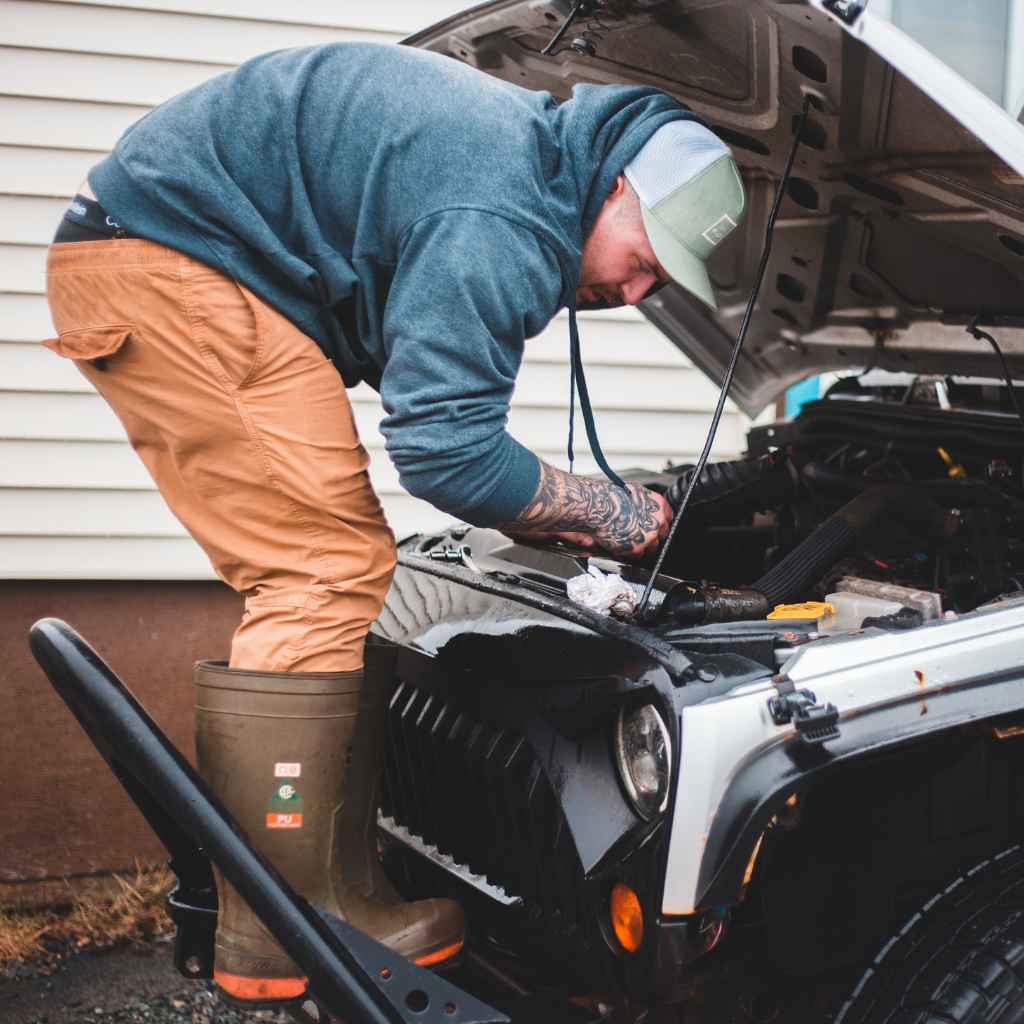
Why Too Much Oil Is a Problem
Adding oil to your car is like giving it a drink. But just like people, cars can have too much of a good thing. When you add more oil than the car needs, it doesn’t just sit there.
The engine is a busy place. Parts are moving very fast. The crankshaft, for example, spins incredibly quickly.
If the oil level is too high, the spinning crankshaft can hit the oil. This whips the oil into a froth, like beating egg whites. This frothy oil is not good at its job.
It can’t lubricate the engine parts properly. It also doesn’t cool as well as smooth oil. This can lead to parts getting too hot.
Another big problem is oil pressure. When there’s too much oil, the whole system can get pressurized. This extra pressure can push oil out of where it’s supposed to be.
Seals and gaskets are designed to hold oil in under normal pressure. But with too much pressure, they can start to leak. Oil might end up where it shouldn’t be.
Signs Your Car Has Too Much Oil
Your car will often let you know if something isn’t right. You just have to know what to look for. The signs of too much oil might not be obvious at first.
But if you pay attention, you can catch them early. This can save you from bigger repair bills later.
One of the first signs many people notice is smoke coming from the exhaust pipe. It might be blue or grey smoke. This means oil is getting into the engine’s combustion chambers.
The engine is burning the oil along with the fuel. This is not good for your engine and can damage your catalytic converter over time.
You might also notice a different smell. Burning oil has a distinct odor. If you smell this when you’re driving or when the car is idling, it’s worth investigating.
It could be oil burning in the engine or leaking onto hot parts of the exhaust system.
Another common symptom is a change in how the engine runs. Your car might feel sluggish. It might not accelerate as well as it used to.
Some drivers report a rough idle. The engine might shake or feel unsteady when it’s stopped. These performance issues can be linked to poor lubrication or increased drag from the oil.
Check engine lights can also come on. Modern cars have many sensors. If the oil pressure is too high or if the engine is running poorly due to oil issues, the car’s computer might trigger a warning light.
It’s important not to ignore these lights.
Quick Check: What to Look For
Exhaust Smoke: Watch for blue or grey smoke from your tailpipe.
Strange Smells: A burning oil smell is a red flag.
Engine Performance: Notice if your car feels slow or shaky.
The Dangers of Overfilling Your Engine Oil
It’s easy to think that more oil means better protection. But in reality, too much oil can cause serious harm. The problems it creates can be expensive to fix.
In the worst cases, it can lead to complete engine failure.
The frothing of the oil is a major concern. When oil gets aerated, it loses its ability to lubricate. This means metal parts in the engine, like the camshaft, crankshaft, and bearings, don’t get the smooth, protective film of oil they need.
Friction increases. This leads to overheating and wear.
Increased oil pressure is another big risk. Think of your engine’s seals like tiny rubber rings. They keep oil in the right places.
When the oil pressure goes up too much, these seals can get damaged. They might crack or break. This lets oil leak out.
It can also let oil seep into other parts of the engine that should stay dry. This includes areas like the intake manifold or spark plug wells.
This oil leak can lead to misfires. It can also damage the catalytic converter. That’s an expensive part to replace.
If oil gets into the combustion chamber, it burns. This adds to pollution and can damage the sensitive components in the catalytic converter. It can also lead to carbon buildup inside the engine over time.
What You Can Do If You Overfill
If you realize you’ve added too much oil, don’t panic. The first thing to do is stop the car. Turn off the engine.
You don’t want to run it with too much oil for too long. The longer it runs, the more damage it can potentially do.
The next step is to remove the excess oil. This is usually done by draining some oil out of the oil pan. Most cars have a drain plug at the bottom of the oil pan.
You’ll need a wrench to loosen it. Be careful, as the oil might be hot. It’s best to have a container ready to catch the oil you drain.
You don’t need to drain out a lot. If you’re just a little bit over, a small amount might be enough. You can drain out a cup or two, then check the dipstick again.
Repeat this process until the oil level is within the safe range. The safe range is usually between the MIN and MAX marks on the dipstick.
If you’re not comfortable doing this yourself, or if you’re unsure, it’s best to get professional help. A mechanic can quickly and safely remove the excess oil. They can also check for any immediate damage that might have already occurred.
Drain Plug Tip
Tool Needed: You’ll likely need a socket wrench to remove the oil drain plug.
Safety First: Make sure the engine has cooled down a bit. Hot oil can burn you.
Container: Have an old pan or bucket ready to catch the drained oil.
Amount: Drain small amounts at a time and recheck the dipstick.
How to Check Your Oil Level Correctly
Checking your oil level is a simple task, but doing it right is key. This helps you avoid overfilling in the first place. It also ensures you get an accurate reading.
The best time to check your oil is when the engine is warm but has been off for a few minutes.
Park your car on a level surface. This is very important. If the car is on a slope, the oil level will appear different than it actually is.
Turn off the engine. Wait about five to ten minutes. This gives the oil time to drain back down into the oil pan.
Locate the oil dipstick. It usually has a bright-colored handle, often yellow or orange. Pull the dipstick out completely.
Wipe it clean with a rag or paper towel. This is to ensure you get a clear reading.
Re will be marks or holes. These usually indicate the MIN (or ADD) and MAX (or FULL) levels. The oil level should be between these two marks.
Ideally, it should be closer to the MAX mark.
If the oil is below the MIN mark, you need to add oil. If it’s above the MAX mark, you have too much. When adding oil, do it in small amounts.
Add a little, wait a minute, then check the dipstick again. Repeat until the level is correct. It’s always better to add too little than too much.
Common Mistakes That Lead to Overfilling
Mistakes happen. When it comes to adding engine oil, a few common errors can lead to overfilling. Understanding these can help you avoid them.
One mistake is adding oil without checking the dipstick first. Some people might think, “It’s been a while, I’ll just add a quart.” But if the oil level was already fine, this will lead to overfilling. Always check the level before adding anything.
It takes only a minute.
Another error is not letting the car sit long enough after adding oil. If you add oil, then immediately check the dipstick, the oil might not have drained down into the pan yet. This can make it seem like you need more oil when you actually don’t.
Give it time to settle.
Using the wrong type or amount of oil is also an issue. Some people might not know the exact oil capacity of their car. They might add a whole gallon when only a few quarts are needed.
Always check your car’s owner’s manual for the correct oil type and capacity. This information is crucial.
Finally, misreading the dipstick can happen. If the dipstick isn’t fully inserted, or if it’s not held level, the reading might be inaccurate. Taking your time and being careful during the check is important.
Oil Capacity Chart (Example)
| Car Model (Example) | Engine Size | Oil Capacity (Quarts) |
|---|---|---|
| Sedan 2020 | 2.0L 4-Cyl | 4.5 |
| SUV 2019 | 3.5L V6 | 5.5 |
| Truck 2022 | 5.0L V8 | 7.0 |
Always check your owner’s manual for exact specifications.
The Impact on Your Car’s Seals and Gaskets
We’ve touched on this, but it’s worth diving deeper. Your car’s engine has many seals and gaskets. These are made of rubber or other flexible materials.
They are vital for keeping fluids like oil and coolant contained. They also prevent dirt and debris from getting inside.
When you overfill the engine with oil, the oil pressure increases. This extra pressure puts a strain on these seals and gaskets. Over time, this strain can cause them to weaken, harden, or even crack.
Once a seal or gasket is damaged, it will start to leak oil.
A small leak might not seem like a big deal at first. But it can get worse. Leaking oil can drip onto hot engine parts, causing smoke and that burning smell.
It can also lead to oil loss, meaning you’ll need to add more oil more often. This can create a cycle of problems.
Moreover, if oil leaks into other areas, like the intake system, it can cause further damage. It can foul spark plugs, leading to misfires. It can also contaminate sensors, affecting how your car runs.
Replacing seals and gaskets can be labor-intensive and costly. Some jobs require removing large parts of the engine.
What Overfilled Oil Does to the Crankshaft and Connecting Rods
Let’s visualize what’s happening inside the engine. The crankshaft is like the backbone of the engine’s rotating parts. It’s a sturdy shaft with offset sections called crankpins.
Connecting rods attach pistons to these crankpins. As the pistons move up and down, they make the crankshaft spin.
These parts move at extremely high speeds. We’re talking thousands of rotations per minute. The bottom of the crankshaft often dips into the oil pan.
In a normal situation, it’s just touching the surface of the oil. This creates a thin film for lubrication.
But with too much oil, the crankshaft is essentially submerged deeper. As it spins, it starts to beat the oil. This action is like using a whisk in a bowl of cream.
It incorporates a lot of air into the oil, creating foam. This foamy oil is called aerated oil.
Aerated oil has poor lubricating properties. It’s like trying to grease a squeaky hinge with soap bubbles. The air pockets don’t provide the necessary film strength to protect the metal surfaces.
This leads to increased friction, heat, and wear between the crankshaft, connecting rods, and their bearings. This is a fast track to serious engine damage.
Aerated Oil: A Closer Look
What it is: Oil that has a lot of air bubbles mixed in.
How it forms: Excess oil level causes the crankshaft to whip it into foam.
Why it’s bad: It doesn’t lubricate engine parts effectively.
Consequences: Increased friction, overheating, and accelerated wear.
The Risk of Hydrostatic Lock
This is a more extreme scenario, but it’s a real risk with severe overfilling. Hydrostatic lock, or hydrolock, happens when a non-compressible fluid enters the combustion chamber.
In a gasoline engine, the combustion chamber is where air and fuel are compressed and then ignited. The piston moves up to compress this mixture. If there’s liquid in there, like oil or coolant, it can’t be compressed.
Liquids don’t shrink when pressure is applied like gases do.
When the piston tries to move up and compress this liquid, it can’t. The engine’s rotating assembly (crankshaft, connecting rods) exerts immense force. If the liquid doesn’t allow the piston to move up, something has to give.
Usually, it’s the connecting rod or the crankshaft that bends or breaks.
This usually happens when oil has leaked past piston rings or valve seals in large enough quantities. Or, if someone accidentally poured oil into the spark plug hole. The engine will usually stop abruptly, and you might hear a loud bang or crunching sound.
Once a hydrolocked engine occurs, the damage is often catastrophic. The engine typically needs a complete rebuild or replacement. This is a very expensive problem.
It highlights why maintaining the correct oil level is so critical.
How Overfilling Affects Your Car’s Computer System
Modern cars are sophisticated. They have computer systems that monitor many aspects of the engine’s performance. These systems rely on sensors to gather information.
If there’s too much oil, it can cause various sensors to send incorrect signals. For example, the oil pressure sensor might read unusually high. This can trigger warning lights and put the engine into a “limp mode” to prevent further damage.
Limp mode severely restricts engine power.
Oil can also get into the intake system if seals fail. This can contaminate the Mass Airflow (MAF) sensor. The MAF sensor measures the amount of air entering the engine.
If it gets dirty or damaged by oil, it will send incorrect readings to the engine control unit (ECU). This can cause the engine to run rough, stall, or have poor fuel economy.
Additionally, if oil gets into the spark plug wells, it can cause misfires. The ignition system relies on a clean spark to ignite the fuel-air mixture. Oil in the well can prevent a good spark from forming, leading to a misfire in that cylinder.
The ECU will detect this misfire and often trigger the check engine light.
Sensor Alerts & What They Mean
Oil Pressure Sensor: High readings can indicate overfilling.
Mass Airflow (MAF) Sensor: Oil contamination leads to incorrect air readings.
Oxygen Sensors: Burning oil can affect these, impacting fuel mixture.
ECU Response: Expect warning lights, limp mode, or rough running.
Is It Safe to Drive with Too Much Oil?
The short answer is: no, it is not safe to drive with too much oil for an extended period. While a short drive to a repair shop might be unavoidable in some situations, continuing to drive normally can cause significant damage.
Even a small amount of overfilling can begin to aerate the oil and increase pressure. This process starts immediately when the engine is running. The longer you drive, the more wear and tear occurs on internal engine components.
Symptoms like blue smoke, strange smells, or a rough-running engine are all signs that damage is occurring. Ignoring these signs and continuing to drive can turn a relatively minor problem into a very expensive one, potentially requiring an engine rebuild or replacement.
If you notice that you’ve overfilled your oil, the best course of action is to address it as soon as possible. If you can safely drain some oil yourself, do that. If not, have the car towed to a mechanic.
Driving it only exacerbates the issue.
Real-World Scenarios: When This Happens
I remember a friend, Sarah, who was new to car maintenance. She was trying to be proactive and topped up her oil. She used one of those oil containers that looks like it has clear markings, but they can be a bit deceptive.
She thought she added about half a quart.
A few days later, she noticed a faint blue haze coming from her exhaust. She also smelled something a bit like burnt popcorn, which she later realized was burnt oil. She freaked out a little, thinking the engine was failing.
She called me, completely panicked.
We looked at her dipstick. It was clearly way over the MAX line. She had added almost a full quart too much.
She had driven for about 50 miles with the overfilled oil. Luckily, she hadn’t noticed any major performance issues yet, just the smoke and smell.
We managed to drain out about a quart of oil from her car. She then checked the dipstick and it was back in the normal range. We told her to keep an eye on it.
For the next few weeks, she noticed the blue smoke was gone. The smell also disappeared. Thankfully, her car seemed to recover without any lasting damage from that one incident.
It was a good lesson for her about always checking and being careful with oil levels.
What This Means for You: Normal vs. Concerning
Understanding when to worry is important. Not every little fluctuation is a disaster. But some signs definitely need your attention.
When it’s Normal (or Almost Normal)
Slightly Above MIN: If the oil level is just a tiny bit above the MIN mark on the dipstick, it’s usually fine. Cars consume a very small amount of oil over time. This is normal wear.
But you should still aim to keep it within the safe zone.
Occasional Minor Smoke: If you see a very brief puff of smoke when you first start the car, especially on cold mornings, it might be normal condensation burning off. However, consistent or blue smoke is not normal.
When to Worry
Oil Level Significantly Above MAX: If the dipstick shows the oil level is well above the MAX mark, this is a cause for concern. The higher it is, the greater the risk.
Persistent Blue or Grey Smoke: This indicates oil is being burned in the combustion chambers. It’s a sign of internal engine issues that can be made worse by overfilling.
Burning Oil Smell: If you smell oil burning, either inside or outside the car, investigate immediately. This means oil is getting somewhere it shouldn’t be.
Sudden Performance Issues: If your car suddenly loses power, runs rough, or the engine sounds different, and you suspect an oil issue, stop driving and check it.
Warning Lights: A check engine light, oil pressure warning light, or other automotive warning lights should never be ignored. They are there for a reason.
Simple Checks
Dipstick: Check level on a flat surface when engine is warm and off for 5-10 mins.
Exhaust: Look for any unusual smoke color (especially blue/grey).
Smell: Listen for any burning oil odors.
Sound: Pay attention to any new or unusual engine noises.
Quick Tips for Maintaining Correct Oil Levels
Keeping your engine oil at the right level is one of the simplest yet most important car maintenance tasks. Here are some tips to help you get it right:
- Read Your Owner’s Manual: This is your best resource. It tells you the exact type of oil your car needs and how much capacity it has.
- Check Regularly: Make it a habit. Check your oil at least once a month, or before long trips.
- Use a Flat Surface: Always park on a level surface for accurate readings.
- Warm Up Engine, Then Wait: Check when the engine is warm but has been off for a few minutes.
- Wipe and Reinsert: Fully clean and reinsert the dipstick for a clear reading.
- Add Slowly: When adding oil, do it in small increments. Add a little, wait, and check again.
- Don’t Guess: If you’re unsure about the amount or type of oil, ask a professional.
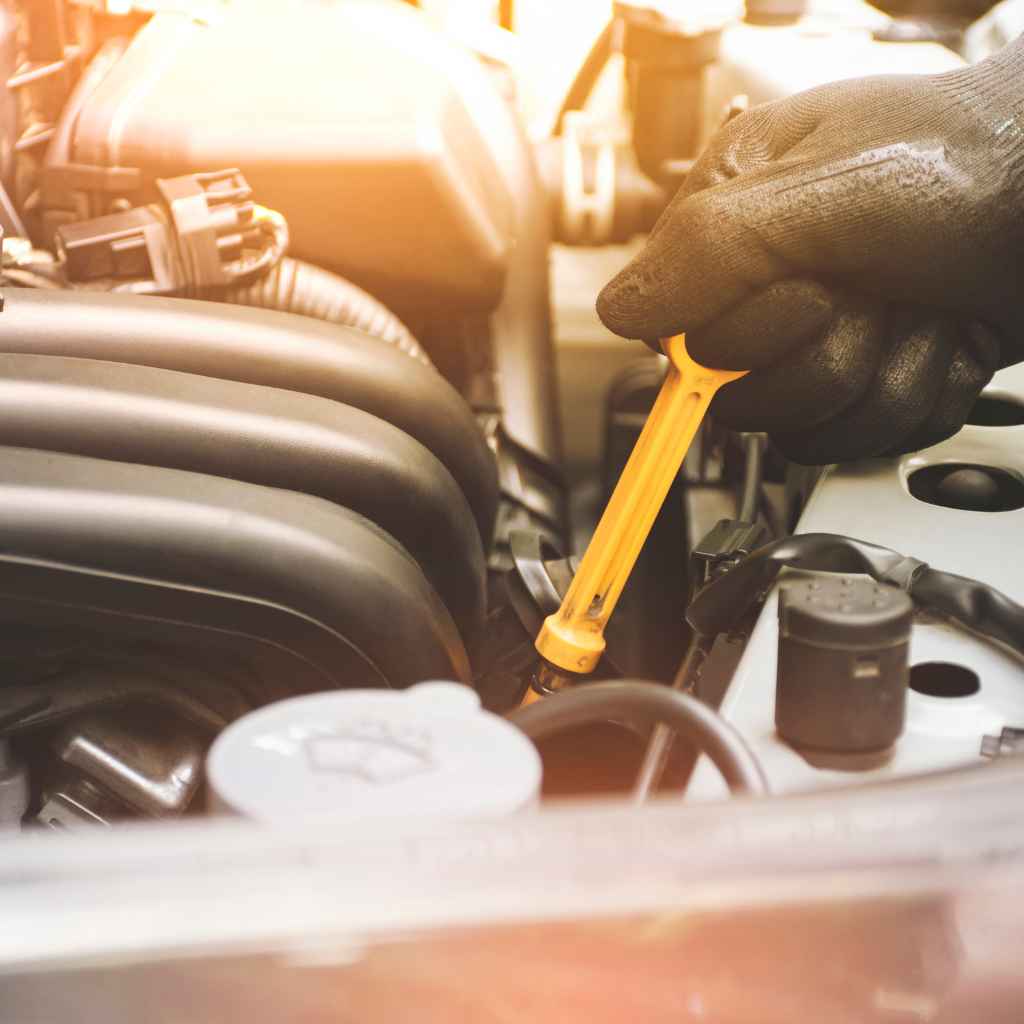
Frequently Asked Questions About Too Much Car Oil
What is the maximum amount of oil I can add before it’s dangerous?
It’s not about a specific number of quarts, but how far above the MAX line on the dipstick the oil level is. Even a quart over can be problematic. If the oil level is higher than the top of the ‘full’ mark, it’s considered overfilled and potentially dangerous for your engine.
Can I drive my car if I accidentally added too much oil?
It’s best to avoid driving if you’ve significantly overfilled the oil. If you must drive a short distance, do so at low speeds and for the shortest time possible to get it fixed. Continuing to drive can cause damage.
How much does it cost to fix an engine damaged by too much oil?
Repair costs vary greatly. A simple oil drain to remove excess oil might cost $50-$150. However, if seals are blown or internal engine parts are damaged, repairs can range from hundreds to thousands of dollars, potentially requiring a full engine rebuild or replacement.
Does synthetic oil behave differently when overfilled?
The physical principles are the same. Whether it’s conventional or synthetic oil, overfilling can still lead to oil frothing, increased pressure, and potential damage. Synthetic oils might handle extreme conditions slightly better, but the core problems of overfilling remain.
What if I’m not sure how much oil my car takes?
Always consult your car’s owner’s manual. It provides the exact oil capacity for your specific make, model, and engine. If you can’t find it, a quick online search using your car’s details should give you the answer.
Can overfilling oil cause a car to overheat?
Yes, overfilling oil can contribute to overheating. The aerated oil doesn’t lubricate as well, leading to increased friction and heat. Also, if oil leaks onto hot engine components, it can raise the overall temperature.
Conclusion: Protecting Your Engine Starts with the Dipstick
It’s clear that getting the engine oil level just right is super important. Too little oil starves your engine. Too much oil can be just as bad, if not worse.
It causes parts to work harder, increases wear, and can lead to leaks and other serious issues. Always take your time when checking or adding oil. Your car’s engine will thank you for it, running smoothly for many miles to come.
Products related to this article
Sponsored / affiliate links. As an Amazon Associate I earn from qualifying purchases. I may earn additional commission from eligible campaigns.
 DongJinK Engine Oil Level Gage Dipstick Compatible with Toyota 4Runner 1984-1995 for Toyota Celica 1984-1985 for Toyota Pickup 1984-1995 Replace# 15301-35020 1530135020
 Suifaqi Engine Oil Dipstick Oil Level Dipstick - Replace Part 120 589 07 21 00, 120589072100 - Compatible with Mercedes-Benz CLS55 AMG 2006(2026 NEW)