How To Remove Water Stains From Car Upholstery Fast
Water stains on car upholstery can be a real headache. They show up unexpectedly and can make your car look messy. For many folks, figuring out How to Remove Water Stains from Car Upholstery Fast seems tricky at first.
You worry about making the stain worse or damaging your seats. Don’t stress, though! We’ll walk you through a super simple, step-by-step plan to get those water marks gone without any fuss.
Get ready to see your car’s interior look fresh and clean again.
Tackling Stubborn Water Stains On Your Car Seats
This section is all about understanding why water stains appear and how to get them out. We’ll cover the basics to help you tackle these common car interior problems. You’ll learn what causes these marks and the first steps to take to remove them effectively.
This will give you a clear path forward to a cleaner car.
Understanding Why Water Stains Form
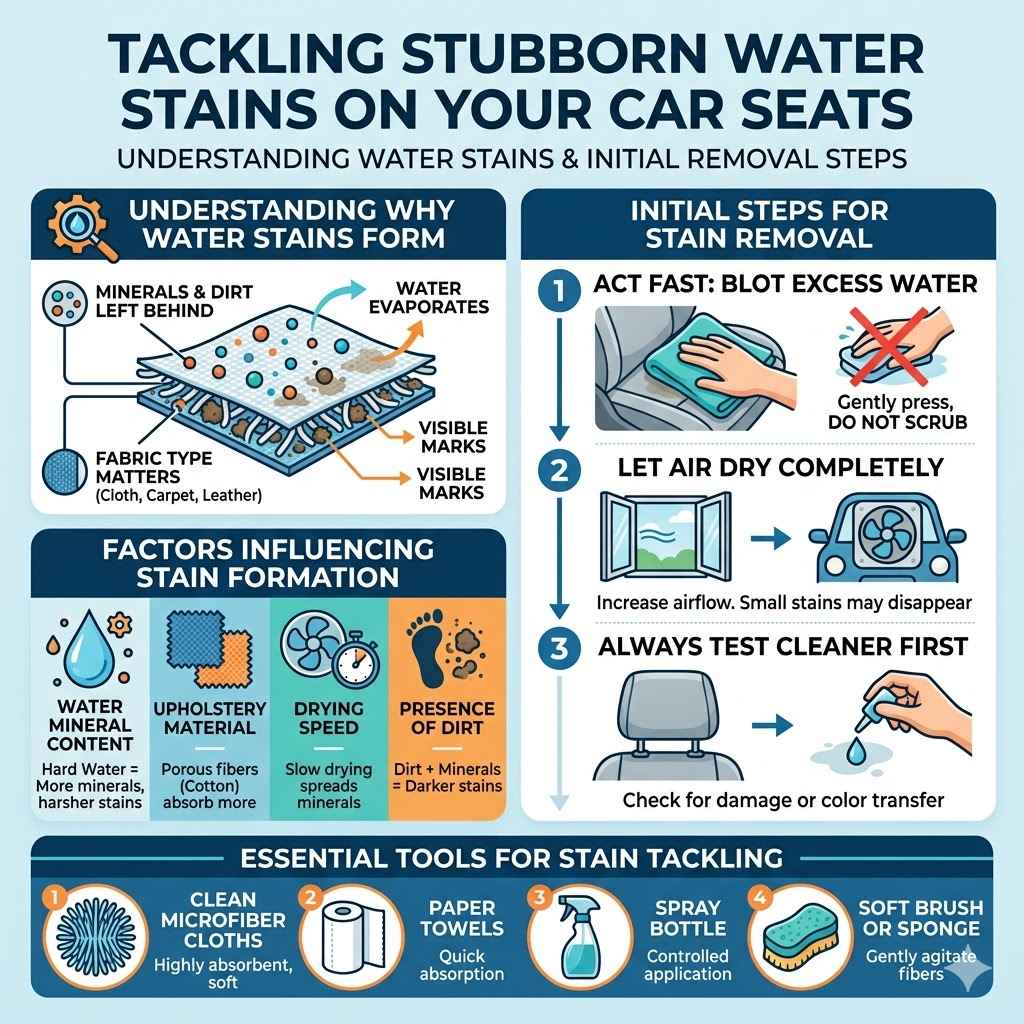
Water stains on car upholstery are more than just wet spots. They happen when minerals and dirt from the water are left behind as the water dries. The type of upholstery you have plays a big role in how easily stains form and how hard they are to remove.
Different fabrics react differently to water and the minerals within it.
Fabric types like cloth, carpet, and even some leather can be affected. For cloth, minerals can get trapped in the fibers. This creates a visible mark.
For carpets, the problem is similar, with dirt and minerals settling into the pile. Even leather can absorb water, and if not treated properly, the water can leave behind residue that changes the color or texture.
The source of the water also matters. Rainwater is generally cleaner than puddle water, which might contain more dirt and pollutants. Spills from drinks can also leave stains that look like water stains but are actually from the drink’s contents.
Knowing the cause helps you choose the best cleaning method.
When water evaporates, it leaves behind dissolved solids. These solids are minerals, salts, and other particles that were in the water. Think of it like boiling a pot of water; when the water is gone, you see white residue left behind.
The same thing happens on your car seats, but the residue is spread out and can be more noticeable on darker fabrics.
Factors Influencing Stain Formation
Water Mineral Content
Water quality greatly impacts stain severity. Hard water, common in many areas, has a high mineral content like calcium and magnesium. These minerals are the primary culprits behind unsightly rings and marks on your upholstery. The more minerals present, the more residue is left behind as the water dries, making the stain more pronounced and harder to lift without specialized cleaning agents. Softened water or distilled water would leave less residue.
Upholstery Material
The type of fabric your car seats are made of is a key factor. Natural fibers like cotton and wool are porous and can absorb water and minerals deeply into their structure, making them difficult to clean. Synthetic materials like polyester or nylon are generally less absorbent and may resist stains better, but they can still be affected. Leather, while often treated, can also absorb moisture, especially if the protective coating is worn.
Drying Speed
How quickly the upholstery dries also affects the stain. If water evaporates slowly, minerals have more time to spread and settle, creating a larger, more defined stain. Using fans or opening windows can speed up the drying process, helping to minimize the spread of minerals and thus the severity of the stain. Rapid drying is beneficial for preventing deep absorption.
Presence of Dirt and Grime
Water often picks up dirt and grime from the car’s interior or exterior as it runs or seeps in. This dirt mixes with the water, and when the water dries, the dirt and minerals are left behind together. This combination can lead to darker, more stubborn stains that require more than just water to remove. It’s like muddy water drying on a surface.
Initial Steps for Stain Removal
Before you grab any cleaning products, a few simple steps can make a big difference. The goal is to act fast and gently. The sooner you address a water stain, the easier it will be to remove.
This preliminary care prevents the stain from setting in.
Start by blotting up as much excess water as possible. Use a clean, dry cloth or paper towels. Press down firmly, but don’t scrub.
Scrubbing can push the water and minerals deeper into the fabric, making the stain harder to remove. Gentle blotting is key to absorbing the liquid.
Once you’ve blotted, let the area air dry completely. If possible, open your car doors and windows to increase airflow. Sometimes, just letting it dry completely can make a stain disappear if it’s just plain water with no heavy mineral content.
If a faint mark remains after it’s dry, then you can move on to specific cleaning methods.
Always test any cleaning solution on an inconspicuous spot first. This is very important to ensure it doesn’t damage or discolor your upholstery. Find a spot under the seat or on the back of a headrest.
Apply a small amount of your chosen cleaner, wait a few minutes, and then blot it up. Check for any color transfer or damage before proceeding with the main stain.
Essential Tools for Stain Tackling
Clean Microfiber Cloths
These are your best friends for cleaning. Microfiber cloths are highly absorbent and soft, meaning they can soak up spills and cleaners without leaving lint behind. They are also gentle enough not to damage delicate upholstery fabrics. Having several on hand allows you to blot effectively, apply solutions, and wipe surfaces clean without spreading the stain or leaving streaks.
Paper Towels
For initial absorption of fresh spills, paper towels are incredibly useful. They can soak up a lot of liquid quickly. However, be mindful that some cheaper paper towels can leave behind lint or even tear, which might make the cleaning process a bit more tedious if they break apart on the wet surface.
Spray Bottle
A spray bottle is essential for applying cleaning solutions evenly. You can mix water and cleaning agents in it. This allows for controlled application, preventing oversaturation of the upholstery, which can lead to new water stains or mold issues. A fine mist setting is ideal for most cleaning tasks.
Soft Brush or Sponge
For working cleaning solutions into tougher stains or for gently agitating fabric fibers, a soft-bristled brush or a soft sponge is useful. Ensure the brush is not too stiff, as it could snag or damage the upholstery. A toothbrush can work for very small, stubborn spots.
Simple Methods How to Remove Water Stains from Car Upholstery Fast
Now that we understand the basics, let’s get into the proven methods. These techniques are designed to be effective and easy to follow. You won’t need fancy tools or professional supplies for most of these.
Our goal is to get rid of those unwanted marks efficiently.
Using Household Cleaning Solutions
Many effective cleaning solutions are probably already in your home. These common items can break down the minerals and dirt left by water stains. They are also generally safe for most car upholstery when used correctly.
One of the most common and effective household cleaners is white vinegar. Mix equal parts white vinegar and water in a spray bottle. Spray this solution lightly onto the stained area.
Let it sit for a few minutes, then blot with a clean cloth. The acidity of the vinegar helps to break down mineral deposits. After blotting, you can use a separate cloth dampened with plain water to rinse the area, then blot dry.
Another option is a mild dish soap solution. Mix a few drops of mild dish soap (like Dawn) with water in a spray bottle. Spray onto the stain and gently work it in with a soft cloth or sponge.
Blot up the suds and residue with a clean, damp cloth, and then dry the area thoroughly. Dish soap is great for lifting dirt that may have combined with the water.
Baking soda can also be a lifesaver. Make a paste with baking soda and a little water. Apply this paste to the stain and let it dry completely.
Once dry, brush off the excess baking soda. Baking soda is a mild abrasive and deodorizer, which can help lift stains and unpleasant odors.
Remember to always test these solutions in an unseen area first. Different upholstery fabrics can react differently. Even mild solutions can cause discoloration on some materials.
A quick test ensures you won’t accidentally damage your car’s interior. The key is to use these sparingly and blot rather than rub.
White Vinegar Method Explained
Preparation
First, ensure the stained area is dry. If it’s still damp, blot it thoroughly with clean towels until it’s no longer wet. Mix one part white vinegar with one part clean water in a spray bottle. Ensure you use plain white vinegar, not apple cider or other colored vinegars, as these could potentially stain.
Application
Lightly mist the vinegar and water solution onto the water stain. Do not saturate the fabric; a gentle, even spray is sufficient. Allow the solution to sit on the stain for about 5-10 minutes. This gives the vinegar time to work on breaking down the mineral deposits.
Blotting and Rinsing
Using a clean, dry microfiber cloth, gently blot the treated area. Press down firmly to absorb the moisture and loosened stain. Avoid rubbing, as this can spread the stain or damage the fabric fibers. After blotting, you may want to “rinse” the area by lightly spraying it with plain water and then blotting it again to remove any vinegar residue.
Drying
Allow the area to air dry completely. You can speed this up by opening car doors and windows, or by using a fan. Once dry, inspect the area. If the stain is gone, you’re done. If a faint mark remains, you might need to repeat the process or try a different method.
Baking Soda Paste Technique
Creating the Paste
In a small bowl, combine baking soda with a small amount of water. You’re aiming for a thick paste, similar in consistency to toothpaste. You can also use a mild liquid soap with the baking soda and water for added cleaning power, but keep it simple to start.
Application and Drying Time
Gently apply the baking soda paste directly onto the water stain. Make sure the entire stained area is covered. Let the paste dry completely. This might take a few hours, depending on humidity and the thickness of the paste. As it dries, the baking soda will absorb moisture and lift the stain.
Removal
Once the paste is completely dry and has turned to powder, use a soft brush or a clean, dry cloth to gently brush or wipe away the residue. You can also use a vacuum cleaner with an upholstery attachment to remove all traces of the dried baking soda.
Final Wipe Down
After removing the baking soda, you can wipe the area with a slightly damp cloth to ensure all residue is gone. Then, blot the area with a dry cloth and allow it to air dry fully. This method is excellent for absorbing lingering moisture and odors.
Specialized Upholstery Cleaners
When household items aren’t quite enough, specialized cleaners are designed for car upholstery. These products are formulated to tackle specific types of stains, including those from water. They are often more potent but still need to be used with care.
When choosing a cleaner, look for products labeled for upholstery or fabric stain removal. Many are available in spray bottles or aerosol cans. Always read and follow the manufacturer’s instructions carefully.
Some cleaners require rinsing, while others are no-rinse formulas.
For tough water stains, an enzyme-based cleaner can be very effective. Enzymes work by breaking down organic matter and mineral deposits. Apply the cleaner according to the product’s directions, usually by spraying it onto the stain and allowing it to dwell for a specified period.
Then, blot or gently agitate the area as instructed.
Spot removers are also a good option. These are often concentrated formulas that you apply directly to the stain. They can be very powerful for targeted stain removal.
However, they can also be harsher, so testing in an inconspicuous area is even more critical.
Some products are specifically designed for the type of fabric in your car. For instance, if you have leather seats, you’ll want a leather cleaner. For cloth seats, a fabric cleaner is best.
Using the wrong product can lead to damage or make the stain worse. Always check the product label for compatibility.
Choosing the Right Cleaner
Identify Your Upholstery Type
The first step is knowing what your car’s upholstery is made of. Is it cloth, synthetic fabric, leather, or a blend? Manufacturers often use tags under the seats or in the owner’s manual to indicate material. Choosing a cleaner designed for your specific material is crucial to avoid damage. For instance, a strong chemical cleaner for tough stains on cloth could damage delicate leather.
Read Product Labels Carefully
Always read the entire label of any upholstery cleaner before purchasing or using it. Look for claims about stain removal, fabric compatibility, and safety. Pay attention to any warnings or special instructions. Some cleaners might require ventilation or protective gloves. Ensure the product is safe for automotive interiors.
Consider Stain Type and Severity
While we are focusing on water stains, sometimes these are mixed with other grime. Some cleaners are general-purpose, while others are formulated for specific problems like grease, ink, or water spots. For water stains, look for products that mention mineral deposit removal or pH-neutral formulas.
Look for pH-Neutral Formulas
pH-neutral cleaners are generally safer for a wide range of upholstery materials. They are less likely to cause discoloration or damage than highly acidic or alkaline cleaners. If you’re unsure about your upholstery’s resilience, a pH-neutral product is often the best starting point.
Using a Commercial Upholstery Spot Remover
Preparation and Testing
Before applying any spot remover, ensure the area is dry. Spray a small amount onto a hidden section of the upholstery to test for colorfastness and any adverse reactions. Let it sit for a few minutes, then blot it up. If there’s no damage or discoloration, you can proceed.
Application of the Product
Apply the spot remover directly to the water stain. Do not oversaturate the area. Follow the product’s instructions, which may involve letting it dwell for a specific time to break down the stain. Some products work best with gentle agitation using a soft brush.
Blotting and Removing Residue
Use a clean, damp cloth to blot the treated area, working from the outside of the stain inward to prevent spreading. This step helps lift the stain and the cleaner. You may need to rinse with a clean, damp cloth (just water) to remove any lingering product residue, then blot dry.
Drying the Upholstery
Allow the treated area to air dry completely. Good ventilation, like opening doors and windows, will help. A fan can also speed up the drying process. Ensure the area is fully dry before using the car or placing items back on it to prevent new stains or mold.
Dealing with Tougher, Set-In Stains
Sometimes, water stains are old or have been left to dry for a long time. These can be harder to remove and might require a bit more effort or a combination of methods. Don’t give up if the first try doesn’t work completely.
For very stubborn stains, you might need a steam cleaner. The heat and moisture from a steam cleaner can help lift set-in mineral deposits and dirt. Use a steam cleaner with an upholstery attachment and follow the manufacturer’s instructions.
Be careful not to over-wet the fabric, as this can lead to new problems like mold or mildew.
A mixture of rubbing alcohol and water can also be effective for some tough stains. Mix equal parts rubbing alcohol and water in a spray bottle. Lightly spray the stain and blot immediately.
Rubbing alcohol evaporates quickly, which helps prevent the fabric from staying wet for too long. It can also help break down certain types of residue.
Consider a commercial fabric cleaner that is specifically designed for tough stains. These often contain stronger cleaning agents. Always adhere strictly to the usage instructions on the product label.
When in doubt, it’s always better to be safe and use a milder approach first. Patience is key here; repeated gentle treatments are often better than one aggressive attempt.
Steam Cleaning for Deep Stains
Preparation and Machine Setup
Ensure you have a steam cleaner suitable for upholstery. Fill the water reservoir with distilled water, as tap water can leave mineral deposits. Attach the appropriate upholstery tool. Some machines may have pre-treatment solutions you can add, but check compatibility first.
Applying Steam and Extraction
Turn on the steam cleaner and allow it to heat up. Hold the upholstery tool a few inches above the stained area and gently move it back and forth, allowing the steam to penetrate the fabric. Immediately follow with the extraction function of the steam cleaner to lift the loosened dirt and moisture. Work in small, manageable sections.
Avoid Over-Wetting
It is crucial not to oversaturate the upholstery. Excessive moisture can damage the backing material, lead to mold or mildew growth, and potentially create new water rings. Focus on a controlled application of steam and thorough extraction.
Drying After Steaming
After steam cleaning, ensure the area dries completely. Open doors and windows, use fans, or even a dehumidifier to speed up the process. Proper drying is essential to prevent lingering moisture issues.
Rubbing Alcohol and Water Solution
Mixing the Solution
In a clean spray bottle, mix equal parts of isopropyl rubbing alcohol (70% concentration is common) and distilled water. Shake the bottle gently to combine the liquids. Using distilled water prevents adding more minerals to the fabric.
Targeted Application
Lightly spray the solution directly onto the water stain. Avoid spraying the surrounding clean areas to prevent creating new damp spots. The rubbing alcohol helps to break down the minerals and also evaporates quickly, which aids in drying.
Blotting Technique
Immediately after spraying, use a clean, absorbent microfiber cloth to blot the stain. Press down firmly to absorb the moisture and the loosened stain particles. Continue blotting with clean sections of the cloth until no more stain transfers to the cloth.
Final Drying
Allow the area to air dry completely. The quick evaporation of the alcohol will help speed this up. Ensure the fabric is fully dry before driving or putting items back on the seat.
Preventing Future Water Stains on Car Upholstery
The best way to deal with water stains is to avoid them altogether. Taking a few preventative measures can save you a lot of time and effort in the long run. These tips are simple to implement and can keep your car looking great.
First, address leaks promptly. If you notice water entering your car from a window seal, door gasket, or sunroof, get it fixed as soon as possible. Small leaks can lead to significant water damage and staining over time.
Regular checks of these areas are a good idea.
Use floor mats, especially all-weather ones. These act as a barrier, catching water from wet shoes, umbrellas, or melted snow before it reaches your carpet. Clean your floor mats regularly to prevent dirt and moisture from seeping through.
Consider applying a fabric protector or a sealant to your car’s interior. These products create a barrier on the upholstery that repels liquids, making spills easier to clean up and less likely to cause stains. Reapplication might be necessary periodically, especially for high-wear areas.
Addressing Leaks and Moisture Entry Points
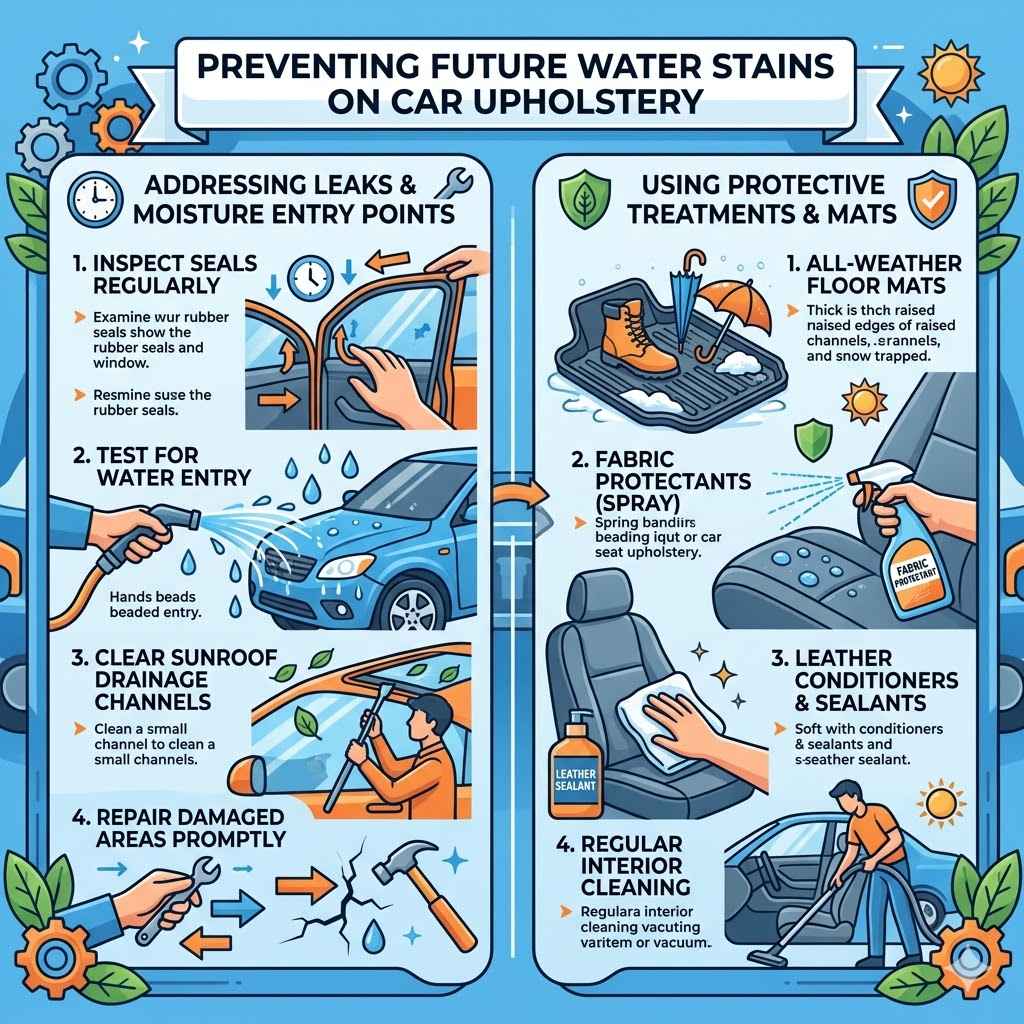
Inspect Seals Regularly
Periodically check the rubber seals around your car’s doors, windows, and sunroof. Look for any signs of wear, cracking, or damage. Even small gaps can allow water to seep in. If you find any issues, consider replacing the seals or using a rubber conditioner to keep them supple.
Test for Water Entry
A simple way to check for leaks is to have someone spray your car with a hose while you’re inside, or vice versa. Pay close attention to where water might enter, especially around window frames and door edges. Mark any areas where you see drips or seepage.
Sunroof Drainage Channels
Sunroofs have small drainage channels to direct water away from the cabin. These can become clogged with debris like leaves and dirt. If you have a sunroof, it’s a good idea to occasionally check and clear these channels to ensure proper water flow.
Repair Damaged Areas Promptly
If you discover a leak, it’s important to have it repaired as soon as possible. Ignoring a leak can lead to more significant problems, including mold, mildew, and damage to the car’s electrical systems or bodywork, in addition to upholstery stains.
Using Protective Treatments and Mats
All-Weather Floor Mats
Investing in high-quality all-weather floor mats is one of the best defenses against water damage. These mats typically have deep channels and a raised edge that traps water, mud, and snow, preventing them from reaching your car’s carpet. They are also easy to remove and clean.
Fabric Protectants (Scotchgard, etc.)
Many automotive detailing products offer fabric protectants, similar to those used in homes. These sprays create an invisible barrier on upholstery fibers, repelling liquids and making them bead up on the surface. This gives you more time to blot spills before they soak in and stain. Reapply as recommended by the product manufacturer.
Leather Conditioners and Sealants
For leather upholstery, regular conditioning is essential not only to keep the leather soft but also to maintain its protective layer. Some leather care products also offer sealant properties that can help repel water and prevent staining. Ensure the product is specifically designed for automotive leather.
Regular Interior Cleaning
Part of prevention is simply keeping your interior clean. Regularly vacuuming your car removes dirt and debris that can absorb moisture and hold onto it, leading to stains. Wiping down surfaces also removes contaminants that might react with water to cause marks.
Frequently Asked Questions
Question: How fast can I realistically remove a water stain from car upholstery
Answer: You can often remove fresh, simple water stains within minutes to an hour by blotting and air drying. Stubborn or old stains might take a few hours of cleaning and drying time, depending on the method and fabric.
Question: Can I use bleach on car upholstery for water stains
Answer: It is strongly advised against using bleach on car upholstery. Bleach is a harsh chemical that can permanently discolor and damage most fabric types, making the stain problem much worse.
Question: What is the best way to clean leather car seats after a water spill
Answer: For leather, blot up the spill immediately. Then, use a dedicated leather cleaner and conditioner. Avoid harsh chemicals.
Ensure the leather dries naturally and is conditioned to prevent cracking.
Question: Will a professional car detailer remove water stains effectively
Answer: Yes, professional detailers have specialized tools and stronger, yet safe, cleaning solutions that can often remove even tough, set-in water stains that DIY methods might struggle with.
Question: How do I know if a water stain is permanent
Answer: If a water stain has been present for a very long time, or if the fabric has been damaged or discolored by the minerals in the water, it might be permanent. However, always try cleaning methods first, as many stains are removable with the right approach.
Summary
Effectively removing water stains from car upholstery fast is achievable with simple methods. Start by blotting spills immediately and letting the area air dry. For tougher marks, try household solutions like white vinegar or baking soda paste.
Specialized cleaners offer more power but require careful use and testing. Prevention through addressing leaks and using protective treatments is key to keeping your car’s interior looking its best.