BMW Battery Replacement Without Programming (Registration Guide)
A same-spec BMW battery can be swapped yourself with basic hand tools, skipping any dealer programming fee. But most BMWs built since 2002 use an Intelligent Battery Sensor (IBS) that still needs quick registration, or the new battery can undercharge and fail within two years. This guide covers the physical swap, when registration is actually required, and how to do it yourself.
Insert your Affiliate Disclosure reusable block here.
Quick Answer
Yes — you can physically replace a BMW battery yourself with no dealer programming required. But if your BMW has an Intelligent Battery Sensor (IBS), standard since 2002, the new battery still needs to be registered with an OBD tool so the charging system doesn’t overcharge or undercharge it. Skipping registration risks shortened battery life.
Tools and Materials You’ll Need
Gather everything below before you disconnect anything. Having the right battery on hand — matched to your BMW’s original size, chemistry, and Cold Cranking Amp (CCA) rating — matters more for a clean replacement than any tool on this list.
- Socket wrench set (most BMW battery terminals use a 10mm bolt)
- Protective gloves and safety goggles
- Replacement battery matching your BMW’s original size, chemistry (flooded vs. AGM), and CCA rating
- Battery terminal cleaner, or a mixture of baking soda and water
- Battery terminal protectant spray or dielectric grease
- A BMW-compatible OBD registration tool — only needed if your BMW has an Intelligent Battery Sensor (see below)
- Optional: a memory saver device, if you want to avoid resetting your radio presets and other settings — see our guide on changing a BMW battery without losing your settings
Best BMW Battery Registration Tool Pick
ANCEL BM700 PRO BMW Scanner & Battery Registration Tool
A BMW-specific scan tool that performs the same-spec battery registration reset most generic OBD2 readers cannot do, plus full-system diagnostics.
- Best for: DIYers replacing a same-spec battery who want a one-time tool instead of a dealer visit
- Why we picked it: Built specifically for BMW/MINI/Rolls-Royce battery registration, not a generic code reader
- Main drawback: Cannot code a battery with different capacity or chemistry — that still needs dealer-level software
Compare more battery replacement essentials
 Option 1 OBDLink CX + Bimmercode App (BMW/MINI)
|
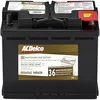 Option 2 ACDelco Gold 94R AGM Battery
|
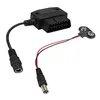 Option 3 9V OBD-II Memory Saver
|
As an Amazon Associate we earn from qualifying purchases.
Step-by-Step: How to Remove and Install a New BMW Battery
Most BMWs keep the battery in the trunk (either under the floor or on the right side) rather than the engine bay, so check there first if you don’t see one under the hood. Once you’ve located it, the physical swap itself takes about 20–30 minutes.
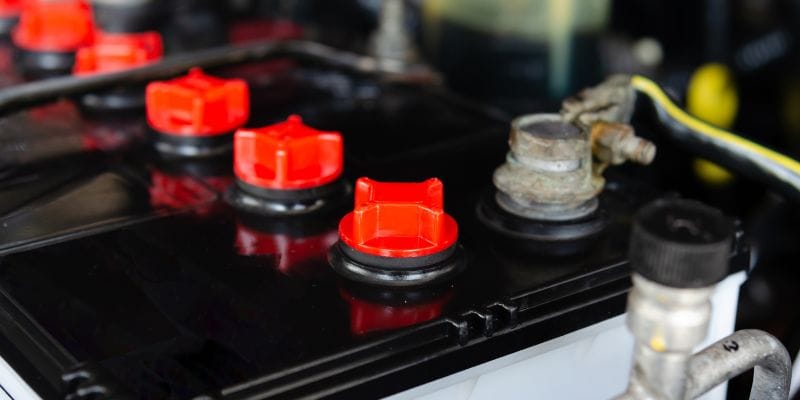
Step 1: Locate and Remove the Old Battery
- Put on gloves and goggles: Battery acid and sparking terminals make eye and skin protection non-negotiable.
- Disconnect the negative terminal first: Loosen the bolt on the negative (black, “–”) terminal with your socket wrench and lift the clamp off. Disconnecting negative first eliminates the risk of a short circuit if a tool touches metal.
- Disconnect the positive terminal: Repeat the process on the positive (red, “+”) terminal.
- Remove the hold-down clamp or bracket: Most BMWs secure the battery with a bolted bracket at the base — remove it before lifting.
- Lift the old battery out: It’s heavy (often 40–55 lbs), so lift with both hands and keep it level to avoid spilling acid.
Step 2: Prepare the New Battery
- Clean the terminals: Use a battery terminal cleaner or a baking-soda-and-water mixture on the new battery’s terminals.
- Rinse and dry thoroughly: Any leftover moisture can slow the terminal connection.
- Apply terminal protectant: A thin layer of protectant spray or dielectric grease helps prevent future corrosion.
Step 3: Install the New Battery
- Set the battery in place: Confirm it sits flush in the tray and reattach the hold-down clamp or bracket.
- Connect the positive terminal first: This is the reverse order from removal — connect positive before negative to minimize spark risk. Tighten securely but don’t overtorque the bolt.
- Connect the negative terminal last: Tighten the negative clamp the same way.
Step 4: Test the Battery and Check for Warning Lights
- Start the car: Confirm the engine turns over normally and the new battery is holding a charge.
- Check the dashboard for warning lights: A battery or charging-system warning light after a swap usually means the IBS still needs to be registered — see the next section.
- Recycle the old battery: Take it to an auto parts store or local recycling center rather than the trash — most retailers accept old batteries for free.
Do You Need to Register the Battery? Registration vs. Programming Explained
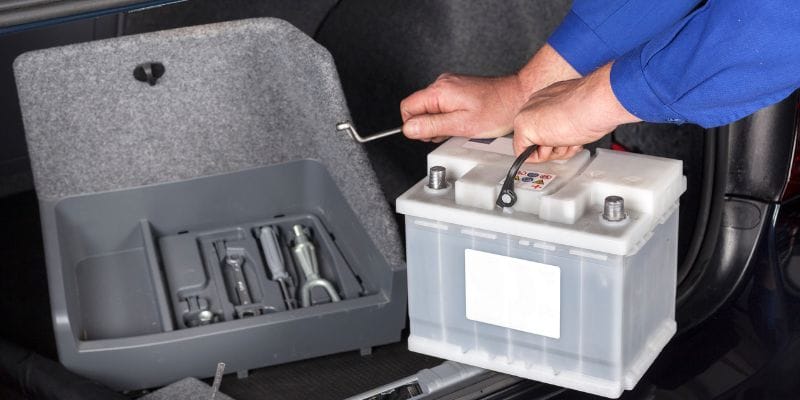
Battery registration is a quick reset procedure that tells your BMW’s Digital Motor Electronics (DME) module that a new, healthy battery of the same specification has been installed, and clears the old battery’s stored charge-cycle history. It is not the same as full “programming” or “coding,” which reconfigures the charging system for a battery with different specs — a different amp-hour capacity, or a switch from flooded lead-acid to AGM.
How to Tell If Your BMW Has an Intelligent Battery Sensor (IBS)
Look at the negative (black) battery cable near the terminal clamp. If a small black sensor module is clamped directly onto the cable, with one or two thin wires running back toward the chassis, your BMW has an IBS — standard equipment on nearly every BMW built since 2002.
📊 Most BMW models built since 2002 use an Intelligent Battery Sensor and require registration after a battery swap, even when no other reprogramming is needed. — Source: BimmerTech, “BMW Battery Replacement and Registration”
“Registration is required so that your car knows about the changed specifications and can adjust to the new battery settings. Otherwise… the battery life may decrease, you could overcharge or undercharge your battery, or in the worst case scenario, cause considerable damage to your vehicle’s alternator and electrical system.”
When You Need Registration vs. Coding vs. Nothing at All
| Scenario | Action Needed | Why |
|---|---|---|
| Same size, chemistry, and capacity, BMW built 2002 or later | Registration only | Resets the IBS charge-cycle history — no spec change to configure |
| Different capacity, chemistry, or terminal layout (e.g., upgrading to AGM) | Full coding required | The charging system must be reconfigured for the new specifications |
| BMW built before roughly 2002 (no IBS) | Neither | There’s no sensor for the DME to reset |
| Key fob battery only | Neither | A separate coin-cell battery, unrelated to the main 12V system |
How to Register a BMW Battery Yourself (No Dealer Visit Needed)
Generic OBD2 code readers cannot perform BMW battery registration — you need BMW-specific software. Two DIY routes cover most same-spec swaps: a BMW-specific scan tool like the ANCEL BM700 Pro, or a Bluetooth adapter such as OBDLink CX paired with the Bimmercode app. Either plugs into the OBD-II port under the dashboard near the brake pedal; from there, you select the battery registration or “IBS reset” function and confirm the new battery’s specifications match the old one. If your new battery has different specs, or you’d rather not do it yourself, a dealer or independent shop with BMW ISTA software can complete the same registration — and full coding, if it’s needed.
Safety Tips and Choosing the Right Replacement Battery
Handle the Battery Safely
- Wear protective gloves and safety glasses to guard against acid leaks or debris.
- Turn off the ignition and remove the key before disconnecting or replacing the battery.
- Disconnect the negative terminal first, then the positive, using an insulated wrench or pliers to reduce short-circuit risk.
- Handle the battery carefully — it’s heavy and can be slippery. Avoid dropping it or impacting the case.
- Dispose of the old battery at an auto parts store or certified recycling center, never in household trash.
Choose the Correct Replacement Battery
- Check your owner’s manual or the label on your current battery for the exact size, chemistry (flooded vs. AGM), and specifications for your BMW model and year.
- Match or exceed the Cold Cranking Amps (CCA) rating listed for your vehicle.
- Check the reserve capacity, which determines how long the battery can power electronics if the alternator fails.
- Confirm the terminal configuration (top-post vs. side-post) matches your original battery.
- Stick with the same chemistry and capacity as the factory battery whenever possible — that’s what keeps you in “registration only” territory instead of triggering a full coding requirement. See our BMW battery buying guide for specific picks by group size.
Common Mistakes to Avoid When Replacing a BMW Battery Without Programming
- Connecting the positive terminal before the negative is fully disconnected — this is the leading cause of short-circuit sparks during a DIY swap.
- Installing a different-spec battery and assuming registration alone covers it — a capacity or chemistry change needs full coding, not just registration.
- Skipping registration because “the car started fine” — charging problems from an unregistered IBS often show up weeks later as reduced battery life, not immediately.
- Assuming any OBD2 code reader can register a BMW battery — most generic scanners can’t; you need BMW-specific software or a tool built for it.
- Skipping a memory saver on a model that relies heavily on stored settings — you may need to reset the clock, radio presets, and window auto-up/down afterward. See changing a BMW battery without losing your settings for the full workaround.
- Throwing the old battery in the trash — lead-acid and AGM batteries are recyclable and hazardous waste; most auto parts stores take them for free.
Frequently Asked Questions About Replacing a BMW Battery Without Programming
How do you replace a BMW battery without programming?
Disconnect the negative terminal of the old battery, then the positive terminal, and remove the battery from its mounting bracket. Install the new battery, connect the positive terminal first, then the negative. Start the vehicle to confirm the swap worked. No dealer programming is required for this physical step — though most 2002-and-newer BMWs still need a quick battery registration afterward.
Can I replace my BMW battery myself?
Yes. As long as you use a battery matching your BMW’s original specifications, follow the correct disconnect/reconnect order, and take basic safety precautions, replacing a BMW battery is a straightforward DIY job that takes about 30 minutes. Always check your owner’s manual for model-specific details first.
Do I need to register a new battery, or is that the same as programming?
They’re related but not identical. Registration resets your BMW’s Intelligent Battery Sensor (IBS) so it knows a fresh, same-spec battery is installed — most BMWs built since 2002 need this step. Full “programming” or coding is only required if the new battery’s capacity, chemistry, or terminal layout differs from the original.
How do I know if my BMW has an Intelligent Battery Sensor (IBS)?
Check the negative battery cable near the terminal clamp. A small black sensor module clamped onto that cable, with one or two thin wires running to the chassis, is an IBS. It’s standard equipment on nearly every BMW built from 2002 onward, so most owners in that range will find one.
What happens if I skip battery registration?
Your BMW’s charging system will keep using the old battery’s stored charge history, which can lead to overcharging or undercharging the new battery. Over time this can shorten the battery’s lifespan, and in some cases strain the alternator and electrical system. The car will usually still start and run — the risk shows up gradually, not immediately.
Will I lose my radio presets and other settings when I replace the battery?
Possibly. Disconnecting the battery can reset the clock, radio presets, and window auto-up/down memory on many BMWs. A memory saver device plugged into the OBD port before you disconnect the battery prevents this. This is a separate issue from IBS registration — see our dedicated guide on changing a BMW battery without losing your settings for the full walkthrough.
Does the new battery need to match the exact specs of the old one?
To stay in “registration only” territory, yes — match the size, chemistry (flooded vs. AGM), and capacity of the original battery. If you install a battery with a different capacity or chemistry, the charging system needs full coding in addition to registration, which typically requires dealer-level or professional-grade software.
Conclusion
Replacing a same-spec BMW battery yourself is a genuinely simple job, and you can skip the dealer’s programming fee entirely. What you shouldn’t skip is registration: if your BMW has an Intelligent Battery Sensor — and most built since 2002 do — a $30–$100 OBD tool or a quick trip to a shop with BMW-specific software is what actually protects your new battery’s lifespan. When in doubt about your specific model, check whether your BMW battery needs to be programmed before you start.
Products related to this article
Sponsored / affiliate links. As an Amazon Associate I earn from qualifying purchases. I may earn additional commission from eligible campaigns.