How To Start Car Detailing Business: Genius Guide
Bolded Quick Summary: Ready to transform your passion for cars into a thriving business? Starting a car detailing business is achievable with a solid plan, the right tools, and a commitment to quality. We’ll guide you through each crucial step, from legalities to marketing, making your entrepreneurial journey smooth and successful.
How to Start a Car Detailing Business: Your Genius Guide
Does your car always look its best, even after years on the road? Do friends and family ask you to make their cars shine too? If you love making vehicles look like new and have a knack for a spotless finish, you might be thinking about turning that passion into a business. Many people start a car detailing business because they enjoy the work and see a real need for it. It can feel a bit overwhelming to know where to begin, but don’t worry! This guide will break down everything you need to know, step-by-step, so you can confidently launch your own car detailing venture and achieve that satisfying shine for your clients.
Why Start a Car Detailing Business?
The automotive industry is huge, and people love their cars. A clean and well-maintained car isn’t just about looks; it’s about pride of ownership, preserving value, and a more enjoyable driving experience. This creates a consistent demand for professional car detailing services. Unlike quick car washes, detailing involves a deep clean, inside and out, using specialized techniques and products to restore and protect a vehicle’s appearance. Think of it as a spa day for cars!
Starting a detailing business offers several advantages:
- Low Startup Costs: Compared to many other businesses, you can start a detailing service with relatively minimal investment, especially if you begin mobile.
- High Demand: Everyone wants a clean car, and busy lives mean many people prefer to outsource this task.
- Flexibility and Freedom: You can set your own hours and be your own boss.
- Growing Market: The car care industry, including detailing, continues to grow as people invest more in their vehicles.
Step 1: Research and Planning – Laying the Foundation
Before you buy a single buffer, it’s crucial to plan. This is where your business starts to take shape. Think of this as the blueprint for your success.
Market Research: Know Your Battlefield
Understand who your potential customers are and what services they’re looking for. Are there many car dealerships, luxury car owners, or families with messy kids in your area? What are other detailing businesses charging? Knowing this helps you identify your niche and competitive pricing.
- Identify your target audience (e.g., busy professionals, car enthusiasts, fleet vehicles).
- Analyze local competitors: What services do they offer? What are their prices? What are their strengths and weaknesses?
- Determine demand: Is there enough interest in your area for detailing services?
Business Plan: Your Roadmap to Success
Even a simple business plan is essential. It forces you to think through all aspects of your operation. A good plan includes:
- Executive Summary: A brief overview of your business.
- Company Description: What your business is, its mission, and vision.
- Market Analysis: Your research on customers and competitors.
- Services Offered: A clear list of detailing packages and individual services.
- Marketing and Sales Strategy: How you’ll attract and keep customers.
- Management Team: Who is running the business (even if it’s just you!).
- Financial Projections: Startup costs, operating expenses, and revenue forecasts.
You can find many free business plan templates online from sources like the Small Business Administration (SBA).

Step 2: Legalities and Administration – Getting Official
You’ve got a plan; now let’s make it official. This step ensures you’re operating legally and protecting yourself and your business.
Choose a Business Structure
The most common structures for small businesses are:
- Sole Proprietorship: Simple to set up, but you’re personally liable for business debts.
- Partnership: If you’re starting with others.
- Limited Liability Company (LLC): Offers personal liability protection, separating your personal assets from business debts. This is often a popular choice for small businesses.
Consult with a legal professional or business advisor to choose the best structure for your situation.
Register Your Business Name
If you plan to operate under a name different from your own legal name, you’ll need to register a “Doing Business As” (DBA) name, also known as a fictitious name, with your local or state government.
Obtain Licenses and Permits
Requirements vary by location. You might need:
- A general business license.
- An employer identification number (EIN) from the IRS if you plan to hire employees or operate as a corporation or partnership. You can get an EIN for free on the IRS website.
- Any specific local permits (e.g., for water usage or waste disposal, depending on your setup).
Secure Business Insurance
This is crucial! General liability insurance protects you if a customer is injured on your property or if you accidentally damage a client’s vehicle during service. Consider professional liability (errors and omissions) insurance as well.
Step 3: Services and Pricing – What Will You Offer?
Decide what detailing services you’ll provide. Starting with a few core packages and adding more as you grow is a smart approach.
Typical Detailing Services
Here are common services:
- Exterior Wash & Wax: Basic cleaning, drying, and a protective wax.
- Interior Detail: Vacuuming, surface cleaning (dashboard, doors, console), window cleaning, and interior dressing.
- Full Detail: Combines exterior wash, wax, and interior detail.
- Shampooing: Carpets and fabric seats.
- Leather Conditioning: Cleaning and moisturizing leather seats.
- Paint Correction: Removing swirls and scratches through polishing (can be a premium service).
- Engine Bay Cleaning: Detailing the engine compartment.
- Headlight Restoration: Clearing cloudy headlights.
- Ceramic Coating Application: Long-lasting paint protection.
Setting Your Pricing
Your pricing should reflect the value you offer, your costs, and local market rates. Consider charging by:
- Package Deals: Offer tiered packages (e.g., Basic, Premium, Deluxe) at set prices.
- Add-on Services: Charge extra for specific tasks like engine bay cleaning or paint correction.
- Time and Material: For custom jobs or complex tasks.
Tip: Research what competitors charge, but don’t be afraid to price yourself based on the quality and thoroughness of your work.
Step 4: Equipment and Supplies – Your Toolkit
The right tools make all the difference. Start with the essentials and upgrade as your business grows.
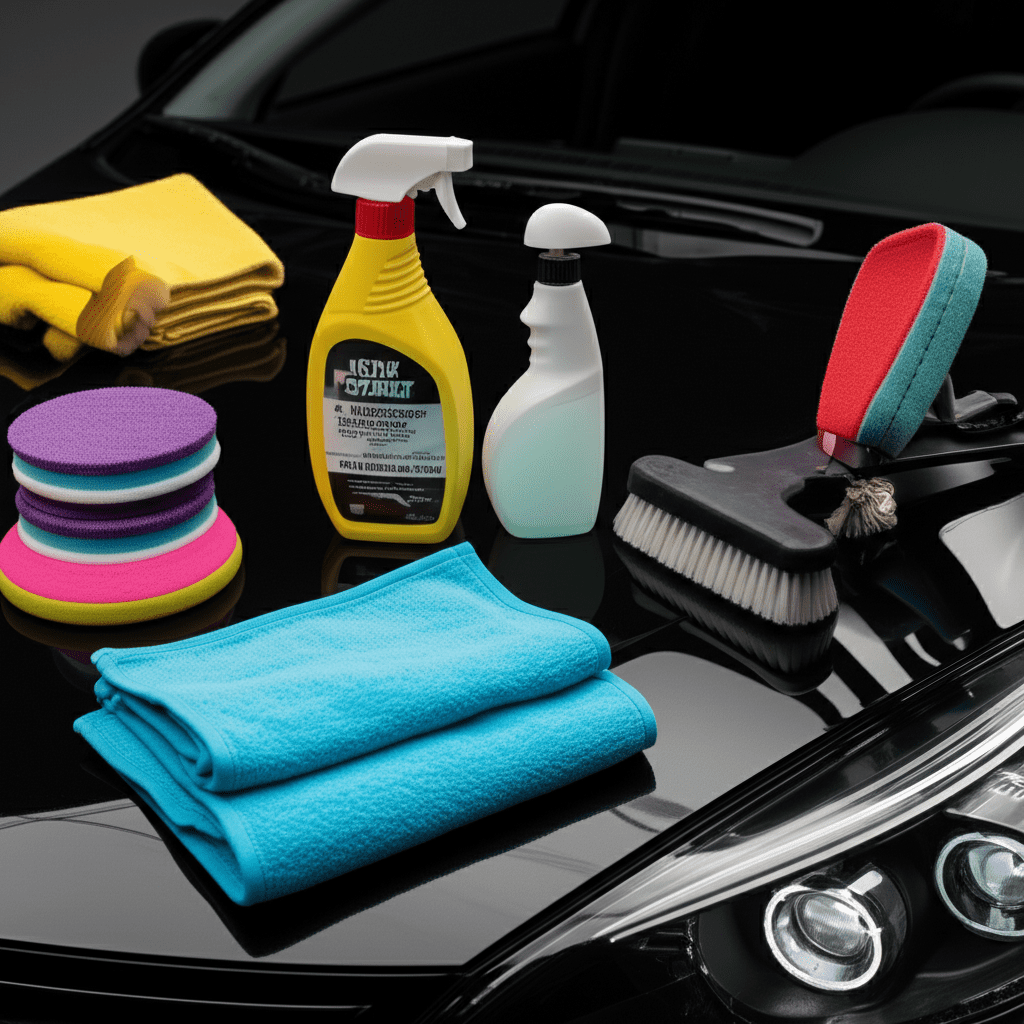
Essential Equipment
| Item | Purpose | Notes |
|---|---|---|
| Pressure Washer | Efficient car washing, rinsing, and pre-soaking. | Look for adjustable pressure settings. |
| Wet/Dry Vacuum | Thorough interior vacuuming, removing wet spills. | A powerful one is key for deep cleaning. |
| Dual Action (DA) Polisher | Paint correction, waxing, and applying sealants. | Safer for beginners than rotary polishers. |
| Hoses and Reels | Water supply for washing. | Durable, kink-resistant hoses are a must. |
| Buckets (Grit Guards) | Two-bucket method for safe washing. | Grit guards trap dirt at the bottom. |
| Microfiber Towels | Drying, buffing, cleaning. | Have many for different tasks (drying, interior, glass). |
| Detailing Brushes | Cleaning vents, crevices, and wheels. | Various sizes and stiffness are useful. |
| Applicator Pads | Applying waxes, sealants, dressings. | Foam or microfiber are common. |
| Wheel Cleaner & Brushes | Cleaning rims safely. | Ensure it’s safe for your clients’ wheel types. |
| Glass Cleaner | Streak-free windows. | Specific automotive glass cleaners work best. |
| Interior Cleaners & Dressings | Cleaning and protecting surfaces. | Protectants add shine and UV resistance. |
| Car Wash Soap & Wax/Sealant | The core cleaning and protection agents. | Choose pH-neutral soaps to avoid damaging paint. |
| Clay Bar & Lubricant | Removing bonded contaminants from paint. | A crucial step for smooth paint. |
Choosing Your Products
Start with reputable brands. Many professional detailers have their favorite products. You can find excellent detailing product suppliers online or at automotive specialty stores. Consider investing in quality over quantity when starting out.
Step 5: Setting Up Your Operations – Mobile or Fixed Location?
Decide how you’ll deliver your services. Your choice impacts startup costs and operational flexibility.
Mobile Detailing
This is often the most popular way to start. You go to the client’s location, saving you the cost of a physical shop.
Pros of Mobile Detailing
- Lower overhead costs (no rent, utilities for a shop).
- Flexibility to serve a wider geographic area.
- Can target specific locations like office parks or residential areas.
- Easier to start with less upfront capital.
Cons of Mobile Detailing
- Reliance on client’s water and electricity (unless you have your own).
- Weather dependency.
- Need a reliable, well-equipped vehicle.
- Storage space for equipment.
You’ll need a good van or trailer, a portable pressure washer, a generator (if needed), and organized storage for all your supplies.
Fixed Location Detailing
This involves renting or owning a physical space, like a garage bay or a small shop.
Pros of Fixed Location Detailing
- Professional appearance, can attract clients.
- Protection from weather, allowing work year-round.
- Potentially more efficient workflow.
- Can offer more advanced services (e.g., ceramic coating booths).
Cons of Fixed Location Detailing
- Higher startup and ongoing costs (rent, utilities, insurance for property).
- Requires more initial investment in setting up the space.
- Location is critical for customer access.
If you choose a fixed location, ensure it has good water access, adequate drainage, and sufficient space for working on vehicles.
Step 6: Marketing and Building Your Brand – Get Noticed!
Having a great service is only half the battle; people need to know about you!
Develop Your Brand Identity
What’s your business name? What’s your logo? What’s your motto or slogan? A strong brand creates recognition and trust.
Online Presence
- Website: Even a simple one showing your services, pricing, and contact info is vital.
- Social Media: Platforms like Instagram and Facebook are perfect for showcasing before-and-after photos of your work. Use relevant hashtags like #cardetailing, #autodetailing, #detailinglife, and location-specific tags.
- Google Business Profile: Essential for local search. Make sure your business appears on Google Maps.
- Online Directories: List your business in local online directories.
Offline Marketing
- Flyers and Business Cards: Distribute them in local auto shops, tire stores, or community centers.
- Local Partnerships: Collaborate with car dealerships, mechanics, or car wash businesses.
- Referral Programs: Offer discounts to existing clients who refer new customers.
- Vehicle Wraps: If you have a mobile unit, a branded wrap is a moving billboard.
Customer Service: The Secret Sauce
Excellent customer service leads to repeat business and positive reviews. Be punctual, communicate clearly, and always deliver high-quality work. Happy customers are your best advertisers.
Step 7: Launch and Grow – Hit the Ground Running!
You’re ready! It’s time to start welcoming clients.
Your First Clients
Start with friends, family, or offer a small discount for your first few customers to build your portfolio and get initial reviews.
Gather Feedback and Testimonials
Encourage clients to leave reviews on Google, Yelp, or your social media pages. Positive testimonials build credibility.
Continuously Learn and Improve
The detailing world is always evolving with new products and techniques. Stay updated by attending industry events, watching tutorials, and experimenting with new methods.
For example, understanding paint correction techniques is crucial. Resources like Autogeek’s detailing glossary can help you understand terms and processes.
Offer Loyalty Programs
Reward your repeat customers with discounts or special offers to foster long-term relationships.

FAQ: Your Car Detailing Business Questions Answered
Q1: How much money do I need to start a car detailing business?
You can start a mobile detailing business with as little as $500 to $2,000 for basic equipment and supplies. A fixed location will require significantly more, potentially tens of thousands of dollars for rent, renovations, and equipment.
Q2: What are the most important skills for a car detailer?
Key skills include attention to detail, patience, good communication, physical stamina, and a thorough understanding of different cleaning products and tools, as well as proper techniques for paint correction and protection.
Q3: Do I need special training to start a car detailing business?
While not always legally required, training and certification from reputable detailing schools can significantly boost your skills and credibility. Many online resources and courses are also available.
Q4: What is the difference between a car wash and car detailing?
A car wash is a quick exterior cleaning. Detailing is a much deeper, more thorough cleaning process that covers both the interior and exterior of the vehicle, often involving specialized techniques to restore and protect its condition.
Q5: How do I find my first customers?
Start with your network (friends, family). Post on social media, create a Google Business Profile, and consider offering introductory discounts to build your client base and portfolio.
Q6: Is it better to offer mobile detailing or have a fixed location?
Mobile detailing has lower startup costs and more flexibility, making it ideal for beginners. A fixed location requires more investment but can offer a more professional image and weather independence.
Q7: What kind of insurance do I need for a car detailing business?
You’ll need general liability insurance to cover property damage or injury. Consider professional liability (errors & omissions) insurance if you offer more advanced services prone to potential mistakes.
Conclusion
Starting a car detailing business can be an incredibly rewarding venture, allowing you to blend your passion for cars with entrepreneurship. By thoroughly researching your market, legally registering your business, investing wisely in quality equipment, and implementing a strong marketing strategy, you set yourself up for success. Remember that consistency in quality, excellent customer service, and a willingness to learn and adapt are key to building a loyal clientele and a thriving business. From those crucial first steps of planning and legalities to the excitement of your first client, you’re on your way to making every car shine. So, grab your grit guards and microfiber towels – your detailing journey awaits!