Are DieHard Car Batteries Good? Tiers, Warranty & Real Verdict
DieHard car batteries are a solid choice, and Gold is the best buy for most drivers; choose Platinum only if your vehicle needs AGM or frequent start-stop duty. Pick the wrong battery and you can overspend, lose warranty coverage, or end up with a weak replacement that fails early. This guide compares DieHard tiers, warranty terms, fitment checks, and the buying situations where each model makes sense.
DieHard battery tiers at a glance

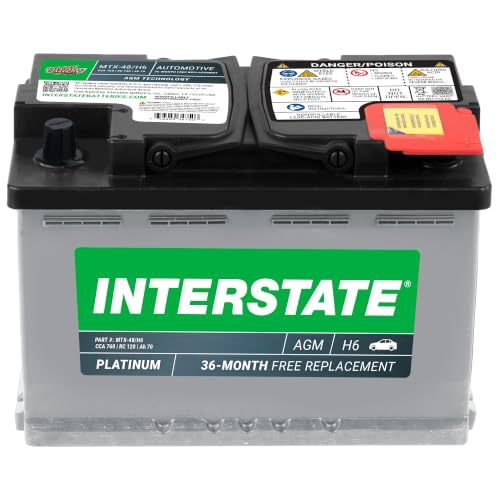
- AGM design supports start-stop systems
- 70Ah capacity for steady power
- 36-month warranty included
DieHard’s lineup breaks into three main tiers: Silver, Gold, and Platinum. Silver is the budget option, Gold is the common middle choice, and Platinum is the premium AGM battery for higher-demand applications. The right one depends on fitment, climate, and the electrical load your vehicle actually asks for.
What each tier is meant
Silver is an economical lead-acid battery with 575 CAA and 720 CA, plus 90 minutes of reserve capacity and a 24-month warranty. Gold sits in the center with 640 CAA and 800 CA, 100-minute reserve capacity, and 12-volt compatibility, and it is the most common tier and less expensive than Platinum. Platinum uses AGM technology, is listed at 850 CAA and 1000 CA, carries 100 minutes of reserve power, and comes with a 48-month warranty.
Those numbers matter in different ways. CCA points to cold-start strength. Reserve capacity tells you how long the battery can support a 25-amp load before dropping out, which matters for accessory use and for a charging-system problem that leaves the alternator offline.
Which DieHard battery fits your car?
Fitment starts with group size, not brand tier. A battery can have the right specs and still be wrong if the case size, terminal layout, or hold-down points do not match the vehicle application. Group 35 is one common example, but you still need the exact group size called for by your car.
When Group 35 is the right match
If your owner’s manual or current battery label calls for Group 35, then Group 35 examples from DieHard may be the right direction. That still does not make every Group 35 battery interchangeable. Start with the vehicle’s specified group size, then check whether the car requires AGM, flooded lead-acid, or a specific terminal arrangement.
Why the wrong battery size causes problems
A battery that is physically off-spec can create mounting issues, cable strain, or poor contact. In the real world, that can show up as a no-start, a loose battery that shifts in the tray, or a battery that cannot be secured correctly. A common first-timer mistake is choosing by amp number alone and ignoring group size entirely.
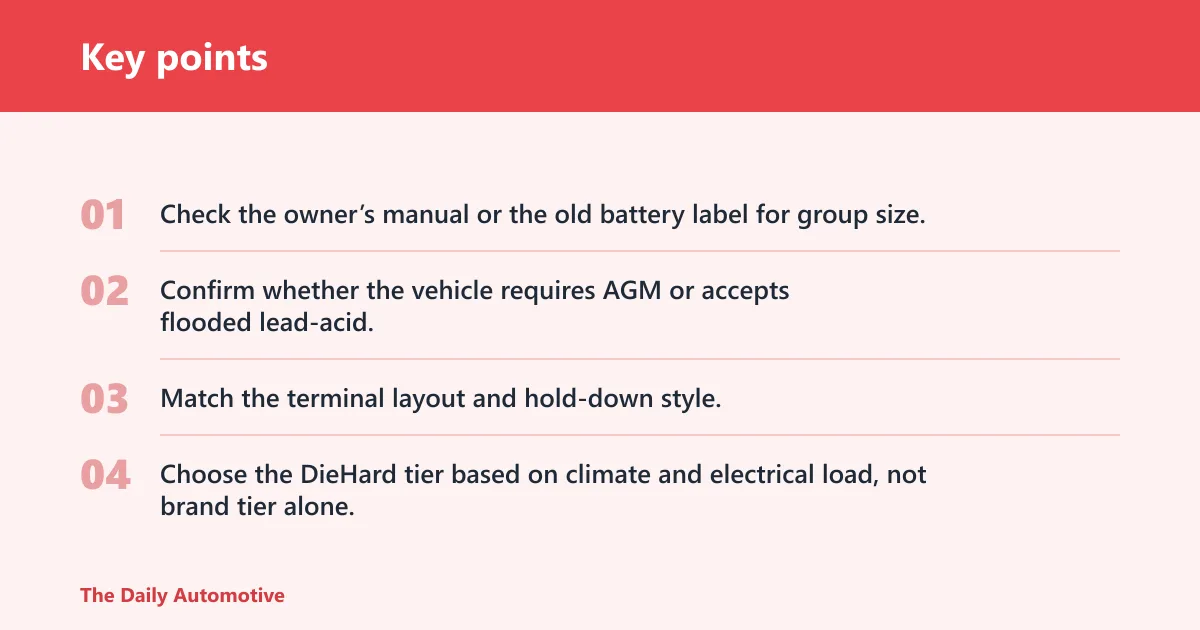
- Check the owner’s manual or the old battery label for group size.
- Confirm whether the vehicle requires AGM or accepts flooded lead-acid.
- Match the terminal layout and hold-down style.
- Choose the DieHard tier based on climate and electrical load, not brand tier alone.
DieHard battery decision table
| Vehicle type | Climate | Electrical load | Recommended DieHard tier | Why it fits | When to avoid it |
|---|---|---|---|---|---|
| Older commuter car | Mild to moderate | Low | Silver | Lower purchase cost, 575 CAA / 720 CA, and 90 minutes of reserve capacity suit simple daily driving. | Avoid if the car specifies AGM or if winter starts are consistently difficult. |
| Main family sedan | Mixed seasons | Moderate | Gold | Good middle ground at 640 CAA / 800 CA with 100-minute reserve capacity and broad fitment value. | Avoid if the vehicle needs AGM for start-stop or heavy accessory use. |
| Start-stop vehicle | Cold or variable | High | Platinum | AGM construction, 850 CAA / 1000 CA, and 100 minutes of reserve power suit repeated starts and accessory draw. | Avoid if the vehicle does not require AGM, because the extra cost may not return value. |
| Truck or SUV with add-ons | Cold winters | High | Platinum or Gold | Platinum gives the strongest reserve for accessories; Gold can work if the electrical load is moderate and the vehicle accepts flooded lead-acid. | Avoid Silver if the vehicle has frequent short trips, long accessory use, or a high cranking demand. |
Are DieHard batteries good in cold weather?
Yes, but the tier matters. Higher CCA improves starting performance at low temperatures, and DieHard’s higher tiers carry more cold-start capacity. Consumer Reports also rates batteries on cold weather performance, along with life, reserve capacity, and warranty. For winter use, Gold is the practical middle choice; Platinum gives the strongest cold-start numbers.
How CCA affects winter starts
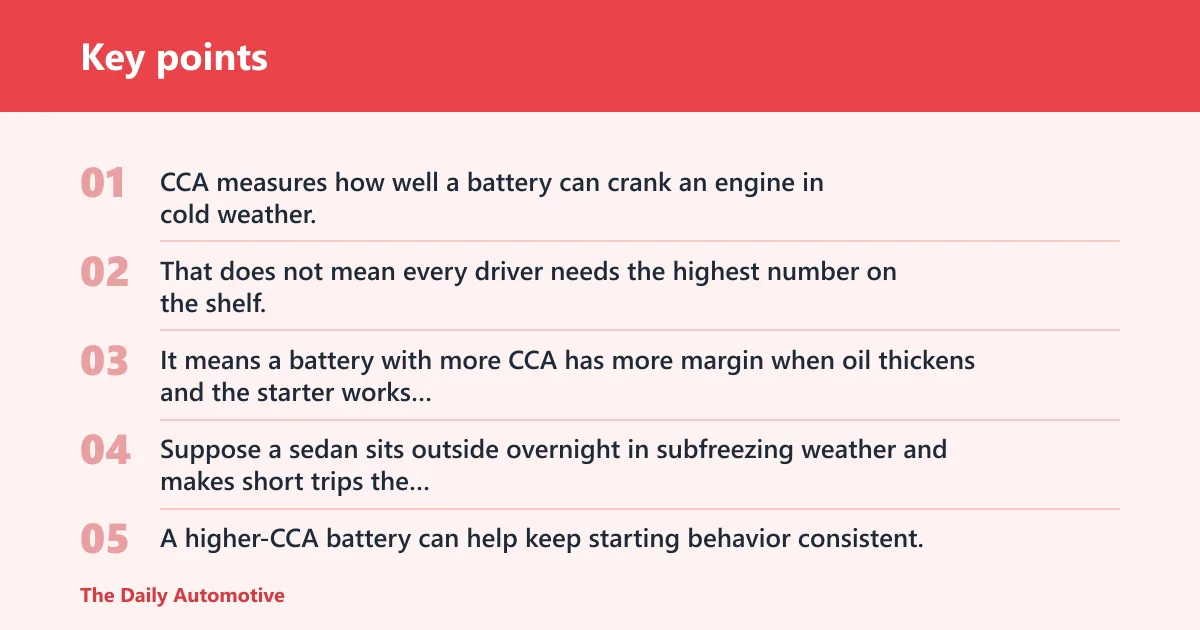
CCA measures how well a battery can crank an engine in cold weather, with testing tied to low-temperature conditions around 0ºF and voltage checked after 15 and 30 seconds of cranking. That does not mean every driver needs the highest number on the shelf. It means a battery with more CCA has more margin when oil thickens and the starter works harder.
Suppose a sedan sits outside overnight in subfreezing weather and makes short trips the next day. A higher-CCA battery can help keep starting behavior consistent, especially if the engine is small but the battery is aging or the car carries extra electrical demand.
Why reserve capacity matters in short-trip driving
Reserve capacity is measured in minutes at a 25-amp load. That matters when the car runs many accessories, idles a lot, or is driven in short bursts that do not give the alternator much time to recover the battery. A battery with more reserve can keep the vehicle alive longer if charging output drops.
Gold and Platinum both list 100 minutes of reserve capacity, while Silver lists 90 minutes. That gap is not huge, but it can matter if the vehicle spends a lot of time with lights, infotainment, or climate control running before the engine is fully warm.
Is a DieHard AGM battery worth it?
It is worth it when the vehicle requires AGM, uses start-stop technology, or has a heavier electrical load. AGM batteries are sealed lead-acid batteries with a spill-proof, leak-proof reputation and a better fit for higher-performance applications. If the car does not need AGM, Platinum may be more battery than you need.
What AGM changes in daily use
AGM construction is less about bragging rights and more about use case. In vehicles that cycle the engine repeatedly, sit under high accessory demand, or call for a sealed battery design, AGM can better match the charging strategy and load profile. That is where Platinum earns its keep.
But AGM is not a universal upgrade. If your car was designed for a standard flooded battery and sees ordinary commuting, Silver or Gold may be the better value. Extra cost only helps when the vehicle can use the extra capability.
When Platinum makes sense and when it does not
Choose Platinum if your vehicle specifies AGM, if you have a start-stop system, or if winter starts and accessory demand are both high. Skip it if the car only needs a standard battery and you want the cheapest reliable replacement. The premium tier is meant for the right application, not every application.
Warranty comparison and ownership risk
DieHard’s warranty length is part of the value picture, but it is not the same as real battery life. Silver carries a 24-month warranty, Gold sits in the middle with the tier’s standard warranty context and is the most common option, and Platinum has a 48-month warranty. Longer coverage matters most when a failure would trigger labor charges, towing, or a missed start that costs real time.
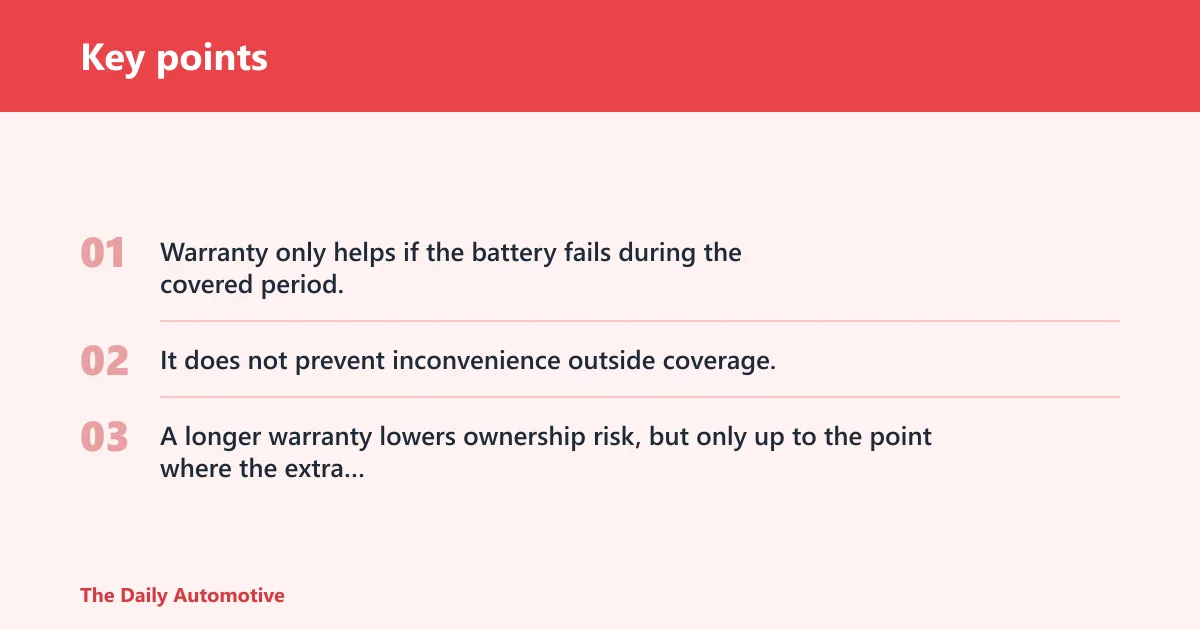
Warranty only helps if the battery fails during the covered period. It does not prevent inconvenience outside coverage, and it does not replace the cost of installation if the seller does not cover labor. A longer warranty lowers ownership risk, but only up to the point where the extra purchase price makes sense.
| Tier | Warranty | Practical risk view | Best use case |
|---|---|---|---|
| Silver | 24 months | Lower upfront cost, but less protection if the battery sees harsh use or a failure outside the coverage window. | Budget replacement for an older car with modest demands. |
| Gold | Middle-tier coverage context | Balanced value when you want decent specs without paying for AGM you do not need. | Best all-around choice for most drivers. |
| Platinum | 48 months | Best coverage against early failure, especially when replacement cost and labor matter more. | AGM-required cars, start-stop use, and heavy electrical load. |
DieHard battery ratings and the final verdict
Consumer Reports rates batteries on life, reserve capacity, cold weather performance, and warranty. That is the right mix to watch because it separates starting strength from staying power and from long-term ownership risk. A battery that looks strong on one number can still be a poor fit if the rest of the package does not match your car. (Consumerreports)
The final verdict is direct: Gold is the sweet spot for most buyers. Silver makes sense only when price is the top priority and the vehicle is easy on batteries. Platinum is the right call when the vehicle demands AGM or the electrical load is high enough to justify the premium.
Picture a compact sedan that uses a Group 35 battery, sits outdoors in winter, and has a normal electrical load. Gold is the cleaner buy. Now picture a newer car with start-stop and more accessory draw. Platinum becomes the safer choice, because the battery type matters as much as the numbers on the label.
Frequently asked questions
Are DieHard car batteries good?
DieHard batteries are a solid option because the lineup covers budget, mid-tier, and premium needs with clear spec differences. The brand is strongest when you match the tier to the vehicle’s actual requirements. Gold is the best fit for most drivers; Platinum is for AGM or heavier-duty applications.
Which DieHard battery is best: Silver, Gold, or Platinum?
For most drivers, Gold is the best balance of price and performance. Silver is the budget pick for simple cars with modest demands, while Platinum is the premium AGM choice for start-stop systems or vehicles that call for a sealed battery. The best tier depends on fitment, climate, and load.
How long is the DieHard battery warranty?
Silver carries a 24-month warranty, and Platinum is backed by a 48-month warranty. Gold sits in the middle as the common, lower-cost tier, but its value should be judged alongside specs and fitment rather than warranty length alone. Coverage matters most when labor or towing would be costly.
What is the difference between DieHard Gold and Platinum?
Platinum is the better technical battery; Gold is the better value for most standard cars.
Which DieHard battery fits my car?
Start with the vehicle’s required group size and battery type. Group 35 is one example size, but the correct fit depends on the car’s application, terminal layout, and whether it calls for AGM or flooded lead-acid construction. Do not buy by brand tier alone, because a wrong physical fit can create real problems.
Are DieHard batteries reliable in cold weather?
They can be, especially in the higher tiers. Higher CCA helps with cold starts, and Cold-weather performance is one of the categories Consumer Reports uses when rating batteries. For winter use, Gold is the practical middle option, while Platinum gives the strongest starting margin.
Who makes DieHard batteries?
That detail can vary by market and sourcing, so the label and current retailer listing are the safest references. What matters for the buyer is the battery tier, the stated specs, the warranty, and whether the case size and battery type match the vehicle. Those factors determine fit and value more than the badge alone.
Products related to this article
Sponsored / affiliate links. As an Amazon Associate I earn from qualifying purchases. I may earn additional commission from eligible campaigns.