Do Smart Cars Take Gas? Everything You Should Know
Some Smart cars use gasoline, but U.S. Smart models are either the gas Fortwo sold through 2017 or the battery-electric EQ Fortwo sold from 2018 to 2019; the brand is discontinued in the U.S. Miss the badge check and you can buy the wrong fuel, pay for the wrong maintenance, or miss an EV battery’s value. This guide breaks down each Smart model and year so you can tell gas, electric, or discontinued at a glance. (Caranddriver)
How to tell gas and electric models apart
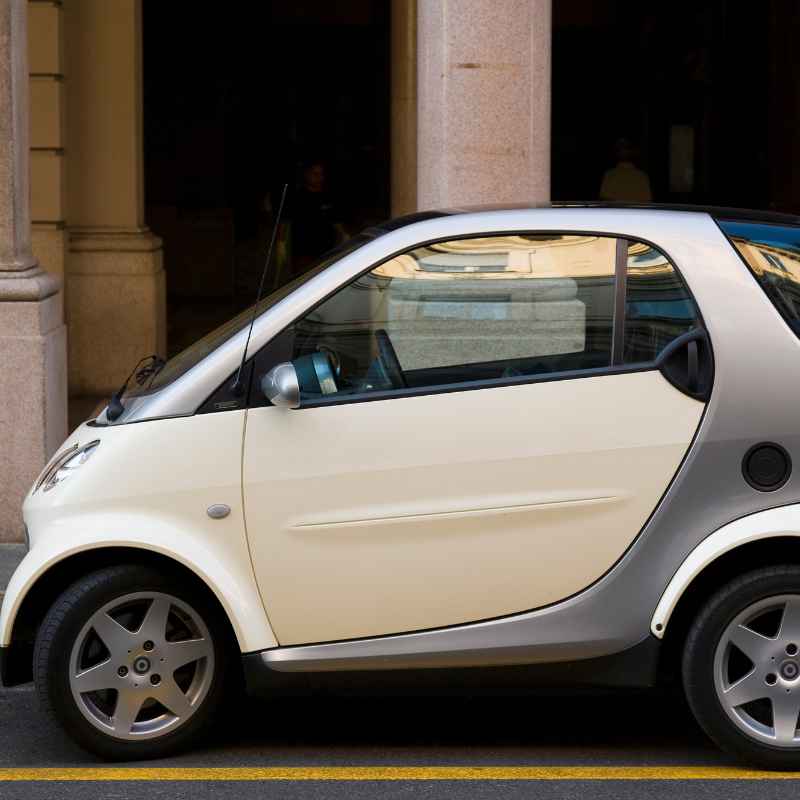
Some do, and some do not. The best-known Smart car, the two-seat Fortwo, was sold in gasoline form for many years, then as the electric Smart EQ Fortwo in later U.S. model years. The exact answer depends on model year, trim, and market, so identify the car before you assume it needs fuel.
That split matters on used-car lots. A 2016 Fortwo and a 2019 EQ Fortwo can look similar from across a parking lot, but one uses unleaded gasoline and the other needs charging. Outside the U.S., Smart also sold other configurations, so market matters too.
Smart fuel checklist
| Smart model | Model year range | Powertrain type | Fuel or charging clue | Owner action |
|---|---|---|---|---|
| Fortwo | Gas models through 2017 in the U.S. | Gasoline engine | Fuel filler cap, no charge port | Use the owner’s manual for octane and fuel requirements |
| EQ Fortwo | 2018 to 2019 in the U.S. | Battery-electric | Charge port, no gasoline filler for driving | Charge from external power; do not add gasoline |
| Fortwo / other Smart variants | Varies by market | Gas or electric | Check badges, model documents, and VIN records | Confirm the exact powertrain before buying fuel or accessories |
Which Smart car models use gas?
Gas-powered Smart models are mainly the Fortwo in U.S. market trim, especially earlier gasoline versions sold before the EQ badge arrived. Those cars use a small gasoline engine and a compact fuel tank, so they suit short trips, city driving, and low-cost fill-ups rather than long-distance travel.
The fuel requirement is not the same for every model year. Some trims may call for a specific octane level, while others are satisfied with regular unleaded. The owner’s manual and the fuel cap label are the final word for that exact car.
What unleaded fuel means here
For a gasoline Smart, “unleaded” means the car is designed for standard pump gasoline without lead additives. Most passenger cars in the U.S. use unleaded fuel, and Smart gasoline models fit that pattern. If the manual names a minimum octane, follow that number rather than guessing based on the badge alone.
A common first-timer mistake is assuming every tiny car takes the cheapest fuel on the pump. If a used Fortwo shows a premium-fuel note on the cap and the manual confirms it, regular gasoline may not be the right choice, even though the tank is small.
Octane notes by trim and year
Octane can vary by engine and model year, so there is no single answer for every gas Smart. Some manuals list regular unleaded, while others allow or require a higher octane rating. If the cap label and manual disagree with a seller’s memory, trust the vehicle paperwork.
That caution matters on older used cars. A Smart Fortwo that has changed hands a few times may come with missing documentation, but the fuel cap, service booklet, and door-jamb labels can still point you to the correct fuel.
Do Smart electric cars need gasoline?
No. The electric Smart EQ Fortwo does not use gasoline for driving. It runs on battery power and charges from external electricity, so ownership centers on charging access, cable condition, and battery range rather than fuel purchases, fuel economy, or octane choice.
That difference changes daily use. Instead of stopping at a gas pump, the driver plans home, workplace, or public charging. Range depends on battery size, temperature, speed, hills, and how hard the car is driven, so the real-world number can move around from trip to trip.
Charging instead of filling up
An EQ Fortwo needs a working charge point and the correct connector setup for the car and market. The owner still needs to read the manual, because charge times, connector type, and charging limits can vary. Unlike gasoline use, there is no refill interval tied to a fuel tank.
Picture a commuter who expects to top off an EQ Fortwo with gas after work. That is the wrong habit. The correct routine is to plug in and confirm the vehicle’s charging status, then monitor range before the next trip.
How can you tell your Smart’s powertrain?
Start with the easiest clues: the badge, the filler location, and the model name in the paperwork. A gas Smart usually has a fuel cap and no charge port. An electric Smart EQ Fortwo has a charge port and no gasoline filler for normal use. The owner’s manual and VIN documents settle any doubt.
Used cars make this harder because the Fortwo body is so compact that gas and electric examples can look nearly identical. A dealer listing that says only “Smart Fortwo” is not enough. You need the year, trim, and powertrain listing before you decide what it takes to operate the car.
Quick identification steps
- Check the model year on the registration, title, or dashboard label.
- Look for a fuel cap on the body panel or a charge port cover.
- Read the rear badge for Fortwo or EQ Fortwo naming.
- Open the owner’s manual and confirm fuel or charging instructions.
- Use the VIN and seller paperwork to verify the engine or electric drive system.
How much gas does a Smart car use?
A gas Smart uses very little fuel compared with larger cars, but the exact amount depends on model year, drivetrain, and driving style. The Fortwo is a small city car, so its fuel economy is usually strongest in urban use, where low speed and short trips fit the car’s size and gearing.
The fuel tank is compact, so fill-ups are more frequent than in a larger sedan simply because there is less room for gasoline. That does not mean the car is costly to operate. It means the tank is small, and city-focused mileage can stretch each fill-up further than the tank size suggests.
Fuel tank size and fill-up frequency
Fuel tank capacity varies by model year and powertrain, and it is measured in gallons or liters. A smaller tank means fewer miles between stops, even when the car is efficient. Check the manual or a reliable spec sheet for the exact capacity of the specific Fortwo you are looking at.
Fuel economy also changes between city and highway use. The Fortwo was built for short urban trips, so stop-and-go driving usually suits it better than long highway runs. Aggressive acceleration, high speeds, cold weather, and heavy loads can all reduce efficiency.
Why driving style changes fill-up frequency
Gentle throttle input, steady speed, and fewer hard stops usually help a small gasoline car go farther on each tank. Short, repeated trips can hurt efficiency because the engine may not reach ideal operating temperature. That is why two identical Smart Fortwos can return different results in daily use.
For an owner who mostly drives a few miles at a time, the little tank may still last longer than expected. For someone commuting at higher speeds every day, the same car will need fuel sooner.
What does ownership look like?
Ownership is simple once the powertrain is known. A gas Smart Fortwo gets unleaded fuel, regular maintenance, and tank-range planning. An electric Smart EQ Fortwo gets charging, battery-related checks, and trip planning around available charging access. Used-car shoppers should verify which one they are buying before signing anything.
That matters because the wrong assumption can cost time and money. A gas buyer who expects an EV charging routine will be confused at the pump, and an EV buyer who expects a fuel filler will miss the car’s actual operating costs.
Refueling a gas smart Fortwo
With a gasoline Fortwo, you fill the tank with the octane called for on the cap or in the manual, then track fuel level like any other ICE car. Maintenance includes engine oil, filters, and other gasoline-engine service items listed by the manufacturer. The exact schedule depends on the model year.
Keep in mind that fuel, coolant, and electrical work need ventilation, no sparks, and the battery disconnected when the manual calls for it. Follow the vehicle and product manual for any service step, and do not improvise around the fuel system.
Charging an electric Smart EQ
With an EQ Fortwo, the main concern is charging access and battery health. Range depends on battery size, weather, terrain, and speed, so the car may fit city duty well even though it does not take gasoline. For an EV, the fill-up is the charge session, not a gas stop.
That is why a seller’s statement that “it takes gas sometimes” is a red flag. The battery-electric Smart does not need gasoline at all, and mixed-up ownership notes can point to a confused listing or missing paperwork.
What used-car shoppers should verify
Ask for the exact model year, trim, and powertrain before you discuss fuel costs. Then confirm the badge, the filler or charge port, and the manual. If the car is a 2018 or 2019 U.S. Smart, it is very likely an EQ Fortwo. If it is an earlier U.S. Fortwo, it is more likely gasoline-powered.
Say your search turns up a 2017 Smart Fortwo with a fuel cap on the left rear body panel. That car is a gas model unless the paperwork says otherwise. If the next listing is a 2019 Smart EQ Fortwo with a charge port and no fuel door, that one does not need gasoline.
Frequently asked questions
Do Smart cars take gas?
Some Smart cars do, and some do not. The exact answer depends on model year, trim, and market, so check the car itself before you refuel.
Are Smart cars gas or electric?
They can be either. The Smart Fortwo existed in gasoline form for years, then in electric EQ Fortwo form later in the U.S. market. Used shoppers also need to watch for non-U.S. market differences, because the lineup changed by country and year.
Is a Smart car expensive to fill up?
Usually no, because the tank is small. Even when gas prices are high, a Smart Fortwo typically needs less fuel per fill than a larger car. The tradeoff is that the car may need more frequent stops, since a compact tank holds less gasoline than a sedan or crossover tank.
How can I tell if my Smart car is gas-powered?
Check the model year, badges, and fuel system hardware. A gas Smart Fortwo has a fuel cap and no charging port, while an EQ Fortwo has a charging port and no gasoline filler for driving. The owner’s manual and VIN paperwork are the best final checks if the car is used or relabeled.
Products related to this article
Sponsored / affiliate links. As an Amazon Associate I earn from qualifying purchases. I may earn additional commission from eligible campaigns.