Is Your Car Battery Standard or AGM? How to Tell
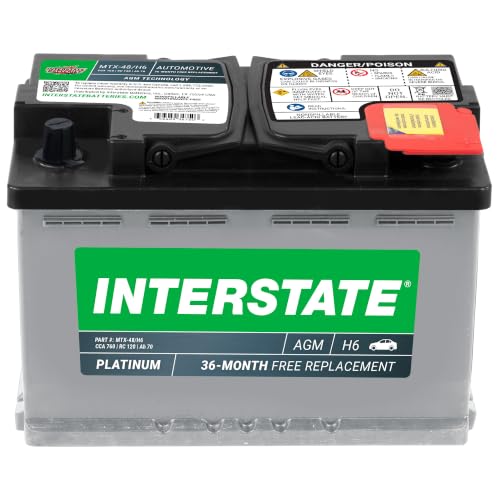
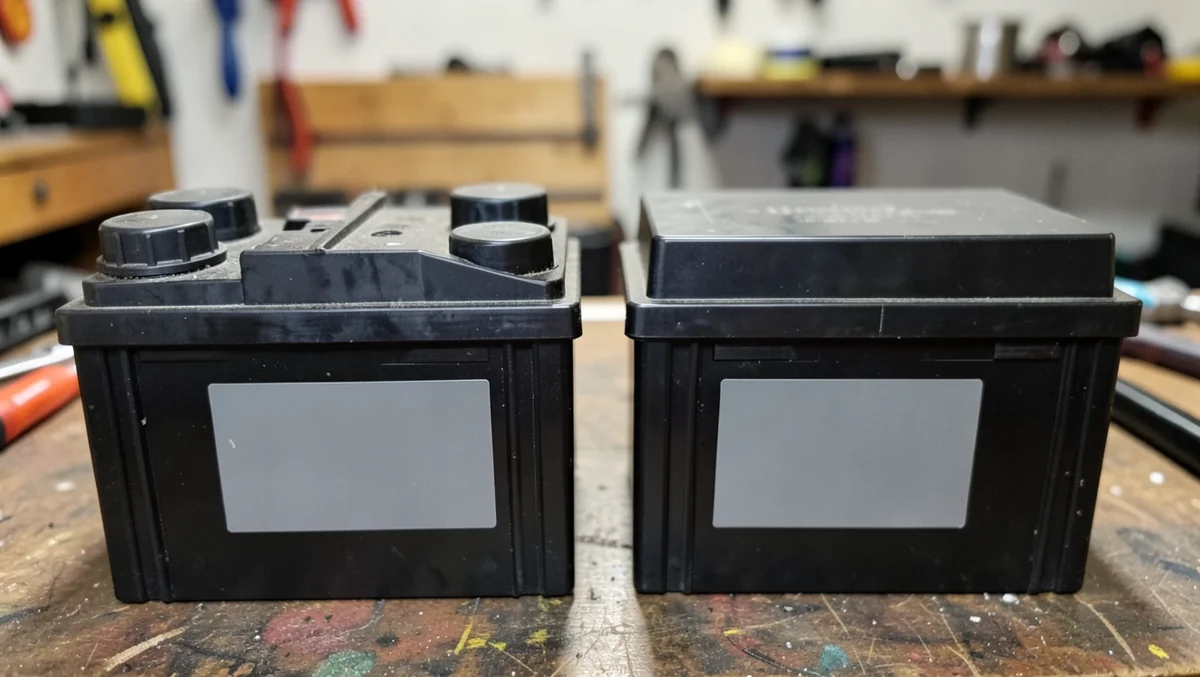
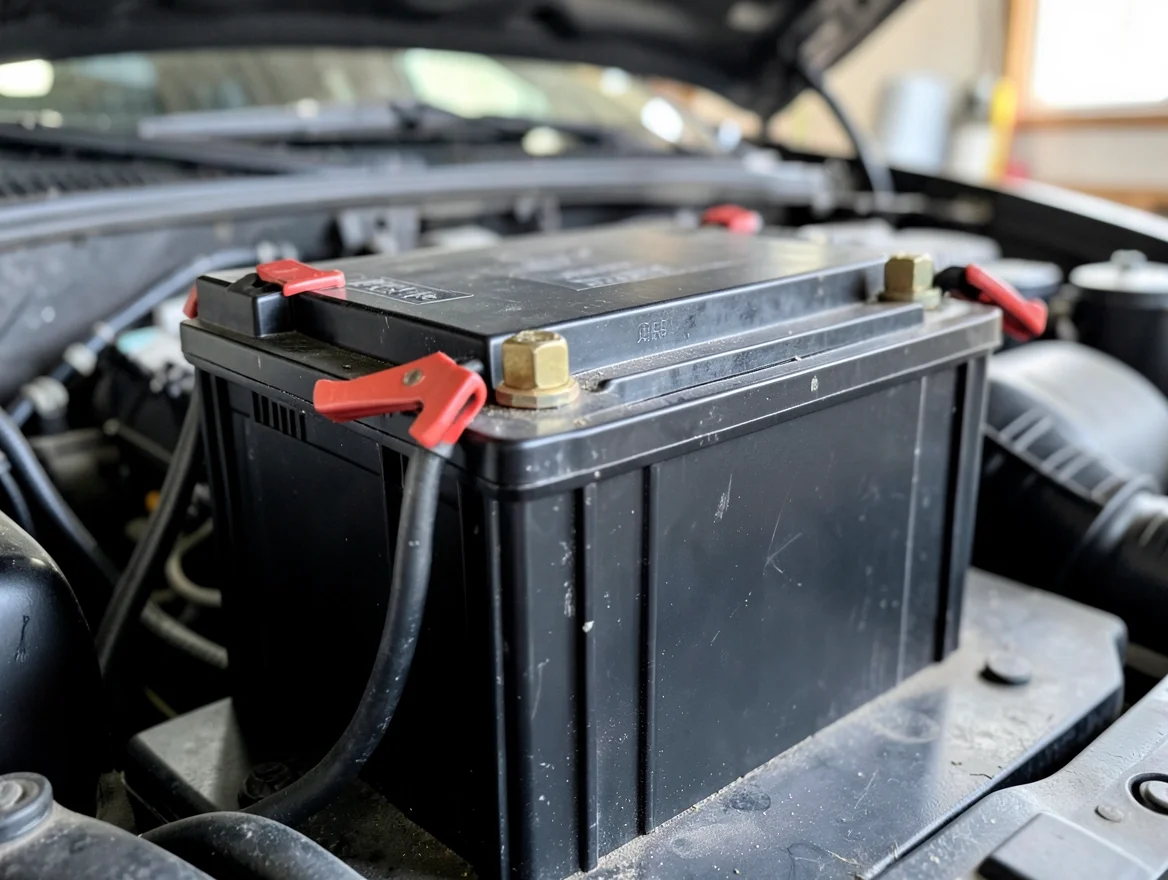
The fastest way to tell is to look at the top of the battery. A standard (flooded lead-acid) battery has removable round vent caps for topping up water, while an AGM (Absorbed Glass Mat) battery is completely sealed with a flat top and a small pressure-relief valve. The label usually confirms it too – look for the words “AGM,” “Absorbed Glass Mat,” or “VRLA” printed on the case.
Mixing up the two matters more than it sounds. AGM batteries need a charger set to the correct mode, cost more to replace, and are standard equipment on many vehicles with stop-start (idle-stop) technology. Below are the checks that settle it in under a minute, a full side-by-side comparison, and what to do differently once you know which one you have.
How to Tell If Your Car Battery Is Standard or AGM (4 Quick Checks)
WORKS WITH AGM & STANDARD BATTERIES
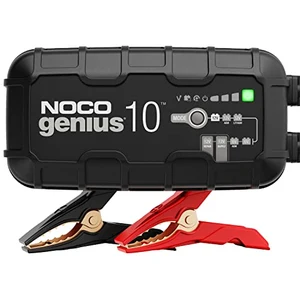 |
NOCO GENIUS10 10A Smart Battery Charger – $99.95 It automatically detects flooded, AGM, gel, and other lead-acid battery types and adjusts its charging profile, so you never have to guess which mode to use.
|
Run through these four checks in order. The first two alone are usually enough to settle it.
- Read the label. Look on the top or side of the battery case for the words “AGM,” “Absorbent Glass Mat,” or “VRLA” (Valve Regulated Lead Acid). If instead it says “flooded,” “wet cell,” or lists no chemistry type at all, it is almost certainly a standard battery.
- Look for vent caps. Standard batteries have a row of small round caps (usually six) across the top that can be pried off to check or add distilled water. AGM batteries are fully sealed with a flat top and no removable caps – just a small safety valve.
- Check your owner’s manual. The battery specification section will name the required type. If your car has stop-start (idle-stop) technology, it almost always ships with an AGM or EFB (Enhanced Flooded Battery) from the factory, not a plain standard battery.
- Feel the weight, as a last resort. Because AGM plates are packed more densely, an AGM battery is often slightly heavier than a standard battery of the same physical size and group number. This is the least reliable check on its own – use it only to confirm what the label and top already told you.
Standard vs. AGM Car Battery: Full Comparison
Once you know which type you have, here is how the two actually compare on the things that affect ownership.
| Factor | Standard (Flooded) | AGM |
|---|---|---|
| Maintenance | Check and top up distilled water periodically | Sealed, maintenance-free |
| Spill risk | Contains liquid electrolyte; can leak if cracked or tipped | Electrolyte absorbed in glass mats; spill-proof, mountable at an angle |
| Vibration resistance | Lower; plates can loosen over time | Higher; tightly packed plates and mats |
| Charging | Works with any standard automotive charger | Needs a charger with an AGM setting; avoid a flooded-battery equalization cycle |
| Typical lifespan | About 3–5 years | About 4–7 years |
| Typical replacement cost | Lower upfront cost | Roughly 1.5–3x the price of an equivalent standard battery |
| Best for | Basic vehicles without stop-start tech or heavy electrical loads | Vehicles with stop-start technology, or with lots of electronics/accessories |
Why the Difference Matters: Charging and Replacement
Charging the wrong way is the most common mistake once someone knows they have an AGM battery. Many basic chargers run a “flooded” charge cycle that finishes with an equalization step – a deliberate overcharge meant to stir up a liquid electrolyte. AGM batteries cannot vent that way; the extra voltage can force open the internal pressure-relief valve and permanently reduce the battery’s capacity. A modern automatic charger with a dedicated AGM (or “AGM/Gel”) setting avoids this, which is why the charger above is worth having on hand even if you are not sure yet which type you own.
Replacement works one direction more safely than the other. Upgrading a standard-battery vehicle to AGM is usually fine as long as the group size and terminal layout match. Going the other way – putting a standard battery into a car that came with AGM from the factory – is not recommended if the vehicle has stop-start technology, since the standard battery cannot handle the frequent, rapid engine restarts and will wear out fast, sometimes triggering a dashboard warning. When in doubt, replace like-for-like with whatever type your owner’s manual specifies for your car.
If you want the deeper technical explanation of how AGM construction actually works and when it is worth paying extra for one, see our full guide to what AGM car batteries are and how they work. And if your battery turns out to be neither of these two – some newer or performance vehicles use lithium-ion (LiFePO4) batteries instead – our guide on how to identify your car battery type covers all four common chemistries side by side.
Driving somewhere cold this winter? An AGM-compatible jump starter built for cold weather is worth keeping in the trunk regardless of which battery type you have, since both lose some cranking power once temperatures drop.
Frequently Asked Questions
How do I know if my battery is AGM or standard?
Check the label on top of the battery for the words “AGM,” “Absorbent Glass Mat,” or “VRLA.” Then look at the top itself: AGM batteries are completely sealed with no removable caps, while standard batteries have a row of small vent caps for adding water.
Is a car battery AGM or regular?
It depends on the vehicle and what was originally installed. Most cars built before stop-start technology became common use a regular (flooded) battery, while most vehicles with stop-start, along with many newer models with heavy electrical loads, ship with AGM from the factory. Check the label or your owner’s manual to confirm which one your specific car has.
Is a car battery standard, AGM, or lithium?
It can be any of the three, though standard and AGM are far more common as factory-installed batteries. Lithium-ion (LiFePO4) starter batteries are mostly found in newer EVs, hybrids, and performance or off-road vehicles as an aftermarket upgrade, since they cost significantly more than either lead-acid option.
What happens if you charge an AGM battery with a standard charger?
A basic charger without an AGM setting can overcharge it, especially if the charger runs a flooded-battery equalization cycle at the end – the higher voltage can vent built-up gas through the AGM battery’s pressure-relief valve and shorten its life. A modern smart charger with a dedicated AGM (or AGM/Gel) mode charges it safely; always confirm charger compatibility before connecting.
Can I replace a standard battery with an AGM battery?
In most cases, yes, as long as the replacement matches the correct group size and terminal layout for your vehicle. Going the other way – replacing a factory AGM battery with a standard one, especially on a car with stop-start technology – is not recommended, since a standard battery cannot handle the frequent restarts as well and will wear out faster.
Whichever type you end up with, matching the battery to your car and charging it correctly is what determines how long it actually lasts.
Products related to this article
Sponsored / affiliate links. As an Amazon Associate I earn from qualifying purchases. I may earn additional commission from eligible campaigns.