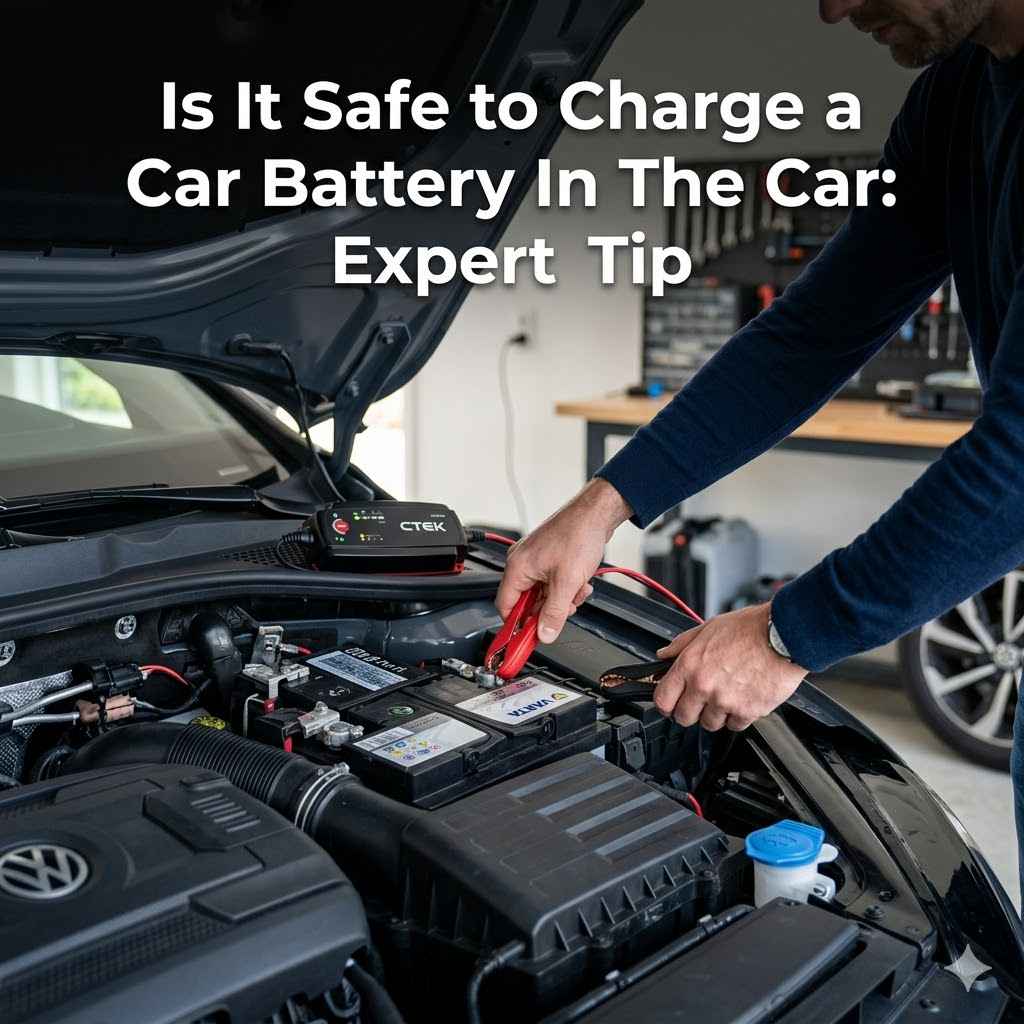
Is It Safe to Charge a Car Battery In The Car: Expert Tip
Figuring out if you can charge your car battery right inside your car can feel tricky, especially when you’re new to car care. Lots of people wonder about this because they want to make sure they don’t mess anything up. It’s a common question, and the answer is simpler than you might think. We’re going to break down exactly what you need to know, step by step, to keep things safe and easy. Get ready for clear advice that will help you get your car battery topped up without any worries.
Understanding Car Battery Charging Safety
This section covers the fundamental safety aspects of charging a car battery while it’s still installed in the vehicle. We will explore the potential risks involved and the essential precautions to take. Understanding these points is vital for anyone looking to perform this task themselves.
It aims to equip you with the knowledge to avoid common mistakes and ensure a secure charging process.
Potential Risks When Charging a Car Battery In The Car
Charging a car battery can be safe if done correctly, but there are some things to watch out for. Batteries store a lot of energy, and improper handling can lead to problems. One main concern is the release of hydrogen gas.
This gas is flammable, and sparks can easily ignite it. So, making sure you have good ventilation is super important. Another risk involves electrical shorts.
If you accidentally touch the positive and negative terminals of the charger or battery with a metal tool, it can cause a dangerous spark and even damage your car’s electrical system. It’s not something to be scared of, but it means we need to be careful and follow the right steps.
Essential Safety Precautions for In-Car Battery Charging
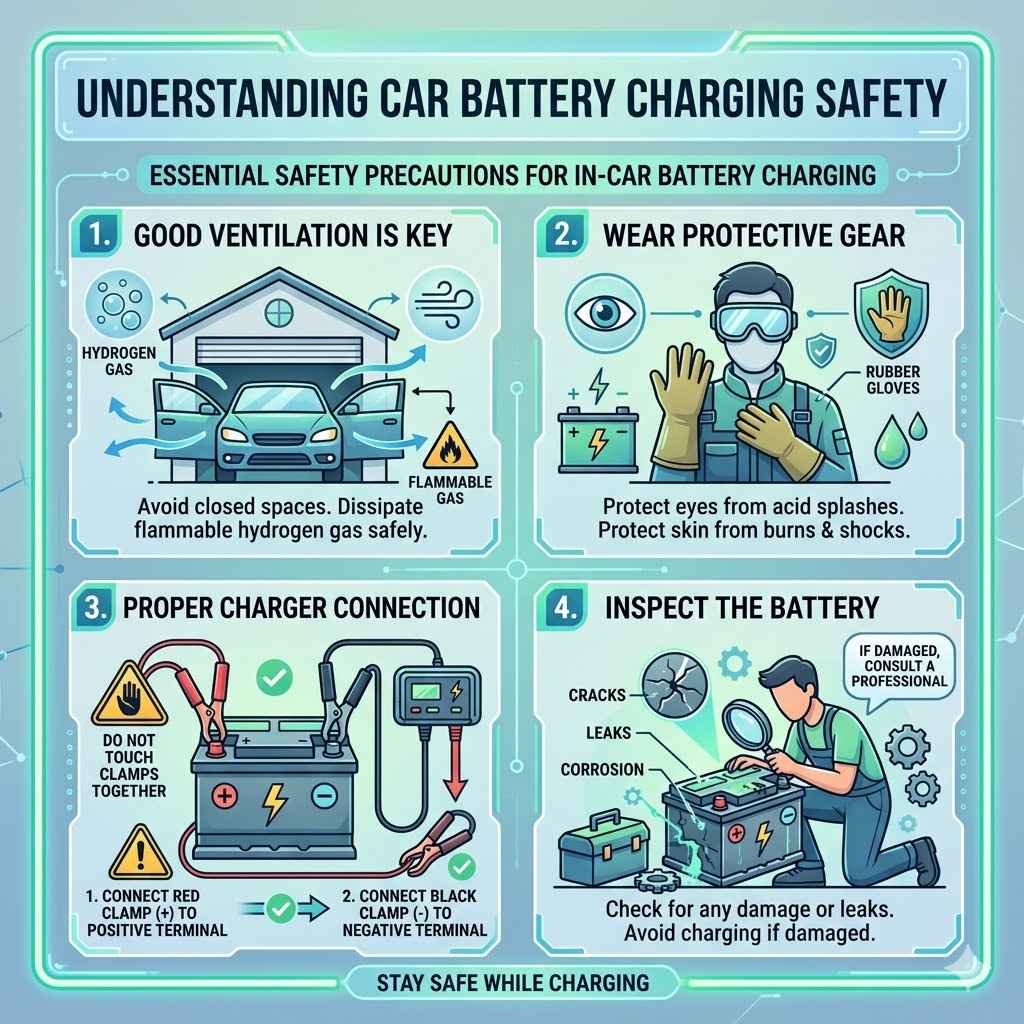
Good Ventilation is Key
Car batteries, especially when charging, can release hydrogen gas. This gas is highly flammable. You must ensure that the area where you are charging your car battery is very well-ventilated.
Open car doors and any garage doors fully. Avoid charging in a closed, unventilated space like a sealed garage. Good airflow helps dissipate any released gases safely, preventing a buildup that could lead to a fire or explosion risk.
Wear Protective Gear
Safety glasses or goggles are a must. They protect your eyes from any acid splashes or debris that might fly off the battery. Wearing rubber gloves is also recommended to protect your skin from battery acid.
Thick work gloves can also prevent accidental burns or shocks. Think of it like wearing a helmet when biking; it’s a simple step that offers great protection against unexpected issues.
Proper Charger Connection
Always connect the charger’s positive (red) clamp to the battery’s positive terminal and the negative (black) clamp to the battery’s negative terminal. Never let the clamps touch each other once they are connected to the battery. Also, ensure the charger is turned off and unplugged before you connect or disconnect the clamps.
This sequence prevents sparks from occurring at the battery itself.
Inspect the Battery
Before you start charging, take a good look at your car battery. Check for any cracks, leaks, or corrosion. If you see any damage, it’s best not to charge the battery yourself.
A damaged battery could pose additional risks. In such cases, it’s safer to consult a professional mechanic to assess and replace the battery if needed.
How to Safely Charge Your Car Battery In The Car
This section will guide you through the practical steps of charging your car battery while it remains in your vehicle. We’ll break down the process into simple, easy-to-follow actions. The goal is to demystify the procedure and empower you to perform this maintenance task confidently.
We aim for clarity, making sure you know exactly what to do from start to finish.
Step-by-Step Charging Procedure
Park in a Safe Location
Find a well-lit and well-ventilated area. An open garage, driveway, or even outdoors on a clear day is ideal. Make sure the car is parked on a level surface and the engine is turned off.
Engage the parking brake for extra security. This initial setup is crucial for a safe charging experience, setting the stage for the rest of the process.
Open the Hood and Locate the Battery
Open your car’s hood to access the battery. The battery is usually located under the hood, often towards the front or side. It’s a rectangular box, typically black or gray, with two large terminals on top.
If you’re unsure, check your car’s owner’s manual for its exact location.
Prepare the Battery Terminals
Ensure the battery terminals are clean. If they have any corrosion (a powdery, often bluish-white substance), gently clean them with a wire brush or a battery terminal cleaner. This ensures a good connection for the charger.
Clean terminals mean a better flow of electricity.
Connect the Charger’s Positive Clamp
With the charger unplugged and turned off, attach the red clamp of the charger to the positive (+) terminal of the battery. This terminal is usually marked with a plus sign and often has a red cover. Make sure the clamp has a firm grip on the terminal.
Connect the Charger’s Negative Clamp
Next, attach the black clamp of the charger to the negative (-) terminal of the battery. This terminal is usually marked with a minus sign. Alternatively, some experts recommend connecting the negative clamp to a clean, unpainted metal surface on the car’s engine block or chassis, away from the battery.
This creates a grounding point and further minimizes the risk of sparks near the battery.
Turn On the Charger
Once both clamps are securely connected, plug the charger into a power outlet and turn it on. Most chargers have an indicator light to show they are working.
Monitor the Charging Process
Allow the battery to charge. The time needed will vary depending on the battery’s charge level and the charger’s power. Many chargers have an automatic shut-off feature when the battery is fully charged.
You can check the charger’s display or indicator lights for status updates.
Disconnect the Charger
When charging is complete, turn off the charger and unplug it from the power outlet. Then, disconnect the negative clamp first, followed by the positive clamp. Ensure the clamps do not touch each other or any metal parts of the car during disconnection.
Close the Hood and Clean Up
Close your car’s hood. Clean up any tools you used.
Understanding Different Types of Battery Chargers
Choosing the right battery charger is important for effective and safe charging. Different chargers offer varying features and levels of automation. This section explains the common types of chargers available, helping you select one that best suits your needs and skill level.
We will look at their functions and how they operate.
Types of Car Battery Chargers
Trickle Chargers
A trickle charger is a simple device that delivers a very low amount of current over a long period. It’s ideal for maintaining a battery’s charge when a car is not used frequently. They are designed to prevent overcharging and are very safe for long-term use.
Think of it as a slow, steady sip of power to keep the battery topped up.
Smart Chargers / Automatic Chargers
These are more advanced chargers. They use microprocessors to monitor the battery’s voltage and temperature. They adjust the charging rate automatically, providing a rapid charge when needed and then switching to a trickle charge to maintain the battery.
Many smart chargers can also diagnose battery health. They are generally the safest option for most users because they take much of the guesswork out of charging.
Jump Starters (with Charging Function)
While primarily used to start a dead car battery by providing a surge of power, some jump starters also have a built-in charger function for topping up a battery over time. These can be very convenient as a multi-purpose device, but it’s important to follow their specific charging instructions.
How to Choose the Right Charger
Consider Your Needs
If you only need to maintain a battery on a rarely used car, a trickle charger might be sufficient. For regular use or if you want more convenience and safety, a smart charger is a better choice. Smart chargers adapt to the battery’s needs.
Check Voltage Compatibility
Ensure the charger is compatible with your car’s battery voltage. Most cars use a 12-volt system, so you’ll need a 12-volt charger. Some older vehicles might have 6-volt systems, and heavy-duty trucks might use 24-volt systems.
Always verify before purchasing.
Look for Safety Features
Prioritize chargers with safety features like overcharge protection, short circuit protection, and reverse polarity protection. These features add an extra layer of security and prevent damage to your car and the charger. Smart chargers usually come with these built-in.
Read Reviews
Before buying, read reviews from other users. This can give you insights into the charger’s reliability, ease of use, and actual performance in real-world situations.
When It Is Not Safe to Charge Your Car Battery In The Car
While charging a car battery in the car is generally safe with proper precautions, there are specific situations where it becomes unsafe or ill-advised. This section details these circumstances, helping you identify when you should seek professional help or avoid charging altogether. Knowing these limits is just as important as knowing the correct procedure.
Damaged Batteries
If your car battery shows any signs of physical damage, such as cracks in the casing, leaks, or bulging sides, it should not be charged. Damaged batteries can be unstable. The casing might be compromised, leading to a greater risk of acid leaks or even explosion.
In such cases, replacement is usually necessary. Continuing to charge a damaged battery could worsen the problem and create a serious safety hazard.
Extreme Temperatures
Extremely hot or cold temperatures can affect battery performance and safety during charging. In very cold weather, a frozen battery can be damaged by charging. In very hot weather, the charging process itself generates heat, and adding external heat can increase the risk of overheating and damage.
It’s best to charge in moderate temperatures, ideally between 50°F and 70°F (10°C and 21°C).
Poor Ventilation
As mentioned earlier, hydrogen gas is a byproduct of charging. If the charging environment is not well-ventilated, this gas can build up. Hydrogen is highly flammable and can ignite from even a small spark.
Charging in a small, enclosed space without airflow, like a tightly sealed garage, is extremely dangerous and should be avoided. Always ensure open doors or windows to allow fresh air to circulate freely.
Corroded Terminals Beyond Repair
While minor corrosion can be cleaned, severely corroded terminals may indicate a more serious issue with the battery or its connections. If the terminals are crumbling, broken, or show signs of extensive damage, it might be difficult to get a secure connection. A poor connection can lead to ineffective charging or create resistance that generates excessive heat.
If cleaning doesn’t resolve the issue, it’s best to get professional advice.
Using the Wrong Charger
Attempting to charge a car battery with a charger not designed for it, such as a charger meant for a different battery type or voltage, is unsafe. Using an incompatible charger can lead to overcharging, undercharging, or even damage to the battery and the car’s electrical system. Always ensure your charger is specifically designed for your car’s 12-volt battery system.
Real-Life Scenarios and Expert Advice
To better illustrate the importance of safety and correct procedures, let’s look at a couple of real-life situations. These scenarios highlight common problems and how expert advice can resolve them. Understanding these examples will help you anticipate issues and apply the right solutions.
Scenario 1: The Dead Battery After a Long Trip
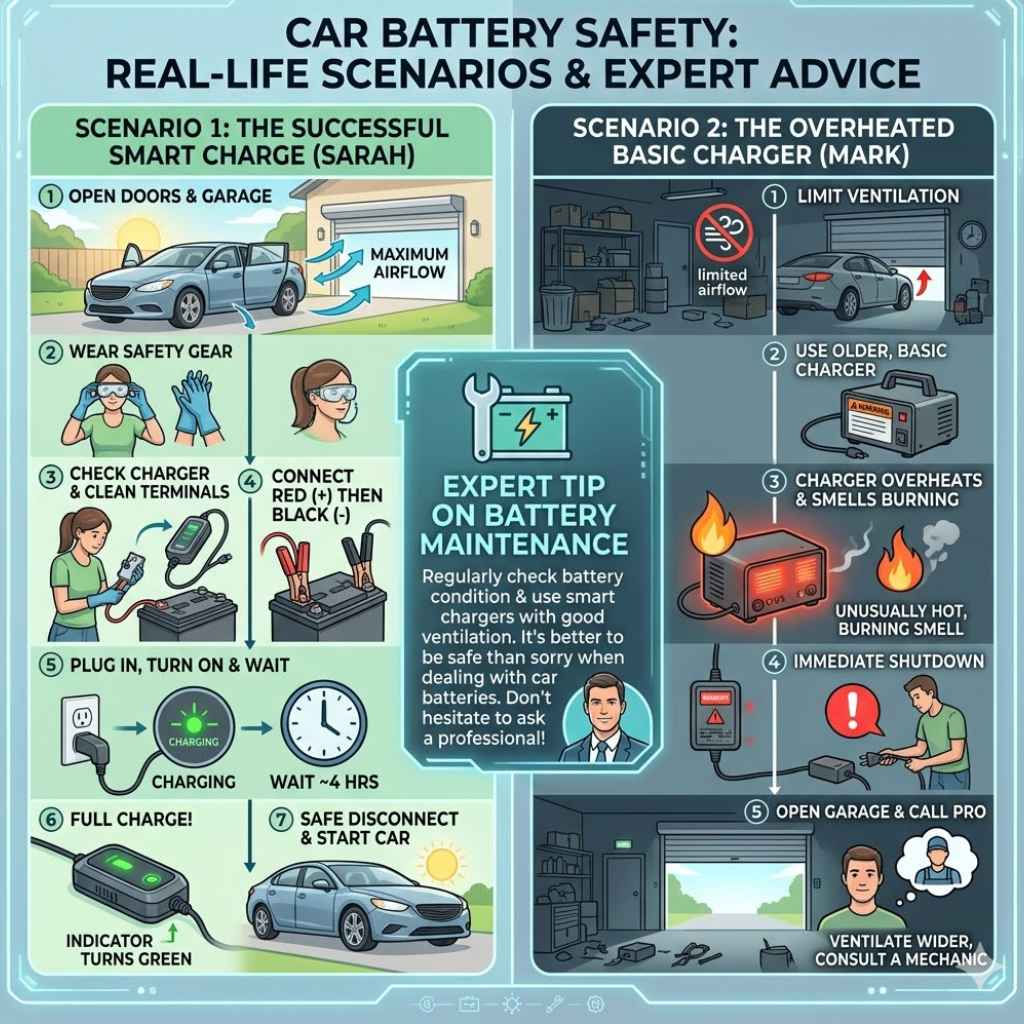
Sarah forgot to turn off her car’s headlights after a long road trip. The next morning, her car wouldn’t start. She knew her battery was likely dead.
She had a new smart charger at home and decided to try charging it herself.
- Sarah parked her car in her driveway, opening both car doors and her garage door for maximum airflow.
- She put on her safety glasses and rubber gloves.
- She located her battery, cleaned the terminals, and double-checked that the charger was off and unplugged.
- Sarah carefully connected the red clamp to the positive terminal and the black clamp to the negative terminal.
- She plugged in the charger, turned it on, and the indicator light showed it was working.
- After about four hours, the charger’s light turned green, indicating the battery was fully charged.
- She turned off the charger, unplugged it, disconnected the clamps (black first, then red), and closed her car doors.
Her car started right up, and Sarah felt confident she had handled it safely.
Scenario 2: The Overheated Charger
Mark’s car battery was also low, and he decided to charge it in his garage. He used an older, basic charger he found. He didn’t open his garage door fully, only leaving a small gap for some air.
During charging, the charger felt unusually hot to the touch, and a faint smell of something burning emerged. Mark, remembering he should be cautious, immediately turned off the charger, unplugged it, and disconnected the clamps. He then opened his garage door wider to ventilate.
Upon inspection, he realized the charger might have been old and not suitable for continuous use, and the limited ventilation was a significant risk. He decided to take his car to a mechanic to have the battery checked properly and to buy a new, safer smart charger for future use. This experience taught him the importance of both proper ventilation and using reliable equipment.
Expert Tip on Battery Maintenance
“Regularly checking your battery’s condition and maintaining its charge can prevent unexpected problems. For most people, using a smart charger and ensuring good ventilation are the simplest ways to keep your battery healthy and your car running smoothly. If you ever feel unsure, don’t hesitate to ask a professional for help.
It’s better to be safe than sorry when dealing with car batteries.”
Frequently Asked Questions
Question: Can I leave a charger connected to my car battery indefinitely?
Answer: It is generally not recommended to leave most basic chargers connected indefinitely. However, many modern smart chargers and trickle chargers are designed for long-term maintenance and have an automatic shut-off or maintenance mode that prevents overcharging. Always check your charger’s manual.
Question: What should I do if I see sparks when connecting the charger?
Answer: If you see sparks, it might indicate a poor connection or a short circuit. Ensure the charger is off and unplugged. Check that the clamps are securely attached to the correct terminals and that they are not touching each other or any metal parts of the car.
If sparks persist, stop and consult a professional.
Question: How long does it typically take to charge a car battery?
Answer: Charging time varies greatly depending on the battery’s charge level, its capacity, and the charger’s output. A deeply discharged battery might take 12-24 hours to fully charge with a standard charger. Smart chargers can often charge much faster and then maintain the charge.
Question: Is it safe to charge a car battery in the rain?
Answer: It’s best to avoid charging a car battery in the rain if possible. Water can conduct electricity, increasing the risk of shock or short circuits. If you must charge, ensure all electrical connections are dry and protected from moisture, and the area is as sheltered as possible.
Question: Can I charge a car battery in my apartment garage?
Answer: Charging a car battery in an apartment garage is generally not recommended unless the garage is very well-ventilated and the doors are open. The buildup of flammable hydrogen gas is a serious risk in enclosed spaces. It’s safer to charge in an open or extremely well-ventilated area.
Summary
Charging a car battery in the car is safe when you follow the right steps and precautions. Always ensure good ventilation, wear protective gear, and connect the charger correctly. Using a smart charger offers added safety and convenience.
Avoid charging damaged batteries or in extreme temperatures. Knowing when not to charge is as vital as knowing how.