Is Tesla the Safest Car? NHTSA & IIHS Data Explained (2026)
Tesla vehicles hold some of the highest NHTSA and IIHS safety ratings on the market — but “safest car” isn’t a blanket fact. In March 2026, NHTSA opened an Engineering Analysis covering 3.2 million Tesla vehicles over Autopilot and Full Self-Driving crashes, even as the Model Y posted the lowest rollover risk (7.9%) of any SUV NHTSA has recorded. This guide breaks down Tesla’s official crash-test scores, the open federal investigations, and what the real-world accident data actually shows.
Insert your Affiliate Disclosure reusable block here.
Quick Answer
Tesla’s mainstream models earn 5-star NHTSA ratings and the Model Y has the lowest rollover risk of any SUV NHTSA has tested. But no single car is unconditionally “the safest”: NHTSA has an open Engineering Analysis covering 3.2 million Tesla vehicles over Autopilot/FSD crashes (as of March 2026), and one independent fatality study found Tesla has the highest per-mile fatal accident rate of any car brand.
How Tesla Models Score on Official Crash Tests (NHTSA + IIHS)
Tesla’s crash-test record is genuinely strong. The Model 3, Model Y, Model S, and Model X have all earned 5-star overall ratings from the National Highway Traffic Safety Administration (NHTSA) — the highest rating NHTSA awards, covering frontal, side, and rollover categories. These are independently administered government tests, not Tesla’s own claims.
The Insurance Institute for Highway Safety (IIHS) runs a separate, and in some ways stricter, evaluation. For 2026, results are more mixed than Tesla’s marketing suggests: the Model Y earned Top Safety Pick+ — IIHS’s highest award — for the seventh consecutive year in 2025. The Model 3 earned the lower-tier Top Safety Pick (not the “+” award) for 2025–2026, missing the top tier on at least one required test category. The Cybertruck was named IIHS’s Top Safety Pick+ and the safest pickup truck of 2026.
| Model | NHTSA Overall Rating | Latest IIHS Award | Notable Result |
|---|---|---|---|
| Model 3 | 5-star | Top Safety Pick (2025–2026) | Missed Top Safety Pick+ tier |
| Model Y | 5-star | Top Safety Pick+ (7th year, 2025) | Lowest rollover risk of any SUV NHTSA has tested (7.9%) |
| Model S | 5-star | Not currently IIHS-rated | NHTSA “lowest probability of injury” claim (2018 test cohort) |
| Model X | 5-star | Not currently IIHS-rated | Large SUV; low sales volume limits IIHS testing frequency |
| Cybertruck | 5-star | Top Safety Pick+ (2026) | Named safest pickup truck of 2026 |
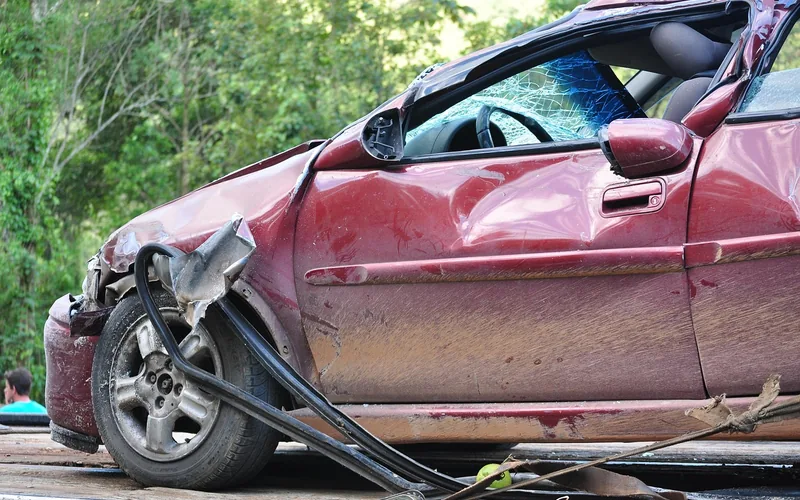
Why Tesla’s Battery-Floor Design Lowers Rollover Risk
A skateboard-style battery pack is a flat, floor-mounted battery layout that runs the length of the vehicle’s underside. Tesla uses this design across its entire lineup, and it’s the main reason Tesla’s SUVs and sedans post unusually low rollover numbers. Placing hundreds of pounds of battery cells as low and flat as possible pulls the car’s center of gravity down, which physically resists the tipping motion that causes rollovers.
NHTSA measures this directly: a vehicle is mounted on a platform that rotates to physically calculate its center of gravity and moment of inertia, then converts that into a rollover-risk percentage. Every Tesla model benefits from the same low-slung battery architecture, though the effect is most dramatic on the Model Y, where NHTSA recorded the lowest rollover risk of any SUV the agency has ever tested.
📊 NHTSA recorded a 7.9% rollover risk for the Tesla Model Y — the lowest of any SUV in NHTSA’s database. — Source: Tesla, “Engineered for Safety” (citing NHTSA rollover test data)
What NHTSA Is Investigating: Autopilot and Full Self-Driving (2026 Update)
Tesla’s driver-assistance systems — Autopilot and the optional Full Self-Driving (Supervised) package — are the part of the safety picture that crash-test scores don’t capture. In December 2023, Tesla recalled roughly 2 million vehicles over Autosteer, its standard lane-keeping feature, after NHTSA found driver misuse played a role in a string of crashes. NHTSA later determined that recall’s software remedy was insufficient once it kept receiving reports of crashes after the fix.
That follow-up concern escalated on March 18, 2026, when NHTSA moved its FSD probe from a Preliminary Evaluation to a formal Engineering Analysis — the step just before a possible recall — now covering an estimated 3.2 million Tesla vehicles. The agency’s concern: Tesla’s camera-based system reportedly failed to detect glare, dust, and other conditions that reduced camera visibility, and didn’t reliably alert drivers before camera performance degraded. The probe documents nine incidents, including one pedestrian fatality and one injury crash.
On June 16, 2026, U.S. Senators Edward Markey and Richard Blumenthal sent a letter to NHTSA demanding the agency independently verify Tesla’s public FSD safety claims — including the claim that FSD is “seven or ten times safer” than human driving — rather than taking Tesla’s own numbers at face value. As of this writing, both the Engineering Analysis and the senators’ review request remain open.
Best Dash Cam Pick
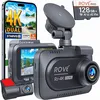
ROVE R2-4K Dual Dash Cam Front and Rear
Independent front-and-rear 4K video that documents what actually happened on the road — a useful backstop no matter what car you drive, Tesla or otherwise.
- Best for: drivers who want video evidence independent of the car’s own onboard systems
- Why we picked it: dual 4K/2.5K recording with a wide low-light sensor captures clear plate and lane detail day and night
- Main drawback: no built-in cellular connection — footage has to be pulled manually or over WiFi, not streamed live
Compare more dash cam options
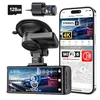 Option 1 REDTIGER 4K STARVIS 2 Dashcam
|
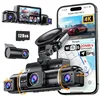 Option 2 Icesky S03 4-Channel 360° + GPS
|
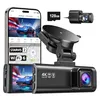 Option 3 REDTIGER F7NP 4K Dash Cam
|
As an Amazon Associate we earn from qualifying purchases.
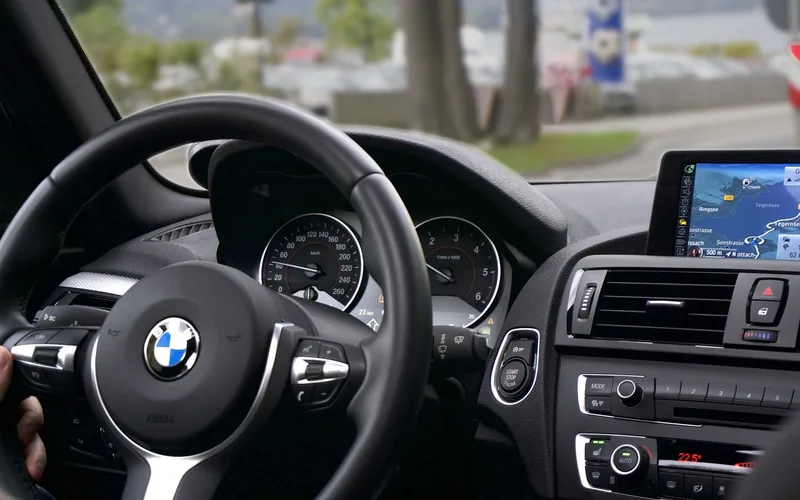
Real-World Crash Data: What the Numbers Actually Show
Why Tesla’s Own Safety Report Claims Are Disputed
Tesla publishes a quarterly Vehicle Safety Report claiming Autopilot and FSD crash rates run 5–10x lower than the U.S. national average. Independent researchers and safety analysts have identified real methodological problems with that comparison. Autopilot and FSD are used overwhelmingly on highways, which are already the safest road type per mile driven, while drivers tend to disable the systems in the riskiest situations — dense intersections, construction zones, unmarked rural roads. Tesla’s customer base also skews newer, wealthier, and more suburban than the average driver, and none of those factors are controlled for in the comparison. Tesla has not released its disengagement data, crash-severity breakdowns, or miles-driven-by-road-type — the exact numbers needed to check the claim independently.
What Independent Fatality Data Shows
A separate analysis by auto-data firm iSeeCars, using NHTSA’s Fatality Analysis Reporting System for model years 2018–2022, found Tesla had the highest fatal-accident rate of any car brand: 5.6 fatal accidents per billion miles driven, versus a 2.8-per-billion-miles average across all vehicles. The Model Y specifically posted 10.6 fatal accidents per billion miles — roughly four times the average and the sixth-worst result of any individual vehicle in the study.
That number sits awkwardly next to Tesla’s 5-star crash-test scores, and the study’s own authors say it probably isn’t a simple vehicle-design story.
“Tesla’s elevated fatality rates might reflect driver behavior more than vehicle design.”
Tesla’s instant torque and quick acceleration likely play a role in how these crashes happen, and the same study notes that Tesla models still perform well in independent crash tests — meaning the fatality data probably says more about how (and how fast) Teslas are driven than about structural safety.
📊 Tesla has the highest fatal-accident rate of any car brand: 5.6 per billion miles, versus a 2.8 average across all vehicles. — Source: iSeeCars, “The 23 Most Dangerous Cars on the Road” (2026)
Battery Fire Risk: Is a Tesla More Likely to Catch Fire?
No. Per mile driven, gasoline vehicles catch fire far more often than electric vehicles, Teslas included — a pattern confirmed by multiple insurance-industry and NFPA-sourced analyses of vehicle fire rates. Tesla’s battery pack sits inside a sealed, liquid-cooled enclosure separate from the passenger cabin, with a cooling system designed to keep individual cells from overheating and firewalls between modules meant to slow any fire that does start from spreading.
That said, EV battery fires behave differently than gasoline fires when they do happen: they burn hotter, can reignite hours or days after being extinguished, and typically require far more water and specialized firefighting protocols. Most documented Tesla fires occur after a severe high-speed collision that breaches the battery enclosure, not spontaneously while parked or charging normally.
How Tesla Compares to Other Safety-Focused Brands
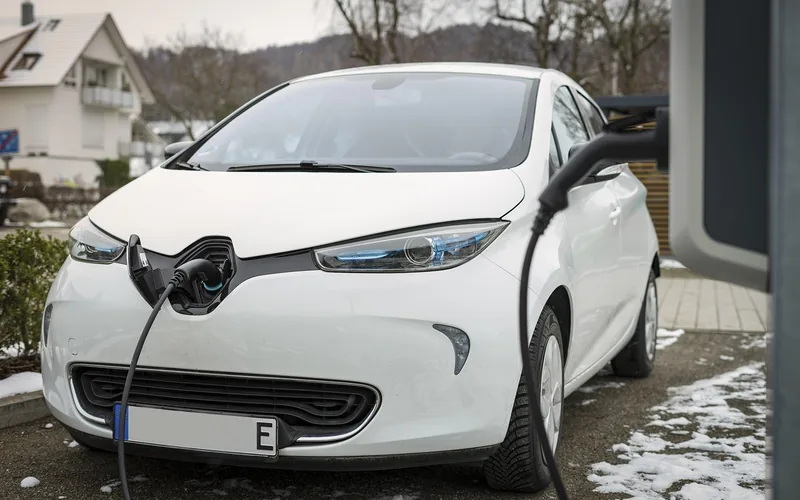
Tesla isn’t the only brand chasing top safety scores. BMW’s EV lineup takes a different approach, leaning on traditional crash-structure engineering rather than a skateboard battery platform, and still posts competitive NHTSA and IIHS scores. Volvo and Toyota both build extensive standard driver-assistance suites — automatic emergency braking, lane-keep assist, blind-spot monitoring — into nearly every trim, without the open-investigation baggage Tesla’s Autopilot and FSD currently carry. None of these brands claim a “10x safer than human drivers” statistic the way Tesla does, which also means none of them are under the same level of regulatory scrutiny for that specific claim.
If you’re cross-shopping specifically for safety, the honest framing is: Tesla’s structural crash-test scores and rollover numbers are genuinely best-in-class, its driver-assistance software is the part of the package still being actively investigated by federal regulators, and Tesla doesn’t sell a gas-powered alternative if you’d rather sidestep the battery-fire question entirely.
Frequently Asked Questions
Is Tesla the safest car on the market?
Not unconditionally. Tesla’s structural crash-test results are genuinely among the best in the industry — 5-star NHTSA ratings across its lineup and the lowest SUV rollover risk NHTSA has ever recorded for the Model Y. But NHTSA has an open Engineering Analysis covering 3.2 million Tesla vehicles over Autopilot/FSD crashes, and an independent fatality study found Tesla has the highest per-mile fatal accident rate of any brand. “Safest” depends on whether you’re weighing crash-test engineering or real-world outcomes.
Does every Tesla model have a 5-star NHTSA safety rating?
Yes, Tesla’s mainstream models — Model 3, Model Y, Model S, Model X, and Cybertruck — have all earned 5-star overall ratings from NHTSA. A 5-star rating covers frontal, side, and rollover categories and is the highest NHTSA awards, but it’s a separate scale from the IIHS’s Top Safety Pick program, where Tesla’s results are more mixed.
Is Tesla’s Autopilot under federal investigation in 2026?
Yes. NHTSA escalated its Full Self-Driving probe to a formal Engineering Analysis on March 18, 2026, covering an estimated 3.2 million Tesla vehicles — the step just before a possible recall. The agency is examining whether Tesla’s cameras reliably detect and warn drivers about reduced visibility from glare or dust. Separately, Senators Markey and Blumenthal asked NHTSA in June 2026 to independently verify Tesla’s own FSD safety claims.
Are Teslas more likely to catch fire than gas-powered cars?
No. Gasoline vehicles catch fire more often per mile driven than electric vehicles, including Teslas. Most Tesla battery fires occur after a severe collision breaches the sealed, liquid-cooled battery enclosure, not spontaneously. EV fires do burn hotter and can reignite after being extinguished, which is a real difference in how they’re fought, but that’s a firefighting-difficulty issue, not a higher-frequency one.
Does Tesla have the highest fatal accident rate of any car brand?
According to a 2026 iSeeCars analysis of NHTSA fatality data for 2018–2022 model years, yes — Tesla’s overall fatal-accident rate (5.6 per billion miles) was the highest of any brand studied, and the Model Y specifically ranked sixth-worst of any individual vehicle. The study’s own analysts caution this likely reflects driver behavior and Tesla’s quick acceleration more than a structural flaw, since Tesla models still score well in independent crash tests.
Which Tesla model has the IIHS Top Safety Pick+ award?
The Model Y earned IIHS’s top-tier Top Safety Pick+ award for the seventh straight year in 2025, and the Cybertruck earned Top Safety Pick+ for 2026, making it IIHS’s top-rated pickup truck. The Model 3 earned the lower-tier Top Safety Pick (without the “+”) for 2025–2026, and the Model S and Model X currently aren’t IIHS-rated due to lower sales volume.
Conclusion
Tesla’s crash-test engineering is legitimately among the best in the industry — 5-star NHTSA ratings across the lineup and the lowest rollover risk NHTSA has recorded for any SUV. But “the safest car” isn’t a single, settled fact: federal regulators have an open Engineering Analysis covering 3.2 million vehicles over Autopilot and FSD crashes, and independent fatality data shows Tesla with the highest per-mile fatal accident rate of any brand — a gap researchers link more to driving behavior than to structural design.
If you’re weighing a Tesla specifically for safety, separate the two questions: the structure is genuinely excellent by every independent crash-test measure, and the driver-assistance software is the part still being actively investigated. Read the history behind who built Tesla for more on how the brand got here.
Products related to this article
Sponsored / affiliate links. As an Amazon Associate I earn from qualifying purchases. I may earn additional commission from eligible campaigns.