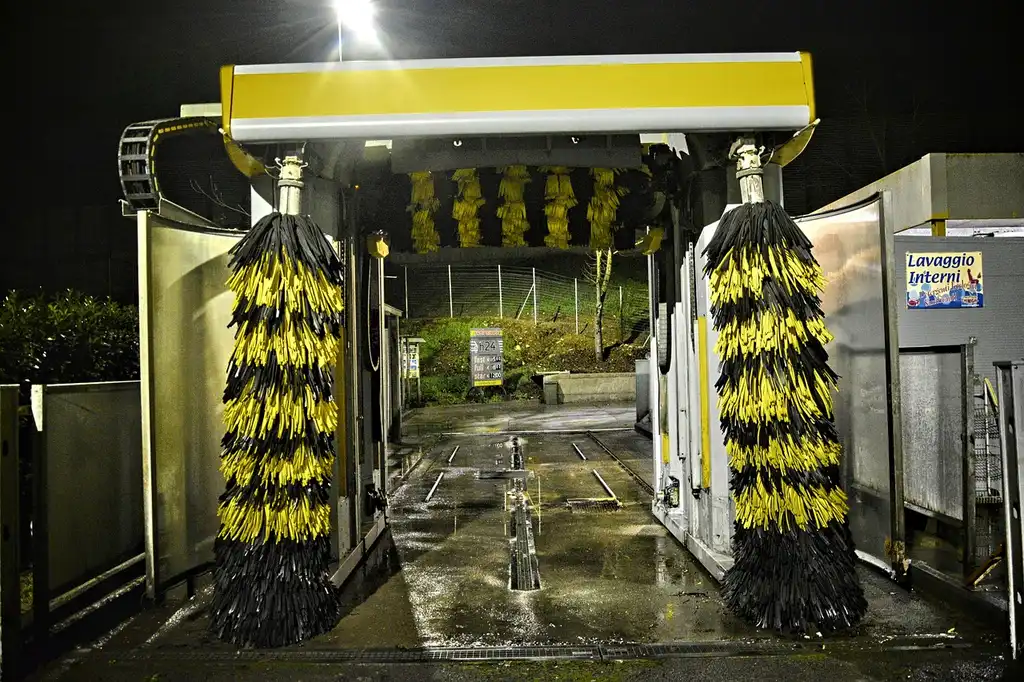
Do Touchless Car Washes Remove Road Salt?
Yes, touchless car washes remove most visible road salt, but they usually do not flush all the salt trapped in wheel wells, seams, and underbody panels. Leave that salt behind and corrosion keeps working after the roads dry. Here’s how to wash in winter, when to add an underbody rinse, and what to do when temperatures fall below freezing.
What a strong winter touch-free package includes
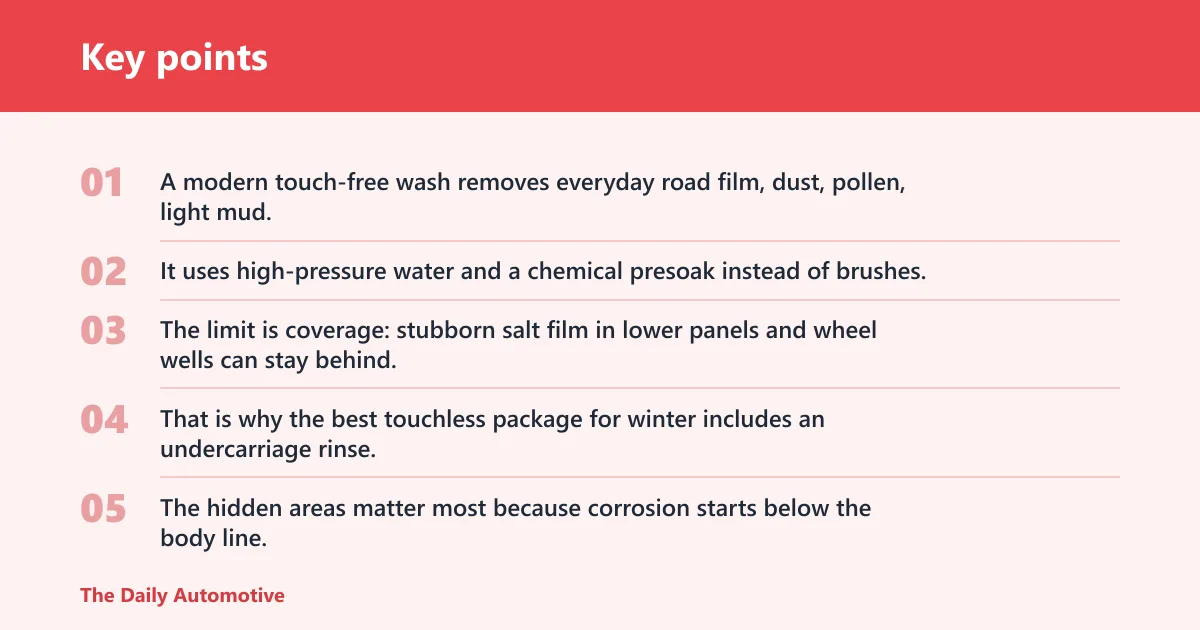


A modern touch-free wash removes everyday road film, dust, pollen, light mud, and road salt well. It uses high-pressure water and a chemical presoak instead of brushes, so it handles loose winter grime effectively. The limit is coverage: stubborn salt film in lower panels and wheel wells can stay behind.
That is why the best touchless package for winter includes an undercarriage rinse. The hidden areas matter most because corrosion starts below the body line, on frame rails, suspension arms, exhaust hangers, and subframes. A good winter wash gets the visible salt off and also reaches the places you cannot see.
What a good winter package includes
Touch-free performance depends heavily on presoak quality and water pressure. If a wash has weak chemistry, a short cycle, or low pressure, it can leave behind a thin salt film that still attracts moisture. A strong package should have a real presoak, enough rinse force to move grime, and an undercarriage spray.
Suppose your SUV comes home with a white crust on the rocker panels and packed salt behind the rear wheels after a slushy highway drive. A touchless wash can clear the exposed paint well, but if the package lacks underbody spray, the hidden salt can remain on the parts that corrode first.
Why road salt keeps causing damage
Winter salt starts with sodium chloride, calcium chloride, or magnesium chloride. Those compounds corrode paint, seams, wheel wells, brakes, suspension, and the undercarriage. They also attract moisture, which keeps surfaces damp long after the slush is gone and gives corrosion more time to work.
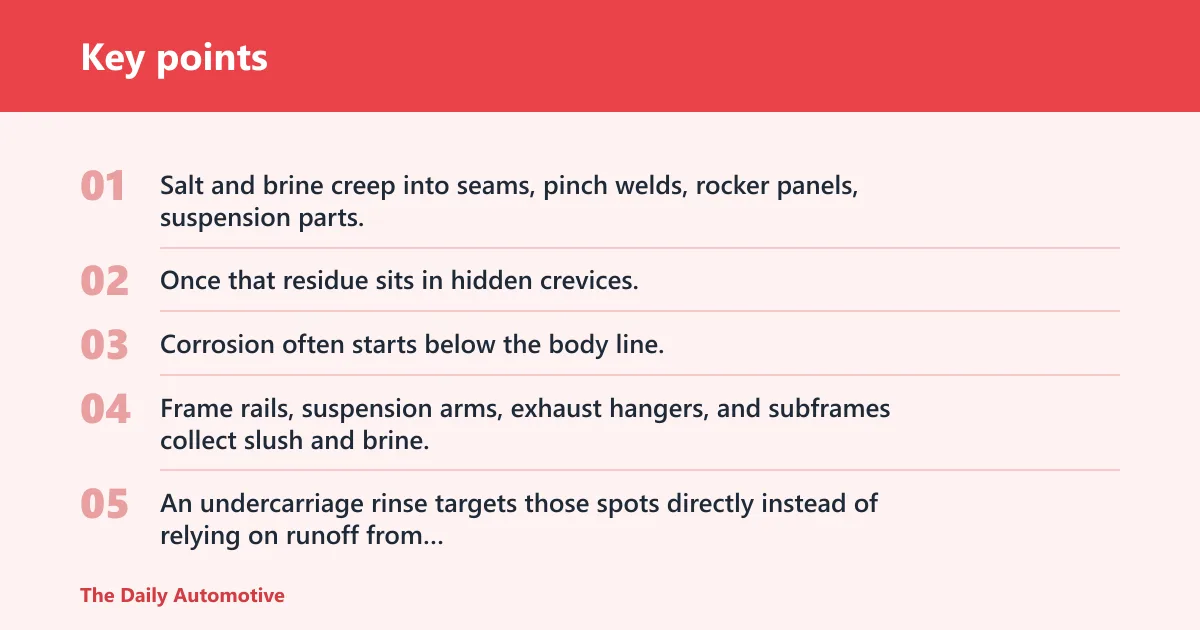
The problem is not only what you can see. Salt and brine creep into seams, pinch welds, rocker panels, suspension parts, and exhaust components. Once that residue sits in hidden crevices, a quick surface wash may leave the worst contamination in place.
Why the underbody matters most
Corrosion often starts below the body line, where spray often hits hardest and tends to dry more slowly. Frame rails, suspension arms, exhaust hangers, and subframes collect slush and brine, especially after highway driving. An undercarriage rinse targets those spots directly instead of relying on runoff from the painted panels above them.
Pick a wash with an undercarriage rinse, and use it during the warmest part of the day when possible. A winter guide recommends washing every 10-14 days, and the same guide says touchless automatic car washes with undercarriage spray are the safest winter option. If temperatures are below 25°F, skip washing at home and wait for better conditions if you can.
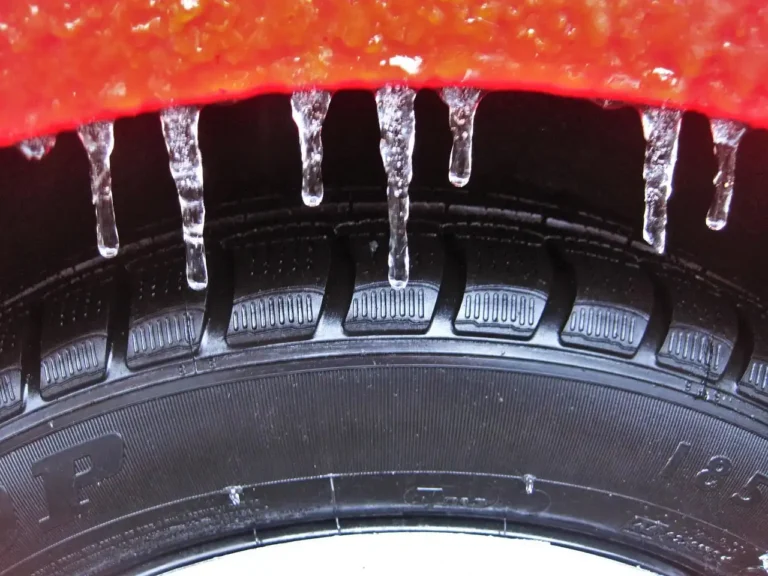
When temperatures are above 40°F, a careful home wash becomes more workable. In freezing weather, the main risk is water sitting in locks, seals, and creases, then refreezing. The wash itself is only part of the job; drying matters too.
Step-by-step winter wash routine
- Choose a touchless wash with a listed undercarriage spray.
- If the car is packed with slush, pre-rinse the wheel wells and lower panels first if you are using a self-serve bay.
- Run the wash with the best presoak and rinse cycle available.
- Dry door seals, lock areas, mirrors, and fuel-filler edges before driving away in freezing weather.
- After the car is clean and dry, apply wax, sealant, or a ceramic spray coating before winter if you have not already protected the finish.
Road salt wash decision table
This table turns winter exposure into a simple choice. The more salt spray and slush you have picked up, the more you need undercarriage coverage and a stronger follow-up step.
| Exposure level | Road conditions | Recommended method | Follow-up step |
|---|---|---|---|
| Light | Dry salt | Touchless with undercarriage | Dry seals; protect with wax, sealant, or ceramic spray coating |
| Moderate | Slush | Touchless with undercarriage | Dry seals; inspect wheel wells and lower doors for leftover film |
| Heavy | Brine | Self-serve pre-rinse, then touchless with undercarriage | Dry seals; repeat protection if the finish is no longer beading well |
| Heavy | Post-storm highway | Hand wash with pH-balanced car shampoo if weather allows | Dry seals; apply wax, sealant, or ceramic spray coating on a clean, dry car |
When touchless is enough and when it is not
Touchless is enough when the car has light to moderate salt film and the wash package includes strong chemistry plus undercarriage spray. It is not enough when salt is caked in lower panels, wheel wells, or seams, or when the wash has weak presoak and weak water pressure. Then you need a rinse-first approach or a full hand wash.
Picture a compact sedan that has only a dusting of dry salt after a local commute. A touchless wash can handle that well. Now picture the same car after about a 60-mile highway drive through slush and brine. In that case, the lower body and undercarriage need more attention than the top surfaces.
How to spot a weak winter wash package
A poor package is easy to miss if you only look at the sign. Watch for weak presoak, short cycle time, no undercarriage rinse, or no way to aim water at the lower panels and wheel wells. If the package names only a basic exterior wash, it may clean the paint while leaving salt where it matters most.
Another warning sign is a wash that treats winter chemistry as an add-on instead of a core feature. A good winter system should be built to move brine out of hidden areas, not only to make the body panels look clean.
How to wash road salt off a car safely
The safest sequence is pre-rinse, wash, dry, then protect. Use a pressure washer or hose nozzle to knock off loose snow, slush, and grit first. That pre-rinse should focus on wheel wells, the lower doors, rear bumper corners, and the undercarriage, because the goal is to flush salt out of seams and rinse away abrasive grit before touching the paint.
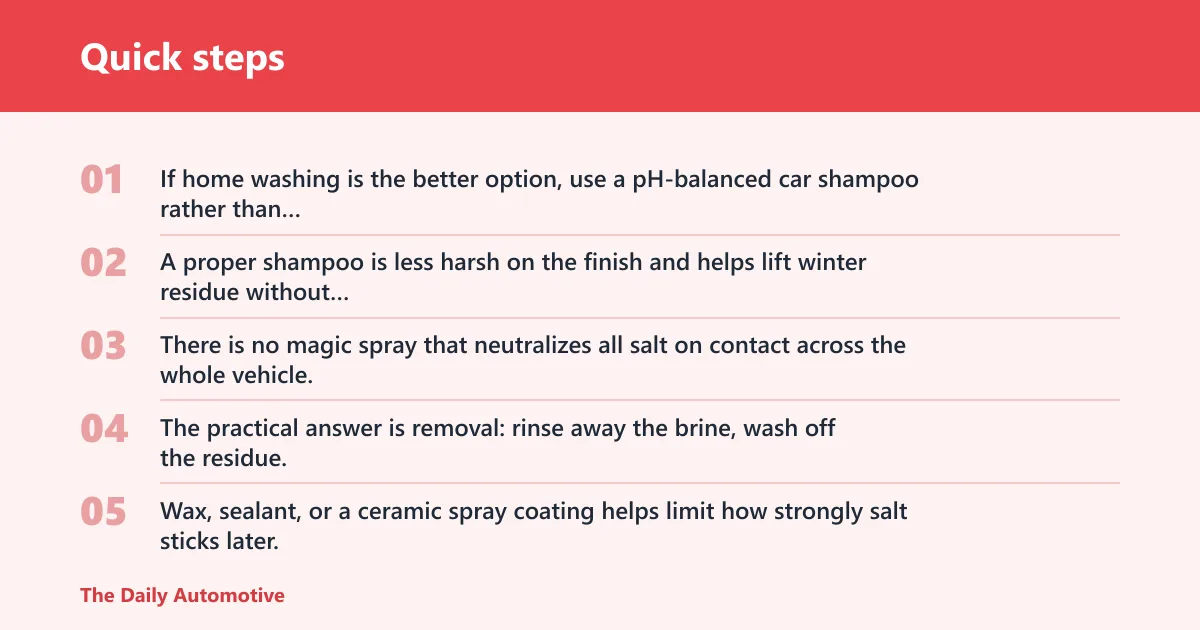
If home washing is the better option, use a pH-balanced car shampoo rather than household detergents. A proper shampoo is less harsh on the finish and helps lift winter residue without stripping protection as aggressively as stronger cleaners can.
How to neutralize road salt on car
There is no magic spray that neutralizes all salt on contact across the whole vehicle. The practical answer is removal: rinse away the brine, wash off the residue, and keep the hidden areas from staying wet and salty. Wax, sealant, or a ceramic spray coating helps limit how strongly salt sticks later, but it does not replace washing.
A common first-timer mistake is to rinse only the hood and doors, then call the job done. The salt that stays in wheel wells and underbody crevices is the part that keeps working after the surface looks clean.
Drying and protection after washing
After washing in freezing weather, dry door seals and lock areas carefully so water does not sit there and refreeze. Pay attention to the fuel door, mirror bases, and hatch or trunk edges too. Once the car is clean and dry, a layer of wax, sealant, or a ceramic spray coating on a clean, dry car helps reduce salt adhesion for the next storm cycle.
Frequently asked questions
Do touchless car washes remove road salt?
Yes, they remove most visible road salt and winter film well, especially when the presoak is strong and the water pressure is adequate. The limitation is hidden contamination. Wheel wells, seams, and underbody parts often need more than a basic exterior pass to get fully cleared.
How do you remove road salt from a car safely?
Use a pre-rinse to remove loose snow and grit, then wash with either a touchless system that includes undercarriage spray or a hand wash with pH-balanced car shampoo. Finish by drying door seals and lock areas, especially when temperatures are near freezing.
Does a touchless wash clean the undercarriage?
Some do, and that is the version worth choosing in winter. An undercarriage rinse helps remove salt from frame rails, suspension arms, exhaust hangers, and subframes. Without that spray, hidden salt can remain after the visible bodywork looks clean.
How often should you wash a car in winter?
Washing every 10-14 days, and sooner after heavy salt exposure or a post-storm highway drive. If roads are repeatedly treated with brine, waiting too long lets salt dry and cling in seams and lower panels.
Are touchless car washes good for winter salt?
Yes, they are a good winter option when temperatures are low, especially if the wash has undercarriage spray. They are strongest against loose salt film and winter grime, but they are still only part of the job when brine has packed into hidden crevices.
Touchless car wash vs regular wash for salt removal
A touchless wash is usually faster and safer for paint than a brush system, and it can work very well on winter film. A regular hand wash with pH-balanced shampoo gives you more control over lower panels, wheel wells, and stubborn residue when weather and time allow.
Products related to this article
Sponsored / affiliate links. As an Amazon Associate I earn from qualifying purchases. I may earn additional commission from eligible campaigns.
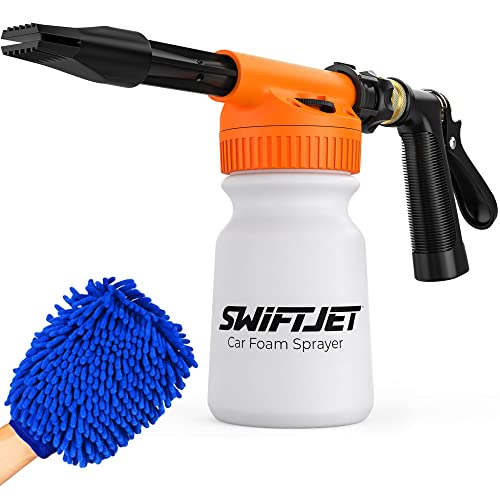 SwiftJet Car Wash Foam Gun + Microfiber Wash Mitt - Foam Cannon Works with Any Soap - Garden Hose Car Foam Sprayer - Car Wash Kit - Car Accessories Foam Blaster (Orange Foam Gun with Mitt)
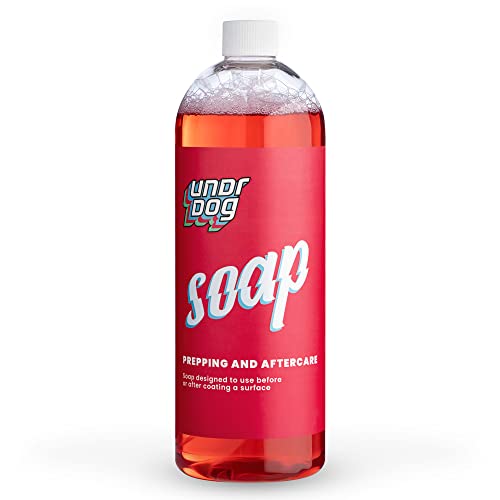 Undrdog Car Wash Soap, Foam Cannon Soap For Pressure Washer, Cleaner Detailing Supplies, Foam Gun Soap For Cars, Motorcycles, Trucks, Boats, 8, 16, 32oz (32oz)