How To Lift A Car For An Oil Change Safely At Home
Working on your car at home can feel great. You save money. You learn new skills.
But lifting a car feels scary. Many people worry about safety. They think it’s too hard or dangerous.
This guide is for you. We will walk through lifting your car the safe way. You can do this.
Let’s make it easy.
Lifting a car for an oil change at home is achievable with the right tools and safety knowledge. This guide details using jack stands and ramps, emphasizing crucial safety steps to prevent accidents and ensure a secure workspace for DIY maintenance.
What It Means to Lift a Car Safely
Lifting a car means getting the vehicle off the ground. You need space to work under it. This is often for tasks like oil changes.
It can also be for tire rotations. Or other repairs. Safely lifting means the car stays up.
It doesn’t fall. It stays put while you work. This protects you.
It also protects your car.
Why is this so important? Cars are heavy. Very heavy.
Even small cars weigh thousands of pounds. That weight needs support. It needs reliable support.
If it fails, bad things happen. We want to avoid any accidents. Your health is the top priority.
Working smart keeps you safe.
Many folks get this wrong. They use the wrong things to hold the car up. Or they don’t use them right.
This is where danger creeps in. We must learn the right way. This guide will show you exactly that.
We focus on safety first. Always.
My First Time Lifting a Car
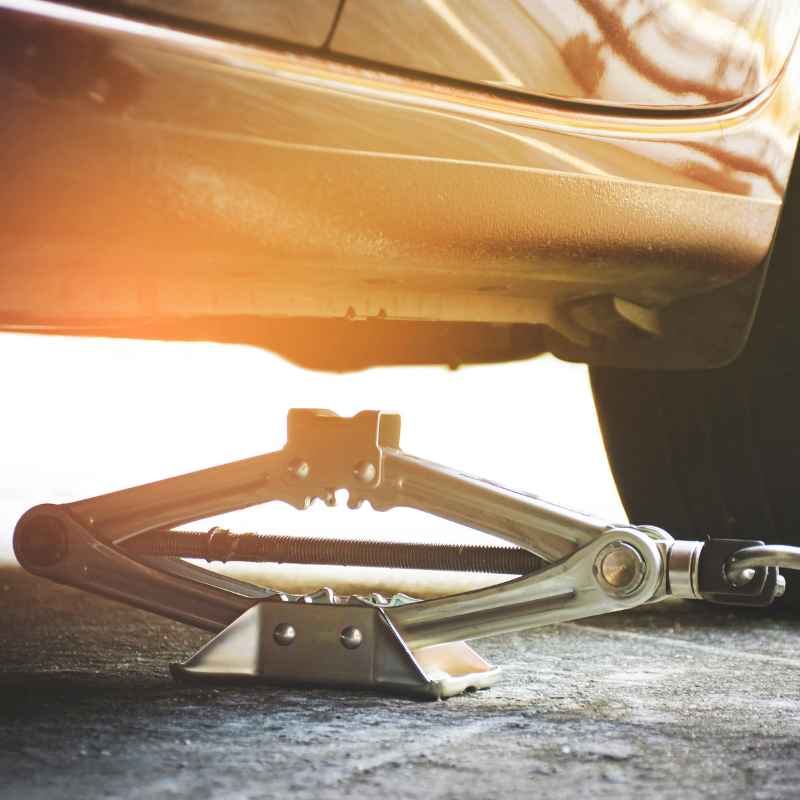
I remember my first attempt to lift my old sedan. It was for an oil change. I had watched videos.
I read forums. But my hands still felt clammy. I had bought a cheap car jack from the auto store.
It looked okay. I put the jack under the car’s frame. Then I started pumping.
The car rose. But it felt… wobbly. I put one hand on the tire.
It didn’t budge. But my gut was screaming. This felt wrong.
Very wrong. I quickly lowered the car. I felt defeated.
And a little scared. Was I just not cut out for this? That feeling of doubt is real.
But it doesn’t have to be the end.
The problem wasn’t me. It was my tools and my knowledge. I didn’t have proper jack stands.
I didn’t know where to place the jack. I was relying on just the jack. That’s a huge mistake.
Jacks are for lifting. They are not for holding. That’s what jack stands are for.
Once I learned that, things changed. My next attempt was much better. I got proper equipment.
I followed strict steps. The car was solid. I felt confident.
It opened up a whole new world of DIY car care for me. You can get there too.
Understanding Your Lifting Options
There are a few main ways to lift a car at home. Each has its good points. Each has its bad points.
Knowing them helps you choose. It helps you do the job right.
The most common method uses a car jack and jack stands. This is often called the “two-post lift” method for DIY. Or a “floor jack and stands.” You use a jack to raise the car.
Then you place jack stands under strong points. The car rests on the stands. The jack can be removed.
Or left loosely in place. It’s a very common way to do it. It works for many cars.
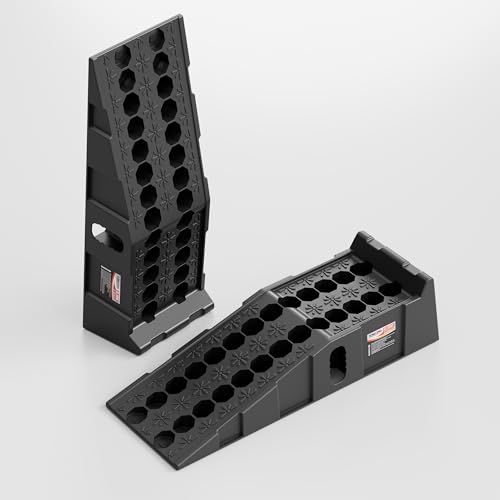
Another popular way is using car ramps. These are angled pieces. You drive your car up them. For an oil change specifically, see our guide to metal car ramps for oil changes, including the weight-rating math and drain-pan clearance most guides skip.
They lift the front or rear of your car. This gives you space underneath. Ramps are often simpler. A third option — wheel cribs — cradle the tire itself for a similar lift without any incline to drive up.
They might feel safer to some. You don’t have to pump a jack. You just drive up.
But you need enough space to position the car correctly. And they usually only lift one end of the car.
Some people use wheel chocks. These are wedges. You put them under the wheels.
They stop the car from rolling. You need these no matter how you lift. They are a basic safety step.
They prevent the car from moving at all. Always use them.
A less common but very safe option is a hydraulic lift. These are more like professional lifts. They can be portable.
Or they can be permanently installed. They lift the car very high. They are more expensive.
They take up more space. For most home users, they are overkill. But they are the safest option if you can get one.
Jack vs. Ramps: A Quick Look
Pros: Lifts entire car, precise height control, versatile.
Cons: Requires more effort, multiple steps, can feel less stable if not done right.
Pros: Simple to use, drive-on access, generally stable.
Cons: Lifts only one end, might not fit low cars, requires clear approach space.
Why Safety is Non-Negotiable
Let’s talk about why safety matters so much. It’s not just a suggestion. It’s a must.
Cars are incredibly heavy. We talked about that. A falling car can cause severe injury.
It can crush limbs. It can be fatal. It’s not worth the risk.
Imagine this. You are under the car. You are focused on the oil drain plug.
Suddenly, you hear a creak. Or a pop. The car shifts.
It starts to fall. There is no time to react. No time to escape.
This is why we don’t cut corners. We don’t use makeshift supports. We don’t trust just one thing to hold the weight.
Safety also saves you money. An accident can destroy your car. It can destroy your tools.
It can lead to medical bills. Following safety steps is the cheapest insurance. It keeps you and your property safe.
It also builds trust. When you know you can lift a car safely, you feel more confident. You can tackle more jobs.
You feel more capable. This confidence comes from knowing you did it the right way. The safe way.
The Weight of Your Car (Approximate)
Compact Cars: 2,500 – 3,000 lbs
Sedans: 3,000 – 4,000 lbs
SUVs: 4,000 – 6,000 lbs
Trucks: 4,500 – 7,000+ lbs
These are general numbers. Always check your car’s manual for its exact weight.
Essential Tools for Lifting Safely
To lift a car safely, you need the right tools. Don’t try to make do with less. Get good quality equipment.
It makes a huge difference. Here’s what you’ll need.
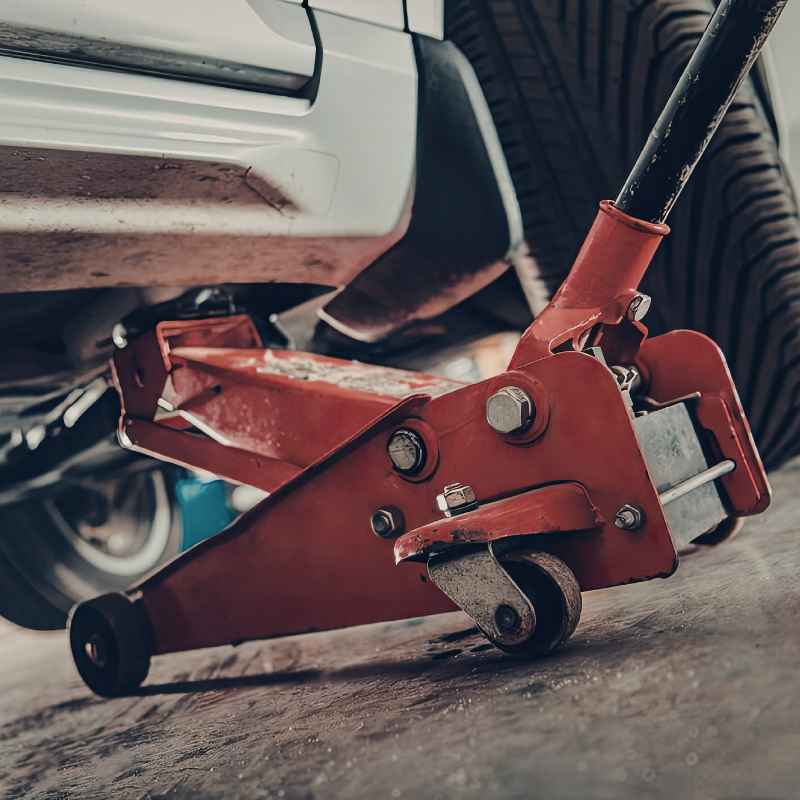
First, a good floor jack. A scissor jack that comes with your car is okay for emergencies. But for regular work, a floor jack is better.
They are stable. They lift higher. They have a wider base.
Look for one with a good weight rating. Make sure it can lift more than your car weighs. A 2-ton or 3-ton jack is usually good for most cars and smaller SUVs.
Next, and most importantly, are jack stands. You absolutely need these. Never, ever work under a car supported only by a jack.
Jacks can fail. They can slip. Jack stands are designed to hold the weight.
They have a solid base. They have a locking mechanism. Get a set of at least two.
Four is even better. Make sure their weight rating is high enough. Again, match it to your car’s weight.
Look for stands that are adjustable. This lets you set the height.
If you use ramps, you need good quality car ramps. They should be sturdy. They should have a good surface grip.
Make sure they are designed for your car’s weight and height. Low-profile cars might need special low-profile ramps. Otherwise, the ramp might be too high.
Don’t forget wheel chocks. These are wedge-shaped blocks. You place them under the wheels.
They stop the car from rolling. You can buy rubber or plastic ones. Or even make them from strong wood.
You need at least two. More is better. They are cheap.
They are vital.
You’ll also need a level surface. This is crucial. Don’t lift your car on a slope.
Or on soft ground like dirt or gravel. Paved, level concrete is best. This gives the jack and stands a solid base.
It prevents the car from rolling or shifting.
Finally, a flashlight or work light. You need to see what you are doing. It can be dark under a car.
Good lighting makes the job safer and easier.
How to Use Jack Stands Safely
Using jack stands correctly is key. This is where many people make mistakes. Follow these steps closely.
First, find a flat, hard surface. Concrete is ideal. Ensure there’s enough room around the car.
Park the car. Engage the parking brake. Put the car in park (for automatics) or in gear (for manuals).
Next, place wheel chocks. Put them on the wheel(s) opposite the end you plan to lift. For example, if you lift the front, chock the rear wheels.
This adds another layer of security. It stops the car from rolling backward or forward.
Now, find the correct jacking points on your car. These are strong points on the car’s frame. They are designed to support the weight.
Your car’s owner’s manual will show you these. They are NOT usually the oil pan or suspension parts. Using the wrong point can damage your car or cause it to slip.
Position your floor jack under the designated jacking point. Make sure it’s centered. Slowly start jacking up the car.
Watch the jack. Watch the car. As the car lifts, get your jack stands ready.
Set them to the height you need. But don’t extend them fully yet. Leave them a bit lower.
Once the car is high enough, slowly lower the jack. Position the jack stands under the vehicle’s frame. Use the designated support points for the jack stands.
These are often near the jacking points. They are strong parts of the frame or pinch welds. Make sure the jack stand heads are firmly seated under these strong points.
Slowly lower the jack completely. The car’s weight should now be fully on the jack stands. Remove the jack from under the car.
Or, leave it in place but with no weight on it. As a backup. Gently try to rock the car side to side.
It should feel solid. It should not wobble.
Double-check. Are the stands on firm ground? Are they at the same height?
Are they positioned correctly on the frame? Never guess. If anything feels off, jack the car back up slightly.
Adjust the stands. Lower it again. Safety first.
Jack Stand Placement Do’s and Don’ts
- DO use the factory-specified jacking and support points.
- DO place stands on a hard, level surface.
- DO ensure the stand’s saddle is securely in contact with the frame.
- DO set the height accurately before lowering the car onto them.
- DON’T place stands on soft ground like dirt or grass.
- DON’T place them on suspension parts or axles alone.
- DON’T use blocks of wood or bricks as substitutes for jack stands.
- DON’T ever work under a car supported only by a jack.
Using Car Ramps: A Simpler Approach
Car ramps offer a different way to get your car in the air. They can be easier for some people. Especially if you have a standard sedan or coupe.
First, like with jack stands, you need a level, hard surface. This is non-negotiable. Gravel or dirt won’t work.
The ramps can slide. The car could roll off.
Place the ramps in front of the wheels you will drive onto them. Make sure they are spaced correctly. They should be about the width of your car’s track.
Or slightly less. Check the ramp manufacturer’s instructions. They often suggest a spacing.
Put wheel chocks behind the wheels that will NOT go on the ramps. If you are driving the front wheels up, chock the rear wheels. This stops the car from rolling backward.
This is very important.
Now, slowly and carefully drive your car onto the ramps. Do this at a slow crawl. You want to guide the car onto the ramps smoothly.
Don’t rush. Watch the ramps. Watch the tires.
Make sure the tires are centered on the ramps.
Stop the car when the front tires are at the top of the ramps. Or when the car is firmly resting on the ramps. Engage the parking brake.
Put the car in park (or gear). Turn off the engine.
Now, you need to secure the car. Some people use additional jack stands after driving onto ramps. They place them under the car’s frame for extra safety.
This is a good idea. Even though the ramps are holding the car, extra support is wise. Especially for longer jobs.
Make sure the car feels stable. Check that the ramps are not shifting. Are the tires fully on the ramps?
This method is generally safer than just a jack. But it doesn’t lift the whole car. You can only work on the front or rear of the vehicle.
Ramp Considerations for Different Cars
Most standard ramps work well. Ensure enough clearance.
Need low-profile ramps. Regular ramps can scrape the bumper or undercarriage.
Need wider and sturdier ramps. Check weight limits carefully.
Can be tricky. Drive very slowly and carefully. Consider ramps with a gentler incline.
Where to Place Your Jack and Stands (The Critical Zones)
This is perhaps the most vital piece of information. Where you put the jack and stands matters more than anything. Your car’s manual is your best friend here.
But here are common spots.
Look for strong metal points on your car’s frame. These are often reinforced areas. They are built to take weight.
On many cars, you’ll find specific notches or reinforced tabs on the rocker panels. These are usually just behind the front wheels and just in front of the rear wheels.
The frame rails themselves are also strong points. These are the thick metal beams running under the car. However, on some cars, these can rust or be damaged.
Always inspect the area you plan to use.
For the Jack:
- Use the jacking points indicated in your owner’s manual.
- These are usually reinforced areas on the frame or pinch welds (the folded metal edges on the side of the car’s undercarriage).
- Make sure the jack head fits snugly and securely on the jacking point.
For the Jack Stands:
- Find the support points. These are almost always near the jacking points.
- They are strong parts of the frame or chassis.
- The saddle of the jack stand should rest squarely on a strong, flat part of the frame.
- Avoid placing stands on the oil pan, suspension components, or body panels. These are not designed to hold the car’s weight.
For Ramps:
- The tires sit on the ramps.
- Ensure the ramps are designed for your tire size and car weight.
- Always chock the wheels that are NOT on the ramps.
If you are unsure about your car’s jacking points, consult a mechanic or a trusted auto repair shop. It’s better to ask than to guess wrong.
Checking Your Car’s Manual
Where to Find It: Look in the glove compartment. Or search online for your car’s make, model, and year, plus “owner’s manual PDF.”
What to Look For: Sections on “Jacking,” “Lifting,” or “Maintenance.”
Why It’s Key: Your manual shows the exact, safe locations for lifting your specific car. This prevents damage and ensures stability.
When Lifting, Always Do This
Let’s boil this down into a simple checklist. These are the things you MUST do every single time.
- Park on a level, hard surface. No exceptions.
- Engage the parking brake firmly.
- Put the car in park or gear.
- Use wheel chocks on the wheels that will NOT be lifted.
- Use a floor jack with a good weight rating.
- Use jack stands with a good weight rating.
- Always use jack stands to support the car. Never rely only on the jack.
- Know your car’s specific jacking and support points. Use your owner’s manual.
- Ensure the jack and stands are stable and secure before working.
- Gently test the car’s stability by rocking it slightly.
- Keep yourself and others clear of the car when lifting and lowering.
- Have a fire extinguisher nearby. Just in case.
What NOT to Do When Lifting
Just as important as what to do is what to avoid. These are common mistakes that lead to danger.
- NEVER work under a car supported only by a jack. This is the biggest rule.
- NEVER lift on a slope or soft ground.
- NEVER use makeshift supports like cinder blocks or old tires.
- NEVER place jack stands on the oil pan, transmission, or suspension parts.
- NEVER use a jack that is not rated for your car’s weight.
- NEVER rush the process. Take your time.
- NEVER assume a jacking point is okay without checking your manual or inspecting it.
- NEVER leave tools or equipment under the car that could interfere with lowering.
- NEVER have anyone else in the car while it’s lifted.
- NEVER place body parts directly in the path of potential falling car parts.
Common Scenarios & Safety Checks
Check: Chock rear wheels. Use frame rails near front wheels for stands. Jack point is usually on front crossmember or reinforced pinch weld.
Check: Chock front wheels. Use reinforced areas on rear axle or frame rails for stands. Jack point is usually on rear differential housing or frame.
Check: Chock opposite wheels. Use reinforced frame points. Ensure the stand is stable.
This is less common for full tire changes but possible.
Check: Ensure ramps are secure and car is centered. Always chock rear wheels. Consider adding jack stands for extra safety.
What This Means For Your Oil Change
So, you want to change your oil. You know you need to lift the car. What does all this safety talk mean for that specific job?
For an oil change, you typically need to lift the front of the car. This gives you access to the oil drain plug and the oil filter. You will need enough clearance to get under there comfortably.
Using car ramps is often the easiest method for just an oil change. Drive the front wheels onto the ramps. Chock the rear wheels.
Then you can usually reach everything you need from there.
If you use jack stands, you will lift the front of the car. Place the jack stands under the designated front frame support points. Make sure they are secure.
Then you can lower the jack, leaving the car resting on the stands. This gives you more room if needed.
Regardless of the method, always double-check stability. Make sure the car is not rocking. Ensure you have good lighting.
Before you even start draining the oil, take a moment. Push on the car gently. Does it feel solid?
If not, adjust your setup. It’s better to be safe than sorry.
Once you are done, you reverse the process. Slowly jack the car up a tiny bit if needed to take weight off the stands. Remove the stands.
Then slowly lower the car completely. Remove the jack. Then remove your wheel chocks.
When It’s Normal, When to Worry
Most of the time, lifting a car correctly feels solid. The car stays put. It doesn’t move.
This is normal. This is what you want.
When should you worry? Here are some red flags:
- Any creaking or popping sounds while the car is lifted. This could mean a stand is shifting or the jack is failing.
- The car feels wobbly or unstable. If you can easily rock the car or it shifts when you touch it.
- A jack stand appears to be sinking into the ground. This means the ground is too soft.
- A jack or stand is leaning at an angle. It should be perfectly vertical.
- The car slides off a jack stand or ramp. This is a major failure. Stop immediately.
- You feel unsure about the setup. If your gut tells you something is wrong, it probably is.
If you see or feel any of these things, stop what you are doing. Slowly and carefully jack the car back up. Remove the stands.
Lower the car. Then re-evaluate your setup. Find a better surface, check your equipment, or reposition the stands.
Your safety is paramount. Don’t ever push through doubt. If it feels unsafe, it probably is.
Quick Tips for a Smooth Lift
Here are some final tips to make the process smoother and safer for your oil change or other work.
Clean Your Tools: Make sure your jack and stands are clean and free of dirt or debris. This ensures they operate smoothly.
Inspect Your Equipment: Before each use, check your jack and stands for cracks, bends, or worn parts. If anything looks damaged, don’t use it.
Know Your Weight Limits: Always ensure your jack and stands have a higher weight capacity than your vehicle. It’s better to have too much capacity than not enough.
Use a Jack Pad: For some cars, especially those with painted frames or delicate underbodies, using a rubber or composite jack pad on your floor jack can prevent damage.
Work in Stages: If you need to lift the car very high, do it in stages. Lift a bit, place stands, then lift more if needed. This allows for adjustments.
Have a Helper (If Possible): An extra pair of eyes can be helpful. Someone to spot for you, hand you tools, or react if something goes wrong.
Lower Slowly: When lowering the car, do it slowly and controlled. Don’t let the jack freefall.
Frequent Questions About Lifting a Car
Can I use the jack that came with my car to lift it for an oil change?
The jack that comes with your car is typically a scissor jack. It’s meant for roadside emergencies. It is not designed for regular maintenance.
It can be unstable. It can be difficult to get the right height. For safety and ease, use a floor jack and jack stands for oil changes.
How high do I need to lift my car for an oil change?
You need enough clearance to comfortably slide under the car. You need enough space to remove the oil drain plug and filter. About 18-24 inches of clearance is usually good.
This will depend on your car and your own height. Ensure the car is stable on its supports at that height.
Are car ramps safer than jack stands?
Both methods can be safe if used correctly. Car ramps are often simpler to use for basic tasks like oil changes. They offer a stable platform.
Jack stands provide more versatility and lift the entire car. The key is to use proper equipment, follow safety steps, and know your car’s support points for either method.
What are the pinch welds on a car?
Pinch welds are the folded metal edges that run along the bottom of your car’s doors and sides. They are usually found on the rocker panels. Many cars have designated jacking and support points built into or near these pinch welds.
Always consult your owner’s manual for the exact locations.
Can I lift my car on grass or dirt?
No, you should never lift a car on grass or dirt. These surfaces are too soft. They can shift or sink under the weight of the car, the jack, or the jack stands.
This can lead to instability and collapse. Always use a hard, level surface like concrete.
What happens if I don’t use jack stands?
If you don’t use jack stands and only rely on the jack, your car is at serious risk of falling. Jacks are designed for lifting, not for sustained support. A jack can fail, leak fluid, or slip.
If the car falls while you are under it, the injuries can be severe or fatal. Jack stands are a critical safety device.
Conclusion
Lifting your car for an oil change doesn’t have to be a scary task. By using the right tools like a floor jack and jack stands, or reliable car ramps, and by following strict safety procedures, you can do it confidently. Always remember to park on a level surface, use wheel chocks, and know your car’s safe lifting points.
Your safety is the most important thing. Take your time, stay aware, and you’ll be able to handle this task safely and effectively. Happy wrenching!
Products related to this article
Sponsored / affiliate links. As an Amazon Associate I earn from qualifying purchases. I may earn additional commission from eligible campaigns.