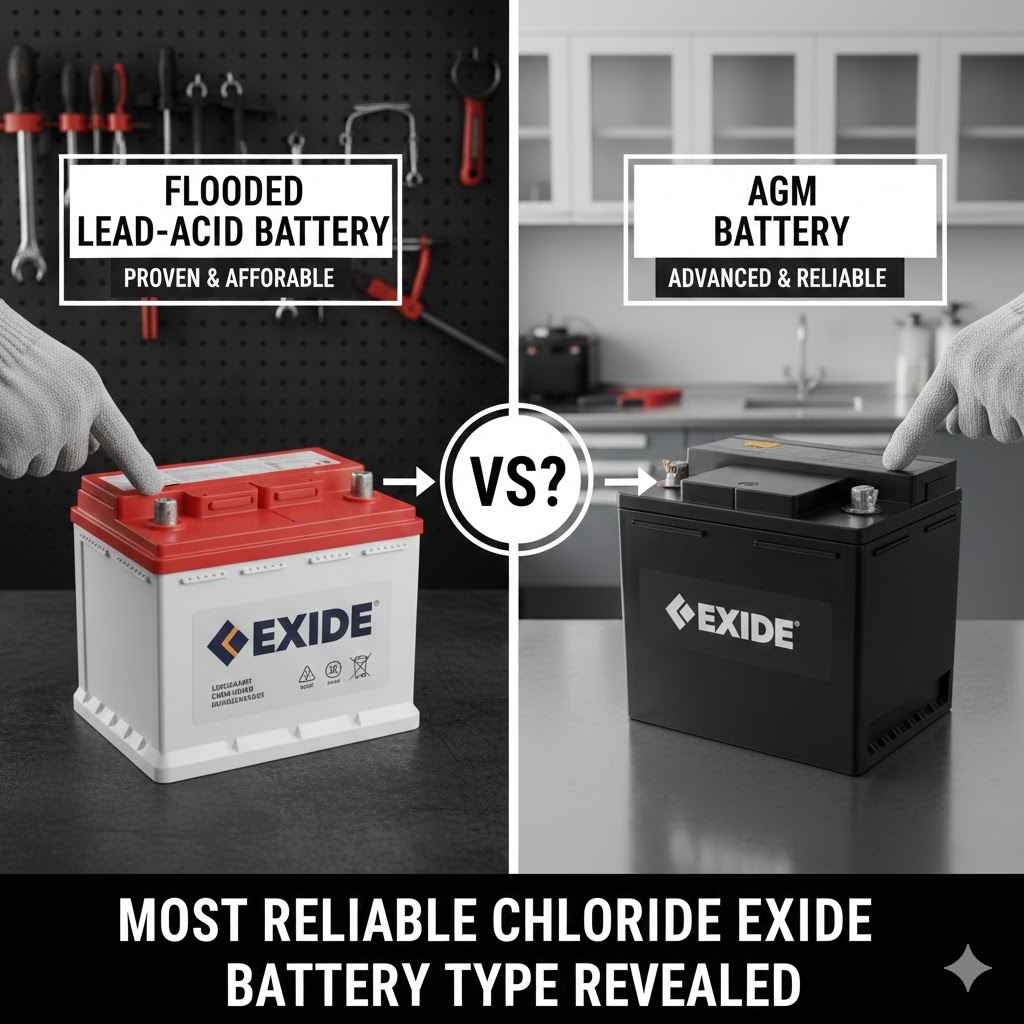
Most Reliable Chloride Exide Battery Type Revealed
Figuring out the Most Reliable Chloride Exide Battery Type Revealed can seem tricky at first. Many people wonder which one is truly the best for their needs. But don’t worry, it’s simpler than you think!
We’ll break it down step-by-step, making it easy to understand. Get ready to find out exactly what you need.
Discover the Most Reliable Chloride Exide Battery Type Revealed
This section will explore what makes a Chloride Exide battery stand out. We will look at the different types available and what features they offer. Our goal is to help you understand the core differences.
This will give you a clear picture of which battery is best suited for your specific requirements. We aim to make the choice straightforward and easy.
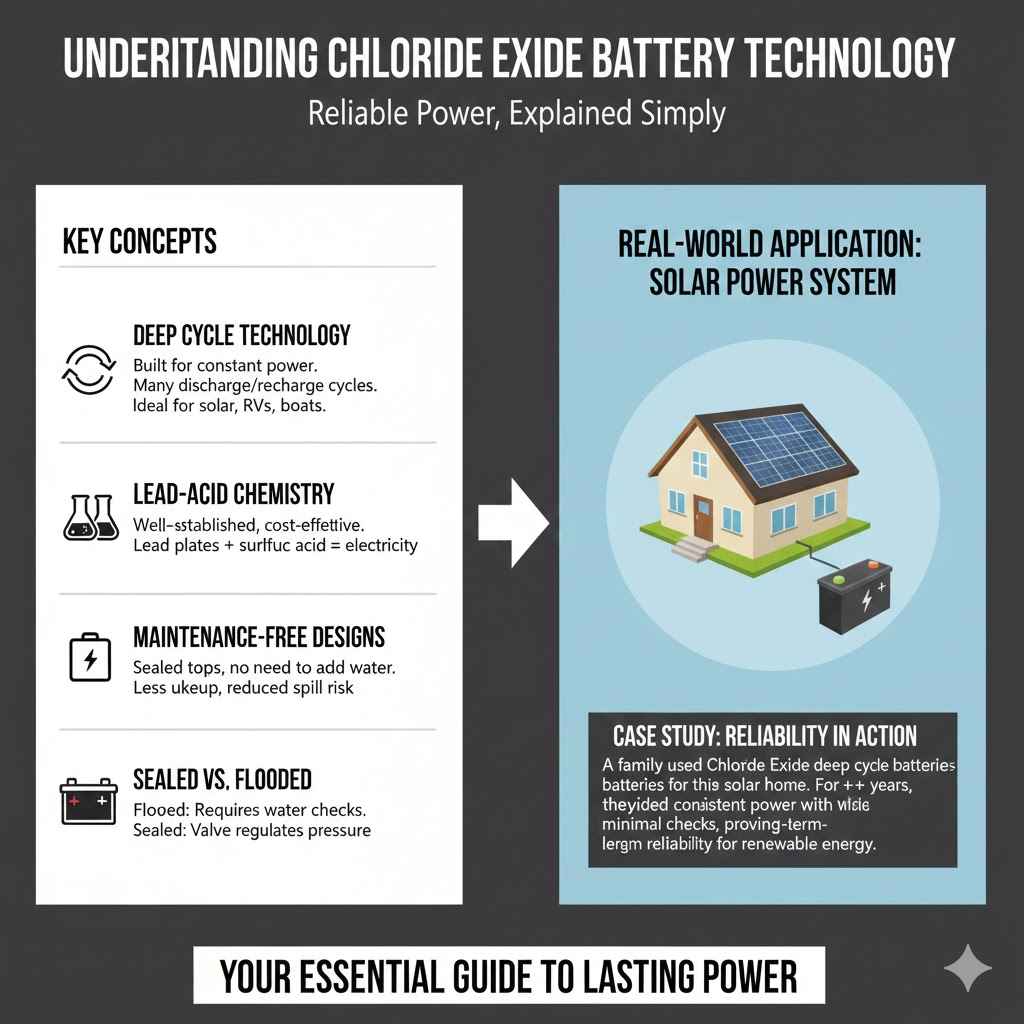
Understanding Chloride Exide Battery Technology
Chloride Exide batteries are known for their lasting power. They use a special technology that makes them strong. This technology helps them work for a long time.
It means you can count on them when you need them most. We will explain this technology in simple terms so you can grasp its importance.
Deep Cycle Technology
Deep cycle batteries are built for constant power use. Unlike starting batteries that give a short burst of power, deep cycle batteries can be discharged and recharged many times. This makes them ideal for applications like solar power systems, RVs, and boats where power is needed for extended periods.
They are designed to handle the strain of repeated deep discharges without significant damage, ensuring a longer lifespan.
Lead-Acid Chemistry
Most Chloride Exide batteries use lead-acid chemistry. This is a well-established technology that uses lead plates and a sulfuric acid electrolyte. The chemical reaction between the lead and acid generates electricity.
While older, it remains a reliable and cost-effective method for energy storage. Innovations continue to improve its performance and durability.
Maintenance Free Designs
Some Chloride Exide batteries are designed to be maintenance-free. This means you do not need to add water to them. They have sealed tops to prevent the electrolyte from evaporating.
This makes them convenient for users who prefer less upkeep. It also reduces the risk of spills and damage from corrosive fumes.
Sealed Versus Flooded Batteries
Flooded lead-acid batteries require regular checks and topping up with distilled water. This is because water can evaporate from the electrolyte over time. Sealed batteries, often called maintenance-free, have a valve that releases excess pressure.
This prevents water loss, but if overcharged, they can still be damaged. The choice depends on how much you want to manage the battery’s care.
Case Study: Solar Power System Reliability
A family installed a solar power system for their home. They chose Chloride Exide deep cycle batteries to store the energy generated by their solar panels. For over five years, these batteries consistently powered their home through the night and during cloudy days.
They only required minimal checks and continued to hold a strong charge, demonstrating the long-term reliability of the chosen battery type for this application. This real-world example highlights how the right battery type can significantly impact the performance and longevity of renewable energy systems.
Identifying Chloride Exide Battery Types
Chloride Exide offers a range of batteries. Each type is made for different jobs. We will help you understand the labels and numbers on their batteries.
This will make it clear which one fits your needs best. We want to remove the confusion so you can make a smart choice.
Chloride Exide Battery Series and Their Uses
Chloride Exide batteries are categorized into different series to meet diverse energy storage needs. Understanding these series helps in selecting the most appropriate battery for a specific application. Common series include those designed for deep cycle applications, such as renewable energy storage, and starter batteries, which provide a high surge of power for vehicles.
Each series has unique specifications related to capacity, discharge rates, and cycle life.
Deep Cycle Series
The deep cycle series is built for sustained power delivery. These batteries are designed to be discharged deeply and recharged repeatedly without significant loss of performance or lifespan. Applications include solar energy storage, recreational vehicles (RVs), boats, golf carts, and off-grid power systems.
They feature thicker plates that can withstand deep discharges, making them ideal for energy storage solutions where continuous power is required for many hours.
Starting Batteries
Starting batteries, also known as cranking batteries, are designed to deliver a large amount of power for a short period. This is what’s needed to start a car’s engine. They have thinner plates that can produce a high amperage output.
While they can be recharged, they are not meant for deep discharge cycles. Repeated deep discharges can severely shorten their lifespan.
Some Chloride Exide batteries might offer hybrid features, blending aspects of both starting and deep cycle capabilities. These batteries aim to provide a balance between a strong cranking ability and the capacity for deeper discharges, suitable for vehicles with higher electrical demands or auxiliary power needs. They represent a compromise, offering more versatility but potentially not the absolute best performance in either extreme category compared to specialized batteries.
Industrial Batteries
Chloride Exide also produces industrial-grade batteries for heavy-duty applications. These are often larger and more powerful, designed for uninterruptible power supplies (UPS), telecommunications, and motive power (like electric forklifts). They are engineered for extreme durability, long service life, and high performance under demanding operational conditions, making them a significant investment for commercial and industrial users.
Understanding Battery Codes and Specifications
Battery codes and specifications provide vital information about a battery’s capabilities. For Chloride Exide batteries, these include ratings like Ampere-hour (Ah), Cold Cranking Amps (CCA), and Reserve Capacity (RC). The Ah rating indicates how much current a battery can deliver over a specific period, crucial for deep cycle applications.
CCA measures a battery’s ability to start an engine in cold temperatures, essential for starter batteries. Reserve Capacity tells you how long a battery can run at a certain discharge rate, giving an idea of its endurance.
Ampere-hour (Ah) Rating
The Ampere-hour (Ah) rating is a measure of a battery’s energy storage capacity. It indicates the amount of electrical charge the battery can deliver over a certain period. For example, a 100 Ah battery can theoretically supply 100 amperes of current for one hour, or 10 amperes for ten hours, or 5 amperes for twenty hours.
This rating is critical for deep cycle applications where sustained power delivery is needed, as a higher Ah rating means longer run times.
Cold Cranking Amps (CCA)
Cold Cranking Amps (CCA) is a rating that specifies the number of amperes a battery can deliver for 30 seconds at 0°F (-18°C) while maintaining a voltage above 7.2 volts. This is a key metric for starting batteries, particularly in colder climates. A higher CCA rating indicates a battery’s superior ability to start an engine, especially in frigid conditions when engine oil is thicker and the engine requires more power to turn over.
Reserve Capacity (RC)
Reserve Capacity (RC) is measured in minutes and indicates how long a fully charged battery can deliver 25 amperes of current at 80°F (27°C) before its voltage drops below 10.5 volts. This metric is particularly useful for deep cycle batteries, as it gives an idea of their endurance and how long they can power essential equipment if the charging source fails. A higher RC value means the battery can provide power for a longer duration.
Sample Scenario: Choosing a Battery for an RV
An RV owner needs to power lights, a refrigerator, and electronics for several days without shore power. They need a battery that can handle repeated deep discharges. They look at Chloride Exide deep cycle batteries.
They see a battery with a 200 Ah rating, which is suitable for their power needs over a few days. They also check the battery’s cycle life, aiming for one that can withstand at least 500 cycles. This ensures the battery will last for many camping seasons.
The Most Reliable Chloride Exide Battery Type Revealed for Various Applications
This section directly addresses the core question of reliability. We will discuss which Chloride Exide battery types are considered most reliable for different uses. Whether you need a battery for your car, a solar system, or a UPS, we have the information.
We will help you pinpoint the best fit to avoid future problems.
Chloride Exide Battery Reliability Factors
Several factors contribute to a battery’s reliability. These include its construction, the quality of materials used, and its intended application. A battery designed for starting cars is not reliable for powering a home solar system.
Understanding these differences is key to making a lasting choice. We will break down what makes a Chloride Exide battery dependable.
Build Quality and Materials
The construction of a battery plays a huge role in its reliability. Chloride Exide uses high-quality materials, such as pure lead and robust separators, to ensure durability. The casing is designed to withstand vibrations and extreme temperatures, common in automotive and industrial environments.
Better materials mean less chance of internal shorts or physical damage, contributing to a longer and more consistent performance.
Advanced Plate Technology
Chloride Exide employs advanced plate technology to enhance performance and lifespan. This can include thicker plates for deep cycle batteries, which resist degradation from repeated discharges. For starter batteries, the plate design is optimized for rapid power delivery.
Innovations in plate pasting and alloying also improve the battery’s resistance to corrosion and sulfation, two common causes of battery failure.
Quality Control Processes
Reputable manufacturers like Chloride Exide implement rigorous quality control checks throughout the production process. This ensures that each battery meets strict standards before it leaves the factory. From raw material inspection to final product testing, these processes minimize defects and guarantee a consistent level of performance and reliability across their product lines.
This attention to detail prevents common issues that lead to early battery failure.
Customer Reviews and Durability Tests
Reliability is also proven through real-world usage. Customer reviews often highlight batteries that consistently perform well over their expected lifespan. Independent durability tests, which simulate harsh conditions and repeated use, further validate a battery’s resilience.
Chloride Exide batteries often score highly in these assessments, indicating their strong reputation for dependability.
Chloride Exide Deep Cycle Battery Reliability
For applications requiring sustained power, Chloride Exide’s deep cycle batteries are highly regarded for their reliability. These batteries are engineered to withstand the rigors of repeated deep discharges and recharges, which are common in solar power systems, RVs, and marine environments. Their robust construction and advanced plate design prevent premature degradation, ensuring a long service life even under demanding conditions.
Users often report that these batteries maintain their capacity and performance for many years, making them a dependable choice for off-grid living and continuous power needs.
Long Cycle Life
A key indicator of deep cycle battery reliability is its cycle life, which is the number of charge and discharge cycles a battery can endure before its capacity significantly degrades. Chloride Exide deep cycle batteries are designed to offer a high number of cycles, often exceeding 1000 cycles under optimal conditions. This extended cycle life means they can be relied upon for many years, providing consistent power output without frequent replacements, a significant advantage for users of renewable energy systems.
Consistent Power Output
Reliable deep cycle batteries provide consistent power output throughout their discharge cycle. This means the voltage remains relatively stable even as the battery’s charge depletes. Chloride Exide deep cycle batteries are known for their ability to deliver steady voltage, which is crucial for sensitive electronic equipment in RVs or for maintaining stable power in off-grid homes.
This consistency ensures that devices connected to the battery operate efficiently without interruption.
Resistance to Sulfation
Sulfation is a common problem in lead-acid batteries where lead sulfate crystals form on the battery plates, reducing their surface area and thus capacity. Chloride Exide deep cycle batteries often incorporate technologies or use materials that resist sulfation. This resistance helps maintain the battery’s performance over time and extends its usable life, making them a more reliable investment for long-term power storage solutions.
Chloride Exide Starter Battery Reliability
When it comes to starting a vehicle, reliability is paramount. Chloride Exide starter batteries are engineered to deliver a powerful surge of electricity precisely when needed to crank the engine, even in challenging weather conditions. Their design focuses on providing high Cold Cranking Amps (CCA) and a robust construction that can withstand the vibrations and temperature fluctuations common in automotive use.
These batteries are built for quick, dependable starts, minimizing the risk of being stranded due to a weak battery.
High CCA Output
The primary function of a starter battery is to provide enough power to turn over an engine. Chloride Exide starter batteries boast high Cold Cranking Amps (CCA) ratings, ensuring reliable engine starts in cold weather. This means that even on a frosty morning, your car is likely to start without hesitation.
The ability to deliver this high surge of power consistently makes them a dependable choice for vehicle owners.
Vibration Resistance
Vehicles are subject to constant vibrations from the road. Chloride Exide starter batteries are built with reinforced internal components and robust casing designs to withstand these vibrations. This vibration resistance is crucial for preventing damage to the internal plates and connections, which can lead to premature failure.
A battery that can endure the physical stresses of driving is inherently more reliable over its lifespan.
Fast Recharge Capability
While starter batteries are not designed for deep discharges, they need to be able to recharge quickly from the vehicle’s alternator. Chloride Exide starter batteries are designed to accept a charge efficiently. This ensures that after starting the engine, the battery can be replenished rapidly, ready for the next start.
This quick recharge capability adds to their overall reliability for daily vehicle use.
Choosing the Most Reliable Chloride Exide Battery
The “most reliable” battery isn’t a single model but depends on how you plan to use it. We will guide you through selecting the best Chloride Exide battery based on your specific needs. This final step ensures you get a battery that truly meets your expectations for performance and longevity.
Matching Battery Type to Application
Selecting the right battery for its intended application is the most critical factor for reliability. A deep cycle battery will fail prematurely if used as a starter battery, and a starter battery will not provide sustained power for a solar system. Chloride Exide offers distinct battery types for these different purposes.
Understanding these distinctions ensures you invest in a battery that is designed for your specific demands, leading to optimal performance and a longer service life.
Automotive and Light Truck Use
For standard cars, SUVs, and light trucks, the most reliable Chloride Exide battery is a starter battery. These are designed to provide the high burst of power needed to crank the engine. Look for a battery with a CCA rating that meets or exceeds your vehicle manufacturer’s recommendation.
These batteries are optimized for short, high-current discharges followed by periods of charging from the alternator, ensuring reliable starts.
Recreational Vehicles (RVs) and Boats
RVs and boats often require both starting power for engines and sustained power for onboard systems like lights, refrigerators, and electronics. In these cases, a dual-purpose battery or a combination of a starter battery and deep cycle batteries is often the most reliable solution. Chloride Exide deep cycle batteries are excellent for powering these auxiliary systems, offering the longevity needed for extended use away from shore power or charging stations.
Solar and Off-Grid Power Systems
For solar panels and off-grid power, deep cycle batteries are the only reliable choice. These batteries are built to handle the repeated deep discharges and recharges inherent in renewable energy storage. Chloride Exide’s dedicated deep cycle battery lines are designed with thicker plates and a robust internal structure to ensure a long cycle life and consistent performance, providing dependable power when the sun isn’t shining.
Uninterruptible Power Supplies (UPS)
UPS systems require batteries that can provide instant backup power for a limited time. Chloride Exide offers batteries suitable for UPS applications, often sealed lead-acid types designed for standby use. These batteries are engineered to hold a charge for extended periods and deliver power immediately upon loss of primary power.
Reliability here means ensuring your critical equipment remains powered during short outages.
Key Performance Indicators for Chloride Exide Batteries
When assessing the reliability of Chloride Exide batteries, several key performance indicators (KPIs) are important to consider. These metrics provide quantifiable data on how well a battery is performing and its expected lifespan. By examining these indicators, consumers can make informed decisions and choose a battery that aligns with their needs for consistent and long-lasting power delivery.
Cycle Life (for Deep Cycle)
Cycle life is arguably the most important KPI for deep cycle batteries. It represents the total number of charge-discharge cycles a battery can undergo before its capacity drops to a specified level, typically 80% of its original capacity. Chloride Exide deep cycle batteries often boast impressive cycle life ratings, sometimes in the thousands, which translates directly into years of reliable service for solar and off-grid applications.
Warranty Period
The warranty period offered by Chloride Exide is a strong indicator of their confidence in their product’s reliability and longevity. Longer warranty periods generally suggest a more durable and dependable battery. For instance, a battery with a 3-year full
Capacity Retention Over Time
A reliable battery will retain a high percentage of its original capacity for an extended period. Chloride Exide batteries are known for their ability to maintain their charge and deliver consistent power output throughout their lifespan. This capacity retention is crucial for applications where predictable power is essential, such as powering sensitive electronics or critical systems.
Discharge Rate Performance
How a battery performs at different discharge rates is another important KPI. For starter batteries, high discharge rates are essential for engine starting. For deep cycle batteries, the ability to maintain a stable voltage even at moderate discharge rates is key to powering equipment reliably.
Chloride Exide batteries are engineered to perform optimally within their designed discharge rate parameters.
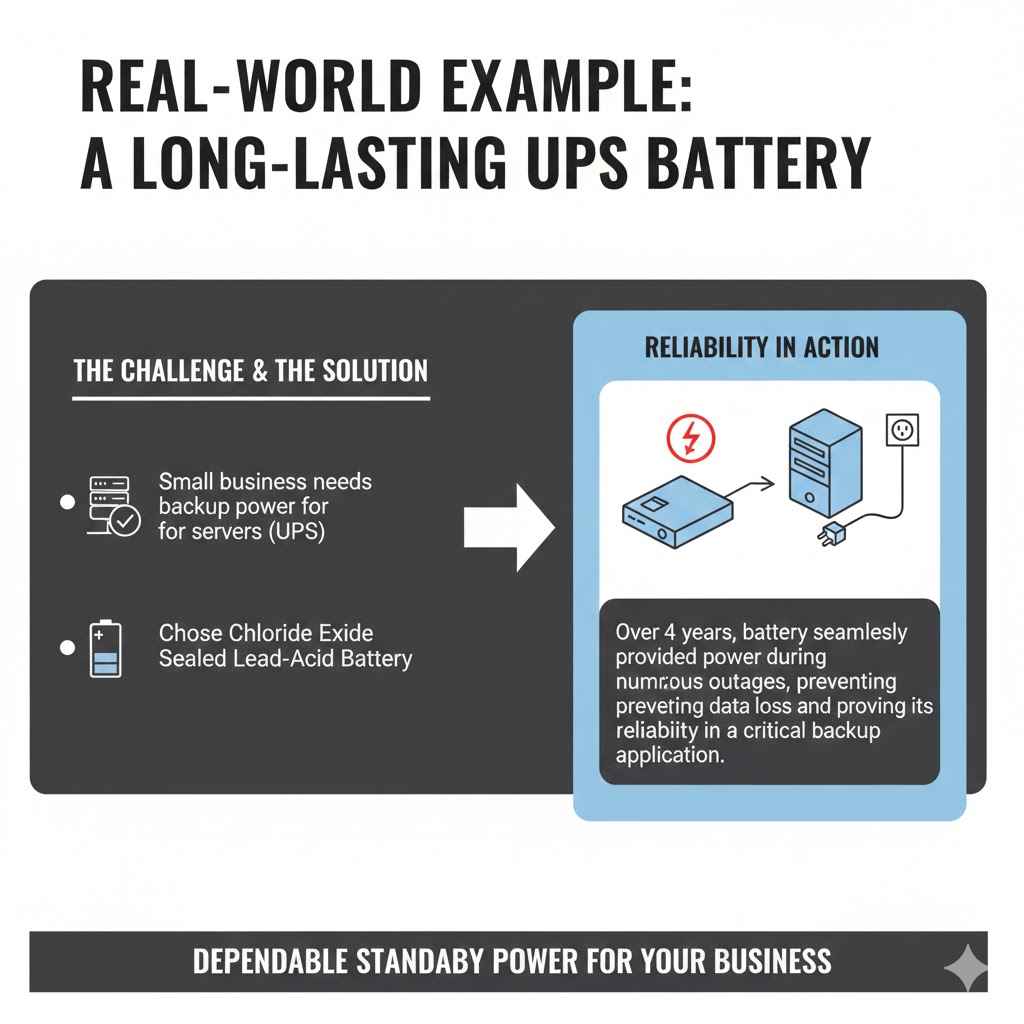
Real-World Example: A Long-Lasting UPS Battery
A small business relies on an Uninterruptible Power Supply (UPS) to protect its servers from power fluctuations and outages. They chose a Chloride Exide sealed lead-acid battery for their UPS system. Over four years, the UPS has seamlessly kicked in during numerous power interruptions, keeping the servers running without data loss.
The battery has consistently held its charge and delivered power when needed, proving its reliability in a critical backup application. This example showcases the dependable standby power Chloride Exide batteries offer.
Conclusion
Choosing the right Chloride Exide battery is about matching its design to your specific use. Deep cycle batteries are best for consistent power over time, like in solar systems. Starter batteries provide the strong burst needed for vehicles.
Always check ratings like Ah for capacity and CCA for starting power. This ensures you get a dependable battery that will perform reliably for years.
Frequently Asked Questions
Question: What is the main difference between Chloride Exide deep cycle and starter batteries?
Answer: Deep cycle batteries are made for repeated deep discharges and recharges, perfect for solar power or RVs. Starter batteries provide a quick, powerful burst to start an engine and are not meant for deep discharges.
Question: How long do Chloride Exide deep cycle batteries typically last?
Answer: With proper maintenance and use, Chloride Exide deep cycle batteries can last anywhere from 3 to 10 years, depending on the model and how frequently they are cycled.
Question: Can I use a Chloride Exide deep cycle battery in my car?
Answer: While technically possible, it is not recommended. Deep cycle batteries are heavier and more expensive, and they are not optimized for the quick, high-current demands of starting a car’s engine.
Question: What does the Ampere-hour (Ah) rating mean for a Chloride Exide battery?
Answer: The Ampere-hour (Ah) rating indicates a battery’s energy capacity. A higher Ah rating means the battery can supply more current for a longer period, making it suitable for extended power needs.
Question: Are Chloride Exide batteries reliable in extreme temperatures?
Answer: Chloride Exide batteries are designed to perform in a range of temperatures. However, extreme heat or cold can affect battery performance and lifespan, so it’s best to keep them within recommended operating ranges.
Summary
The most reliable Chloride Exide battery type depends on its intended job. For consistent power needs, choose a deep cycle battery. For starting engines, a starter battery is the way to go.
Always look at specifications like Ah and CCA to match the battery to your application. This makes sure you get the performance and longevity you expect.