3 Best Oil Gauges for Cars (2026): We Compared
The best oil gauge for a car is usually a 0–80 psi mechanical gauge for older or modified engines, a sender-based electric gauge for daily drivers, and a factory-style warning gauge if you only need low-pressure alerts. Pick the wrong type and you can miss a real pressure drop, chase false readings, or turn a simple install into a costly teardown. Below, we compare three gauge types by fit, install difficulty, and what each one tells you about engine risk before you buy.
Quick comparison
| Product | Badge | Best for | Price | ||
|---|---|---|---|---|---|
 |
MEASUREMAN 2 Inch Mechanical Oil Pressure Gauge, 0-100 PSI,MEASUREMAN | Our pick | 2-1/16 in. · 0-100 PSI · mechanical | $26.99
Price as of 25 Oct 2026
|
View |
 |
AUTO METER 1219 American Muscle 2-1/16" Electric OilAUTO METER | Also great | $115.99
Price as of 25 Oct 2026
|
View | |
 |
GlowShift Black 7 Color 100 PSI Oil Pressure Gauge Kit,GlowShift | Also great | 2-1/16 in. · 0-100 PSI · 7-color | $96.99
Price as of 25 Oct 2026
|
View |
The main trade-off is simple. Mechanical gauges give the most direct pressure reading. Electric gauges are easier to blend into modern cabins. Warning-focused gauges suit drivers who want an early alert more than a detailed number. Fit matters just as much as style, because sender threads, dash opening size, and lighting control often decide whether the install is straightforward or messy.
How we chose
These picks were compared using four buyer-facing filters: pressure range, install complexity, dash fit, and what each gauge can tell you about engine risk. Also check sender or hose requirements, lighting, and whether the included kit pieces reduce the chance of a parts run during installation.
The goal is not just to pick a display. It is to match the gauge to the engine and the dash opening you already have.
| Gauge | Type | Size | Pressure range | Install notes | Best fit |
|---|---|---|---|---|---|
| MEASUREMAN 2 Inch Mechanical Oil Pressure Gauge | Mechanical | 2-1/16-inch panel mounting size | 0-100 PSI | Needs a pressure line routed into the cabin | Classic cars and simple analog installs |
| AUTO METER 1219 American Muscle Electric Oil Pressure Gauge | Electric | 2-1/16-inch, 52.4mm | 0-100 PSI | Uses an electric sender and wiring | Modern dashboards and cleaner cabin installs |
| GlowShift Black 7 Color 100 PSI Oil Pressure Gauge Kit | Electric kit | 2-1/16-inch, 52mm standard aftermarket size | 0-100 PSI | Includes 1/8-27 NPT electronic sensor and wiring | Drivers who want a complete kit and lighting options |
Oil gauge decision matrix
This matrix maps the gauge type to the car in front of you, not just the display you like. The right choice depends on how the engine feeds oil, how much wiring you want to run, and whether you need a pressure number or only a warning threshold.
| Buyer profile | Right gauge type | Recommended pressure range | Required parts | Common installation pitfalls |
|---|---|---|---|---|
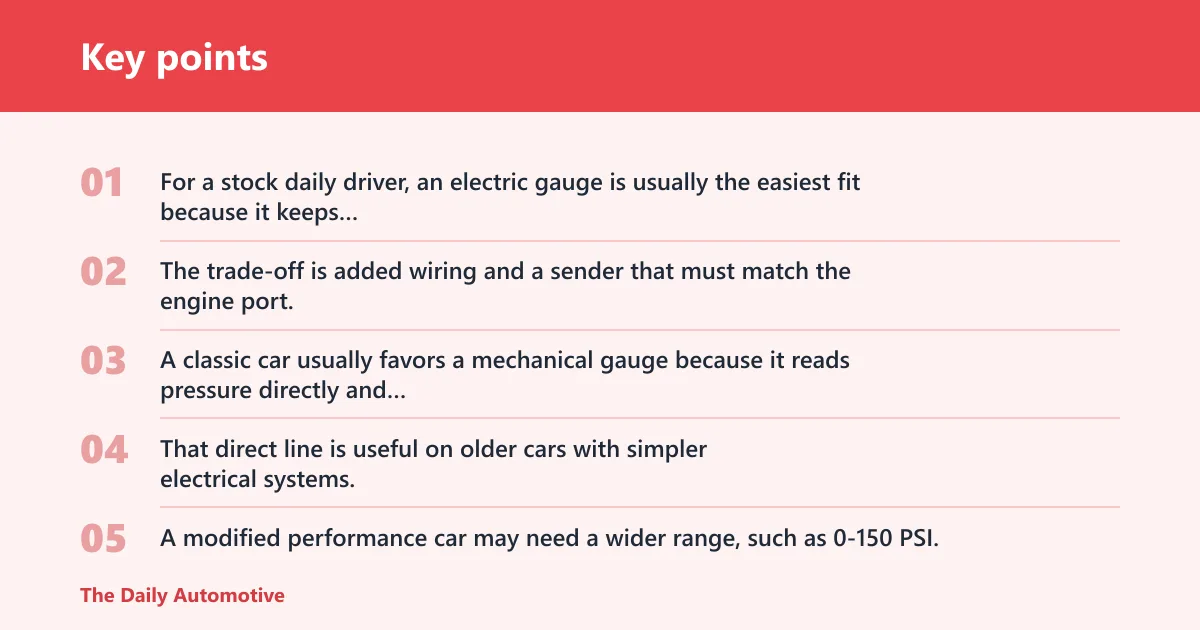
| Stock daily driver | Electric oil pressure gauge | 0-100 PSI | Gauge, sender/sensor, wiring harness, mounting hardware, dash pod or panel opening | Wrong sender thread, poor grounding, dimmer mismatch, cramped routing near hot parts |
| Classic car | Mechanical oil pressure gauge | 0-100 PSI | Gauge, pressure line, compression or adapter fittings, mounting hardware, hose pass-through | Leak-prone routing, sharp bends, line rub-through, cabin entry that is not sealed well |
| Modified performance car | Electric oil pressure gauge or 0-150 PSI gauge | 0-150 PSI if the setup runs higher pressure or you want more headroom | Gauge, sender, 1/8-27 NPT adapter if needed, wiring, mounting hardware, possibly a pod | Range too narrow, sender in the wrong port, bad signal ground, confusing high readings from a mismatched sender |
Stock daily driver
For a stock daily driver, an electric gauge is usually the easiest fit because it keeps oil out of the cabin and works well with illuminated factory-style dashboards. The trade-off is added wiring and a sender that must match the engine port, so the thread check matters before you order anything.
Classic car
A classic car usually favors a mechanical gauge because it reads pressure directly and does not need vehicle power to work. That direct line is useful on older cars with simpler electrical systems, but it also means you must route a pressure hose through the firewall and protect it from heat and abrasion.
Modified performance car
A modified performance car may need a wider range, such as 0-150 PSI, especially if cold oil pressure runs higher or extra headroom is wanted for a built motor. Electric gauges are often easier to package in a pod, but the sender and adapter path must match the block or oil filter housing.
Common installation pitfalls
Bad readings often come from installation mistakes, not from the gauge face itself. Common failures include sender mismatch, ground problems, hose leaks, a line that kinks under the dash, and a sensor mounted in the wrong location for the engine’s real oil path.
Suppose you fit a 1/8-27 NPT electronic sender into an adapter that is not fully compatible with the engine block. The gauge may still light up, but the reading can drift, spike, or sit dead because the sender is not seated correctly or the ground path is weak.
MEASUREMAN 2 Inch Mechanical Oil Pressure Gauge: best for classic cars
The MEASUREMAN mechanical gauge suits a classic car buyer who wants a simple analog reading and does not want to depend on vehicle power. Based on the published details, it uses a 2-1/16-inch panel mounting size and a 0-100 PSI scale, which is a common range for many older engines.
Its main appeal is direct pressure sensing. You are reading the oil line itself, not an electrical sender’s signal, so the setup can feel more straightforward on a basic car with a conventional dash opening.
The drawback is the install path. A mechanical gauge needs a pressure line routed into the cabin, which adds sealing work and creates a leak point if the fitting or hose routing is poor.
What stands out
The illuminated black dial is easy to read at a glance, and the 0-100 PSI range covers common street use without forcing a high-range scale that makes small changes harder to see. The built-in edge illumination also helps if the dash lighting is weak.
What to plan
Mechanical installs usually need more attention at the firewall, especially around heat and vibration. Plan on checking hose length, routing, and chafe protection before you mount the gauge permanently.
AUTO METER 1219 American Muscle Electric Oil Pressure Gauge: best for modern dashboards
The AUTO METER 1219 is the cleaner choice for a modern dash because it uses an electric sender instead of a pressure hose. It is a 2-1/16-inch electric gauge with a 0-100 PSI scale, so it fits the standard aftermarket opening while keeping the cabin free of fluid lines.
This type works well when you want a factory-like install with fewer visible lines and better packaging around the firewall. It is also the easier route if you plan to pair the gauge with other electric instruments in a pod or panel.
The trade-off is that the sender and wiring must be correct. If the sender thread does not match, or if the ground path is poor, the gauge can be inaccurate even when the engine is healthy.
Sender and wiring requirements
Electric gauges depend on a sender mounted in the engine’s oil pressure port. That means you need the correct thread, enough wire length, and a clean ground path back to the gauge and vehicle chassis.
Where this fits best
This is a sensible pick for a stock commuter or a mild build where the owner wants pressure data without adding a pressure hose inside the cabin. It is also a better visual match if the rest of the dash already uses electric gauges.
GlowShift Black 7 Color 100 PSI Oil Pressure Gauge Kit: best for complete installs
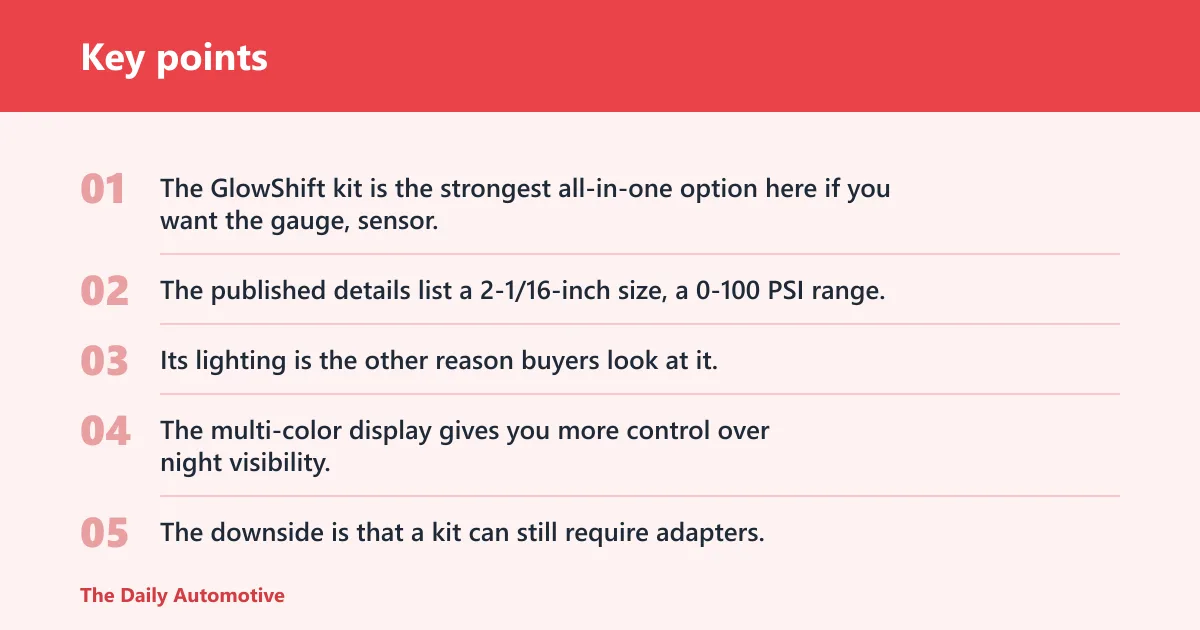
The GlowShift kit is the strongest all-in-one option here if you want the gauge, sensor, and wiring in one box. The published details list a 2-1/16-inch size, a 0-100 PSI range, and 1/8-27 NPT electronic sensors, which makes the compatibility path clearer for many aftermarket installs.
Its lighting is the other reason buyers look at it. The multi-color display gives you more control over night visibility, which matters if the gauge sits in a dim cabin or needs to match existing dash lighting.
The downside is that a kit can still require adapters. If the engine port is not already 1/8-27 NPT, you may still need the right fitting for the block or oil filter housing, and that can add cost and time.
Lighting and visibility
Lighting matters more than style when the gauge is mounted low in the dash or in a door-side pod. Multi-color illumination can help you match the rest of the interior, but dimmer compatibility still needs attention so the gauge does not overpower the cabin at night.
Parts included and parts still needed
The appeal of a kit is obvious: fewer separate purchases and less guesswork. Even so, thread compatibility is still the main check, because a sensor that does not match the engine port can turn a simple install into an adapter hunt.
Mechanical oil pressure gauge vs electric oil pressure gauge
Mechanical gauges read pressure directly through a line, while electric gauges read through a sender or sensor. The first is simpler in concept and often preferred for older cars; the second is easier to integrate into modern interiors and usually keeps the firewall cleaner.
Direct sensing versus sender-based sensing
A mechanical gauge gives a direct pressure signal with no electrical power required. An electric gauge translates engine pressure through a sender, which adds wiring but makes the cabin layout easier and usually avoids routing oil into the interior.
Failure modes to watch
Mechanical gauges can leak at the hose, kink behind the dash, or chafe where the line passes through metal. Electric gauges can fail at the sender, lose ground, or read oddly if the sender thread or adapter is wrong for the engine.
What should your oil pressure gauge read?
There is no universal number that fits every engine, but the reading should make sense for the engine’s design and temperature. A healthy gauge usually shows higher pressure when cold, lower pressure at hot idle, and a steadier reading at cruise or under light load.
Hot idle, cruise, and load
Hot idle is the reading many buyers care about most, because weak pressure often shows up there first. Cruise should usually rise from hot idle, and load should not produce sudden drops that suggest bearing wear, a pickup problem, or oil starvation.
A common first-timer mistake is to judge pressure from a cold start alone. Picture a stock commuter that shows high pressure right after startup, then settles lower once fully warm; that shift is normal, while an unexplained drop at hot idle is the reading that deserves attention.
How to read the gauge in practice
Watch the pattern, not one number in isolation. If the needle is steady at idle, rises with rpm, and stays within the engine maker’s normal operating range, the gauge is doing its job as an early warning tool rather than a repair tool.
0-150 PSI gauge: best for modified engines
That extra range is useful on modified engines, but it can make small pressure changes harder to read at the low end.
When a higher range makes sense
Choose a higher range if the engine or oiling system is expected to push pressure beyond a standard street setup, or if the builder wants more room before the needle approaches the top of the scale. For ordinary commuter cars, that extra range is often unnecessary.
How to match the range to your engine
Start with the engine’s normal hot idle and cruise behavior, then choose a scale that keeps those readings in the middle portion of the dial. That approach gives you enough resolution to spot a drop without making the gauge sit pinned near the top in normal use.
What to watch at idle and cruise
Modified engines can show very different pressure trends depending on oil viscosity, bearing clearance, and operating temperature. If the gauge reads too low when hot or too high when cold, the issue may be the setup rather than the dial range itself.
Which oil gauge should you buy?
Choose a mechanical gauge if your priority is direct pressure sensing and you are working on a classic car or a simple build with room for a pressure line. Choose an electric gauge if you want a cleaner cabin install, better integration with a modern dash, and fewer fluid lines inside the car.
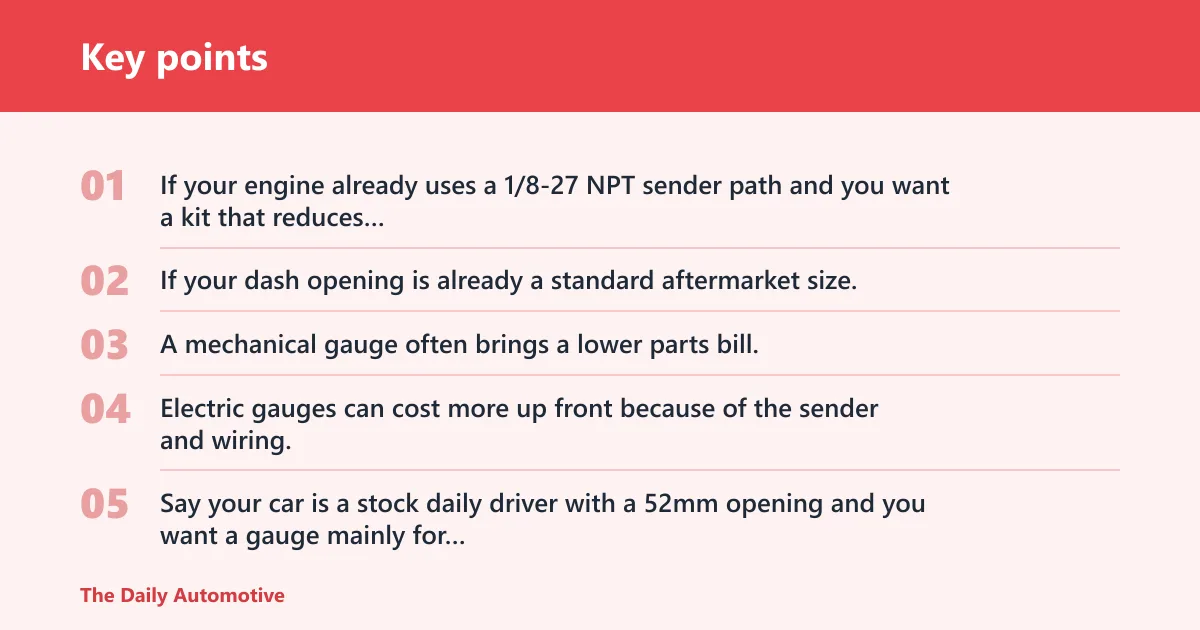
If your engine already uses a 1/8-27 NPT sender path and you want a kit that reduces parts hunting, the GlowShift setup is the most complete of the three here. If your dash opening is already a standard aftermarket size, the 2-1/16-inch options are the easiest fit; if the opening is tighter, verify the panel cutout before you buy.
Budget matters, too. A mechanical gauge often brings a lower parts bill, but the install can still cost more in time if the line routing is awkward. Electric gauges can cost more up front because of the sender and wiring, yet they often save time once you start fitting the dash.
Say your car is a stock daily driver with a 52mm opening and you want a gauge mainly for warning value. A 0-100 PSI electric gauge is the sensible choice because it gives a readable number, accepts a modern lighting setup, and avoids a cabin pressure line.
Suppose you have a carbureted classic with limited wiring and a clean firewall. A mechanical gauge is the better match because it reads pressure directly and keeps the install concept simple, even though it needs more care at the hose pass-through.
Do not buy by dial color alone. Pick the gauge that matches your engine’s pressure behavior, your dash opening, and the amount of installation work you are willing to take on.
Frequently asked questions
What is the best oil gauge for a car?
The best oil gauge depends on the vehicle. A mechanical gauge suits older and modified engines that need direct pressure sensing, while an electric gauge fits daily drivers and cleaner dash layouts. If you only want low-pressure alerts, a warning-style gauge is usually enough.
How do I read an oil pressure gauge?
Read the gauge by watching how pressure changes with temperature and rpm. Cold pressure is usually higher, hot idle is usually lower, and cruise should rise above hot idle. The key is a stable pattern that fits the engine’s normal operating range.
How do I test an electric oil pressure gauge?
Start with the basics: verify power, ground, sender wiring, and thread compatibility. If the gauge still reads wrong, compare it against a known-good sender or check the sender location and adapter. Many bad readings come from grounding or installation faults rather than the gauge face.
Mechanical or electric oil pressure gauge: which is better?
Neither type is always better. Mechanical gauges are simpler in principle and work well for classic cars, while electric gauges are easier to wire into modern cabins and avoid a pressure hose inside the vehicle. Pick the one that fits your engine and dash.
What size oil pressure gauge fits a car dash?
Common aftermarket sizes are 2 inches, 2-1/16 inches, and 52mm. Measure the pod, bezel, or panel opening before you buy, because a gauge that looks right on paper can still miss the mounting hole by a small but frustrating amount.
Products related to this article
Sponsored / affiliate links. As an Amazon Associate I earn from qualifying purchases. I may earn additional commission from eligible campaigns.