P1747 Ford Code: EPC Solenoid Short Circuit Causes & Fix
The Ford P1747 code means the Electronic Pressure Control (EPC) solenoid ‘A’ circuit has short-circuited — not an open circuit like the separate P1746 code. Left active, the transmission drops into limp mode, locking into 2nd or 3rd gear to protect itself from further damage. This guide covers the real wiring and solenoid faults that trigger P1747, a diagnostic order that checks cheap fixes before replacing parts, and realistic repair costs.
Quick Answer
P1747 on a Ford means the EPC (Electronic Pressure Control) solenoid ‘A’ circuit has a short to ground or voltage, not an open circuit — P1746 is the open-circuit version of this same code. Check wiring and connectors near the transmission first (the cheapest and most common cause), test the solenoid’s resistance with a multimeter, and only replace the EPC solenoid if wiring checks out clean. Expect $250–$750 for a full repair if a shop does it.
What You’ll Need to Diagnose P1747
- OBD-II scan tool (to read and clear the code, and confirm whether P1747 or P1746 is stored)
- Digital multimeter with continuity and resistance (ohms) settings
- Flashlight or work light to inspect wiring near the transmission and exhaust
- Basic hand tools (socket set, screwdrivers) to access the connector and fuse box
- Replacement EPC solenoid or wire connector kit, if testing confirms a failed part
Best P1747 Diagnostic Pick
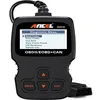
ANCEL AD310 OBD-II Scanner
Confirms whether you have P1747 (short) or P1746 (open) before you spend money on parts, and lets you clear the code after the repair to verify it doesn’t come back.
- Best for: Reading and clearing the exact P17xx code before repairs
- Why we picked it: Reads and clears codes on any 1996+ OBD-II vehicle without a subscription
- Main drawback: Won’t show live solenoid resistance — you still need a multimeter for that
Compare more P1747 diagnostic & repair options
 Option 1 AstroAI True RMS Multimeter
|
 Option 2 4R70W EPC Solenoid Kit
|
 Option 3 Kuject Wire Connector Kit
|
As an Amazon Associate we earn from qualifying purchases.
What Does the P1747 Code Mean?
P1747 is a Ford-specific code for “Electronic Pressure Control (EPC) Solenoid ‘A’ — Short Circuit.” The PCM has detected that the EPC solenoid’s control circuit is shorting to ground or to voltage, not that the wire has simply broken open. That distinction matters: P1746 is the separate code Ford uses for an open circuit on the same solenoid, so if a scan tool pulls P1746 instead, the wiring or connector fault is different from what’s covered here.
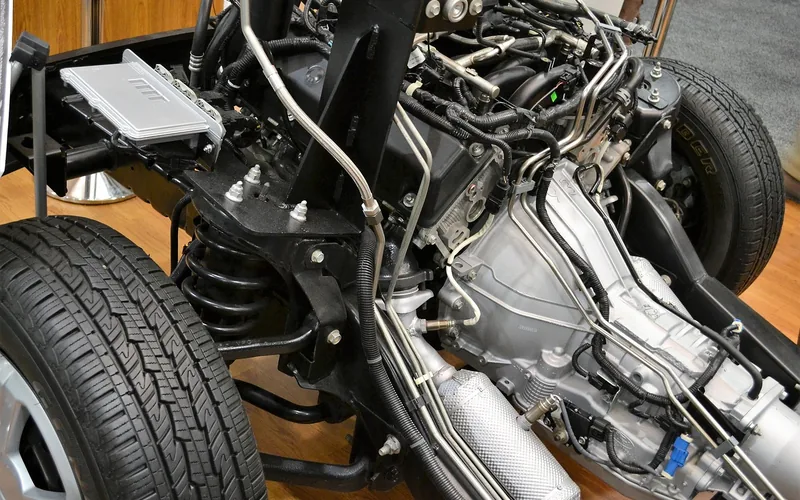
The EPC solenoid regulates hydraulic line pressure inside the automatic transmission, which controls how firmly the clutch packs and bands apply during a shift. When its circuit shorts, the PCM can no longer command the correct pressure, so the transmission defaults to a fixed, high-pressure “failsafe” pattern — that’s why P1747 almost always shows up alongside harsh, jarring shifts rather than a smooth one.
What Causes the P1747 Code?
A short circuit on the EPC solenoid ‘A’ line comes from a small set of real causes, roughly in order of how often they actually show up:
- A failed EPC solenoid itself — the electromagnetic coil inside degrades and shorts internally after years of heat cycling. This is the single most common cause.
- Damaged external wiring — insulation melted or chafed against the exhaust, frame, or another hot component, exposing bare wire that shorts to the chassis.
- Corroded or loose connector pins — at the solenoid connector itself or further back in the fuse box, from years of heat, vibration, and moisture.
- A blown fuse tied to the transmission/PCM circuit — less common as a root cause, but it can accompany or mask a short elsewhere in the circuit.
- A shorted TCC (torque converter clutch) solenoid sharing the same circuit — on some model years the PCM can flag P1747 from a fault on an adjacent solenoid rather than the EPC solenoid itself.
Two real-world examples come up repeatedly in owner and technician troubleshooting discussions: exhaust heat melting the insulation on a nearby wire (often near the O2 sensor harness) until it shorts to ground, and corroded connector pins inside the fuse box behind the dash, where simply cleaning and re-seating the connections resolved the code without replacing any part. Neither of those shows up if you jump straight to replacing the solenoid.
Which Ford Vehicles Get the P1747 Code?
P1747 shows up almost exclusively on Fords built with the 4R70W (and its later 4R75W/4R75E variants) automatic transmission, which Ford used from the early-to-mid 1990s through roughly the late 2000s. In practice, that covers F-150 and Super Duty trucks, E-Series vans, the Mustang, Crown Victoria, and Grand Marquis, and the Explorer — across a wide span of model years, which is why the exact same code and fix apply whether your truck is a late-1990s F-150 or a mid-2000s E-350. If your vehicle uses a newer 6-speed or 10-speed automatic, a P1747 result is less common but not impossible, since some later PCM software reused the same code numbering for an analogous pressure-control circuit.
The diagnostic steps below are the same regardless of model year — only the exact wiring routing and connector location change slightly between trucks, vans, and cars.
📊 A complete transmission control solenoid replacement (parts + labor) typically runs $250–$750, with labor billed at $60–$150 per hour for 1–3 hours of work — Source: PartCatalog Transmission Solenoid Replacement Cost Guide, 2024
How to Diagnose and Fix a P1747 Code
Work through these steps in order — cheapest and most likely first, so you don’t replace a $60–$100 solenoid when the real problem is a $10 wiring repair.
- Pull the exact code: Confirm you actually have P1747 (short) and not P1746 (open) with an OBD-II scanner, since the wiring fault you’re looking for is different for each.
- Inspect the wiring and connector: Trace the harness from the transmission connector back toward the PCM, looking for melted insulation near the exhaust, chafe points against the frame, and corrosion at any connector, including inside the fuse box.
- Check the fuse: Locate the fuse tied to the transmission/PCM circuit for your specific model and confirm it isn’t blown; also check for a corroded or loose fuse socket.
- Test the solenoid circuit: With the connector disconnected, set a multimeter to resistance (ohms) and test the EPC solenoid’s terminals, and separately check for continuity to ground (a short will show near-zero resistance to chassis ground when there shouldn’t be any).
- Repair or replace based on what you find: Repair and heat-shrink any damaged wiring section, clean and re-seat corroded connectors, or replace the EPC solenoid itself only if the wiring tests clean and the solenoid’s resistance is out of spec.
- Clear the code and test drive: Clear the code with the scan tool and drive the vehicle through a full shift cycle. If P1747 doesn’t return, the fix held; if it returns immediately, the fault wasn’t fully resolved.

“In real-world P1747 cases discussed across Ford owner and technician forums, the short has been traced to sources as ordinary as exhaust heat melting nearby O2 sensor wire insulation, and corroded fuse-box connector pins that cleaning and re-seating fixed without replacing any part.”
DIY vs. Professional Repair: What It Actually Costs
Driving on a P1747 code isn’t recommended — the transmission is running in a fixed failsafe pressure pattern, and violent or slipping shifts accelerate wear on the clutch packs. Once you know whether the fault is wiring, a connector, or the solenoid itself, here’s what to expect for each repair path:
| Repair Path | DIY | Professional Shop |
|---|---|---|
| Total cost (parts + labor) | ~$20–$100 (solenoid part, connector kit, or fuse only) | $250–$750 for a complete solenoid replacement |
| Labor time | 1–3 hours if you already own a multimeter | 1–3 hours billed at $60–$150/hr, higher in urban/coastal areas |
| Risk if misdiagnosed | May replace the solenoid unnecessarily if the real fault is wiring | Diagnostic testing narrows the fault down before parts are ordered |
| Best for | Confirmed wiring/connector fault, or a confirmed bad solenoid | Wiring buried deep in the harness, or if P1747 persists after a solenoid swap |
Common Mistakes When Fixing P1747
- Replacing the EPC solenoid first, without testing it — the solenoid is the most common cause, but not the only one, and swapping it doesn’t fix a wiring short.
- Ignoring the fuse box behind the dash — corroded connector pins there can produce the exact same code as a bad solenoid.
- Continuing to drive on the code — the failsafe pressure pattern causes harsher-than-normal shifts, which wears clutch packs faster than normal driving.
- Not checking for P1746 instead — an open circuit needs a different repair approach than a short, so confirm the exact code before you start.
How to Avoid a Repeat P1747 Code
Once the short is repaired, a few habits reduce the odds of P1747 coming back. Keep the transmission fluid at the manufacturer’s recommended level and change interval — check the signs your car needs transmission fluid if you’re not sure when it was last serviced, since degraded fluid runs hotter and accelerates solenoid coil wear. During any other engine bay work, route wiring harnesses away from the exhaust and frame edges rather than letting them rest against either. And if you cleaned a corroded connector to fix the code, check it again at your next oil change; corrosion in the same spot often means moisture is getting in from a cracked boot or a loose bulkhead seal that also needs attention.
P1747’s limp-mode symptom — the transmission locking into one gear — is different from a transmission that won’t leave first gear at all or won’t engage a gear at all. If your symptoms don’t match what’s described above, see our related guides on a car that only drives in 1st, 2nd, and reverse or a car stuck in neutral before assuming it’s P1747.
Frequently Asked Questions
Is P1747 a Short Circuit or an Open Circuit?
P1747 indicates a short circuit in the EPC solenoid ‘A’ control circuit. Ford uses a separate code, P1746, for an open circuit on the same solenoid, so confirm which one your scan tool actually pulled before starting repairs.
Can I Still Drive My Ford With a P1747 Code?
It’s not recommended. With P1747 active, the transmission runs in a fixed failsafe pressure pattern that causes harsher shifts than normal, and continuing to drive on it accelerates wear on the clutch packs. Get it diagnosed as soon as you reasonably can.
Which Ford Vehicles Are Most Likely to Get a P1747 Code?
P1747 shows up almost exclusively on Fords built with the 4R70W automatic transmission (and its 4R75W/4R75E variants), used from the early-to-mid 1990s through roughly the late 2000s. That includes F-150 and Super Duty trucks, E-Series vans, the Mustang, Crown Victoria, Grand Marquis, and Explorer.
How Much Does It Cost to Fix a P1747 Code?
A full repair, including parts and labor, typically runs $250 to $750 at a shop, with labor billed at $60 to $150 per hour for 1 to 3 hours of work. If the fault turns out to be a wiring or connector repair rather than a full solenoid replacement, the cost can be well under $100.
Can a Blown Fuse or Corroded Connector Cause a P1747 Code?
Yes. Corroded connector pins, including inside the fuse box behind the dash, and a blown fuse tied to the transmission or PCM circuit can both trigger the same P1747 code as a failed solenoid. Check these before assuming the solenoid itself needs replacing.
What’s the Difference Between P1747 and P1746?
Both codes point to the same EPC solenoid ‘A’ circuit, but P1747 means the circuit has shorted (to ground or to voltage), while P1746 means the circuit is open (broken or disconnected). The wiring fault you’re looking for is different for each, so confirm the exact code first.
Conclusion
P1747 means the EPC solenoid ‘A’ circuit has shorted, not that the solenoid is necessarily bad on its own — wiring damage and corroded connectors cause a real share of these cases. Work through wiring and fuse checks before replacing the solenoid, and you’ll often fix it for well under the $250–$750 a shop charges for a full solenoid swap. If the code returns after a repair, that’s a sign to have the wiring rechecked rather than replacing parts again on a guess.
Products related to this article
Sponsored / affiliate links. As an Amazon Associate I earn from qualifying purchases. I may earn additional commission from eligible campaigns.