Paint Sticks for Cars: Best Touch-Up Pens for Scratches
Paint sticks for cars — touch-up pens and micro repair brushes — fix minor scratches and stone chips in under 30 minutes, for less than the cost of a single body-shop estimate.
They work by depositing color-matched paint straight into the damaged spot with a fine felt tip or a micro-applicator brush, then you let it cure and seal it later with clear coat. Below are three well-reviewed options — a factory-white pen, a black pen, and a 300-piece brush set for fine detail work — plus how to find your car’s exact paint code so the color actually matches instead of leaving a visible patch.
How to Find Your Car’s Exact Paint Code First
Buying a pen labeled just “white” or “black” is the most common mistake with these repairs — most automakers sell a dozen or more shades of each color, and an unmatched pen leaves a patch that’s more obvious than the original scratch. Check your car’s paint code on a small metal or sticker plaque, usually inside the driver’s-side door jamb, on the glovebox lid, or on the trunk lid or spare-tire well. It’s a short alphanumeric code (sometimes labeled “Color” or “Paint”); many touch-up paint sellers let you search by that code or by your car’s year, make, and model to get an exact match.
Also run the fingernail test before you buy: drag a fingernail across the damage. If your nail catches on a ridge or dips into a groove, the scratch has likely gone past the clear coat and color coat and needs primer and body filler, not just a pen. Touch-up pens are built for shallow chips and light scratches that haven’t reached bare metal.
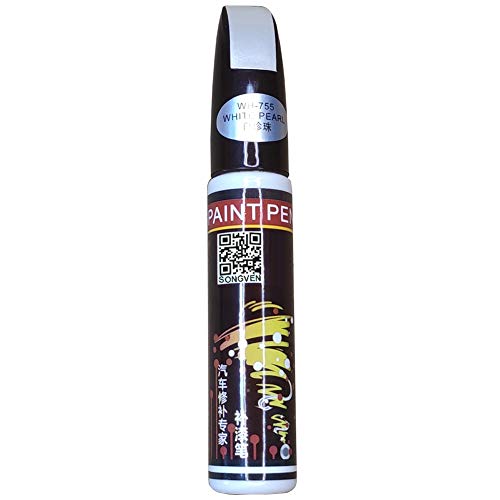
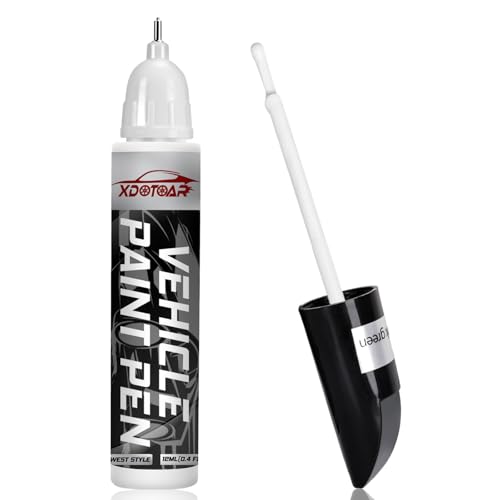
White Car Paint Touch Up Pen
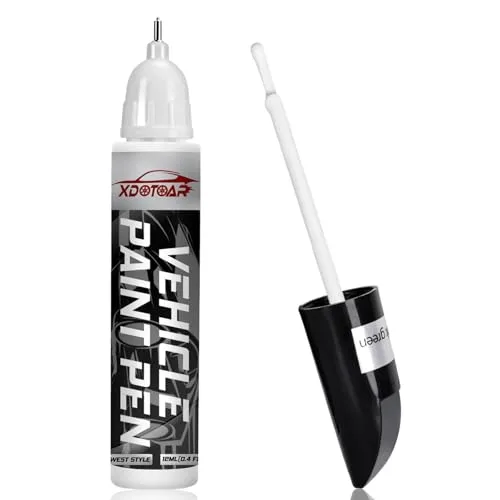
The White Car Paint Touch Up Pen by xdotoar is aimed at owners who want a quick, low-cost fix for minor scratches without a trip to the body shop.
Pros:
- Color accurate Pure White formula for a seamless repair.
- Fast dry so the car is drivable again the same day.
- Safe and washable once fully cured.
- Easy to use, even for a first-time repair.
Cons:
- Only made in Pure White, so it will not match tinted or metallic whites.
- Deeper chips usually need two or three thin coats, not one.
The Pure White shade is formulated to match common factory white finishes, which is what makes a repair with this pen close to invisible rather than a visible smear. Apply it in thin layers and let each one flash off before adding the next — a single heavy coat is the most common reason a pen repair looks worse than the scratch it was meant to fix.
To buy this product, click here.
300 Pcs Repair Paint Brushes
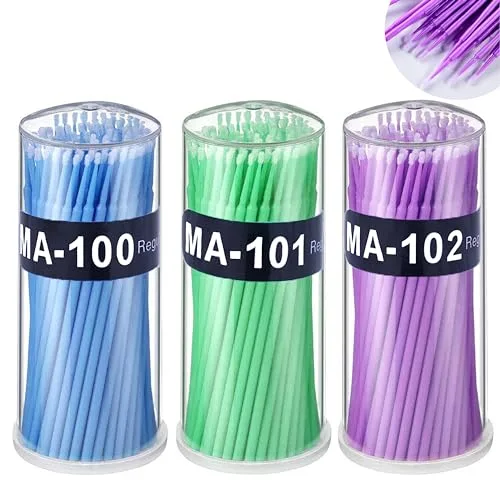
The 300 Pcs Repair Paint Brushes from Yuanwovv are disposable micro-applicators, not a pen — they’re for anyone who wants finer control than a felt tip gives, whether that’s a DIY owner or a detailer touching up several cars a week.
Pros:
- Three sizes — 2.5 mm, 2.0 mm, and 1.5 mm — for different chip and scratch widths.
- Color-coded handles (blue, green, purple) so you grab the right size without checking a label.
- Cost-effective at 300 brushes per pack.
- Compact enough to keep in a glovebox repair kit.
Cons:
- Each brush is single-use, so a large repair job burns through the pack faster than a reusable pen tip.
- Bristles can fray or bend if you press too hard on textured trim.
The three sizes let you match the brush to the job: the 2.5 mm tip covers a wider scratch in fewer passes, while the 1.5 mm tip is precise enough for a stone chip the size of a pinhead. Because each brush is disposable, you’re not cleaning dried paint out of bristles between repairs — you just use one and toss it, which keeps the paint from cross-contaminating between colors if you’re touching up more than one car.
To buy this product, click here.
Ubog Car Paint Scratch Repair
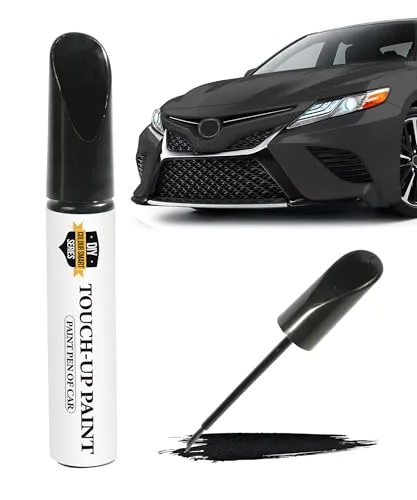
The UBOG Car Paint Scratch Repair pen is the black counterpart to a white pen like the one above — a low-cost option for owners who want to keep their car’s finish looking factory-fresh between full details.
Pros:
- Easy-to-use pen applicator.
- Cost-effective for minor scratches.
- Portable, glovebox-friendly size.
- Fast-drying formula.
Cons:
- Only sold in a single black shade, which will not match metallic or tinted blacks.
- Not built for deep scratches that reach bare metal.
- Needs a steady hand to avoid overlapping onto good paint.
Like most single-color touch-up pens, this one is best suited to solid gloss black — if your car uses a metallic or pearl black, hold the pen against a hidden panel first to check the match before working on a visible spot. Its main advantage over a full repair kit is speed: it’s small enough to live in a glovebox and be used the moment a fresh scratch shows up, before dirt and moisture have a chance to work into it.
To buy this product, click here.
Frequently Asked Questions
How Do I Use a Car Paint Touch Up Pen?
Wash and dry the scratch first so dirt doesn’t get sealed under the paint. Shake the pen well, then apply thin layers with the tip rather than one thick coat, letting each layer dry before adding the next. Once the final coat has fully cured, the repair blends into the surrounding paint instead of standing out as a raised patch.
Are Touch Up Paint Pens Safe for Cars?
Yes. They’re formulated for automotive paint and are safe for the surrounding clear coat and trim when used as directed. Most current formulas are also safe and washable once fully cured, so normal car washes won’t lift the repair.
How Effective Is a Scratch Remover Pen?
A touch-up pen is very effective on light scratches and small chips that haven’t broken through to bare metal — it fills the mark and blends with the surrounding color so it’s far less noticeable. It is not a fix for deep gouges, rust, or dents; those need body filler or a repaint.
What Size Repair Paint Brushes Are Available?
Micro repair brushes typically come in 2.5 mm, 1.5 mm, and 2.0 mm tips, often color-coded so you can grab the right one at a glance. The larger tip covers wider scratches faster, while the smallest tip is precise enough for a pinhead-sized stone chip.
Can Touch Up Paint Match My Car’s Color?
Yes, as long as you buy the paint by your car’s specific paint code rather than by a generic color name. Automakers use dozens of shades of white, black, silver, and red, so a code match is what actually blends in — a pen just labeled “white” or “black” is a guess.
How Do I Find My Car’s Paint Code?
Check the driver’s-side door jamb, the glovebox lid, or the trunk lid or spare-tire well for a small metal or sticker plaque with a short alphanumeric code, often labeled “Color” or “Paint.” Your owner’s manual or dealer can also confirm it if the plaque has faded.
Conclusion
Paint sticks are a genuinely practical fix for the kind of damage every daily driver picks up — door-edge scuffs, parking-lot scratches, and stone chips from the highway. A pen or micro-brush costs a fraction of a body-shop visit, dries within the hour, and holds up fine once cured, provided the damage is shallow enough for a topical repair in the first place.
The one step that decides whether the repair looks invisible or obvious is matching the paint code before you buy, not after. Find your code on the door jamb or trunk plaque, run the fingernail test to confirm a pen is the right tool for the damage, then pick the pen or brush set above that fits the job.
Products related to this article
Sponsored / affiliate links. As an Amazon Associate I earn from qualifying purchases. I may earn additional commission from eligible campaigns.