Best Alloy Wheels for Your Car (2 Real Picks Compared)
For most daily drivers, the safest best alloy wheels are OE-spec fitment wheels with the right bolt pattern, offset, and load rating; compared here, the Enkei RPF1 and BBS SR are the two real picks to check first. Get fitment wrong and you can create rubbing, dull steering feel, or a wheel that is too weak for the car’s axle load. This guide compares both wheels on fitment, durability, curb-rash risk, and long-term ownership costs.
Two alloy wheel picks compared
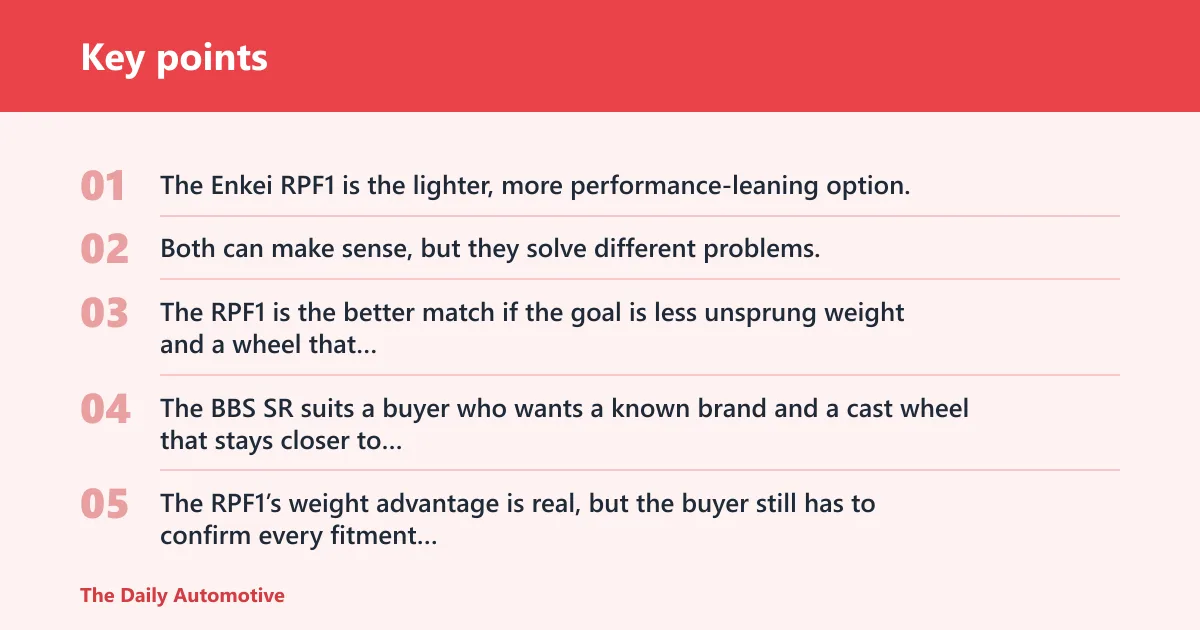
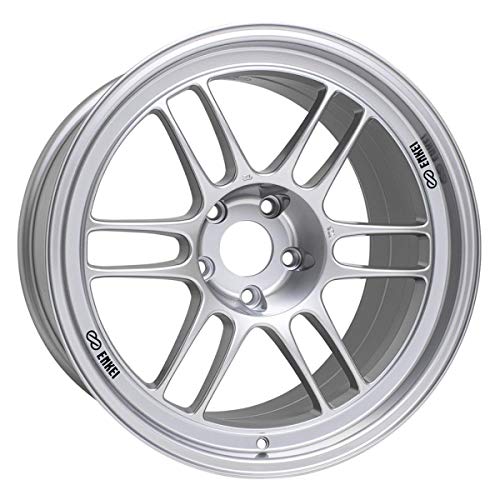


The core trade-off is simple. The Enkei RPF1 is the lighter, more performance-leaning option, while the BBS SR leans toward a more conservative replacement path with a heavier, cast construction and a less aggressive ownership profile. Both can make sense, but they solve different problems.
| Spec | Enkei RPF1 | BBS SR |
|---|---|---|
| Construction | Forged-style performance wheel | One-piece counter pressure cast wheel |
| Size and fitment listed | 17×8 | Varies by application; check exact fitment before buying |
| Bolt pattern listed | 5×114.3mm | Varies by application; must match the vehicle exactly |
| Offset listed | 35mm | Varies by application; verify brake and suspension clearance |
| Weight listed | 16.0 pounds | 24.6 pounds |
| Main ownership angle | Lighter wheel, sharper response | More conventional cast wheel ownership profile |
What each wheel is best
The RPF1 is the better match if the goal is less unsprung weight and a wheel that supports mild performance use without moving into full track-only territory. The BBS SR suits a buyer who wants a known brand and a cast wheel that stays closer to the daily-driver side of the spectrum.
Biggest trade-offs at a glance
The RPF1’s weight advantage is real, but the buyer still has to confirm every fitment spec. The BBS SR is heavier, which usually means less agility from the wheel itself, yet it may be easier to live with if the goal is a straightforward replacement that does not chase the lightest possible setup.
Which fitment specs matter most?
Bolt pattern, offset, hub bore, load rating, and brake clearance all have to line up. A wheel can look right and still be a poor buy if any one of those numbers is off. Bolt pattern has to match exactly, offset controls tuck and poke, and the load rating has to suit the vehicle’s weight.
Bolt pattern: match it exactly
A bolt pattern is non-negotiable; if wrong, the wheel will not bolt on. Common formats like 5×114.3, 6×135, 5×100, and 5×115 use lug count x circle diameter, and the number has to align with the hub and studs exactly. There is no safe “close enough.”
That is why a wheel like the Enkei RPF1 listed at 5×114.3mm fits only vehicles that call for that pattern. The AVID1 AV-20 is listed in 19×8.5 size with a +35 offset and 5×114.3 bolt pattern, which shows how even within the same bolt family, offset and size still matter.
Offset: tuck, poke, and clearance
Offset determines whether a wheel tucks into the wheel well or pushes outward. A +35mm wheel sits differently from a +48mm wheel, and an 18mm offset pushes much farther outward than either. That change affects fender poke, suspension clearance, and whether the wheel can contact brake parts or liners.
Use offset as a fitment control, not a styling number. A wheel that pokes too far out can increase scrape risk and put more stress on the outer lip during impacts. A wheel that tucks too far in can run into suspension hardware or brake calipers.
Hub bore and hub-centric rings
Hub bore controls how the wheel centers on the hub. If the wheel bore is larger than the hub, hub-centric rings may be needed to reduce vibration and keep the wheel centered properly. A common example is about 73.1mm / 73mm, where the wheel bore and hub size are close but not identical.
Do not guess here. If the wheel is not hub-centric to the vehicle, the lugs may be asked to do work they should not be doing, and that can show up as vibration at speed.
Load rating and brake clearance
Load rating is safety-critical and should be checked against vehicle weight. Real examples are commonly reported in a range from about 667 to 1500 lbs per wheel, and that number needs to make sense for the axle load the wheel is expected to carry. A wheel that looks good with a weak rating is a bad buy.
Brake clearance matters for the same reason. The wheel barrel and spoke shape have to clear the caliper, not just the hub. A wheel can bolt on and still fail because the brake package needs more room than the barrel offers.
- Confirm the vehicle’s bolt pattern first.
- Check the offset range that keeps the wheel clear of suspension and fenders.
- Verify hub bore and whether rings are required.
- Match load rating to the vehicle’s weight and use case.
- Measure brake clearance before ordering.
Alloy wheel decision matrix
Use this matrix to compare the two wheels on ownership issues that show up after purchase. Lower fitment risk and maintenance burden are better. Higher pothole resilience and value are better. Visual aggressiveness is scored on how much the wheel changes the car’s stance and appearance.
| Criterion | Enkei RPF1 | BBS SR |
|---|---|---|
| Fitment risk | 2/5 | 3/5 |
| Pothole resilience | 4/5 | 3/5 |
| Maintenance burden | 3/5 | 3/5 |
| Visual aggressiveness | 4/5 | 2/5 |
| Value | 4/5 | 3/5 |
Fitment risk score
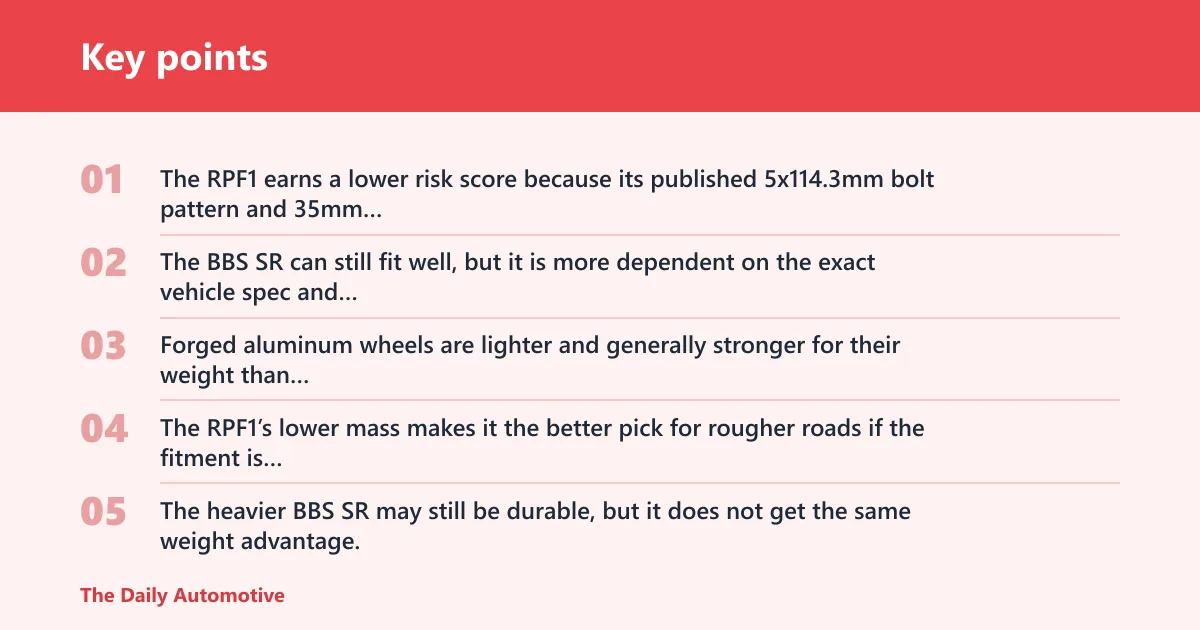
The RPF1 earns a lower risk score because its published 5×114.3mm bolt pattern and 35mm offset are easy to verify against many performance and sport-sedan applications. The BBS SR can still fit well, but it is more dependent on the exact vehicle spec and the buyer’s willingness to verify every detail before purchase.
Pothole resilience score
Forged aluminum wheels are lighter and generally stronger for their weight than comparable cast wheels, which helps them in harder use. The RPF1’s lower mass makes it the better pick for rougher roads if the fitment is correct. The heavier BBS SR may still be durable, but it does not get the same weight advantage.
Maintenance burden score
Finish choice changes upkeep. A machine face or polished surface usually shows brake dust and curb rash more easily than a painted or satin finish. Both wheels can be manageable, but any bright machined lip or polished face will ask for more cleaning in winter or on dusty roads.
Value score
Cast aluminum alloy wheels usually cost less than forged aluminum wheels. That matters when the plan is to replace damaged rims or refresh a daily driver without chasing the lightest option available. The RPF1 offers stronger performance value, while the BBS SR can be attractive if the goal is a familiar premium cast wheel.
Direct-fit OE replacement wheel
A direct-fit OE replacement wheel matches factory specs and avoids adapters or hub rings. That makes it the safer path when the goal is replacing a damaged rim with the fewest surprises. It should line up with the car’s bolt pattern, offset, hub bore, and load rating without extra hardware.
Why it fits with fewer surprises
Because the wheel is built to the car’s original geometry, the chance of rubbing, vibration, or brake interference is lower. The buyer is not trying to force a performance wheel into a package that needs more spacer, ring, or correction work to sit properly.
Say your sedan uses 5×114.3, needs a moderate offset, and runs a factory brake package. A direct-fit OE replacement wheel removes the guesswork. The owner still checks load rating and finish, but the basic fit path is simpler.
Who should buy it?
Choose a direct-fit OE replacement wheel if you want the easiest path to safe installation, a factory-like driving feel, and less time sorting out fitment accessories. It is the stronger choice for a daily commuter or for someone replacing a bent or cracked rim.
Who should skip it?
Skip it if your priority is lower wheel weight, sharper response, or a more performance-focused appearance. In that case, a forged aluminum wheel can offer a better strength-to-weight ratio and a more purposeful stance, provided the fitment is checked carefully.
Forged aluminum wheel
A forged aluminum wheel suits harder use because it offers a higher strength-to-weight ratio and is lighter than comparable cast wheels. That does not make it immune to damage, but it does make it a better fit for performance-minded drivers and for roads where pothole impacts are part of daily life.
Why it suits harder use
Less unsprung weight can help the suspension react more quickly, and the wheel itself is often built to tolerate demanding use better than a typical cast option. That is why forged wheels are common where performance and impact tolerance matter at the same time.
Suppose a driver runs a 17-inch package on rough city streets. A lighter forged wheel can reduce some of the harshness that comes from extra rotating mass, but only if the tire sidewall and offset are also chosen correctly. Wheel choice alone does not solve a harsh ride.
Will lighter alloy wheels help?
Lighter alloy wheels can help, but the gains are modest and depend on the rest of the setup. Reduced wheel weight can improve steering response and may help fuel economy slightly, while also reducing the work the suspension has to do. It is an improvement, not a transformation.
Handling response
Less rotational mass can make steering feel more immediate. That is one reason the 16.0-pound Enkei RPF1 stands out against the 24.6-pound BBS SR. The lighter wheel generally asks less of the suspension when the car changes direction.
Ride quality
Wheel weight can affect ride quality, but tire sidewall height and wheel diameter often matter more. A larger alloy wheel can make the ride harsher if it forces a shorter sidewall, because there is less cushion between the rim and the pavement. Wheel size matters as much as wheel mass.
Fuel economy expectations
Fuel-economy gains from lighter wheels are usually small. The improvement comes from less mass to move and slow, not from any magic change in the engine’s efficiency. Buyers should expect a subtle difference, not a measurable leap in every driving condition.
Choose direct-fit OE replacement if… / Choose forged aluminum if…
Choose a direct-fit OE replacement wheel if your priority is a simple, safe swap with factory-like behavior. Choose a forged aluminum wheel if you want lower weight, stronger performance intent, and better odds of surviving rougher roads without stepping into a heavy, purely cosmetic upgrade.
Daily commuter priorities
Pick direct-fit OE replacement if your commute is mostly normal pavement, you want fewer fitment variables, and you value easy maintenance over sharper response. That is the better answer for most drivers who just need the car to feel normal and stay reliable.
Pothole-heavy city driving
Pick forged aluminum if your route includes broken pavement, speed humps, and sudden impacts, and if you want a wheel that can better justify its price in that environment. The lower weight can also help the car feel less busy over sharp edges.
Mild performance use
Pick forged aluminum if you care about steering response, braking feel, and a more purposeful setup without moving to a track-only wheel. The lighter wheel is not the whole story, but it is part of why the car can feel more precise.
What wheel finish should you pick?
Finish affects appearance, maintenance, and corrosion resistance. Machine face, matte white, satin grey, polished, and painted wheels all age differently. In winter climates, the more exposed the finish, the more important regular cleaning becomes to slow corrosion and hide damage less effectively.
Machine face versus painted
Machine face wheels show off the metal surface and often look sharper, but they also reveal curb rash and brake dust more readily. Painted and satin finishes usually hide grime better and are easier to keep looking even, especially on a commuter car.
Winter maintenance and corrosion
Winter roads punish wheel finishes. Salt, slush, and grit can shorten the life of a neglected finish, so the buyer should think about cleanup time as part of wheel cost. A wheel that looks better on day one can become more expensive to maintain if the finish is hard to keep clean.
Curb-rash visibility
Glossy polished edges and bright machine faces make curb rash obvious. Matte white can hide some light scuffing at a distance, though it may show grime sooner. Satin grey is often the middle ground for owners who want a cleaner look without constant detailing.
Frequently asked questions
What alloy wheels fit my car?
The wheel has to match your car’s bolt pattern, offset range, hub bore, brake clearance, and load rating. Bolt pattern is the first hard gate. If that is wrong, the wheel will not bolt on. After that, offset and hub bore decide whether the wheel sits correctly and runs smoothly.
How do I know the bolt pattern and offset I need?
Check the vehicle placard, owner’s manual, or the manufacturer’s wheel-fitment chart. The bolt pattern must match exactly, and the offset needs to keep the wheel from rubbing the suspension or fender. Use those specs together, not one at a time, or fitment problems can sneak in.
Are lighter alloy wheels better for daily driving?
Often, yes, but only in context. Lighter wheels can improve steering response and slightly reduce the effort needed to move the car. The gain is usually modest, and the wheel still has to meet the right load rating, offset, and brake-clearance requirements for the vehicle.
Do alloy wheels improve handling and fuel economy?
They can, but the effect is usually small unless the wheel is also lighter than the original. A lower-mass wheel reduces unsprung weight and rotational inertia, which can help the car respond faster. Fuel-economy gains are possible, but they are not usually dramatic.
What is the difference between direct-fit and aftermarket alloy wheels?
A direct-fit wheel matches the factory specs closely and usually avoids adapters or hub rings. An aftermarket wheel may offer more style or a different weight target, but it can require more checking for offset, hub bore, and brake clearance. Direct-fit is the safer path for most owners.
How important is hub bore when buying wheels?
Very important. If the hub bore is too large for the car, hub-centric rings may be needed to center the wheel and reduce vibration. If the bore and hub size are close, such as 73.1mm / 73mm, the fit may still need a ring or careful verification to stay smooth.
What load rating should I look for in replacement wheels?
Look for a load rating that safely covers the vehicle’s weight at the wheel location in question. This is a safety-critical spec, not a cosmetic one. Published examples like 667, 1120, 1133, 1477, and 1500 lbs per wheel show how much the number can vary between designs.
Products related to this article
Sponsored / affiliate links. As an Amazon Associate I earn from qualifying purchases. I may earn additional commission from eligible campaigns.