Pros and Cons Auto Mechanic Career Review
Thinking about becoming an auto mechanic? It’s a good question to ask. The Pros and Cons of Being an Auto Mechanic: 2026 Career Review can seem a bit tricky when you’re just starting.
Lots of people wonder if it’s the right path for them. Don’t worry, we’ll break it down simply, step by step. We will cover all you need to know to make a smart choice.
Let’s explore what this career really offers.
The Pros and Cons of Being an Auto Mechanic
Choosing a career path is a big deal. For auto mechanics, understanding both the good and the challenging parts is key to making a sound decision. This review looks at the bright sides and the tough aspects of this hands-on profession.
It aims to give you a clear picture of what to expect, helping you decide if auto repair is the right fit for your future. We’ll explore the rewards, the daily work, and the long-term outlook.
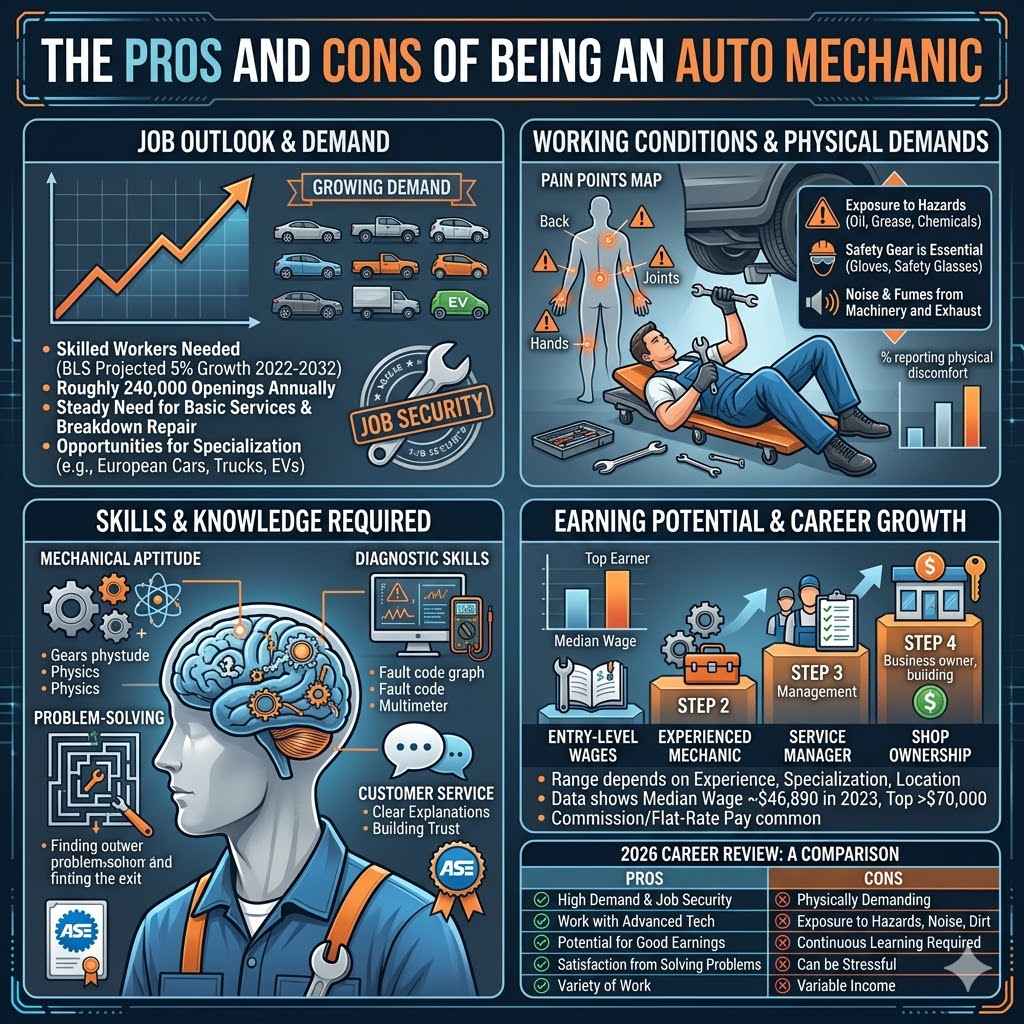
Job Outlook and Demand
The need for skilled auto mechanics remains strong. As more cars are produced and older vehicles stay on the road, the demand for repair and maintenance services continues to grow. This steady demand offers job security for those with the right skills.
Many mechanics find they have plenty of work, year-round.
The automotive industry is always changing. New car models come with more complex technology. This means mechanics need to keep learning.
But this also creates a need for specialists. The ability to adapt and learn new systems is a big plus for a mechanic’s career. Being good at fixing cars means you’ll likely always find a job.
- Consistent Demand for Services: Cars need regular oil changes, tire rotations, and brake checks. Breakdowns happen, too. This steady need for basic upkeep ensures that auto mechanics are always in demand. Even during economic downturns, people tend to keep their cars running rather than buying new ones.
- Opportunities for Specialization: The automotive field is vast. You can choose to focus on specific types of vehicles, like European cars, trucks, or electric vehicles. You can also specialize in certain systems, such as transmissions, engines, or electrical systems. This allows for a deeper expertise and can lead to higher earning potential.
- Technological Advancements Drive Need: While new technologies like hybrid and electric vehicles present learning curves, they also create new repair needs. Mechanics who embrace learning about these systems will find themselves even more valuable in the job market. The integration of computers and complex electronics in modern cars requires specialized diagnostic skills.
Statistics show a positive trend. According to the Bureau of Labor Statistics, employment of automotive technicians and mechanics is projected to grow 5 percent from 2022 to 2032. This is about as fast as the average for all occupations.
This growth is driven by the increasing number of vehicles and the aging of the current car population. Roughly 240,000 openings for automotive technicians and mechanics are projected each year, on average, over the decade. Many of these openings are expected to result from the need to replace workers who transfer to different occupations or exit the labor force, such as to retire.
Working Conditions and Physical Demands
The job of an auto mechanic is often physically demanding. Mechanics spend long hours on their feet. They often work in awkward positions, bending and reaching to access parts of vehicles.
The work can also involve heavy lifting of tires or engine components.
The work environment can be noisy and dirty. Mechanics are exposed to oil, grease, and various chemicals. While safety measures are in place, the nature of the work means a certain level of physical exertion and exposure is unavoidable.
Safety gear, like gloves and safety glasses, is essential to protect against potential hazards.
- Physical Strain: Many tasks require bending, kneeling, or lying down under vehicles. This can put a strain on joints and the back over time. Repetitive motions are also common.
- Exposure to Hazards: Mechanics work with various fluids, including gasoline, oil, and coolants, which can be harmful if not handled properly. There’s also the risk of cuts and burns from tools and hot engine parts.
- Noise and Fumes: Auto repair shops can be loud environments due to machinery and engines. There can also be exposure to exhaust fumes, though ventilation systems aim to reduce this.
A survey of automotive technicians found that over 60% reported experiencing some form of physical discomfort, such as back pain or hand injuries, within a given year. This highlights the importance of proper body mechanics and taking breaks when needed. Many mechanics also develop strong upper bodies and hands due to the nature of the work.
Skills and Knowledge Required
Becoming a successful auto mechanic requires a blend of technical skills and problem-solving abilities. You need to understand how various car systems work, from the engine and brakes to the electrical and climate control systems. Strong diagnostic skills are crucial for identifying problems accurately.
Beyond technical know-how, good communication is important. Mechanics need to explain complex issues to customers in a way they can understand. Patience and attention to detail are also vital.
You must be able to follow procedures carefully and troubleshoot issues systematically.
- Mechanical Aptitude: A natural ability to understand how mechanical things work is fundamental. This includes an understanding of gears, levers, and basic physics applied to vehicles.
- Diagnostic Skills: The ability to use diagnostic tools and interpret their readings is essential. This involves using computers and specialized equipment to find the root cause of vehicle problems.
- Problem-Solving: Every car problem is a puzzle. Mechanics need to think critically and logically to figure out why something is not working and how to fix it. This often involves trial and error combined with technical knowledge.
- Customer Service: Explaining repairs, providing estimates, and discussing vehicle health with customers requires good communication. Building trust with clients is important for repeat business.
A study on automotive technician education found that graduates with formal training and certifications, such as those from ASE (National Institute for Automotive Service Excellence), typically have higher starting salaries and better career advancement opportunities. These certifications demonstrate a mastery of specific automotive skills.
Earning Potential and Career Growth
The earning potential for auto mechanics can vary widely. Entry-level positions might offer a modest wage, but as mechanics gain experience and specialize, their salaries tend to increase. Many mechanics work on commission or flat-rate systems, where they earn a set amount for each job they complete.
Career growth can include becoming a lead mechanic, a service manager, or even opening your own repair shop. Specializing in high-demand areas, like electric vehicle repair or advanced diagnostics, can also significantly boost earning potential. Continued education and certification play a big role in career advancement.
- Entry-Level Wages: Starting pay for apprentice mechanics is typically lower as they learn on the job. This is an investment in future earnings.
- Experienced Mechanic Salaries: With several years of experience and specialized skills, mechanics can earn significantly more. Many experienced technicians are well-compensated.
- Service Manager Roles: Moving into management positions offers higher salaries and greater responsibility. This path involves overseeing operations and customer relations.
- Shop Ownership: The ultimate career growth for some is owning their own auto repair business, which offers unlimited earning potential but also significant risk and responsibility.
Data indicates that in 2023, the median annual wage for automotive technicians and mechanics was around $46,890. However, top earners, such as those with specialized skills and certifications, can earn well over $70,000 per year. This wide range shows the impact of experience, specialization, and location on income.
Pros and Cons of Being an Auto Mechanic: 2026 Career Review – A Comparison
To help clarify the choice, let’s compare the key aspects of being an auto mechanic. This table highlights the main advantages and disadvantages you might encounter.
| Pros | Cons |
|---|---|
| High demand for skilled workers, job security. | Physically demanding work, potential for injury. |
| Opportunity to work with advanced technology. | Exposure to noise, dirt, and hazardous materials. |
| Potential for good earnings with experience and specialization. | Continuous learning required to keep up with new tech. |
| Satisfaction from solving complex problems and helping people. | Can be stressful dealing with demanding customers. |
| Variety of work; no two days are exactly alike. | Income can be variable if paid by commission or flat-rate. |
This overview shows that while the career offers many rewards, it also comes with significant challenges. It is important to weigh these factors carefully when considering this profession. The choice depends on your personal preferences, physical capabilities, and career goals.
The Skills You Need to Succeed
For anyone looking at the Pros and Cons of Being an Auto Mechanic: 2026 Career Review, understanding the necessary skills is paramount. It’s not just about being good with your hands. A successful auto mechanic needs a diverse set of abilities to thrive in this dynamic field.
We will explore the essential technical skills, the importance of problem-solving, and the soft skills that make a mechanic stand out.
Technical Proficiency and Tool Mastery
At the core of being an auto mechanic is a deep understanding of how vehicles function. This includes knowing the intricacies of internal combustion engines, braking systems, suspension, steering, and electrical systems. Proficiency with a wide array of tools, from basic wrenches and screwdrivers to advanced diagnostic scanners and multimeters, is absolutely essential.
Mechanics must know the purpose of each tool and how to use it safely and effectively.
Modern vehicles are essentially rolling computers. This means mechanics need to be comfortable with electronic components and software. They must learn to interpret error codes from onboard diagnostic systems (OBD-II).
This technology allows mechanics to pinpoint issues with great accuracy, saving time and reducing guesswork. Staying updated on the latest automotive technology is a continuous requirement for success.
- Engine Systems: Understanding how the engine converts fuel into power, including fuel injection, ignition, and exhaust systems. This involves knowing how to diagnose and repair issues like misfires or poor performance.
- Braking and Suspension: Knowledge of hydraulic systems, anti-lock braking (ABS), and the components that ensure a smooth and safe ride. This includes replacing brake pads, rotors, shocks, and struts.
- Electrical Systems: Expertise in circuits, batteries, alternators, starters, and the complex electronic control modules that manage various vehicle functions. This is often one of the most challenging areas.
- Diagnostic Equipment Usage: Mastering the use of scan tools, oscilloscopes, multimeters, and other specialized equipment to read data, test components, and identify faults.
A common scenario involves a customer reporting that their car is not starting. A mechanic with strong technical skills will first check the battery. If the battery is fine, they might then test the starter motor.
If the starter is working, they would move on to check the fuel pump and ignition system, using diagnostic tools to narrow down the possibilities systematically.
Diagnostic and Problem-Solving Abilities
The ability to diagnose problems is arguably the most critical skill for an auto mechanic. Cars are complex machines, and problems rarely present themselves with obvious symptoms. Mechanics must be able to listen to customer descriptions, observe vehicle behavior, and use their knowledge and tools to pinpoint the exact cause of a malfunction.
This requires a methodical approach. Mechanics often follow a process of elimination. They might start with the most common causes and work their way to less frequent ones.
Strong analytical and critical thinking skills are vital. The satisfaction of figuring out a tough diagnostic challenge and restoring a vehicle to working order is a major reward of the profession.
- Gather Information: Listen carefully to the customer’s description of the problem. Ask clarifying questions about when and how the issue started.
- Perform Initial Inspection: Visually inspect the vehicle for obvious signs of damage or leaks. Check fluid levels and tire pressure.
- Use Diagnostic Tools: Connect a scan tool to the OBD-II port to retrieve any stored diagnostic trouble codes (DTCs). These codes provide valuable clues.
- Test Components: Based on the codes and initial findings, test specific components or systems using appropriate tools like multimeters or pressure gauges.
- Formulate a Repair Plan: Once the root cause is identified, determine the necessary repairs and provide an estimate to the customer.
Consider the case of a vehicle experiencing intermittent stalling. A new mechanic might
Communication and Customer Service
While technical skills are essential, effective communication is equally important for an auto mechanic. Mechanics often deal with customers who have little to no technical knowledge about cars. They need to be able to explain the problem clearly, describe the necessary repairs, and provide an accurate estimate in a way that is easy for the customer to understand.
Good customer service builds trust and loyalty. When customers feel informed and respected, they are more likely to return for future service and recommend the mechanic to others. This involves being patient, honest, and professional.
It also means managing expectations, especially when dealing with unexpected findings during a repair.
- Clear Explanations: Avoid jargon and use simple language to describe what is wrong with the vehicle and what needs to be done.
- Transparency with Estimates: Provide detailed written estimates and get approval before starting any work beyond what was initially agreed upon.
- Professional Demeanor: Maintain a calm and respectful attitude, even with upset or demanding customers.
- Educating Customers: Offer advice on vehicle maintenance to help customers prevent future problems and understand their car better.
Imagine a customer brings in their car for a strange noise. Instead of just saying “It’s the bearings,” a good mechanic would explain “The noise you’re hearing is likely coming from a wheel bearing. This part helps the wheel spin smoothly.
If it fails completely, it could be unsafe. We need to replace the bearing and check the rotor while we’re there. Here’s the estimate.” This empowers the customer.
Continuous Learning and Adaptability
The automotive industry is constantly evolving. New car models are released every year with updated features and technologies. Hybrid and electric vehicles are becoming more common, and they require different maintenance and repair skills than traditional gasoline-powered cars.
For an auto mechanic, continuous learning is not optional; it’s a necessity. This means attending training courses, reading industry publications, and staying curious about new developments. Mechanics who are adaptable and willing to learn new skills are more likely to remain in demand and advance their careers.
Embracing these changes is a key aspect of the Pros and Cons of Being an Auto Mechanic: 2026 Career Review.
For example, the rise of electric vehicles (EVs) presents a new set of challenges and opportunities. Mechanics need to understand high-voltage battery systems, electric motors, and regenerative braking. Manufacturers offer specialized training programs for EV repair.
Mechanics who complete these programs become highly valuable assets.
The Day-to-Day Life of an Auto Mechanic
Exploring the Pros and Cons of Being an Auto Mechanic: 2026 Career Review wouldn’t be complete without looking at what a typical day involves. It’s a hands-on job that demands energy and focus from morning till evening. The routine can vary depending on the shop and the types of vehicles being serviced.
But certain elements are common to most mechanics’ daily work.
Morning Routine and Job Assignment
Most auto mechanics start their day early. They arrive at the shop, clock in, and often have a brief team meeting. The service advisor or shop manager usually assigns the day’s work.
This involves reviewing repair orders (ROs) for the vehicles that are scheduled for service or have been dropped off by customers.
Each RO details the customer’s complaint and the work requested. Mechanics might pick their jobs based on their expertise or what’s next in line. They gather the necessary tools and parts before heading to the bay where the vehicle is parked.
This preparation ensures they can start working efficiently without delays.
- Reviewing Repair Orders: Mechanics examine the ROs to understand the vehicle’s history, the customer’s concerns, and the specific tasks required.
- Gathering Tools and Parts: Before starting a job, mechanics ensure they have all the necessary tools, equipment, and any pre-ordered parts for the repair.
- Initial Vehicle Assessment: Upon receiving the vehicle, a mechanic might perform a quick walk-around inspection to note any visible issues or damage before starting the diagnostic or repair process.
- Prioritizing Tasks: Mechanics often juggle multiple repair orders, prioritizing urgent jobs or those with a tight deadline.
A typical morning might involve looking at an RO for a car that’s making a loud grinding noise when braking. The mechanic would then get the car into a bay, confirm the noise by test-driving it, and begin to inspect the braking system.
Performing Repairs and Diagnostics
The bulk of a mechanic’s day is spent working on vehicles. This can range from routine maintenance like oil changes and tire rotations to complex diagnostic work and major repairs. Mechanics use their skills and tools to identify problems, disassemble parts, replace or repair components, and reassemble everything correctly.
Diagnostic work is often the most challenging. It involves using specialized equipment to figure out why a vehicle isn’t working as it should. This requires patience, logical thinking, and a deep understanding of automotive systems.
Sometimes, a simple fix is all that’s needed. Other times, a problem can be very intricate and take hours to solve.
- Routine Maintenance: Tasks like oil changes, filter replacements, fluid top-offs, tire rotations, and multipoint inspections.
- Brake System Repairs: Replacing brake pads, rotors, calipers, and bleeding brake lines.
- Engine Diagnostics and Repair: Identifying issues with spark plugs, ignition coils, fuel injectors, sensors, and performing engine tune-ups or major overhauls.
- Electrical System Troubleshooting: Diagnosing problems with batteries, alternators, starters, wiring harnesses, and power accessories.
- Suspension and Steering Work: Replacing ball joints, tie rods, shocks, struts, and performing wheel alignments.
For instance, a mechanic might spend the morning diagnosing why a check engine light is on. They connect a scan tool, retrieve a code indicating an issue with the oxygen sensor. They then test the sensor, determine it needs
Interacting with Customers and Service Advisors
Mechanics don’t work in isolation. They constantly interact with service advisors, who act as the liaison between the mechanic and the customer. Mechanics report their findings, explain the necessary repairs, and discuss any unexpected issues that arise.
The service advisor then communicates this information to the customer.
Sometimes, mechanics might speak directly with customers, especially if a more in-depth explanation is needed or if the customer has specific questions. Building a good working relationship with service advisors is crucial for smooth operations. Clear and timely communication ensures that customers are well-informed and satisfied.
- Reporting Findings: Mechanics clearly explain the diagnosed problem, the proposed repair solution, and the estimated time and cost to the service advisor.
- Getting Approval for Extra Work: If additional issues are found during a repair, the mechanic consults with the service advisor, who then seeks customer approval before proceeding.
- Answering Technical Questions: Mechanics might be called upon to clarify technical details of a repair for the service advisor or even the customer.
- Collaborating on Complex Issues: In some shops, mechanics may work together or consult with senior technicians on particularly challenging diagnostic problems.
A mechanic might discover a worn timing belt during a routine inspection. They would then inform the service advisor, who would explain to the customer the importance of replacing it, the risks of it breaking, and provide an estimate. The mechanic would wait for approval before ordering parts and scheduling the repair.
End of Day Tasks and Preparation
As the workday winds down, mechanics have a few key tasks to complete. They need to finish any current jobs, ensuring they are properly documented. This includes noting down the parts used, labor hours, and any specific details about the repair.
They also clean their work area and tools.
Proper cleanup is essential for safety and efficiency. A clean bay prevents accidents and makes it easier to find tools for the next day. Mechanics also prepare for the next day by reviewing their assigned jobs or checking for any new repair orders that might have come in.
This helps them hit the ground running in the morning.
- Completing Documentation: Filling out all necessary paperwork for completed jobs, including parts used, labor time, and any special notes.
- Tool and Bay Cleanup: Organizing tools, cleaning up any spills or debris in their work bay, and ensuring equipment is properly stored.
- Preparing for the Next Day: Reviewing upcoming repair orders and identifying any parts that may need to be ordered in advance.
- Vehicle Pickup and Delivery Prep: Ensuring vehicles are ready for customer pickup, including a final quality check.
A mechanic might finish a brake job, document it, clean their tools, and ensure the vehicle is parked in the designated area for pickup. They might then check the schedule for tomorrow’s first job, ensuring they know what to expect. This attention to detail ensures a smooth transition to the next workday.
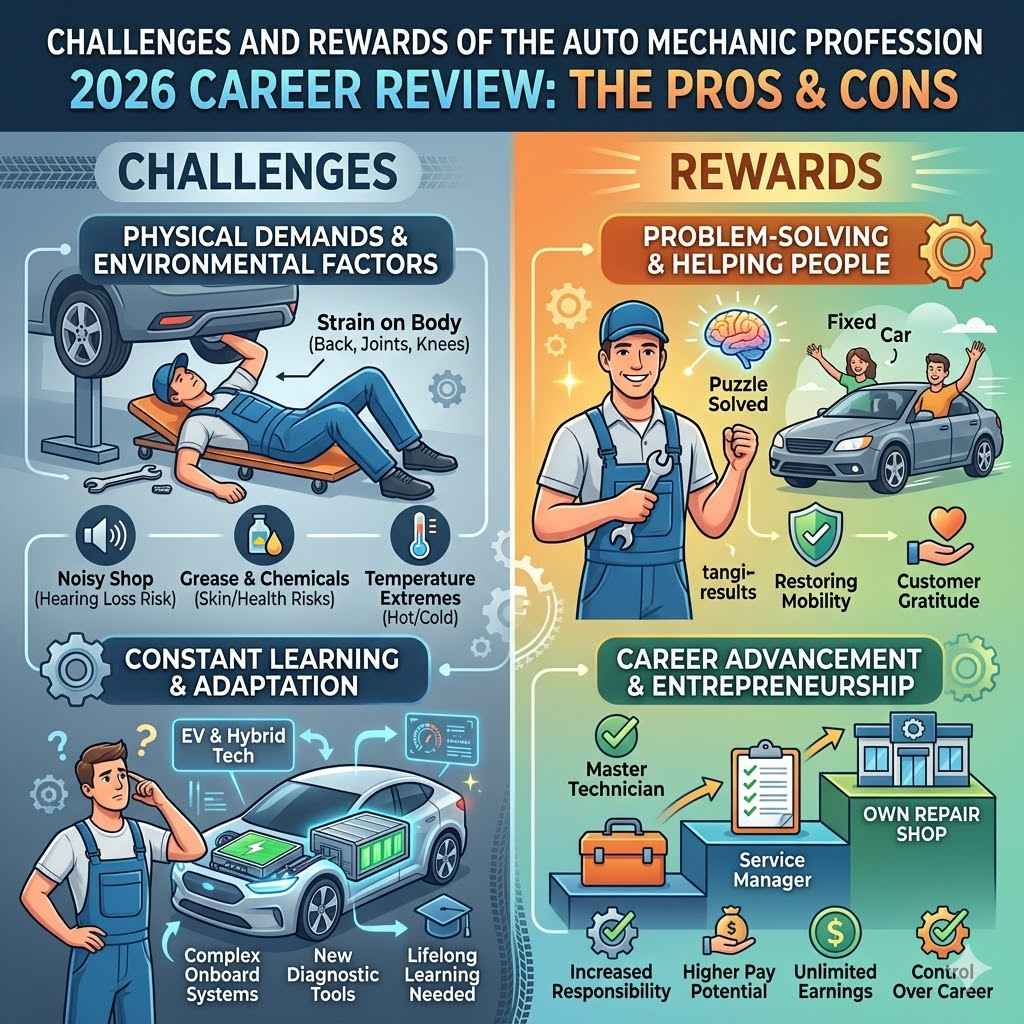
Challenges and Rewards of the Auto Mechanic Profession
Delving into the Pros and Cons of Being an Auto Mechanic: 2026 Career Review involves looking at both the difficult aspects and the satisfying elements of this career. It’s a job that requires resilience and offers significant rewards for those who are passionate about cars and problem-solving.
The Physical Demands and Environmental Factors
One of the most significant challenges is the physical nature of the job. Mechanics often spend their days on their feet, bending, kneeling, and reaching into tight spaces. This can lead to chronic back pain, joint issues, and other physical ailments over time.
The work is also physically taxing, requiring stamina and strength.
The work environment itself can be demanding. Auto repair shops are typically noisy, with the sounds of machinery, power tools, and running engines. Mechanics are also exposed to grease, oil, chemicals, and exhaust fumes.
While safety protocols and ventilation systems are in place, the inherent nature of the work involves a certain level of environmental exposure that can be challenging for some.
- Strain on the Body: Constant bending, lifting, and working in awkward positions can lead to long-term musculoskeletal problems.
- Exposure to Chemicals: Working with oils, greases, solvents, and other automotive fluids can pose health risks if proper protective gear is not used consistently.
- Noise Pollution: The loud environment of a repair shop can contribute to hearing loss over time if hearing protection is not worn regularly.
- Temperature Extremes: Work environments can be hot in the summer and cold in the winter, especially in less climate-controlled shops.
A 2021 study on occupational health for automotive technicians found that a significant percentage reported experiencing shoulder, wrist, or knee pain. This underscores the importance of ergonomic practices and taking care of one’s body throughout a career in this field.
The Need for Constant Learning and Adaptation
The automotive industry is in a state of rapid transformation. With the rise of electric vehicles (EVs), hybrid technology, and increasingly sophisticated onboard computer systems, mechanics must constantly update their skills. What a mechanic learned five years ago might be outdated today.
This requires a commitment to lifelong learning. Mechanics need to attend training sessions, get new certifications, and spend time familiarizing themselves with new diagnostic tools and repair procedures. While this can be challenging, it also keeps the job interesting and ensures mechanics remain valuable in the evolving market.
The ability to adapt is a key factor in career longevity.
For example, working on an electric car requires understanding high-voltage battery systems, which are very different from traditional gasoline engines. Mechanics need specialized training and safety equipment to handle these vehicles. Those who embrace this learning curve will find more opportunities.
The Reward of Problem-Solving and Helping People
Despite the challenges, being an auto mechanic offers significant rewards. The core of the job is problem-solving, which can be incredibly satisfying. Successfully diagnosing and fixing a complex issue provides a sense of accomplishment and expertise.
Mechanics are often the heroes who get people back on the road.
The ability to help people solve their transportation problems is a major draw for many mechanics. When a customer’s car is broken down, it can disrupt their life. Knowing that your skills have restored their mobility and convenience brings a great deal of personal satisfaction.
This aspect of the job contributes to high job satisfaction for many.
- Intellectual Stimulation: Each car problem is a puzzle that requires critical thinking and technical knowledge to solve, making the job mentally engaging.
- Tangible Results: Mechanics can see the direct results of their work – a repaired car driving away. This provides a strong sense of accomplishment.
- Customer Gratitude: Helping someone out of a difficult situation by fixing their car often leads to genuine gratitude from customers.
- Sense of Expertise: Becoming a skilled mechanic means developing a high level of specialized knowledge and practical ability that is respected.
Consider a scenario where a family is stranded due to a car breakdown during a vacation. A mechanic who can quickly diagnose and repair the vehicle not only solves the immediate problem but also saves their vacation. The relief and thanks from the family are deeply rewarding.
Career Advancement and Entrepreneurship
The auto mechanic profession offers a clear path for career advancement. With experience and additional certifications, mechanics can move into supervisory roles like lead technician or service manager. These positions often come with increased responsibility and higher pay.
For ambitious individuals, entrepreneurship is a significant reward. Many experienced mechanics dream of opening their own repair shop. While this requires significant investment and business acumen, it offers the ultimate control over one’s career and the potential for substantial financial success.
The skills learned as a mechanic are a strong foundation for owning a business.
A mechanic might start by becoming a master certified technician, then move to managing a team of mechanics, and eventually, after years of saving and planning, open their own independent garage. This progression allows for growth and the realization of long-term career aspirations.
Frequently Asked Questions
Question: What is the average salary for an auto mechanic?
Answer: The average salary can vary widely based on experience, location, and specialization. However, many sources indicate a median annual wage in the United States around $46,000 to $50,000 for experienced technicians.
Question: Do I need a college degree to become an auto mechanic?
Answer: No, a college degree is typically not required. Many mechanics gain their skills through vocational training programs, community college courses, or apprenticeships. Certifications are often more important than a formal degree.
Question: What are the biggest challenges for new auto mechanics?
Answer: New mechanics often face the challenge of gaining hands-on experience, mastering diagnostic tools, and keeping up with rapidly changing automotive technology. Building confidence and speed can also be initial hurdles.
Question: Is it a good career choice for the future?
Answer: Yes, the career outlook for auto mechanics is generally positive. The demand for skilled technicians remains strong as vehicles continue to require maintenance and repair, especially with the increasing complexity of modern cars.
Question: Can auto mechanics specialize in certain areas?
Answer: Absolutely. Mechanics can specialize in areas like hybrid and electric vehicles, diesel engines, transmissions, suspension systems, or even specific car brands. Specialization can lead to higher earning potential and more focused career paths.
Final Thoughts
The Pros and Cons of Being an Auto Mechanic: 2026 Career Review shows a demanding yet rewarding field. You’ll gain practical skills and problem-solving expertise. The job offers stability due to consistent demand.
While physical challenges exist, the satisfaction of fixing cars and helping people is immense. Consider your passion for vehicles and mechanical work to see if this path is right for you.