Automotive Service Technician vs. Mechanic: What Changes
An automotive service technician usually starts with diagnosis and electronic troubleshooting, while a mechanic usually centers on mechanical repair and replacement; if the symptom is vague, start with diagnostics, and if the failed part is obvious, send it to repair. Miss that split, and you can buy parts you did not need and miss the real fault. This guide explains title differences, shop duties, pay context, and which symptoms point to each role.
| Decision factor | Automotive Service Technician | Mechanic | Winner |
|---|---|---|---|
| Best first move on a vague symptom | Reads codes, checks live data, traces wiring, and isolates the root cause | Inspects worn or broken parts and replaces what has failed | Automotive Service Technician |
| Best fit for obvious mechanical failure | Can still diagnose it, but may be overkill for a visible break | Usually faster for a bent bracket, leaking shock, or worn brake hardware | Mechanic |
| Electronic and computer-controlled systems | Stronger match for OBD-II, sensors, CAN-network faults, and ADAS calibration | May handle some electrical work, but usually less diagnostic-centered | Automotive Service Technician |
| Hands-on replacement work | Does it often, especially after diagnosis | Core of the job | Mechanic |
| Shop-title overlap | Often the same worker in modern shops | Often the same worker in modern shops | Tie |
Diagnosis-First Workflow and Essential Service Tools


The real split is workflow, not a hard wall. An automotive service technician usually starts with diagnosis first, especially on modern vehicles with sensors, modules, and software-controlled systems; a mechanic is usually the person who completes the physical repair after the failed part is known. In many shops, one person does both.
Why many shops use the titles interchangeably
Independent repair shops, dealer service departments, and franchise chains do not all write job descriptions the same way. One employer may call the job “technician” because it wants diagnostic skill with scan tools and electrical testing; another may use “mechanic” for the same mix of repair work and troubleshooting.
The U.S. occupation code even groups them together as Automotive service technicians & mechanics. That matters for labor-market data, pay, and job growth, because title differences often sit inside the same occupation rather than in two separate careers.
How employer type changes the job description
Dealers often expect more factory process work, software use, and model-specific training. Independent shops may lean harder on broad repair skill, especially suspension, brakes, exhaust, and routine maintenance. Fleet employers may care more about uptime than titles, which pushes the role toward whichever task gets the vehicle back in service fastest.
| Role | Typical daily work | Common tools | Typical systems |
|---|---|---|---|
| Automotive service technician | Inspection, diagnostic testing, electrical troubleshooting, maintenance, and repair verification | OBD-II scan tool, diagnostic software, multimeter, oscilloscope, calibration equipment | Engine management, ABS, airbags, A/C controls, transmission electronics, ADAS |
| Mechanic | Component removal, replacement, adjustment, and mechanical repair | Wrenches, socket sets, lifts, presses, jacks, hand tools | Brakes, suspension, exhaust, engine hardware, driveline parts |
Technician work in practice
An automotive service technician works on modern vehicles with sensors, cameras, and pressure monitors, and uses specialized diagnostic machines and software to find the fault. That matters when a problem is intermittent, when warning lights come and go, or when the symptom sits inside a control module rather than a visibly broken part.
Mechanic work in practice
A mechanic’s work is more physical: engine repairs, brake work, tire changes, suspension repairs, exhaust repairs, and many transmission jobs. The title still fits traditional shop language, but it does not mean the person avoids diagnosis. It usually means the repair side is the main focus.
📊 STVT says its automotive service technician program is 71.5 credit hours. Source: STVT.
When should you see a technician vs. a mechanic?
Start with a technician when the problem is vague, intermittent, or electronic. Start with a mechanic when the failure is visible, noisy, leaking, or clearly mechanical. Newer cars with ADAS, module networks, and calibrated camera systems usually need diagnosis first even when the symptom seems simple.
Symptoms that point to diagnostics first
Check-engine lights, random stalling, rough idle, CAN-network faults, battery drains, ABS or airbag warnings, and ADAS messages all point toward scan-tool work first. Those symptoms often need code reading, live-data checks, and wiring or module testing before any parts come off the car.
Symptoms that point to repair first
Grinding brakes, leaking struts, a broken exhaust hanger, or an obvious steering part that has play usually belong in the repair lane first. The failed component is often visible or easy to verify with a physical inspection, so the job begins with removal, replacement, and a road test.
When either role may be the right first call
Some symptoms sit in the middle. A vibration at highway speed, for example, might be tire balance, a bent wheel, a worn CV joint, or a sensor issue on some vehicles. In that case, a shop that can both diagnose and repair is the safest first stop.
What tools does a technician use that a mechanic does not?
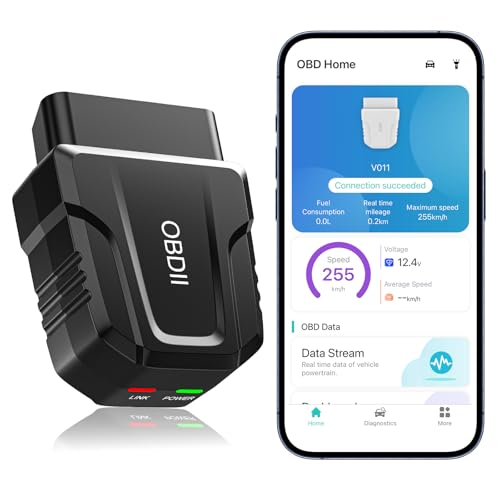
A technician is more likely to rely on OBD-II scan tools, live-data software, multimeters, oscilloscopes, and calibration gear for camera and sensor systems. A mechanic may own some of the same tools, but a diagnostics-first job leans on them every day, not just on hard cases.
OBD-II and live-data scanning
OBD-II scan tools are used to pull diagnostic trouble codes and view sensor readings while the engine runs. That is central for check-engine-light complaints, fuel trim problems, misfire tracing, and transmission control faults, because the fault often sits in the data before it shows up as a broken part.
Electrical testing and calibration equipment
Multimeters and oscilloscopes matter when a code points to a wiring issue, sensor dropout, or intermittent signal loss. Calibration equipment becomes important after windshield replacement, camera removal, steering work, or any repair that affects ADAS sensors. A camera that is not aligned can cause false warnings or incorrect driver-assist behavior.
Proof matrix: 10 common symptoms and the best first stop
The table below gives a practical first call, not a final diagnosis. In many cases, the same shop worker may inspect, diagnose, and repair the vehicle. The point is to route the car toward the most efficient first step.
| Symptom | Best first stop | Likely tools or tests | Certification note |
|---|---|---|---|
| Check-engine light | Technician | OBD-II scan, live data, misfire counters, smoke test if needed | ASE helps; the issue is often electronics or engine management |
| Rough idle | Technician | Scan data, vacuum leak test, ignition and fuel checks | ASE and diagnostic skill matter more than basic part swapping |
| No-start | Either | Battery test, starter test, fuel pressure check, scan tool, wiring checks | Could need mechanical repair or electrical diagnosis |
| Brake noise | Mechanic | Wheel-off inspection, pad and rotor measurement, caliper check | Brake repair is common shop work; ASE brake knowledge helps |
| Steering pull | Either | Tire inspection, alignment check, suspension inspection, road test | May require mechanical repair or sensor/calibration follow-up |
| A/C inoperative | Technician | Manifold gauges, leak test, scan tool, refrigerant handling tools | EPA Section 609 matters for MVAC refrigerant work |
| Battery drain | Technician | Parasitic draw test, multimeter, fuse isolation, module sleep-state checks | Electrical diagnosis is a technician-heavy task |
| ABS or airbag warning light | Technician | Scan tool, live data, sensor testing, wiring inspection | Safety-system faults need diagnostic skill first |
| Transmission slip | Technician | Scan data, fluid inspection, pressure testing, software checks | Modern transmission work often blends diagnostics and repair |
| ADAS calibration after windshield replacement | Technician | Calibration targets, alignment verification, scan-tool relearn procedures | Camera and sensor calibration training matters here |
Say your midsize SUV throws a check-engine light on Monday, idles rough at stoplights on Wednesday, and then smooths out on Friday. That pattern points away from a single obvious broken part and toward diagnostics first, because the fault may be intermittent and stored in live data rather than visible damage.
Suppose a compact sedan comes in with a loud grinding sound from the front left brake and a pad backing plate that is visibly contacting the rotor. That is a repair-first job. The part is already identified, so the fastest path is mechanical inspection, replacement, and a road test.
What certifications do automotive technicians usually need?
ASE certification is a widely recognized industry credential for automotive technicians, and it can signal competency across multiple repair areas. EPA Section 609 is different: it is tied to MVAC refrigerant handling for A/C work. The two credentials are not interchangeable, and many jobs need one without the other.
ASE certification
ASE is common for technicians because it fits the diagnostics-and-repair mix across brakes, suspension, electrical systems, engines, and transmissions. Employers often use it as a proof point that the worker can handle more than one repair area, especially on modern vehicles with integrated systems.
EPA Section 609
If the job involves MVAC or MVAC-like system work, refrigerant handling rules matter. EPA Section 609 is the credential tied to that work, so a technician who services automotive A/C should understand when it is required. That requirement is separate from general repair skill. (lincolntech.edu)
Specialty paths
Diesel, EV, and manufacturer training can matter as much as, or more than, a general credential in some shops. EV service adds high-voltage procedures. Diesel work adds different fuel systems, emissions hardware, and heavier driveline components. Manufacturer training becomes important where software updates and calibration procedures are brand-specific.
Automotive service technician vs. heavy duty mechanic
Automotive service technicians mainly work on light-duty cars and trucks, while heavy duty mechanics typically specialize in commercial trucks, diesel equipment, buses, and other larger platforms. The title shift usually reflects vehicle class, not a simpler-versus-better distinction. The systems, tools, and safety procedures change with the platform.
Different vehicles, different systems
A heavy duty mechanic deals with larger braking systems, air systems, diesel engines, and commercial driveline parts. A light-duty automotive service technician is more likely to see passenger-car electronics, ADAS, gasoline engine management, and compact packaging that demands different service procedures.
When the title changes in a fleet shop
Fleet and trucking employers often sort jobs by duty cycle and equipment size. A shop that keeps delivery trucks on the road may use one title for light-duty vans and another for tractor-trailer or diesel work. The best clue is the vehicle class, not the title alone.
Automotive service technician vs. mechanic
For jobseekers, the better title depends on what kind of work you want most often. Choose automotive service technician if you want diagnostics-heavy work, scan tools, electrical troubleshooting, and newer vehicles. Choose mechanic if you want more hands-on component replacement, traditional mechanical repair, and broad physical service work.
Choose automotive service technician if…
Choose this path if you want to read trouble codes, trace wiring, work with ADAS, and diagnose intermittent faults. It fits better in dealer service departments, electronics-heavy shops, and any environment where a scan tool and software are part of the daily routine.
Choose mechanic if…
Choose this path if you prefer direct repair work such as brakes, suspension, exhaust, engine hardware, and component replacement. It fits well in independent repair, fleet maintenance, and jobs where fast physical service matters more than deep electronic troubleshooting.
How to read shop ads for pay and task mix
Do not read the title alone. Look for words like diagnostics, electrical, ADAS, drivability, scan tools, and manufacturer training if you want technician work. Look for brakes, suspension, line repair, and overhaul if you want repair-heavy work. Pay often tracks skill depth, regional demand, and employer type more than the title itself.
Pay and labor-market context
The occupation is large and still growing, but modestly. The U.S. workforce for automotive service technicians & mechanics was 782,128 in 2024, average yearly wage was $52,579 in 2024, and the 10-year job growth projection was 4.17%. Automotive repair & maintenance employed 66.1% of these workers, and car dealers employed 28%.
Is automotive service technician a better-paid job than mechanic?
Not by title alone. In the real market, a technician with stronger diagnostic skill can earn more than a repair-focused mechanic, but the reverse can also be true in a different shop or region. Pay follows specialization, certifications, employer type, and the amount of electronic work expected on the job.
Frequently asked questions
What is the difference between an automotive service technician and a mechanic?
An automotive service technician usually focuses on diagnosis, scan tools, electrical troubleshooting, and systems driven by software. A mechanic usually focuses on physical repair and replacement. In many shops, the same person does both, so the difference is often about workflow and emphasis, not a strict job boundary.
Is auto technician the same as mechanic?
In everyday shop language, often yes. In practice, “technician” usually signals stronger diagnostic and electronic work, while “mechanic” leans toward hands-on repair. Employers use the words differently, and the same worker may perform both duties depending on the shop and the day’s repair order.
Products related to this article
Sponsored / affiliate links. As an Amazon Associate I earn from qualifying purchases. I may earn additional commission from eligible campaigns.
 LABRIMP Transmission Shifter Bracket Lever Kit Heavy Duty Replacement for Precise Fit Easy Installation Shifter Rack Repair Hardware
 OBD2 Scanner Diagnostic Tool - Check Engine Light Code Reader, Reset Function, Data Stream, I/M Readiness, Full Features, Modes 6 & 8, for All 1996+ Vehicles, Automotriz Scanner