Racing Cars or Skydiving Which Is Thrilling
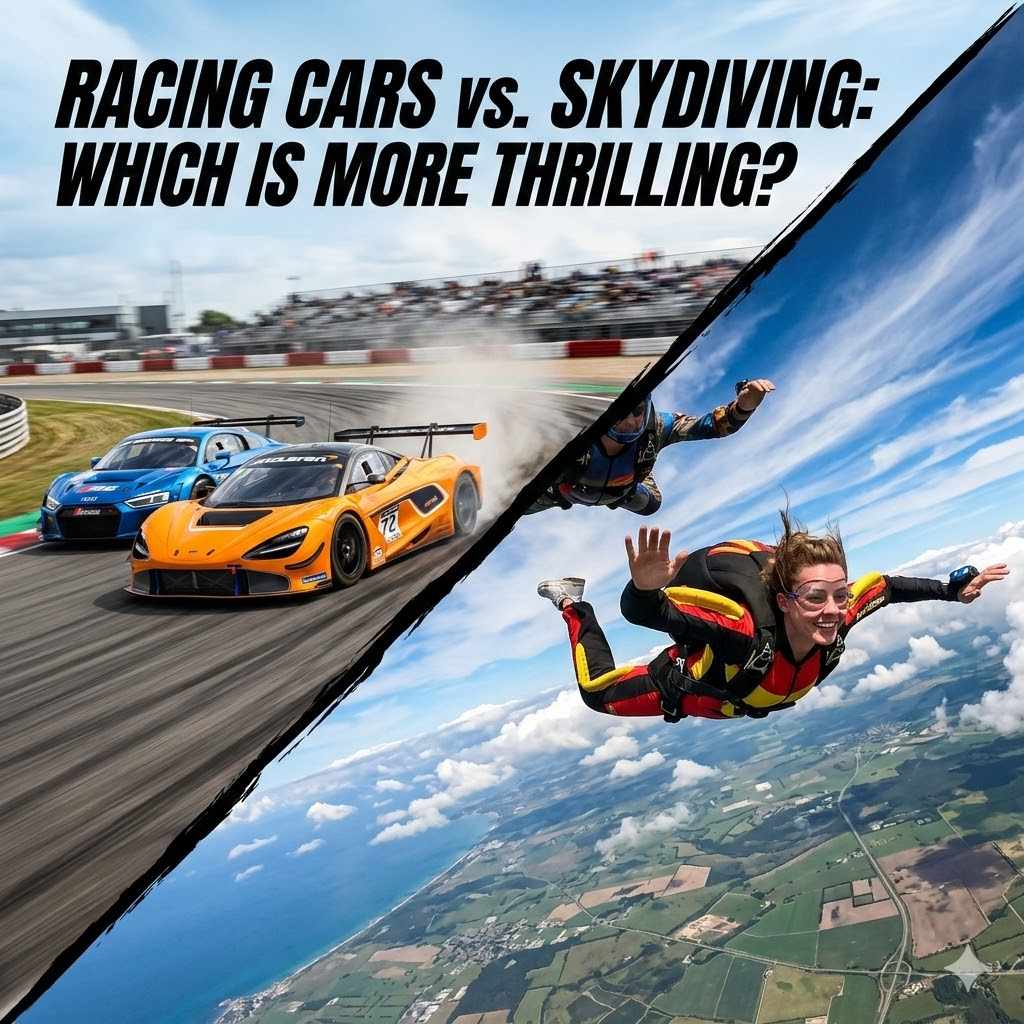
Figuring out what makes your heart race can be tricky. For many, the idea of Racing Cars or Skydiving: Which Is More Thrilling? pops up when they want a big rush. It’s a tough question because both things sound super exciting, but also a little scary if you’ve never tried them.
Don’t worry, we’ll break it down simply. We’ll explore what makes each activity so exciting and help you see which one might be right for you. Get ready to learn about the amazing thrills that await!
Comparing Racing Cars and Skydiving Thrills
Many people wonder about Racing Cars or Skydiving: Which Is More Thrilling? because both experiences offer intense feelings and push people beyond their comfort zones. The excitement comes from speed, risk, and a sense of control or lack thereof. For beginners, imagining these sensations can be challenging.
They might picture the high speeds of a race car or the freefall of skydiving and feel a mix of awe and apprehension. This article aims to clarify the unique thrills each activity provides, making it easier to understand their appeal and potential for excitement. We will look at the science behind the thrill and what makes each a memorable adventure.
The Speed and Precision of Race Cars
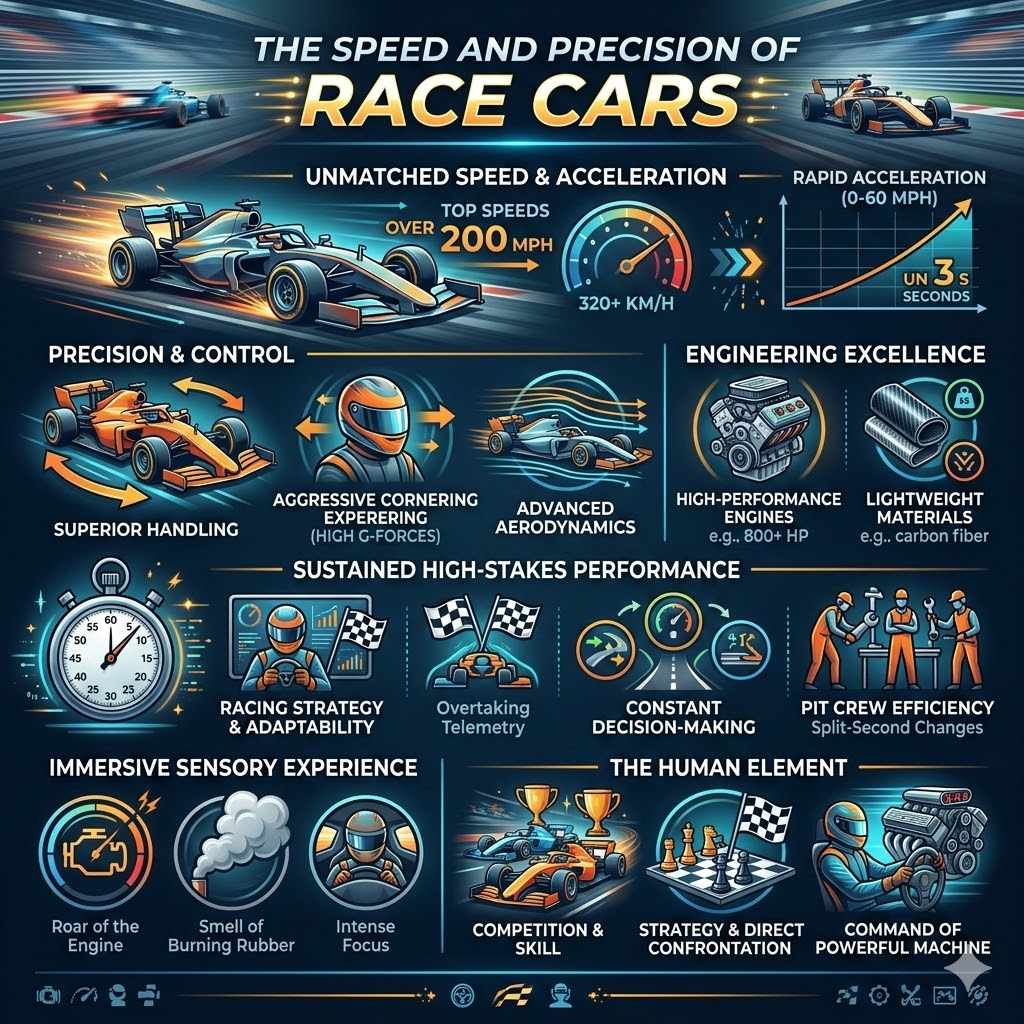
Racing cars offer a thrill deeply rooted in speed, precision, and control. Drivers experience G-forces as they corner at incredible speeds, pushing the limits of physics and their own reflexes. The roar of the engine, the smell of burning rubber, and the intense focus required create an immersive sensory experience.
Unlike the singular event of a skydive, a race is a sustained period of high-stakes performance. Drivers must constantly adapt to track conditions, other racers, and their vehicle’s behavior. This ongoing challenge demands split-second decisions and unwavering concentration.
The thrill of racing cars is also about the human element. It’s the competition, the strategy, and the skill of the driver. The feeling of being in complete command of a powerful machine, even as it teeters on the edge of losing traction, is a unique adrenaline rush.
It’s a battle of nerves and skill against both the track and other competitors. This makes it a thrilling prospect for those who enjoy strategy and direct competition.
Technical Aspects of Racing Car Performance
The performance of a racing car relies on advanced engineering and physics. Aerodynamics play a crucial role, with wings and body shapes designed to create downforce. Downforce presses the car onto the track, increasing tire grip, especially at high speeds.
Without adequate downforce, the car would lift off the ground at extreme velocities, leading to a loss of control. This is why race cars can corner at speeds that seem impossible for regular vehicles.
Engine power is another key factor. High-performance engines generate hundreds of horsepower, allowing for rapid acceleration. This acceleration contributes significantly to the G-forces a driver experiences.
Braking systems are equally vital. Carbon-ceramic brakes, for instance, can withstand extreme heat and provide immense stopping power, enabling drivers to brake later and harder into corners. The tires themselves are also specialized, designed for maximum grip on asphalt, even under immense stress and heat.
The Psychology of Racing Thrills
The psychological thrill in car racing is multifaceted. It involves a controlled exposure to danger, often referred to as “edgework.” This is the practice of engaging in risky activities to feel alive and alert. For racers, the intense focus required to manage speed and navigate tight turns can create a state of “flow,” where they are fully immersed and lose track of time.
This heightened state of awareness is highly rewarding.
Another aspect is the sense of mastery. When a driver successfully executes a difficult maneuver, like an overtake or a perfect corner, there’s a powerful feeling of accomplishment. This contrasts with the more passive experience of freefall in skydiving.
The competitive aspect also fuels adrenaline. The desire to win, to outperform others, adds another layer of excitement and pressure, driving the performance and the associated thrill.
Consider a scenario where a race car driver is approaching a hairpin turn at 150 miles per hour. Their heart rate might be around 160 beats per minute. They must brake hard, downshift, and perfectly manage the steering to maintain traction.
The car vibrates intensely, and the G-forces press them into their seat. This combination of sensory input and the mental demand for precision creates an intense, sustained thrill. It’s a moment where the driver is fully alive and in control of a dangerous situation.
Real-Life Example: Formula 1 Racing
Formula 1 racing provides a prime example of extreme vehicular thrills. Drivers operate machines capable of accelerating from 0 to 60 mph in under 2.5 seconds and reaching speeds well over 200 mph. During a Grand Prix, cars experience extreme G-forces, sometimes exceeding 5 Gs in corners.
This is more than a fighter pilot experiences during high-G maneuvers. The physical and mental endurance required is immense. A driver can lose up to 8 pounds of fluid during a single race due to exertion and heat.
The strategies employed by teams, including pit stop timing and tire management, add a layer of intellectual thrill. Fans experience vicarious thrills through the on-screen action, the commentators’ exclamations, and the shared excitement of other viewers. The unpredictability of weather, mechanical failures, or driver errors ensures that every race is unique and can deliver unexpected moments of drama and excitement, making it a captivating sport for many.
The Ultimate Rush of Skydiving
Skydiving offers a thrill of a different kind, one characterized by absolute freedom and an intense confrontation with gravity. The initial leap from a plane, thousands of feet in the air, is an iconic moment of courage. The feeling of freefall, where wind rushes past at speeds up to 120 mph, is an unparalleled sensory experience.
It’s a complete surrender to the elements, a stark contrast to the controlled environment of a race car.
The thrill here is often more existential. It’s about overcoming a primal fear of heights and falling. The vastness of the landscape below and the immense sky above create a sense of awe and perspective.
After the parachute opens, the descent becomes a serene glide, offering a peaceful, reflective experience after the intense adrenaline surge of freefall. This duality makes skydiving a unique adventure for those seeking profound personal challenge.
Understanding Freefall Dynamics
Freefall in skydiving is a fascinating interplay of gravity and air resistance. When a skydiver first jumps, gravity is the primary force pulling them down. As their speed increases, air resistance, also known as drag, starts to oppose gravity.
Drag is influenced by the skydiver’s body position, surface area, and speed. When the force of drag equals the force of gravity, the skydiver reaches terminal velocity, meaning they stop accelerating and fall at a constant speed.
For a typical freefalling skydiver in a stable belly-to-earth position, this terminal velocity is around 120 mph. However, experienced skydivers can alter their body position to increase drag and slow down, or to decrease drag and speed up, reaching speeds of over 200 mph in a head-down or stand-up position. This ability to manipulate their speed through body control adds an element of skill and engagement to the freefall experience, even in its most intense phase.
The Psychological Impact of Freefall
The psychological impact of freefall is profound. It taps into our most basic fears, particularly the fear of falling. Successfully completing a skydive can lead to a significant boost in self-confidence and a sense of empowerment.
The intense adrenaline release during freefall is often described as euphoric. It can lead to what is sometimes called “runner’s high,” a feeling of intense well-being and reduced anxiety after the peak of the experience.
The sensory overload of wind noise, the visual spectacle of the earth from above, and the physical sensation of falling all combine to create a memorable experience. For many, skydiving provides a new perspective on life, making everyday problems seem smaller and less significant. The act of trusting an instructor or a parachute system also builds a unique kind of trust and reliance.
This makes the thrill deeply personal and transformative for many.
Imagine standing at the open door of an airplane at 10,000 feet. The wind is already strong, and the world below looks like a miniature map. Your heart pounds, and your mind races.
Then, you take the leap. For a few seconds, there’s a stomach-lurching sensation, followed by the overwhelming rush of wind as you accelerate. The world becomes a blur of colors, and the sound of the wind drowns out everything else.
This is the peak of the adrenaline rush, a moment of pure, unadulterated sensation.
After what feels like an eternity, but is typically around 60 seconds, the parachute deploys. The sudden deceleration is gentle but noticeable, and the roaring wind is replaced by a soft whoosh. Now, the sensation shifts from intense rush to serene gliding.
You can steer yourself, enjoying the breathtaking views and the quiet calm. This transition from extreme excitement to peaceful observation is a core part of the skydiving thrill, offering a complete sensory and emotional journey.
Real-Life Example: Tandem Skydiving
Tandem skydiving is the most accessible way for beginners to experience the thrill of freefall. In a tandem jump, a novice skydiver is securely harnessed to an experienced instructor. The instructor handles all the technical aspects, including the exit from the plane, freefall maneuvers, and parachute deployment.
This significantly reduces the perceived risk for the participant, allowing them to focus on the experience itself.
The jump typically begins with a briefing and gearing up. Once at altitude, often around 10,000 to 14,000 feet, the skydiver and instructor exit the aircraft. The freefall lasts about 45-60 seconds, during which the participant can experience speeds up to 120 mph.
Following freefall, the instructor deploys the main parachute, and the descent continues for another 5-7 minutes under canopy. This allows for a peaceful ride with stunning aerial views before a soft landing.
Comparing the Thrill Factors
When we compare Racing Cars or Skydiving: Which Is More Thrilling?, we see they offer distinct types of excitement. Racing cars provide a thrill based on sustained high speeds, precision maneuvers, and competitive strategy. The driver is an active participant in controlling a powerful machine, constantly making decisions under pressure.
The danger is real, but it is managed through skill, engineering, and a deep understanding of physics.
Skydiving, on the other hand, offers a thrill primarily through an intense, short burst of freefall, an experience of surrender and confronting primal fears. The participant is largely a passenger during freefall, experiencing the raw power of nature. The risk is undeniable, but the experience is amplified by the unique sensory input and the profound sense of accomplishment after facing and overcoming the fear.
The comparison highlights how different individuals might find one more appealing based on their personality and what they seek in an adrenaline rush.
Speed and Control Versus Freefall and Freedom
The thrill from racing cars is closely tied to the concept of control at high speeds. Drivers harness immense power and must exhibit extraordinary reflexes and strategic thinking to remain in command. This offers a profound sense of agency and mastery over a challenging situation.
The thrill comes from executing perfect turns, overtakes, and managing the car’s performance under extreme conditions. It’s an exhilarating dance with physics, where skill directly dictates outcome.
Skydiving provides a thrill centered on the experience of ultimate freedom and surrendering to the forces of nature. The freefall itself is an intense sensory experience unlike any other, characterized by the rush of wind and the sensation of flying. While the participant has less direct control during freefall, the thrill lies in embracing the moment, overcoming fear, and enjoying the spectacular views.
The parachute ride offers a contrasting calm, a peaceful glide that allows for reflection on the intense experience, providing a unique duality of thrill and serenity.
Here’s a simple way to look at it:
- Racing Cars Thrill: Mastery of a machine, strategic competition, sustained high-speed control.
- Skydiving Thrill: Surrender to nature, overcoming primal fear, intense sensory freedom, unique perspective.
Both activities push individuals to their limits, but in very different ways. One is about pushing limits through skill and precision, the other through embracing vulnerability and raw sensation. The “more thrilling” aspect is truly subjective and depends on what kind of extreme experience a person craves.
Risk Perception and Management
The perception and management of risk differ significantly between racing cars and skydiving. In car racing, risk is managed through rigorous safety standards, advanced vehicle technology, driver training, and track design. Safety nets, run-off areas, and fire-resistant suits are standard.
The risk is calculated and mitigated through these measures, allowing drivers to push boundaries within a structured safety framework.
Skydiving also involves extensive risk management. This includes rigorous parachute maintenance, extensive training for instructors, weather monitoring, and safety protocols for equipment. Tandem jumps are designed with a high margin of safety, with instructors responsible for critical decisions.
While the inherent risk of falling from great heights is apparent, the industry’s safety record is strong due to strict procedures. The thrill comes from facing a perceived high-risk situation that is, in reality, managed with significant safety measures.
Statistics on Extreme Sports Participation and Safety
Understanding participation and safety statistics can offer insight into the perceived risks and popularity of these activities. While exact, directly comparable statistics for “thrill-seeking” in car racing versus skydiving are hard to isolate, general trends in extreme sports can be illustrative. In the United States, figures from organizations like the U.S.
Parachute Association (USPA) indicate a strong safety record for skydiving. In 2022, the USPA reported 10.1 million jumps with 20 fatalities, equating to approximately 0.19 fatalities per 100,000 jumps. This represents a significant improvement over decades, thanks to advancements in training and equipment.
Motorsports like Formula 1 have also seen remarkable safety improvements. Fatalities in top-tier motorsport have decreased dramatically due to car design, track safety features, and driver equipment. For example, the number of fatalities in Formula 1 races has significantly reduced since the 1970s, with modern safety measures contributing greatly.
However, the perception of risk in these high-speed events remains high for spectators and participants alike, contributing to their thrilling nature.
Which Is Right For You?
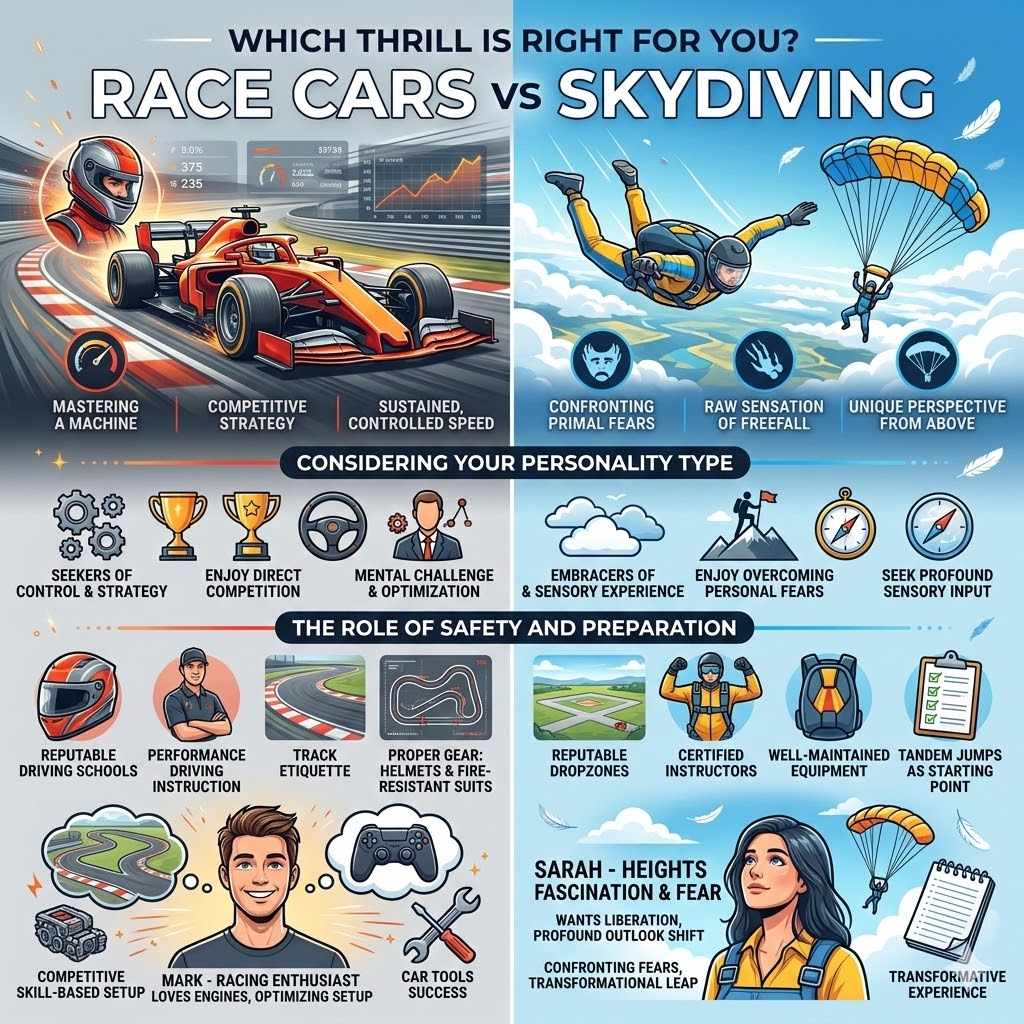
Deciding whether racing cars or skydiving is more thrilling for you depends on your personal preferences and what you seek in an adventure. If you enjoy the idea of mastering a complex machine, engaging in competitive strategy, and experiencing sustained, controlled speed, then the world of race cars might call to you. The thrill here is about precision, skill, and the adrenaline of intense competition.
If, however, you are drawn to the idea of confronting primal fears, experiencing the raw sensation of freefall, and gaining a unique perspective from high above, then skydiving could be your ultimate thrill. The excitement comes from a profound sensory experience and the personal triumph of overcoming a significant challenge. Both offer incredible rushes, but they cater to different desires for excitement and personal growth.
Considering Your Personality Type
Your personality can be a strong indicator of which activity might provide a greater thrill. Thrill-seekers who thrive on control, strategic thinking, and direct competition often gravitate towards activities like motorsports. They enjoy the mental challenge of outmaneuvering opponents and optimizing performance.
The feeling of being in command of a powerful vehicle and executing precise maneuvers can be immensely satisfying and adrenaline-inducing for these individuals.
On the other hand, individuals who are more drawn to experiences that involve surrendering to forces beyond their immediate control, facing significant psychological barriers, and seeking profound sensory input might find skydiving more thrilling. They may be motivated by the challenge of conquering a deep-seated fear and the exhilaration of a unique, immersive experience. The sense of freedom and the altered perspective gained from a skydive can be incredibly rewarding for them.
Here’s a quick personality guide:
- Seekers of Control and Strategy: Might find racing cars more thrilling.
- Embracers of Surrender and Sensory Experience: Might find skydiving more thrilling.
- Those who enjoy direct competition: May prefer racing cars.
- Those who enjoy overcoming personal fears: May prefer skydiving.
The Role of Safety and Preparation
Regardless of which activity sparks your interest, safety and thorough preparation are paramount. For racing cars, this means seeking out reputable driving schools that offer instruction in performance driving and track etiquette. Understanding the vehicle, its limits, and the rules of the track is essential for a safe and thrilling experience.
Proper gear, like helmets and fire-resistant suits, is also crucial.
For skydiving, choosing a reputable dropzone with certified instructors and well-maintained equipment is non-negotiable. Tandem jumps are an excellent starting point, as they minimize the technical learning curve. Listening carefully to your instructor, following all instructions, and understanding the basic safety procedures will ensure the experience is as thrilling as it is safe.
The preparation builds confidence and enhances the enjoyment of the adventure.
Sample Scenarios
Scenario 1: Mark loves the roar of engines and the smell of burnt rubber. He enjoys video games where he can practice racing lines and optimize car setups. He likes the idea of a competition where his skill directly translates to success.
The thought of pushing a car to its limits on a track, feeling the G-forces, and battling for position excites him greatly. He sees racing cars as the ultimate test of skill and nerve.
Scenario 2: Sarah has always been fascinated by heights but also feels a knot of fear when she thinks about falling. She’s read accounts of people who felt incredibly liberated after skydiving and experienced a profound shift in their outlook. The idea of jumping from a plane, feeling the rush of freefall, and then floating peacefully under a parachute appeals to her sense of adventure and her desire to confront her fears in a controlled yet exhilarating way.
She sees skydiving as a leap of faith and a transformative experience.
Frequently Asked Questions
Question: Is racing cars or skydiving more dangerous?
Answer: Both activities have inherent risks, but with proper safety measures and training, they can be managed. Skydiving has a statistical safety record that, per jump, is quite good due to rigorous procedures. Racing, particularly at professional levels, also has advanced safety systems, but the speeds involved present continuous risks.
Your personal perception of danger might also influence which feels more risky.
Question: Can I try racing cars without being a professional driver?
Answer: Absolutely! Many race tracks offer experience days or track days where you can drive sports cars or go-karts on a professional track under supervision. Driving schools also provide excellent opportunities to learn performance driving techniques in a safe environment.
Question: How long does a typical skydive last?
Answer: A tandem skydive experience, from boarding the plane to landing, can take about 2-3 hours. The actual freefall part lasts about 45-60 seconds, and the parachute ride under canopy takes about 5-7 minutes.
Question: What kind of training is needed for racing cars?
Answer: For amateur or track day racing, basic driving schools that teach performance driving are a good start. For competitive racing, more advanced training programs and licensing are usually required, focusing on car control, race craft, and safety.
Question: Will I feel scared during a skydive?
Answer: It’s very common to feel scared or nervous before and during a skydive, especially before the freefall. This is a natural reaction to an extreme situation. However, most people report that the excitement and the incredible sensations of freefall quickly override the fear, leading to an exhilarating experience.
Final Thoughts
Deciding between racing cars or skydiving for the ultimate thrill depends on you. If you crave speed, control, and competition, racing offers an intense experience. If you seek freedom, sensory immersion, and confronting fears, skydiving delivers.
Both provide powerful rushes and memorable adventures.