Does Remote Start Hurt Your Engine in Winter?
No, remote start usually does not hurt a healthy modern engine in winter; the bigger risks are a weak battery, the wrong oil, and long idle time. Ignore those, and you can end up with hard starts, poor cabin heat, and extra wear from repeated cold cranking. Here’s when remote start is safe, when it helps, and when it is the wrong fix.
This guide is part of our Winter Car Care: The Complete Cold-Weather Guide series.
Does remote start hurt your engine in winter?
For a healthy modern gas car, remote start usually does not harm the engine. It starts the engine without a driver inside and lets it idle for a preset time, often while the climate control comes on. The engine is still cold at first, so it is not warming under load.
What remote start changes and what it does not
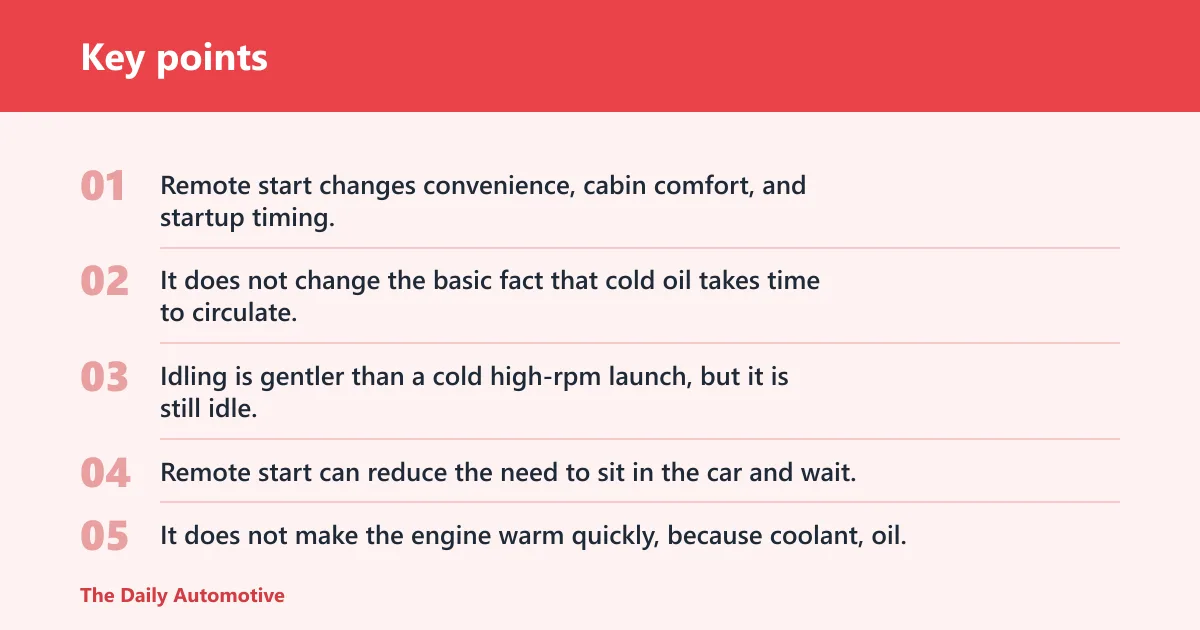
Remote start changes convenience, cabin comfort, and startup timing. It does not change the basic fact that cold oil takes time to circulate, and the first seconds after startup are the hardest part of a cold engine cycle. Idling is gentler than a cold high-rpm launch, but it is still idle.
That difference matters. Remote start can reduce the need to sit in the car and wait, and it can help defrost windows. It does not make the engine warm quickly, because coolant, oil, and the thermostat still have to reach operating temperature.
What winter startup does to an engine
Cold oil flows more slowly than warm oil. Many manufacturers specify winter-friendly viscosities such as 0W-20 or 5W-30, because the first number helps describe cold-flow performance. The owner’s manual matters more than guesswork, because the wrong viscosity can slow startup lubrication.
During the first few seconds, the oil pump builds pressure and sends oil through galleries to bearings, camshafts, and turbo hardware if the engine has one. That is where startup wear matters most. Once a protective film is established, idle running is usually much easier on the engine than repeated cold cranking.
How coolant and cabin heat warm up
Engine coolant does not jump to operating temperature just because the engine is running. The thermostat stays closed until coolant reaches its opening point, then begins regulating flow to the radiator. That is why cabin heat often arrives slowly after a remote start, especially in deep cold.
Modern engine management also enriches the mixture during a cold start, which helps the engine run smoothly but increases fuel use and emissions while the catalyst is still cold. Remote start can make the cabin more livable. It does not erase cold-start physics.
Winter remote-start checklist
Use this checklist to decide if remote start is the right tool or a warning sign. The same feature can work well in one car and cause trouble in another, depending on battery health, oil choice, turbo hardware, and install quality.
| Bucket | Likely risk | First thing to check | Is remote start a good idea? |
|---|---|---|---|
| Healthy modern gas car | Low engine risk; mainly idle fuel use and emissions | Owner’s manual oil viscosity and normal battery condition | Yes, for comfort and defrosting |
| Weak battery or short-trip car | Low-voltage no-starts and failed remote starts | 12-volt battery age, charge state, and charging system health | Maybe, but fix the battery issue first |
| Turbocharged or high-mileage car | Cold oil flow delay, worn seals, and higher sensitivity to poor oil | Correct oil grade and whether the engine burns oil or idles rough | Yes, with extra care and gentle driving |
| Remote-start system that fails in cold weather | Module voltage drop, bad wiring, or weak fob battery | Battery in the vehicle, battery in the fob, and install quality | No, not until the fault is found |
Can remote start cause problems if I use it every day?
Daily use is usually fine on a healthy car, but it can expose weak batteries, poor oil choices, and bad installs. Remote start itself is not the problem. Repeated cold starts are where the weak point shows up, especially if the car makes lots of short trips or sits outside in freezing weather.
Battery drain and low-voltage no-starts
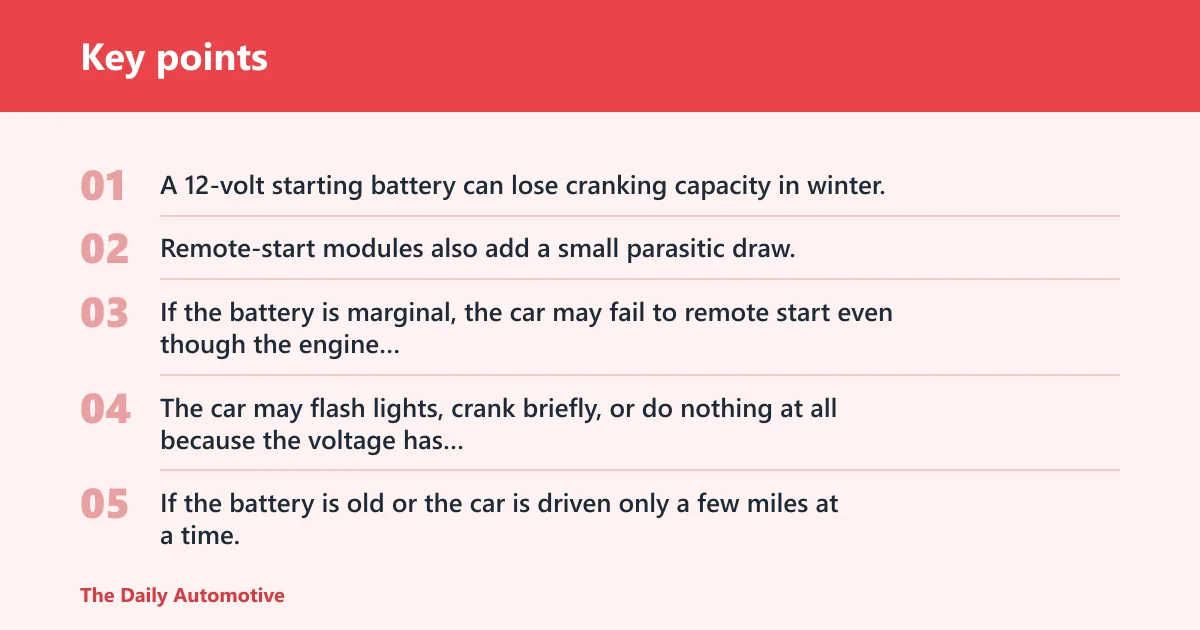
A 12-volt starting battery can lose cranking capacity in winter, and short trips may not fully restore the charge used to start the car. Remote-start modules also add a small parasitic draw. If the battery is marginal, the car may fail to remote start even though the engine itself is fine.
That failure mode is common. The car may flash lights, crank briefly, or do nothing at all because the voltage has fallen too low for the module or the starter system to stay happy. If the battery is old or the car is driven only a few miles at a time, check the battery first.
Fuel use, emissions, and long idle time
Remote start is a tradeoff, not a free warm-up. Idling burns fuel, and the cold-start emissions spike lasts until the catalyst lights off and the engine reaches a more stable temperature. Long idle time also wastes fuel without warming the drivetrain the way normal driving does.
That does not mean a brief remote start is harmful. It means the feature is best used for comfort, defrosting, and a short stabilization period, not for letting the car sit and idle far longer than needed.
When aftermarket installs create trouble
Factory remote start is usually better integrated with the vehicle’s electrical system, security logic, and climate controls. Aftermarket systems can work well, but bad wiring, weak connections, or sloppy programming can create hard-to-trace faults. Cold weather tends to expose those mistakes.
If a remote-start system began acting up after an installation, do not assume the engine has developed a mechanical problem. The issue may be voltage drop, a bad module ground, or a poor connection that shows up only when temperatures fall.
What oil and battery checks matter most?
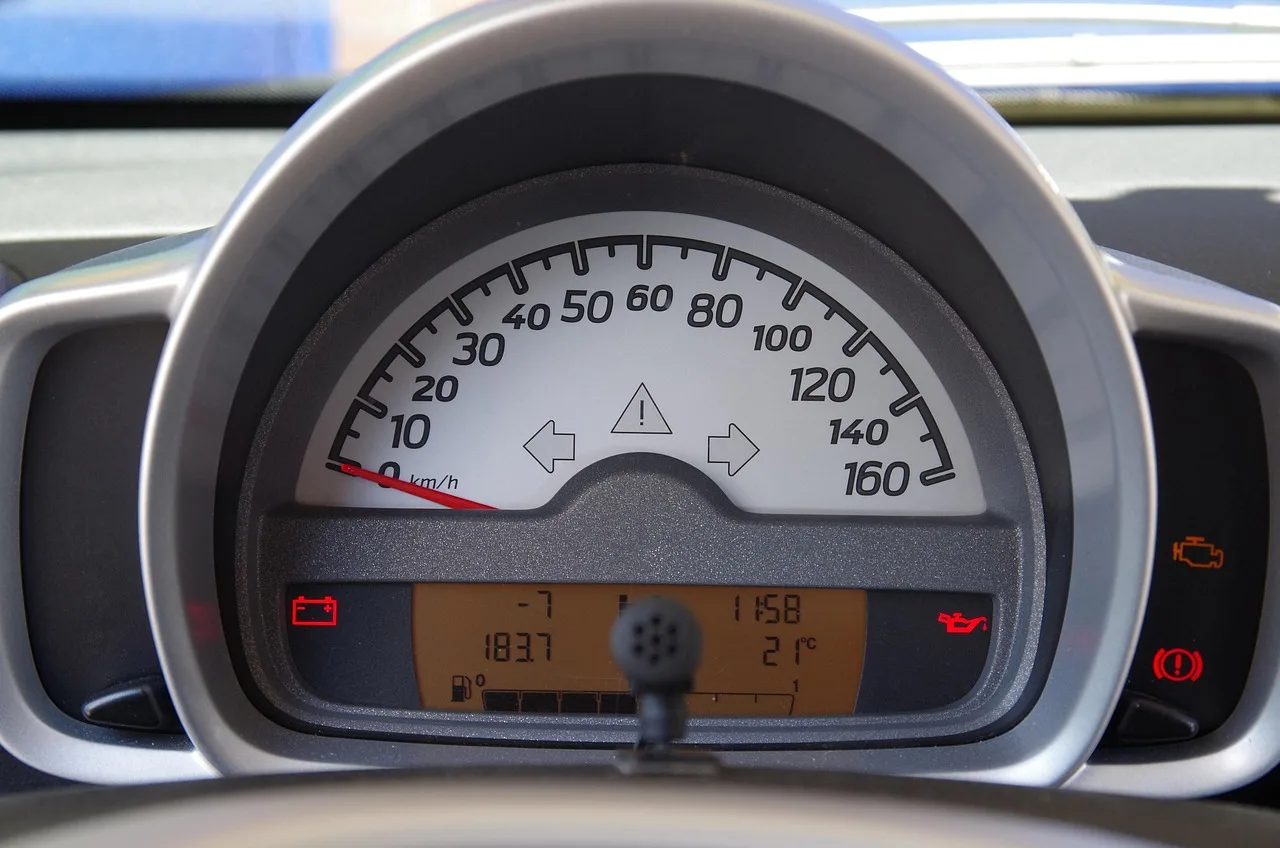
The two most useful winter checks are oil viscosity and battery state of charge. Those two items drive most of the remote-start complaints that look like “engine problems” but are actually cold-weather support issues. A correct oil grade and a healthy battery solve a lot of them.
Use the manufacturer-specified oil viscosity
Most modern cars call for a specific oil grade, often 0W-20 or 5W-30. The winter number affects how quickly the oil flows at low temperature, and that matters for the first seconds after startup. Use the grade in the owner’s manual unless a manufacturer bulletin says otherwise.
Thicker oil is not a winter cure. If the engine is designed for a low-viscosity oil, going heavier can slow circulation and make cold starts less friendly, especially in freezing weather. Oil changes on time matter too, because old oil loses some of its cold-flow consistency.
Watch battery state of charge in winter
A weak battery is one of the most common reasons remote start fails in cold weather. Winter reduces battery output, and short trips keep the battery from fully recovering. If the car struggles to crank normally, remote start will not make that weakness disappear.
Look for slow cranking, dim lights, multiple warning messages, or a remote start that works only after a recent drive. Those are signs the battery or charging system needs attention before the remote start becomes a daily frustration.
Check for warning signs of weak electrical health
- Confirm the battery age and test result.
- Check for corrosion or loose terminals.
- See whether the car is making many short trips.
- Watch for failed remote-start attempts after cold nights.
- Inspect aftermarket wiring if the system was added later.
Suppose a 2019 sedan with 0W-20 oil lives outside and drives three miles to work and back. If remote start fails after a 10-degree morning, the first suspect is usually the 12-volt battery, not the starter motor or the remote-start feature itself.
Is remote start okay for turbo engines?
Yes, remote start is usually okay for turbocharged engines if the oil is correct and the system is working properly. The extra caution is that turbo hardware depends heavily on fast oil flow. Cold oil is thicker, so the engine should not be loaded hard right away.
Why turbo oiling matters in cold weather
Turbochargers spin at very high speeds and rely on engine oil for lubrication and cooling. During a cold start, that oil is thicker and slower to move than it is after warm-up. Remote start helps the engine begin circulating oil, but it does not make the turbo ready for hard throttle immediately.
Why hard driving should wait
After remote start, do not rev the engine or launch hard the moment you get in. Let the oil pressure stabilize, drive gently for the first few minutes, and keep boost demands low until coolant and oil are closer to normal temperature. That advice matters even more in freezing weather.
When older or higher-mileage turbos need extra caution
Older turbo engines, or engines with higher mileage, deserve more attention to oil quality and oil-change intervals. If the engine already burns oil, smokes on startup, or idles rough, a remote start does not fix those issues. It may simply make them easier to notice on cold mornings.
A common first-timer mistake is letting a turbo car remote start, then pulling away at full throttle within a minute because the cabin already feels warmer. Cabin heat arrives before the oil and turbo are fully ready. Those are not the same thing.
When remote start is the better choice
Remote start is most useful when you want a warm cabin, clearer glass, and a short idle period before driving away. It is also helpful when frost or snow would make the first minute of driving uncomfortable. For many daily drivers, that is the right tradeoff.
Daily comfort and defrosting
If the windshield is iced over, remote start can help the defroster get moving before you sit down. That can save time and reduce the temptation to scrape while shivering. It still works best as a brief comfort feature, not as a substitute for proper winter maintenance.
When a plug-in heater makes more sense
If the car sits in extreme cold every night, a block heater or other plug-in heater may be a better answer than a long idle. Those systems warm the engine more directly and can reduce cold-start strain before the key or remote start is used. They are especially useful for very cold climates and long overnight freezes.
When to skip remote start and inspect the car first
Skip remote start and check the car first if the battery is weak, the engine has the wrong oil, the check-engine light is on, or the remote-start system is unreliable in the cold. Those problems deserve attention before you keep asking the system to do more work.
Frequently asked questions
Is remote start bad for your car in winter?
No, not usually. A healthy modern car can handle remote start in winter, but the feature still leaves the engine idling cold for a while. The bigger winter risks are weak batteries, wrong oil, bad installs, and idling longer than needed.
Does remote start damage your car engine over time?
On a properly maintained modern engine, remote start does not usually create measurable engine damage by itself. Over time, the bigger concern is repeated cold starts plus long idle time, especially if the oil grade is wrong or maintenance is overdue.
Is it okay to remote start a cold engine in freezing weather?
Yes, as long as the car is healthy and the oil matches the manufacturer’s spec. Freezing weather makes battery weakness and cold oil more noticeable, so remote start is best used briefly, followed by gentle driving after you get in.
Can remote start hurt the battery in winter?
Remote start does not usually hurt a good battery, but winter can make a weak battery fail sooner. Cold temperatures reduce cranking capacity, and short-trip use may not replace the energy spent starting the car. A weak battery often shows up through failed remote starts.
Why does my remote start not work when it’s cold?
The most common reasons are low battery voltage, a weak key fob battery, a poor connection, or an aftermarket module that does not tolerate cold well. If the car cranks slowly or the battery is older, start there before blaming the engine.
Products related to this article
Sponsored / affiliate links. As an Amazon Associate I earn from qualifying purchases. I may earn additional commission from eligible campaigns.