Best Luggage Carrier for Car Hitch (3 Picks Compared)
The best luggage carrier for a car hitch is the one that matches payload first, then rear access, weather protection, and legal visibility before size alone. Pick the wrong setup and you can overload the hitch, block the liftgate, soak bags, or cover lights and plate. This guide covers how to pick the right hitch carrier for SUVs, trucks, vans, and long road trips.
Top pick for most drivers
For most drivers, a folding 2-inch hitch basket is the safest starting point because it keeps luggage easy to load, works with common hitch receivers, and still leaves room to add a cargo bag or tie-downs when weather turns rough. If your hatch has to open often, or your cargo needs more protection, a hard box or swing-away setup can be the better fit.
📊 Car and Driver named MaxxHaul 70107 the Best Budget option. Source: Caranddriver.
Quick comparison
| Product | Badge | Best for | Price | ||
|---|---|---|---|---|---|
 |
MaxxHaul 70103 500 lb. Capacity Steel Hitch Mount FoldingMAXXHAUL | Our pick | 60 x 21 x 6.5 in · 500 lb · steel basket | $124.99
Price as of 29 Oct 2026
|
View |
 |
CURT 18153 Folding Hitch Basket Cargo Carrier, 60" x 24",CURT | Also great | 60 x 24 in · 500 lb · folding basket | $200.27
Price as of 29 Oct 2026
|
View |
 |
Thule Arcos XL Hitch-Mounted Cargo Carrier, Add Storage toThule | Upgrade pick | 450L · hard-shell · hitch box | $1,049.95
Price as of 29 Oct 2026
|
View |
 |
Yakima EXO GearLocker Cargo Carrier Hard Shell Box forYakima | Pair with it | 10 cu ft · hard shell · EXO system | $648.95
Price as of 29 Oct 2026
|
View |
This comparison focuses on failure points, not brag-sheet capacity. A carrier can look large and still fail on tongue weight, hatch clearance, or plate visibility before the trip is halfway done.
How we chose
This guide uses manufacturer specs, listing details, and published buyer feedback. It weighs the fit points that decide real-world use: receiver size, payload math, dimensions, weather protection, security hardware, and visibility.
It also favors setups that fit common trips. Suitcases, coolers, camping gear, and dirty tools fail in different ways, so the carrier should be chosen for that job.
Luggage carrier decision table
| Use case | Best carrier style | Minimum features | Common mistake | Go/no-go safety check |
|---|---|---|---|---|
| Weekend road trip with suitcases | Folding basket or flat platform | 2-inch receiver fit, tie-down points, side rails, folding shank | Buying by capacity alone and ignoring rear overhang | Loaded weight stays under the hitch and vehicle limit, and the plate and taillights stay visible |
| Wet-weather travel | Enclosed carrier or cargo bag on a basket | Waterproof or rainproof material, sealed seams, strap attachment points | Using a loose bag with weak zippers and no cargo net | Bag is tight, straps are secure, and water-sensitive items are inside sealed storage |
| Frequent hatch access | Swing-away platform or tilt-capable basket | Swing-away or tilt feature, stabilizer, clear latch access | Choosing a fixed carrier that blocks the liftgate | Hatch opens without contacting the carrier, and the shank does not wobble |
| Heavy camping gear or coolers | Steel platform or heavy-duty basket | High carrier rating, rigid frame, even weight distribution | Placing all the weight at the rear edge | Carrier weight plus cargo stay within the receiver and vehicle limits |
| Theft-sensitive cargo | Hard shell box or locked bag setup | Locking hardware, hidden zippers or locking lid, hitch pin lock | Leaving soft bags exposed overnight | Contents are locked or removed, and the carrier cannot be detached quickly |
What is the best luggage carrier for a car hitch?
The best choice is the carrier style that fits your cargo and access needs, not the biggest box you can bolt on. For most mixed trips, that means a folding basket or platform on a 2-inch hitch receiver, because it balances loading ease, tie-down flexibility, and visibility better than a bulky enclosure.
Use an enclosed box when weather or theft risk matters more than quick access. Use a cargo bag when you need temporary weather protection and do not want a hard shell taking space at home. Use a platform or basket when odd-shaped gear, coolers, or tote bags need open access.
Car and Driver’s published roundup named Mockins the Best Overall Value, MaxxHaul 70107 the Best Budget option, and Pakmule Pro the Best Premium option. Those labels are a starting point, but the right pick still depends on payload, rear access, and whether your license plate and taillights remain visible.
Are hitch cargo carriers safe?
They are safe when the loaded weight stays within the vehicle’s hitch rating and the carrier is secured correctly. The bigger risk is not the carrier itself; it is overloading the hitch, stacking weight too far behind the bumper, or driving with a loose shank, blocked lights, or poor strap tension.
Check the vehicle’s tongue weight limit, then subtract the carrier’s own weight before loading cargo. That math matters because a carrier rated for 500 lb is not automatically safe at 500 lb once you add the carrier itself and the rearward leverage created by the load.
Also check clearance before the first mile. A loaded basket can scrape on steep driveways, and a rear camera can become less useful if a tall bag or box sits in the wrong position. Make sure the pin is fully seated, a locking pin is installed if you want theft resistance, and the carrier does not wobble.
Payload math before departure
Start with the lower of the two numbers: the hitch receiver’s tongue weight limit or the carrier’s own rating. Then subtract the carrier’s weight, because the hitch is supporting both the rack and the luggage. Spread the remaining cargo weight evenly from side to side and front to back.
If your hitch is rated for about 350 lb of tongue weight and the carrier weighs about 60 lb, that leaves about 290 lb for cargo, not the full hitch rating. Load a cooler, two suitcases, and a tent so the heaviest item sits low and near the vehicle, not at the very rear of the tray.
Visibility and clearance checks
Taillights, reflectors, and the license plate must stay visible under local rules. If the carrier hides them, add approved lighting or choose a different setup. Rear overhang also matters: the farther the load sticks out, the more likely it is to drag on a steep driveway or bottom out on a ramp.
How do you choose a trailer hitch cargo carrier?
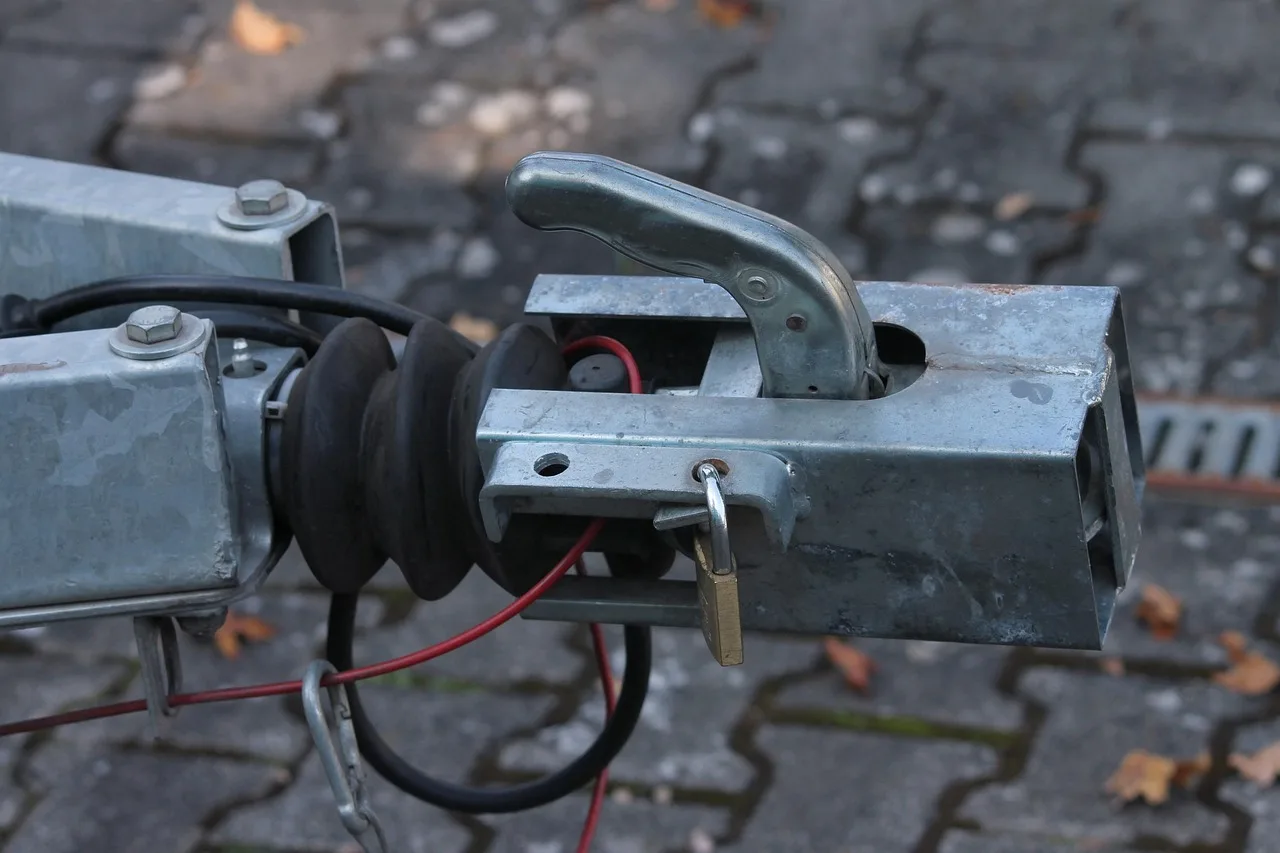
Choose by failure point first. If payload runs out first, choose a lighter carrier and load less. If hatch access fails first, choose a swing-away or tilt design. If weather fails first, choose an enclosed box or a sealed cargo bag. If legal visibility fails first, choose a shorter carrier with better light and plate clearance.
Basket vs platform vs enclosed or bag
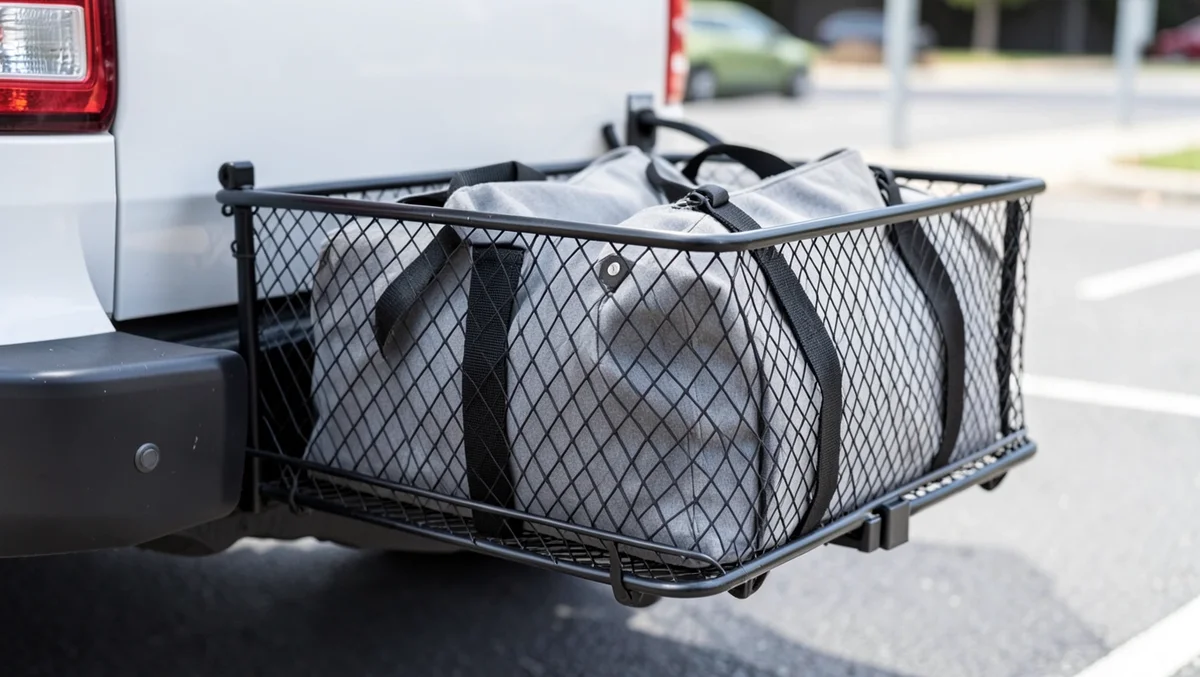
Basket-style carriers are the easiest place to start because they are open, simple, and usually cheaper. Platform carriers offer a flatter floor for boxes and coolers. Enclosed carriers protect gear better, while cargo bags add weather resistance without the bulk of a hard shell.
A cargo bag is the better choice when you need temporary rain protection, theft deterrence through concealment, or more flexible storage at home afterward. It is a weaker choice for sharp cargo, heavy abrasion, or trips where zipper quality and seam sealing matter more than open loading.
Steel vs aluminum
Steel is common for heavier-duty use because it is stiff and usually cheaper for the load rating. Aluminum is lighter and resists rust better, which matters if the carrier lives outside or sees winter road spray. Powder coat helps steel survive corrosion, but chipped coating still needs attention.
If the carrier will be left on the vehicle through bad weather, rust resistance becomes more than a nice extra. If you remove it after every trip, a heavier steel model may still be the better fit because it can offer better value for the same payload rating.
Folding, tilt, and swing-away features
Folding shanks help when parking space is tight. Tilt features can improve hatch access. Swing-away systems go further by moving the whole load out of the way, but they add weight, cost, and setup complexity. That tradeoff is worth it only if rear access is a constant problem.
Toproofbox lists the Curt Basket-Style Cargo Carrier with a folding shank and says it can fit 1-1/4 or 2-inch shanks. It also lists the Reese ProSeries Rambler with a 60 x 24 platform and up to 500 lbs, which shows how platform dimensions can vary even when the load rating looks similar on paper.
Will a 2-inch hitch receiver fit most cargo carriers?
Yes, a 2-inch receiver fits most hitch cargo carriers sold for SUVs, trucks, and vans. It is the most common size for this category, but the fit still depends on the shank size and the vehicle’s receiver class. Always confirm the carrier listing before buying.
Some carriers also fit 1-1/4-inch receivers, often through a different shank or adapter. That sounds flexible, but adapters can add movement and reduce confidence at the hitch. If your vehicle already has a 2-inch receiver, that is usually the cleaner setup.
How much weight can a hitch cargo carrier hold?
Typical hitch cargo carriers are commonly listed up to about 500 lb, but that rating only matters if the vehicle’s hitch rating allows it. The usable load is the carrier rating, the hitch rating, and the carrier’s own weight taken together. The lowest safe figure wins.
Car and Driver listed Mockins at a manufacturer maximum load capacity of 500 lb and internal dimensions of 58.75 x 19.5 x 6 in. The same source lists the Reese ProSeries Rambler at up to 500 lbs. Those numbers help compare options, but neither replaces the vehicle manual.
Weight distribution matters as much as max capacity. Two suitcases centered over the tray are easier on the hitch than the same total weight piled at the rear edge. Heavy items should ride low and forward, with lighter bags stacked on top.
How do you install a hitch cargo carrier?
Installation is usually straightforward: insert the shank into the hitch receiver, align the pin holes, secure it with a hitch pin, and then check for movement before loading. If the model supports it, add a locking pin option and a stabilizer to reduce rattle and theft risk.
After that, load the carrier evenly, secure the cargo with ratchet straps or a cargo net, and confirm that taillights, reflectors, and the license plate remain visible. If the carrier tilts, folds, or swings away, test that mechanism with the vehicle parked on level ground before a trip.
- Confirm the receiver size and the tongue weight limit in the vehicle manual.
- Check the carrier rating, then subtract the carrier’s own weight from the available hitch limit.
- Slide the shank into the receiver and align the pin holes.
- Insert the hitch pin, then install a locking pin if theft resistance matters.
- Load cargo low and centered, then secure it with straps and a cargo net.
- Verify taillight, reflector, and license plate visibility before driving away.
A common first-timer mistake is packing the heaviest item all the way at the back of the tray because it seems easier to reach. That creates more leverage on the hitch and can make a 500 lb carrier behave like it is carrying more than the vehicle wants.
What’s the difference between a hitch cargo carrier and a cargo bag?
A hitch cargo carrier is the structure that mounts to the receiver. A cargo bag is soft storage that sits on or inside that structure. The carrier handles support and tie-down points, while the bag adds weather protection and concealment for luggage, blankets, or soft gear.
The same source says the ROLA Wallaroo Cargo Bag has 11.5 cubic feet of storage space and is made of rainproof material. That makes it useful for wet trips, but it still depends on straps, seam quality, and zipper quality. A hard basket is more forgiving of abrasion and sharp corners.
If theft is a concern, a hard shell box usually protects better than an open basket with a loose bag. If rear hatch access is the priority, a bag on a folding basket may still block less than a fixed enclosed box. Use the lightest solution that still solves your actual failure point.
Best for road trips: folding basket carrier
A folding basket works well for road trips because it accepts odd-shaped luggage, coolers, and camping bins without forcing a perfect pack pattern. The open layout also makes it easier to add straps and a cargo net, which matters when the load shifts after a few highway miles.
The key dimensions are tray length, tray width, side rail height, ground clearance, and rear overhang. Car and Driver listed Mockins with internal dimensions of 58.75 x 19.5 x 6 in, while Toproofbox lists the Reese ProSeries Rambler at 60 x 24. Bigger is not automatically better if it pushes the load too far back.
Choose steel if you want stiffness and a more traditional heavy-duty build. Choose aluminum if lower weight and rust resistance matter more. Either way, look for powder coat, good tie-down points, and enough clearance for driveways and ferry ramps.
Best for weather protection: cargo bag carrier
A cargo bag carrier makes sense when rain, spray, or dusty roads are the main concern and you do not want to pay for a hard box. It is also useful when you need extra storage only a few times a year and prefer something that packs away when the trip is over.
The weak points are zipper leakage, seam failure, and strap looseness. A bag should attach securely to the carrier, close with a durable zipper, and keep its shape when fully loaded. Without that, water and road grit find their way in quickly.
Car and Driver said Mockins includes a waterproof cargo bag, and Toproofbox says the ROLA Wallaroo is made of rainproof material. Those claims point to the same need: the bag has to be part of the system, not an afterthought thrown over an open rack.
Best for rear access: swing-away platform carrier
A swing-away platform helps when the liftgate or rear doors need to open often. Instead of removing the carrier every time, you swing the load away from the rear of the vehicle. That can be a real advantage on camping trips, at trailheads, or during long hotel stops.
The tradeoff is weight, price, and setup complexity. A swing-away unit usually adds more parts and more points to check before departure. If you only need occasional hatch access, a tilt shank or folding basket may be enough and much simpler.
This style is easiest to justify when the vehicle has limited rear clearance or when the cargo is too heavy to unload every time the hatch opens. If the vehicle camera is your main backing aid, confirm that the swing-away hardware does not block it when stowed.
Best for heavy gear: steel platform carrier
Steel is the common choice for heavy gear because it gives up less stiffness under load. That matters with coolers, water jugs, tool bins, and camping hardware that do not compress into a neat shape. A platform design also spreads weight more evenly than a deep basket.
The same source says the Reese ProSeries Rambler carries up to 500 lbs, which shows why heavy-duty users keep seeing steel platforms in this category. The drawback is obvious: steel is heavier, and it can rust if the powder coat chips and the carrier is left wet or salted.
Check the finish for scratches after every trip. If rust starts at welds or corners, clean and coat it before the next long drive. That is especially important on vehicles that live in snow states or near the coast.
Which one should you buy?
If you want the simplest answer, buy the carrier that matches the first thing likely to fail on your trip. For mixed road trips, start with a folding basket. For wet or theft-sensitive cargo, move to a hard shell or a well-made bag system. For frequent hatch access, choose swing-away. For heavy, dirty, or bulky gear, choose steel.
Published roundup labels are useful for orientation only: Mockins was named Best Overall Value, MaxxHaul 70107 the Best Budget option, and Pakmule Pro the Best Premium option. Those labels do not change the real decision: the carrier must fit your receiver, stay within tongue weight, and preserve light and plate visibility.
Suppose your SUV has a 2-inch receiver, a moderate tongue weight limit, and you mainly pack two roller bags plus a cooler. A folding basket is likely the cleanest fit. Suppose the same SUV is hauling wet tents and muddy boots on a fall trip. A rainproof bag or hard shell becomes the better call because weather and cleanup matter more than open access.
If the carrier covers your taillights or plate, choose a different style before a longer trip. That is not a small inconvenience. It is the kind of issue that can turn a convenient load carrier into a legal and safety problem.
Frequently asked questions
Do hitch cargo carriers block taillights or a license plate?
They can, especially when the tray is deep or the cargo sits tall. That is why visibility belongs in the buying decision from the start. Check taillights, reflectors, the rear camera, and the plate after loading. If any are hidden, use a different carrier or add approved lighting and plate relocation gear where legal.
Products related to this article
Sponsored / affiliate links. As an Amazon Associate I earn from qualifying purchases. I may earn additional commission from eligible campaigns.