Should a Car Be Running When Adding Brake Fluid
Many people wonder about the right way to add brake fluid to their car. It can seem a bit tricky, especially if you’re new to car maintenance. The question, “Should a car be running when adding brake fluid?” pops up a lot.
Don’t worry, it’s a common question! We’re going to break it down simply and show you exactly what to do. You’ll be able to handle this small task with confidence.
Let’s get started and make sure your car’s braking system is in top shape.
This section will clear up the main confusion around whether your car needs to be running when you add brake fluid. It’s important to understand the correct procedure to ensure safety and proper function of your vehicle’s braking system. We will explain why this question is so common and provide a straightforward answer.
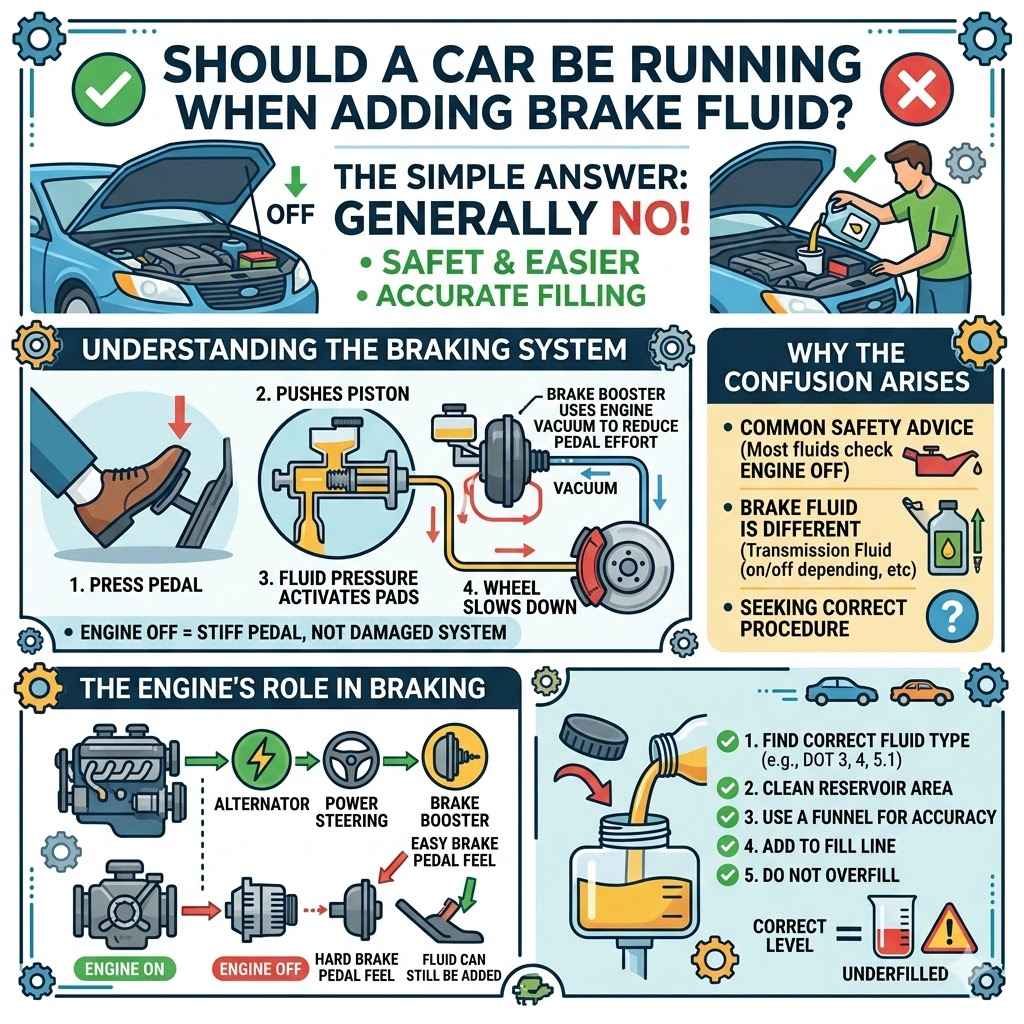
The Engine’s Role in Braking
Your car’s braking system is a hydraulic system. This means it uses fluid pressure to work. When you press the brake pedal, you push a piston in the master cylinder.
This piston forces brake fluid through the brake lines. The fluid then pushes the brake pads against the rotors, slowing your car down.
The engine doesn’t directly help push the brake fluid. However, the engine powers the alternator. The alternator keeps the car’s electrical systems running.
It also powers the power steering pump and the brake booster. The brake booster uses engine vacuum to help you press the brake pedal. It makes braking much easier.
If the engine is off, the brake booster won’t work as well. This means the brake pedal will feel much harder to push.
When adding brake fluid, the engine being on or off mainly affects how the brake pedal feels and how the brake booster operates. It doesn’t change the fundamental way brake fluid is added to the reservoir.
Why This Question Arises
The confusion about whether to run the engine often comes from other maintenance tasks. For example, when checking oil or other fluids, the engine is usually off. This is a safety precaution and ensures accurate readings.
However, brake fluid levels are checked differently. The car’s braking system can build pressure when the engine is running due to the brake booster.
For someone new to car maintenance, it’s natural to want to follow the most common safety advice. This often means turning the engine off. But in the case of adding brake fluid, this isn’t necessary and can even make the pedal feel stiff.
Understanding the system helps clarify the best approach.
The Simple Answer to the Core Question
No, you generally do not need to have your car’s engine running when adding brake fluid. The primary goal when adding brake fluid is to replenish the master cylinder’s reservoir. This reservoir is easily accessible from under the hood.
The engine running does not impact the level of fluid in the reservoir itself. It only affects the pressure assistance from the brake booster.
You will be able to see the brake fluid reservoir clearly with the engine off. This makes it safer and easier to pour the fluid accurately. The focus should be on adding the correct type of fluid and not overfilling the reservoir.
We will cover the details of fluid types and proper filling levels next.
Understanding Brake Fluid Types and Levels
This section explains the different kinds of brake fluid and why using the correct one is vital. We’ll also cover how to check your brake fluid level accurately and what the markings on the reservoir mean. Getting this right is key to your car’s safety.
Brake Fluid Specifications DOT 3 DOT 4 and DOT 5
Brake fluid isn’t all the same. There are different types, identified by DOT (Department of Transportation) ratings. The most common are DOT 3, DOT 4, and DOT 5.
It’s crucial to use the type recommended by your car’s manufacturer.
- DOT 3 Brake Fluid: This is a standard type of brake fluid. It has a lower boiling point than DOT 4. It’s also more susceptible to absorbing moisture from the air. Over time, moisture can lower its boiling point, which can lead to brake fade under heavy braking.
- DOT 4 Brake Fluid: DOT 4 has a higher boiling point than DOT 3. This means it can withstand higher temperatures before it starts to boil. It also absorbs moisture, but at a slower rate than DOT 3. Many modern cars use DOT 4 fluid because it offers better performance and safety.
- DOT 5 Brake Fluid: This type is silicone-based. It is not compatible with DOT 3 or DOT 4 systems. DOT 5 fluid does not absorb water like glycol-based fluids (DOT 3 and DOT 4). However, it can form air bubbles if it gets contaminated with water, which is undesirable in a hydraulic system. It’s important to never mix DOT 5 with DOT 3 or DOT 4.
Always check your car’s owner’s manual to find out which brake fluid specification is recommended for your vehicle. Using the wrong type can damage your braking system or cause it to fail.
Why Fluid Type Matters
Braking systems generate a lot of heat. When brake fluid gets too hot, it can boil. Boiling fluid creates air bubbles.
Air is compressible, unlike liquid. So, when you press the brake pedal, the air bubbles get compressed instead of the fluid pushing the brakes. This causes the brake pedal to feel soft or go all the way to the floor.
This is known as brake fade and is very dangerous.
Higher boiling points, like those in DOT 4, help prevent this. Also, brake fluid absorbs moisture over time. This process is called hygroscopic absorption.
Even a small amount of water can significantly lower the boiling point of DOT 3 and DOT 4 fluids. This is why brake fluid should be flushed and replaced periodically.
Mixing different types of brake fluid can cause serious problems. For example, mixing DOT 3 with DOT 5 would create a chemical reaction. This reaction could damage the rubber seals in your brake system.
It could also cause the fluid to break down. This leads to corrosion and leaks.
Checking Your Brake Fluid Level
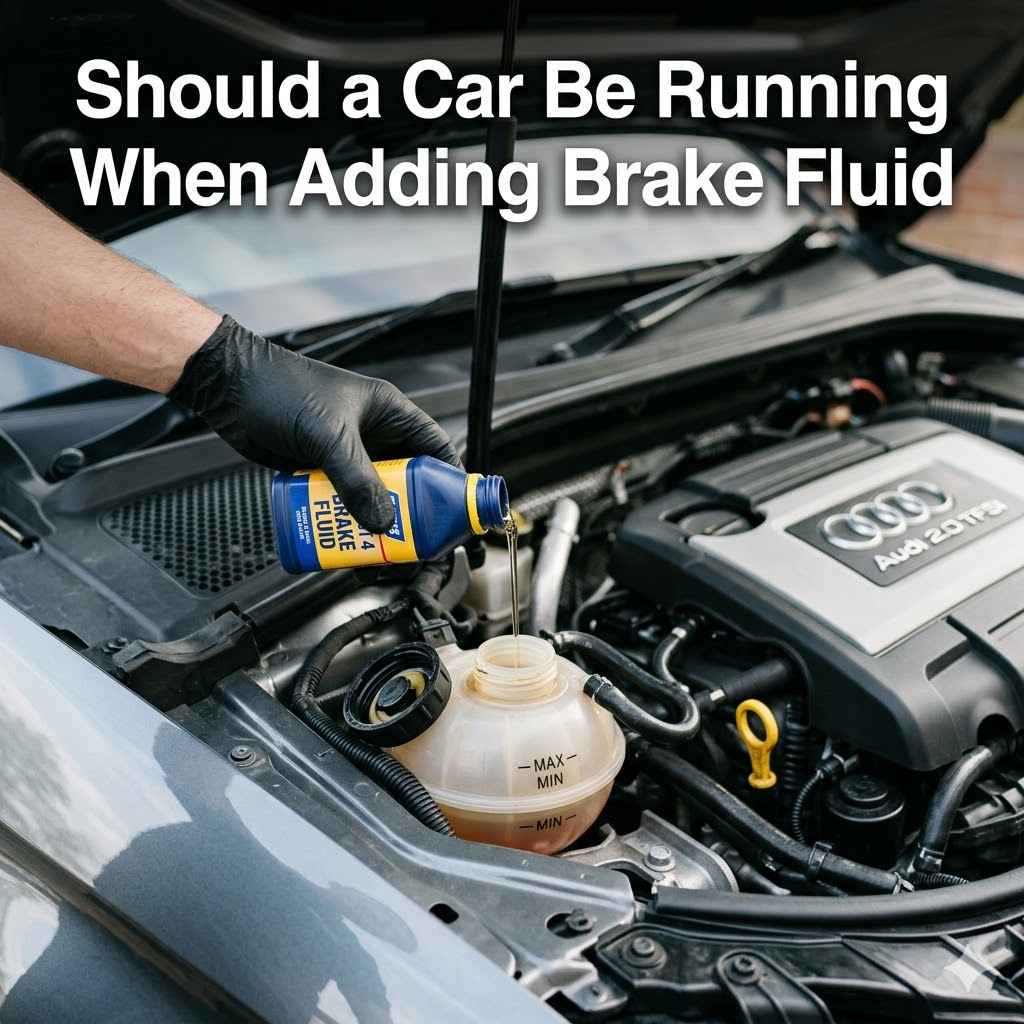
Locating the brake fluid reservoir is the first step. It’s usually a translucent plastic container with a cap that says “Brake Fluid” on it. It’s typically found on the driver’s side of the engine compartment, near the firewall.
You’ll see lines on the side of the reservoir.
These lines indicate the “MIN” or “LOW” level and the “MAX” or “FULL” level. Your brake fluid should always be between these two lines. If the fluid is below the MIN line, it means you need to add fluid.
It could also indicate a leak in the system.
Example Scenario:
- Park your car on a level surface.
- Open the hood and locate the brake fluid reservoir.
- Observe the fluid level against the MIN and MAX markings.
- If the level is below MIN, you need to add fluid.
It’s important to note that brake pads wear down over time. As they wear, the brake caliper pistons extend further. This causes the fluid level in the reservoir to drop slightly.
So, a low fluid level can sometimes just mean your brake pads need replacing. It’s always wise to have your brake pads checked when you notice the fluid level is consistently low.
Understanding the Reservoir Markings
The markings on the brake fluid reservoir are straightforward. The “MAX” or “FULL” line shows the maximum safe level for the brake fluid. Filling above this line can cause issues, such as fluid overflowing when the cap is removed or potentially damaging seals due to excess pressure.
The “MIN” or “LOW” line indicates the minimum acceptable level. If the fluid drops below this line, it’s a clear sign that you need to add more fluid. It’s also a critical warning sign that there might be a leak in your brake lines or a problem with your brake pads.
If your fluid is consistently near the MIN line, it’s best to have your brakes inspected by a mechanic.
Some reservoirs might have a “COLD” and “HOT” marking. Brake fluid expands when it gets hot. The “HOT” line is slightly higher than the “COLD” line.
This accounts for this expansion. When checking the fluid, it’s best to do so when the engine has cooled down. This ensures you are reading the “COLD” level.
How to Safely Add Brake Fluid
Now, let’s get to the practical steps of adding brake fluid. This process is quite simple if you follow the correct procedure. We will guide you through each step, emphasizing safety and accuracy to ensure your braking system works perfectly.
Gathering Your Supplies
Before you start, make sure you have everything you need. This will make the process smooth and efficient. Having the right tools and materials prevents interruptions and mistakes.
- New Brake Fluid: Ensure you have the correct type of brake fluid (DOT 3, DOT 4, etc.) as specified in your owner’s manual. It’s best to buy from a reputable brand.
- Clean Funnel: A small, clean funnel with a narrow spout is essential. This prevents spills and makes it easy to pour fluid into the reservoir.
- Clean Rags or Paper Towels: You’ll need these to wipe up any drips or spills. Brake fluid can damage paint.
- Gloves (Optional but Recommended): Brake fluid can irritate the skin, so wearing gloves is a good idea.
- Eye Protection (Recommended): To protect your eyes from accidental splashes.
Having these items ready means you can complete the task without needing to stop and search for something mid-process. It also ensures you’re using clean materials, which is vital for the health of your braking system.
Step-by-Step Guide to Filling the Reservoir
Here’s how to add brake fluid correctly. Remember to work in a well-lit area.
- Ensure Engine is Off: As we’ve established, the engine does not need to be running. Turn the engine off and ensure the car is in park or in gear.
- Locate the Brake Fluid Reservoir: It’s usually a translucent plastic container near the back of the engine bay on the driver’s side.
- Clean the Reservoir Cap Area: Before opening the cap, use a clean rag to wipe any dirt or debris from around the cap. This prevents contaminants from falling into the brake fluid.
- Open the Reservoir Cap: Carefully unscrew or unclip the cap. If it’s a screw-on cap, turn it counter-clockwise.
- Insert the Funnel: Place the clean funnel into the opening of the reservoir.
- Add Brake Fluid Slowly: Pour the new brake fluid into the funnel slowly and steadily. Do not overfill. Stop when the fluid reaches the “MAX” or “FULL” line.
- Remove Funnel and
- Wipe Up Spills: If any brake fluid spills onto painted surfaces, wipe it up immediately with a clean, wet rag. Brake fluid can damage paint.
These steps ensure you add the fluid accurately and safely. The key is to be patient and avoid rushing the process.
What to Do if You Overfill
Overfilling the brake fluid reservoir is a common mistake. It’s not ideal, but it’s usually fixable. If you accidentally add too much fluid, the level will be above the “MAX” line.
The excess fluid can create pressure within the system. This pressure might push past seals or cause other components to wear prematurely. In some cases, especially in warmer weather when the fluid expands, overfilling can lead to brake fluid leaking out of the reservoir cap.
To fix an overfilled reservoir, you will need to remove the excess fluid. The best way to do this is with a clean turkey baster or a medical syringe. Use it to draw out the extra fluid from the reservoir.
Make sure the turkey baster or syringe is completely clean and has never been used with anything other than fluids. Dispose of the removed fluid properly.
After removing the excess fluid, ensure the level is back within the acceptable range (between MIN and MAX). Then, replace the cap securely. It’s a good idea to check the fluid level again after a day or two of driving to make sure it hasn’t changed.
Safety Precautions to Remember
Brake fluid is corrosive and can damage car paint and irritate skin. Always handle it with care. Wear gloves and eye protection if possible.
Never pour old brake fluid down drains or onto the ground, as it is harmful to the environment. Many auto parts stores accept used brake fluid for recycling.
If brake fluid gets on your skin, wash it off immediately with soap and water. If it gets in your eyes, rinse them thoroughly with water and seek medical attention. Ensure the cap is put back on tightly.
Loose caps can allow moisture to enter the system, reducing the fluid’s effectiveness and potentially causing corrosion.
Always ensure you are using the correct type of brake fluid. Mixing different types can cause severe damage to your braking system. Refer to your car’s owner’s manual for the specific DOT rating required.
When to Check Your Brake Fluid and Seek Professional Help
Regularly checking your brake fluid is an important part of routine car maintenance. However, there are certain signs that indicate you should check it immediately or seek help from a mechanic. This section will help you know when to be concerned.
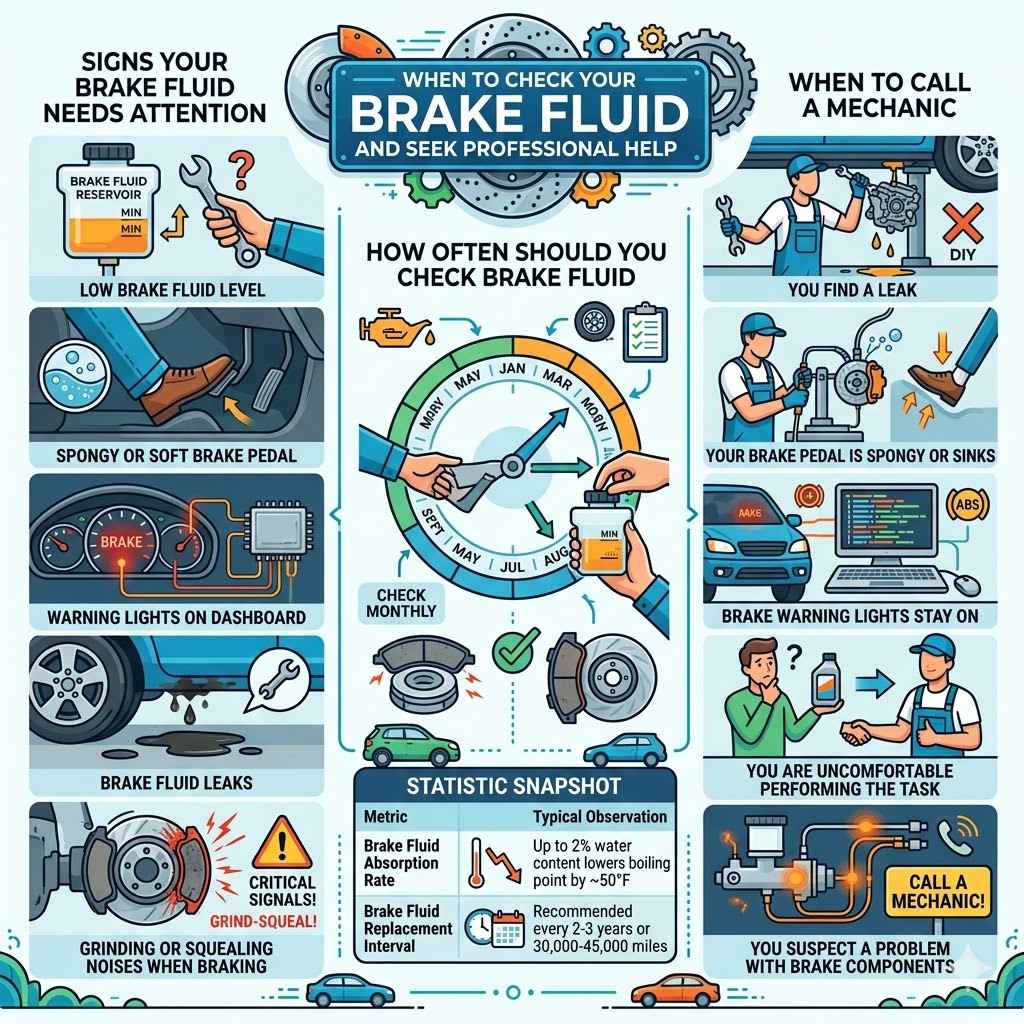
Signs Your Brake Fluid Needs Attention
There are several indicators that your brake fluid might be low or that there’s a problem within the braking system. Paying attention to these signs can prevent a minor issue from becoming a major safety hazard.
- Low Brake Fluid Level: As discussed, if the brake fluid level in the reservoir is consistently below the MIN mark, it’s a direct sign you need to add fluid. However, it’s crucial to investigate why it’s low.
- Spongy or Soft Brake Pedal: If your brake pedal feels soft, spongy, or sinks closer to the floor when you press it, this is a serious symptom. It often means there is air in the brake lines or the brake fluid has overheated.
- Warning Lights on the Dashboard: Most cars have a brake warning light. If this light comes on, it could indicate a low fluid level or a problem with the brake system’s pressure.
- Brake Fluid Leaks: You might notice dark, oily spots under your car where it’s parked. If these spots are near the wheels or brake lines, it suggests a leak in the brake system.
- Grinding or Squealing Noises When Braking: While this often points to worn brake pads, it can sometimes be related to hydraulic issues within the braking system.
These are all critical signals that your braking system needs attention. Never ignore them, as compromised brakes put you and others at risk.
How Often Should You Check Brake Fluid
Checking your brake fluid level should be part of your regular vehicle maintenance routine. For most drivers, checking the brake fluid monthly is a good practice.
You can easily check it each time you check your engine oil or tire pressure. This habit helps you catch low fluid levels or other potential issues early. If you notice the fluid level dropping between monthly checks, it’s a sign of a leak or excessive brake pad wear.
It’s also wise to check your brake fluid after any significant maintenance on the braking system. This includes replacing brake pads or rotors. This ensures that the fluid level is correct and the system is functioning as it should.
Statistic Snapshot:
| Metric | Typical Observation |
|---|---|
| Brake Fluid Absorption Rate | Up to 2% water content lowers boiling point by ~50°F |
| Brake Fluid Replacement Interval | Recommended every 2-3 years or 30,000-45,000 miles |
The data shows how quickly brake fluid can degrade. This highlights the importance of regular checks and timely replacement.
When to Call a Mechanic
While adding brake fluid is a simple DIY task, there are situations where you should definitely call a professional mechanic. If you’re unsure about any part of the process, it’s always best to err on the side of caution.
You should call a mechanic if:
- You find a leak: If you see brake fluid leaks under your car or around the brake lines, do not attempt to fix it yourself unless you are experienced. Leaks can be complex to locate and repair.
- Your brake pedal is spongy or sinks: This is a sign of air in the system or a potential failure of a brake component. This requires bleeding the brakes or further inspection.
- Brake warning lights stay on: While low fluid is one cause, dashboard warning lights can indicate more serious issues, like problems with the ABS (Anti-lock Braking System).
- You are uncomfortable performing the task: If you don’t feel confident adding the fluid or checking your brakes, a mechanic can do it quickly and correctly.
- You suspect a problem with brake components: Issues with brake calipers, master cylinder, or brake lines should be handled by a professional.
A mechanic has the specialized tools and knowledge to diagnose and fix complex brake system problems. Your safety is paramount, so don’t hesitate to seek professional assistance when needed.
Frequently Asked Questions
Question: Do I need to bleed my brakes after adding fluid?
Answer: Generally, no. If you are only topping off the brake fluid to the correct level and there are no signs of air in the system (like a spongy pedal), you do not need to bleed the brakes. Bleeding is usually done when the brake fluid has been completely drained or when air has entered the system.
Question: Can I use any type of fluid if I can’t find the correct brake fluid?
Answer: No, you absolutely should not. Using the wrong type of brake fluid can severely damage your braking system and compromise your safety. Always use the specific DOT rating recommended in your car’s owner’s manual.
Question: How much brake fluid does a car typically need?
Answer: A typical car’s brake fluid reservoir holds about 1 to 1.5 liters (roughly 1 to 1.5 quarts) of brake fluid. However, you rarely need to fill the entire reservoir. You are usually just topping it off to the correct level, so you’ll likely only need a small amount from a new bottle.
Question: Is it safe to drive with low brake fluid?
Answer: It is not safe to drive with significantly low brake fluid. Low fluid levels can lead to a spongy brake pedal and reduced braking performance, increasing the risk of an accident. If your fluid is low, it may also indicate a leak or worn brake pads, both of which require immediate attention.
Question: What happens if brake fluid gets on my car’s paint?
Answer: Brake fluid is highly corrosive to car paint. If it comes into contact with paint, it can quickly eat through the clear coat and damage the paint underneath. It’s crucial to wipe up any spills immediately with a clean, wet cloth to prevent permanent damage.
Conclusion
You do not need to run your car’s engine when adding brake fluid. Simply ensure the engine is off, locate the reservoir, and carefully add the correct fluid type up to the MAX line. Always use a clean funnel and wipe up any spills.
Regular checks prevent issues and ensure your brakes work their best.