How Many Brake Calipers Does a Car Have? (4, Not Always)
Most cars have four brake calipers — one per wheel — but that number drops to two on economy models that pair front disc brakes with rear drum brakes, like the Nissan Versa. Mixing up caliper count with piston count is a common mistake that leads to buying the wrong parts or misdiagnosing a caliper that’s actually stuck.
This guide covers the standard 4-caliper setup, real 2-caliper exceptions, multi-piston performance calipers, and the warning signs of a failing caliper.
Understanding the Role of Brake Calipers
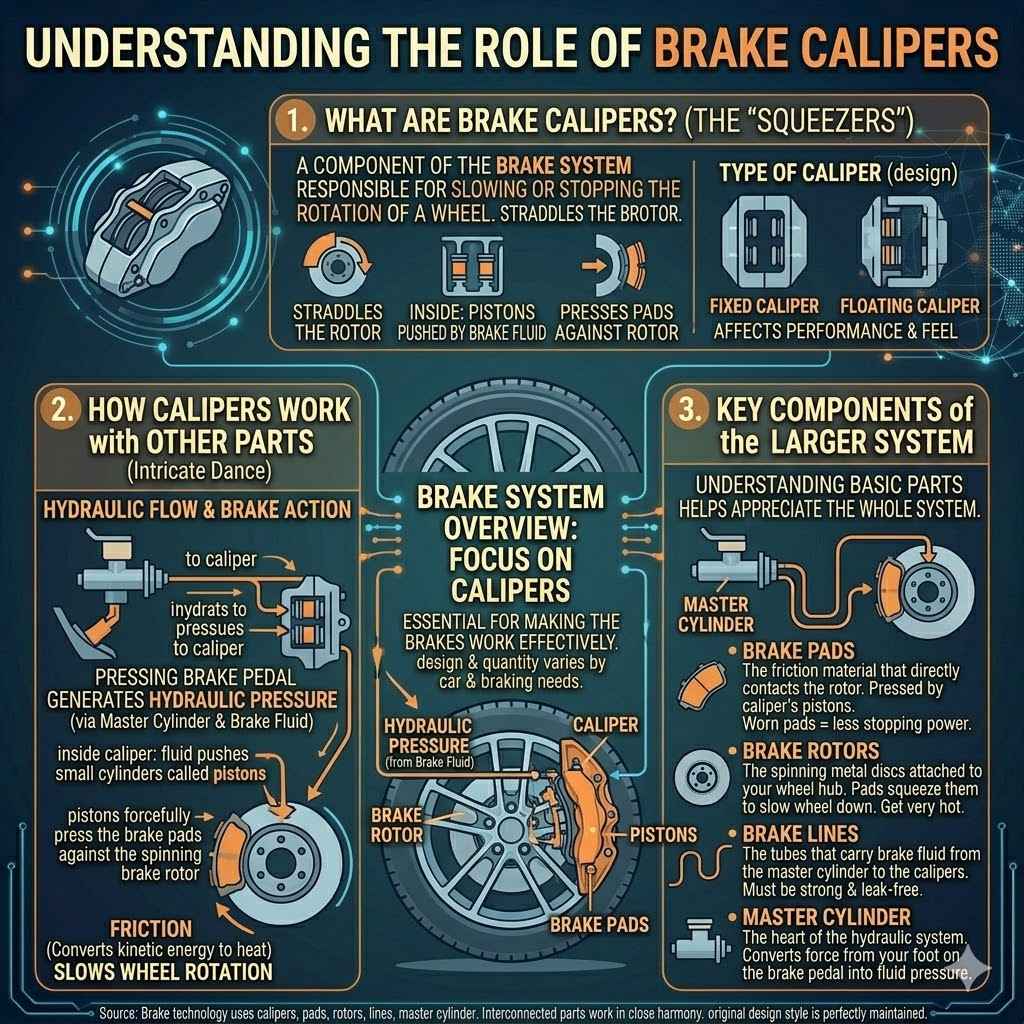
Brake calipers are a really important part of your car’s braking system, working alongside the brake pads to help your car slow down and stop. When you press the brake pedal, fluid pushes pistons inside the caliper.
These pistons then squeeze the brake pads against the spinning brake rotor. This friction is what slows your wheels. Without calipers, your car wouldn’t be able to stop safely.
Think of them as the “squeezers” of the braking system. They don’t do all the work alone, but they are essential for making the brakes work effectively. The way they are designed and how many you have depends on the type of car and its braking needs.
They are usually located on the sides of your wheels, making them visible if you look closely.
This section will explore how these essential components function within the broader braking mechanism. We will look at their design and how they interact with other parts of the system. Understanding this helps answer the question about their quantity more clearly.
What Are Brake Calipers?
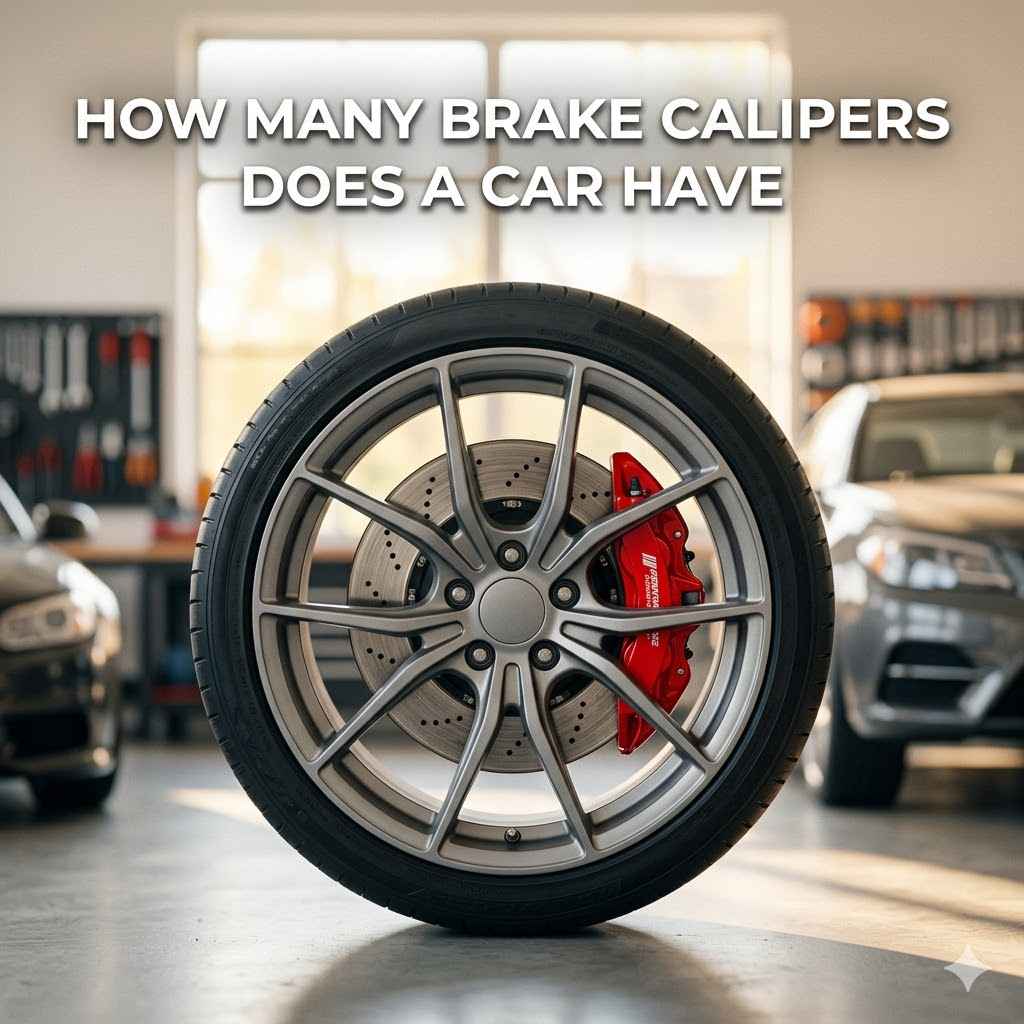
A brake caliper is a component of the brake system that is responsible for slowing or stopping the rotation of a wheel. It is the part that straddles the brake rotor. Inside the caliper are pistons that are pushed outward by brake fluid.
These pistons press the brake pads against the rotor.
The caliper housing itself is usually made of cast iron or aluminum. It can be either a fixed caliper, where the pistons are on both sides of the rotor, or a floating caliper, where the pistons are only on one side and the caliper slides to press the pads.
- Calipers are like clamps. They grab the brake rotor to create friction. This friction slows down the wheel and stops the car.
- They contain pistons. These pistons are moved by hydraulic pressure from the brake pedal. They push the brake pads.
- Material matters. Calipers are often made of strong materials like iron or aluminum to handle the heat and force.
The design of the caliper ensures that the brake pads are applied evenly to the rotor. This leads to consistent and effective braking. The type of caliper, fixed or floating, can affect braking performance and feel.
Understanding these basic parts helps to appreciate the whole system.
How Brake Calipers Work with Other Parts
Brake calipers are just one piece of a larger, interconnected system designed to bring your vehicle to a safe halt. They work in close harmony with brake pads, brake rotors, brake lines, and the master cylinder. When you press the brake pedal, you activate the master cylinder.
This cylinder generates hydraulic pressure by forcing brake fluid through the brake lines.
This pressurized fluid travels to the brake caliper. Inside the caliper, the fluid pushes small metal cylinders called pistons. These pistons then forcefully press the brake pads against the spinning brake rotor.
The friction between the pads and the rotor converts the kinetic energy of the moving car into heat, slowing the wheel’s rotation.
- Brake Pads are the friction material that directly contacts the rotor. They are pressed by the caliper’s pistons. Worn pads mean less stopping power.
- Brake Rotors are the spinning metal discs attached to your wheel hub. The pads squeeze them to slow the wheel down. They get very hot during braking.
- Brake Lines are the tubes that carry brake fluid from the master cylinder to the calipers. They must be strong and leak-free.
- Master Cylinder is the heart of the hydraulic system. It converts the force from your foot on the brake pedal into fluid pressure.
This intricate dance of parts ensures that your car stops when you need it to. Each component plays a vital role, and the caliper is the critical link that applies the stopping force directly to the rotating wheel.
How Many Brake Calipers Does a Car Typically Have
For most standard cars, trucks, and SUVs, the answer to How Many Brake Calipers Does a Car Have? is quite straightforward. Typically, a car will have two brake calipers on the front wheels and two brake calipers on the rear wheels, totaling four. This setup is the most common because it provides balanced and effective braking for everyday driving conditions.
Each wheel needs to be able to slow down independently, and having a caliper on each side allows for this. The front brakes do most of the stopping work, especially during hard braking, which is why they are often larger and more robust. However, the rear brakes are still crucial for stability and overall stopping distance.
This section will clarify the standard configuration and explain why this number is so common. We will also touch upon exceptions and specialized vehicles. You’ll get a clear picture of what to expect on most vehicles you encounter.
The Standard Four-Caliper Setup
The vast majority of passenger vehicles on the road today are equipped with a braking system that features four brake calipers. This configuration means there is one brake caliper assembly for each wheel of the car. Specifically, there are two calipers located at the front axle and two calipers situated at the rear axle.
This setup ensures that all four wheels can be braked simultaneously and with controlled force. The primary role of the calipers is to house the pistons and brake pads. When you apply the brakes, hydraulic fluid pressure forces these pistons outward, causing the brake pads to clamp down on the spinning brake rotors.
This action generates friction, which slows and eventually stops the vehicle’s wheels.
- Front Calipers (Two): These are generally more substantial than rear calipers because the front wheels bear a larger portion of the vehicle’s weight during braking. They are key to overall stopping power.
- Rear Calipers (Two): While less critical for initial stopping force than the front, rear calipers are essential for maintaining stability and preventing skidding, especially during hard braking.
- Balanced Braking: Having calipers on all four wheels ensures a more balanced and controlled deceleration, distributing the stopping force across the entire vehicle.
This standard arrangement is a result of decades of automotive engineering aimed at optimizing safety and performance for a wide range of driving situations. It’s a robust and reliable system that serves millions of drivers daily.
Why Four Calipers Are Standard
The reason cars typically have four brake calipers comes down to effective and balanced stopping power. When a car is moving, it has a lot of momentum. To stop that momentum safely, you need to apply force to the wheels to create friction.
Having a brake caliper at each wheel allows for the most controlled way to do this across all four wheels.
The front brakes usually handle about 60% to 80% of the braking force, especially during a sudden stop. This is because when a car brakes, its weight shifts forward. Therefore, front calipers and their associated brake components are often larger and designed for higher performance than rear calipers.
📊 About 70% of a car’s total braking force is handled by the front brakes during a typical stop — which is why front calipers, pads, and rotors are built larger and wear out faster than rear ones. Source: Motorist Assurance Program (AMRA)
However, rear calipers are still vital. They help to keep the car stable and prevent it from spinning out, especially during emergency stops.
- Weight Transfer: During braking, the car’s weight shifts forward, putting more load on the front wheels. Front calipers are designed to handle this increased load efficiently.
- Stability and Control: Rear brakes help to prevent the car from fishtailing or spinning. They provide crucial balance to the braking system.
- Even Wear: Distributing braking force across all four wheels helps to ensure more even wear on the brake pads and rotors, potentially extending their lifespan.
This balanced approach to braking is a fundamental safety feature. It ensures that the vehicle decelerates smoothly and predictably, giving the driver better control in various driving conditions, from gentle stops to emergency situations.
Are There Vehicles with Fewer Than Four Calipers
While four brake calipers is the standard for most cars, there are indeed vehicles that operate with fewer. These are typically specialized vehicles or older designs where braking needs and technology differed. Understanding these exceptions can provide a fuller picture of automotive braking systems.
Historically, some very early automobiles might have had only two or even one brake caliper, often acting on just the rear wheels or a single driveshaft. This was due to simpler designs and lower speeds. Today, you might find exceptions in certain racing applications where weight reduction is paramount, or in some very basic utility vehicles.
- Older or Simpler Vehicles: Some older cars, particularly before the widespread adoption of four-wheel disc brakes, might have had drum brakes on the rear. Drum brakes have a different internal mechanism and do not use a caliper in the same way as disc brakes.
- Motorcycles: While not cars, motorcycles are a common example of vehicles with fewer than four calipers. Most motorcycles have two calipers on the front wheel and one or two on the rear wheel, totaling three or four.
- Some Specialized Machinery: Certain industrial or agricultural vehicles might have unique braking configurations based on their specific operational requirements.
However, for everyday passenger cars and trucks manufactured in recent decades, the expectation remains a caliper at each wheel. This design has proven to be the most effective for safety and performance.
Which Cars Still Have Only 2 Brake Calipers?
The clearest real-world exception is a car with disc brakes on the front axle and drum brakes on the rear. Drum brakes use curved brake shoes pressed outward inside a drum, not a caliper, so a car built this way has 2 brake calipers total instead of 4. The Nissan Versa is a current example — it has used rear drum brakes across most of its production run to keep cost and weight down.
Trim level can change the count on a single model, too. The 2013–2016 Chevrolet Sonic RS came with 4 calipers (rear disc brakes), while the base LS and LT trims of that same generation had only 2, pairing front calipers with rear drums. Rear brakes only handle a small share of stopping force (see the data point above), so automakers often use the cheaper drum setup on economy trims and switch to a caliper the moment a model gets a performance or upscale badge.
If you’re not sure which setup your own car has, check its caliper lifespan and maintenance guide or look through the rear wheel — a caliper is a metal clamp gripping a flat rotor, while a drum brake is a fully enclosed metal cylinder with no visible pads.
Advanced Braking Systems and Caliper Counts
While the standard four-caliper setup is common, some vehicles incorporate more advanced braking technologies that can influence the number or type of calipers used. Performance cars, heavy-duty trucks, and vehicles with specialized braking needs might feature multi-piston calipers or even more caliper assemblies for enhanced stopping power and heat dissipation.
These advanced systems are designed to handle higher speeds, heavier loads, or more demanding driving conditions. They represent an evolution in braking technology, pushing the boundaries of what’s possible in terms of safety and vehicle control. Understanding these variations helps to answer the question of How Many Brake Calipers Does a Car Have? in more nuanced situations.
This section will explore these advanced systems. We’ll look at how they differ and why they might use more complex caliper arrangements. This will give you a complete view.
Multi-Piston Calipers
Many performance-oriented vehicles and heavy-duty trucks don’t just have more calipers; they often have calipers with more pistons. While a basic car might use a two-piston caliper (one piston on each side in a floating caliper, or two pistons on one side in a fixed caliper), performance vehicles can feature calipers with four, six, or even eight pistons. These are known as multi-piston calipers.
The advantage of having more pistons is that they can distribute the braking force more evenly across a larger brake pad. A larger brake pad can then contact a larger brake rotor. This combination leads to greater stopping power and better heat management.
Heat is the enemy of brakes; if they get too hot, they can lose effectiveness (brake fade).
- Increased Surface Area Contact: More pistons mean more pressure can be applied to the brake pad, pushing it more firmly and evenly against the rotor. This creates more friction.
- Improved Heat Dissipation: Larger pads and rotors, enabled by multi-piston calipers, can absorb and dissipate more heat. This prevents brake fade during hard or prolonged braking.
- Better Pedal Feel: Multi-piston calipers can offer a more progressive and responsive brake pedal feel, allowing the driver finer control over braking intensity.
These calipers are often found on sports cars, racing cars, and high-performance SUVs where stopping from high speeds quickly and repeatedly is essential. They are a significant upgrade over standard single-piston or dual-piston calipers.
Performance Brake Systems
Performance brake systems go beyond simply adding more pistons to the calipers. They often involve a complete redesign of the braking components to maximize stopping power and durability. This can include larger, vented brake rotors for even better heat management, high-performance brake pads made from specialized compounds, and braided stainless steel brake lines for a firmer pedal feel and quicker response.
In some extreme cases, vehicles might even employ a dual-caliper setup on a single wheel. This is rarely seen on street cars but can be found in some forms of motorsport. For example, a rally car might have one caliper for regular road braking and a second, separate caliper that acts on the rotor to function as a handbrake or for specialized braking techniques.
- Larger Rotors: Performance systems often use significantly larger diameter and thicker brake rotors. These can be drilled or slotted to improve cooling and remove brake dust.
- Specialized Brake Pads: High-performance pads use materials that can withstand higher temperatures and provide greater friction, though they might wear faster or be noisier than standard pads.
- Braided Lines: These lines are less likely to expand under pressure compared to rubber hoses, leading to a firmer and more direct brake pedal response.
These systems are engineered for drivers who demand the utmost in braking performance and safety, particularly in high-speed or track driving situations. They represent a significant investment in automotive technology.
Heavy-Duty and Commercial Vehicles
Heavy-duty trucks, buses, and other commercial vehicles are built to carry substantial loads and operate under demanding conditions. Their braking systems must be equally robust to ensure safety. Consequently, these vehicles often feature much larger and more powerful brake calipers than passenger cars.
While they still typically have four wheels with brake assemblies, the size and design of the calipers are scaled up considerably. Some heavy-duty trucks might even utilize specialized caliper designs or multiple caliper units per wheel, especially on the drive axles, to manage the immense forces involved in stopping such large vehicles. Air brakes, common on heavy trucks, operate on a different principle than hydraulic brakes but still involve clamping mechanisms akin to calipers to apply pressure to brake discs or drums.
- Larger and Stronger Calipers: Designed to handle the immense forces required to stop heavy loads, these calipers are built with heavy-duty materials and robust piston designs.
- Enhanced Cooling: Due to the significant heat generated, heavy-duty braking systems often incorporate advanced cooling mechanisms for rotors and calipers.
- Air Brake Systems: Many heavy trucks use air brakes. These systems use compressed air to actuate brake chambers, which then push brake shoes against drums or pads against discs, effectively serving the same purpose as hydraulic calipers.
The focus here is on durability, immense stopping power, and reliability under continuous stress, which is a different set of priorities compared to passenger vehicles.
Does an Electronic Parking Brake Add an Extra Caliper?
No — in most vehicles, an electronic parking brake (EPB) does not add a 5th caliper. EPB systems use one of two designs. A “cable-puller” system uses a small motor to tug the existing rear parking-brake cables, the same cables a manual handbrake would use. A “caliper-integrated” system instead builds a small electric motor directly into the same rear caliper that already handles normal braking — the motor turns a screw that clamps the pad and holds it there. Either way, the car still has 4 service-brake calipers total; the parking brake just reuses them.
A smaller number of rear-disc vehicles use a different, older design called a “drum-in-hat” parking brake. It’s a miniature drum brake built into the hollow center (“hat”) of the rear rotor, with tiny brake shoes instead of a caliper, used only to hold the car when parked. This is a separate mechanism from the service-brake caliper on the same wheel, so it still doesn’t change the car’s 4-caliper braking count — but it does mean that wheel technically has both a caliper and a small set of brake shoes.
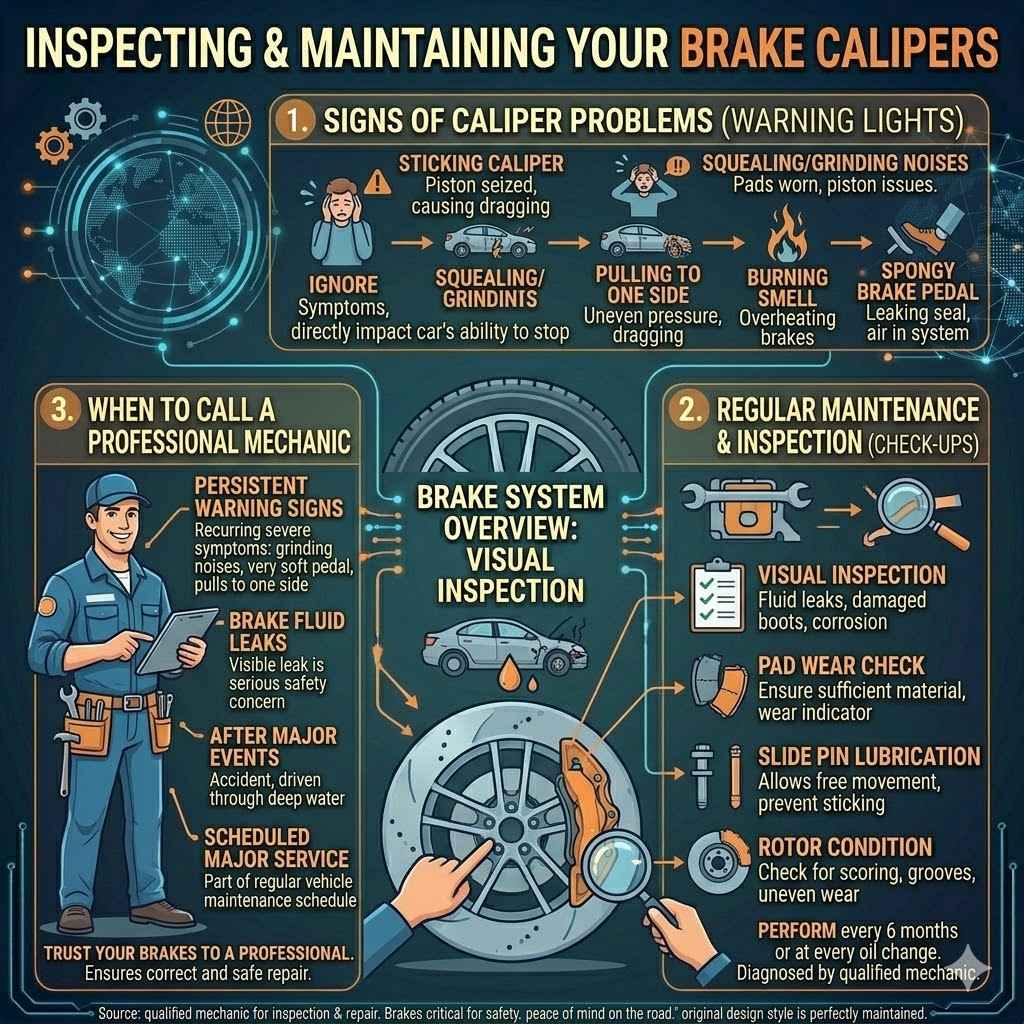
Inspecting and Maintaining Your Brake Calipers
Now that you have a clearer idea about How Many Brake Calipers Does a Car Have? and their importance, it’s crucial to understand how to keep them in good working order. Regular inspection and maintenance are key to ensuring your brakes function correctly and safely. Issues with brake calipers can lead to reduced stopping power, uneven braking, or even complete brake failure.
Fortunately, many basic checks can be performed by car owners, and most brake system maintenance is best left to qualified mechanics. This section will guide you through what to look for and when to seek professional help. Keeping your brakes in top shape is a vital part of vehicle ownership and ensures your safety and the safety of others on the road.
Signs of Caliper Problems
Brake calipers, like any mechanical part, can wear out or develop problems over time. Recognizing the warning signs is essential for timely repair and preventing more serious damage. Ignoring these symptoms can be dangerous, as it directly impacts your car’s ability to stop.
One of the most common issues is a sticking caliper. This happens when the piston or slide pins within the caliper seize up, preventing the brake pads from retracting fully from the rotor. This can cause the brakes to drag, leading to a burning smell, reduced fuel efficiency, and premature wear of the brake pads and rotor on that wheel.
- Squealing or Grinding Noises: A persistent squealing sound when you’re not braking, or a grinding noise when you apply the brakes, can indicate caliper issues, such as worn pads or a seized piston.
- Pulling to One Side: If your car pulls to the left or right when you brake, it often means one caliper is not applying as much pressure as the others, or one is sticking and dragging.
- Burning Smell: A strong burning smell, especially after driving, can be a sign that a caliper is sticking and causing the brakes to overheat.
- Spongy or Soft Brake Pedal: While often related to brake fluid or other components, a caliper issue like a leaking seal can introduce air into the system, making the pedal feel soft.
These signs should never be ignored. They are direct indicators that your braking system needs attention.
Regular Maintenance and Inspection
Regular brake maintenance is crucial for safety and can save you money in the long run by preventing minor issues from becoming major repairs. A visual inspection of your brake calipers should be part of your routine vehicle check-ups, ideally performed every six months or at every oil change.
When inspecting, look for any signs of leaks around the caliper, such as brake fluid residue. Check the condition of the brake pads; if they are worn down to their minimum thickness, they will need to be replaced. Also, examine the caliper itself for any signs of damage, corrosion, or seized components.
If the car is on a lift, the brake rotors should be checked for excessive wear, warping, or scoring.
- Visual Inspection: Look for fluid leaks, damaged boots on the pistons, or excessive corrosion on the caliper body.
- Pad Wear Check: Ensure brake pads have sufficient material remaining. Most pads have a wear indicator that makes a squealing noise when they are low — see our guide on how to change brake pads once they hit that point.
- Slide Pin Lubrication: Caliper slide pins allow the caliper to move freely. They should be inspected and lubricated during brake pad replacement to prevent sticking.
- Rotor Condition: Check rotors for scoring, grooves, or signs of uneven wear, which can indicate caliper problems.
Many of these checks are simple enough for a vigilant car owner to perform. However, any suspected issue should be diagnosed and repaired by a qualified mechanic.
Best Brake Caliper Maintenance Pick
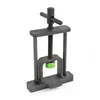
OEMTOOLS Heavy Duty Dual Piston Brake Caliper Compression Tool
A steel wind-back tool for pushing a sticking or worn caliper piston back into its bore during a DIY pad job.
- Best for: Compressing stuck or worn caliper pistons back into place during a pad replacement
- Why we picked it: Single-piece steel design handles both single- and dual-piston calipers without extra adapters
- Main drawback: Not built for the multi-piston fixed calipers used on performance cars
Compare more brake caliper maintenance options
 Option 1 Hetman Tuning Slide Pin Grease
|
 Option 2 Rust-Oleum Caliper Spray Paint, Red
|
 Option 3 Luckmart 21pc Wind Back Tool Kit
|
As an Amazon Associate we earn from qualifying purchases.
When to Call a Professional Mechanic
While a visual check is useful, brake systems are complex and critical for safety. There are many instances when you should not hesitate to contact a professional mechanic to inspect or repair your brake calipers and the entire braking system.
If you notice any of the warning signs of caliper problems, it’s time to see a mechanic. This includes unusual noises, pulling to one side, a soft brake pedal, or any burning smells. Additionally, if you’re not comfortable performing brake work yourself or lack the proper tools and equipment, it’s always best to let a professional handle it.
Mechanics have specialized diagnostic tools and the expertise to identify and fix brake issues accurately.
- Persistent Warning Signs: Any recurring or severe symptoms like grinding noises, a very soft pedal, or a car that constantly pulls to one side warrant immediate professional attention.
- Brake Fluid Leaks: Any visible brake fluid leak is a serious safety concern and requires immediate repair by a professional.
- After Major Events: If your car has been involved in an accident, even a minor one, or has driven through deep water that could affect brake components, a professional inspection is recommended.
- Scheduled Major Service: As part of a vehicle’s regular maintenance schedule, mechanics will perform thorough brake system checks.
Trusting your brakes to a professional ensures they are repaired correctly and safely, giving you peace of mind on the road.
Frequently Asked Questions
How many brake calipers does a standard car have?
A standard car typically has four brake calipers, with one on each of the four wheels. This setup ensures balanced and effective braking.
Do all cars have disc brakes with calipers?
Most modern cars use disc brakes on all four wheels, which include calipers. However, some vehicles, including current economy models like the Nissan Versa, still use drum brakes on the rear axle, which operate differently and don’t use a caliper.
What happens if a brake caliper fails?
If a brake caliper fails, it can lead to significantly reduced braking performance, uneven braking, or a complete loss of braking on one or more wheels, which is extremely dangerous.
Can I drive my car if one brake caliper is sticking?
You can technically drive your car, but it is not recommended. A sticking caliper causes the brake to drag, leading to overheating, damage to the rotor and pad, poor fuel economy, and a dangerous reduction in stopping power.
How often should brake calipers be inspected?
Brake calipers should be visually inspected as part of regular brake maintenance, usually every six months or at every oil change. Professional inspection is recommended when you notice any braking issues or during scheduled brake service.
How many brake pads does a car have?
A car with 4 brake calipers has 8 brake pads total, since each caliper holds 2 pads — one inner and one outer — that clamp the rotor from both sides. A car with only 2 front calipers and rear drum brakes has 4 brake pads up front plus a set of curved brake shoes at the rear instead of pads.
Do all rear disc brakes use a caliper for the parking brake?
Not always. Most rear disc brakes use the same caliper for both regular braking and the parking brake, either through a cable-puller mechanism or a motor built into the caliper. A smaller number of vehicles instead use a “drum-in-hat” design, with tiny parking-brake shoes hidden inside the rear rotor — a separate mechanism from the caliper on that same wheel.
Summary
Most cars have four brake calipers, one for each wheel. This standard setup provides balanced stopping power. Some economy models pair front calipers with rear drum brakes instead, bringing the count down to two, while performance or heavy-duty vehicles might use multi-piston calipers or specialized systems for more demanding needs.
Regular checks and professional maintenance are essential to keep these critical components working safely. Know the signs of trouble and get them fixed promptly.
Products related to this article
Sponsored / affiliate links. As an Amazon Associate I earn from qualifying purchases. I may earn additional commission from eligible campaigns.