Smart Phone Car Diagnostic Tools: Best Picks
Finding the right tool to check your car can feel tricky. You want something easy, right? Many people find learning about Smart Phone Integrated Car Diagnostic Tools: Best 2026 Picks a bit confusing at first.
There are so many options! But don’t worry, we’ll make it super simple for you. We’ll walk through it step-by-step.
Get ready to learn how to pick the best tools for your car needs.
Smart Phone Integrated Car Diagnostic Tools
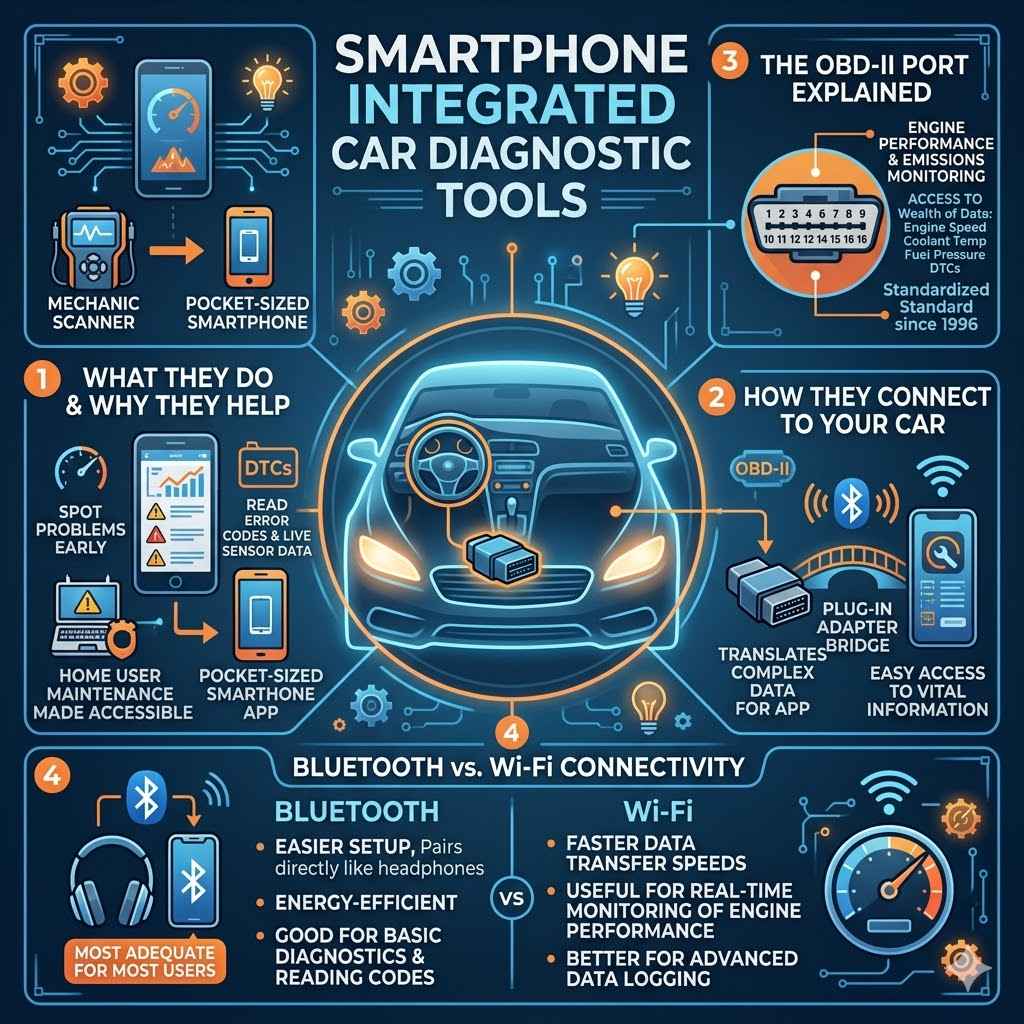
Smart phone integrated car diagnostic tools are devices that connect to your car’s computer system and send data to your phone. This lets you see what’s going on with your vehicle right from an app. It’s like having a mechanic’s scanner in your pocket.
These tools help you spot problems early before they become big, expensive issues. They can read error codes, show live sensor data, and even help you reset warning lights. Many are designed for home users, making car maintenance more accessible.
How These Tools Connect to Your Car
These diagnostic tools typically use a small adapter that plugs into your car’s On-Board Diagnostics (OBD-II) port. This port is usually located under the dashboard, near the steering wheel. The adapter then connects wirelessly to your smartphone, either via Bluetooth or Wi-Fi.
The adapter acts as a bridge, translating the car’s complex data into a language your phone app can understand. This allows for easy access to vital car information without needing a professional mechanic for simple checks.
Think of the OBD-II port as your car’s main communication hub. It’s been standard on cars since 1996. It’s designed to help emissions testing and diagnostics.
When a problem arises, the car’s computer stores a diagnostic trouble code (DTC). The smart phone tool reads these codes.
The OBD-II Port Explained
The On-Board Diagnostics II (OBD-II) port is a standardized connector that allows diagnostic equipment to access various systems within your vehicle. It was mandated for all cars and light trucks sold in the United States starting in 1996. This port is crucial for monitoring engine performance and emissions.
It provides access to a wealth of data, including engine speed, coolant temperature, fuel pressure, and diagnostic trouble codes (DTCs). Mechanics use this port to pinpoint issues quickly. With smart phone tools, you can access much of this same information.
The OBD-II port has 16 pins, though not all are used for every vehicle. Different communication protocols are used, such as Controller Area Network (CAN), which is the most common today. Understanding where your OBD-II port is located is the first step in using any smart phone diagnostic tool.
Bluetooth vs. Wi-Fi Connectivity
When choosing a smart phone integrated car diagnostic tool, you’ll often encounter two main types of wireless connectivity: Bluetooth and Wi-Fi. Each has its own advantages and disadvantages. Bluetooth is generally easier to set up.
It pairs directly with your phone like wireless headphones. Wi-Fi connections can sometimes offer faster data transfer speeds, which can be useful for real-time monitoring of engine performance. However, Wi-Fi adapters might require setting up a separate Wi-Fi network for the device.
For most users, Bluetooth is perfectly adequate. It’s energy-efficient and works well for reading codes and basic diagnostics. If you plan on doing advanced data logging or real-time performance tracking, Wi-Fi might be a slightly better choice.
Always check the product specifications to see which type of connection the tool uses and if it’s compatible with your phone’s operating system (iOS or Android).
Benefits Of Using Smart Phone Car Diagnostic Tools
Using a smart phone integrated car diagnostic tool brings many benefits to car owners. It saves you time and money by helping you understand your car’s issues before visiting a mechanic. You can get a quick check yourself, and then decide if a repair is urgent or can wait.
This empowers you with knowledge about your vehicle’s health. It’s a great way to be more proactive with your car maintenance.
Save Money On Repairs
One of the biggest advantages is saving money. Instead of paying a mechanic just to read a check engine light, you can often do it yourself with an affordable tool. If the code points to a simple fix, you might even be able to handle it yourself.
Even if you still need a mechanic, you can go in armed with information. This helps prevent overpaying for unnecessary repairs or misdiagnoses. You can discuss the specific error code with your mechanic, leading to more efficient service.
For instance, a common issue like a loose gas cap can trigger a check engine light. A diagnostic tool will tell you this immediately, saving you a trip to the shop. You just tighten the cap, and the light may turn off after a few driving cycles.
This simple act alone can save you a diagnostic fee.
Early Problem Detection
These tools are fantastic for catching problems early. Many issues start small. A minor sensor fault might not cause immediate driving problems, but it can lead to bigger issues or reduced fuel efficiency over time.
By regularly scanning your car, you can identify these minor faults before they escalate. This proactive approach can prevent catastrophic failures and extend the life of your vehicle. Early detection is key to avoiding costly repairs down the road.
Imagine a small oil leak. You might not notice it until it’s a serious problem. A smart phone tool might pick up on a related sensor reading that is slightly off, hinting at an issue.
This gives you a heads-up to check for leaks or other related symptoms.
Increased Understanding Of Your Vehicle
Beyond just reading codes, these tools provide a window into how your car operates. You can view live data streams from various sensors, such as engine RPM, vehicle speed, throttle position, and oxygen sensor readings. This helps you understand your car’s performance and how different components work together.
It demystifies car mechanics for the average owner. This knowledge can make you a more informed driver and car owner.
Learning about these readings can be fascinating. You can see how your car responds when you accelerate or brake. It helps you appreciate the engineering involved.
This improved understanding also makes it easier to communicate with mechanics about any concerns you might have.
Top Smart Phone Integrated Car Diagnostic Tools
Choosing the right smart phone integrated car diagnostic tool depends on your needs and budget. We’ve looked at what’s available and highlighted some excellent options that offer a great balance of features, ease of use, and value. These tools are designed to be user-friendly, even for those who aren’t car experts.
They provide the data you need to keep your car running smoothly and to make informed decisions about maintenance and repairs.
Factors To Consider When Buying
When selecting a tool, think about what you want it to do. Do you just need to read check engine lights, or do you want more advanced features like live data, smog checks, or battery health monitoring? Compatibility is also key.
Make sure the tool works with your smartphone’s operating system (iOS or Android) and your car’s make and model.
Ease of Use
The app interface should be simple and intuitive. You don’t want to spend hours trying to figure out how to read a code. Look for tools with clear instructions and a straightforward design. Many apps offer helpful guides and explanations for the codes they find.
Features Offered
Consider the specific features you need. Some tools only read basic engine codes. Others can access transmission codes, ABS codes, or airbag codes. Live data streaming is valuable for performance monitoring. Some advanced tools offer bi-directional control, allowing you to command specific car functions, but these are typically for professional use.
Vehicle Compatibility
Ensure the tool supports your car’s make, model, and year. Most modern tools work with a wide range of vehicles manufactured after 1996, but it’s always best to check the compatibility list provided by the manufacturer.
Cost and Subscription Fees
Diagnostic tools vary widely in price. Some are a one-time purchase, while others have optional subscription services for enhanced features or specific car brands. Factor in any ongoing costs.
Customer Support and Reviews
Look for brands with good customer support. Reading reviews from other users can provide valuable insights into the tool’s reliability and the manufacturer’s responsiveness.
Best Picks for Home Mechanics
For the everyday car owner who wants to be more hands-on, there are several outstanding choices. These tools offer a great blend of functionality and affordability. They help you understand your car without requiring specialized knowledge.
1. FIXD OBD2 Scanner Active Scan Tool
The FIXD scanner is designed with simplicity in mind. It plugs into your OBD-II port and pairs with your smartphone via Bluetooth. The app not only reads diagnostic trouble codes but also translates them into plain English.
This is a huge help for beginners. It also monitors your car for potential issues and can alert you to problems before they become serious. It provides information on scheduled maintenance and can even give you an idea of repair costs.
FIXD’s strength lies in its user-friendly interface and clear explanations. It’s ideal for those who want a quick and easy way to understand their car’s health and potential issues. It covers a wide range of vehicles and provides notifications for various systems.
2. Ancel AD410 OBD2 Code Reader
The Ancel AD410 is a more traditional code reader but with smart capabilities. It’s a standalone unit that can also connect to a phone for more detailed analysis and data logging. It’s known for its robust build quality and its ability to read not just engine codes but also some ABS and transmission codes on certain vehicles.
It has a clear color screen and easy-to-navigate menus.
This tool is a good option if you want something reliable and capable of more than just basic code reading. It’s a step up in functionality for those who are becoming more comfortable with car diagnostics. It also supports multiple languages.
3. Carly Universal OBD2 Scanner
Carly offers a powerful system that combines a hardware adapter with a comprehensive app. It’s praised for its advanced features, including live data, diagnostic scans for various systems (engine, transmission, ABS, etc.), and even coding functions for certain car models. The app provides detailed reports and health checks.
Carly often requires a subscription for full features, but the basic diagnostic capabilities are often included.
This is a great choice for car enthusiasts or those who want to dig deeper into their car’s diagnostics. The ability to code certain modules, like turning on automatic window closing or changing headlight behavior, is a unique feature not found in many basic scanners. It supports a vast number of car makes.
Advanced Features And What They Mean
Beyond basic code reading, many tools offer advanced features that can be very useful. Understanding these can help you choose the tool that best fits your needs.
Live Data Streaming
Live data streaming allows you to see real-time information from your car’s sensors as you drive or as the engine runs. This includes data like engine RPM, vehicle speed, throttle position, coolant temperature, oxygen sensor voltage, and fuel trim. By observing these values, you can see how your car’s systems are performing under different conditions.
For example, if you suspect a problem with your engine’s air-fuel mixture, you can monitor the oxygen sensor readings. If the readings are consistently outside the normal range, it indicates a potential issue that needs further investigation. This feature is invaluable for diagnosing performance problems and understanding how your car operates dynamically.
Smog Check Functionality
Some diagnostic tools include a smog check function. This feature can tell you if your car is ready for an emissions test. It checks if all the necessary systems have been monitored by the car’s computer and if there are any active diagnostic trouble codes that would cause your car to fail.
This can save you a trip to the smog station only to be told your car isn’t ready. The tool will indicate which systems need more driving cycles to complete their self-tests. This helps you ensure your car is prepared for its emissions inspection.
Battery Health Monitoring
A healthy battery is essential for your car to start and for all its electrical systems to function correctly. Some advanced diagnostic tools can test your car’s battery health. They can tell you the battery’s voltage, cranking amps, and overall condition.
This is especially useful in extreme weather conditions or if you’ve been experiencing starting issues. Knowing the state of your battery can help you avoid being stranded. It also helps you decide when it’s time for a replacement before it fails completely.
Smart Phone Integrated Car Diagnostic Tools: Best 2026 Picks Explained
The landscape of vehicle diagnostics is constantly changing, and by 2026, we expect smart phone integrated tools to be even more sophisticated and user-friendly. The trend is towards greater integration with vehicle systems and more advanced analytical capabilities. This means that even basic tools will offer more insight.
The aim is to empower car owners with as much information as possible, making car ownership less mysterious and more manageable. These tools will continue to bridge the gap between DIY enthusiasts and professional mechanics.
How to Use Your Diagnostic Tool Effectively
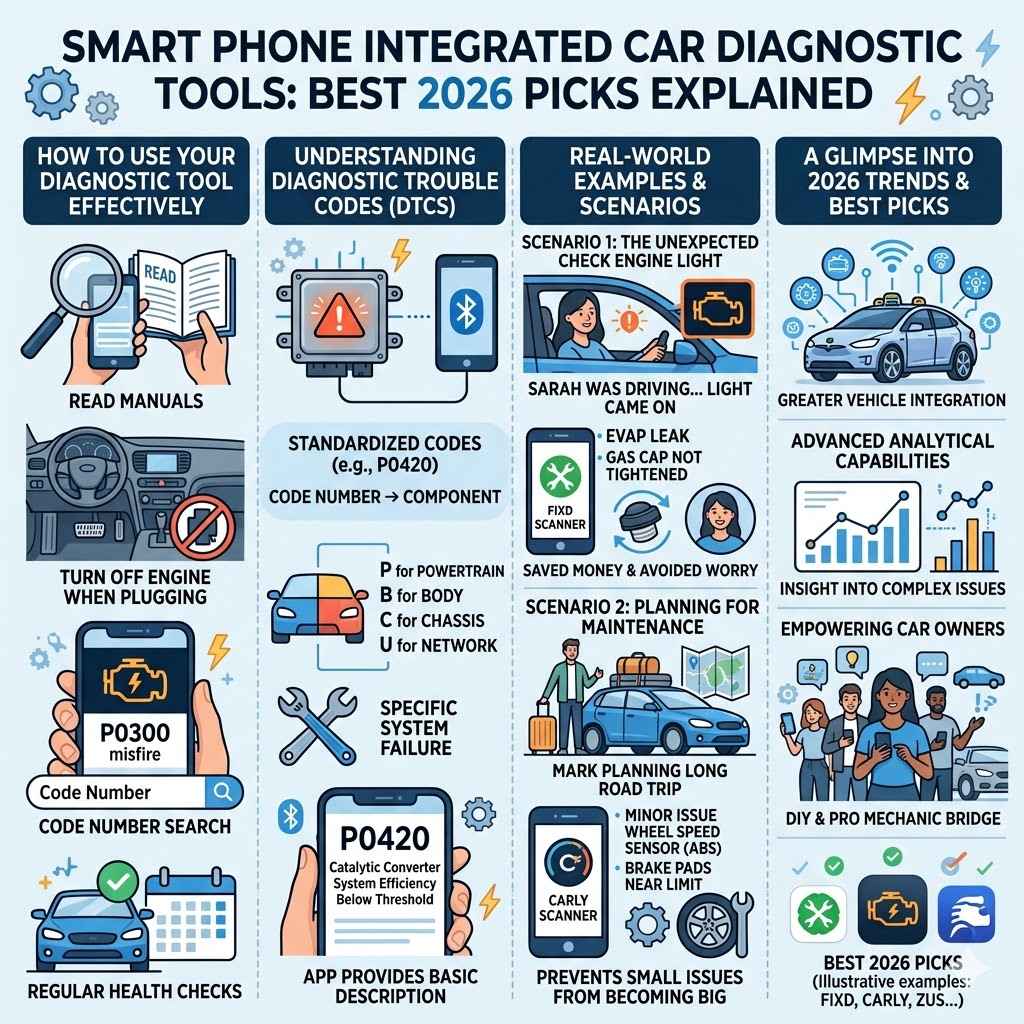
Once you have your tool, using it effectively is key. Start by reading the manual for both the tool and its accompanying app. This will familiarize you with its specific functions and limitations.
Always ensure your car’s engine is turned off when plugging in or unplugging the adapter.
When reading codes, pay attention to the specific code number (e.g., P0300). You can then use the app or search online for a detailed explanation of what that code means for your specific vehicle make and model. This information will guide you on whether it’s a minor issue or something that requires immediate attention from a professional.
Regularly checking your car’s health will become a routine part of car ownership.
Understanding Diagnostic Trouble Codes (DTCs)
Diagnostic Trouble Codes (DTCs) are standardized codes that your car’s computer system generates when it detects a problem. They usually start with a letter (P for Powertrain, B for Body, C for Chassis, U for Network) followed by four numbers. For example, P0420 indicates a problem with the catalytic converter system.
Each code points to a specific component or system that is not functioning as expected. The smart phone diagnostic tool reads these codes and displays them to you. The accompanying app often provides a brief description of the code’s meaning.
However, for a complete understanding, it’s good to research the code further. Knowing what the DTC means is the first step to diagnosing and fixing the problem.
Real-World Examples and Scenarios
Let’s look at a couple of real situations where these tools shine.
Scenario 1: The Unexpected Check Engine Light
Sarah was driving to work when her check engine light came on. Instead of panicking and immediately scheduling an expensive mechanic appointment, she used her FIXD scanner. The app told her the code was related to an evaporative emission control system leak. She remembered that her gas cap wasn’t fully tightened after her last fill-up. She tightened it, and after a few days of driving, the light turned off. She saved money and avoided unnecessary worry.
Scenario 2: Planning For Maintenance
Mark wanted to get his car ready for a long road trip. He used his Carly scanner to perform a full system scan. It found a minor issue with one of his wheel speed sensors, which could have affected his ABS system. It also indicated that his brake pads were getting close to needing
These examples show how smart phone diagnostic tools can provide peace of mind and prevent small issues from becoming big problems. They put control back into the hands of the car owner.
Frequently Asked Questions
Question: How do I know if a smart phone diagnostic tool will work with my car?
Answer: Most smart phone diagnostic tools are designed to work with vehicles manufactured after 1996 that have an OBD-II port. Always check the product’s compatibility list or contact the manufacturer to confirm it supports your car’s specific make, model, and year before purchasing.
Question: Can these tools really replace a mechanic?
Answer: While these tools are excellent for reading codes and understanding basic issues, they typically cannot perform complex repairs or advanced diagnostics that a professional mechanic can. They are best used to supplement professional service, not replace it entirely.
Question: Do I need a special app for the diagnostic tool?
Answer: Yes, almost all smart phone integrated diagnostic tools require a companion app that you download onto your smartphone. This app is what interprets the data from the tool and displays it in a user-friendly format.
Question: How often should I use my diagnostic tool?
Answer: You can use your diagnostic tool whenever your check engine light comes on. For preventative maintenance, many users like to check their car’s health once a month or before long trips to ensure everything is in order.
Question: Are there any hidden costs with these tools?
Answer: Some tools are a one-time purchase, while others may offer optional premium features or subscriptions for more advanced diagnostics or specific car brands. Always check the product details for any ongoing costs.
Wrap Up
Smart phone integrated car diagnostic tools offer a simple way to understand your car’s health. They help you save money by identifying issues early and prevent bigger problems. With our picks and advice, you can confidently choose a tool that fits your needs.
Start using these tools to take control of your car maintenance today.