
Tax Collected at Source on Car Explained: A Simple Guide
Figuring out Tax Collected at Source on Car Explained can be tricky, especially if you’re new to car buying or tax rules. There’s a lot of jargon and specific rules that seem confusing at first. Don’t worry, though. This guide breaks it down into easy steps, so you’ll easily grasp what you need to know. We’ll simplify the whole process. Let’s explore how it works and what it means for you.
What Exactly Is Tax Collected at Source on Car?
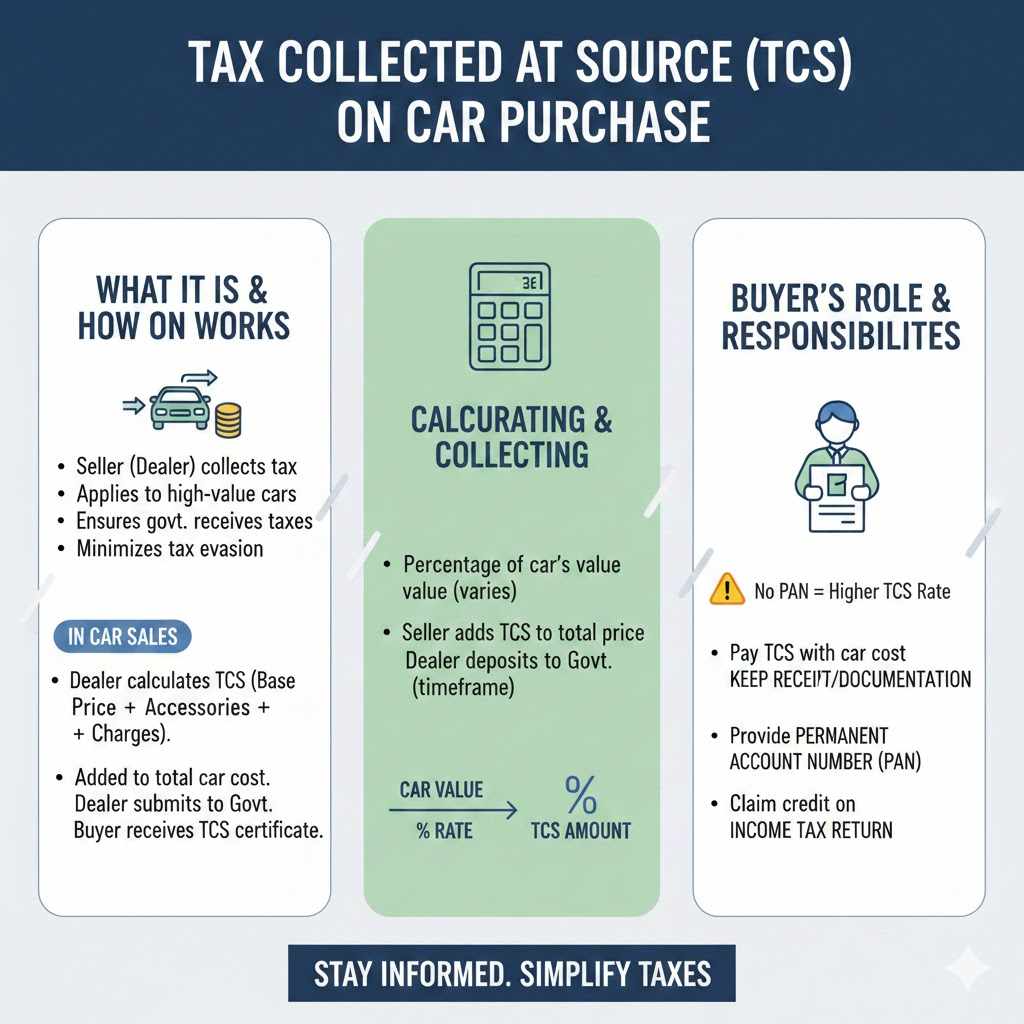
Tax Collected at Source (TCS) on a car is a tax collected by the seller when you buy a vehicle. It’s not a new type of tax, but a way for the government to ensure it receives its due taxes. The seller, typically a car dealer, collects this tax and then sends it to the government. This method streamlines tax collection and minimizes tax evasion. The TCS applies to the sale of certain high-value goods, and cars often fall into this category. The specific rules and rates can change, so it’s essential to stay informed about current guidelines.
How TCS Works in Car Sales
When you purchase a car, the dealer calculates the TCS amount based on the car’s transaction value. This value includes the car’s base price, any additional accessories, and sometimes, other charges like insurance and registration. The TCS amount is added to the total amount you owe for the car. The dealer then submits this tax to the government on your behalf. This system ensures that the government collects tax at the point of sale. This process helps maintain transparency and reduces the risk of tax avoidance. You, as the buyer, usually receive a certificate from the dealer that you can use when filing your income tax return to claim credit for the TCS paid.
- Calculating the TCS Amount: The calculation is based on a percentage of the car’s value, which can vary. The seller will use the specific rate set by the tax authority to figure out how much tax to collect from you.
- Collection by the Seller: The dealer is responsible for collecting the TCS. This means they add the TCS amount to the total price you pay for the car. This part is crucial because it’s when the actual tax transaction happens.
- Deposit to the Government: After collecting the TCS from you, the dealer is required to deposit this amount with the government within a specified timeframe.
The Buyer’s Role and Responsibilities
As a buyer, you have a few responsibilities regarding TCS. First, you must pay the TCS amount when you pay for the car. It’s essential to keep the receipt or any documentation from the dealer showing the TCS payment. This documentation is your proof of payment and is vital when filing your income tax return. You can usually claim a credit for the TCS paid against your tax liability. It is important to know that you must provide your Permanent Account Number (PAN) to the dealer, as this is required for the TCS reporting. Failure to provide it might result in the collection of TCS at a higher rate. Keeping these documents organized and knowing the rules makes the tax process smoother.
- Providing PAN Information: Your Permanent Account Number (PAN) is necessary for the dealer to file the TCS correctly. Make sure you provide this information accurately.
- Keeping the Receipt: Always keep the proof of payment provided by the dealer. This receipt is essential for claiming your tax credit.
- Claiming Credit on Your Tax Return: When filing your income tax return, use the TCS certificate or receipt to claim credit. This will reduce the amount of tax you owe.
Who is Affected by Tax Collected at Source on Car?
Tax Collected at Source on car purchases impacts several parties. The most directly affected are car buyers and car dealers. However, the government benefits from a more efficient tax collection system. The application of TCS on car sales ensures that taxes are collected at the point of the transaction, which minimizes the chances of tax avoidance. This regulation helps create a fairer tax system where everyone contributes their share. Additionally, the guidelines on TCS may differ slightly based on the state or region where the car is sold, which means that dealers need to remain updated with regional tax laws to stay compliant. This system contributes to financial transparency, promoting trust between taxpayers and the government.
Car Dealers and Their Obligations
Car dealers are key in the TCS system. They are responsible for collecting the tax from buyers. This means adding the TCS amount to the final sale price. They must also file the tax with the government within the timeline set. They must obtain and verify the buyer’s PAN, because they need it to file the return. Car dealers provide the buyer with a TCS certificate, a document the buyer needs to claim their tax credit. Failing to comply with TCS rules may result in penalties, like fines or additional interest. Dealers must manage the TCS process correctly. They are vital in making sure the tax system is effective and works correctly.
- Collecting TCS: Adding the TCS amount to the total sale price of the car.
- Obtaining PAN: Getting the buyer’s PAN accurately for tax filing.
- Filing TCS with the Government: Depositing the collected TCS to the government within the deadlines.
Impact on Car Buyers
For car buyers, the TCS means a slight increase in the total cost of the car at the time of purchase. However, the buyer can claim a tax credit when filing their income tax return. The actual impact on the buyer will depend on their overall income and tax situation. The buyer should maintain accurate records of TCS payments. This will help when claiming the tax credit. It’s also important for buyers to understand the current TCS rules. This helps in estimating the total cost and tax liability beforehand. Being informed can help them plan their finances and avoid last-minute surprises.
- Increased Upfront Cost: The TCS adds to the initial cost when buying the car.
- Tax Credit Claim: The buyer can claim a credit on their income tax return to reduce their tax liability.
- Record Keeping: Buyers need to keep payment proofs for proper tax filing.
Practical Examples of Tax Collected at Source on Car
Let’s look at some specific examples of how Tax Collected at Source on Car works in different situations. These examples will clarify how TCS impacts various scenarios. By looking at these real-world examples, you’ll see how TCS impacts car purchases and the roles of buyers and sellers.
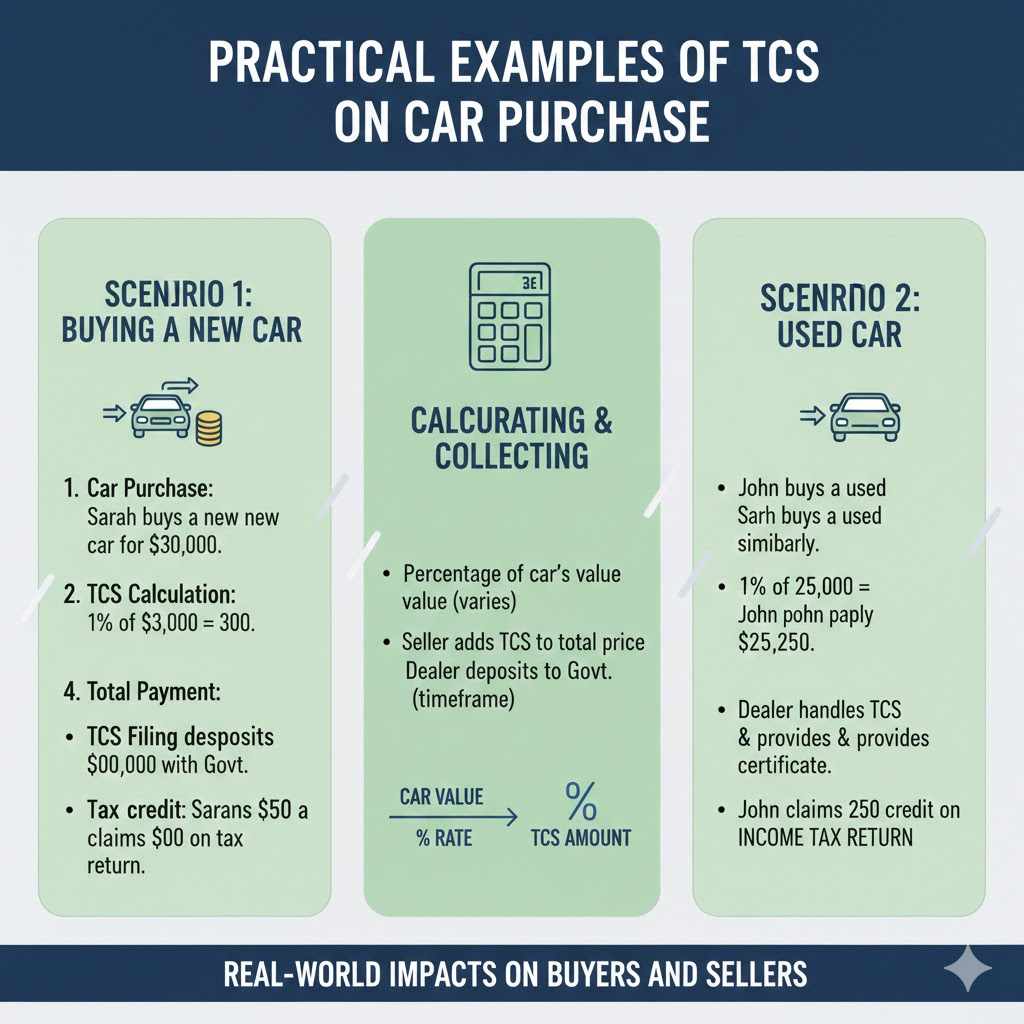
Scenario 1: Buying a New Car
Sarah buys a new car for $30,000. Assuming the TCS rate is 1%, the dealer must collect $300 as TCS at the time of the sale. This amount is added to the total cost, bringing Sarah’s upfront payment to $30,300. The dealer submits the $300 to the tax authorities. Sarah receives a TCS certificate from the dealer. When Sarah files her income tax return, she uses this certificate to claim a credit of $300, reducing her overall tax liability. This scenario is a common illustration of the TCS process and the impact on a buyer’s total payment.
Scenario 2: Buying a Used Car from a Dealer
John buys a used car from a dealer for $25,000. In this case, the TCS rules usually apply similarly to new car sales. With a TCS rate of 1%, the dealer charges John an additional $250. This amount is added to the price, making his total payment $25,250. The dealer handles the TCS and gives John a certificate. This certificate helps John claim his tax credit. The process remains the same as for a new car, but with a different purchase price. The main idea is that the TCS calculation is based on the final transaction amount.
- Step 1: Car Purchase: Sarah buys a new car for $30,000.
- Step 2: TCS Calculation: The dealer calculates TCS at a rate of 1% – $300.
- Step 3: Total Payment: Sarah pays $30,300, including the TCS.
- Step 4: TCS Filing: The dealer files and deposits the $300 with tax authorities.
- Step 5: Tax Credit: Sarah claims a $300 tax credit on her return.
Frequently Asked Questions
Question: What is the current TCS rate on cars?
Answer: The TCS rate can change, so it’s always best to check the latest guidelines from the tax authorities. Often, it’s a percentage of the car’s value, which the seller then adds to the total price.
Question: Do I need to provide my PAN to the dealer?
Answer: Yes, you usually must provide your Permanent Account Number (PAN) to the dealer. This is necessary for the dealer to file the TCS correctly with the tax authorities.
Question: How do I claim the TCS credit when filing my taxes?
Answer: The dealer will give you a TCS certificate. You’ll need this certificate to claim the credit when you file your income tax return. The certificate will show the amount of TCS you paid.
Question: What happens if I don’t provide my PAN?
Answer: Failing to provide your PAN might result in the dealer collecting TCS at a higher rate. It is important that you provide this information.
Question: Does TCS apply to all car sales?
Answer: Generally, TCS applies to car sales above a certain value threshold. The exact rules can change, so it is important to keep informed of current tax guidelines.
Final Thoughts
So, we’ve explored the process of Tax Collected at Source on Car Explained. Essentially, TCS is a system where the seller collects a tax on your car purchase and submits it to the government. It affects both buyers and sellers, and it’s important to understand your role. As a buyer, your part involves providing your PAN, paying the TCS when you buy the car, and keeping the proof of payment.
This helps you when you file your tax return. Remember to keep all documents, and stay informed about the latest rules. If you do, you can deal with car tax easily. Now you are well equipped to understand and manage TCS when purchasing your next vehicle. Good luck with your car buying journey!