
Temporary Plate Cost: How Much It Really Is?
Temporary plate cost is often reported as ranging from $0 to about $100, though the amount can rise once taxes, title work, dealer charges, or county fees are added. Skip the fee breakdown and you can overpay, miss a legal step, or end up without valid driving papers. This guide breaks down temporary plate cost by use case and fee stack so you can estimate the total before you buy or move a vehicle.
What a temporary plate covers
A temporary license plate is a short-term permit that lets you drive before permanent plates arrive. It is also called a temporary tag or permit. The exact product, fee, and validity period vary by state, by dealer involvement, and by the reason you need it, such as waiting on registration, a title transfer, or a one-time move.
Temporary license plate versus temporary registration permit
These are related but not identical. A temporary license plate or temp tag usually covers the gap after purchase or while registration is pending. A temporary registration permit is state-issued in some jurisdictions and is tied to paid fees and pending plate issuance. Both can last for a limited time, but the paperwork and cost logic can differ.
Dealer-issued tags versus DMV-issued permits
A dealer temporary tag is issued when you buy a vehicle, and in some states it may be included in the purchase price. DMV-issued permits usually carry a separate fee and tighter document checks. Availability depends on state dealer rules, so the dealer cannot always issue the same paper the DMV would issue.
Where in-transit permits fit
An in-transit permit or trip permit is for moving a vehicle or making a single trip, often after a private sale or for interstate movement. Some states use very short durations, including 72 hours. That makes this product closer to a movement permit than a standard temporary registration.
How much do temporary plates cost?
Temporary plate cost is driven by the permit type, not just the sticker or paper itself. The fee stack can include a base issuance fee, processing, delivery, tax or transfer charges, and convenience add-ons. Some dealer-issued tags are bundled; some DMV-issued permits are paid separately.
The fee stack that changes the total
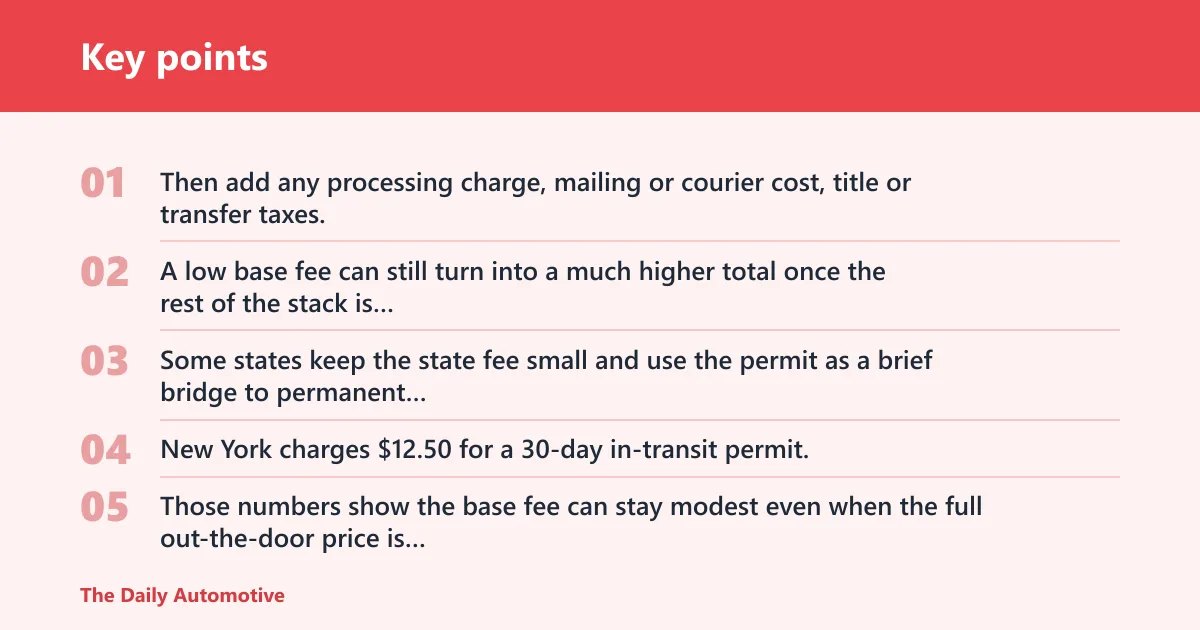
Start with the base issuance fee. Then add any processing charge, mailing or courier cost, title or transfer taxes, and service fees if a dealer, tag agency, or online service handles the paperwork. A low base fee can still turn into a much higher total once the rest of the stack is added.
Why some states charge very little
Some states keep the state fee small and use the permit as a brief bridge to permanent registration. Wisconsin charges $3 for a temporary plate. New York charges $12.50 for a 30-day in-transit permit. Those numbers show the base fee can stay modest even when the full out-the-door price is higher.
Why some dealer tags feel free and are not
Dealer tags can look free because the cost is folded into the vehicle deal. That does not mean the permit has no fee behind it. The amount may be built into the purchase price, financed with the deal, or offset by dealer processing charges rather than shown as a separate line item.
Temporary plate cost stack
The table below separates the likely fee pieces by use case so you can estimate the total before you pay. These are common cost patterns, not a single national schedule. Your state may use different forms, different duration rules, or a different payment path.
| Use case | Likely fee components | Common documents required | Plain-English estimate range |
|---|---|---|---|
| Dealer purchase | Base issuance, dealer processing, possible delivery or mailing, possible tax or title transfer items | Proof of ownership paperwork from the dealer, ID, proof of insurance, signed buyer forms | $0 if bundled by the dealer, or roughly $5 to $100+ if separate fees and add-ons apply |
| Private sale | State permit fee, title or transfer charge, processing, possible convenience fee if using a tag service | Bill of sale or title, ID, proof of insurance, transfer application | Usually about $5 to $50 before any title or transfer charges |
| Out-of-state move | Trip permit fee, processing, possible courier or printing charge, possible reciprocity-related permit difference | Proof of ownership, ID, insurance, route or travel details if required by the state | About $5 to $50, with short-duration permits sometimes priced separately |
| Plate-delay replacement | Replacement or extension fee, processing, mailing, convenience fee, possible recheck of title status | Receipt from the original application, ID, proof of ownership, insurance, application number | Often low if the state extends a pending permit, but can move into the $5 to $50 range with service fees |
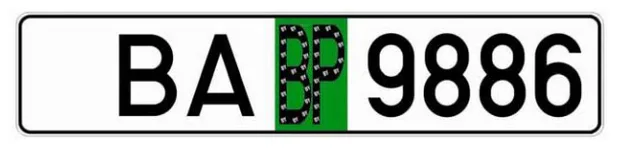
Say your dealer quotes a “temporary tag included” deal on a used sedan. The tag may be built into the selling price, but the buyer still pays the vehicle’s title, registration, and any county items that come later. The tag itself looks free; the paper trail usually is not.
Suppose you buy a car from a private seller on Friday and need to drive it home that night. If your state issues an in-transit or trip permit, you may pay only the permit fee plus a small processing charge. If you also need title transfer services, the total rises quickly.
Which documents do you need?

Most temporary plate applications need proof of ownership and proof of insurance. Many states also ask for ID, a completed application, and title transfer papers. If the paperwork does not match the vehicle or buyer, the state or dealer can reject the request and send you back for corrections.
Proof of ownership
For private sales, proof of ownership is usually a bill of sale or title. For a dealer purchase, the dealer packet often serves that role. The issuing authority needs a document that ties you to the vehicle before it will issue any short-term plate or permit.
Proof of insurance
Insurance is commonly checked before issuance. That check can happen at a dealer, at a DMV counter, or through an online portal. If your policy does not yet list the vehicle, expect delays until the insurer updates the VIN and effective date.
ID, application, and title transfer papers
Bring a government ID, the state application form, and any title transfer paperwork the state requires. Some offices also want odometer or sale disclosure forms. Missing one page can turn a same-day visit into a second trip.
- Confirm which permit type your state uses for your situation.
- Gather proof of ownership, proof of insurance, and ID.
- Check whether you apply through the dealer, DMV, or an online portal.
- Pay the base fee and any processing, mailing, or transfer charge.
- Verify the expiration date before you drive away.
You usually get temporary plates from a dealer or from the state DMV or motor vehicle agency. Some states allow online submission, while others require in-person service. The route matters because the fee stack, wait time, and paperwork review can be very different depending on where you apply.
At a dealer
If you buy from a dealer, ask whether the temporary tag is issued at point of sale and whether it is included in the purchase price. Dealer-issued tags are common after a retail sale, but state dealer rules control whether the dealer can issue them and how long they last.
At the DMV or motor vehicle agency
When the DMV issues the permit, the agency usually charges its own fee and may require direct proof that the title or registration is pending. New York’s temporary registration permit fee is generally $20, and its 30-day in-transit permit is $12.50. Those are separate examples of how states structure the cost.
Online or in person, depending on the state
Some states let you apply online, then print or receive the permit by mail. Others want an in-person visit for identity, insurance, or ownership review. A state-specific rule set decides both where you apply and how long the temporary plate lasts.
How long do temporary plates last?
Temporary plates commonly last 30 to 90 days, but some states use shorter or longer windows. Common validity periods include 10, 21, 30, 72 hours, and 90 days.
Common validity periods
Florida temp tags can be 10, 30, or 90 days. Texas 30-Day Permits are valid up to 30 days. Oregon trip permits last 21 days for a car. Pennsylvania temporary registration plates are commonly up to 90 days. Those examples show how different the timing can be across jurisdictions.
What happens when a tag expires
An expired temporary tag is not a harmless paperwork problem. That can lead to fines, stops, or impoundment depending on local enforcement and the exact violation.
Why some permits last only one trip
In-transit permits are meant for movement, not normal daily driving. That is why some jurisdictions set short terms, including 72 hours or a single-trip window. If you need a permit for commuting while waiting on permanent plates, a trip permit is often the wrong product.
State rules that change the price
State rules change the price more than many buyers expect. Duration rules, issuance rules, reciprocity, and vehicle type all affect the fee stack. A cheap base permit in one state can become a higher total in another once local processing and transfer charges are added.
Duration and issuance rules
Some states issue one product for a 10-day window; others use 30, 90, or even a short restricted-use permit. Arizona restricted-use permits can last 3 or 30 days. California uses a Temporary Operating Permit, or TOP. New Jersey calls it a temporary vehicle tag. The name often signals the rule set.
Out-of-state acceptance and reciprocity
Can you drive out of state with temporary plates? Sometimes yes, sometimes only under specific reciprocity rules. Do not assume every state accepts every permit the same way. If you are crossing state lines, confirm that the issuing state and the destination state both recognize the document.
Vehicle type and local fee differences
Car, motorcycle, trailer, and commercial vehicle rules can differ, and so can county or city add-ons. That is why two buyers in the same state can pay different totals. Trade plates and plastic plates are usually not the right terms for standard temp tags; the real issue is the permit type and the issuing authority.
Frequently asked questions
How much does a plate cost?
For a temporary plate, the common range is $5 to $50, though the total can reach about $100 when processing, title transfer, delivery, or convenience fees are added. Permanent plate costs are separate and usually follow the state’s registration schedule, not the temporary permit schedule.
How much are plates?
That depends on whether you mean temporary plates or permanent registration plates. Temporary plates often cost little at the base level, and some dealer-issued tags are bundled into the sale. Permanent plates usually include registration, title, and local fees that are calculated separately.
Can I drive out of state with temporary plates?
Sometimes, but not automatically. Out-of-state travel depends on the issuing state’s rules and the other state’s reciprocity or recognition policy. Before leaving, confirm that the permit type is accepted where you plan to drive and that the dates cover your whole trip.
What documents do I need for temporary plates?
Most applications need proof of ownership, proof of insurance, and ID. Private-sale buyers often need a bill of sale or title, while dealer buyers use dealer paperwork. Some states also require title transfer forms or a completed temporary registration application before they will issue the permit.
Products related to this article
Sponsored / affiliate links. As an Amazon Associate I earn from qualifying purchases. I may earn additional commission from eligible campaigns.