Tire Plug Kit Cost / Price / How Much
A basic tire plug kit usually costs about $8 to $25, while a shop plug repair often runs about $20 to $40. If the puncture is in the tread and the tire has no sidewall damage, repair is usually cheaper than replacement. A bad repair can leave you paying for a new tire, a tow, or both. This guide breaks down kit prices, shop labor, and the signs that a cheap repair no longer makes sense.
What a tire plug actually costs
A simple tire plug job has two very different price paths. DIY kits can be cheap. A professional repair adds labor, wheel removal, inspection, leak checking, and sometimes balancing. The final bill changes fast if the tire needs more than a straight tread puncture repair.
In the common case, a tread puncture in a tubeless tire is the least expensive repair. A plug alone may be used from the outside, but a plug-plus-patch is often the safer long-term repair when the shop will do it. Sidewall damage, bead damage, or multiple punctures usually move the tire out of repair territory.
DIY kit price range
Most tire plug kits sit in the low-cost range because they are roadside tools, not full repair jobs. Basic kits often include a T-handle insertion tool, a spiral probe or reamer, and self-vulcanizing plugs or repair cords. Better kits add organized storage, stronger handles, and more repair material.
Shop repair price range
A shop repair usually costs more than the parts alone because you are paying for labor and checks. That bill may include wheel removal, a visual inspection, a leak test, and balance correction if the wheel has to come off. In some markets, a simple repair can still stay modest, but the price rises when the puncture is angled or the shop has to do more work.
What changes the final bill
The main cost drivers are location, tire type, labor, and the severity of the damage. Mobile roadside repair adds convenience and often adds a premium. Roadside service may add 20-50% extra in the U.S., which is why an emergency call can cost far more than a walk-in shop visit.
Say your commuter car picks up a nail in the tread and the tire still holds air. A shop may charge for the repair itself, but a mobile call-out can quickly add enough cost to make the same job feel expensive. The repair is still cheap compared with a new tire, but not as cheap as the kit on a shelf.
Must-have
The three pieces that matter most are the insertion tool, the reamer or spiral probe, and the plug material. If one of those is weak or missing, the repair gets harder and the result is less reliable. For a basic DIY kit, those parts should be the first thing you check.
 As an Amazon Associate we earn from qualifying purchases. Prices and availability are accurate as of the date shown and are subject to change.

Slime 2040-A Tire Repair Plug Kit
This 11-piece tubeless kit fits the basic roadside use case. It includes reamer and plugger tools, multiple tire strings, and pistol-grip handles that are meant to make insertion easier. The drawback is simple: it is a small kit, so it is better for basic punctures than for a truck owner who wants more repair material on hand.
As an Amazon Associate we earn from qualifying purchases. Prices and availability are accurate as of the date shown and are subject to change.
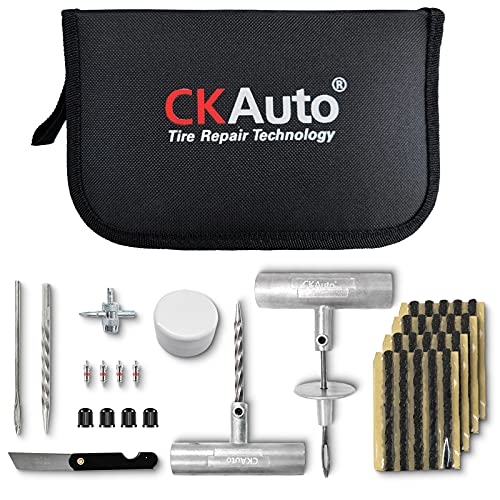
CKAuto 36 pcs Universal Tire Repair Kit
This 36-piece universal kit is built around the core tools most people need: a T-handle insertion tool, a probe tool, plugs, and a compact carry bag. It is a better fit if you want more pieces in one package, but the larger count does not tell you everything about tool durability, so check the listing details for your exact use case.
Nice-to-have
These extras do not change the basic repair method, but they can improve safety and convenience. A plug-plus-patch is a better long-term answer than plug-only in many cases, and balancing or leak testing can catch problems a roadside plug cannot solve. Mobile service is useful when the tire is flat, but it usually costs more.
As an Amazon Associate we earn from qualifying purchases. Prices and availability are accurate as of the date shown and are subject to change.

Boulder Tools Compact Tire Repair Kit
This compact universal kit comes with a Molle storage pouch, which helps keep the parts organized in a vehicle. The listing also points to durable repair components and broad tubeless compatibility across motorcycles, ATVs, overlanding gear, and cars. The main drawback is that compact kits can trade away storage space and extra repair material for portability.
Consumables and spares
Repair cords, valve parts, gloves, cutters, and sealant-type extras are the items that tend to disappear or get used up. They do not replace a proper repair, but they can keep a kit ready for the next puncture. Truck and heavy-duty owners should pay close attention to plug length, because cord length matters more on larger tires.
As an Amazon Associate we earn from qualifying purchases. Prices and availability are accurate as of the date shown and are subject to change.
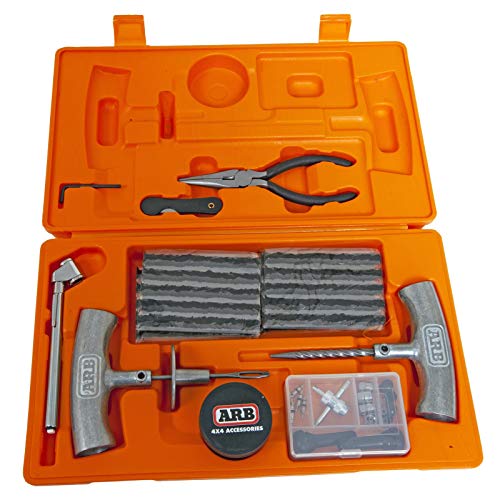
ARB 10000011 Speedy Seal 2 Tire Repair Kit
This heavy-duty kit is built for a wide range of vehicles, including trucks, RVs, tractors, and trailers. It includes 40 vulcanizing repair plugs, a gauge, pliers, and a high-visibility molded case. The drawback is cost: it is one of the pricier kits here, so it makes more sense if you want a larger supply of repair material and a sturdier storage case.
As an Amazon Associate we earn from qualifying purchases. Prices and availability are accurate as of the date shown and are subject to change.

Safety Seal Tire Repair Kit – Auto/LT Deluxe Bag Kit
This deluxe bag kit is aimed at cars, SUVs, and light trucks, with 30 repairs and 4-inch plug strings. It also includes metal T-handle tools, which matters because handle quality can affect how easy the repair is to prepare and install. The downside is that it is priced above entry-level kits, so a casual driver may pay extra for capacity they rarely use.
Budget setups
Different drivers should shop for different kit sizes. A commuter car may only need a low-cost emergency kit, while a truck or RV owner usually benefits from a larger kit with longer plugs and more storage. The right choice depends on whether you want a one-time roadside fix or a kit that stays in the vehicle for repeated use.
| Setup | Best fit | Price | Why it makes sense | Drawback |
|---|---|---|---|---|
| Cheapest roadside kit | Small tread puncture in a commuter car | $7.97 | Lowest entry price and enough for a basic tubeless repair kit | Smallest package and less room for extras |
| Mid-range home kit | Most drivers who want a compact carry kit | $19.99 to $22.99 | Better organization, more parts, and a more complete roadside setup | Still not a substitute for a proper shop repair when the tire damage is borderline |
| Serious truck or heavy-duty kit | Truck, RV, trailer, or repeated roadside use | $47.46 to $54.95 | More plug material, sturdier storage, and more support for larger vehicles | Higher upfront price than a basic repair kit |
Tire plug price table
| Scenario | DIY kit cost | Shop labor | Mobile call-out fee | Balancing/checks | Total expected out-of-pocket |
|---|---|---|---|---|---|
| Small tread puncture | $8 to $25 | $20 to $40 | $0 to $0 if you drive in | $0 to $15 | $20 to $55 |
| Angled puncture | $8 to $25 | $30 to $60 | $0 to $25 | $10 to $20 | $40 to $105 |
| Roadside emergency | $8 to $25 | $40 to $80 | $20 to $50 or more | $0 to $20 | $60 to $155 |
Those totals are useful because they show where the “cheap plug” can stop being cheap. Once mobile service, balancing, and extra inspection time enter the bill, a repair that started as a quick fix can approach the cost of a used tire or get uncomfortably close to replacement money.
When does a plug make sense?
A plug makes sense when the puncture is in the tread area, the tire is tubeless, and the hole is small enough to stay under the common limit of under 1/4 inch, about 6-7 mm. That is the zone where repair is usually considered reasonable. Outside that zone, the cost of repair can become wasted money if the tire is not safe to keep.
Tread-area punctures only
Safe repair is limited to punctures in the tread area, not the sidewall. A plug seals the hole from the outside, which is why it is popular for nails and screws in the tread. For longer-term use, many shops prefer a plug-plus-patch repair instead of plug-only.
Damage size limits
If the hole is too large, the plug may not seal well enough to be trusted. The common size limit is under 1/4 inch, about 6-7 mm. Damage larger than that, or damage that is ragged from driving too far on low pressure, is a sign that replacement may be the safer and smarter choice.
Tubeless tire basics
Tubeless tires are the main candidates for plug kits. That includes many cars, trucks, motorcycles, ATVs, and RVs. If the tire has a tube, or if the damage reaches the sidewall or bead, the usual plug-kit logic no longer applies.
Picture a delivery van with a nail in the center tread. A shop can often repair that for far less than a new tire. But if the same van has a puncture near the shoulder, the repair bill is no longer the only issue; the tire may be out of safe repair range.
When should you replace the tire?
Replace the tire when the damage is in the sidewall or bead, when there are multiple punctures, or when the tire is too old or cracked to trust after repair. At that point, even a cheap plug becomes a false economy because you may pay twice: once for the repair, and again for the replacement you should have bought first.
Sidewall or bead damage
Sidewall and bead damage are the clearest replacement signals. Those areas flex differently and are not treated as normal plug repairs. If the tire is damaged there, the safer answer is usually replacement, not a plug with crossed fingers.
Multiple punctures
Multiple punctures can push the repair cost up fast. The cited guide puts multiple punctures with more labor at PKR 800-1,500, which shows how quickly a simple fix can turn into a more expensive job. Multiple holes also make the tire less trustworthy, even if each hole looks small.
Old or cracked tires
Old, cracked, or visibly worn tires deserve a closer look before anyone patches them. The repair may seal the hole, but it does not restore the tire’s condition. If the casing is tired, the smartest money may be spent on a replacement instead of a repair that only delays the next problem.
A common mistake is assuming a $10 tire plug kit will fix a sidewall puncture just as easily as a small tread nail hole. A tread puncture in a nearly new tubeless tire is one thing. A cracked tire with a gouge near the shoulder is another. Those are different repairs, and sometimes the second one is no repair at all.
Frequently asked questions
How much does a tire plug cost?
A basic DIY tire plug kit usually costs about $8 to $25, while a shop plug repair often runs about $20 to $40 before extras. The total depends on whether the shop removes the wheel, checks for leaks, and balances the tire after the repair.
How much to plug a tire
For a straightforward tread puncture, the bill often stays in the low double digits at a shop and can be lower if you only buy a kit. The price rises when the tire needs inspection, balancing, or mobile service at the roadside.
How much to get tire plugged
A shop plug repair commonly costs less than replacement, especially for a small nail hole in the tread. If the puncture is angled or the shop adds a leak check and balancing, the price can move toward the upper end of the repair range.
Is a plug enough or do I need a plug and patch?
A plug may stop the leak, but a plug-plus-patch is often the safer long-term repair. Many shops use that combined method when the tire qualifies. If the damage is in the tread and not too large, the combined repair is usually the better answer.
When should I replace the tire instead of plugging it?
Replace the tire if the damage is in the sidewall or bead, if there are multiple punctures, or if the tire is old and cracked. Those conditions make a plug a poor value because the tire may no longer be safe even after the hole is sealed.
How much does a DIY tire plug kit cost compared with a shop repair?
A DIY kit often costs less than one shop repair, which is why it makes sense for emergency use. The tradeoff is that the kit only covers the material side of the job. A shop adds labor, leak checking, and sometimes balancing, which is why the final bill is higher.
Products related to this article
Sponsored / affiliate links. As an Amazon Associate I earn from qualifying purchases. I may earn additional commission from eligible campaigns.