All-Season Tires Cost: What to Expect Before Buying
All-season tires often cost in the roughly low-hundreds per tire range, and a set installed can land in the several-hundred-dollar range, with larger vehicles and premium sizes often costing more. Skip install, alignment, and disposal fees, and you can still be short by $100 or more. This guide breaks down tire-only price, installed cost, and cost per mile by vehicle type and tire size.
This guide is part of our Car accessories guide series.
How much do all-season tires cost?
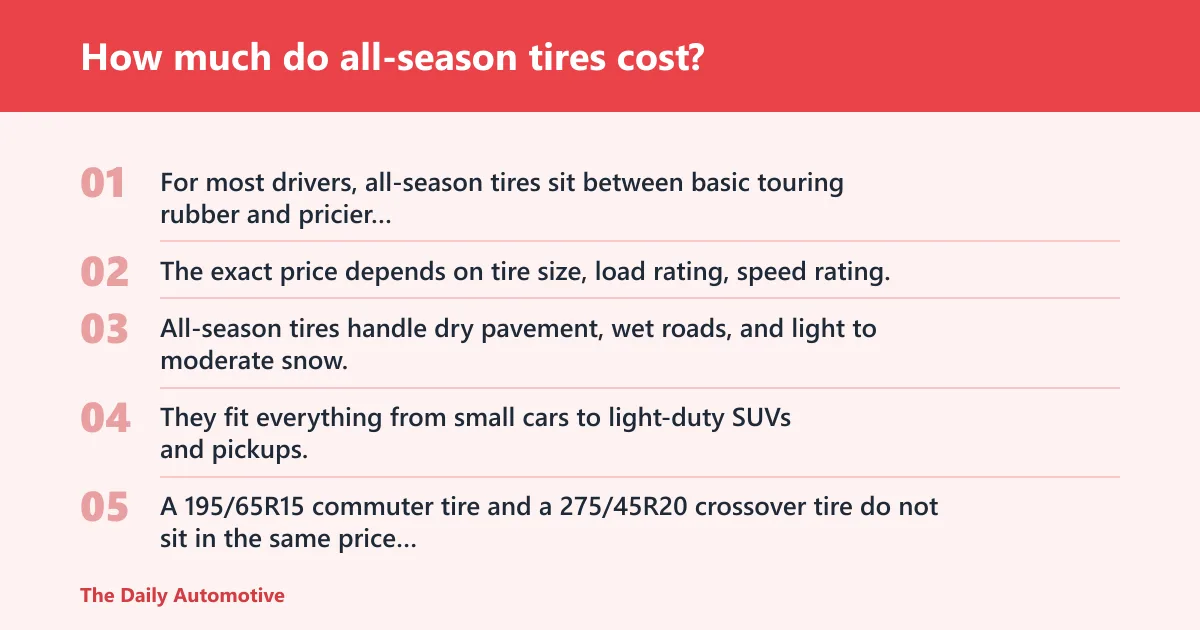


For most drivers, all-season tires sit between basic touring rubber and pricier performance or winter options. The exact price depends on tire size, load rating, speed rating, and if you are buying a passenger-car, SUV, or light-duty pickup fitment.
Typical tire-only price ranges by segment
All-season tires handle dry pavement, wet roads, and light to moderate snow. They fit everything from small cars to light-duty SUVs and pickups, and that range explains the wide spread in prices. A 195/65R15 commuter tire and a 275/45R20 crossover tire do not sit in the same price band.
Touring tires are a comfort-focused all-season subcategory often used on passenger cars. They often sit near the lower to middle part of the price range because they are built for daily commuting, low road noise, and predictable wear rather than sharp response.
How tire size changes the price
Tire size changes cost because it sets how much material goes into the tire and how common that fitment is. Common small-car sizes are often cheaper. Large-diameter wheels, wider tread widths, and higher load ratings usually push the price up fast.
That is why readers should match the exact tire size on the sidewall before comparing prices. A tire that looks close can still miss on load index, speed rating, or overall diameter, which affects price and safety.
What makes one all-season tire cost more than another
Several factors move the sticker price. Brand position matters. So does tread design, warranty length, and whether the tire is aimed at a passenger car, SUV, or light-duty pickup. Treadwear warranty examples can run from 40,000 to 80,000 miles, and longer coverage often costs more up front.
UHP, or ultra-high-performance, all-season tires generally cost more than basic touring tires because they are tuned for better grip and steering response. That extra performance usually brings a higher price and, in many cases, a shorter tread life.
📊 Les Schwab says all-weather tires have a 3PMSF rating. Source: All-Season Tires for Year-Round Performance.
What drives the out-the-door price of a set?
The sticker price is only part of the bill. Mounted-out-the-door cost usually includes the tire price plus mounting, balancing, valve stems, disposal fees, and sometimes alignment. For a full set, those add-ons can change the total by a meaningful amount.
Mounting and balancing fees
Mounting and balancing are the standard labor charges. In my experience, mount-and-balance is often priced in the low-to-moderate tens of dollars per tire, though the exact amount depends on the shop and the wheel setup. Low-profile tires and larger wheels often cost more to install.
Alignment, valve stems, and disposal charges
Alignment is separate from tire installation, but it matters because bad alignment can shorten tread life. A common alignment charge is about $90 to $150 when needed. Valve stems or TPMS-related service can add more, and disposal fees often run a few dollars per tire.
A set of four tires can also trigger shop-specific charges for balancing materials, road-hazard plans, or special handling. Those items are easy to miss when you compare prices online.
Dealer, tire shop, and warehouse pricing differences
Some retailers advertise a lower tire-only price and make up the difference in installation or mandatory fees. Others quote a higher tire price but package the labor. Warehouse clubs and big-box stores can price aggressively, but they may have limited brand choices or appointment availability.
For comparison, always look at the full mounted quote for the same tire size. That is the number that affects your budget.

Cost breakdown by tire type and vehicle size
Vehicle class matters as much as tire brand. Passenger-car all-season and touring tires usually cost less than SUV/crossover sizes, and light-duty pickup fitments often sit at the top end because of larger dimensions and higher load needs. All-season truck tires are used on SUVs and light-duty pickups.
| Segment | Typical tire-only price, each | Mounted set of 4 | Common add-ons | Cost per mile range |
|---|---|---|---|---|
| Passenger-car all-season / touring | $80 to $150 | $400 to $750 | $60 to $160 install and balance, plus alignment if needed | 0.5 to 1.9 cents |
| SUV / crossover all-season | $110 to $220 | $520 to $1,100 | $60 to $160 install and balance, plus disposal and alignment if needed | 0.7 to 2.8 cents |
| Light-duty pickup all-season | $130 to $280 | $600 to $1,400 | $60 to $160 install and balance, plus disposal and alignment if needed | 0.8 to 3.5 cents |
How to use the table: divide the mounted set price by the tire’s treadwear warranty or expected usable life in miles. A $600 set that lasts 60,000 miles costs 1.0 cent per mile. A $1,000 set that lasts 80,000 miles costs 1.25 cents per mile.
- Find the exact tire size on your current tire sidewall.
- Check the tire class: passenger, SUV/crossover, or light-duty pickup.
- Compare the tire-only price for that exact size.
- Add mounting, balancing, valve stems, and disposal fees.
- Use the treadwear warranty or expected life to estimate cost per mile.
- If alignment is due, include it in the total before deciding.
Picture a 225/60R17 sedan owner shopping for a touring all-season tire. A lower-priced set can look attractive until mounting, balancing, and disposal add $100 or more. The better comparison is the full bill divided by the miles the tire is likely to last.
Are all-season tires cheaper than all-weather, winter, or summer tires?
All-season tires often cost less than winter tires over a full year, but they are not always the lowest-price tire on the shelf. All-weather tires can price differently from standard all-season tires, while summer tires may cost more in some performance sizes. The better comparison is total ownership cost.
All-season vs all-weather tire cost
All-weather tires are a year-round tire option with a 3PMSF rating. Les Schwab says all-weather tires are better suited to colder regions with moderate winter weather. Because they have more winter capability, they often cost differently from standard all-season tires.
That extra snow focus can raise the purchase price. For drivers who need better cold-weather traction without swapping sets, the higher tire-only price may still make sense.
All-season vs winter tire cost
Winter tires have more biting edges for snow and ice grip than all-season tires, and they use a softer rubber compound in extreme cold. They are usually bought as a full set of four and wear more quickly on cleared roads, so the annual cost can be higher if you drive them too long in warm weather.
For severe winter regions, the higher spend can be justified by the extra grip. For mild winters, the cost of owning and storing a second set may be hard to justify.
All-season vs summer tire cost
Summer tires are optimized for warm-weather performance and are not intended for cold weather. They usually lose the fight on snow and ice traction, while all-season tires remain the more practical year-round option in mixed climates. Summer rubber can also be poor value if you need one tire for all seasons.
On some performance cars, summer tires can cost more than all-season tires. On other fitments, the price gap is smaller. The bigger issue is use case, since summer tires are built for warm conditions rather than year-round driving.
How long do all-season tires last, and what does that mean for cost per mile?

All-season tires commonly last about 40,000 to 80,000 miles, depending on the model, driving style, and maintenance. Treadwear warranty is one of the easiest ways to judge long-term value, but warranty coverage is not the same thing as a guarantee of exact mileage.
Treadwear warranty ranges to watch
Les Schwab says all-season tire warranties can range from 40,000 to 80,000 miles. That span matters because a cheaper tire with a short warranty may cost more per mile than a pricier tire that lasts much longer. The spread is especially important for drivers who keep vehicles a long time.
How rotation and alignment affect lifespan
Regular rotation helps tires wear more evenly, and alignment keeps them from scrubbing away tread early. Neglect either one and the cost per mile rises fast. A tire that should last 60,000 miles may fall short if the suspension is out of spec or the vehicle is not rotated on schedule.
A common first-timer mistake is comparing only the set price and ignoring wear rate. A $480 set that wears out early can cost more over time than a $720 set with a longer warranty and better tread life.
Why a longer-lasting tire can cost less over time
Cost per mile is the number that shows the real value. A $500 set that lasts 40,000 miles costs 1.25 cents per mile. A $900 set that lasts 80,000 miles costs 1.125 cents per mile. The more durable tire wins, even with the higher sticker price.
Which kind of driver gets the best value from all-season tires?
Drivers in mild to moderate climates usually get the best value from all-season tires. They work best for everyday driving on dry pavement, wet roads, and light snow, and they fit many sedans, minivans, SUVs, and light-duty pickups. They are the right cost choice when one set needs to handle most of the year.
Mild- to moderate-climate commuters
If winter is usually brief and roads are plowed quickly, all-season tires can be the most practical spend. They avoid the cost of a second wheel set and the hassle of swapping tires twice a year. For a lot of commuters, that simplicity matters.
Drivers who need one set for year-round use
One-set ownership keeps costs predictable. You buy once, install once, and track one set of wear. That approach works well for drivers who do not want to store tires or pay for seasonal changeovers.
When winter or all-weather tires are the better spend
If you live where snow and ice are frequent, winter tires are the better tire choice even if they raise annual cost. If you want one tire that is stronger in winter than a standard all-season tire, all-weather tires may be the better spend because they carry a 3PMSF rating.
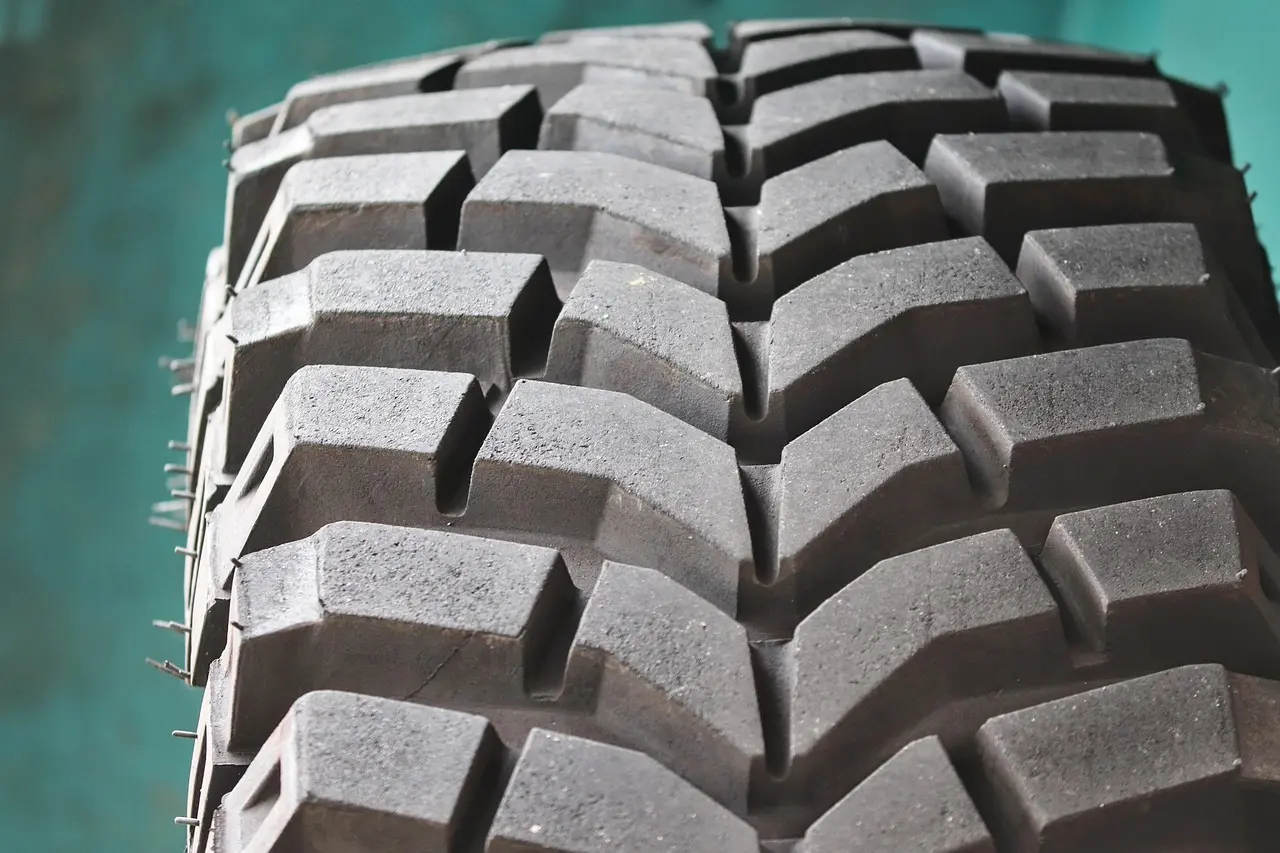
All-terrain tires are a different case. TechEngage lists the Yokohama Geolandar A/T G015 as an all-terrain tire for SUVs and light trucks, and all-terrain tires use a more aggressive tread pattern than all-season tires. They are built for on-road and moderate off-road use, so they should not be compared directly with a standard commuter tire.
Frequently asked questions
how much does all season tires cost
Most all-season tires cost about $80 to $200 each, depending on size and category. A full set installed often lands around $400 to $1,000, and larger SUV or pickup sizes can cost more. The exact total depends on mounting, balancing, disposal, and whether alignment is needed.
how much are all season tires
All-season tires are priced by size, load rating, and vehicle type, so the answer varies widely. Passenger-car touring tires tend to sit near the lower end, while SUV and light-duty pickup fitments cost more. To compare fairly, use the exact tire size on your vehicle.
how much are new all season tires
New all-season tires usually run about $80 to $200 per tire, with some premium or oversized fitments above that range. If you want the real number, ask for an installed quote for the exact size, because labor and disposal fees can add $100 or more to a set.
how much is a set of all season tires
A set of four all-season tires commonly costs about $400 to $1,000 installed. Passenger cars usually fall lower, while SUVs and light-duty pickups tend to land higher. The best comparison is the full mounted price, since installation and balancing change the total.
are all season tires more expensive
All-season tires are not always more expensive than the alternatives. They are often cheaper than winter ownership over a full year because you do not need a second set, but all-weather and some performance tires can cost more per tire. The right question is total cost over time.
all season vs all weather tires cost
All-weather tires usually cost differently from standard all-season tires because they carry a 3PMSF rating and better snow traction. That can raise the purchase price, but it may be worth it in colder regions. If winter grip matters more than low sticker price, all-weather can be the better buy.
all terrain vs all season tires cost
All-terrain tires often cost more than standard all-season tires because they use a more aggressive tread pattern and are built for SUVs and light trucks. They also suit a different job. If you mainly drive on pavement, an all-season tire usually makes more financial sense.
Products related to this article
Sponsored / affiliate links. As an Amazon Associate I earn from qualifying purchases. I may earn additional commission from eligible campaigns.
 RV Tire Covers Set of 4 for All-Weather Heavy Duty Wheel Covers, Waterproof UV Sun Protector 420D Oxford for Trailer, Camper, Truck, Motorhome, SUV Universal Fits Diameters 27-29 inch
 ACARLUOY Portable Air Compressor for Car Tires - 3X Faster Inflation, Fit for Kia sorento (2011-2016),6000mAh Battery, LCD Screen, LED Light,Auto Shutoff