Water Filtration for Car Washing: Deionized Systems for a Spot-Free Rinse
Water filtration for car washing means running your rinse water through a deionization (DI) or reverse-osmosis (RO) filter before it hits the paint. Stripping out the dissolved minerals that cause white spots lets the car air-dry completely clean, with no towel drying and no swirl marks from wiping.
Below is how these systems actually work, real current prices and stock status for three popular deionized rinse units, a portable budget pick, and what a spot-free finish costs to maintain long-term.
What Is a Deionized Water System for Car Washing?
BUDGET / PORTABLE PICK
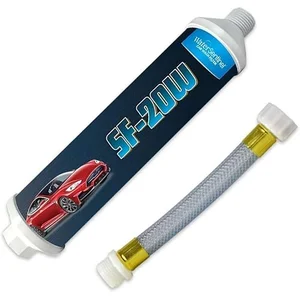 |
WaterSentinel SF-20W Inline Deionized Filter – $33.99 Screws straight onto a garden hose with no cart, resin tank, or setup — the fastest way to get a spot-free rinse without buying a full system.
|
Regular tap water carries dissolved minerals — mostly calcium and magnesium — that are invisible while the water is still wet on the car. Once it evaporates off a hot hood, roof, or windshield, those minerals get left behind as the white, etched-looking water spots that towel drying is meant to prevent. A deionization (DI) system runs that water through a resin bed that swaps the dissolved minerals for hydrogen and hydroxide ions, which combine into more water — the result reads at or near 0 parts per million (ppm) on a TDS (total dissolved solids) meter, which is the standard benchmark detailers use to confirm water is truly spot-free.
Reverse osmosis (RO) does a similar job differently: it forces water through a semi-permeable membrane that physically blocks most dissolved solids, typically getting tap water down from a couple hundred ppm to single digits. RO is slower and needs enough water pressure to push through the membrane, so many combo “RO/DI” setups run the water through both stages — RO first to cut the mineral load, then a smaller DI resin cartridge to finish it off at 0 ppm. A straight DI-only cart, like the three below, skips the RO stage and relies entirely on resin, which is simpler to plumb but means the resin depletes faster on very hard water.
iSpring WGB22BD Spotless Water System
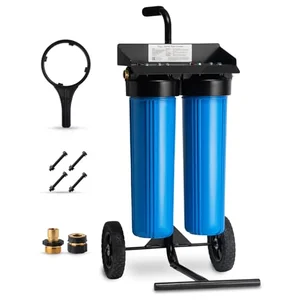
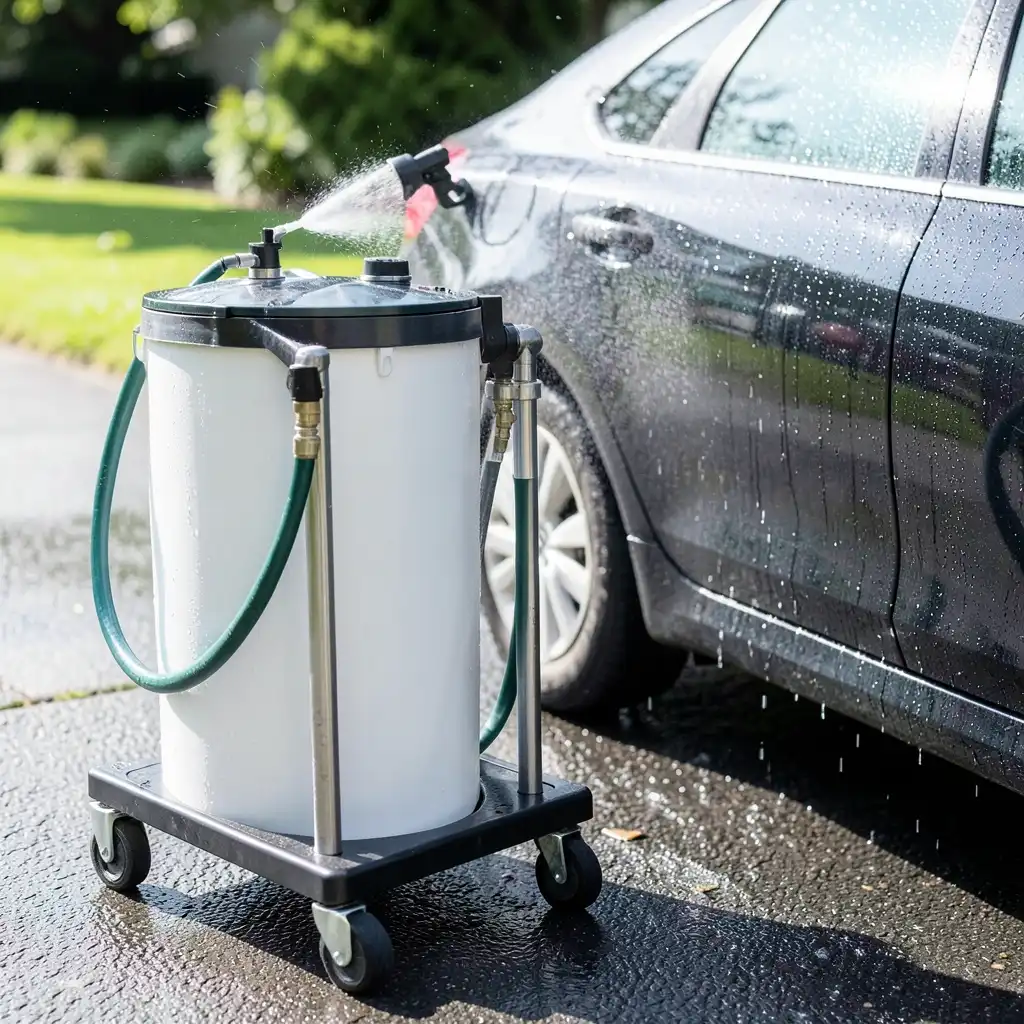
The iSpring WGB22BD is a wheeled, dual-canister DI cart rated for about 1,200 gallons of resin capacity before the filters need swapping — enough for dozens of washes for most single-vehicle households. It connects between the hose bib and your spray nozzle, so the last step of any wash (rinse, then let it air-dry) is the only part of your routine that changes. Current listed price is $419.99, and it was showing limited stock at the time of writing, so availability can be tight.
- Pros: No towel drying needed; dual-tank design gives more resin volume than a single inline filter; wheeled cart makes it easy to roll between the driveway and storage.
- Cons: Higher upfront cost than a single inline filter; resin cartridges are a recurring cost once the 1,200-gallon capacity is used up.
CR Spotless Water Systems DIC-20
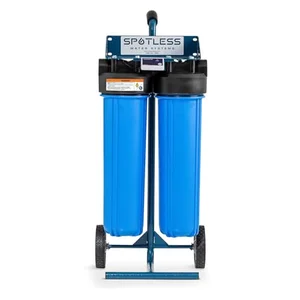
The CR Spotless DIC-20 is another wheeled cart system, positioned toward RV owners and detailers who wash a wider range of vehicles — the listing covers cars, motorcycles, boats, planes, and yachts. It’s the priciest of the three reviewed here at a current listed price of $499.00, and it was showing as in stock at the time of writing. Like the iSpring unit, it’s a hose-fed cart rather than a hand-held inline filter, so it’s better suited to a garage or driveway where it can stay set up rather than being packed away after every wash.
- Pros: Rated for a wide range of vehicle types beyond cars; wheeled cart is easy to move around a garage.
- Cons: Highest price of the three carts; the cart footprint needs dedicated storage space when not in use.
Clearly MaD Deionized Spot-Free Rinse System
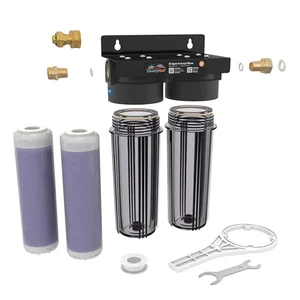
The Clearly MaD DI unit is the compact, budget-cart option of the three, listed at $67.85 and in stock at the time of writing — a fraction of what the iSpring and CR Spotless carts cost. It’s built as a single hose-ready unit rather than a dual-canister cart, which keeps it lighter and easier to store, at the tradeoff of less total resin volume than the two pricier options above. It’s a reasonable middle ground between the WaterSentinel inline filter above and the full carts: more capacity than a single inline filter, but far less to store and spend than a wheeled dual-tank system.
- Pros: Lowest price of the three reviewed carts; compact and easy to store; connects to a standard garden hose.
- Cons: Less resin capacity than the dual-tank iSpring or CR Spotless carts, so it will need filter changes more often under regular use.
How Much Does Spot-Free Water Filtration Cost Long-Term?
The unit itself is only part of the cost — every DI system depends on resin that gets used up and has to be replaced or professionally recharged. How fast that happens depends mostly on your local water hardness: harder tap water (more dissolved minerals) exhausts the resin faster than soft water does. Some newer systems use color-changing resin that visibly shifts color once it’s spent, which takes the guesswork out of knowing when to swap it, rather than waiting for spots to reappear as your only warning sign.
| Option | Unit Price | Best For |
|---|---|---|
| Inline hose filter (WaterSentinel SF-20W) | $33.99 | Occasional washes, renters, first-time DI users |
| Compact hose-ready unit (Clearly MaD) | $67.85 | Regular home washing on a budget |
| Dual-tank cart (iSpring WGB22BD) | $419.99 | Frequent washing, larger resin capacity |
| Dual-tank cart, multi-vehicle (CR Spotless DIC-20) | $499.00 | RVs, boats, and detailers washing several vehicle types |
Prices and stock status above were verified directly against current Amazon listings at the time of writing and can change. If you’re already comfortable with the basics of an automatic car wash’s own spot-free rinse cycle, a home DI system is simply the DIY version of the same deionization principle those tunnels use on their final rinse.
Frequently Asked Questions
What Is a Deionized Water System for Car Washing?
A deionized water system runs your rinse water through a resin filter that removes dissolved minerals before it touches the car. Without those minerals, the water sheets off and air-dries without leaving white water spots, so you can skip towel drying entirely.
How Is Deionized Water Different From Reverse Osmosis Water?
Deionization (DI) uses a resin bed that exchanges dissolved minerals for hydrogen and hydroxide ions, reaching close to 0 ppm on a TDS meter. Reverse osmosis (RO) instead pushes water through a membrane that physically blocks most dissolved solids. Many combo systems run RO first, then a smaller DI stage, to get the lowest possible reading.
How Do I Know When My DI Resin Needs Replacing?
The clearest sign is water spots reappearing on your rinse, since that means minerals are getting through again. Some systems use color-changing resin that visibly shifts color once it’s exhausted, which is a more reliable warning than waiting for spots to show up on the paint.
Is a Deionized Rinse System Worth It for a Single Car?
For one car washed occasionally, a low-cost inline filter is usually enough to justify the price versus the time spent towel drying. A full dual-tank cart makes more sense if you wash multiple vehicles, live somewhere with hard water, or already do enough washes that resin cost per wash works out lower with the larger capacity.
Can I Use a Deionized Water System on RVs, Boats, or Motorcycles?
Yes. Deionized water rinses the same way regardless of what it’s rinsing off, so the same inline filters and cart systems used for cars work on RVs, boats, and motorcycles. Larger vehicles with more surface area to rinse will use up resin capacity faster per wash.
Conclusion
Water filtration for car washing comes down to removing dissolved minerals before they can dry into spots — whether that’s a $34 inline filter you screw onto a hose, or a $400-plus dual-tank cart built for frequent use. Match the system to how often you wash and how hard your local water is: an inline filter or compact unit covers occasional washes, while a larger cart pays for itself faster if you’re washing several vehicles or living somewhere with hard water.
Products related to this article
Sponsored / affiliate links. As an Amazon Associate I earn from qualifying purchases. I may earn additional commission from eligible campaigns.