Car AC Repair Costs: Stay Cool With Real Price Ranges Today
A simple refrigerant recharge often costs a few hundred dollars or less, but a leaking system, a weak compressor, or a failed dye test can push the bill much higher. Skip diagnosis and you can pay for a recharge that leaks out again within weeks. This guide breaks down quote gaps, the parts that drive cost, and the signs that tell you when a recharge is enough.
Why car AC repair costs vary so much


Car AC repair costs in the USA range from $100 to $2,500, with the average around $650. The spread comes from the job itself, the refrigerant used, the labor rate, and how hard the system is to diagnose. A simple service and a compressor job sit in different price bands.
Refrigerant type matters because the system must be serviced with the correct cooling fluid and the correct equipment. Labor rate matters too. Mechanics charge $25-$80 per hour, and labor is affected by location, such as New York versus rural areas.
How car make and model changes pricing
Car make and model can change both parts cost and labor time. Access is often easier on some compact cars than on full-size SUVs, and some brands package AC parts tightly around the engine bay. That raises labor hours and can turn a straightforward repair into a larger bill.
Luxury vehicles often cost more because parts are pricier and the system design can be more complex. Older vehicles can cost more too, especially if they use older refrigerant layouts or need a retrofit from R-12 to R-134a. Hybrids and EVs can add another layer because the AC system may be tied to high-voltage components or use different compressors and service procedures.
Why luxury, older, hybrid, and EV systems can cost more
Luxury marques often use model-specific compressors, sensors, and control valves. Older vehicles may need extra labor to adapt fittings, hoses, or seals. Hybrids and EVs may require specialized refrigerant service and technician training, which can raise the total even before parts are listed.
A quote that looks high on paper may still be normal for the platform. That is why the make, model, engine, and refrigerant type should appear on every estimate.
📊 Car AC repair costs in the USA range from $100 to $2,500. Source: Stay Cool: What I Learned About Car Air Conditioning Repair Costs.
What a car AC recharge costs and when it is enough
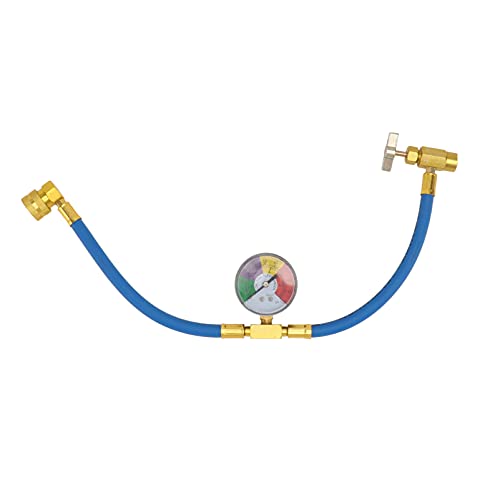
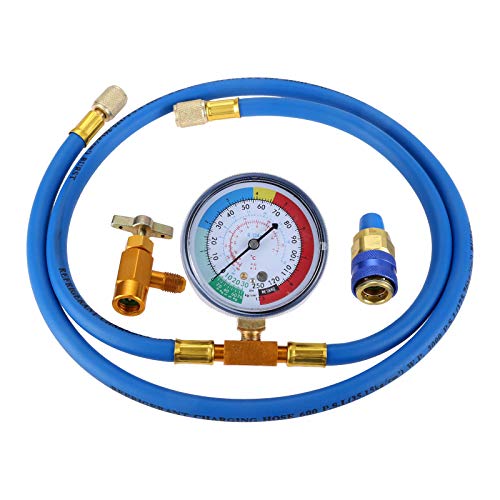
A simple AC recharge might cost $100-$300 and usually takes about 1-2 hours. It adds refrigerant back into the system, which can restore cooling if the charge level is low and the rest of the system is working. It does not fix a leak.
Refrigerant is the cooling fluid inside the system, and a low level is often caused by a leak. A proper refill should follow leak checks, not replace them. If the system is low again soon after service, the real problem was never solved.
Signs that a recharge is the wrong answer
Warm air after a recent recharge is the biggest warning sign, but it is not the only one. Cycling on and off too often, cooling that comes and goes, oily residue on hoses or fittings, and a compressor clutch that does not engage can all point to a fault that needs more than refrigerant.
A common first-timer mistake is approving repeat recharges because the price looks small. That becomes a money trap when the system has an active leak. The refrigerant leaves, the cabin warms up again, and the same bill returns.

Why is my car AC blowing warm air?
Warm air usually means the system is low on refrigerant, the compressor is not pumping, or the controls are routing air the wrong way. Electrical faults and blend-door problems can also create warm air even when the AC hardware is partly working. The symptom points you to the first checks, not the final fix.
Low refrigerant and leak-related causes
Low refrigerant is one of the most common causes. That usually means a leak, not normal wear. Tiny leaks are hard to spot without the right tools, and a system can still produce some cooling before it fails completely, which is why the problem is easy to ignore at first.
Leak detector tools help here. Shops may use UV dye, a sniffer, or both to find escaping refrigerant at hose crimps, condenser seams, service ports, seals, and the evaporator case.
Compressor failure and electrical faults
The compressor is the major failure component in many expensive AC repairs. If it cannot pressurize the refrigerant, cooling drops sharply or stops. Electrical faults can mimic compressor failure if a fuse, relay, pressure sensor, control module, or wiring issue blocks engagement.
That is why a code scan and electrical check matter before approving a major part. Replacing a compressor will not help if the clutch command never arrives.
Blend-door and cabin air filter problems
Blend-door failures can send hot air into the cabin even when the AC system is cold. Weak airflow can also come from a dirty cabin air filter, a failing blower motor, blocked ducts, or a problem in the HVAC case. Weak air is not always an AC refrigerant issue.
Many cabin air filters sit behind the glove compartment area on modern cars, and many are easy DIY replacements. If the filter is packed with debris, it can restrict airflow enough to make the AC feel weak, even if refrigerant charge is fine.
How much does it cost to fix a car AC leak?
Leak repair can start modestly and climb fast depending on where the leak sits and how hard it is to access. A hose repair is listed at $200-$500, but evaporator leaks, condenser damage, or seal failures can push the total far higher once labor and recharge charges are added.
Small leaks often hide in places that do not show obvious wet spots. That is why a recharge without leak testing can repeat the same failure. The repair is only complete when the leak source is found and fixed.
Leak detection methods: UV dye and sniffer tools
UV dye helps a mechanic trace refrigerant escape paths under ultraviolet light. A sniffer detects refrigerant in the air around fittings, hoses, and components. Used together, they make small leaks easier to catch, especially when the loss is too slow to see by eye.
Some leaks show up only under pressure or after the system has been running. That is where the right tool saves time and prevents guessing.
Common leak points and why small leaks are easy to miss
Common leak points include O-rings, service ports, hoses, condensers, compressors, and evaporators. Rubber parts age, metal parts corrode, and vibration wears on joints over time. A tiny leak may take weeks or months to show up as warm air, which is why repeated refills can be deceptive.
If a shop recommends another recharge without naming the leak source, ask what test was used and what part failed. You want the fault, not a temporary top-off.
What your mechanic uses to diagnose and service AC
A proper diagnosis often starts with a pressure check, visual inspection, and a scan for electrical faults. Then the shop may use a leak detector and a vacuum pump before any refill. That sequence helps separate a simple low-charge case from a repair that needs parts.
Leak detector
A leak detector helps find escaping refrigerant that would otherwise be missed. UV dye and sniffer methods are common because they can reveal very small losses around fittings, valves, and hard-to-see components. Without them, a technician may only guess at the problem.
Vacuum pump and evacuation process
A vacuum pump removes air before refrigerant refill. That step matters because air and moisture can hurt cooling performance and damage the system over time. A shop that skips evacuation before recharge is not following proper AC service practice.
Why a diagnostic visit can still save money
A diagnostic-only visit can be the cheapest smart spend if the problem is unclear. Paying for a proper diagnosis is better than authorizing a compressor when the real issue is a blown fuse or a dirty filter. Good diagnostics reduce repeat visits and wasted refrigerant.
Shop quote comparison: four common AC repair paths
Use line items to compare quotes, not just the bottom number. Ask what the estimate includes: diagnosis, refrigerant, evacuation, labor, shop fees, and any parts warranty. The same symptom can lead to very different repair paths and very different totals.
| Scenario | Parts | Labor hours | Total estimate range | Red flag that says it is the wrong fix |
|---|---|---|---|---|
| Recharge only | Refrigerant, service port caps, shop supplies | 1-2 | $100-$300 | System is low again soon, or UV/sniffer test points to a leak |
| Leak repair plus recharge | O-rings, hose, seal, condenser, refrigerant | 2-5 | $250-$900+ | Oil residue or leak dye is visible at another point the shop did not inspect |
| Compressor replacement | Compressor, refrigerant, seals, sometimes expansion valve or dryer | 4-6 | $800-$1,500 | No compressor fault is confirmed, or the issue is electrical instead |
| Diagnostic-only visit | None, or scan and test fees | 0.5-1.5 | $100-$200+ | Shop wants to replace parts before pressure, leak, or electrical testing |
How to keep the bill under control
The fastest way to control cost is to compare quotes from an independent shop and a dealership before authorizing major work. Independent shops are often cheaper than dealerships, and they are a useful price comparison point when the estimate starts to climb. That does not mean every dealership quote is high, only that you should compare.
Ask for line-item quotes before authorizing work
Request separate prices for diagnosis, refrigerant, evacuation, recharge, labor, and parts. If a shop quotes one total, ask how much is labor and how much is parts. That makes it easier to see whether a high total comes from expensive components or from a long labor job.
Check the cabin air filter before paying for major AC work
If airflow is weak, the cabin air filter is a simple place to start. A dirty filter can restrict air, and on many modern cars it sits behind the glove compartment and is easy to replace yourself. If the filter is clean, the problem may be the blower, ducting, or blend door instead.
Get multiple quotes when the estimate is high
If the estimate jumps into compressor territory or includes a long leak hunt, get another opinion. That matters most on luxury vehicles, older vehicles, hybrids, EVs, and retrofit R-12-to-R-134a jobs, where parts and labor can vary more than expected.
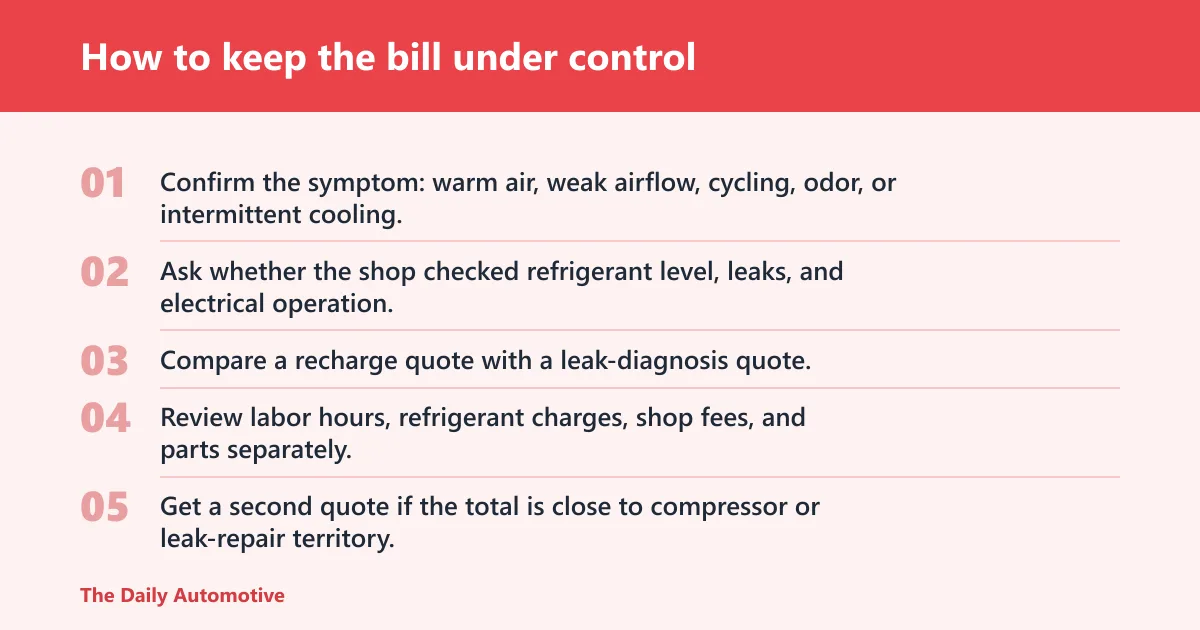
- Confirm the symptom: warm air, weak airflow, cycling, odor, or intermittent cooling.
- Ask whether the shop checked refrigerant level, leaks, and electrical operation.
- Compare a recharge quote with a leak-diagnosis quote.
- Review labor hours, refrigerant charges, shop fees, and parts separately.
- Get a second quote if the total is close to compressor or leak-repair territory.
Can I drive with broken car air conditioning?
Yes, in many cases you can drive with broken AC, but the answer depends on what failed. A dead AC system is usually a comfort problem, not a safety problem, unless the failure affects defrost, visibility, electrical systems, or engine cooling. Warm weather and fogged glass change the risk.
If the compressor is seized, a belt problem is present, or there is an electrical short, driving may create more damage. If the cabin filter or blend door is the issue, the car can often be driven safely while you plan the repair.
What affects car AC repair labor costs?
Labor costs change with location, vehicle design, and the repair path. Mechanics charge $25-$80 per hour, and labor is affected by location, such as New York versus rural areas. A part that is easy to reach on one car may take several hours on another.
Compressor replacement takes about 4-6 hours, while a recharge takes about 1-2 hours. That gap matters because the labor line can exceed the parts line on larger repairs. Electrical diagnosis can also take time if the fault is intermittent.
Is it cheaper to repair car AC at an independent shop or dealership?
An independent shop is often cheaper than a dealership, especially for routine diagnosis, recharges, hose repairs, and leak checks. Dealerships may be the right place for brand-specific programming or hard-to-source parts, but they are not the default low-price option. Compare the same repair scope at both.
Ask both shops to list the refrigerant type, labor hours, and any fees for evacuation or diagnostics. That keeps the comparison honest and makes it easier to spot padding.
How can I tell if my cabin air filter is causing weak AC?
A dirty cabin air filter can cause weak airflow, but it does not usually create warm air by itself. If the cabin air comes out softly from the vents, smells stale, or drops off when the fan is on high, the filter is a sensible first check. Many are behind the glove compartment and simple to replace.
If the airflow improves after a filter change, you may have avoided a larger AC bill. If airflow stays weak, the issue may be the blower motor, a blocked duct, or a blend-door problem instead.
Frequently asked questions
How much does car air conditioning repair cost?
Car AC repair costs in the USA range from $100 to $2,500, with the average around $650. A recharge can stay near the low end, while compressor work, leak repair, or electrical diagnosis can move the bill much higher. The final price depends on the vehicle and the fault.
Why is my car AC blowing warm air?
Warm air usually points to low refrigerant, a leak, a failed compressor, an electrical fault, or a blend-door issue. A dirty cabin air filter can also reduce airflow, which makes cooling feel weaker. The symptom matters, but the diagnosis has to separate refrigerant, airflow, and control problems.
Is an AC recharge enough or do I need a compressor replacement?
A recharge is enough only when refrigerant is low and the rest of the system works. If the system leaks, the compressor is weak, or pressure tests show a major fault, a recharge will not hold. Compressor replacement is usually a much larger repair and takes about 4-6 hours.
How much does it cost to fix a car AC leak?
Leak repair varies by part and access. A hose repair is listed at $200-$500, while other leak sources can cost more once labor and refrigerant are included. Tiny leaks often need UV dye or a sniffer test, and repeated recharges can become a money trap.
Can I drive with broken car air conditioning?
Often yes, if the failure is limited to cooling and the car otherwise drives normally. The bigger concern is whether the problem affects defrost, engine accessories, or electrical systems. If the compressor is seized or the system has an electrical short, get it checked before driving much farther.
How can I tell if my cabin air filter is causing weak AC?
If the vents push only a small amount of air, the cabin air filter is one of the first things to check. Many are behind the glove compartment and are easy to replace on modern cars. If a new filter does not help, look at the blower, ducts, and blend door.
Products related to this article
Sponsored / affiliate links. As an Amazon Associate I earn from qualifying purchases. I may earn additional commission from eligible campaigns.