Interior Car Detailing Cost What To Expect
Interior car detailing often costs about $75 to $200 for a normal sedan, but heavy pet hair, stains, smoke, or mold can sometimes push quotes into the $250 to $400+ range because labor, not the badge on the package, sets the price. Miss those conditions and you can pay for a low quote that turns into upsells, rushed cleaning, or stains left behind. This guide breaks down what changes the bill, which extras add real labor, and how to compare packages before you book.
What drives interior detailing cost
Interior car detailing is a deep-cleaning service for cabin surfaces. A basic package usually includes vacuuming, shampooing or wiping surfaces, glass cleaning, and some odor treatment, but the final price changes with size, condition, material type, and add-ons. Bigger interiors and tougher contamination take more time.
Size and surface area
Vehicle size is the first price divider. A compact car has less carpet, fewer seats, and fewer tight areas than a full-size SUV or truck, so labor is lower. Larger vehicles cost more because there is more surface area to clean and more trim to work around.
Condition, stains, and odor
Condition is the biggest reason quotes jump. Light dust and crumbs are a maintenance job; old spills, sticky consoles, pet hair, and embedded odor are remediation. Smoke, food, mildew, and pet smells may need enzyme deodorizing or ozone treatment, and those steps can add time fast.
Material type and add-ons
Cloth and leather are not priced the same. Fabric often needs shampooing and extraction, while leather needs careful cleaning followed by conditioning. Headliners, seatbelts, trunk liners, and fabric protection are common add-ons because they demand slower, more careful work than a quick wipe-down.
What a full interior detail includes
A full interior detail should go beyond a fast vacuum. Most full interior detailing packages include vacuuming, upholstery cleaning, and odor removal, then add surface cleaning for dashboards, consoles, and door panels. Glass, vents, cupholders, and crevices should also be addressed if the package is complete.
Seats, carpets, and floor mats
Seats and carpets are where labor piles up. Cloth seats may need shampooing and extraction, while rubber or carpeted floor mats need separate cleaning so dirt does not get spread back into the cabin. Deep stains often need spot treatment before the main cleaning passes begin.
Dashboard, console, and door panels
These areas are usually wiped and dressed, but the detailer still has to work around buttons, seams, storage pockets, and vents. Sticky residue in cupholders and grime in door pulls can take longer than expected because those spots hold buildup in narrow edges.
Glass, vents, cupholders, and crevices
Interior glass and mirrors should be cleaned without streaks. Vents, switchgear, and tight crevices slow the job because dust collects where towels and brushes cannot move quickly. If the quote does not mention these areas, ask whether they are part of the base price or treated as extras.
Interior detailing quote checklist
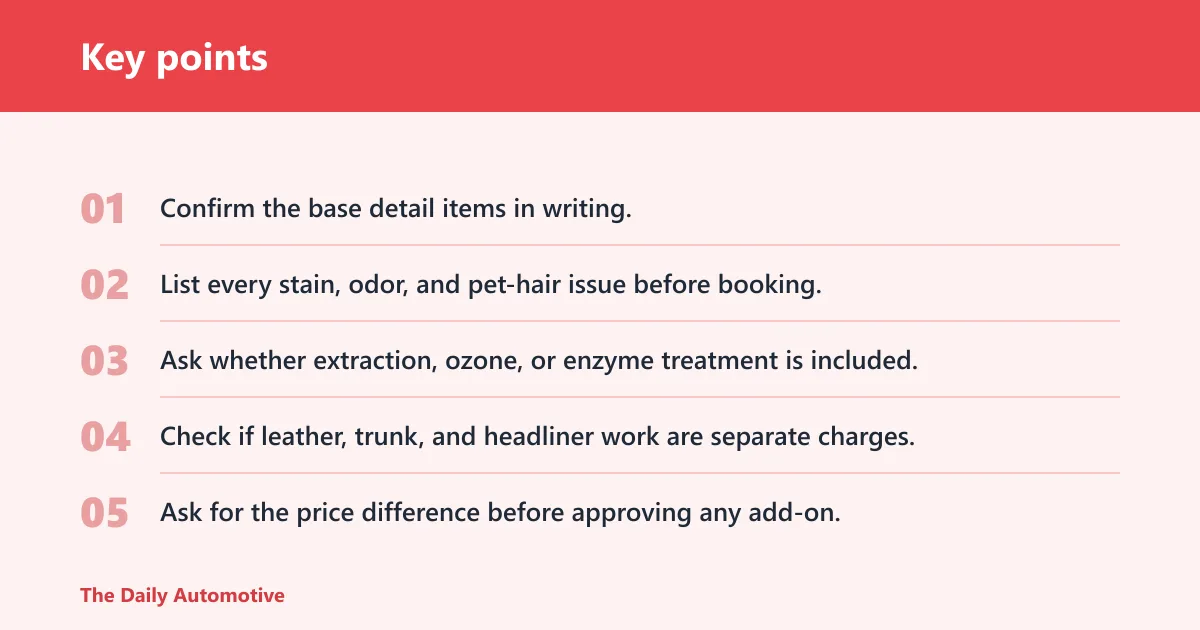
Use this checklist to compare quotes apples-to-apples. A low number can hide labor that another shop already built into the price, so you want the same line items covered before you judge value. Ask what is included, what counts as extra labor, and what gets billed only after inspection.
| Line item | Status | Buyer note |
|---|---|---|
| Base interior detail | Usually included | Ask whether vacuuming, wiping, and basic glass cleaning are part of the base package. |
| Seat material | Quote-only | Ask if cloth shampooing or leather cleaning and conditioning changes the price. |
| Carpet extraction | Commonly extra | Ask whether extraction is included for stains or only available as an add-on. |
| Pet hair | Commonly extra | Ask if pet hair removal is billed by severity, by seat, or by the whole cabin. |
| Stain severity | Quote-only | Ask whether deep stains, dye transfer, or old spills trigger a separate labor charge. |
| Odor treatment | Commonly extra | Ask whether the shop uses ozone, enzymes, or another deodorizing method. |
| Trunk cleaning | Commonly extra | Ask whether cargo areas are included or billed as a separate zone. |
| Headliner cleaning | Quote-only | Ask if the headliner is safe to clean and whether it is treated as a delicate add-on. |
| Leather conditioning | Usually included | Ask whether conditioning is standard or a higher-tier finish on leather seats. |
| Protection add-ons | Commonly extra | Ask if fabric protection, sealants, or surface coatings are priced separately. |
- Confirm the base detail items in writing.
- List every stain, odor, and pet-hair issue before booking.
- Ask whether extraction, ozone, or enzyme treatment is included.
- Check if leather, trunk, and headliner work are separate charges.
- Ask for the price difference before approving any add-on.
How vehicle size changes the price
Vehicle size changes interior detailing cost because it changes labor time and reachable surface area. A compact sedan usually costs less than a truck or minivan, and luxury or exotic vehicles can cost more still because trim, materials, and fitment often require slower work.
Compact and sedan pricing
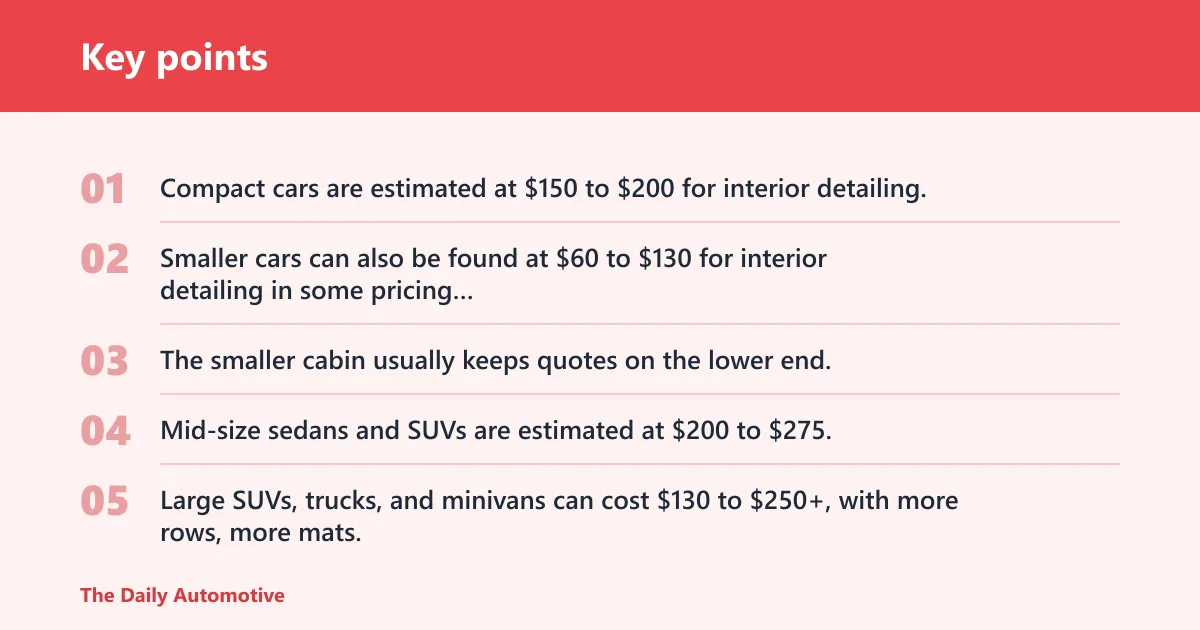
Compact cars are estimated at $150 to $200 for interior detailing. Smaller cars can also be found at $60 to $130 for interior detailing in some pricing examples, which shows how local markets and package depth can differ. The smaller cabin usually keeps quotes on the lower end.
SUV, crossover, and minivan pricing
Mid-size sedans and SUVs are estimated at $200 to $275, while mid-size SUVs and crossovers can cost $90 to $160 in some market examples. Large SUVs, trucks, and minivans can cost $130 to $250+, with more rows, more mats, and more cargo space to clean.
Truck, luxury, and exotic pricing
Full-size SUVs or trucks are estimated at $250 to $350+, and luxury or exotic cars are estimated at $300 to $450+. Higher-end interiors can require extra caution around delicate trim, special leather, piano-black panels, or unique stitching, which adds time and risk.
Say your compact sedan has light dust, normal crumbs, and no odor. That job may fit a basic interior detail. Suppose the same car has embedded dog hair in the cloth seats and a sour spill in the carpet; the price moves up because the detailer now needs extra labor and extraction.
What add-ons raise the bill?
Add-ons are where a quote can jump by $25 to $100 or more. Pet hair, odor treatment, stain work, trunk cleaning, and headliner cleaning are the most common extras because they require slower passes, specialty chemicals, or more cleanup time than a standard interior package.
Pet hair removal
Pet hair removal is labor-heavy because hair sticks to cloth, carpet, seat seams, and cargo mats. Fresno pricing shows heavy pet hair, stains, or buildup can add $30 to $80. Ask whether the quote covers just visible hair or a full pickup across seams and under seats.
Odor treatment and extraction
Odor treatment may use ozone, enzyme cleaners, or deodorizer applications. Smoke and mildew are harder than a simple food smell, and deep odors can remain after the visible dirt is gone. Persistent smells may need repeated treatment or deeper source removal, which is why some quotes are only estimates.
Headliner, trunk, and leather add-ons
Headliner cleaning is delicate because the adhesive can be sensitive to excess moisture. Trunk cleaning matters when groceries, sports gear, or wet cargo has left residue. Leather conditioning often pairs with leather cleaning, but it should be priced clearly so you know whether it is part of the base package or an extra finish step.
Is DIY cleaning enough?
DIY cleaning is enough for light buildup, small spills, and routine maintenance if you already have the right tools and the mess is limited. Professional extraction becomes the better value when dirt is deep in fabric, pet hair is embedded, or odor has spread through the cabin and keeps returning.
When a home cleanup is reasonable
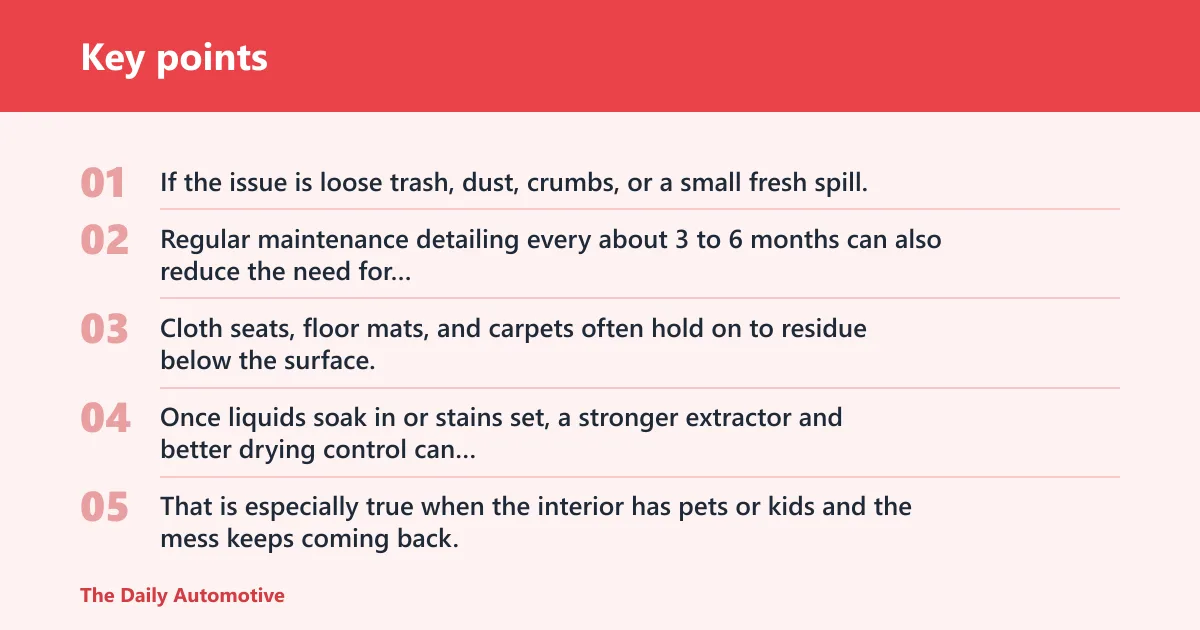
If the issue is loose trash, dust, crumbs, or a small fresh spill, a home cleanup can handle it. Regular maintenance detailing every about 3 to 6 months can also reduce the need for costly correction work, especially if the vehicle sees light use and buildup is kept under control.
When professional extraction makes more sense
Cloth seats, floor mats, and carpets often hold on to residue below the surface. Once liquids soak in or stains set, a stronger extractor and better drying control can save time and reduce repeat attempts. That is especially true when the interior has pets or kids and the mess keeps coming back.
When remediation becomes the cheaper choice
Some failures break normal pricing. Mold, smoke odor, water intrusion, and bio-mess cleanup can turn a detail into remediation work. At that point, the key question is not whether the cabin looks clean, but whether the source of the contamination has been removed so the problem does not return.
A common first-timer mistake is booking a low-cost detail for a smoke-filled SUV and expecting the odor to disappear after one pass. If the smoke has soaked into cloth, headliner, and HVAC surfaces, deodorizing may need multiple steps, and the quote should reflect that before the job starts.
What should you check before booking?
Before booking, check exactly what the quote includes, what counts as extra labor, and how long the job should take. A clean, detailed quote helps you compare services fairly and keeps you from paying a base price for a job that is really a deep-remediation package.
What is included in the quote?
Ask whether vacuuming, shampooing, conditioning, glass cleaning, and odor treatment are included in the quoted price. If the quote only covers a quick wipe-down and vacuum, it is not the same as a true interior detail. Confirm whether the trunk, seatbelts, and vents are included.
What counts as extra labor?
Ask how the shop defines heavy pet hair, deep stains, smoke odor, and mold. These are the conditions most likely to trigger extra charges. If the detailer inspects the car first, make sure you understand which findings change the quote and which ones are already covered.
How long should the job take?
Time is a useful clue. A basic interior detail should not be priced like a full remediation job if the cabin is only lightly dirty. If the car has heavy contamination, a much longer appointment is normal because the detailer needs to work through seams, fabric, and odor sources carefully.
Frequently asked questions
How much does detailing a car cost?
Interior car detailing in 2025 costs between $150 and $350, though the real number depends on size and condition.
How much to detail a car interior?
A normal sedan can land in the $75 to $200 range, but that is only a rough starting point. Dirty carpets, pet hair, stains, smoke, or mold can move the price much higher because the work shifts from routine cleaning to labor-heavy remediation.
What is the average car detailing cost versus DIY?
DIY usually costs less in cash, but it can cost more in time and still miss deep contamination. Professional detailing is often the better buy when extraction, odor treatment, or stain removal is needed, because the tools and labor are designed for embedded dirt rather than surface cleaning.
What should I expect from an interior car detailing price?
Expect the price to reflect size, condition, and material type, not just a package name. A quote should usually account for vacuuming, upholstery cleaning, odor removal, and basic interior surfaces. Add-ons like pet hair, trunk work, and headliner cleaning can increase the total.
How long does interior detailing take?
Timing depends on the cabin’s condition and the services included. A light maintenance detail is much faster than a deep clean with extraction, odor treatment, and stain work. If the car has heavy pet hair or smoke residue, expect the appointment to take longer.
What should I check before booking interior detailing?
Check the quote line by line. Confirm what is included, which surfaces count as extra, whether odor treatment is part of the base price, and how the shop prices pet hair or stains. Also remove personal items before the appointment so the detailer can reach every area efficiently.
Products related to this article
Sponsored / affiliate links. As an Amazon Associate I earn from qualifying purchases. I may earn additional commission from eligible campaigns.