Car Battery Not Charging? Causes, Tests & Fixes
A car battery that won’t charge is almost always one of four things: a failing alternator, a dead or sulfated cell inside the battery itself, corroded or loose terminal connections, or a smart charger’s safety cutoff refusing to engage on a deeply discharged battery. You can tell these apart in under 10 minutes with a $15 multimeter, without guessing or replacing parts you don’t actually need.
The trick is testing in the right order. A battery that reads a healthy 12.6 volts at rest can still be the problem if it drops to almost nothing under load. An alternator that looks fine can be under-charging just enough to slowly starve the battery. And a brand-new smart charger that “won’t work” is sometimes doing exactly what it’s designed to do — refusing to charge a battery it thinks might be internally shorted. Here’s how to figure out which one is actually happening to your car.
How to Tell If It’s the Alternator, the Battery, or the Charger
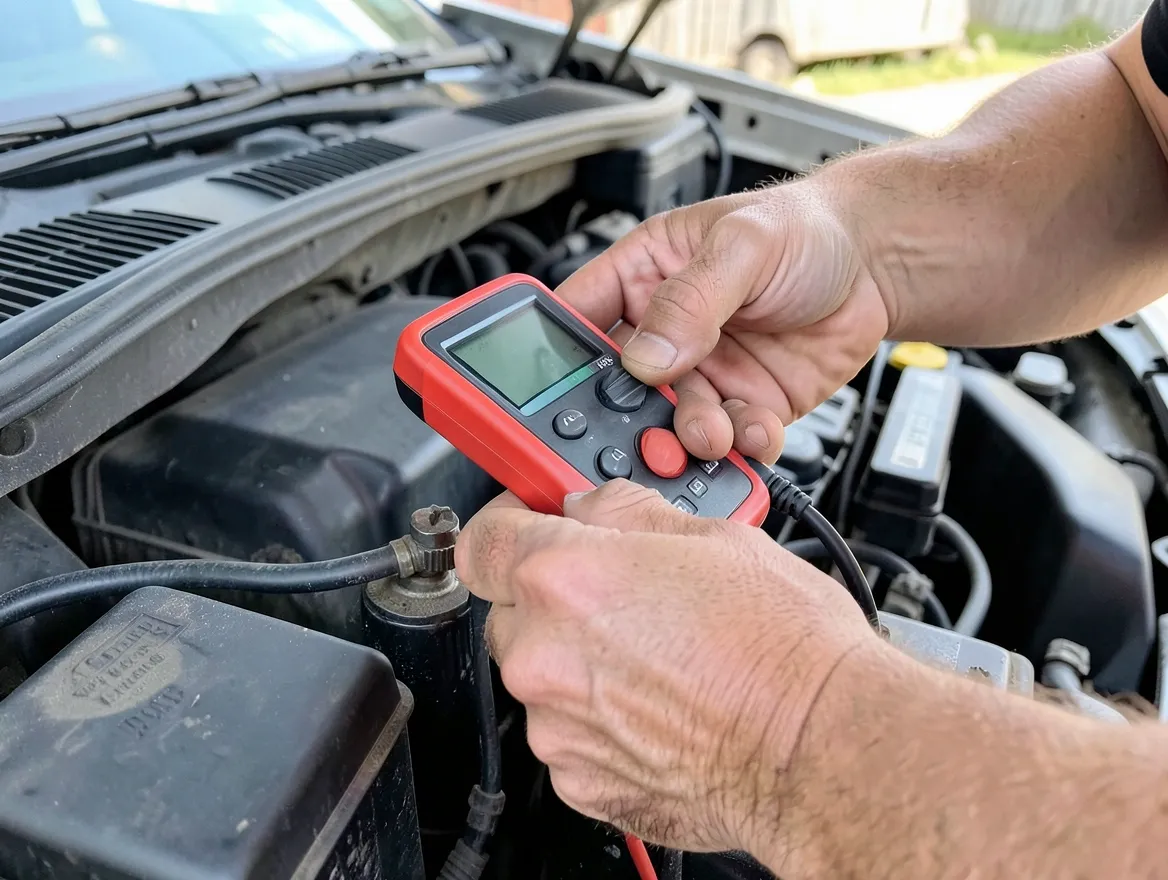
Grab a digital multimeter and set it to DC volts. Touch the red probe to the positive terminal and the black probe to the negative terminal, then compare your reading to the ranges below.
| Test | Normal Reading | What It Means |
|---|---|---|
| Engine off, battery resting | 12.4V – 12.7V | Battery itself is charged |
| Engine off, battery resting | Below 12.0V | Battery is discharged or failing |
| Engine running (idle) | 13.5V – 14.8V | Alternator is charging normally |
| Engine running (idle) | Below 13.0V | Alternator isn’t charging the battery |
| Engine running (idle) | Above 15.0V | Alternator is overcharging — get it checked |
A quick way to confirm an alternator problem: jump-start the car and let it idle for 20–30 minutes. If it dies again shortly after, the alternator almost certainly isn’t recharging the battery — a healthy charging system would have topped it back up in that time. A failing alternator can also overcharge a battery, which cooks it internally and shortens its life just as fast as undercharging does.
HANDLES DEEPLY DISCHARGED BATTERIES
 |
NOCO GENIUS10 Smart Battery Charger – $99.95 If your current charger keeps refusing to start on a dead battery, this one has a manual Force Mode built specifically for batteries too far gone for most chargers to recognize.
|
5 Real Reasons Your Car Battery Won’t Take a Charge
Once you know roughly where the problem lives, one of these five causes is almost always the actual reason.
1. A Dead or Sulfated Battery Cell
A 12-volt car battery is really six 2-volt cells wired together. If one cell dies, the battery can still show a deceptively normal-looking 12.2–12.5 volts at rest — called a “surface charge” — but collapses the instant you put it under a real load, like cranking the engine. This is also what sulfation looks like: lead sulfate crystals build up on the plates during periods of low charge and block the battery from accepting a full charge again, even though the resting voltage can still look convincing. A load test (most auto parts stores will run one for free) is the only way to catch this — a plain voltage reading can miss it entirely. Once a cell is truly dead or heavily sulfated, no amount of charging brings it back; the battery needs to be replaced.
2. Corroded or Loose Terminal Connections
White or bluish-green crust on the terminals adds resistance to the connection, which can choke off the current the alternator is trying to send back into the battery — even if the alternator itself is working perfectly. Loose clamps do the same thing. Clean the terminals with a wire brush and a baking-soda-and-water paste, then make sure the clamps are snug once they’re back on. If corrosion keeps coming back within weeks of cleaning it off, that’s usually a sign of a separate charging or ventilation issue, not just dirty terminals.
3. A Failing Alternator
The alternator is what actually recharges the battery while the engine runs — the battery itself only starts the car and runs accessories briefly with the engine off. A worn-out voltage regulator, a slipping serpentine belt, or failing internal diodes can all cause the alternator to under-charge or stop charging altogether. Listen for a high-pitched whine or grinding sound from the alternator’s pulley, and watch for a battery warning light on the dashboard — on most cars that light is monitoring the charging system, not the battery’s age.

4. Parasitic Drain Faster Than the Charge
Sometimes the battery is charging just fine — something is just pulling power out faster than the alternator (or a charger) can put it back in. A dome light left on, a phone charger plugged into an “always hot” outlet, or a failing module that won’t power down are common culprits. If the battery keeps testing weak again within a day or two of a full charge, a parasitic draw is worth checking with a multimeter set to amps, in series with the negative terminal, before you assume the battery or alternator is at fault.
5. A Charger That Isn’t Actually Charging
Not every “won’t charge” problem is the car’s fault. A charger with a blown fuse, a broken clamp connection, or a charger that has quietly failed can look like it’s plugged in and doing something while delivering zero current. Test the charger’s output on a known-good battery, or check its own diagnostic lights, before assuming the battery itself is bad.
Why Your Smart Charger Says Error or Refuses to Start
This is the one cause almost no older guide to this topic covers, and it trips up a lot of people who just bought a “smart” charger expecting it to fix a dead battery instantly. Most modern smart chargers have a built-in safety cutoff, typically somewhere around 10.5 volts, and simply refuse to begin charging a battery that reads below it. That’s not a malfunction — it’s the charger protecting you. A battery that deeply discharged might have a cell that welded itself shut internally during sulfation, or in rare cases the charger can’t rule out that a completely different, unstable battery chemistry (like a swapped-in lithium pack) is connected instead of lead-acid.
Two things actually get you past this safely:
- Force Mode / Recovery Mode: some smart chargers, including the NOCO GENIUS10 above, include a manual override that bypasses the low-voltage detection so you can attempt to charge a battery all the way down near 0 volts.
- Parallel jump with a donor battery: connecting a second, healthy battery of the same voltage in parallel with the dead one briefly raises the combined voltage above the charger’s cutoff threshold, letting the charger recognize it and begin charging normally.
If neither works, the battery has likely suffered hard sulfation or an internal short and is not coming back — it’s time to replace it rather than keep fighting the charger.
Repair or Replace? What Your Battery’s Age and Symptoms Tell You
Most car batteries last 3 to 5 years. Age alone doesn’t guarantee failure, but it stacks the odds — an older battery that won’t charge is much more likely to need replacing than repairing.
| What You See | Likely Fix |
|---|---|
| Corroded or loose terminals, otherwise young battery | Clean and tighten — usually resolves it |
| Battery under 3 years old, tests weak under load | Have it load-tested before replacing; may still be repairable/chargeable |
| Battery over 5 years old, won’t hold a charge | Replace — not worth chasing further |
| Cracked case, swelling, or a rotten-egg smell | Replace immediately — physical damage isn’t fixable |
| Alternator reads below 13V running | Have the alternator tested/replaced, not the battery |
If you don’t own a charger and just need a one-time boost, many auto parts stores will charge or load-test your battery for free while you wait. And if the problem turns out to be less about this one dead-battery moment and more that your battery seems to die repeatedly over time, our guide to what actually kills a car battery walks through the slower, cumulative causes — parasitic drain, short trips, extreme temperatures — that this troubleshooting guide doesn’t cover in depth.
Frequently Asked Questions
What voltage should a car battery show when it’s charging properly?
With the engine off, a healthy battery reads 12.4 to 12.7 volts. With the engine running, the alternator should push that up to between 13.5 and 14.8 volts. Anything below 13.0 volts while running means the alternator isn’t charging the battery properly.
Can a battery read fully charged and still not start the car?
Yes. A battery can rest at a convincing 12.4 to 12.6 volts on a “surface charge” while one internal cell is too weak to deliver real cranking power under load. A voltmeter reading alone can miss this — a load test at an auto parts store will catch it.
Why does my battery charger show an error or refuse to start?
Most smart chargers won’t engage on a battery that has dropped below roughly 10.5 volts, as a safety precaution against internally shorted cells. Use the charger’s Force Mode or Recovery Mode if it has one, or briefly connect a second healthy battery in parallel to raise the voltage above the charger’s detection threshold.
How long does it take to charge a fully dead car battery?
It depends heavily on the charger’s amperage. A basic 1–2 amp trickle charger can take most of a day to fully recharge a dead battery, while a 10-amp smart charger can typically restore enough charge to start the car in under an hour, though reaching a true full charge still takes several hours longer.
Is it safe to keep driving on a battery that won’t fully charge?
Not for long. A weak battery puts extra strain on the alternator and can leave you stranded with no warning, especially in cold weather when batteries lose a large share of their cranking power. Get it tested rather than waiting for it to fail completely.
Can I jump-start or charge a swollen or leaking battery?
No. A cracked, swollen, or leaking case, or a rotten-egg smell, means the battery has physical damage and should be replaced immediately rather than charged or jump-started — attempting either can be dangerous.
The Bottom Line
A car battery that won’t charge almost always traces back to one of four places: a dead or sulfated cell, corroded or loose terminals, a failing alternator, or a charger’s own safety cutoff. A $15 multimeter and 10 minutes of testing — battery voltage at rest, then again with the engine running — will tell you which one you’re actually dealing with, so you’re not stuck guessing or replacing a part that was never the problem.
Products related to this article
Sponsored / affiliate links. As an Amazon Associate I earn from qualifying purchases. I may earn additional commission from eligible campaigns.