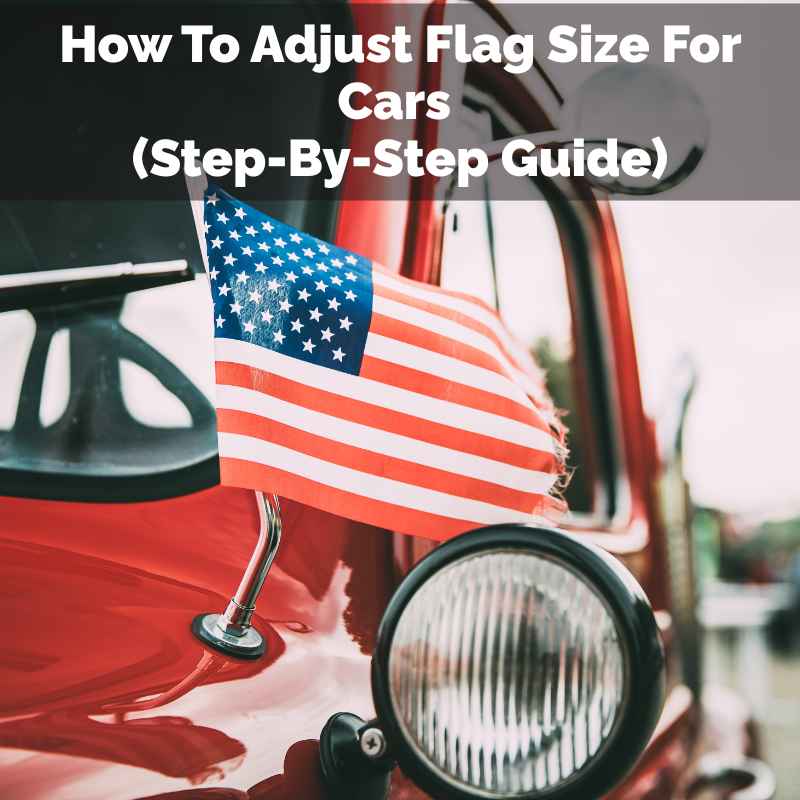
How To Adjust Flag Size For Cars (Step-By-Step Guide)
Getting the right flag size for your car is more than just looks. It’s about safety and making sure your flag flies proudly without causing problems on the road. This guide helps you find that sweet spot for size and stability, making your car a statement piece.
Understanding Flag Size for Cars
Choosing the correct flag size for a car is important. Too big, and it might flap too much. It could also get in the way or even break.
Too small, and it might get lost against the car’s size. The goal is a flag that looks balanced. It should also be sturdy enough for driving.
Most car flags come in standard sizes. These are often around 11 by 15 inches or 12 by 18 inches. These sizes tend to work well for most vehicles.
They provide a good visual impact without being too large to handle. Think about the type of car you have. A small car might look best with a smaller flag.
A large truck or SUV can handle a slightly bigger one.
The pole is also a key part of the system. Car flag poles are usually shorter. They are designed to fit into specific mounts.
These mounts can attach to windows or other parts of the car. The pole length must match the flag size. A short pole with a large flag can make the flag droop or not fly properly.
A long pole with a small flag might look awkward.
You also need to think about the material of the flag. Lighter materials like polyester or nylon are best for cars. They catch the wind easily.
They also dry faster if they get wet. Heavier fabrics might not fly well at lower speeds. They can also put more strain on the pole and mount.
Many people don’t realize how much wind resistance a flag creates. At highway speeds, this force can be significant. A flag that is too large or not attached securely can be dangerous.
It might detach and become a hazard for other drivers. It could also damage your car. So, matching the flag size to your driving conditions is wise.
Common Car Flag Sizes and Uses
Small Cars (Sedans, Compacts): 8 x 12 inches is a good starting point. This size is subtle but noticeable.
Medium Cars (SUVs, Minivans): 11 x 15 inches offers a nice balance. It’s visible without being overwhelming.
Large Vehicles (Trucks, Large SUVs): 12 x 18 inches can work well. Make sure the mounting is very secure.
Special Events/Parades: Slightly larger flags might be okay for slow speeds. Always prioritize safety.

Why Proper Flag Size Matters
Getting the right flag size for your car is more than just how it looks. It directly impacts safety and the flag’s lifespan. A flag that’s too large can be a real problem when you’re driving.
At highway speeds, wind can catch a large flag like a sail. This puts a lot of stress on the pole, the mount, and even your car’s body.
Imagine driving at 60 miles per hour. The air moving past your car creates a strong force. If your flag is too big, this force can cause it to flap wildly.
This can lead to tearing the flag fabric. It can also bend or break the flag pole. In worst cases, it could even loosen or damage the part of your car it’s attached to.
This is not just about looks; it’s about preventing damage and ensuring safety for yourself and others.
On the flip side, a flag that’s too small might not be seen. If you’re trying to make a statement or show support, a tiny flag might not achieve that goal. It can get lost against the backdrop of the car.
It might seem insignificant to other drivers or pedestrians.
The right size ensures the flag flies properly. When a flag is the right size for its pole and the car, it can catch the wind gently. This allows it to unfurl and display its design clearly.
It creates a nice visual effect rather than a chaotic flapping. This proper display is key to making the flag look good and serve its purpose.
Consider the material again. A lightweight fabric will perform better with any size flag. It moves with the wind more easily.
It reduces strain. If you have a larger flag, choosing a lightweight, durable material like nylon or polyester is crucial. These materials are designed for outdoor use and can withstand some wind.
It’s also about legal requirements in your area. Some places might have rules about what you can attach to your vehicle. These rules often relate to visibility or potential hazards.
A flag that’s too big or flaps uncontrollably could fall into this category. Always check local laws if you’re unsure.
So, the “perfect” size is really about balance. It balances visibility with safety. It balances the flag’s design with the car’s capabilities.
It balances your desire to express yourself with the practicalities of driving on the road.
Key Benefits of Correct Flag Sizing
- Enhanced Safety: Prevents flags from becoming hazards.
- Durability: Extends the life of your flag and pole.
- Aesthetics: Creates a balanced and appealing look.
- Legal Compliance: Avoids potential issues with traffic laws.
- Performance: Ensures the flag flies correctly and looks good.
Choosing the Right Flag Mount
The flag mount is just as important as the flag size itself. This is what holds your flag securely to your car. A bad mount can ruin even the best-sized flag.
It can lead to the flag falling off or damaging your car. There are several popular types of car flag mounts available.
One common type is the window clip mount. These clips attach to the top edge of your car window. When you roll the window up, it often pinches the mount in place.
This is a very simple and popular option. It’s easy to put on and take off. They are great for temporary use or for smaller flags.
For larger flags or at high speeds, they might not be secure enough.
Another type is the magnetic mount. These use a strong magnet to stick to metal parts of your car. The roof or the trunk lid are common places.
Magnetic mounts are easy to use. You just place them where you want them. However, their strength depends on the magnet quality and the surface.
They can sometimes scratch paint if not placed carefully or if debris gets under them. They are also not suitable for cars with plastic or aluminum bodies.
Some mounts are designed to fit into existing holes. For example, some truck beds have stake pockets. You can get mounts that slide into these.
These offer a very secure attachment. They are often used for larger flags or for more permanent installations. They require a specific feature on your car to work.
Suction cup mounts are another option. These work by creating a vacuum seal against a smooth surface, like a window or a car body panel. They can be quite strong if applied correctly on a clean surface.
However, extreme temperatures or dirt can weaken the seal over time. You might need to reapply them periodically.
When picking a mount, always consider the weight of your flag. Also, think about the speeds you’ll be driving. If you plan to drive on highways often, you need a very robust mount.
Look for mounts made of sturdy metal or heavy-duty plastic. Read reviews from other users to see how well they hold up in real-world conditions.
The mount should also be compatible with your flag pole. Most standard car flag poles have a diameter that fits common mounts. However, it’s always good to check the specifications of both the pole and the mount before buying.
I remember one time, I was driving home from a rally. I had a new flag on my car, and I used a cheap window clip. I thought it would be fine for the short trip.
Well, about halfway there, I heard a loud flapping sound. I looked in my rearview mirror and saw the flag pole swinging wildly. It was about to break off.
I had to pull over quickly to take it off before it caused any damage. That taught me a big lesson about not skimping on the mount!
Mount Type Comparison
| Mount Type | Pros | Cons |
|---|---|---|
| Window Clip | Easy to use, temporary, good for small flags. | Can be less secure at high speeds, may limit window use. |
| Magnetic | Easy placement, no drilling, good for metal surfaces. | Can scratch paint, not for non-metal cars, strength varies. |
| Stake Pocket | Very secure, stable, good for larger flags. | Requires specific car features (e.g., truck beds). |
| Suction Cup | Strong seal on smooth surfaces, reusable. | Can fail in extreme temps or on dirty surfaces. |
Step-by-Step Guide to Adjusting Flag Size and Mounting
Adjusting your flag size and mounting it correctly might seem like a chore, but it’s pretty straightforward once you know the steps. We’ll break it down so you can get it done quickly and correctly.
Step 1: Assess Your Car and Needs
First, look at your car. What kind of car is it? A small sedan needs a different approach than a large SUV.
Think about where you’ll mostly be driving. Are you sticking to city streets, or will you be on the highway a lot? This helps decide the best flag and mount combination.
Step 2: Select Your Flag and Pole
Based on your car and driving habits, choose a flag size. As we discussed, 11×15 inches is a safe bet for many cars. Pick a lightweight material like nylon.
For the pole, ensure it’s designed for cars. It should be sturdy and the right length for the flag. A 15-inch pole is often good for an 11×15 flag.
Step 3: Choose a Secure Mount
Select a mount that fits your car and your flag setup. If you have a truck, a stake pocket mount might be ideal. For most cars, a good quality window clip or magnetic mount will work.
Read reviews to find one known for reliability. For highway driving, a stronger mount is always better.
Step 4: Prepare the Mounting Area
Clean the area where you’ll attach the mount. For magnetic mounts, make sure the car surface is clean and dry. This prevents scratches and ensures a strong hold.
For window clips, make sure the window edge is clean. For suction cups, the surface must be perfectly smooth and clean.
Step 5: Attach the Mount to Your Car
Follow the instructions that came with your mount. For window clips, slide them onto the window edge and roll the window up carefully to secure them. For magnetic mounts, simply place them on a flat metal surface.
For stake pocket mounts, insert them and tighten any screws. For suction cups, press them firmly onto the clean surface to create a seal.
Step 6: Attach the Flag Pole to the Mount
Most mounts have a way to attach the flag pole. This might be a clamp, a sleeve, or a screw. Make sure the pole is seated firmly.
If it’s a screw-type attachment, tighten it securely.
Step 7: Attach the Flag to the Pole
Slide the flag onto the pole. Many car flags have a sleeve that the pole slides through. Some might have grommets and ties.
Ensure the flag is spread out evenly on the pole and tied or secured well. Make sure the seam or hem is facing the right way so it looks good when flying.
Step 8: Test and Inspect
Before you drive, give the flag and pole a gentle tug. Make sure everything feels solid. Roll the window up and down if you used a window clip to ensure it still functions.
Check that the flag isn’t hanging too low or obscuring your view. Start driving slowly at first. Listen for any unusual noises.
Check the flag periodically as you drive.
I recall a friend who got excited and just slapped a flag on her car without really checking. She was driving down the highway, and the flag pole snapped. The flag then got tangled in her windshield wipers.
It was a mess! We learned that the inspection step is really, really crucial.
Quick Mounting Checklist
Car Type: Small, Medium, Large?
Driving Type: City, Highway?
Flag Size: Appropriate for car and speed?
Pole Length: Matches flag size?
Mount Type: Secure and suitable?
Area Prep: Clean and dry?
Secure Attachments: All parts tight?
Visual Check: No obstructions, looks balanced?
Common Issues and How to Fix Them
Even with the best intentions, you might run into a few snags. But most common problems with car flags have simple fixes. Understanding these can save you a lot of headaches.
Issue 1: Flag Tears or Rips
This usually happens because the flag is too large for the speed you’re traveling, or the material is weak. The wind pulls too hard on it. The fix is to use a smaller flag.
Or, choose a flag made of stronger, more durable material like heavy-duty polyester or ripstop nylon. Ensure the stitching is reinforced.
Issue 2: Pole Bends or Breaks
A flimsy pole can bend or break under wind pressure. This is common with larger flags. Always use a pole designed for car use.
These are usually made of fiberglass or strong aluminum. They are more flexible and resilient. Make sure the pole is the right length for your flag size.
A pole that’s too short can’t support the flag properly.
Issue 3: Mount Comes Loose or Falls Off
This is a major safety concern. If your mount isn’t secure, it can detach. Check the mount’s strength.
For window clips, ensure they are gripping the window firmly. For magnets, ensure they are on a clean, flat metal surface. For suction cups, reapply them periodically, especially in temperature changes.
If a mount repeatedly fails, it’s time to get a better, stronger one. Don’t risk it!
Issue 4: Flag Doesn’t Fly Properly
If the flag just hangs there or doesn’t unfurl, it might be too heavy for the wind conditions, or the pole might not be angled correctly. Ensure your flag is lightweight. Also, make sure the pole is mounted so it can catch the breeze.
Sometimes, slight adjustments to the pole’s angle can make a difference. Make sure the flag is threaded onto the pole correctly, with no binding.
Issue 5: Paint Damage
Magnetic mounts or poorly installed clips can scratch your car’s paint. Always clean the surface before applying a magnetic mount. Consider using a protective film underneath if you’re worried.
When using clips, ensure they don’t rub against the paint. Regularly check for any signs of wear or damage on your car’s finish.
I once saw a guy with a flag mount that had sharp edges. He hadn’t noticed, and it had left deep scratches all over his trunk lid. He was pretty upset.
It was a good reminder to check the mount itself for any potential issues before attaching it. Small details can prevent big problems.
Troubleshooting Table
| Problem | Likely Cause | Solution |
|---|---|---|
| Flag Tears | Flag too big, weak material, high speed. | Use smaller flag, stronger material, check speed limits. |
| Pole Bends | Flimsy pole, flag too large for pole. | Use stronger pole, ensure correct pole-flag size match. |
| Mount Fails | Weak mount, dirty surface, temperature change. | Upgrade mount, clean surface, reapply periodically. |
| Flag hangs | Heavy fabric, poor pole angle. | Use lighter flag, adjust pole angle for wind. |
| Paint Scratches | Mount edges, debris under mount. | Clean surface, use protective film, check mount edges. |
Legalities and Best Practices
Flying a flag on your car can be a great way to show something important to you. However, there are rules and best practices to follow. These help ensure you stay safe and out of trouble.
First, check your local laws. What’s allowed varies by state and sometimes by city. Some places might have restrictions on the size of flags you can fly.
Others might have rules about flags obscuring your vision or creating a hazard. Generally, flags that flap excessively or hang too low are frowned upon. Always err on the side of caution.
If you’re unsure, it’s best to use a smaller, well-secured flag.
Speed is a major factor. Most standard car flags and mounts are designed for speeds up to around 40-45 mph. If you frequently drive on highways, you need a robust setup.
This means a strong pole, a durable flag material, and a very secure mount. Some sources suggest that for speeds over 50 mph, it might be best to take the flag down. This is because the forces involved can be extreme.
Visibility is key. Your flag should never block your view of the road. This includes your mirrors.
Make sure the flag placement doesn’t hinder your ability to see around your vehicle. Also, ensure the flag itself doesn’t obstruct other drivers’ views of your signals or lights.
Think about the flag itself. Ensure it’s not tattered or ripped. A damaged flag can flap erratically and is more likely to tear completely.
Replace flags that are showing significant wear and tear. Also, make sure the colors are still clear. A faded flag might not make the impact you intend.
Consider the type of flag. While patriotism and support are common, be mindful of what your flag represents. Some symbols or messages might be controversial and could attract unwanted attention or reactions from others on the road.
It’s about expressing yourself responsibly.
Finally, regular checks are essential. Before you drive, always do a quick check. Give the flag and mount a gentle tug.
While driving, especially at higher speeds, be aware of any new noises or vibrations. If something feels loose or is flapping excessively, pull over safely and inspect it. It’s better to stop and fix something than to have it become a problem.
I remember seeing a car with a huge flag during a parade. It was amazing to look at! But the parade was slow.
As soon as the parade ended and people started to drive faster, that flag looked like it was going to rip right off. The driver wisely took it down quickly. It highlighted that size matters, but so does how and where you use it.
Best Practices Summary
- Know Your Laws: Check local regulations about car flags.
- Mind the Speed: Use flags appropriate for your typical driving speed.
- Prioritize Visibility: Ensure the flag doesn’t block your view or others’.
- Maintain Your Flag: Replace tattered or faded flags.
- Choose Wisely: Be mindful of the message your flag conveys.
- Inspect Regularly: Always check the flag and mount before driving.
When to Consider a Different Approach
Sometimes, even with the best efforts, a traditional car flag might not be the best fit. There are situations where you might want to explore other options to express yourself or show support.
If you drive very fast regularly, on highways for long distances, a standard car flag might just be too risky. The constant high wind forces can be a lot for any flag setup. In these cases, maybe a temporary decal or a removable window cling is a better choice.
These don’t have the same moving parts or wind resistance issues.
For very large flags, like those used for parades or special events, they are often best handled separately. They might be flown on a temporary stand outside your car or carried by hand. Trying to mount a very large flag on a moving vehicle can be unsafe.
It might also violate regulations.
Some people opt for small, personalized license plate frames or bumper stickers. These are permanent or semi-permanent fixtures. They don’t have the flapping issues of flags.
They also don’t require mounting hardware that could potentially fail.
Another option is to use car flags only for stationary events. If you’re parked at a car show, a picnic, or a tailgate party, you can use larger flags or more elaborate setups. Then, you can remove them before you start driving again.
This allows for a bigger visual impact without the risks.
The key is to be realistic about what your car can safely handle. Think about the stresses involved. If you’re constantly worried about the flag falling off or damaging your car, it might be time to rethink the approach.
There are many ways to show your spirit, and safety should always come first.
I remember a friend who wanted to fly a huge college flag for a big game day. He had a nice truck, but the flag was almost as big as the truck itself. He tried a few mounts, but nothing felt secure enough for the highway.
In the end, he decided to put the flag up at the stadium parking lot. He drove there with just a small sticker on his car. It was a smart compromise.
Alternatives to Traditional Car Flags
- Window Clings: Easy to apply and remove, no flapping.
- Car Decals/Stickers: Permanent or semi-permanent, no moving parts.
- License Plate Frames: Subtle way to display affiliation.
- Bumper Stickers: Classic way to show personality or support.
- Stationary Displays: Use larger flags when parked at events.
Quick Fixes and Tips
Here are some super quick tips to make sure your car flag experience is a good one. These are small things that make a big difference.
- Always buy a flag with reinforced stitching. This helps prevent tears.
- Use a flag pole that has a flexible tip. This helps it bend with the wind instead of breaking.
- If you use a window clip, make sure the window is fully up. This usually secures the clip best.
- For magnetic mounts, buy the strongest magnet you can find. Read reviews for strength.
- Clean the car surface thoroughly before attaching any mount. This ensures better adhesion and prevents scratches.
- Check your flag at every gas stop. It’s a good habit to get into.
- If the flag seems to be flapping too much, slow down. Your flag and your car will thank you.
- Consider buying a spare flag. They can wear out, and it’s good to have a backup.
- Store your flag and pole inside when not in use. This protects them from sun damage and wear.
Frequently Asked Questions About Car Flags
What is the best size flag for a car?
The best size depends on your car and where you drive. For most sedans and SUVs, an 11×15 inch flag is a good starting point. For smaller cars, 8×12 inches might be better.
Always consider highway speeds; larger flags need very secure mounting.
Can I put a flag on my car at highway speeds?
Yes, but only with a very secure setup. Use a strong mount and a durable, appropriately sized flag and pole. Many experts recommend taking flags down if you plan to drive regularly over 45-50 mph, as the wind force can be extreme.
What kind of mount is most secure for a car flag?
Mounts designed for truck stake pockets are generally the most secure. For everyday use on sedans or SUVs, high-quality magnetic mounts or robust window clips designed for higher speeds are good options. Always check reviews for reliability.
Will a car flag damage my car’s paint?
Magnetic mounts can scratch paint if the surface isn’t clean or if debris gets underneath. The same paint-safety rules apply to custom car magnets used for personalization or business advertising. Window clips can sometimes rub or create pressure points. Always clean the mounting area thoroughly and inspect for damage.
Some people use protective films.
How do I clean a car flag?
Most car flags are made of nylon or polyester and can be hand-washed with mild soap and cold water. Gently scrub any stains. Rinse thoroughly and hang to dry completely.
Avoid machine washing or drying, as this can damage the fabric and stitching.
Are there any legal restrictions on car flags?
Yes, laws vary by state and locality. Some places restrict flag size, how they are attached, or if they can obstruct visibility. It’s wise to check your local Department of Motor Vehicles (DMV) or transportation authority for specific rules before installing a flag.
Final Thoughts on Car Flags
Putting a flag on your car can add a lot of personal flair. It’s a way to share what matters to you. By paying attention to flag size, pole strength, and secure mounting, you can do it safely.
Remember that balance is key. It’s about making your car look great without creating a hazard. Enjoy showing your colors proudly and safely on the road!
Products related to this article
Sponsored / affiliate links. As an Amazon Associate I earn from qualifying purchases. I may earn additional commission from eligible campaigns.