What Are Crossovers for Car Audio? (Active vs. Passive)
A car audio crossover is an electronic filter that splits one audio signal into separate frequency bands, so tweeters, midrange speakers, and subwoofers each receive only the sound they were built to reproduce. Without one, a small tweeter can end up trying to play bass notes it was never designed for, which distorts the sound and can burn out its voice coil. Every car stereo uses some form of crossover, whether it is a simple passive network built into a speaker or a fully adjustable active unit wired ahead of the amplifiers.
What a Car Audio Crossover Actually Does
BEST FOR ADJUSTABLE ACTIVE CROSSOVER SETUPS
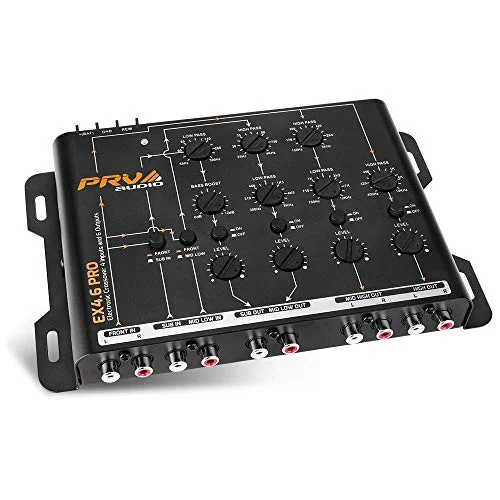 |
PRV Audio EX4.6 PRO Electronic Crossover – $59.00 A 4-way active crossover with independently adjustable high-pass and low-pass points for tweeters, midranges, midbass, and subwoofers.
|
Every crossover does the same basic job: it takes in one signal and divides it by frequency before that signal reaches a speaker. A high-pass filter blocks everything below a set cutoff and lets only the higher frequencies through to a tweeter. A low-pass filter does the opposite, passing bass frequencies to a woofer or subwoofer while blocking the highs. A band-pass filter combines both, isolating a narrow middle range for a dedicated midrange driver. Sending a speaker only the frequencies it can reproduce is what keeps a car system sounding clean instead of muddy or harsh.
The other job a crossover does is protect the speakers themselves. A tweeter’s voice coil is tiny and moves very little air, so heavy bass energy can overheat and tear it apart in seconds. A subwoofer cone, on the other hand, is not built to move fast enough to reproduce clean treble. By keeping each driver inside its safe operating range, a properly set crossover extends speaker life and lets an amplifier’s power go toward sound the speaker can actually use instead of frequencies it has to fight against.
Active vs. Passive Crossovers
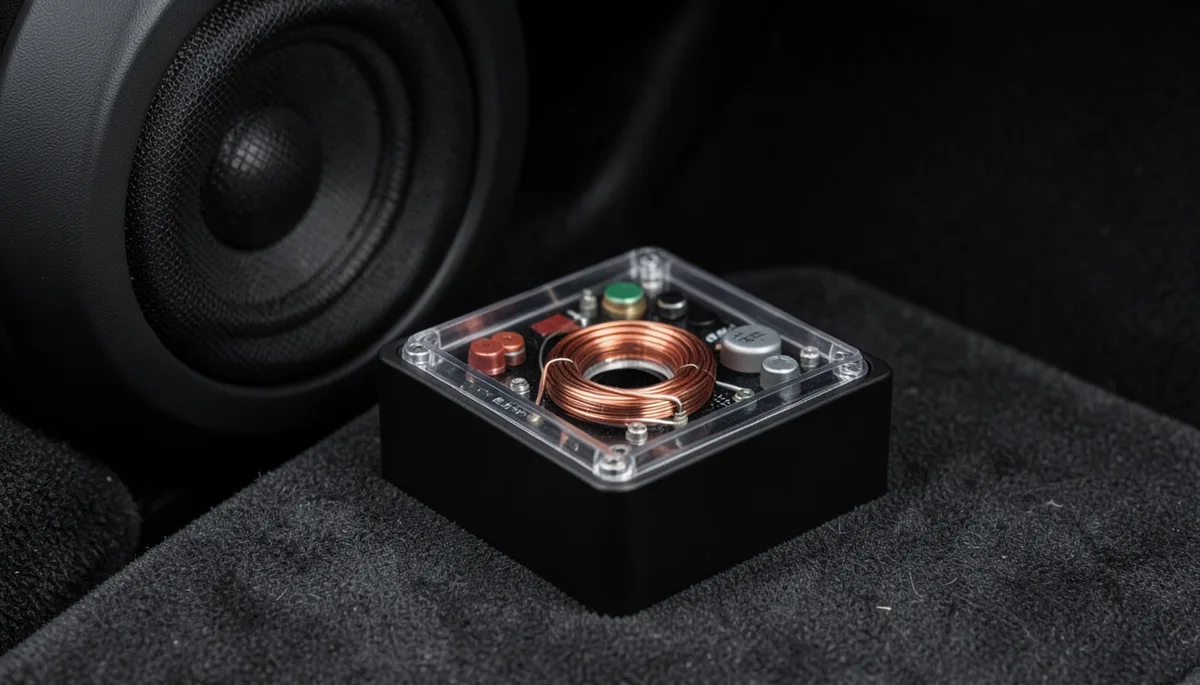
Passive crossovers are built from capacitors, inductors, and resistors wired between the amplifier and the speaker terminals, and most component speaker sets already come with one soldered onto a small circuit board inside a plastic housing. They need no external power, they cost little, and they are simple to wire in. The tradeoff is that the resistors bleed off a small amount of amplifier power as heat, and there is almost no way to adjust where the frequencies actually split once the crossover is built.
Active crossovers sit between the head unit (or a digital signal processor) and the amplifiers, using powered electronic circuits instead of passive components. Because each frequency band is amplified separately after the crossover splits it, active setups deliver cleaner sound with far less wasted power, and most active units let you dial in the exact crossover point and slope for every speaker with a knob, switch, or phone app. That flexibility costs more and takes a more involved install, which is why active crossovers show up mostly in multi-amp systems rather than a basic factory-speaker upgrade.
Crossover Slopes: Why 6dB, 12dB, and 24dB Per Octave Matter
The crossover point is only half the story. The slope determines how aggressively a crossover cuts off everything on the wrong side of that point, and it is measured in decibels of attenuation per octave. A gentle 6dB-per-octave slope (a first-order filter) rolls off softly and lets a fair amount of overlap through between speakers, which some listeners find natural but which still exposes a tweeter to more low-frequency energy than a steeper filter would.
A 12dB-per-octave slope (second-order) is the most common middle ground on aftermarket active crossovers, cutting frequencies twice as fast and giving small tweeters meaningfully better protection without much added complexity. Steeper 18dB and 24dB-per-octave slopes (third- and fourth-order filters) cut off very sharply, which shields a small driver from lower frequencies almost completely, but they need more circuitry and can introduce phase shift between speakers if the crossover points on each channel are not matched carefully. Passive crossovers bundled with entry-level component sets are usually fixed at 6dB or 12dB per octave, while dedicated active processors typically offer selectable slopes so an installer can match the protection to how much bass each speaker can physically survive.
Setting the Right Crossover Points for Your Speakers
There is no single correct crossover setting for every car, but speaker manufacturers publish recommended ranges based on how each driver is built, and those numbers are a solid starting point before fine-tuning by ear.
| Speaker | Typical Crossover Point | Filter Type |
|---|---|---|
| Subwoofer | Around 80 Hz | Low-pass |
| Midbass / midrange | Roughly 80 Hz to 2.5 kHz | Band-pass |
| Tweeter | 2.5 kHz to 4 kHz and up | High-pass |
Check the spec sheet or owner’s manual that came with your speakers before assuming these numbers apply directly, since a 3.5-inch tweeter and a coaxial speaker’s built-in tweeter can have very different minimum safe frequencies. If you are running a subwoofer alongside factory door speakers, setting the sub’s low-pass filter close to where the door speakers naturally roll off keeps the transition between them from sounding like two separate systems instead of one.
Installing a Crossover in Your Car
Before starting, gather a wire stripper, a crimping tool, electrical tape or heat-shrink tubing, and zip ties, and disconnect the car battery or at least the head unit’s power wire so you are not working on a live circuit. Mount the crossover as close to the speakers it feeds as practical, since shorter speaker-level runs pick up less interference than long ones. Route the input wires from the amplifier or head unit to the crossover’s input terminals, then run the output wires from the crossover to each speaker, matching polarity on every connection so the speakers stay in phase with each other.
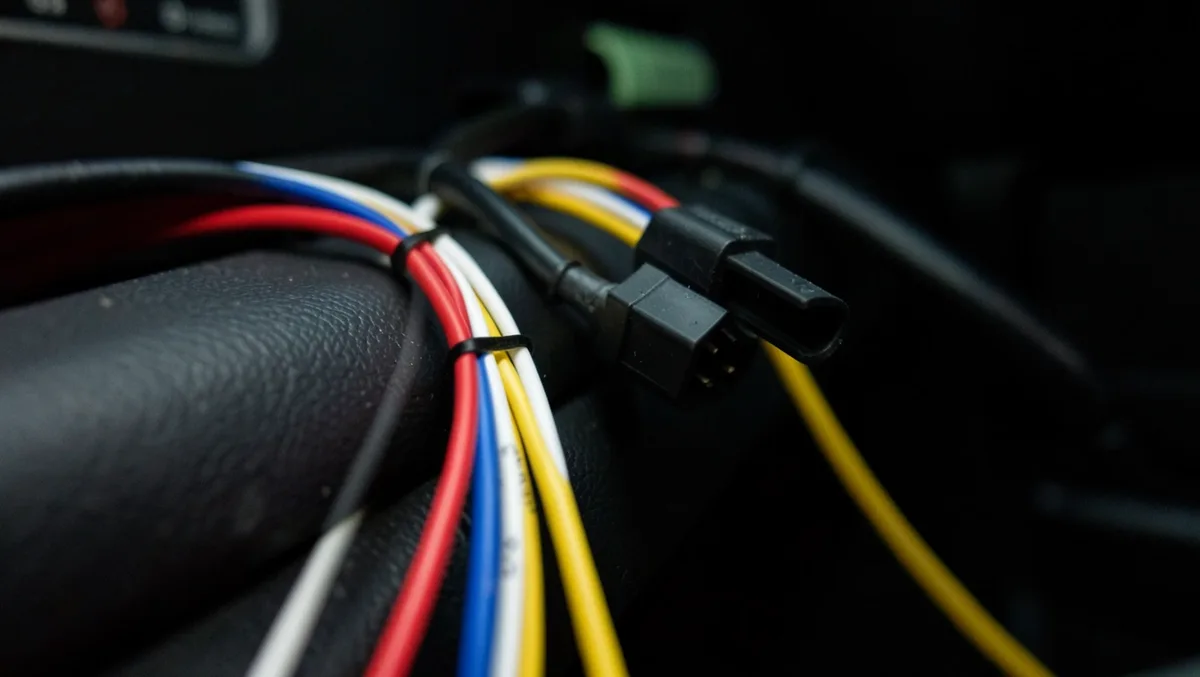
Secure the crossover with screws, adhesive-backed mounts, or heavy zip ties so it cannot rattle loose over bumps, then double-check every terminal is tight before closing up any panels. Power the system back on and listen for balanced sound across the full range; if something sounds thin, harsh, or muffled, the most common culprit is a reversed polarity wire or a crossover point set too aggressively for the speaker in that position. If wiring and soldering are not something you want to tackle yourself, most local car audio shops install crossovers as a routine job, usually with a warranty on the labor.
Troubleshooting Common Crossover Problems
Most crossover problems show up as one of three symptoms: a speaker that sounds too quiet or muffled, a harsh or distorted edge on loud passages, or a channel that has gone silent altogether. Start by listening critically rather than assuming the crossover itself has failed, since loose connections, worn speaker wire, and a dusty or damaged driver produce very similar symptoms. Wiggle each connection while the system plays to check for an intermittent contact, and inspect the crossover’s terminals for corrosion if the install is more than a few years old.
If the diagnosis points to the crossover settings rather than a physical fault, work through the fix methodically. Re-seat every wire and re-tighten the terminals first, since a loose screw terminal is the single most common cause of a crackling or cutting-out channel. Clean the speaker terminals and connector pins with an electrical contact cleaner if you see any green or white corrosion. Finally, revisit the crossover points and slope: a tweeter set too low will sound harsh and strained, while a subwoofer’s low-pass filter set too high will let it try to reproduce midrange notes it was never meant to play. Small adjustments, tested one at a time, usually reveal which setting was off.
Frequently Asked Questions
Does a Crossover Improve Sound Quality?
Yes. A crossover directs each frequency range to the speaker best suited to reproduce it, which reduces distortion and lets tweeters, midranges, and subwoofers all perform closer to their design limits. A properly matched crossover point and slope, more than the crossover’s price tag, is what determines how much benefit you actually hear.
What Is the Best Crossover Setting for Car Audio?
There is no universal setting, but a common starting point is 80 Hz for a subwoofer’s low-pass filter, roughly 80 Hz to 2.5 kHz for midrange and midbass drivers, and 2.5 kHz to 4 kHz or higher for tweeters. Always check your specific speaker’s spec sheet first, then fine-tune by ear once everything is wired in.
Do I Need a Crossover for My Sound System?
If your system uses more than one type of speaker, such as a tweeter paired with a woofer or a subwoofer added to factory door speakers, you need a crossover to keep each driver from receiving frequencies it cannot handle. A single full-range speaker with no subwoofer can sometimes run without one, but sound quality and speaker longevity both improve with proper frequency division.
What Crossover Slope Should I Use for a Tweeter?
A 12dB-per-octave slope is a safe, common choice for most aftermarket tweeters, since it cuts low frequencies fast enough to protect a small voice coil without the added complexity of a steeper filter. Very small or fragile tweeters sometimes benefit from an 18dB or 24dB-per-octave slope, but check the manufacturer’s recommended crossover point and slope before settling on one.
The Bottom Line
A crossover is what makes a multi-speaker car audio system work as one coherent unit instead of several speakers fighting over the same frequencies. Whether you stick with the passive network built into a component speaker set or step up to an adjustable active crossover, getting the frequency points and slope right protects your speakers and is usually the single biggest jump in clarity you can make short of replacing the speakers themselves.
Products related to this article
Sponsored / affiliate links. As an Amazon Associate I earn from qualifying purchases. I may earn additional commission from eligible campaigns.