What Are Memory Seats in Cars? How They Work (+ Repair Cost)
Memory seats are power-adjustable seats that use position sensors and a control module to save 2-3 driver profiles, restoring seat and mirror settings at one button press. A battery disconnect or failed sensor can wipe every saved profile, and a full control module replacement often costs $644 to $697. This guide covers how the sensors and control module work, which cars commonly offer the feature, and how to fix seats that stop responding.
Insert your Affiliate Disclosure reusable block here.
What Are Memory Seats in Cars?
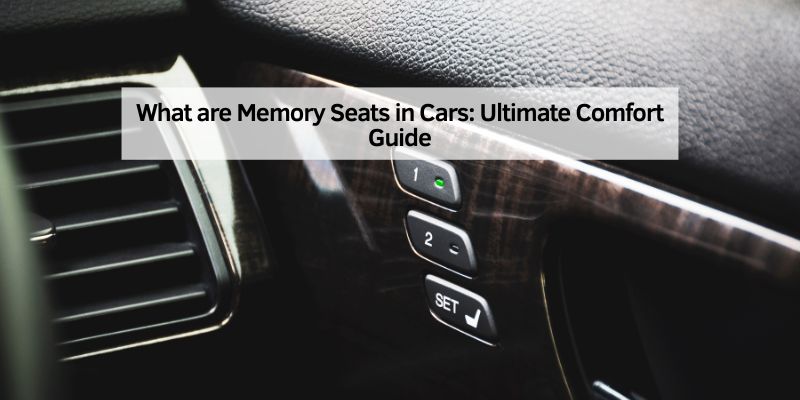
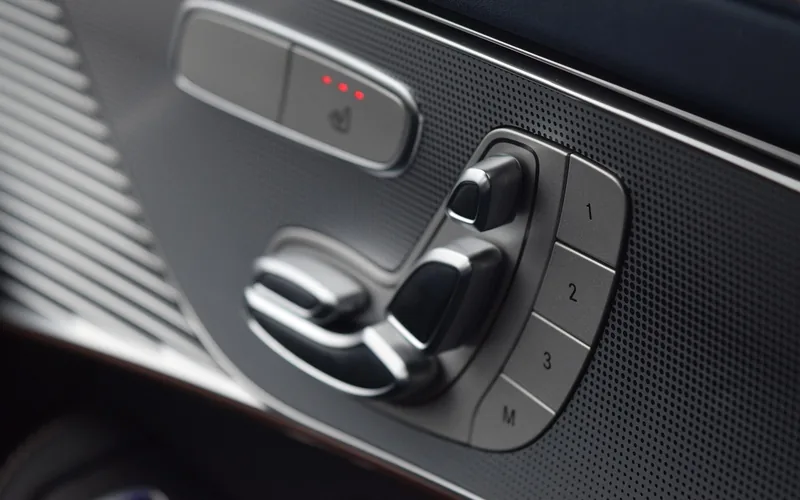
Memory seats are power-adjustable car seats that can save a driver’s preferred position – and often the mirror and steering wheel positions too – and return to it automatically with the press of a button or the detection of a specific key fob. Instead of manually sliding, tilting, and raising the seat every time someone new gets behind the wheel, the car remembers the setup for each driver and restores it in seconds.
The feature is built around three things working together: motors that physically move the seat, sensors that track exactly where the seat is, and a small control module that stores that position data. Adjust the seat once, save it to a memory slot, and the car handles the rest from then on.
Benefits of Memory Seats
The biggest benefit is time and comfort on repeat drives. If you always drive the same car, your seat, mirrors, and sometimes climate settings are already exactly where you left them – no readjusting after someone else used the car, no fumbling with switches before you pull out of the driveway.
It also matters more for households that share a vehicle. Two drivers with a noticeable height or reach difference can each save their own setup and switch between them with one press, instead of one person constantly re-adjusting a seat set up for someone else’s build.
Types of Memory Seat Systems
Not every memory seat system works the same way. Most vehicles use one of three approaches, depending on the trim level and how the automaker wired the feature to the key fob:
| System Type | How It Recalls Position | Best For |
|---|---|---|
| Single-profile | One saved position, returned by pressing the same memory button every time | Cars driven mostly by one person |
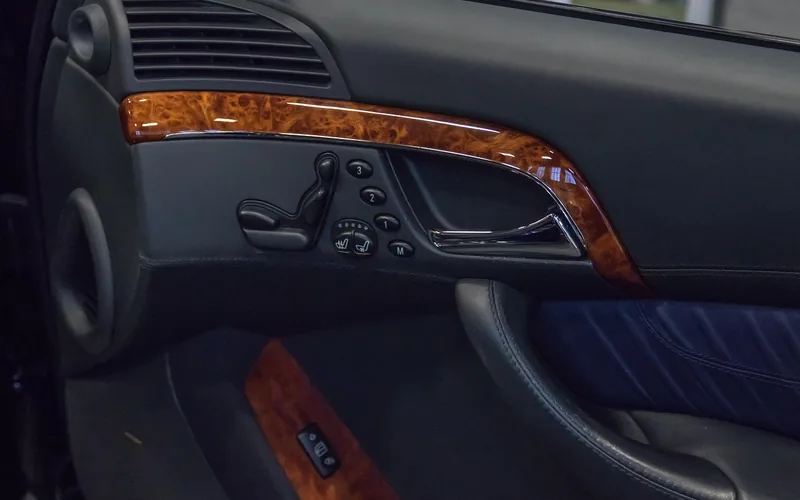
| Multi-profile (typically 2-3) | Separate numbered buttons or a menu slot per driver; restores seat, mirrors, and sometimes the steering wheel together | Shared household vehicles with more than one regular driver |
| Fob-linked auto-recall | Detects which key fob unlocked the door and moves the seat automatically – no button press needed | Families or valet-shared cars where drivers forget to press a memory button |
Most mainstream vehicles that offer the feature stop at two or three saved profiles; some full-size luxury models allow more, and a handful of newer systems layer in seat heating, cooling, and lumbar presets on top of the physical position.
How Memory Seats Work: Sensors, Control Module & Profiles
Memory seats rely on position sensors mounted along the seat track and inside the seat motors, most commonly potentiometers or non-contacting Hall-effect sensors. As the seat moves, these sensors report a changing electrical signal back to a dedicated seat control module – essentially a small onboard computer just for the seat.
When you adjust the seat and press the memory button, the control module records the exact sensor readings for that moment into its non-volatile memory, usually labeled slot 1, 2, or 3. Press that button again later, and small electric motors drive the seat back through those same positions until the sensors report the saved values.
On systems with fob-linked auto-recall, the module also checks which key fob is being used to unlock or start the car and loads that driver’s saved profile automatically, sometimes moving the mirrors and steering column at the same time.
“Seat track position sensors are environmentally sealed, non-contacting sensors that work alongside a vehicle’s occupant classification system to track exactly where the seat sits along its rails.”
– CTS Corporation, automotive position sensor manufacturer
Which Cars Commonly Have Memory Seats?
Memory seats started out as a luxury-only option decades ago and have since spread into near-luxury trims and even some higher trims of mainstream models. Today the feature is common on full-size and luxury vehicles from automakers like Cadillac, Lincoln, BMW, Mercedes-Benz, Lexus, and Genesis, and it also shows up on upper trims from Ford (Expedition, F-150 Platinum), GMC and Chevrolet (Denali and High Country trims), Nissan (Armada, Titan Platinum), and Honda (Odyssey and Pilot Elite trims).
As a rule of thumb, if a trim level includes power-adjustable seats and heated/ventilated seating, it is worth checking the options list for memory seating too – the two features are frequently bundled together on the same higher trims.
Memory Seats in Luxury Cars
Memory seats remain a signature comfort feature in luxury cars, where they are usually paired with more adjustment points than a standard power seat – backrest angle, lumbar support, thigh extension, and side bolstering can all be part of the saved profile, not just the seat’s forward-and-back position.
On many current luxury and near-luxury trims, that saved profile also recalls seat heating and cooling levels alongside the physical position, so switching drivers restores climate comfort along with seat position in a single step. This is a present-day feature on many trims already on the road, not a future concept – it is one of several reasons luxury automakers are typically singled out for the smoothest, most quietest, most comfortable rides in a lineup.
Emerging Trends in Memory Seat Technology
A few automakers are testing sensors that read a driver’s body shape or weight distribution and suggest an ergonomic starting position automatically, rather than requiring the driver to save one manually. Voice-activated seat adjustment is also being explored on some newer infotainment systems, letting a driver ask for a position change instead of pressing a button.
Health-related seat sensing – tracking heart rate or driver fatigue through contact sensors in the seat back – has been demonstrated in concept vehicles and a handful of production trims, but it is not yet a standard part of most memory seat systems and should be treated as an emerging feature rather than something to expect on a typical new car today.
Why Did My Memory Seats Stop Working?
Memory seats that stop saving or recalling positions almost always trace back to one of five causes, in roughly the order worth checking:
- Check the key fob battery: On fob-linked systems, a weak or dead key fob battery can stop the car from recognizing which driver’s profile to load, even though the seat motors still work fine. Replacing the key fob battery is the cheapest fix and solves this specific symptom.
- Reconnect the battery and relearn positions: Disconnecting the car’s 12V battery – including for routine work like disconnecting the battery terminals – frequently wipes every saved memory profile. Reconnect the battery, wait a few minutes for the modules to power back up, then re-save each driver’s position from scratch.
- Check the fuse box: A blown fuse dedicated to the seat or memory module cuts power to the whole system at once, so no button – memory or manual – will move the seat. The fuse box location and diagram are usually printed on the inside of the fuse box cover or in the owner’s manual.
- Inspect the seat track wiring and switch: A loose connector or a worn switch under the seat can interrupt the signal between the position sensors and the control module, even when the fuse and battery are fine.
- Test or replace the seat control module: If the steps above don’t fix it, the dedicated memory-seat control module itself may have failed internally and typically needs a shop’s diagnostic scan tool to confirm before replacement.
📊 A power seat control module replacement typically costs $644 to $697 total (about $114-$167 in labor plus roughly $530 in parts), though costs run well over $1,000 on some luxury models. – Source: RepairPal, Power Seat Control Module Replacement Cost Estimate
Best Memory Seat Fix Pick

CR2032 Key Fob Replacement Batteries (2-Pack)
A universal-fit coin battery swap that resolves fob-detection failures behind many “memory seat stopped working” complaints.
- Best for: A weak key fob battery that stops the car from recognizing which driver’s profile to load
- Why we picked it: It’s the single most common, cheapest fix behind a “memory seat stopped working” complaint
- Main drawback: Only fixes fob-detection issues, not a failed seat sensor or blown fuse
Compare more memory seat repair options
 Option 1 AstroAI Digital Multimeter Tester
|
 Option 2 Evenoonest 6-Way Power Seat Switch Knob
|
 Option 3 AiYiGu 6-Way Power Seat Switch (Ford/Lincoln/Mercury)
|
As an Amazon Associate we earn from qualifying purchases.
Frequently Asked Questions
What Are Memory Seats In Cars?
Memory seats are power-adjustable car seats that store seating positions for multiple drivers. They let drivers set and save their preferred seat, mirror, and sometimes steering wheel positions, then recall those settings with a button press or automatic key fob detection, without any manual readjustment.
How Do Memory Seats Work?
Memory seats use position sensors on the seat track and motors to move the seat, all managed by a dedicated control module. Drivers adjust the seat, mirrors, and steering wheel, then save the setup to a memory slot with a button. The module records the sensor readings and replays them on demand to restore that exact position.
How Many Driver Profiles Can Memory Seats Store?
Most memory seat systems store 2 to 3 driver profiles, each saved to its own numbered button or menu slot. Some full-size luxury vehicles allow more, but 2-3 profiles is the standard most mainstream and near-luxury trims offer.
Are Memory Seats Worth The Cost?
Memory seats are worth it if more than one person regularly drives the car, since they save time and hassle every time drivers switch. For a single driver who never shares the vehicle, the feature is a comfort convenience rather than a necessity, and the value depends on how often the seat position actually needs to change.
Which Cars Have Memory Seats?
Memory seats are common on luxury and near-luxury vehicles from automakers like Cadillac, Lincoln, BMW, Mercedes-Benz, Lexus, and Genesis, and also appear on upper trims of mainstream models such as the Ford Expedition, GMC Denali trims, Nissan Armada, and Honda Odyssey and Pilot Elite trims. It’s typically bundled with other higher-trim comfort options like heated and ventilated seats.
Why Did My Memory Seats Stop Working After a Battery Disconnect?
Disconnecting a car’s 12V battery frequently erases every saved memory seat profile, since that data can be stored in the module’s working memory rather than truly permanent storage on some systems. After reconnecting the battery, you typically need to re-adjust and re-save each driver’s position from scratch, and on some models also re-sync the key fobs.
Can Memory Seats Improve Driving Experience?
Memory seats improve the driving experience by restoring a personalized, ergonomically correct seating position automatically. This reduces the time spent adjusting mirrors and seat height before every drive and helps ensure each driver starts in a safe, comfortable driving posture, which matters most in households or fleets with multiple regular drivers.
Conclusion
Memory seats save real time for anyone who shares a car with another driver, using seat position sensors and a control module to restore an exact seat setup at the press of a button. When they stop working, the fix is usually cheap and simple – a fresh key fob battery, a fuse, or re-saving positions after a battery disconnect – and a full control module replacement is the rare exception rather than the norm.
Products related to this article
Sponsored / affiliate links. As an Amazon Associate I earn from qualifying purchases. I may earn additional commission from eligible campaigns.