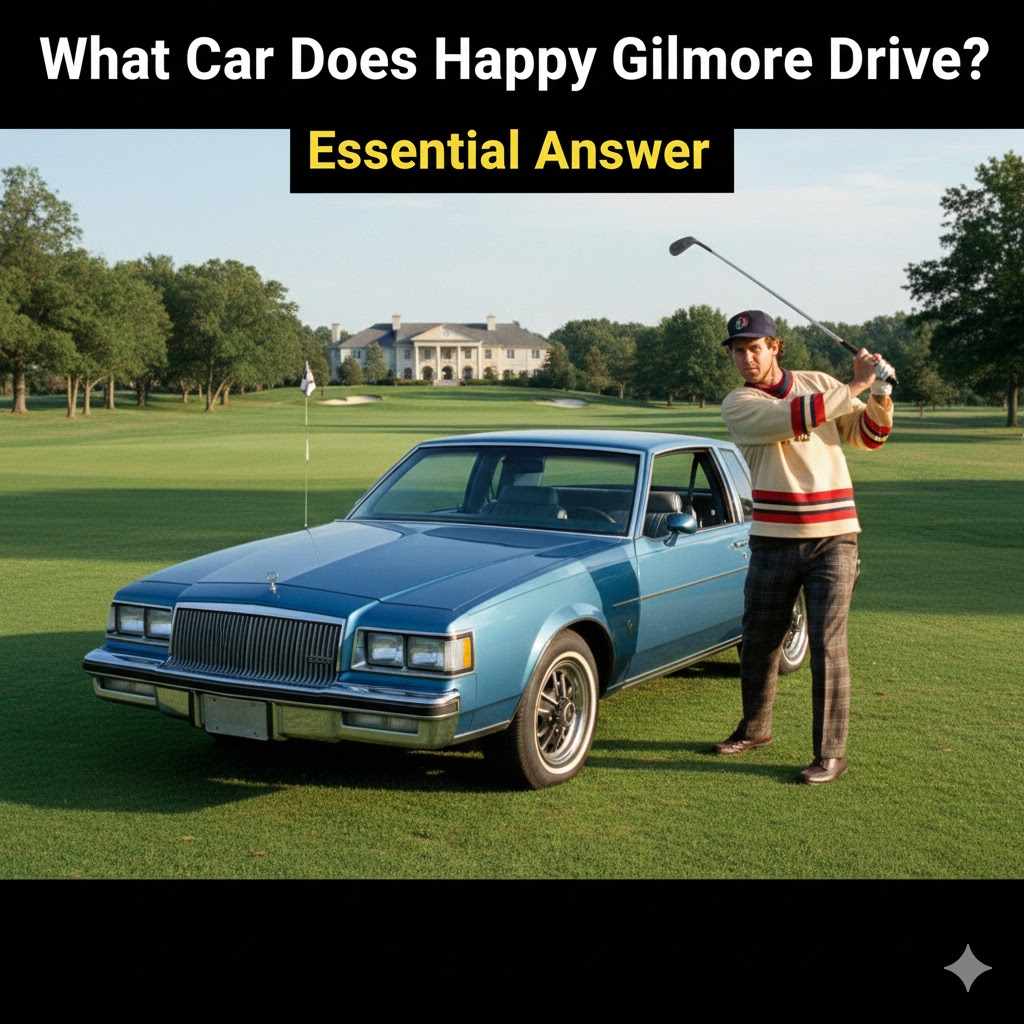
What Car Does Happy Gilmore Drive? Essential Answer
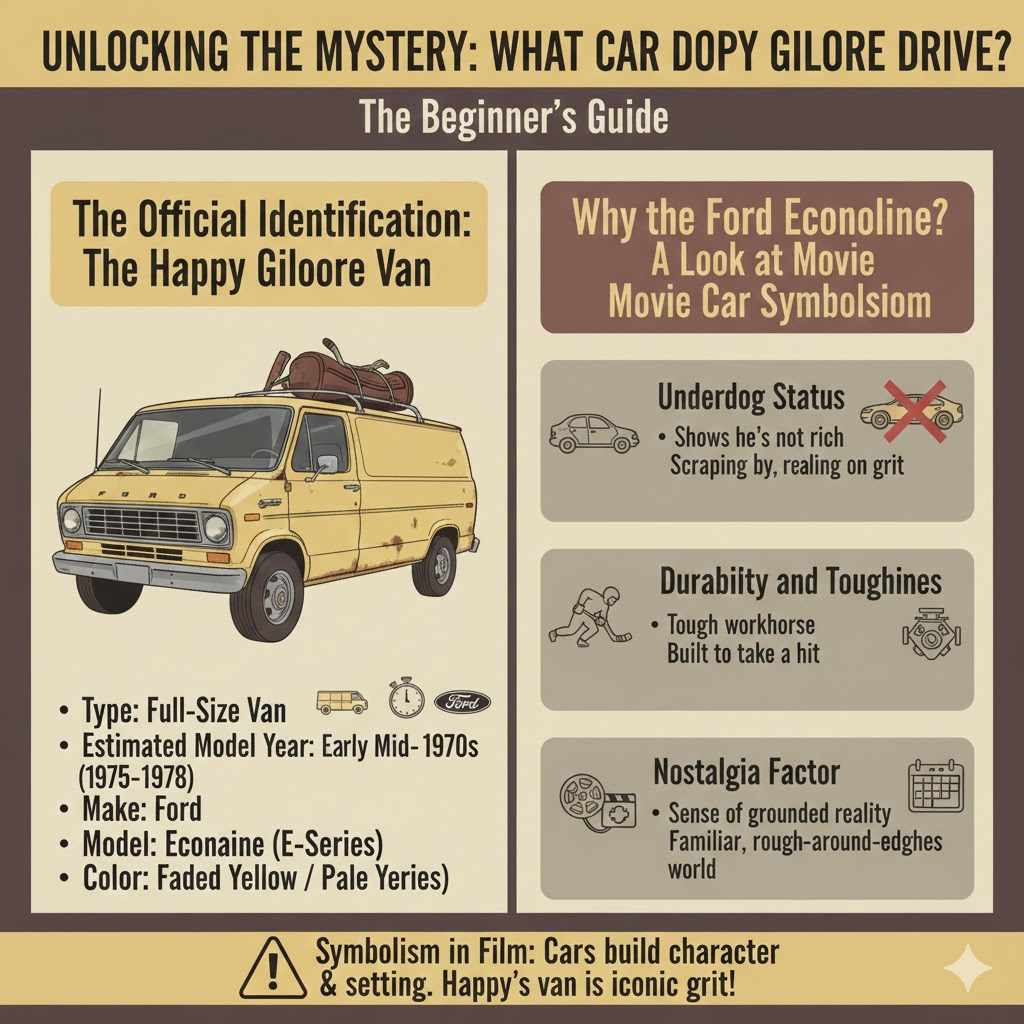
Happy Gilmore drives a classic, beat-up, pale yellow 1970s-era Ford Econoline van, often referred to by fans as the “Happy Gilmore Van.” This dependable, if slightly dented, vehicle perfectly matches his scrappy, underdog personality throughout the movie.
It’s a question that pops up in sports movie trivia nights and online forums: what exactly was the vehicle used by everyone’s favorite hockey-player-turned-golfer, Happy Gilmore? The car or truck a character drives often tells you a lot about who they are, and Happy’s ride is no exception. If you’ve ever tried to recall that specific shade of fading yellow, you’re not alone. Pinpointing movie car details can be surprisingly tricky!
We are going to break down the exact make and model of Happy Gilmore’s iconic van. We’ll look at why this specific vehicle was chosen for his character and what it tells us about his journey from hockey tough guy to golfing great. Get ready to settle this trivia debate once and for all!
Unlocking the Mystery: What Car Does Happy Gilmore Drive?
When you think of Happy Gilmore, you probably picture his slapshot, his crazy antics, and his trusty caddie, Otto. But the vehicle that hauls Happy and his gear around is just as memorable, even if it’s not always in focus. It is a true symbol of his working-class roots.
The Official Identification: The Happy Gilmore Van
The vehicle central to Happy Gilmore’s life, besides the few brief appearances of his old hockey car, is a large, aging van. This van isn’t sleek; it’s rugged. It’s the kind of vehicle that looks like it has stories to tell—most of them involving hockey practice, cheap beer, and maybe a few fender benders.
Here is the essential breakdown of the vehicle:
- Type: Full-Size Van
- Estimated Model Year: Early to Mid-1970s (around 1975-1978)
- Make: Ford
- Model: Econoline (often referenced as the E-Series)
- Color: Faded Yellow or Pale Yellow
This van, specifically a Ford Econoline, is crucial because it’s practical. Happy needs something big enough to move his old hockey gear around and then, later, transport his golf clubs. It screams functionality over flash, which is exactly who Happy is when we first meet him.
Why the Ford Econoline? A Look at Movie Car Symbolism
In filmmaking, cars are characters. The choice of vehicle helps establish the setting and the character’s background immediately. For Happy, the beat-up Ford Econoline works perfectly for a few key reasons:
- Underdog Status: A brand-new luxury car would never suit Happy. The faded yellow van shows he’s not rich. He’s scraping by, relying on grit, not glamour.
- Durability and Toughness: Econolines from that era are known for being tough workhorses. This mirrors Happy’s hockey background—he’s built to take a hit and keep going, much like his van.
- Nostalgia Factor: Older vehicles often provide a sense of grounded reality or nostalgia, pulling the audience into a familiar, slightly rough-around-the-edges world before the absurdity of professional golf kicks in.
If you are interested in learning more about how classic cars are used in Hollywood to build character, you might find this article from a film studies resource interesting regarding set design and props.
Diving Deeper: Features of Happy’s Iconic Van
While the movie doesn’t spend much time detailing the van’s specs (it’s not an automotive documentary, after all!), we can gather some key visual details that make this particular Econoline instantly recognizable to fans.
Exterior Clues and Condition
The appearance of the van contributes heavily to its characterization. It’s not a show car; it’s a utility vehicle that has seen better days.
- The Paint Job: The most distinguishing feature is the pale yellow color. It looks factory original but heavily weathered, suggesting years of sun exposure and general neglect.
- Body Damage: If you watch closely, the van has dents and dings—battle scars that suggest a long life being used hard.
- Hubcaps/Wheels: These are typically simple steel wheels, perhaps missing hubcaps entirely, reinforcing the no-frills nature of the vehicle.
Interior Observations
The interior shots, though limited, usually show a functional, if cluttered, space. This is where Happy keeps his life together.
What we often see inside:
- Old hockey equipment (stick bags, pads).
- Golf paraphernalia mixed in later in the film.
- General clutter indicating that the van serves as storage, transportation, and perhaps even a very temporary home base.
The van’s interior reliability (or lack thereof) often provides subtle, low-key comedic moments, much like the overall atmosphere of the film.
The Van vs. The Hockey Car: A Quick Comparison
Before Happy became a golfer, he was a hockey player. While the Econoline is his most prominent vehicle, some earlier scenes suggest he might have owned a different car associated with his old life. Let’s compare the two potential vehicles:
| Vehicle Type | Primary Association | Condition | Role in Story |
|---|---|---|---|
| Ford Econoline Van | Golf Career/Current Life | Beat-up, Yellow, Reliable enough | Primary transport, symbol of his humble beginnings. |
| Possible Older Car (Less Seen) | Hockey Days/Pre-Golf Life | Unknown, likely older/less significant | Used briefly in early scenes establishing his life before fame. |
For all intents and purposes, the Ford Econoline Van is the answer when fans ask “what car does Happy Gilmore drive,” as it features heavily in the central part of his journey.
The Econoline Legacy: Why We Still Talk About It
The movie came out in 1996, yet people still ask about this van. Why does a simple, old Ford van stick in the collective memory?
The Power of the Prop
Movie props that are perfectly matched to a character become iconic. Think about Ferris Bueller’s Ferrari or the DeLorean in Back to the Future. Happy’s van operates on a similar, albeit much more humble, principle. It’s the antithesis of the polished, expensive world of professional golf that he suddenly enters.
When Happy shows up to a pristine golf course in that battered yellow van, the contrast is hilarious and meaningful. It visually represents the culture clash central to the film’s humor.
Practicality for the Average Driver
As an automotive guide, I often see drivers gravitate towards vehicles they see in movies because they feel attainable. You can’t easily buy a DeLorean, but a 1970s Econoline is rooted in real-world durability. Many viewers might have owned a similar van or truck growing up, making Happy’s vehicle feel relatable and real, even amidst the fantastical elements of his golf swing.
If you are looking into buying or maintaining an older Ford vehicle, understanding proper engine maintenance is key. For example, checking coolant levels regularly is essential for older engines to prevent overheating, a common issue in vehicles that age. You can find reliable government maintenance guides on safe vehicle operation from the National Highway Traffic Safety Administration (NHTSA).
How to Spot a 1970s Ford Econoline Today
If you want to spot a real-life version of Happy’s ride, knowing what to look for in a 1970s Ford Econoline will help you recognize this classic utility vehicle.
Key Identification Characteristics
The Econoline model went through several major redesigns. The van driven by Happy belongs to the third generation (1975–1991), but the specific visual cues point toward the earlier part of that run.
Look for these design features:
- Grille and Headlights: Earlier models often featured a relatively simple, squared-off front end, sometimes with dual headlights set into a simple rectangular or slightly rounded bezel.
- Window Shape: The side and rear windows often have a distinct, slightly curved profile, typical of van designs from that era before more modern, angular designs took over.
- Body Lines: These vans have very straight, utilitarian body panels—less aerodynamic styling and more box-on-wheels construction.
Maintenance Tips for Classic Vans (If You Own One!)
If you are inspired by Happy’s van and decide to track down a classic Econoline, remember that older vehicles require consistent care. They are rewarding but demand attention.
- Rust Inspection: Since these vans are old, check floor pans, wheel wells, and door sills aggressively for corrosion.
- Ignition System Check: Older ignition systems (points and condensers, or early electronic systems) need regular tune-ups to ensure reliable starting.
- Brake System Overhaul: If buying one, plan to replace all rubber brake lines, as they degrade over time, which is a major safety concern.
- Fluid Changes: Stick to a strict schedule for changing engine oil, transmission fluid, and differential fluid—these older engines run harder.
We always prioritize safety. If you are new to vehicle maintenance, never attempt brake or steering repairs without proper training or supervision. Start small with things like checking tire pressure!
Beyond the Van: Happy’s Other Wheels
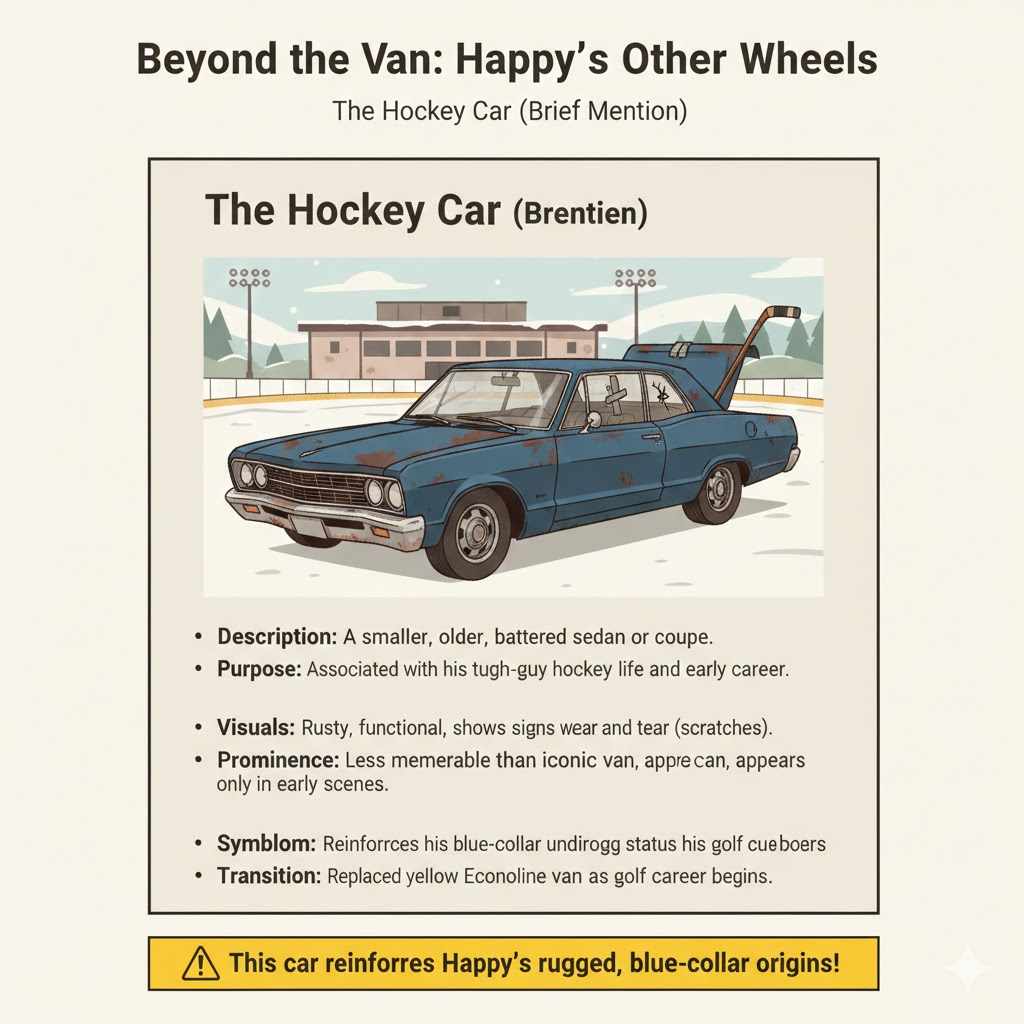
While the van steals the show, it’s worth briefly mentioning any other vehicle associated with Happy. In the opening scenes, we see Happy driving a vehicle associated with his tough-guy hockey life. Although less prominent, this often reinforces his earlier identity.
The Hockey Car (Brief Mention)
In the early scenes involving his grandmother and his hockey career, Happy is sometimes seen getting out of a slightly smaller, older car—though it is less distinctly memorable than the van. If a vehicle is seen at all during his bar fights or hockey practice scenes, it’s usually functional, perhaps a battered sedan or coupe, again reinforcing his blue-collar status.
However, once the golf storyline takes hold, the yellow Econoline becomes his signature ride, bridging the gap between his old life and his new, unlikely career.
Frequently Asked Questions (FAQ) About Happy Gilmore’s Vehicle
1. Is the Happy Gilmore van street legal?
Yes, in the context of the movie, the van is operational and driven throughout. In real life, if a van of that age has passed local inspection standards (emissions, safety), it can certainly be driven legally.
2. Was the van customized for the movie?
The van appears to be mostly stock for its model year, but it was intentionally weathered and detailed to look old and used. It was chosen specifically for its worn appearance rather than heavily modified for stunts.
3. What year is the Econoline van exactly?
While the exact year is often debated by fans, the visual characteristics strongly suggest it belongs to the third generation (1975–1991) Ford Econoline, likely in the late 1970s range, which was known for that specific body style.
4. Does Happy Gilmore ever get a new car in the movie?
No. Happy’s journey involves him winning money, but he remains grounded. He doesn’t trade in the van for a fancy sports car, which maintains his underdog image right through to the end.
5. What is the significance of the yellow color?
The yellow color makes the van highly visible and memorable on screen. In filmmaking, bright, solid colors help props stand out against various backdrops, enhancing the visual comedy.
6. Did Adam Sandler drive the van in real life?
For filming close-ups and dialogue scenes, actors often drive the hero cars. It is highly likely Adam Sandler drove the van during some of the driving sequences, though stunt drivers would have handled high-risk maneuvers.
7. What kind of engine would that old van likely have?
A Ford Econoline from that era often came equipped with robust V8 engines, possibly a 302 or 351 cubic inch V8, known for torque and durability rather than fuel efficiency—perfect for hauling gear!
Conclusion: A Dependable Ride for a Dependable Guy
So, we have our definitive answer: Happy Gilmore drives a beat-up, pale yellow 1970s-era Ford Econoline van. It’s not the flashiest vehicle in cinema history, but it is absolutely perfect for the character it carries.
The van symbolizes everything Happy Gilmore is: functional, tough, a little rough around the edges, and surprisingly dependable when it really counts. It bridges the gap between his past as a promising hockey player and his unexpected future as a major league golfer. For those of us who appreciate vehicles that tell a story, the Econoline remains a beloved, unsung star of the film.
We hope this deep dive has cleared up that nagging trivia question for you! Whether you’re tending to your own classic ride or just enjoying movie lore, remember that even the humblest vehicles can play a starring role. Keep your own ride running smoothly, whether it’s a brand-new sedan or a trusty, slightly dented van!