What Does It Mean If Your Car Is Running Hot: Essential Signs
If your car is running hot, it means its engine temperature is too high. This is often due to cooling system problems like low coolant, a faulty thermostat, or a leak, and can cause serious damage if ignored. Recognizing the signs is key to preventing costly repairs.
Understanding Why Your Car Runs Hot: A Beginner’s Guide
Seeing that temperature gauge creep into the red zone or noticing steam billowing from under your hood can be alarming. What does it mean if your car is running hot? Simply put, your engine is overheating. Your car’s cooling system is designed to keep the engine at a safe, consistent temperature. When it’s working too hard or not working at all, that vital balance is lost. This can range from a minor fix to a significant problem. Don’t worry, though! Understanding the signs and what they mean is the first step toward keeping your car happy and healthy. We’ll break down exactly what’s happening and what you can do.
Overheating isn’t just an inconvenience; it can lead to severe engine damage if left unchecked. Think of it like your body running a fever – it’s a sign something isn’t right and needs attention. Fortunately, your car gives you plenty of clues when it’s struggling to stay cool. By learning to spot these signals, you can act quickly and potentially save yourself from a much bigger, more expensive repair bill down the road. Ready to become more familiar with your car’s temperature? Let’s dive into the essential signs that your car might be running hot.
We’ll cover everything from what the gauge on your dashboard is telling you to the less obvious, but equally important, clues your car is trying to send your way. This guide will help you understand the common culprits and, more importantly, give you the confidence to know when to seek professional help and when you might be able to address a simple issue yourself.
The Most Obvious Sign: Your Temperature Gauge
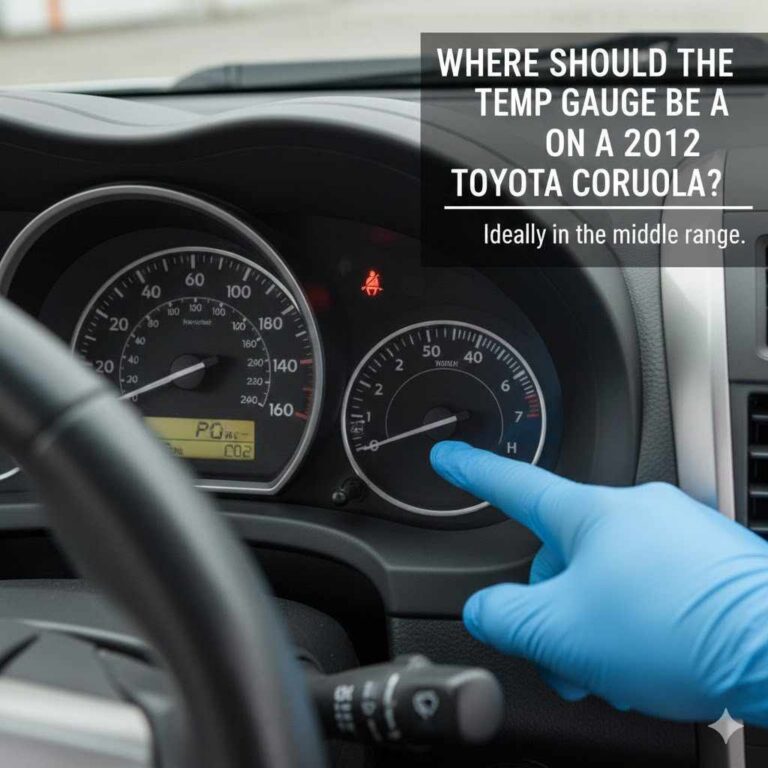
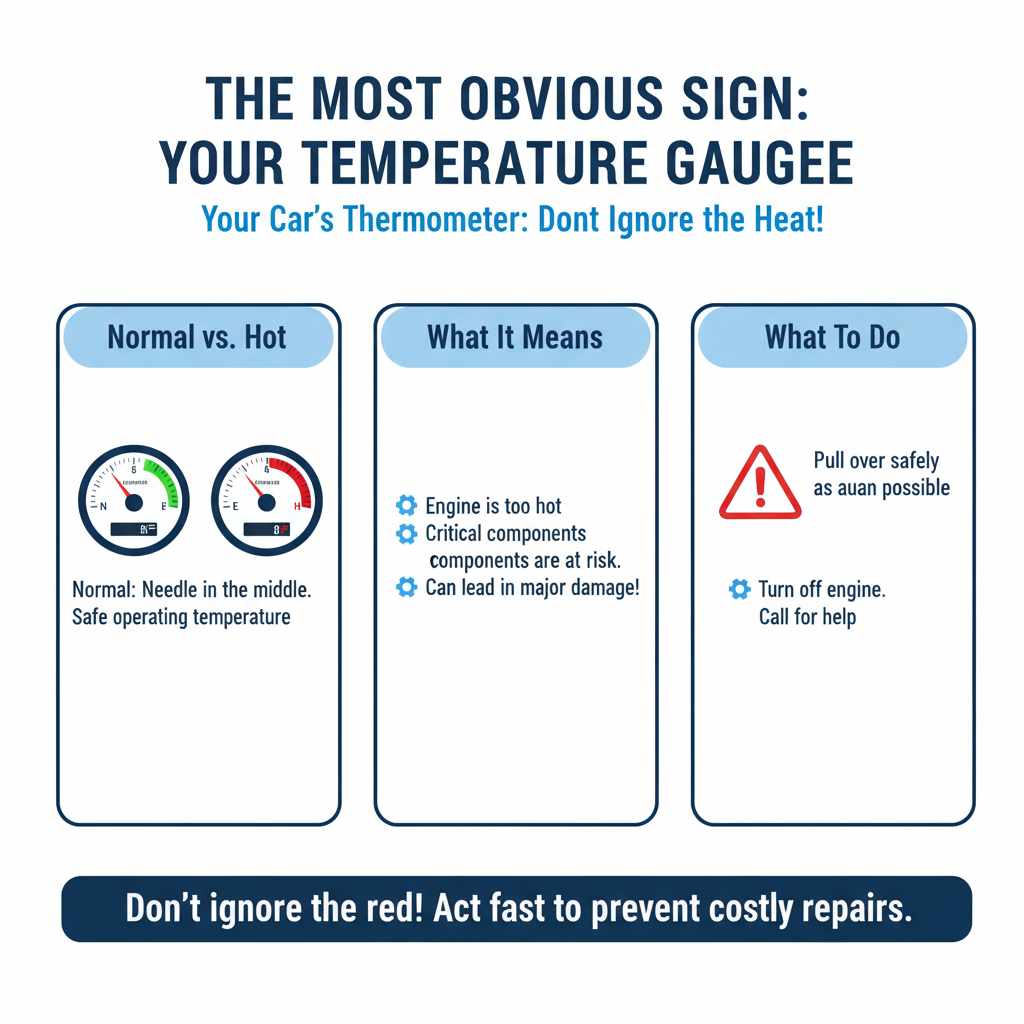
The most direct indicator that your car is running hot is right in front of you: your dashboard’s temperature gauge. Most cars have a gauge that looks like a thermometer or a series of blue and red bars. When your engine is at its normal operating temperature, the needle or indicator will sit somewhere in the middle of the “N” for Normal or just around the halfway mark. If you see that needle climbing higher and higher, moving towards the “H” for Hot or into the red zone, it’s a clear signal that your engine is overheating.
It’s important to know what “normal” looks like for your specific car. Some cars have a digital display that shows the temperature in degrees, while others use a simple pointer. Regardless of the type, any significant upward movement from its usual position warrants attention. If the needle stays in the red for more than a minute or two, pull over safely as soon as possible. Continuing to drive an overheating car can cause significant damage to critical engine components, leading to very costly repairs.
What to Do if Your Temperature Gauge Reaches the Red
- Pull Over Safely: Find a safe spot off the road, away from traffic. Turn off the engine immediately.
- Let It Cool Down: Do NOT open the radiator cap or coolant reservoir cap while the engine is hot. The system is under pressure, and hot coolant can spray out, causing severe burns. Wait for at least 30-60 minutes for the engine to cool completely.
- Check Coolant Level (Once Cool): After the engine has cooled thoroughly, carefully check the coolant level in the overflow reservoir. If it’s low, you’ve found a key indicator.
- Call for Assistance: If you’re unsure what to do, or if the coolant is very low, it’s best to call for roadside assistance or a tow truck. Driving further could damage your engine.
Beyond the Gauge: Other Essential Signs of Overheating
While the temperature gauge is your car’s primary warning system, it’s not the only way your vehicle will tell you it’s running too hot. Sometimes, the first signs are subtler, or you might notice them before the gauge even reaches the alarming “hot” zone. Paying attention to these other indicators can help you catch a problem early, even before it becomes a critical issue and affects your temperature gauge significantly.
These secondary symptoms are your car acting like a person feeling unwell. They might not be screaming in pain, but they’re definitely feeling “off.” Learning to recognize these can be a lifesaver for your engine. Let’s explore these important, often overlooked, signs.
1. Steam or Smoke Coming from Under the Hood
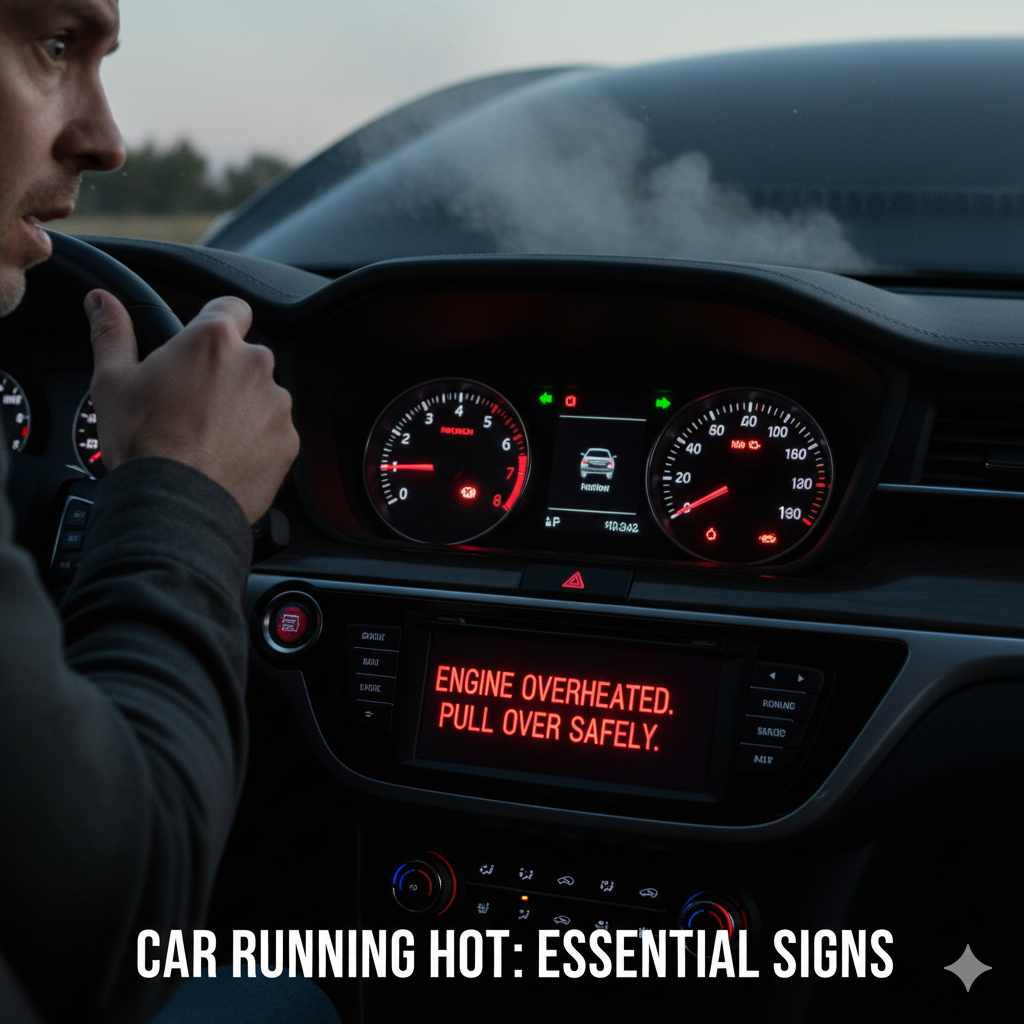
This is perhaps the most dramatic and alarming sign that your car is running hot and can indicate a serious problem. If you see white steam or light smoke emanating from the engine bay, especially around the front grille or the hood edges, it’s a critical warning. This steam is usually caused by coolant boiling over and escaping the system. Coolant operating outside of its intended pathways at high temperatures will vaporize, creating steam or smoke. This scenario often happens when there’s a leak in the cooling system, such as a ruptured hose, a faulty radiator cap, or a blown gasket.
If you see steam, it’s imperative to pull over immediately and shut off the engine. Do not attempt to open the hood until the steam has completely dissipated and the engine has cooled down significantly. The rapid release of steam indicates a rapid buildup of heat and pressure, which poses a burn risk. This sign often occurs alongside a rapidly climbing temperature gauge and a smell of hot, sweet fluid (coolant). It’s a definitive sign that you need to stop driving and assess the situation.
2. A Persistent Hot or Sweet Smell
Sometimes, your nose can be your best diagnostic tool. A distinct, strong, sweet, or syrupy smell often indicates a coolant leak. Coolant typically has a sweet fragrance to make it more palatable, though this is deceptive as it’s toxic. If you’re smelling this sweet odor, especially when the car is running, or shortly after you turn it off, it’s a strong sign that coolant is escaping the system and evaporating onto hot engine parts. This evaporation process generates the smell, and it’s a clear indicator that your coolant level might be dropping.
This smell can also be accompanied by a burning odor, which might indicate oil burning on hot engine components if there’s a leak from another source. However, the sweet smell is almost always related to the cooling system. If you notice this persistent odor, it’s a sign that there’s a leak somewhere in your cooling system, and that leak is allowing the coolant to escape, which can lead to your car running hotter than it should.
3. Strange Noises from the Engine
An engine running too hot can make unusual sounds. One common noise is a “ticking” or “pinging” sound, often described as metallic tapping. This can happen because the hotter metal components expand more, and sometimes parts might not be lubricating properly due to the increased heat. Another noise could be a hissing or sputtering sound, which might indicate steam escaping from a leak or a pressurizing cooling system. You might also hear a grinding or whining sound, which could be related to a failing water pump, a component crucial for circulating coolant.
These noises are your engine’s way of telling you it’s under stress. A ticking sound under the hood, especially when the engine is hot or under acceleration, can be a sign of pre-ignition or detonation, which occurs when the fuel-air mixture ignites too early due to excessive heat. This is serious. A whining noise could be a belt that’s too loose or worn, or a pulley that’s failing, and these can impact the cooling system’s ability to function. Any new or unusual noise coming from your engine bay, especially when combined with other signs of overheating, should be a cause for concern.
4. Loss of Engine Power or Sluggish Performance
When an engine overheats, its performance can suffer significantly. You might notice that your car struggles to accelerate, feels less responsive, or generally runs with less power than usual. This happens because the extreme heat can negatively affect the combustion process within the engine. Overheating can cause the engine’s computer to reduce power output to protect the engine from further damage. This is a safety feature, but it means your car won’t perform as it should.
This sluggishness can be subtle at first, like the car not picking up speed as quickly as it used to. Or, it can be very noticeable, with the car practically losing power when you try to climb a hill or overtake another vehicle. If you’re experiencing a noticeable decrease in performance, especially when the temperature gauge is climbing or if you’ve noticed any other signs of overheating, it’s a clear indication that your engine is not happy. This symptom, combined with others, is a strong signal to stop driving and get it checked.
5. The Malfunctioning Temperature Light
Some cars don’t have a traditional temperature gauge but instead use a warning light. This light often looks like a thermometer. When the engine is operating within its normal temperature range, this light remains off. If the light illuminates, it means your engine’s temperature has risen to a critical level. This is your car’s way of sounding a general alarm for overheating. It might be a steady light, or it could be flashing, with flashing usually indicating a more urgent situation.
When this light comes on, it’s crucial to take immediate action. Just like with the gauge reaching the red, you should pull over safely as soon as you can and shut down the engine. Don’t ignore this light, as it’s a direct alert from your car’s management system that something is wrong and potentially causing damage. The cause could be low coolant, a faulty sensor, or an actual issue with the cooling system, but the light itself is your cue to stop and investigate.
Common Causes for Your Car Running Hot
Now that you know the signs, let’s look at what typically causes your car’s engine to run hot. Understanding these common issues can help you troubleshoot or at least prepare you for a conversation with your mechanic. Most overheating problems stem from a malfunction within the cooling system, which is a complex network designed to keep your engine from reaching dangerous temperatures.
The cooling system includes the radiator, coolant (antifreeze), thermostat, water pump, hoses, and a fan. If any part of this system isn’t working correctly, it can lead to overheating. Let’s break down the most frequent culprits.
1. Low Coolant Level
This is the most common reason for a car overheating. Coolant, a mixture of antifreeze and water, circulates through your engine, absorbing heat and then dissipating it in the radiator. If the coolant level is too low, there isn’t enough fluid to effectively cool the engine. Low coolant can be due to a leak in the system, or sometimes simply from not being topped up during regular maintenance.
A leak can occur in various places: a cracked radiator, a worn hose, a faulty water pump, or a damaged head gasket. If there’s no obvious leak but the level is consistently low, it might be a slow, internal leak that’s harder to spot. You can check your coolant level yourself in the overflow reservoir when the engine is cool. If it’s below the “MIN” or “LOW” mark, it needs to be refilled with the correct type of coolant for your vehicle. For more information on coolant types, you can consult your owner’s manual or resources like FEMA’s guide on coolant types, although using the specific coolant recommended by your car manufacturer is always best.
2. Faulty Thermostat
The thermostat is a small but crucial valve that regulates the flow of coolant through your engine. It stays closed when the engine is cold to help it warm up faster and protect components. Once the engine reaches its optimal operating temperature, the thermostat opens, allowing coolant to flow to the radiator for cooling. If the thermostat gets stuck in the closed position, coolant cannot reach the radiator, and the engine will overheat quickly, even if the coolant level is full.
A thermostat can fail over time due to corrosion or mechanical issues. Signs of a faulty thermostat include the engine overheating quickly after starting, or the temperature gauge fluctuating erratically. Sometimes, the heater in your car might also stop working properly if the thermostat is stuck closed, as hot coolant won’t be circulated to the heater core.
3. Leaking or Damaged Hoses
Your cooling system relies on a network of rubber hoses to transport coolant to and from the engine, radiator, and heater core. These hoses are made of durable materials, but they can degrade over time due to age, heat, and exposure to chemicals. Cracks, bulges, or deterioration can lead to leaks, and if a hose ruptures completely, all the coolant can drain out, causing rapid overheating.
You can often spot a leaking hose by looking for wet spots or stains under your car or around hose connections. Visually inspect the condition of the hoses regularly, especially when the engine is cool. Squeeze them gently; they should feel firm but pliable, not brittle, mushy, or overly hard. If you see any signs of cracking, swelling, or leakage, replace the affected hose promptly.
4. A Failing Water Pump
The water pump is responsible for circulating the coolant throughout the engine and cooling system. It’s essentially the heart of your cooling system. Driven by a belt or sometimes by the timing chain, it pushes coolant through the engine block, cylinder head, heater core, and radiator. If the water pump fails, coolant stops flowing, and the engine will quickly overheat. Signs of a failing water pump can include a whining noise coming from the front of the engine, a leak from the pump itself (often near the pulley), or the temperature gauge climbing rapidly.
Water pumps can fail due to worn-out bearings, a damaged impeller (the part that pushes the fluid), or a leaking seal. Sometimes, the drive belt that powers the water pump can slip or break, also causing a loss of circulation. If you suspect your water pump is failing, it’s a good idea to have it inspected and replaced by a professional, as it’s a critical component for engine longevity.
5. Clogged Radiator or Cooling Fins
The radiator’s job is to dissipate heat from the coolant into the air. It has a series of thin metal fins that allow for a large surface area. Over time, the radiator can become clogged, both internally and externally. Internal clogs can be caused by sediment, rust, or debris accumulating in the coolant passages, restricting flow. External clogs, such as dirt, leaves, or bugs, can block airflow through the radiator fins, preventing efficient heat transfer.
If the radiator fins are blocked, you can often see it by looking at the front of the radiator. You can try gently cleaning them with water or compressed air. Internally, clogs are more serious and might require a professional flush of the cooling system or even radiator replacement. Signs of a clogged radiator include the engine overheating, especially at lower speeds or when idling, because there isn’t enough airflow through the radiator to cool the coolant effectively.
6. A Malfunctioning Radiator Fan
Most cars have at least one electric or engine-driven fan attached to the front of the radiator. This fan is designed to pull air through the radiator when the vehicle is moving slowly or stopped, such as in traffic. If the fan isn’t working correctly, crucial airflow is lost, and the coolant won’t be cooled sufficiently. This leads to overheating, particularly in stop-and-go driving conditions.
Electric fans can fail due to a blown fuse, a faulty relay, a bad motor, or temperature sensor issues. Engine-driven fans are typically connected via a belt and a clutch that engages them when needed. If the fan motor fails, or the clutch isn’t engaging properly, it won’t spin at the necessary speed to cool the radiator. You can often tell if the fan is running by listening for it or looking at it when the engine is hot and the car is idling.
When to Seek Professional Help
While some minor issues like topping up coolant can be handled by beginners, many of the causes of a car running hot require expert diagnosis and repair. It’s important to know your limits and when it’s safer and more effective to let a qualified mechanic take over. If you’ve noticed any of the critical warning signs, or if you’ve tried to address a simple issue and the problem persists, it’s time to call in the pros.
Don’t hesitate to seek professional help if you’re dealing with any of the following situations:
- Persistent Overheating: If your car continues to overheat after you’ve added coolant or performed other basic checks.
- Suspected Leaks: If you can’t locate the source of a coolant leak or if it seems significant.
- Strange Noises: Unusual noises from the engine, especially if they’re accompanied by overheating.
- Steam or Smoke: Any visible steam or smoke from under the hood indicates a potential emergency.
- Indicator Lights: If the temperature warning light stays on.
- Lack of Confidence: If you’re simply not comfortable diagnosing or repairing auto issues.
A professional mechanic has the specialized tools, knowledge, and experience to accurately diagnose the root cause of overheating and perform the necessary repairs safely and effectively. For instance, diagnosing a head gasket leak, which can cause severe overheating, requires specific testing procedures that are best left to experts. You can find reputable mechanics through online reviews or by asking for recommendations from friends and family. Resources like the Better Business Bureau (BBB) Auto Repair section can help you find accredited and reviewed businesses in your area.
Preventative Maintenance: Your Best Defense
The best way to avoid the stress and expense of an overheating car is through regular preventative maintenance. By keeping up with scheduled checks and tunes-ups, you can catch potential problems before they escalate.
Coolant Flushes and Checks
Coolant degrades over time and loses its ability to protect your engine from extreme temperatures and corrosion. Most manufacturers recommend flushing and replacing the coolant every 30,000 to 60,000 miles, or every 2-5 years. This process removes old, weakened coolant and replaces it with fresh coolant, ensuring optimal performance and preventing internal blockages.
Regular checks of the coolant level and its condition (color and clarity) between flushes are also essential. If the coolant looks rusty, murky, or has particles floating in it, it might be time for a flush sooner than scheduled.
Hose and Belt Inspections
As mentioned, hoses can degrade. During routine maintenance appointments, ask your mechanic to inspect all cooling system hoses for signs of wear, cracking, swelling, or hardening. Similarly, check accessory belts (like the one that drives the water pump) for signs of fraying, cracking, or excessive looseness. A broken belt can stop the water pump from circulating coolant, leading to rapid overheating. A resource like Mechanics.com provides good visual guides on belt inspection.
Radiator and Fan Checks
Ensure the radiator is free from debris that could block airflow. Your mechanic can also check that the radiator fan is engaging properly when the engine reaches a certain temperature. If you notice your car struggling to cool down in traffic, mention it during your next service.
Thermostat and Water Pump Monitoring
While these components are harder for an average driver to inspect directly, a good mechanic will often check for signs of wear or impending failure during regular service. Pay attention to any unusual noises or performance issues that might indicate a problem with these parts.
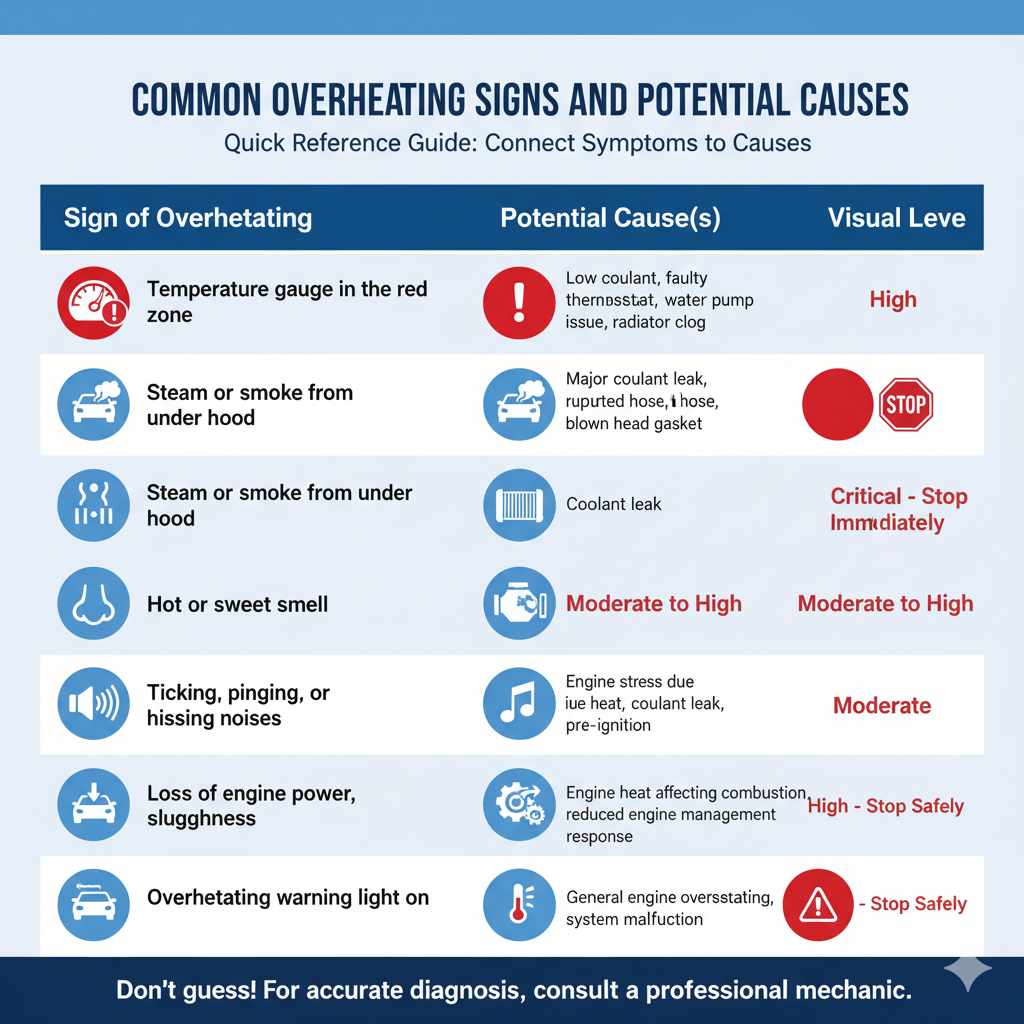
Table: Common Overheating Signs and Potential Causes
Here’s a quick reference guide to help you connect the symptoms you’re experiencing with their likely causes. Remember, this is a general guide, and a professional diagnosis is always recommended for certainty.
| Sign of Overheating | Potential Cause(s) | Urgency Level |
|---|---|---|
| Temperature gauge in the red zone | Low coolant, faulty thermostat, water pump issue, radiator clog | High |
| Steam or smoke from under hood | Major coolant leak, ruptured hose, blown head gasket | Critical – Stop Immediately |
| Hot or sweet smell | Coolant leak | Moderate to High |
| Ticking, pinging, or hissing noises | Engine stress due to heat, coolant leak, pre-ignition | Moderate to High |
| Loss of engine power, sluggishness | Engine heat affecting combustion, reduced engine management response | Moderate |
| Overheating warning light on | General engine overheating, system malfunction | High – Stop Safely |
Frequently Asked Questions (FAQ)
Q1: How quickly can an engine be damaged if it overheats?
Severe overheating can cause significant damage very rapidly, sometimes within minutes. Critical components like the cylinder head gasket, engine block, and pistons can warp or melt under extreme heat, leading to very expensive repairs or even requiring engine replacement. It’s crucial to stop driving as soon as you notice signs of overheating.
Q2: Can I drive my car if the temperature gauge is slightly above normal but not in the red?
If the gauge is only slightly above its normal position, and it returns to normal after a short while or when you reduce engine load (e.g., turning off the A/C), you might be able to drive a short distance to a safe place. However, if it stays elevated or continues to climb, it’s best to pull over. Continuing to drive with even a slightly elevated temperature can put unnecessary stress on the engine.
Q3: What kind of coolant should I use if I need to top it up?
Always use the type of coolant recommended in your vehicle’s owner’s manual. Coolants come in different colors and formulations (e.g., ethylene glycol, HOAT, OAT) and are not always interchangeable. Using the wrong type can cause corrosion, reduce cooling efficiency, or even damage your cooling system. If you’re unsure, it’s best to consult your manual or a trusted mechanic.
Q4: Is it normal for the cooling fan to run after I turn off the engine?
Yes, it can be normal for the electric cooling fan to continue running for a short period after you turn off a hot engine, especially after driving in hot weather or in stop-and-go traffic. The fan helps to dissipate residual heat from the radiator. However, if it runs for an excessively long time or if your car is still overheating, it might indicate an issue and should be checked.
Q5: How often should the cooling system be flushed?
Cooling system flush intervals vary by vehicle and coolant type. Generally, most manufacturers recommend a coolant flush and replacement every 30,000 to 60,000 miles or every 2 to 5 years. Always refer to your owner’s manual for the specific maintenance schedule recommended for your car.
Q6: Can a clogged air filter cause my car to run hot?
A severely clogged air filter can restrict airflow into the engine, making it work harder and potentially run hotter. However, it’s usually not the primary cause of significant overheating compared to cooling system issues. Overheating is predominantly a cooling system problem. Regular air filter replacement is part of good maintenance, contributing to overall engine efficiency.
Conclusion: Keeping Your Cool on the Road
Understanding what it means if your car is running hot is essential for every driver. Those subtle smells, strange noises, power reductions, and of course, the red-hot temperature gauge, are critical signals your car needs attention. Overheating isn’t just an annoyance; it’s a serious condition that can lead to costly repairs if ignored. But with knowledge and a little proactive care, you can keep these problems at bay.
By recognizing the signs we’ve discussed – from steam to power loss – you’re empowered to act quickly and safely. Remember the common culprits like low coolant, a faulty thermostat, or fan issues, and make preventative maintenance your best friend. Regular checks and scheduled services will help ensure your cooling system is always in top shape, ready to handle whatever the road throws at you. Don’t wait for a warning light to become a breakdown. Stay informed, stay observant, and keep your car running cool and reliably.