What Does It Mean to Straight Pipe a Car? Explained Simply
Figuring out What Does It Mean to Straight Pipe a Car? can seem tricky if you’re just getting started. It’s a common term in the car scene, but it might sound confusing if you’re not familiar with car modifications. Don’t worry, though. This post will break it down in a way that’s easy to grasp. We’ll explore the basics of straight piping, why people do it, and what you need to keep in mind. Get ready to learn!
Basic Car Exhaust Systems
Every car has an exhaust system that helps get rid of the burned gases from the engine. It’s essential for your car to run properly. This system is like a pathway for the exhaust to exit the vehicle. The exhaust system does more than just push out fumes; it also affects the engine’s performance, how loud the car is, and the environment. Learning how the exhaust system functions is crucial for a complete view of how straight piping affects a car.
The Role of the Exhaust System
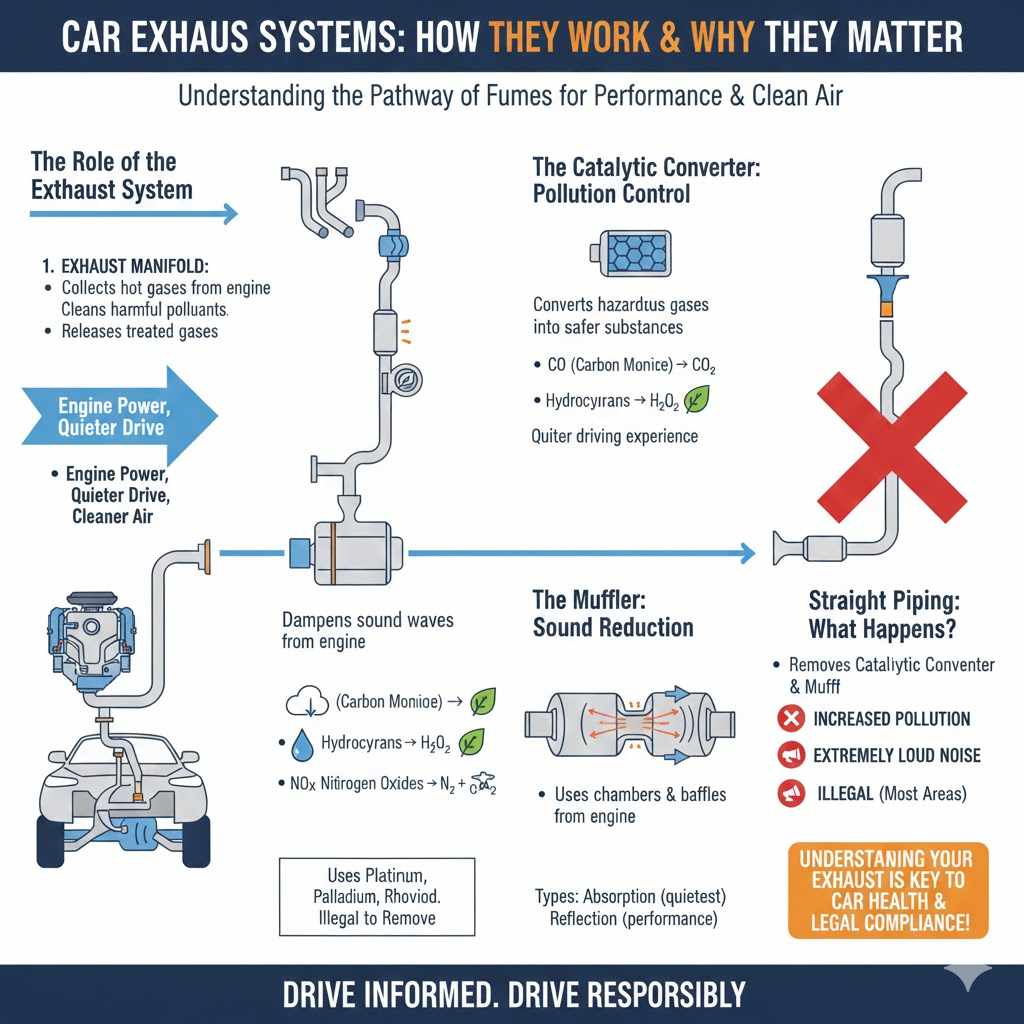
The exhaust system is made up of several parts, each with a special job. First, you have the exhaust manifold. It collects the exhaust gases from the engine. Then, there’s the catalytic converter. Its primary function is to clean the exhaust by reducing harmful pollutants like carbon monoxide and hydrocarbons. The muffler, further along the exhaust route, is responsible for lowering the noise level. Finally, the exhaust pipe carries the exhaust gases away from the car.
- The exhaust manifold is the initial point of collection for exhaust gases.
- The catalytic converter is designed to minimize pollution.
- The muffler significantly reduces the sound level from the engine.
- The exhaust pipe releases the gases from the vehicle.
Cars with well-maintained exhaust systems typically produce less pollution and make less noise, which contributes to a more pleasant driving experience. Plus, a healthy exhaust system can also help your car run more efficiently. If any part of the exhaust system malfunctions, the car’s performance and the environment can suffer.
What the Catalytic Converter Does
The catalytic converter is an essential component of the exhaust system, as it’s designed to lower the amount of pollution released into the air. It works by converting hazardous gases into less harmful substances. Inside the converter, a catalyst uses chemical reactions to break down pollutants like carbon monoxide, hydrocarbons, and nitrogen oxides. The technology inside it is impressive. The catalytic converter is a vital part of keeping the air clean.
- Catalytic converters reduce dangerous pollutants from exhaust.
- They convert carbon monoxide into carbon dioxide.
- They change hydrocarbons into water and carbon dioxide.
- They transform nitrogen oxides into nitrogen and oxygen.
Catalytic converters are usually made with metals like platinum, palladium, and rhodium. These are good catalysts because they can handle high temperatures and speed up chemical reactions. Because of their effectiveness and the materials used to make them, catalytic converters can be quite expensive. It is important to remember that tampering with or removing a catalytic converter is illegal in most places because it directly increases pollution levels.
The Function of the Muffler
The muffler’s main job is to reduce the noise made by your car’s engine. It does this by using a series of chambers and baffles to change the sound waves that come from the engine. As the exhaust gases pass through these chambers, the sound waves are dampened and canceled out. The muffler doesn’t just make your car quieter; it also helps improve your driving experience.
- Mufflers are designed to decrease engine noise.
- They use chambers and baffles to reduce sound waves.
- Mufflers make the driving experience more enjoyable.
- They help meet noise regulations in different areas.
The design of a muffler can affect the car’s performance. Some mufflers are made for performance and might offer better flow to improve power, but these tend to be louder. Others focus more on quietness, which often comes with some performance compromise. Different types of mufflers include absorption, which uses sound-absorbing materials; and reflection, which uses chambers to bounce the sound waves.
Exploring the Meaning of Straight Piping
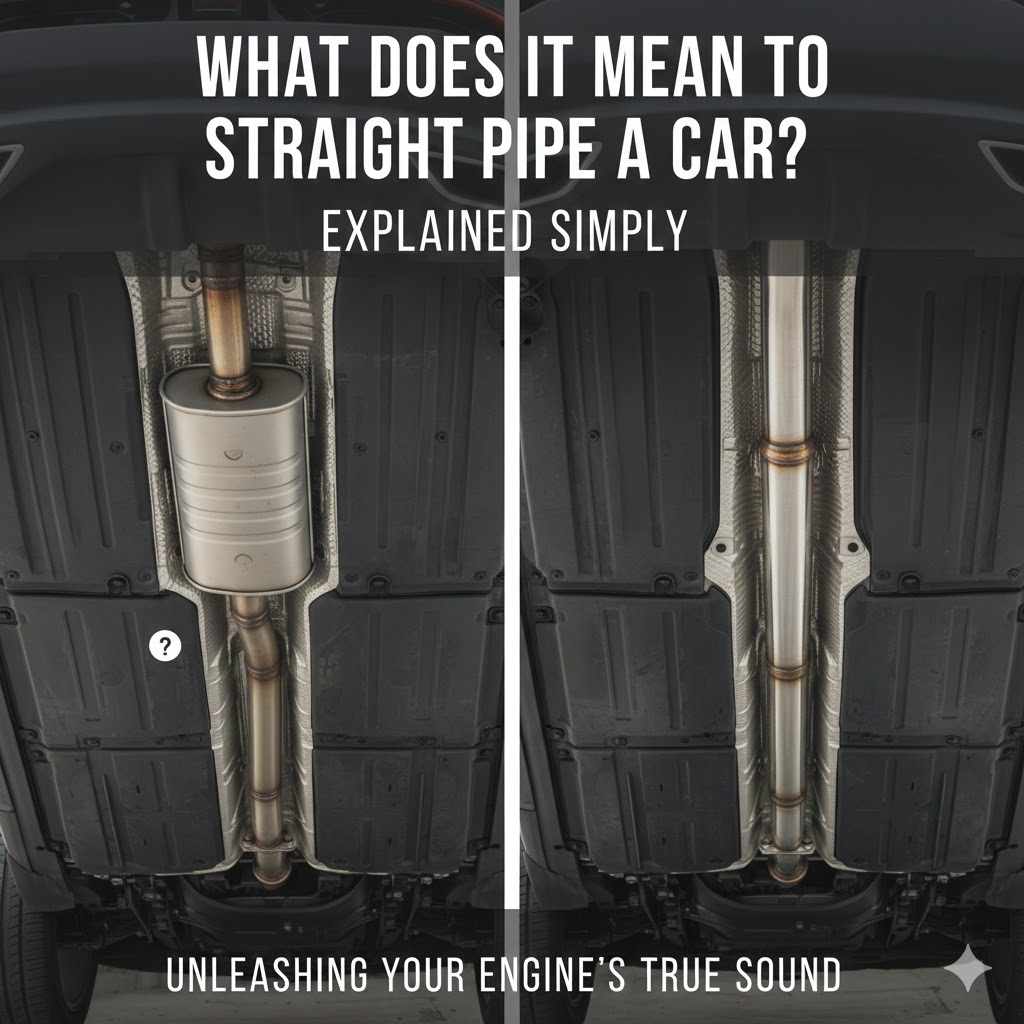
When someone mentions What Does It Mean to Straight Pipe a Car? they’re talking about a modification that changes the car’s exhaust system. This modification involves removing parts of the exhaust system, such as the catalytic converter and the muffler, and replacing them with a straight pipe. This direct route makes it easier for the exhaust gases to leave the engine.
Straight Pipe Definition and Process
Straight piping means removing the catalytic converter and muffler from a car’s exhaust system and replacing them with a straight pipe. This creates a more direct route for exhaust gases to escape. This modification can significantly change the sound and performance of a vehicle. The process usually begins by cutting out the existing components and welding in a new pipe in its place. This is a fairly simple procedure for a skilled mechanic, but it’s important to understand the legal and performance implications.
- Straight piping removes parts of the exhaust system.
- The catalytic converter and muffler are replaced by a straight pipe.
- The gases have a more direct path to exit.
- The car’s sound and performance change.
The main goals behind straight piping are usually to boost engine performance and change the exhaust sound. Since the exhaust gases flow out with less resistance, the engine might be able to breathe more efficiently, potentially enhancing horsepower and torque. However, the exact effects on performance can depend on the car’s engine and the rest of the exhaust system. This type of modification can lead to a louder exhaust sound, which is popular with some car enthusiasts.
Why People Straight Pipe Their Cars
People straight pipe their cars for a variety of reasons. Often, the main reason is to boost the engine’s performance. By removing the restrictions caused by the catalytic converter and muffler, the exhaust gases can exit more easily. This can potentially lead to a small increase in horsepower and torque, making the car feel more responsive. Another big factor is the sound; straight pipes give a car a louder, more aggressive exhaust note that many people find appealing.
- Performance improvements are often desired.
- A louder exhaust note is very appealing to some.
- Some enthusiasts want a more custom look and feel.
- The modification might seem like a simple project.
Besides the performance and sound, straight piping can be seen as a way for car owners to customize their vehicles. Some people appreciate the custom look and the distinct sound that sets their car apart from others. For some, the appeal of a straight pipe is also connected with the idea of a simple, straightforward modification they can make. However, it’s vital to acknowledge that straight piping often comes with legal and environmental problems, such as not passing emissions tests or breaking local noise regulations.
The Effects on Sound and Performance
The main effects of straight piping a car are changes to both the sound and performance. The most noticeable change is the sound: the exhaust becomes considerably louder, producing a deep, throaty roar that can vary based on the engine and exhaust setup. The performance changes can also be significant. With less restriction in the exhaust system, the engine may breathe easier.
- Sound levels increase dramatically.
- The car produces a deeper, more aggressive tone.
- Engine performance may see small gains.
- Changes depend on the car’s design.
While straight piping can possibly lead to a slight increase in horsepower and torque, the real-world performance gains might not always be huge. However, the improved exhaust flow can also help the engine run more efficiently, especially at higher speeds. It’s important to keep in mind that these performance improvements depend on the engine type and the car’s current exhaust system. Other factors include the diameter of the straight pipe used and any other modifications. The impact of straight piping also changes the environment, with the potential of increasing exhaust emissions.
Legal and Environmental Implications of Straight Piping
Before modifying your exhaust system, it’s essential to consider the legal and environmental rules about straight piping a car. These rules can differ depending on where you live, so understanding them is very important. Straight piping may result in issues that could lead to fines or even the need to fix the car to meet legal requirements. It’s crucial to examine all the possible consequences.
Emissions Regulations
Emissions regulations are rules that aim to control the amount of pollutants cars release into the air. These regulations are designed to lower air pollution and protect the environment. Many places have set strict guidelines on emissions, and cars are usually tested to ensure that they meet these standards. Straight piping often causes a car to fail these tests. The catalytic converter is a vital part of the exhaust system as it reduces harmful emissions.
- Emissions regulations aim to lower air pollution.
- Cars must pass emissions tests.
- Straight piping can cause a car to fail tests.
- The catalytic converter is crucial for emissions.
Removing the catalytic converter usually means your car will release more harmful pollutants. This can result in failing the emissions test and getting a ticket. Failing the test means you may have to
Noise Ordinances
Noise ordinances are local rules that put limits on how loud cars can be, especially in residential areas. These rules are made to reduce noise pollution and keep neighborhoods peaceful. Straight piping makes the car’s exhaust much louder, which can be against noise ordinances. Violating a noise ordinance may result in penalties, like fines or being ordered to fix your car to meet local standards.
- Noise ordinances limit how loud cars can be.
- Straight pipes make cars much louder.
- Violating the rules can result in penalties.
- Many areas enforce strict noise levels.
Many communities have noise ordinances to protect their residents from disruptive noise. Some of these ordinances set specific decibel level limits that a vehicle can’t exceed. A car with a straight pipe will likely go over these limits. To avoid problems with noise ordinances, it is vital to know local laws. This might mean keeping the muffler and only changing parts of the exhaust. The best way to follow these laws is to keep your car’s exhaust within the accepted noise levels.
Potential Penalties and Consequences
Straight piping can lead to some significant penalties and consequences. Violating emissions standards and noise ordinances can result in legal trouble. The fines can be substantial. You may also be required to change your exhaust system back to its original state or replace the missing components. It could be costly and time-consuming.
- Fines can be issued for rule violations.
- You might have to revert your exhaust system.
- The car might fail inspections.
- You may encounter insurance issues.
Besides fines and the need to restore your car, straight piping can also lead to other problems. A car that fails an inspection because of straight piping might not be able to be legally driven on the road until it meets all requirements. Insurance companies might raise your premiums or, in some cases, cancel your coverage if they believe your modifications make your car riskier. Being aware of these potential consequences before modifying your exhaust system is important. Making sure your car follows the law is crucial for keeping your driving safe and legal.
Alternatives and Considerations
When considering modifying your exhaust, there are alternatives that let you reach your goals without the problems that come with straight piping. These choices offer a mix of performance, sound, and legal compliance. It’s smart to review all the options before making your choice. Also, carefully think about the kind of modifications that are best for you.
Performance Exhaust Systems
Performance exhaust systems are made to increase engine performance while still meeting legal and environmental standards. These systems offer higher performance than standard exhaust systems. They typically have better flow designs, like larger diameter pipes and high-flow mufflers, to reduce backpressure. This leads to improvements in horsepower and torque. Unlike straight pipes, performance exhaust systems usually include all the required components.
- Performance systems improve engine performance.
- They use high-flow mufflers and larger pipes.
- These systems often include a catalytic converter.
- They are designed for better airflow.
These systems often result in improved performance across the entire rev range. Performance exhaust systems can also give the car a more aggressive sound without exceeding noise limits. Because they’re usually designed to work with all the parts of the exhaust system, you can often keep the catalytic converter. This helps meet emissions standards. Many brands offer a variety of options that let drivers customize their cars while still following the law.
Cat-Back and Axle-Back Exhaust Systems
Cat-back and axle-back exhaust systems are popular choices for car owners wanting to change the sound and performance without messing with the catalytic converter. Cat-back systems swap the exhaust components behind the catalytic converter. Axle-back systems
- Cat-back systems replace parts after the catalytic converter.
- Axle-back systems only replace the rear section.
- They provide sound and performance improvements.
- They are often easier to install.
Cat-back and axle-back systems provide several benefits. They can improve the exhaust sound, often giving it a deeper and more aggressive tone. They can increase performance by decreasing exhaust backpressure. Installation is usually easier than full exhaust system modifications. These systems are usually legal since they don’t involve removing or changing the catalytic converter. This makes them good alternatives to straight pipes if you want to modify your car but still comply with the law.
Considerations for Noise and Compliance
When thinking about modifying your exhaust system, paying attention to noise levels and staying within legal limits is very important. Understanding the rules in your area about noise and emissions will help you make decisions that are both good for your car and legal. This includes exploring different components that meet your goals without violating the law. Doing so means a more enjoyable and responsible driving experience.
- Understand local noise and emissions laws.
- Consider systems that meet regulations.
- Select components that do not exceed noise levels.
- Regular vehicle inspections are important.
Review your local noise ordinances before making any changes. Some areas have limits on the decibel level your car can produce. Ensure any modifications you make don’t cause your car to break those rules. Choose performance parts that are designed to lower backpressure while also meeting noise standards. This could include using a high-flow muffler or a complete exhaust system that includes a catalytic converter. You should also think about regular vehicle inspections, which verify your car meets noise and emissions regulations. By keeping these factors in mind, you can enjoy a custom exhaust sound without causing legal problems.
How to Decide on an Exhaust Modification
Choosing the best exhaust modification for your car involves some thought and research. You need to balance your wants for sound and performance with your concern for the law and the environment. Taking your time, gathering information, and thinking about your priorities are important steps in making the right choice.
Assessing Your Goals and Priorities
Before modifying your car’s exhaust, you need to think about your goals and what is most important to you. Are you mostly looking for a louder sound, or do you want to boost the car’s performance? How much are you willing to spend on the changes? Do you want to stay within legal and environmental rules, or are you ready to take more risks? Answering these questions will help you make a decision that matches your needs.
- Identify the goals for the modifications.
- Think about your budget.
- Decide on your level of compliance with the law.
- Take into account the car’s use.
Knowing what you want out of the modifications helps you decide. If you want a loud sound, straight piping or a performance exhaust system might be good options. If performance is your priority, look for a system that lowers backpressure and enhances airflow. Determine how much you are able to spend, as exhaust modifications can range in price. Also, take into account where and how you use your car. If you drive in a lot of areas with strict noise rules, you may want to stay with a quieter exhaust system.
Researching and Comparing Options
Doing some research and comparing different exhaust modification options is key. See what exhaust systems are available for your car. Look at what others have said about the brands and models you are interested in. This research will help you make a good choice. There is a lot of information available on the internet, from reviews to videos.
- Look at different exhaust systems.
- Check out customer reviews.
- Compare prices and features.
- Read expert opinions.
Read online reviews from other car owners. They can offer useful insights into the sound, performance, and durability of different exhaust systems. Compare prices and features. Consider the materials, construction quality, and warranties. Read reviews from people who specialize in car modifications. They can provide advice on which systems work best and will perform with your car. The more information you gather, the more confident you’ll be in your choice.
Professional Installation vs. DIY
Deciding if you will install your exhaust modifications yourself or get professional help is important. If you are comfortable working on cars and have the correct tools, you could do the work yourself. If not, professional installation could ensure the changes are correctly done and save you time. Both have advantages.
- Assess your mechanical abilities.
- Consider the cost of tools and equipment.
- Factor in the time and effort needed.
- Professional installers offer warranties.
Assess your abilities and how comfortable you are working on your car. If you have experience with car repairs and the right tools, you might want to consider doing the work yourself. Think about the tools you’d need, as well as the time and effort needed to install the system. Professional installers have the right tools and knowledge. They can do the job correctly and can guarantee their work. While you may have to pay for labor costs, you can get a good and trustworthy installation. The best choice relies on your experience, resources, and how much time you have.
Sample Scenarios
Understanding how people use and experience exhaust modifications can help you make a better choice. The following scenarios highlight several instances, showing how different car owners have approached exhaust modifications. They provide a look at the benefits, problems, and solutions encountered by car owners who have chosen to change their exhaust systems.
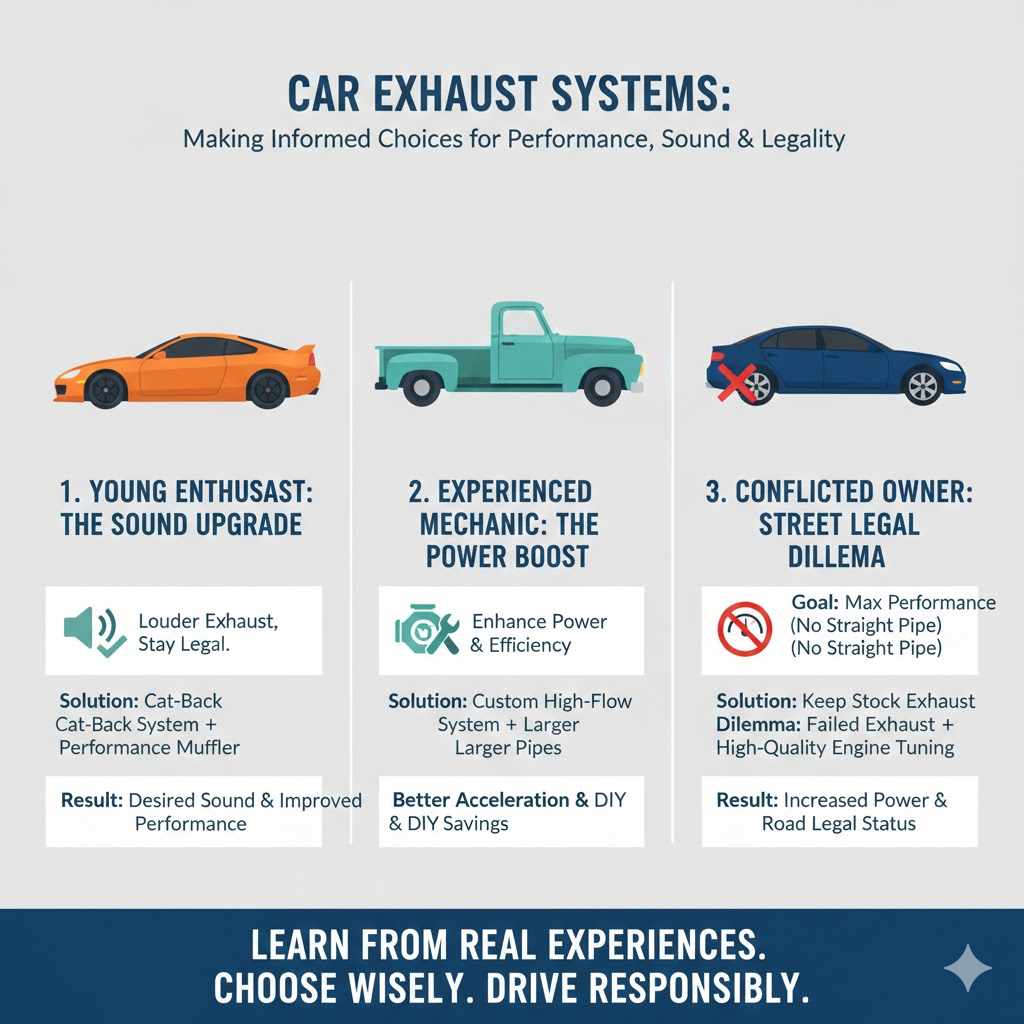
- A young car enthusiast wanted a louder exhaust for their sports car. They considered straight piping but were concerned about the legal aspects. After researching, they chose a cat-back exhaust system with a performance muffler. This gave them the sound they wanted while still meeting emissions and noise regulations. The car’s performance improved, and they felt good about staying within the law.
- An experienced mechanic bought an older pickup truck. They were not interested in the sound, but wanted to enhance the car’s power. After reviewing the options, they decided on a custom exhaust system using high-flow components, like a free-flowing muffler and bigger pipes. They put in the system themselves, which saved them money. Their truck’s acceleration and overall performance were better, meeting their performance goals.
- A car owner considered straight piping their car to reduce weight and boost performance. However, they found out they couldn’t pass the inspections needed for their car to be street legal. So, they decided against it. They chose to keep their original exhaust system, and, instead, invested in high-quality engine tuning. They still got better power, and, more importantly, kept their car road legal.
Frequently Asked Questions
Question: What is the main purpose of straight piping?
Answer: The primary goal of straight piping is to increase exhaust flow, potentially boosting engine performance and producing a louder exhaust sound.
Question: Is straight piping legal everywhere?
Answer: No, straight piping is illegal in many places due to emissions and noise regulations. Local laws can vary, so it is important to be informed.
Question: What’s the difference between a cat-back and axle-back exhaust?
Answer: A cat-back system replaces the exhaust components from the catalytic converter back, while an axle-back system only changes the components from the rear axle back.
Question: Can straight piping damage my engine?
Answer: While unlikely to cause direct damage, straight piping can potentially affect engine performance if not properly done. It is crucial to have the correct modifications.
Question: Where can I find information about local noise ordinances?
Answer: You can often find local noise ordinances on your city or county government’s website. You might also find information at your local police department or town hall.
Final Thoughts
What Does It Mean to Straight Pipe a Car? It means making a change to your exhaust system, often to boost performance and get a louder sound. While this modification might seem tempting, it comes with important things to consider. You must think about the legal and environmental rules and the impact it could have. Before making any modifications, investigate the local laws about noise and emissions to prevent any fines or penalties.
Alternatives like performance exhaust systems and cat-back setups provide ways to adjust your car without the possible negative consequences. Ultimately, the best choice depends on what you want out of your car, your budget, and how much you care about following the law. Take your time, do your research, and choose the option that fits your needs.