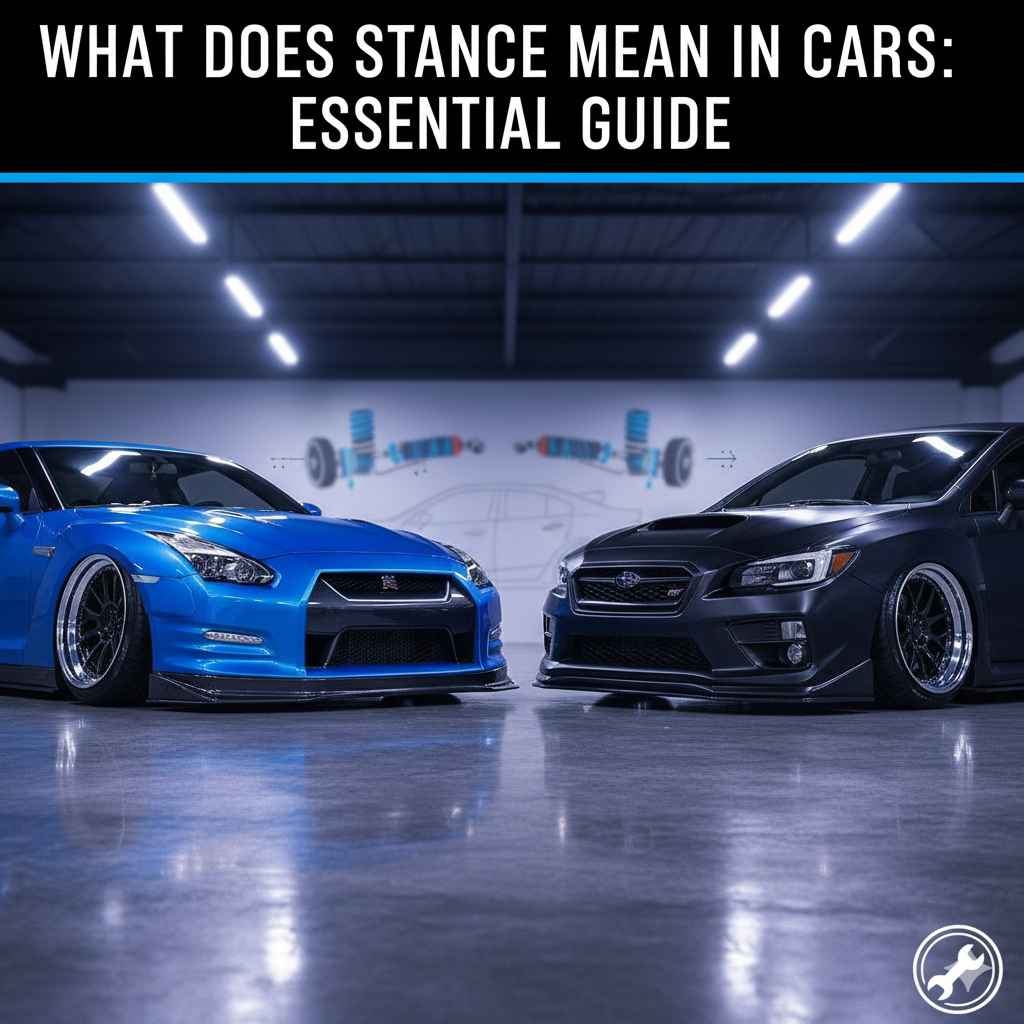
What Does Stance Mean in Cars: Essential Guide
Car stance refers to how a vehicle sits on its wheels, impacting its look and handling. A good stance balances aesthetics with performance for a visually appealing and well-balanced ride.
Have you ever looked at a car and thought, “Wow, it just sits right”? That’s the magic of car stance! It’s one of those car terms that sounds a bit mysterious, but it’s actually quite simple. For many car owners and fans, the way a car looks from the side—how it fills its wheel wells, its overall profile—is just as important as how it drives. If you’ve ever been curious about why some cars look lower, wider, or more aggressive, you’re in the right place. This guide will break down exactly what car stance means, why it matters, and how it’s achieved. Let’s get your questions answered and boost your automotive confidence – no complicated jargon, just clear and helpful insights!
What Does Stance Mean in Cars? The Simple Breakdown
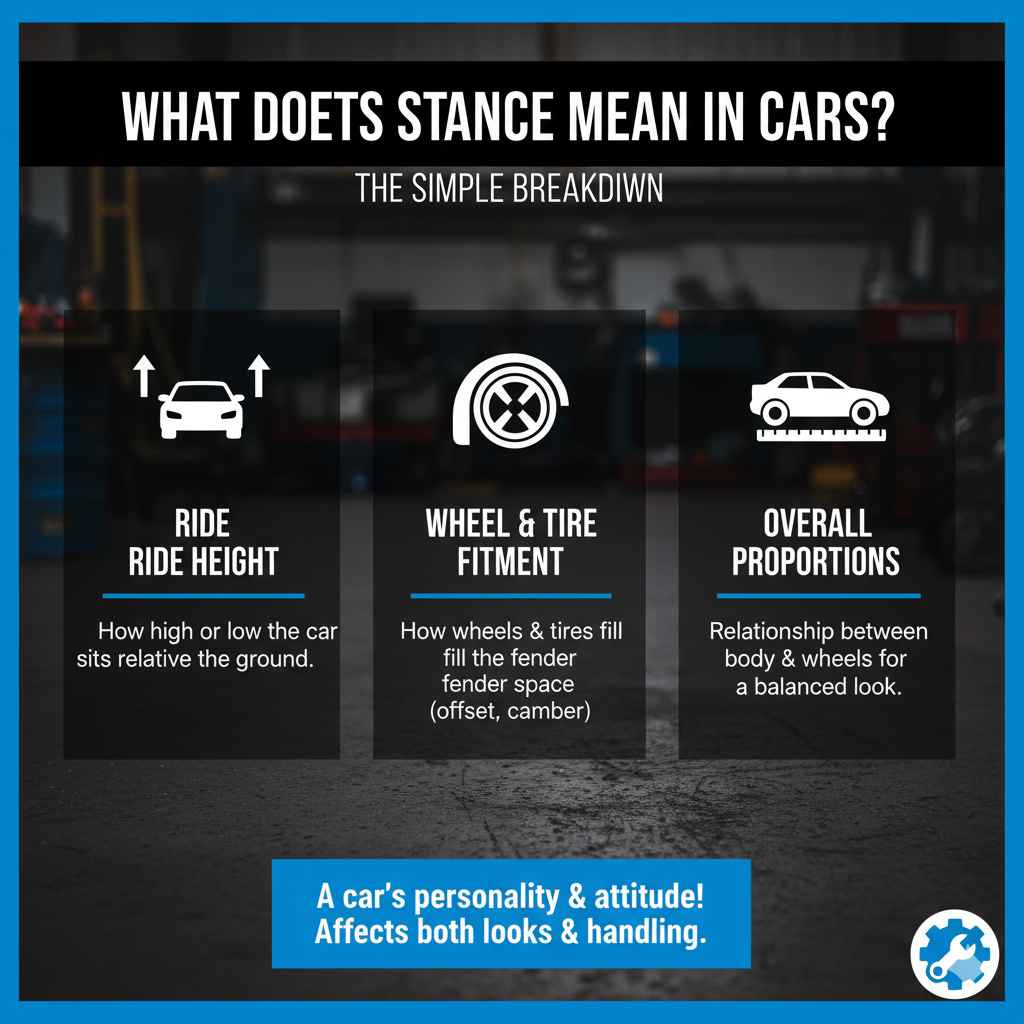
In the world of cars, “stance” is all about how a vehicle looks when parked. It describes the visual impression of the car’s width, height, and how the wheels fit within the wheel arches. Think of it as the car’s personality or attitude. A car with a good stance looks balanced, purposeful, and sometimes even aggressive or elegant, depending on the style you’re going for. It’s a combination of factors like:
- Ride Height: How high or low the car sits.
- Wheel and Tire Fitment: How the wheels and tires fill the space in the fenders (wheel arches).
- Overall Proportions: The relationship between the car’s body and its wheels.
It’s not just about making a car look cool, though that’s a big part of it! Stance can also affect a car’s performance and handling. Many enthusiasts modify various parts of their car to achieve a specific stance they find appealing.
Why Stance Matters to Car Owners
So, why do people care so much about how their car “sits”? It boils down to a few key reasons:
1. Aesthetics and Visual Appeal
This is the most common reason. A car with a well-executed stance often looks more dynamic and attractive. It can make a car appear:
- Lower and sportier
- Wider and more planted
- More aggressive or custom
It’s about making the car look its best, especially if it’s a vehicle you take pride in. Think of it like choosing the right shoes to complete an outfit – the right stance can totally transform a car’s look.
2. Performance and Handling
While aesthetics are often the primary driver, stance modifications can also impact how a car handles. Lowering a car, for example, can:
- Reduce Body Roll: A lower center of gravity means less leaning when you turn.
- Improve Aerodynamics: A lower ride height can reduce drag.
- Enhance Grip: When done correctly, proper wheel fitment can optimize tire contact with the road.
However, it’s crucial to remember that incorrect modifications can negatively affect handling and even safety. It’s a delicate balance.
3. Personalization and Expression
Your car is often an extension of your personality. Modifying its stance is a way to make it unique and express your personal style. Whether you prefer a subtle, clean look or a bold, in-your-face statement, stance customization allows for endless possibilities.
Key Elements That Define a Car’s Stance
Several interconnected factors contribute to a car’s stance. Understanding these will help you appreciate what goes into making a car look just right.
1. Wheel Offset
This is one of the most critical elements. Wheel offset refers to the distance between the mounting surface of the wheel (where it bolts to the car) and the centerline of the wheel. It determines whether the wheel sits further inside or further out from the fender.
- Positive Offset: The mounting surface is closer to the outside of the wheel. Often found on front-wheel-drive cars.
- Negative Offset: The mounting surface is closer to the inside of the wheel. Often found on rear-wheel-drive cars.
- Zero Offset: The mounting surface is exactly at the centerline of the wheel.
A common modification to improve stance is changing the offset to push the wheels out closer to the fenders, making the car look wider and more planted. This is a popular way to achieve that “flush” look where the tire edge is nearly even with the fender. For more information on wheel specifications, checking resources from organizations like the California DMV regarding tire and wheel regulations can provide a helpful perspective on road legalities.
2. Wheel Width and Diameter
The physical size of your wheels plays a huge role. Wider wheels can fill out the fender gaps better, giving a more assertive look. Larger diameter wheels can sometimes make the car look like it’s sitting higher, while smaller diameter wheels might exaggerate how low the car is. The goal is often to find a wheel size that perfectly complements the car’s body lines and desired stance.
3. Tire Size and Profile
Tires are the crucial link between the wheel and the road. Their width and sidewall height (profile) significantly impact stance.
- Tire Width: Wider tires can make the car look more substantial and fill wheel wells more effectively.
- Tire Profile (Sidewall Height): A lower profile tire (shorter sidewall) on a larger diameter wheel often makes the car look lower and sportier. A higher profile tire on a smaller wheel can make it appear higher.
A common technique in stance tuning is “rolling the fenders” to create more clearance for wider tires or wheels pushed further out. This might involve carefully bending the inner lip of the fender to prevent rubbing.
4. Ride Height and Suspension
This is perhaps the most direct way to alter stance. Ride height is how high the car’s chassis sits off the ground, determined by the suspension system. Modifications can include:
- Lowering Springs: Replacing the stock springs with shorter, stiffer ones to reduce ride height.
- Coilovers: Adjustable suspension units that allow for precise control over ride height, damping, and sometimes camber.
- Air Suspension: Systems that use air bags to adjust ride height, offering versatility and comfort.
Lowering the car dramatically changes its profile, making it look sportier and more aggressive. A popular stance often involves a ride height that minimizes the gap between the tire and the fender, sometimes referred to as “tucking” the tire.
5. Camber
Camber is the angle of the wheel when viewed from the front or rear. It’s measured in degrees.
- Positive Camber: The top of the wheel tilts outward.
- Negative Camber: The top of the wheel tilts inward.
- Zero Camber: The wheel is perfectly vertical.
Many stance enthusiasts use negative camber to allow wheels to sit further out (or “tuck” under the fenders at the top) without rubbing. A little bit of negative camber can also improve cornering grip, but too much can negatively affect tire wear and straight-line stability. For a deeper understanding of how suspension angles affect vehicle dynamics, the SAE International standard J670 on Vehicle Dynamics Terminology provides comprehensive definitions, including those for camber and other crucial metrics.
Common Stance Styles and What They Mean
The world of car customization has developed many popular “stances.” Here are a few you might hear about:
1. The “Flush” Stance
This is arguably the most popular modern stance. It’s achieved when the outer edge of the tire is perfectly flush, or even slightly inset, with the fender or the outermost edge of the car’s bodywork. It makes the car look wider and more planted on the road, giving it a very clean and aggressive look.
2. The “Tucked” Stance
Here, the top portion of the tire is intentionally pulled inwards, sitting beneath the fender lip. This is often achieved using lower ride heights, wider wheels with aggressive offsets, and significant negative camber. It can create a dramatic visual effect, making the wheel arches appear very full.
3. The “Aggressive” Stance
This is a broader term that encompasses designs aiming for a pronounced, sporty, and sometimes menacing appearance. It often involves a combination of:
- Low ride height
- Wide wheels
- Slightly negative camber
- Wheels that sit outwards, close to the fender line
The goal is to make the car look like it’s gripping the road.
4. The “OEM+” Stance
This refers to a look that appears very close to factory, but with subtle, tasteful upgrades. It might involve slightly wider wheels, a minor drop in ride height, or a small amount of camber, all done in a way that looks like it could have come straight from the manufacturer, but just a bit cleaner or sportier.
5. The “Static” Stance
This contrasts with air suspension. “Static” means the car has a fixed ride height, typically achieved with lowering springs or coilovers. Enthusiasts often value the predictability and sometimes sharper handling of a static setup.
Modifications for Achieving Your Desired Stance
If you’re looking to change your car’s stance, here are the common modifications:
1. Lowering Springs
What they are: Replacement springs for your car’s suspension that are shorter and often stiffer than stock.
Pros: Relatively inexpensive way to lower the car, improves handling by reducing body roll, creates a sportier look.
Cons: Ride comfort can be reduced, requires compatible shocks/struts, changes suspension geometry which might require alignment.
Best for: Beginners looking for a noticeable drop without a huge cost.
2. Coilovers
What they are: Integrated units that combine a spring and a shock absorber. Many are adjustable, allowing you to fine-tune ride height and damping stiffness.
Pros: High adjustability for ride height and stiffness, can provide excellent handling performance, allows for precise tuning of stance.
Cons: More expensive than lowering springs, can be complex to adjust properly, may require professional installation.
Best for: Enthusiasts who want maximum control over their stance and handling.
3. Air Suspension Kits
What they are: Systems that replace traditional springs with air springs (air bags). A compressor fills these bags with air to raise the car, and releases air to lower it.
Pros: Fully adjustable ride height, can provide a comfortable ride, can lift the car over obstacles, unique “bagged” look.
Cons: Most expensive option, complex installation with many components (compressor, tank, lines), potential for leaks or system failures.
Best for: Those seeking ultimate adjustability, comfort, and the ability to “lay frame” (have the car’s chassis rest on the ground).
4. Wheel Spacers
What they are: These are used to push your existing wheels further out from the hub, effectively increasing the positive offset or reducing the negative offset.
Pros: Inexpensive and easy way to get wheels closer to the fenders, can improve the look without buying new wheels.
Cons: Can put extra stress on wheel bearings, may require longer lug nuts, can cause vibration if not installed correctly, legality can vary by region.
Safety Note: Always use high-quality wheel spacers from reputable manufacturers that bolt directly to your hub for maximum safety. You can find more details on safe automotive modifications at resources like the National Highway Traffic Safety Administration (NHTSA), which offers safety information vital for any vehicle modification.
5. New Wheels and Tires
What they are: Replacing your stock wheels and tires with aftermarket ones that have different widths, diameters, offsets, and tire profiles.
Pros: The most comprehensive way to achieve a custom look, allows for perfect fitment, can also improve performance.
Cons: Can be the most expensive option, requires careful selection to ensure proper fit and avoid clearance issues.
Best for: Those undertaking a full build or wanting complete control over their car’s appearance and fitment.
Table: Stance Modification Pros and Cons at a Glance
Here’s a quick look at the pros and cons of common stance modifications:
| Modification Type | Pros | Cons | Best For |
|---|---|---|---|
| Lowering Springs | Affordable, noticeable drop, improved handling look, easy installation | Reduced comfort, potential alignment issues, limited adjustability | Beginners, budget-conscious |
| Coilovers | Adjustable height & damping, precise tuning, enhanced performance | Higher cost, complex adjustment, potentially stiffer ride | Enthusiasts, performance-oriented |
| Air Suspension | Fully adjustable height, comfortable ride, versatility | Most expensive, complex installation, potential for leaks | Luxury seekers, show cars, maximum adjustability |
| Wheel Spacers | Inexpensive, pushes wheels out, quick visual change | Stress on bearings, potential vibration, safety concerns if low quality | Minor adjustments, budget tweaks |
| Aftermarket Wheels/Tires | Complete control over look, precise fitment, performance options | Most expensive, requires thorough research | Full customization, ultimate look |
Important Considerations Before Modifying Stance
Changing your car’s stance is exciting, but there are a few things to keep in mind to ensure you do it safely and legally.
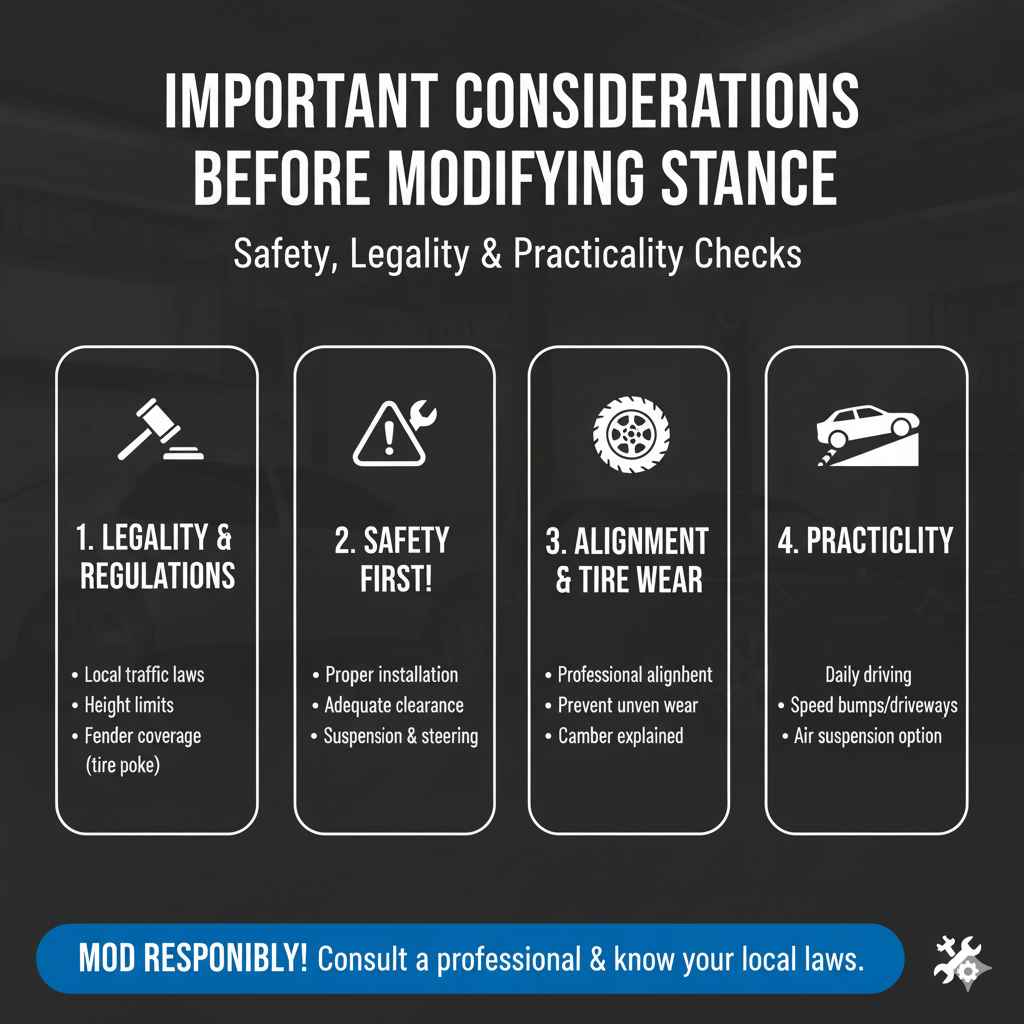
1. Legality and Regulations
In many places, there are rules about how low a car can be, or how far wheels can extend beyond the fenders. Always check your local traffic laws and regulations to make sure your modifications are street legal. For instance, some areas have specific requirements regarding tire coverage by fenders.
2. Safety First!
Modifications like lowering a car or pushing wheels out can affect its safety. Ensure that all components are installed correctly and that there’s adequate clearance for suspension travel and steering. Incorrectly fitted parts or extreme angles can be dangerous.
3. Alignment and Tire Wear
When you change ride height, camber, or offset, your car’s alignment will likely be affected. It’s crucial to get a professional wheel alignment after modifying your suspension to ensure proper handling, prevent uneven tire wear, and maintain safety. Too much camber, for example, can drastically reduce tire life.
4. Practicality
A very low car might struggle with speed bumps, steep driveways, or uneven roads. Consider your daily driving conditions. Will a slammed vehicle be practical for your needs? Air suspension offers a good compromise if you want a low look but need to raise the car for everyday driving.
Tips for Beginners: Getting Started with Stance
If you’re new to the world of car stance, start simple:
- Do Your Research: Look at cars similar to yours that have been modified. What looks do you like? What are they running?
- Start Small: Consider entry-level modifications like quality lowering springs or a set of subtly wider wheels with appropriate offset before jumping into complex systems.
- Consult Professionals: If you’re unsure, talk to reputable auto shops that specialize in suspension and wheel work. They can offer advice based on your car and budget.
- Prioritize Quality: Invest in reputable brands for suspension parts, wheels, and spacers. Cheap parts can lead to bigger problems and safety risks down the road.
Frequently Asked Questions (FAQ)
What is the most common way to change a car’s stance?
The most common way to change a car’s stance is by adjusting its ride height, typically by lowering it with components like lowering springs or coilovers. Changing wheel offset and tire size are also very popular.
Can changing stance affect my car’s ride comfort?
Yes, it often does. Lowering a car with stiffer springs or coilovers can make the ride firmer and feel more bumps. Air suspension is the exception, as it can offer variable comfort.
How much does it cost to change a car’s stance?
Costs vary greatly. Simple modifications like wheel spacers can be under $100, while lowering springs might cost a few hundred dollars plus installation.