Military Emblems for Cars: Metal vs. Decal Buying Guide
Choose Metal if you want the toughest military emblem for repeated washes, UV, and road abuse. Choose Decal Buying if you want the easiest removal and the lowest risk to paint. Pick wrong, and you can end up with peeling edges, corrosion, adhesive residue, or a resale headache. This guide compares durability, legality, mounting, and removal so you can buy the right emblem the first time.
Emblem decision table
| Buyer criterion | Metal | Decal Buying | Winner | Best fit |
|---|---|---|---|---|
| Durability | Rigid badge construction holds shape better under abuse | Film can lift, crease, or edge-peel sooner | Metal | Daily drivers and vehicles that see regular weather |
| UV resistance | Chrome, black, or brushed finishes can outlast printed film | Cut vinyl usually resists fading better than printed vinyl, but printed film can fade faster | Metal | Long sun exposure on hood, tailgate, or quarter panel |
| Wash resistance | Better for repeated machine washes when mounted well | Edges are more vulnerable to brush contact and strong spray | Metal | Frequent car-wash use |
| Installation difficulty | Needs careful alignment, clean surface prep, and pressure on adhesive backing or fasteners | Usually simpler to place, squeegee, and remove bubbles | Decal Buying | Quick installs on glass or painted panels |
| Removal risk | Heat and residue cleanup can be harder, especially with stronger emblem tape | Generally easier to remove with less paint lift risk | Decal Buying | Lease returns and resale prep |
| Paint safety | Safe on clear coat if installed and removed correctly, but adhesive failure can mark paint | Lower risk when applied to sound paint or glass with proper prep | Decal Buying | Paint-sensitive surfaces or temporary use |
| Cost of ownership | Often lasts longer, so replacement frequency can be lower | Cheaper upfront, but may need earlier replacement | Tie | Depends on how long you keep the vehicle |
| Customization | Finish choices matter more than graphic detail | Better for cut-vinyl shapes and printed graphics | Decal Buying | Custom text, unit-style graphics, or color variation |
| Visibility | Stands off the panel and reads well from a distance | Looks cleaner on glass or flat paint, but may blend in more | Metal | Grille, tailgate, or fender placement |
| Best-fit vehicle use case | Truck, SUV, off-road build, or show vehicle that needs presence | Daily driver, lease, or temporary military-style accent | Depends | Use case decides the winner |
Durability and weather exposure
Metal wins when the emblem has to survive repeated heat, cold, road salt, rain, and wash cycles. A rigid badge with adhesive backing or fastener mounting keeps its shape, while vinyl can fail at the edges first, then start to lift or curl. That failure mode matters more than a simple “lasts longer” claim.
Installation difficulty and prep
Decal Buying is easier to place on a clean, dry panel, especially on glass or a flat painted section. Metal takes more care because the emblem must sit flat and bond well across its full back surface. If the surface is greasy, dusty, or too cold, both options can fail early.
Removal risk and paint safety
Decal Buying is the safer pick when the car may be sold soon, returned at lease-end, or repainted later. Metal can come off cleanly, but stronger emblem tape raises the chance of residue or clear-coat lift if you rush the removal. The safer path is controlled heat and slow separation.
Best-fit vehicle use case
Metal fits trucks, SUVs, and off-road builds better when the emblem needs presence and weather resistance. Decal Buying fits temporary branding, glass placement, and owners who want the lightest visual footprint with the easiest exit later. Say your tailgate badge will stay on through winter road salt, metal is the better bet. Say your side glass decal needs to come off before resale, decal is the better bet.
Should you buy metal or decal?
Buy metal if the emblem needs to survive repeated washing, outdoor storage, and long-term use on a bumper, tailgate, or quarter panel. Buy Decal Buying if you care most about easier installation, lower removal risk, and a cleaner path back to stock. The right choice follows the vehicle’s use, not just the look.
Choose metal if you need a rigid badge
Metal car emblems use a stiff badge body, usually with chrome, black, or brushed-metal finishes. That structure gives them better visual presence and better tolerance for road abuse than thin film graphics. If the emblem must stay readable from a distance, metal usually has the edge.
Choose decal if you want easier removal
Vinyl decal material is better when you may want to change the design later or remove it without a long cleanup job. Cut vinyl is usually cleaner for simple shapes, while printed vinyl allows more complex artwork but can age differently in the sun. The easier exit is the main draw.
Pick by use and finish goals
A truck owner who wants a military-style badge on the grille should usually start with metal. A driver who wants a subtle graphic on a rear window should usually start with vinyl. If the goal is long-term presence, metal fits. If the goal is reversible styling, decal fits.
How durable is each option?
Metal is usually the better choice for weather, UV, and repeated washes, while decal durability depends more on film type and installation quality. A well-made vinyl graphic can last a long time, but it is still more exposed at the edges. That is where failure starts.
UV fade and finish wear
Sun exposure is hard on printed vinyl first. Cut vinyl generally holds up better than printed film because there is less ink layer to fade, but metal still has the stronger long-term edge when the emblem is meant to stay visible for years. Chrome and brushed finishes can still dull, so finish quality matters.
Rain, salt, and car wash resistance
Rain is rarely the only problem. Road salt, detergent, and brush contact can attack decal edges and weak adhesive, while a well-mounted metal badge is more resistant to those repeated hits. If the vehicle sees winter roads, the mounting method matters as much as the material.
Cracking, lifting, and edge failure
Metal can bend, corrode, or pop loose if the backing fails, but it does not curl the way vinyl does. Decals often fail at corners first, then let moisture creep underneath. Once that starts, the graphic can look tired long before it is fully gone.
How do you install each one?
Both options need a clean, dry surface and proper temperature before application. For metal, alignment and pressure are the main concerns; for decals, bubble control is the main concern. The safest rule is simple: prep first, install second, and let the adhesive cure before washing.
Clean, degrease, and dry the panel
Wash the area with soap and water, then wipe it with alcohol or another approved degreaser. The panel must be dry before the emblem or decal touches it. Installation in the wrong temperature window can weaken bond strength, so follow the vehicle and product manual.
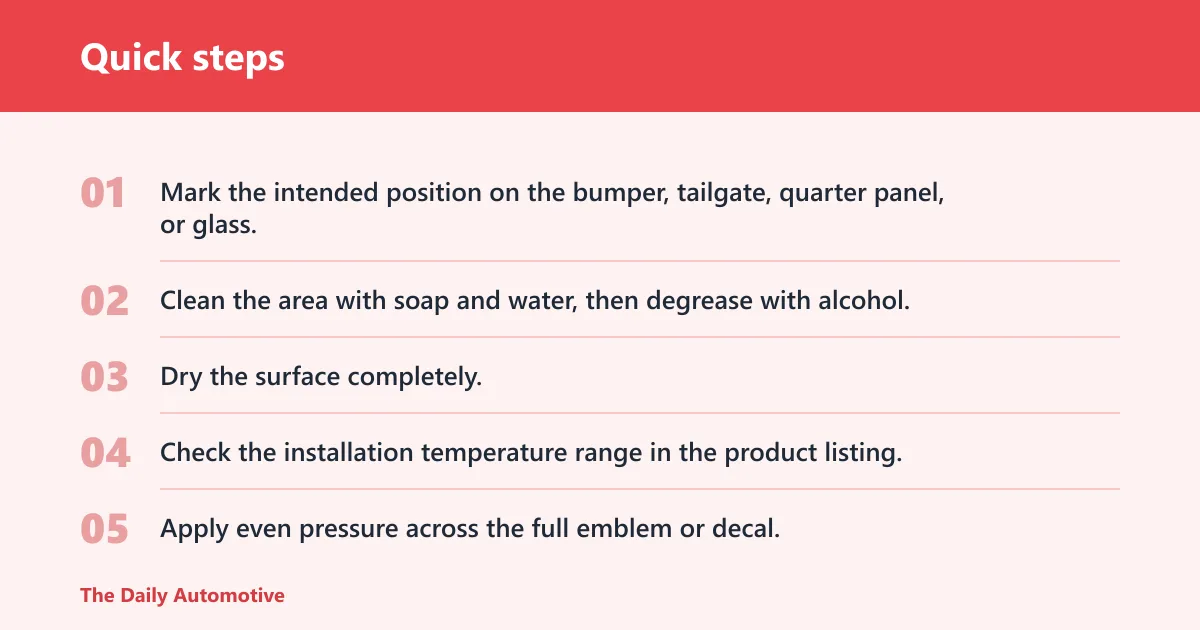
- Mark the intended position on the bumper, tailgate, quarter panel, or glass.
- Clean the area with soap and water, then degrease with alcohol.
- Dry the surface completely.
- Check the installation temperature range in the product listing.
- Apply even pressure across the full emblem or decal.
- Avoid washing the vehicle until the adhesive has had time to cure.
3M tape and cure time for badges
3M automotive adhesive is common for badge-style emblems because double-sided emblem tape can hold well when the surface is properly prepared. It needs firm contact and cure time to reach full bond. If the panel is dusty, oily, or wet, the tape can fail early at the edges.
Bubble control for vinyl decals
Vinyl installs cleanly when you work from one edge outward and press out trapped air as you go. A squeegee helps, especially on large graphics. Small bubbles often fade later, but trapped dust or a crooked first placement usually means starting over.
Will it damage your paint?
Neither option should damage sound paint if installed and removed correctly, but metal carries more removal risk because stronger adhesive or fasteners can work against the clear coat. Decals are usually gentler, especially on glass or well-prepped painted panels. The paint is safest when the product matches the surface and comes off slowly with heat.
Adhesive backing versus fasteners
Adhesive-backed metal emblems depend on bond strength, while fastener-mounted badges depend on holes or existing mounting points. Adhesive is simpler and usually safer for resale, but it still needs proper surface prep. Fasteners can be secure, yet they are not the best choice if the panel should stay untouched.
Heat-assisted removal and residue cleanup
A heat gun or hair dryer softens emblem tape and decal adhesive so the piece can be lifted more slowly. Then you clean residue with the right remover for clear coat, not with scraping. The goal is to loosen the bond, not pull harder.
Safe removal from clear coat
Work patiently and keep the tool moving so the panel does not overheat. If the emblem resists, add more heat rather than more force. That lowers the chance of paint lift and keeps the clear coat in better shape for the next badge or decal.
What size and placement work best?
Most buyers should size the emblem to the panel, not the other way around. A badge that is too large can look forced on a grille or fender, while one that is too small disappears from a few steps away. Placement should also match the material: metal for open exterior panels, vinyl for flatter or glass surfaces.
Grille, fender, tailgate, or glass
Metal usually works best on a grille, tailgate, bumper, or quarter panel where it can sit flat and stay visible. Vinyl is often the easier pick for side glass or rear glass because it conforms well and removes more cleanly later. The vehicle location should guide the material choice.
Visibility from a distance
Emblem size should be large enough to read from the distance you expect other drivers or spectators to see it. A small graphic can disappear on a large truck panel, while an oversized badge can crowd a compact car. Proportion matters more than pure size.
Proportion to the panel
On a wide tailgate, a wider emblem can look balanced. On a narrow fender, a smaller badge usually works better. Before ordering, check the listed dimensions and compare them to the exact panel area you plan to use.
What should you avoid before ordering?
Avoid buying on appearance alone. The most common mistakes are misreading size, ignoring surface type, and overlooking local rules or symbol sensitivity. A good-looking emblem can still be the wrong choice if it is too large, hard to remove, or likely to create a legal or social problem where you drive.
Misreading badge size and fitment
Check the product listing for width and compare it to the panel, grille bar, or glass area you plan to use. “Universal” does not mean it will look right everywhere. A 2.5-inch emblem can be perfect on a small panel and awkward on a large tailgate.
Ignoring local laws and symbol sensitivity
Military insignia-style designs can raise legal or social questions depending on jurisdiction, placement, and context. Check local laws before putting any emblem in a spot that could affect driver visibility or violate vehicle rules. Also think about how the symbol will be read by others, especially on public roads.
Choosing the wrong surface for the product
Metal belongs on sound painted panels or other solid mounting locations that can support its weight and adhesive. Vinyl belongs on clean glass or paint with a smooth finish. If the surface is dirty, textured, or curved beyond the product’s intended use, expect early failure.
Our picks by need
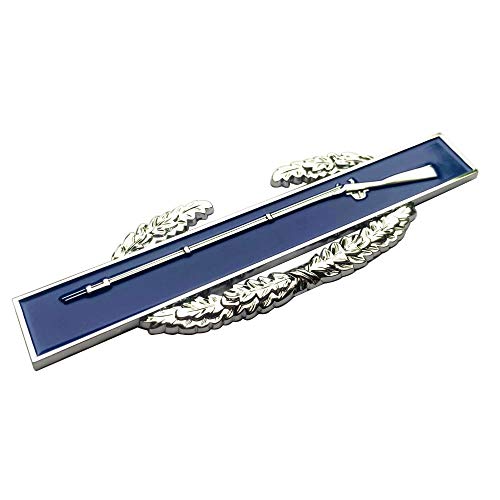
Long-term exterior use: US Army metal emblem

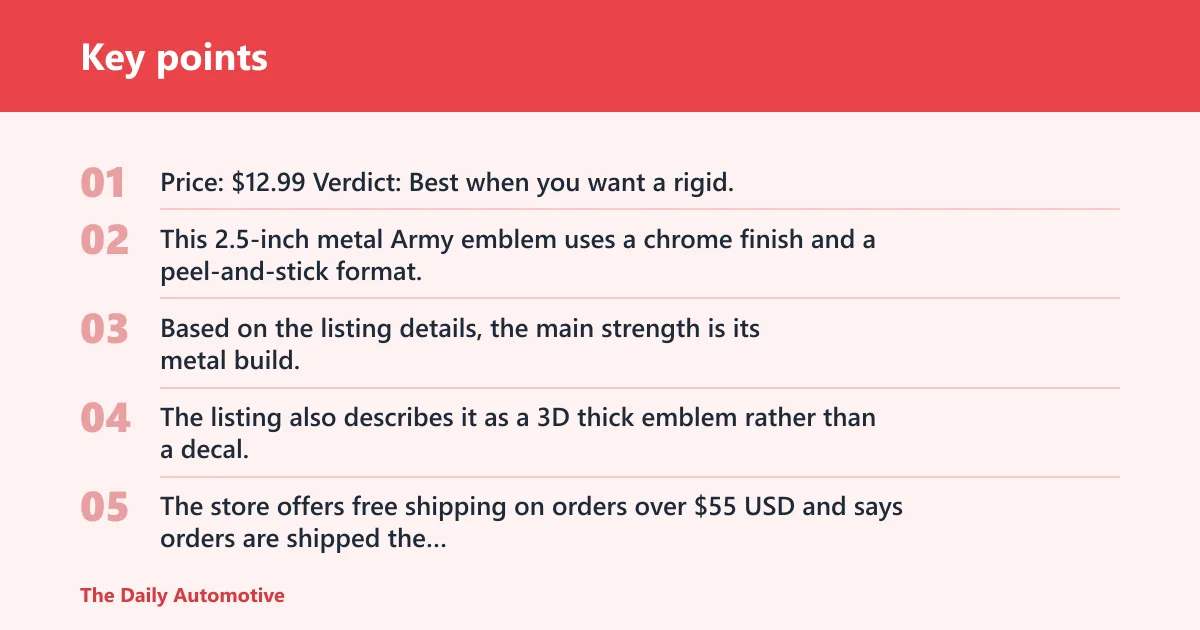
Price: $12.99
Verdict: Best when you want a rigid, chrome military badge that should hold up better than a thin sticker on a truck or SUV.
This 2.5-inch metal Army emblem uses a chrome finish and a peel-and-stick format, which makes it better suited to long-term exterior use than a thin vinyl graphic. Based on the listing details, the main strength is its metal build; the main drawback is that chrome badges still need careful prep and can be harder to remove later.
The listing also describes it as a 3D thick emblem rather than a decal, so it is the better fit when visible presence matters on a grille, tailgate, or quarter panel. The store offers free shipping on orders over $55 USD and says orders are shipped the next business day, but check the listing for your exact vehicle fit before ordering.
Mistakes to avoid
Do not assume metal always wins. A badge can be the wrong answer if you need quick removal, want glass placement, or plan to change the look later. Do not assume vinyl is “temporary” by default either; a properly installed decal can last a long time if the surface prep and environment are right.
Another common mistake is treating all adhesive the same. 3M automotive adhesive, emblem tape, and decal adhesive all depend on a clean, dry surface and enough cure time. If you wash too soon, install in the wrong temperature window, or skip degreasing, both products can fail early.
Finally, do not ignore symbolism. Military-style emblems can carry meaning beyond styling, and that matters on public roads. Before you order, check the local rules, think about how the badge will read at a glance, and choose a placement that does not interfere with visibility.
Frequently asked questions
Should I buy a metal military emblem or a decal for my car?
Buy metal if you want the better choice for repeated washes, UV, and rougher weather exposure. Buy a decal if you want easier removal and a lower chance of paint cleanup later. The right answer depends on whether the emblem is meant to stay on the vehicle for years or come off cleanly.
Will a military emblem damage my paint?
It can, but only if the adhesive is rushed, the panel is dirty, or removal is done too aggressively. A sound clear coat usually handles properly installed emblems and decals well. Heat-assisted removal and slow peeling lower the chance of residue or paint lift.
Are metal car emblems better than vinyl decals in the rain and heat?
Yes, for most long-term exterior use. Metal badges usually handle rain, heat cycling, and wash exposure better because they are rigid and less likely to curl at the edges. Vinyl is still useful, but it is more vulnerable to lifting, fading, and edge wear.
How do I install a metal emblem on a car?
Clean the area with soap and water, degrease it with alcohol, and make sure it is dry before you start. Place the badge carefully, press it firmly across the full back surface, and let the adhesive cure before washing the vehicle. Follow the product and vehicle manual for the right temperature window.
How do I install a decal on a car without bubbles?
Start with a clean, dry panel and position the decal carefully before it touches the surface fully. Press from one side to the other with a squeegee or firm edge, pushing air out as you go. Small bubbles may disappear, but dirt trapped underneath usually means you need a fresh application.
Can I remove a military decal without leaving residue?
Often yes, especially if the decal is lifted slowly and warmed first with a hair dryer or heat gun. Some adhesive residue is still possible, so plan on a safe cleaner for clear coat or glass. The less force you use, the better your odds of a clean finish.
What size military emblem should I put on my car?
Choose a size that fits the panel and stays readable from the distance you care about. A badge that looks balanced on a tailgate may look too large on a fender or too small on a truck bumper. Check the listed width and compare it to the exact mounting space before ordering.
Will a chrome emblem or vinyl decal last longer on a vehicle?
Chrome metal emblems usually last longer on the exterior because they are more resistant to wash wear and edge lift. Vinyl can last a long time too, especially cut vinyl, but printed graphics and weak installs often fail sooner. If longevity is the priority, metal is the safer bet.
Products related to this article
Sponsored / affiliate links. As an Amazon Associate I earn from qualifying purchases. I may earn additional commission from eligible campaigns.