What Does the Car Symbol Button Do Besides AC
Many drivers see a little car symbol button inside their car and wonder, “What Does the Car Symbol Button Do Besides AC?” It can be confusing when you’re new to driving or a new car model. You know the AC button keeps you cool, but this other symbol? It’s a puzzle.
Don’t worry, it’s much simpler than it looks. This guide will walk you through it step-by-step.
Understanding the Car Symbol Button
The car symbol button, often appearing as a car with wavy lines or a fan inside, is a common feature in many vehicle climate control systems. It’s not directly related to cooling the air like the AC button. Instead, it plays a vital role in how your car’s heating and cooling systems circulate air.
Many drivers are familiar with adjusting fan speed or temperature, but this specific button’s function can be a mystery.
Knowing what this button does can help you use your car’s climate control more effectively. It influences the air quality inside your vehicle and can even help your car reach your desired temperature faster. We will break down its purpose and how to use it to your advantage.
Internal Air Recirculation Explained
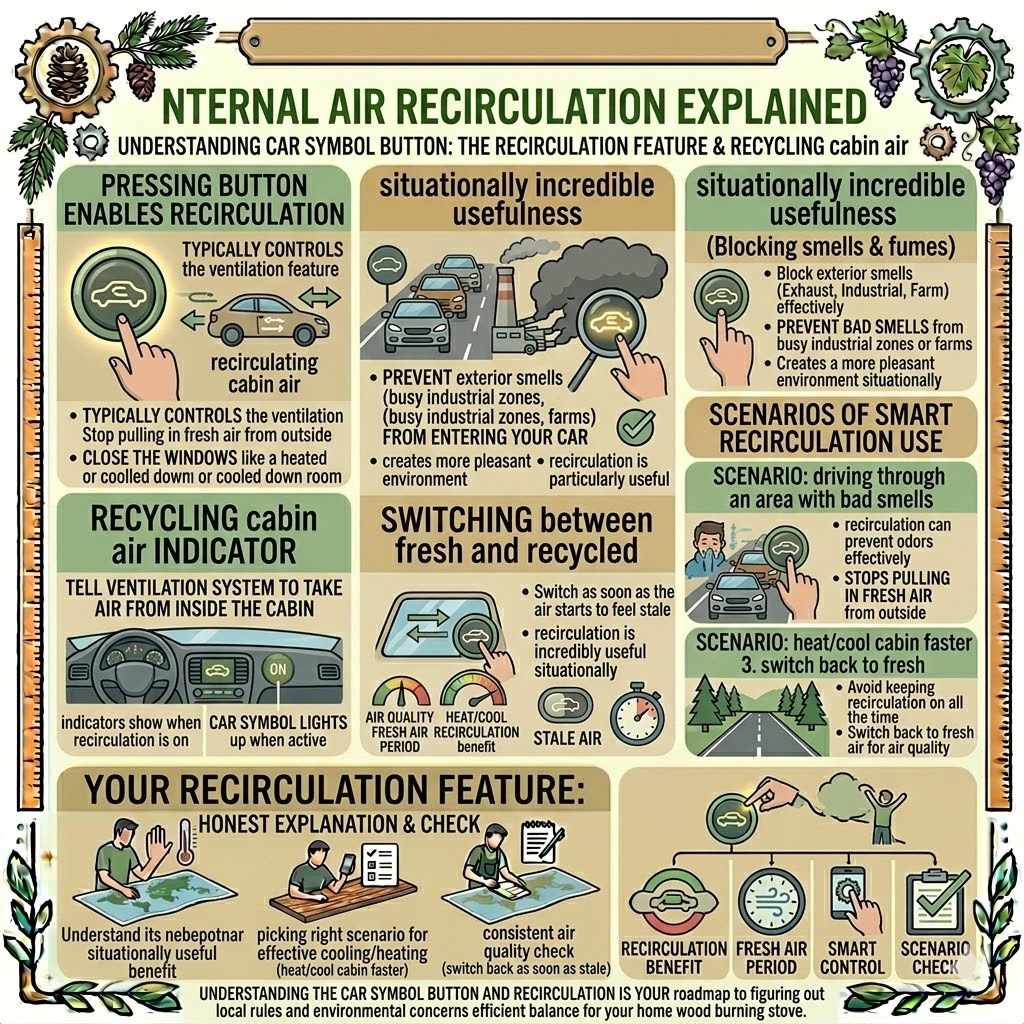
The car symbol button typically controls the air recirculation feature. When you press it, you’re telling your car’s ventilation system to take air from inside the cabin and recirculate it. This means it stops pulling in fresh air from outside your car.
Think of it like closing the windows when you want to quickly heat up or cool down a room.
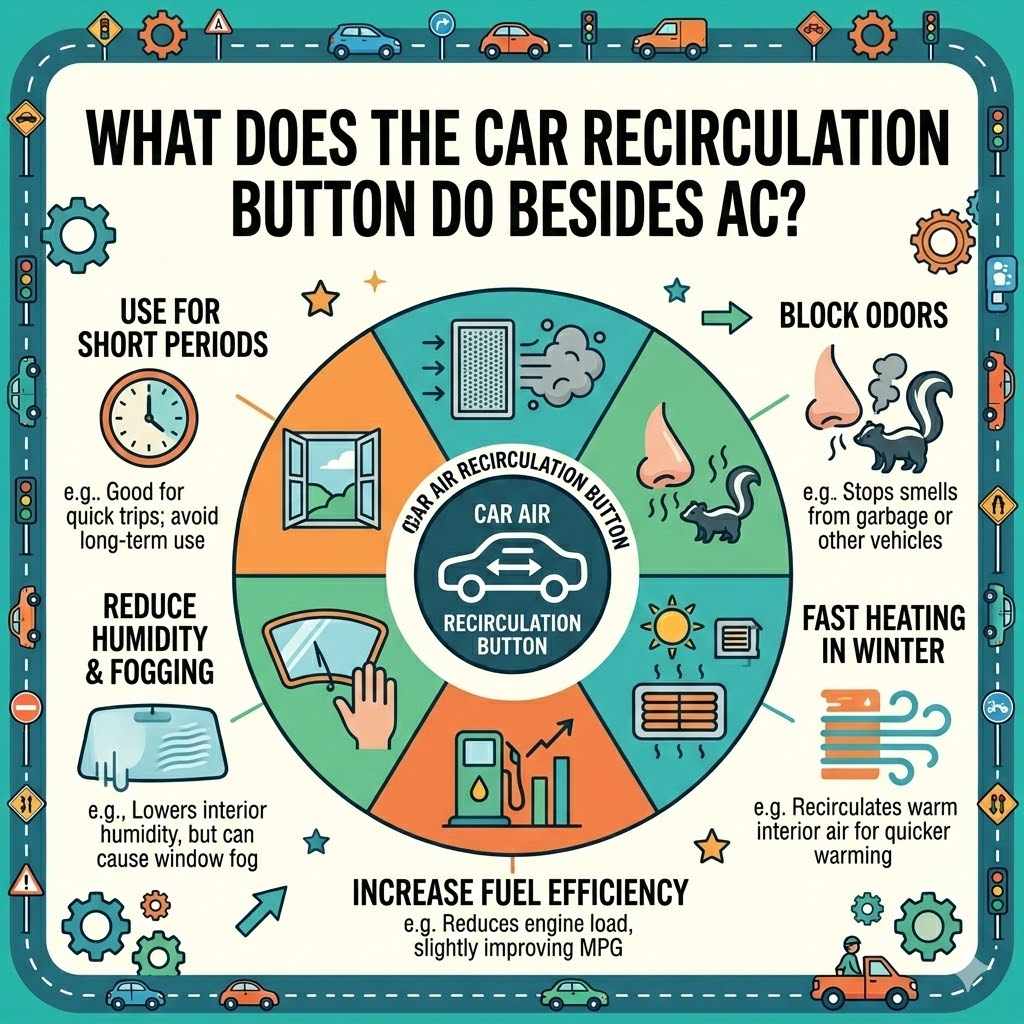
This feature is incredibly useful in certain situations. For instance, if you’re driving through an area with bad smells, like a busy industrial zone or a farm, using recirculation can prevent those odors from entering your car. It creates a more pleasant environment for you and your passengers.
The system usually has a light or indicator to show when recirculation is on. You’ll often see the car symbol light up. This helps you remember that the system is currently recycling cabin air.
Benefits of Recirculation Mode
Using the recirculation mode offers several practical advantages. One of the primary benefits is its ability to help your car’s climate control system work more efficiently. When you’re trying to cool down a hot car, the outside air might be very warm.
By recirculating the already cooler cabin air, the AC doesn’t have to work as hard to lower the temperature.
Similarly, in cold weather, recirculating the warm air inside can help your car heat up faster. It traps the heat generated by the engine and heater, preventing it from escaping. This means you can feel comfortable sooner, especially on chilly mornings.
Recirculation also plays a part in filtering the air you breathe inside your car. By limiting the intake of outside air, you can reduce the amount of dust, pollen, and pollutants that enter the cabin. This is particularly helpful for individuals with allergies or respiratory sensitivities.
When to Use Recirculation
There are specific times when activating the air recirculation mode is most beneficial. One common scenario is when you want your car’s temperature to change quickly. If your car is sweltering hot after sitting in the sun, pressing the recirculation button before turning on the AC can make the cabin feel cooler much faster.
Another important use is to block unpleasant external odors. If you drive past a landfill, a busy construction site, or even encounter a strong diesel exhaust smell from a truck, the recirculation mode can effectively seal out these smells. This keeps your car’s interior fresh and enjoyable to breathe in.
In snowy or rainy conditions, recirculation can help prevent your windows from fogging up. When you’re using the AC to cool the air, it also dehumidifies it. This drier air, when recirculated, can help to clear condensation from your windows more effectively than just blowing outside air.
When Not to Use Recirculation
While air recirculation has many benefits, it’s important to know when to avoid it. Leaving the recirculation mode on for extended periods, especially in a car with multiple passengers, can lead to poor air quality inside the cabin. This is because the system is not bringing in fresh oxygen from the outside.
Over time, recirculating air without any fresh air intake can cause the air inside your car to become stale. It can also lead to an increase in carbon dioxide levels. This can make occupants feel drowsy or even cause headaches.
Therefore, it is crucial to periodically switch back to drawing in outside air.
In very humid conditions, prolonged use of recirculation without also using the AC can sometimes lead to increased moisture inside the car, potentially causing condensation on surfaces. It’s best to use it strategically and not as a constant setting.
Understanding Fresh Air Intake
The opposite of the car symbol’s recirculation function is the fresh air intake mode. This is usually the default setting when you turn on your car’s ventilation system or when the car symbol light is off. In this mode, your car’s fan system draws in air from the outside environment and brings it into the cabin.
This process is essential for maintaining good air quality inside your vehicle. It ensures a constant supply of oxygen for the occupants and helps to remove any stale air that may have accumulated. Fresh air intake is particularly important on longer drives or when many people are inside the car.
The fresh air intake system typically has a filter, often called a cabin air filter, that cleans the incoming air. This filter removes dust, pollen, and other small particles before the air reaches you. Regularly replacing this filter is key to ensuring the air you breathe is as clean as possible.
Importance of Fresh Air
Having a continuous supply of fresh air inside your car is vital for several reasons, primarily related to your health and comfort. When you’re breathing in fresh oxygen, your brain functions better. This helps you stay alert and focused, which is crucial for safe driving.
Stale air, on the other hand, can make you feel tired and less attentive.
For passengers, especially children, adequate fresh air intake is important for their well-being. It can prevent feelings of stuffiness and discomfort. In a car where many people are talking or breathing, the air can quickly become depleted of oxygen and filled with carbon dioxide.
Fresh air replenishes this supply.
Furthermore, fresh air helps to regulate humidity levels inside the car. While recirculation can help dehumidify during AC use, relying on it too much can make the air feel dry. Bringing in outside air, even if it’s a bit humid, can help balance this out.
How Fresh Air Intake Works
The fresh air intake system in your car works by opening vents located near the base of your windshield, at the front of the car under the hood. When you select fresh air mode (usually indicated by the car symbol button being off or showing a different symbol), flaps inside the ventilation system open up. These flaps allow outside air to be pulled into the car’s air intake.
This air then passes through the cabin air filter. This filter is designed to trap particles like dust, pollen, leaves, and other debris that might be present in the outside air. After passing through the filter, the air is then directed through your car’s heating or cooling system, depending on your temperature settings, and finally distributed into the cabin through the dashboard vents.
The fan speed you choose affects how quickly this fresh air is drawn in and circulated. A higher fan speed means more air is being processed, leading to quicker ventilation of the cabin.
The Car Symbol Button Functionality Explained
Now, let’s get back to the specific car symbol button and how it works with your car’s climate control. As we’ve discussed, this button primarily controls the air recirculation. When the button is illuminated or the symbol is displayed, it means the car is set to recirculate air from inside the cabin.
When it’s off, the system is drawing in fresh air from outside.
Some car models might have a slightly different symbol or integrate this function differently. For example, some systems might show a car with an arrow going in a circle to represent recirculation. Others might have a separate button specifically labeled “Recirculate.” However, the underlying principle remains the same: it controls whether air is coming from outside or being reused from inside.
Understanding this simple function empowers you to manage your car’s interior environment better. It’s not just about keeping cool; it’s about air quality, efficiency, and comfort.
Indicator Lights and Symbols
Most cars will provide a visual cue to let you know if the recirculation mode is active. The car symbol button itself often has an integrated light. When the button is pressed and the light is on, recirculation is engaged.
When the light is off, the system is set to fresh air intake.
Some vehicles might display a small icon on the climate control screen or dashboard. This icon could be the same car symbol with a circle around it, or it might show a different graphic to indicate recirculation. It’s always a good idea to consult your car’s owner’s manual for the exact symbols and their meanings specific to your model.
Being aware of these indicators helps prevent accidental long-term use of recirculation, which we’ve learned can lead to stale air. You can quickly check the light or icon to confirm the setting.
Practical Examples and Scenarios
Imagine you’re driving on a highway and a large truck ahead of you is emitting a lot of exhaust fumes. Pressing the car symbol button immediately activates recirculation, blocking those fumes from entering your car’s cabin. This keeps your drive pleasant and the air breathable.
Another scenario: it’s a very hot summer day, and you just got into your car. The interior feels like an oven. Before turning on the AC to full blast, you press the car symbol button.
The AC will now cool the existing, slightly less hot cabin air, reaching a comfortable temperature much faster than if it were constantly trying to cool hot outside air.
Consider driving through a rural area where there might be strong farm smells. Activating the car symbol button prevents these odors from spoiling your trip. You can enjoy the scenery without the unpleasant smells.
Conversely, on a long drive, especially with other people, you might notice the air feeling a bit stuffy. This is a sign that you should turn off the recirculation. Pressing the car symbol button again to deactivate it allows fresh air to enter, refreshing the cabin and ensuring everyone has enough oxygen.
Efficiency and Climate Control
The car symbol button, by controlling recirculation, significantly impacts your car’s climate control efficiency. When the AC is running, it removes moisture from the air to cool it. If it’s pulling in hot, humid outside air, it has to work much harder and longer to achieve the desired coolness.
By recirculating the already cooler, drier cabin air, the AC system uses less energy and cools the car down faster.
This enhanced efficiency can lead to slightly better fuel economy because the engine doesn’t have to power the AC compressor as intensely or for as long. While the difference might be small on short trips, it can add up over time. It’s a simple feature that contributes to overall vehicle performance and comfort.
In winter, the effect is similar. Recirculating warm cabin air helps the heater warm up the interior more quickly. This means you can turn down the fan or heater sooner, saving energy and providing comfort faster.
It’s a smart way to optimize your car’s heating and cooling systems.
Common Car Symbol Button Misconceptions
It’s common for people to associate the car symbol button with something more complex than it is. Some might think it’s related to the car’s engine performance, or perhaps a special type of air conditioning. The reality is much simpler, focusing purely on air circulation within the cabin.
Another misconception is that recirculation should always be on. As we’ve seen, this can lead to poor air quality over time. The button is meant to be used situationally, not as a permanent setting.
Understanding its specific purpose helps avoid these misunderstandings.
Some drivers might confuse it with the button that controls the direction of airflow (e.g., blowing air to your feet, face, or defogging the windshield). These are separate functions on the climate control panel. The car symbol button is specifically about where the air is coming from: inside or outside.
Debunking Myths About Car Symbol Button
Let’s clear up some common myths. Myth 1: The car symbol button makes the AC colder. While it helps the AC cool faster, it doesn’t make the AC itself any more powerful.
Myth 2: It’s always good to have the car symbol button on. This is false; continuous recirculation leads to stale air. Myth 3: It’s a feature only for hot weather.
Recirculation is also beneficial in cold weather for faster heating.
The car symbol button is a tool for managing cabin air. It allows you to choose between outside air and inside air. Its primary benefit is in speed of temperature change and blocking external elements.
It is not a performance booster or a magical cooling enhancer beyond helping the existing system work smarter.
Understanding the correct function helps you use your car’s climate control effectively. This leads to a more comfortable and healthier driving experience. Always remember to switch it off periodically to bring in fresh air.
Interaction with Other Climate Controls
The car symbol button works in tandem with other climate control settings. When you select “Auto” mode on many climate control systems, the car might intelligently decide when to use recirculation and when to bring in fresh air. For instance, on a very hot day when you first start the car, “Auto” mode might engage recirculation to cool the cabin quickly.
Once a comfortable temperature is reached, it might switch to fresh air intake to maintain it.
The fan speed you choose also affects how quickly air is circulated or exchanged. A higher fan speed will bring in outside air or recirculate inside air more rapidly. The temperature setting determines whether the air is heated or cooled, regardless of whether it’s fresh or recirculated.
Understanding these interactions allows you to fine-tune your climate control. For example, if you want the fastest cooling, you might manually press the car symbol button and set the fan to high. If you want to ensure fresh air while the AC is running, you’d make sure the car symbol button is off.
Maintaining Optimal Air Quality
Maintaining good air quality in your car is crucial for health and comfort. The car symbol button plays a role, but so do other factors. Regularly replacing your cabin air filter is one of the most important steps.
This filter traps dust, pollen, mold spores, and other airborne pollutants before they enter your cabin.
A clogged cabin air filter can restrict airflow, making your climate control system work harder. It can also lead to unpleasant odors and reduced air quality. Check your owner’s manual for the recommended replacement interval, which is often every 10,000 to 15,000 miles, or more frequently if you drive in dusty conditions.
Beyond the filter, it’s also a good practice to periodically air out your car. This means rolling down the windows for a few minutes, especially after long drives or when the car has been sitting in the sun. This helps to flush out any stale air and moisture.
Cabin Air Filter Importance
The cabin air filter is your car’s first line of defense against airborne contaminants entering the interior. It’s typically located behind the glove box or under the dashboard. When you use the fresh air intake mode, all the air entering your car passes through this filter.
A high-quality cabin air filter can trap particles as small as 0.3 microns. This includes dust, pollen, soot, and even some bacteria. For people with allergies or asthma, a clean cabin air filter can make a significant difference in their comfort and respiratory health while driving.
According to a study by the Bosch Group, a leading automotive supplier, a dirty cabin air filter can reduce airflow by up to 50%. This not only impacts the performance of your heating and cooling but can also lead to a buildup of moisture, mold, and bacteria within the ventilation system, which can then be circulated into the cabin.
Statistics on Air Quality
Did you know that the air inside your car can be up to 5 times more polluted than the air outside? This is partly due to the limited ventilation and the accumulation of pollutants from the road and passengers. With recirculation off, the cabin air filter helps significantly.
However, if it’s dirty, its effectiveness diminishes.
A report by the American Lung Association highlights that poor indoor air quality can exacerbate respiratory problems and lead to symptoms like headaches and fatigue. This is why understanding your car’s climate controls, including the car symbol button, and maintaining your cabin air filter are so important for your well-being on the road.
The effectiveness of cabin air filters varies. Some advanced filters offer activated carbon layers to help neutralize odors from exhaust fumes and other external smells, further enhancing the air quality inside your vehicle.
How to Use the Car Symbol Button Effectively
Using the car symbol button effectively is all about understanding when and why to use it. Here’s a simple approach:
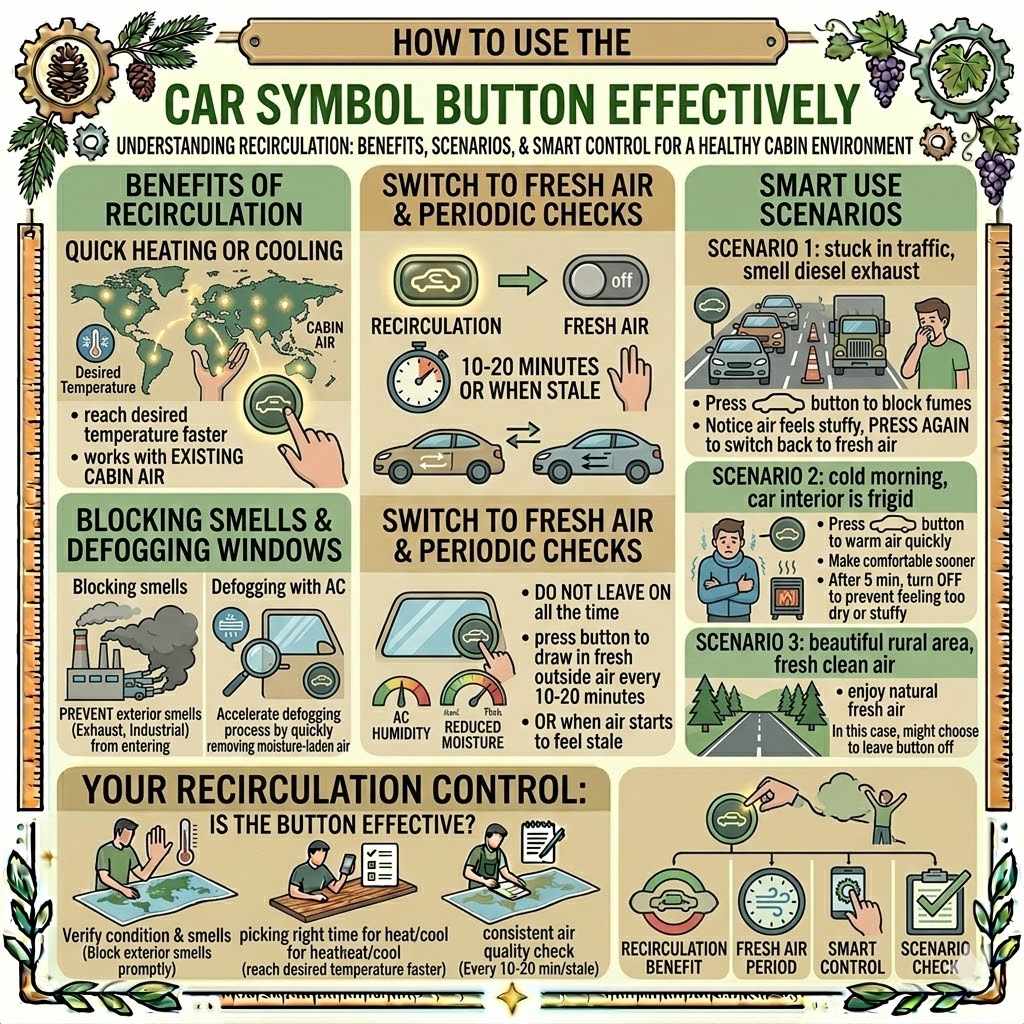
- For Quick Heating or Cooling: When you first get into a very hot or very cold car, press the car symbol button to activate recirculation. This helps the climate control system reach your desired temperature faster by working with the existing cabin air.
- To Block Smells: If you encounter unpleasant odors from traffic, industrial areas, or other sources outside your car, press the car symbol button to prevent those smells from entering.
- For Defogging Windows: In humid or cold weather, your windows might fog up. While AC is the primary defogger (as it dehumidifies air), sometimes using recirculation with the AC can accelerate the process by quickly removing moisture-laden air.
- Periodically Switch to Fresh Air: Do not leave the car symbol button on all the time. Every 10-20 minutes of driving, or as soon as the air starts to feel stale, press the button again to turn off recirculation and draw in fresh outside air.
This simple strategy ensures you get the benefits of recirculation when you need it most, without compromising on fresh air and a healthy cabin environment. It’s a key part of mastering your car’s climate control.
Sample Scenarios for Smart Use
Scenario 1: You’re stuck in heavy city traffic on a hot day. The car behind you is a diesel truck, and you can smell its exhaust. Press the car symbol button.
The fumes are blocked. After a few minutes, you notice the air feels a bit stuffy. Press the button again to switch back to fresh air and let your AC continue cooling.
Scenario 2: It’s a cold winter morning, and your car’s interior is frigid. You start the engine and turn on the heater. Press the car symbol button.
The heater will warm up the air inside the car more quickly, making you comfortable sooner. After 5 minutes, you turn off the car symbol button to let in fresh, warmer air and prevent the cabin from feeling too dry or stuffy.
Scenario 3: You’re driving through a beautiful, clean rural area with fresh air and no offensive smells. Your windows are slightly open. In this case, you might choose to leave the car symbol button off to enjoy the fresh air coming in naturally.
Frequently Asked Questions
Question: What does the car symbol button do if it’s not AC?
Answer: The car symbol button typically controls the air recirculation feature, meaning it recirculates air from inside your car’s cabin instead of drawing in fresh air from outside.
Question: When should I use the car symbol button?
Answer: Use it to quickly heat or cool your car’s interior, to block unpleasant outside odors, or sometimes to help defog windows faster.
Question: Is it bad to leave the car symbol button on all the time?
Answer: Yes, it is not ideal to leave it on all the time. Prolonged use can lead to stale air, reduced oxygen, and potential drowsiness.
Question: How do I know if the car symbol button is on?
Answer: Most cars have an indicator light on the button itself that illuminates when recirculation is active. Some cars might also show an icon on the climate control display.
Question: Does the car symbol button affect fuel economy?
Answer: Yes, using recirculation can indirectly improve fuel economy by allowing your AC or heater to reach the desired temperature faster, meaning they run for shorter periods.
Conclusion
The car symbol button is your control for air recirculation. It helps your car’s climate system work faster and blocks unwanted outside smells. Remember to use it when needed and switch back to fresh air regularly for optimal cabin air quality and comfort.
Master this simple function for a better drive.