What Does 303 Miles To E Mean On A Car Display? Explained
Seeing “303 miles to E” on your car’s dashboard can feel like a riddle. You glance down, expecting a simple number for your fuel, and instead, you see this cryptic message. It’s easy to feel a little unsure, maybe even a bit worried.
What exactly does this mean for your drive? Does it mean you have exactly 303 miles left? Or is it just a rough guess?
This number seems to change constantly, too. It can be frustrating when you just want clear information about your car’s fuel. Let’s break down this common display and understand it better.
We’ll cover what it means, why it fluctuates, and how to interpret it so you can drive with more confidence.
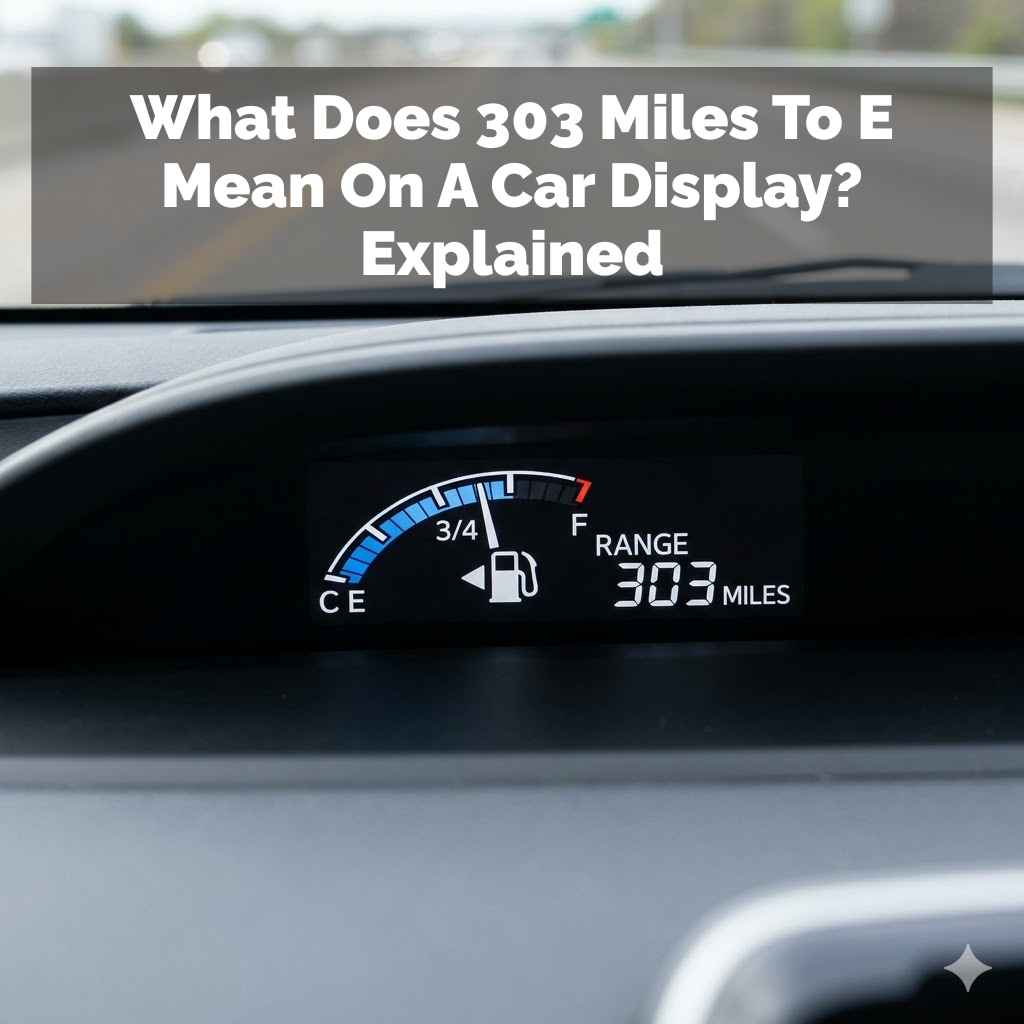
The “miles to empty” or “range” indicator on your car’s dashboard shows an estimated number of miles you can drive before your fuel tank is theoretically empty. The specific number, like 303 miles, is a dynamic calculation based on recent driving patterns and the current fuel level. It is not a precise guarantee but a helpful guide to gauge your fuel situation.
Understanding Your Car’s Range Indicator
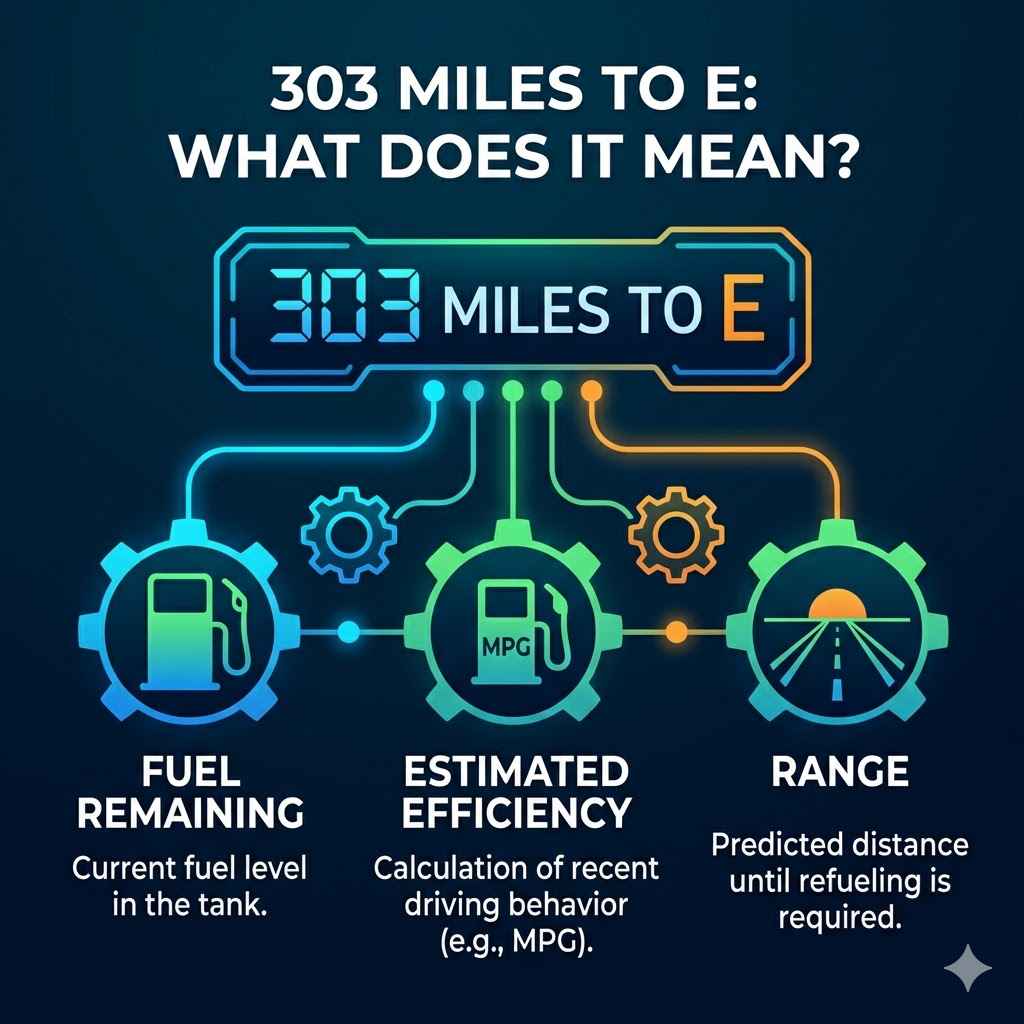
Your car’s computer is pretty smart. It watches how you drive. It also knows how much gas is in your tank. The “miles to E” number is its best guess. It tries to tell you how much further you can go. This system helps drivers avoid running out of gas. It’s a convenience feature that’s become standard on most modern cars.
How the Calculation Works
Think of it like this: your car measures the fuel left. Then, it looks at your recent fuel use. Did you just drive on the highway for a long time? That uses gas slower. The car might show a higher number. Did you spend a lot of time in stop-and-go city traffic? That uses gas faster. The number will drop more quickly.
The computer takes your current fuel level. It then divides that amount by your average fuel consumption rate. This rate is usually based on the last few minutes or miles of driving. So, if you’re getting great gas mileage, the miles to empty will seem higher. If your mileage drops, the number goes down.
Why the Number Changes So Much
This is where most confusion happens. The “miles to E” isn’t fixed. It’s a live calculation. That’s why you might see it jump up or down unexpectedly. For example, if you’re driving on the highway at a steady speed, you’re using fuel efficiently. The car might think you have more miles left.
Then, you hit city traffic. You slow down, speed up, and idle. Your car’s computer notices this change. It recalculates based on this less efficient driving. Suddenly, the miles to empty might drop by 20 or 30 miles. This can feel alarming, but it’s just the system updating its estimate.
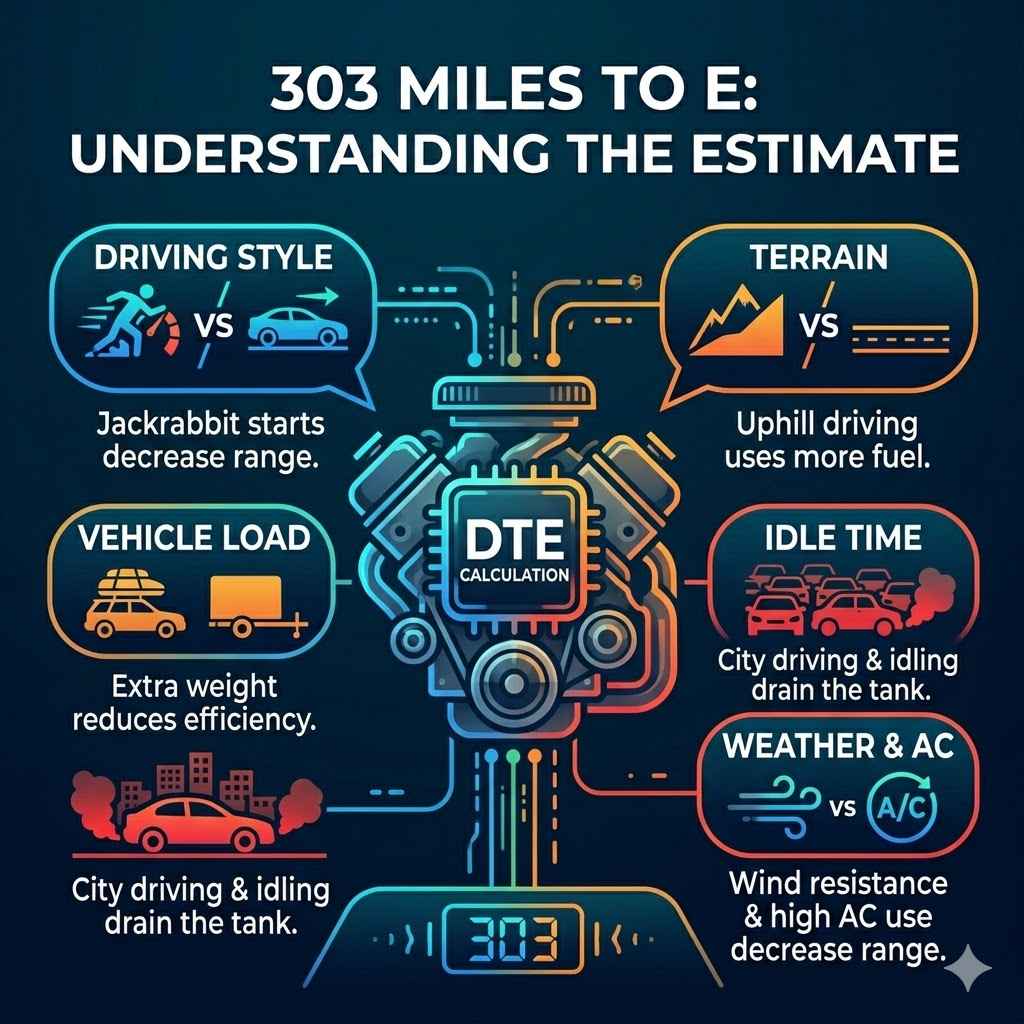
Another thing to consider is your driving style. Aggressive acceleration and braking use more fuel. So, if you’re driving spiritedly, the range will decrease faster. Driving calmly and smoothly helps your car’s computer calculate a more optimistic range.
My Own “Range Anxiety” Moment
I remember one time, I was heading out on a road trip. I’d filled up the night before. The next morning, my car displayed a whopping 450 miles to empty. I was thrilled! “Wow,” I thought, “I won’t even need to stop for gas for ages.” So, I packed up and headed out.
About an hour into the drive, I hit some unexpected traffic. It was a holiday weekend, and everyone was on the road. We were crawling along, stopping and starting for what felt like forever. I glanced at my dash. My heart sank a little. The “miles to empty” had dropped to about 380. In just an hour!
I started to feel that familiar pang of “range anxiety.” Was my car broken? Was the initial number completely wrong? I began to question everything. I drove more conservatively, trying to save gas. But the traffic just kept going. It was a good lesson for me. That number isn’t a crystal ball. It’s a smart guess that changes with the road conditions and how I drive. It taught me to use it as a guide, not a gospel.
Real-World Factors Affecting Your Fuel Range
It’s not just your driving style that impacts how far your car can go on a tank. Many other things play a role. These real-world conditions can make that number on your dashboard seem less like a solid promise and more like a flexible estimate.
Driving Conditions and Terrain
Driving uphill requires more engine power. This means your car uses more fuel. So, if you’re going through a hilly area, your range will decrease faster than on flat ground. The opposite is true for downhill driving, where your car might even regain a little bit of range if you’re coasting.
Weather also matters. Cold weather can affect your engine’s efficiency. Batteries don’t perform as well in the cold, and this can impact engine performance slightly. Also, driving in strong headwinds means your car has to work harder to push through the air. This uses more gas. Rain or snow can also increase rolling resistance, making your engine work harder.
Vehicle Load and Tire Pressure
The more weight you carry in your car, the more fuel it uses. This is simple physics. If you’ve loaded up your car for a camping trip or have several passengers, your fuel economy will likely decrease. This will directly impact your “miles to E” reading.
Proper tire pressure is also super important. Underinflated tires create more drag. Your car’s engine has to work harder to overcome this resistance. This leads to lower fuel efficiency. Keeping your tires properly inflated, as recommended in your car’s manual, can help maintain your fuel range.
What “303 Miles to E” Really Means for You
So, when you see “303 miles to E,” what should you take away from it? It’s a sign, not a strict deadline. Think of it as your car’s way of saying, “Based on how we’ve been driving lately, and with the fuel we have, we should have about this much further to go.”
When the Number is “Good”
If you see a high number, like 303 miles or more, and you’re about to start a drive that’s shorter than that, you’re probably fine. It means you likely have plenty of fuel to reach your destination. This number gives you peace of mind. You don’t need to worry about finding a gas station immediately.
When the Number Seems Low
If you see a low number, say under 50 miles, it’s time to start thinking about getting fuel. Don’t wait until it’s critically low. Most cars have a reserve fuel tank. This is why you can often drive a little further than the displayed range suggests. However, relying on this reserve is not a good idea. It can put stress on your fuel pump.
The “E” Itself
The “E” stands for Empty. When the number gets very low, or even disappears and the “E” is all you see, it means your fuel tank is very low. The warning light will usually come on around this point as well. At this stage, you should be actively looking for a gas station.
Understanding Your Fuel Gauge
Fuel Level vs. Range: Your fuel gauge shows the physical amount of gas. The “miles to E” is an estimate of distance.
They work together but are different.
Constant Recalculation: The range number updates constantly. It reflects your current driving conditions.
Ideal Conditions: Highway driving usually shows a higher range than city driving. This is due to better fuel efficiency.
Weight Matters: More passengers or cargo means more weight. This uses more fuel and lowers your range.
What to Do When the Number Changes Rapidly
It’s common to feel a bit of alarm when the “miles to E” drops significantly in a short period. This often happens when you switch from highway driving to city driving. Or maybe you’ve been stuck in slow-moving traffic.
Don’t Panic
First, take a deep breath. This is normal behavior for the system. It’s doing exactly what it’s supposed to do: recalculate based on new information. The initial higher number was likely based on more efficient driving. The lower number reflects less efficient driving.
Check Your Driving Habits
Are you accelerating hard? Are you braking suddenly? These actions use more fuel. Try to drive more smoothly. Ease into acceleration. Anticipate stops and brake gently. You’ll notice a difference in how quickly the miles to empty decreases.
Consider Your Route
If you know you have a lot of stop-and-go traffic or hilly terrain ahead, understand that your range will decrease faster. Plan your fuel stops accordingly. It’s always better to have a little more fuel than you think you need.
How to Get a More Reliable Fuel Estimate
While the “miles to E” is a helpful tool, it’s not perfect. For a more reliable picture, combine its information with other methods.
Track Your Fuel Stops
A simple way to understand your car’s real-world fuel economy is to track your fill-ups. When you fill your tank, note the number of gallons. Then, note your odometer reading. When you fill up again, note the new odometer reading and the gallons needed. Divide the miles driven by the gallons used. This gives you your actual miles per gallon (MPG).
Use the Fuel Gauge Visually
Don’t just rely on the number. Look at your actual fuel gauge. Is it showing a quarter tank? Half a tank? This visual cue can give you another perspective. If the “miles to E” seems high but the gauge looks low, it might be time for a fuel stop.
Know Your Car’s Reserve
Most cars have a reserve fuel capacity. This is the amount of fuel left when the gauge hits “E” or the warning light comes on. It’s usually enough for about 20-40 miles, but this varies greatly by car model. It’s good to know this as a backup, but don’t depend on it.
Quick Fuel Range Tips
- Smooth Driving: Accelerate and brake gently.
- Proper Inflation: Keep tires at the recommended pressure.
- Reduce Weight: Remove unnecessary heavy items.
- Check Conditions: Hills and headwinds use more fuel.
- Monitor Gauge: Use the “miles to E” with your fuel gauge.
Common Misconceptions About Fuel Range
People often misunderstand how the “miles to E” system works. Clearing up these common misconceptions can save you stress and potential fuel-related issues.
Misconception 1: It’s a Guaranteed Number
Many drivers believe the displayed number is a precise guarantee. They think if it says 100 miles, they will drive exactly 100 miles. This is not true. It’s an estimate based on recent data.
Misconception 2: The Car is Lying When It Changes
When the number drops suddenly, some people think the car is malfunctioning. They worry they have a fuel leak or a faulty sensor. In most cases, it’s just the system adjusting to new driving conditions.
Misconception 3: “E” Means Immediate Danger
While “E” means empty, most cars have a buffer. The warning light usually comes on before the tank is truly empty. You have some time to find a gas station once the light is on. However, it’s best to refuel soon after the light appears.
The Danger of Running Out of Gas
While the “miles to E” system is designed to prevent this, running out of gas does happen. It’s not just an inconvenience; it can be dangerous.
Safety Hazards
Stranding yourself on the side of a busy highway is risky. You’re exposed to passing traffic. It can also leave you vulnerable in remote areas, especially at night or in bad weather.
Mechanical Damage
Running a fuel tank completely dry can damage your car. The fuel pump relies on gasoline to stay cool. If there’s no fuel, the pump can overheat and fail. Also, sediment at the bottom of the tank can get sucked into the fuel system, causing clogs.
What “303 Miles to E” Signals About Your Car’s Health
For the most part, seeing “303 miles to E” is just a data point. It doesn’t usually signal a problem with your car’s health. However, if you notice drastic, unexplained changes or other symptoms, it might be worth investigating.
Unusual Fluctuations
If the number seems to be wildly erratic without any change in driving conditions, it might indicate an issue with the fuel level sensor. This sensor tells the car’s computer how much fuel is in the tank.
Persistent Low Readings
If your car consistently shows a much lower “miles to E” than you expect, even with careful driving and a full tank, it could mean your fuel economy has dropped. This might be due to a maintenance issue, like clogged air filters or spark plugs.
What to Look For
If you’re concerned, pay attention to other signs. Is your car running rough? Are you noticing a change in performance? If so, it’s always a good idea to consult a trusted mechanic.
Tips for Maximizing Your Fuel Range
Want to make that number on your dashboard work for you? There are several easy ways to improve your fuel economy and extend your driving range.
Regular Maintenance
Keeping up with your car’s maintenance schedule is key. This includes oil changes, air filter replacements, and ensuring your tires are properly inflated. A well-maintained car runs more efficiently.
Driving Habits
As mentioned, smooth acceleration and braking are crucial. Avoid excessive idling. If you’re going to be stopped for more than a minute, it’s often more fuel-efficient to turn off the engine.
Reduce Drag
Remove roof racks or cargo carriers when not in use. They create wind resistance, which hurts fuel economy. Keep your windows up at highway speeds.
Plan Your Trips
Combine errands to make fewer trips. Try to drive during off-peak hours to avoid stop-and-go traffic. Use GPS apps that show traffic conditions to help you find the fastest, most fuel-efficient routes.
Fuel Saving Strategies
Maintain Your Vehicle: Regular check-ups help. Clean air filters are important.
Drive Smart: Gentle acceleration and braking save gas. Avoid rapid starts.
Reduce Aerodynamic Drag: Remove external carriers when not needed. Close windows at speed.
Strategic Driving: Plan routes to avoid traffic. Combine short trips.
Tire Care: Proper tire pressure is essential for efficiency.
When to Seek Professional Advice
For the most part, “303 miles to E” is just information. But there are times when you should consult a professional.
Persistent Fuel Gauge Issues
If your fuel gauge seems erratic, or the “miles to E” reading is consistently and inexplicably wrong, your fuel level sensor might be faulty. A mechanic can diagnose and fix this.
Sudden, Drastic Drops in MPG
If you notice a significant, unexplained drop in your car’s average miles per gallon, it could point to an engine issue. This could be anything from a dirty fuel injector to a problem with the oxygen sensor.
Warning Lights
If the “check engine” light comes on along with fuel gauge anomalies, it’s definitely time for a professional check. This light indicates that the car’s computer has detected a problem.
FAQ: Your Burning Questions About “Miles to E” Answered
What does “303 miles to E” mean exactly?
Click to see answer
It means your car estimates it can travel approximately 303 more miles before the fuel tank is empty. This number is a dynamic calculation based on your current fuel level and recent driving patterns. It is not a guaranteed distance.
Why does the “miles to E” number change so much?
Click to see answer
The number changes because your car’s computer constantly recalculates the estimated range. It adjusts based on your current driving speed, acceleration, braking, and road conditions, which affect fuel efficiency.
Can I trust the “miles to E” display?
Click to see answer
It’s a helpful guide, but it’s an estimate, not a guarantee. It’s best to use it in conjunction with your actual fuel gauge and your own judgment about your driving conditions.
What happens if I drive until the “E” appears?
Click to see answer
When the “E” appears or the low fuel warning light illuminates, your fuel tank is very low. While there’s usually a reserve, running completely empty can damage your fuel pump and other engine components.
How many miles can I really drive after the “E” appears?
Click to see answer
This varies by car. Most cars have a reserve fuel capacity that allows you to drive an additional 20-40 miles. However, this is not reliable and can stress your vehicle’s systems.
Should I worry if my “miles to E” suddenly drops by 50 miles?
Click to see answer
Not necessarily. This often happens when you transition from highway driving to stop-and-go city traffic, which significantly impacts fuel economy. However, if it happens frequently and without explanation, consult a mechanic.
Does carrying extra weight in my car affect the “miles to E” number?
Click to see answer
Yes, absolutely. Extra weight makes your engine work harder, consuming more fuel. This will cause the “miles to E” calculation to decrease more rapidly.
Conclusion: Drive Smarter, Not Harder
Seeing “303 miles to E” on your display is a common experience for car owners. It’s a sophisticated system designed to give you a helpful estimate of your remaining range. Remember that this number is a dynamic prediction, influenced by many factors like your driving habits, terrain, and weather. It’s not a strict countdown. By understanding how it works and combining its information with your fuel gauge and knowledge of your car, you can navigate your journeys with greater confidence and avoid unnecessary stress.
Keeping your car well-maintained and adopting fuel-efficient driving practices will not only help you extend your range but also save you money in the long run. So, the next time you see that number, take a moment to appreciate the technology, understand its limitations, and drive on with peace of mind.
Products related to this article
Sponsored / affiliate links. As an Amazon Associate I earn from qualifying purchases. I may earn additional commission from eligible campaigns.