What Is the Meaning of Automobile Services?
Automobile service usually means work done on a vehicle to keep it running, such as inspections, oil changes, fluid checks, and repairs; in contracts, it can also mean transport service or other listed support. Miss that meaning and you may miss maintenance, pay for covered work, or misread a legal agreement. This guide explains the everyday, repair-shop, and contract meanings in plain English.
Scope of maintenance work and legal contracts
Automobile service means work carried out on a vehicle so it stays usable, safe, and roadworthy. In a repair shop, that can mean inspection, diagnosis, maintenance, replacement parts, or corrective repairs. In contracts, the same phrase may be narrowed or expanded by written scope, pricing, and timing terms.
Why the term can cover more than one kind of work
The phrase is broad because real service visits are broad. A service technician may inspect brakes, change oil, read fault codes, replace a battery, or fix a failed sensor in the same visit. In contract language, GenieAI states the term can cover repair, maintenance, or enhancement of vehicles, and can also include the sale of related parts or products.
That is why the wording matters. GenieAI also notes that automobile service sets expectations for quality, pricing, and turnaround, which means the phrase can affect both what gets done and what gets billed.
Where readers usually see the phrase
You will usually see automobile service on invoices, work orders, maintenance agreements, service agreements, repair request forms, and fleet contracts. GenieAI says the term often appears in maintenance agreements and can appear in a Master Service Agreement for fleet operators. It can also intersect with a Car Sale Agreement when delivery, prep, or included servicing is listed in writing.
Automobile service vs maintenance vs repair
Automobile service is the broad umbrella. Maintenance is the planned upkeep side of that umbrella, such as fluid changes, filter replacement, tire rotation, and scheduled checks. Repair is the fault-finding and correction side, such as fixing a leak, replacing worn brake pads, or diagnosing a no-start condition.
Routine upkeep and scheduled checks
Maintenance is usually predictable work tied to time or mileage. It helps prevent failure and keeps systems within spec. That is why people often say “car service” when they mean a scheduled visit rather than a breakdown.
Fault-finding and corrective work
Repair work starts when something is already wrong. A service technician may diagnose a warning light, trace an electrical fault, or replace a damaged part. An automobile repair shop is the place where automobiles are repaired by auto mechanics and electricians, so repair sits inside the larger service idea.
Where overlap creates confusion
The confusion comes from overlap. An oil change is maintenance, but the visit may also include inspection or diagnostics. A wheel bearing replacement is repair, but it may be written on a service invoice. In day-to-day speech, “service” may refer to either or both.
Say your sedan is due for a roughly 10,000-mile visit. The invoice lists an oil filter, cabin filter, brake inspection, and a coolant top-up. That is service in the maintenance sense. If the technician also finds a leaking valve cover and replaces the gasket, the same visit now includes repair work too.
What work is usually included?
Automobile service usually includes labor, and it may include parts, diagnostics, maintenance, warranty work, or some combination of those items. What is included depends on the visit type and the paperwork. A diagnostics-only appointment may find the problem without fixing it. A warranty visit may fix it at no charge to the owner, but the work is still service work.
Labor and parts
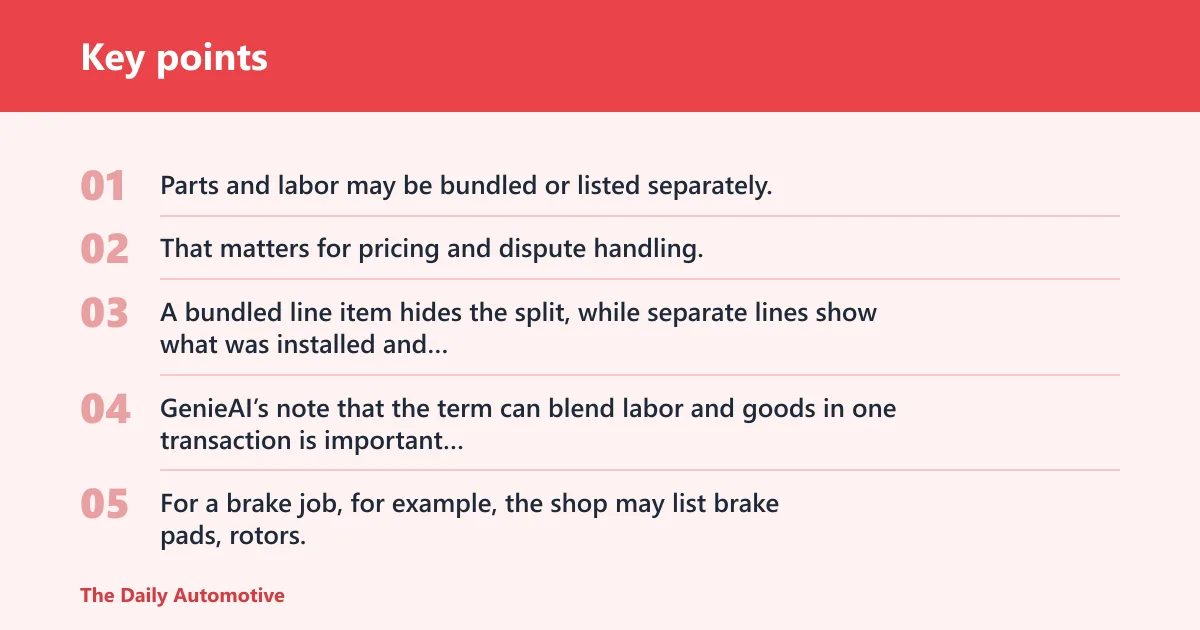
Parts and labor may be bundled or listed separately. That matters for pricing and dispute handling. A bundled line item hides the split, while separate lines show what was installed and what the technician was paid to do. GenieAI’s note that the term can blend labor and goods in one transaction is important here.
For a brake job, for example, the shop may list brake pads, rotors, and labor as separate line items. Another invoice may show one flat brake service price that includes both. The total can be the same, but the wording changes how you read the bill.
Diagnostics-only visits
A diagnostics-only visit is service work even if no part is replaced. The shop may charge for scanning codes, pressure testing, or checking wiring. The result is often a diagnosis report and a repair estimate, not a completed fix. That is a common point of confusion for drivers expecting a repair instead of an investigation.
Warranty work and dealer visits
Warranty work is often billed to the manufacturer or covered under a warranty promise, so the owner may not pay the full amount. Dealer visits can also combine scheduled maintenance, inspection, recalls, and warranty repair. The invoice may still call all of it service, but the payor, scope, and timing can differ.
Turnaround time
Turnaround time means the completion timeframe promised for the job. GenieAI says automobile service sets expectations for turnaround, which matters when a car is needed for work or school. A same-day oil change and a three-day diagnostic repair are both service, but they carry different time expectations.
Service comparison table
This table separates everyday use, repair-shop use, and contract use so the same phrase is easier to read in context.
| Item | Everyday meaning | Repair-shop meaning | Contract meaning |
|---|---|---|---|
| Labor | Work done on the vehicle | Technician time for inspection, diagnosis, maintenance, or repair | May be billed separately or included in a fixed price |
| Parts | Pieces needed to keep the car working | Replacement items such as filters, pads, batteries, or sensors | May be included, excluded, or capped by the agreement |
| Diagnostics | Finding out what is wrong | Testing, scanning, and fault tracing before repair | May be billable even if no repair follows |
| Maintenance | Routine upkeep | Scheduled services such as oil changes and inspections | Often the core covered scope in a maintenance agreement |
| Warranty work | Covered fix under a promise | Repair performed under warranty rules | May be excluded, included, or sent to a separate billing channel |
| Turnaround time | How long the car stays at the shop | Time needed to finish the job | Often stated as same-day, next-day, or another agreed window |
- Included: labor that the invoice or contract names.
- Included: parts listed on the work order or agreement.
- Included: diagnostics if the document says scanning or testing is billable.
- Excluded: unrelated repairs not written in the request.
- Excluded: warranty work unless the agreement says it is covered.
- Excluded: turnaround promises that were never written down.
How contracts use the term
In contracts, automobile service is not just a shop visit. It is a scope term that tells both sides what the provider must do, what the customer will pay, and how fast the work must be completed. GenieAI says the term can appear in maintenance agreements and Master Service Agreements, and that precision matters because labor and goods may be mixed in one transaction.
Maintenance agreements
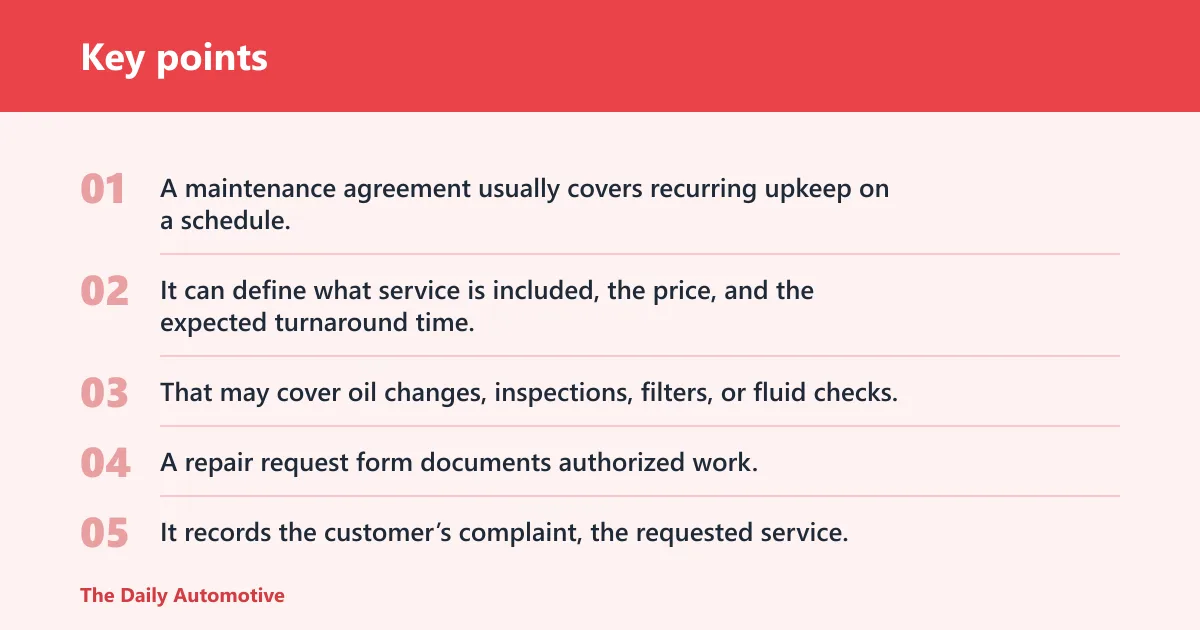
A maintenance agreement usually covers recurring upkeep on a schedule. It can define what service is included, the price, and the expected turnaround time. That may cover oil changes, inspections, filters, or fluid checks, while leaving collisions, abuse, or unrelated defects outside the agreement.
Repair request forms
A repair request form documents authorized work. It records the customer’s complaint, the requested service, and the shop’s permission to inspect or repair. That paper trail helps later when the bill includes diagnostics, a replaced part, or an additional repair that the customer approved by phone or message.
Master service agreements
A Master Service Agreement is common for fleets or businesses with repeated vehicle work. It sets recurring service obligations, pricing logic, billing terms, and timing expectations across many vehicles instead of one repair order. For a fleet operator, that wording can control everything from routine maintenance to urgent roadside repairs.
Suppose a delivery company signs a fleet agreement for a few dozen vans. The contract says oil service is covered every 7,500 miles, brake inspection is included, and emergency repairs need next-business-day scheduling when parts are available. That is automobile service written as a contract obligation, not a casual shop promise.
What does automotive service mean?
Automotive service is usually treated as a synonym for automobile service. Search results often use the phrases interchangeably, and many shops do too. The context still matters, though, because automotive service can mean a broad industry category, a repair visit, or a contract term depending on the document in front of you.
Why context still matters
In a consumer setting, automotive service may mean a tune-up or oil change. In a dealer setting, it may cover maintenance, recalls, and warranty work. In a fleet contract, it may mean ongoing service obligations, parts supply, and turnaround targets. The phrase stays similar, but the scope changes.
How search results may use the phrase
Search engines often treat automobile service and automotive service as close matches. That helps users find the same kind of content, but it can hide important differences in document language. A work order, warranty booklet, and fleet contract may all use “service” while meaning different things.
What is a service technician?
A service technician is the person who inspects, diagnoses, maintains, and replaces parts on a vehicle. In an automobile repair shop, the technician may check systems, read fault codes, perform scheduled upkeep, and complete repair work. The title covers more than one task because service itself covers more than one task.
Core duties
Core duties often include a walkaround inspection, test results, fluid checks, and repair recommendations. A technician may also document the findings so the invoice matches the work performed. That record helps when parts and labor are separated or when the customer wants to compare estimates.
Inspections and diagnosis
Inspection and diagnosis are often the first steps. The technician looks for wear, leaks, fault codes, or physical damage, then narrows the problem. A diagnostics-only visit may end there, while a repair order moves on to parts replacement or corrective work.
Parts replacement and repairs
When replacement is needed, the technician removes the failed item and installs the new one. That could mean brake pads, a sensor, a battery, or a belt. The service record should show what was replaced, because that line item affects warranty handling, payment, and future troubleshooting.
Frequently asked questions
What is the meaning of automobile services?
“Automobile services” is the plural form people use for work done on vehicles, usually in shops, dealerships, or fleet programs. It can refer to maintenance, repair, diagnostics, parts replacement, or contract-covered work. The exact meaning depends on the invoice, agreement, or request form in front of you.
What is the meaning of car service?
Car service usually means routine maintenance or repair work on a car. In everyday speech, it often means an oil change, inspection, tire rotation, or another scheduled visit. In a contract, it may be narrower and list exactly which jobs are covered and which are excluded.
What is the meaning of pms in car service?
In car service, PMS usually means periodic maintenance service. It refers to scheduled upkeep done at set mileage or time intervals, such as oil changes, inspections, fluid checks, and filter replacement. The exact checklist can vary by brand, model, and the service agreement being used.
What is the meaning for auto?
“Auto” is a short form people use for automobile, which means a motor vehicle such as a car. In service wording, “auto” often appears in phrases like auto repair, auto service, or automotive service. The short form is common in everyday speech and shop documents.
What is the meaning of consider for auto upgradation?
“Consider for auto upgradation” usually means think about improving a vehicle with added or better equipment. That could include safety features, infotainment, lighting, or performance-related changes. The phrase is not fixed law or technical shorthand; it simply signals that an upgrade option should be reviewed.
Products related to this article
Sponsored / affiliate links. As an Amazon Associate I earn from qualifying purchases. I may earn additional commission from eligible campaigns.