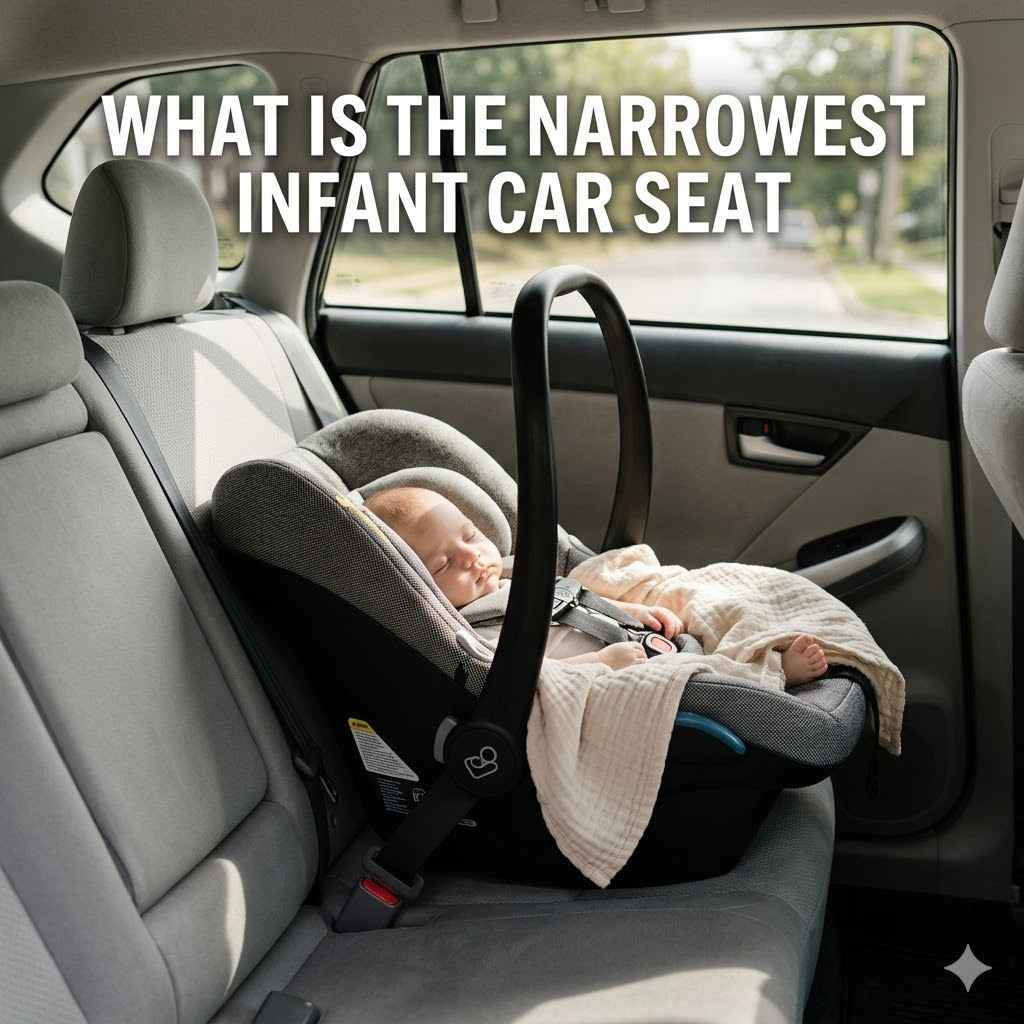
What Is the Narrowest Infant Car Seat
Trying to find the right car seat can feel a bit tricky, especially when you’re looking for something specific like the narrowest infant car seat. Many parents wonder about this because fitting multiple car seats in a car or simply getting a good fit for a smaller vehicle can be a challenge. Don’t worry, we’re here to make it super simple.
We’ll walk you through exactly what makes a car seat narrow and how to find the best one for your needs, step by step. Get ready to discover how easy it can be to choose the right car seat.
Finding the Narrowest Infant Car Seat
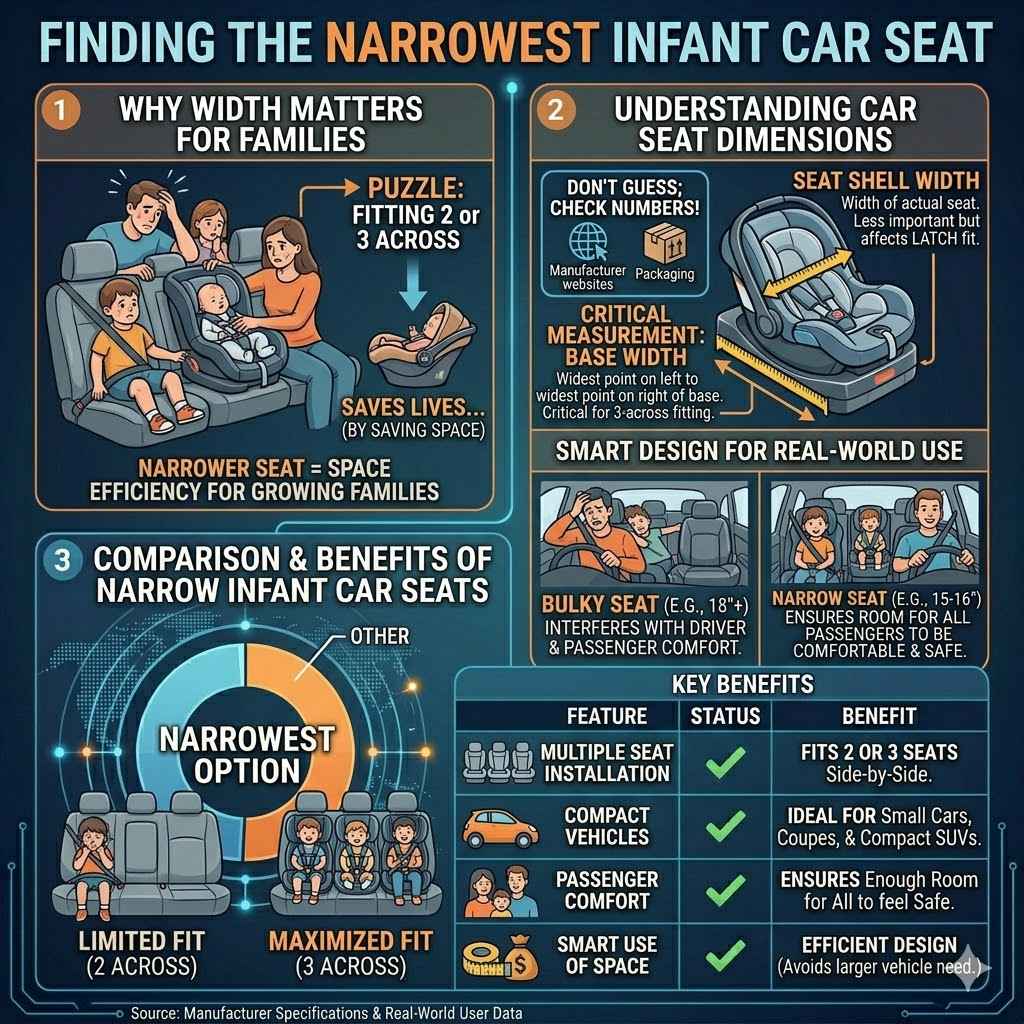
When parents ask, “What is the narrowest infant car seat?” they usually have a very practical reason. Often, it’s about fitting multiple children in a vehicle’s backseat. Having two or three car seats side-by-side can be a real puzzle.
A narrow car seat takes up less space, making it possible to fit two or even three seats across a standard backseat. It can also be important for smaller cars or vehicles with less rear seating space, like coupes or compact SUVs. This need for space efficiency is a common concern for growing families.
Understanding Car Seat Dimensions
When you’re looking at car seats, the dimensions are key to figuring out how narrow they are. You’ll typically find these measurements listed by the manufacturer. The most important measurement for narrowness is the width of the car seat base.
This is the part that sits on your vehicle’s seat. Sometimes, the width of the seat shell itself is also given, which is the part where your baby sits. Knowing these numbers helps you compare different models easily.
The width of a car seat base can vary quite a bit. Some bases might be over 18 inches wide, while others can be as slim as 15 or 16 inches. Even a one or two-inch difference can be enough to make a big impact when you’re trying to fit multiple seats.
Always look for the specific width dimensions provided in the product specifications. This information is usually found on the manufacturer’s website or on the product packaging. Don’t guess; always check the numbers.
- Base Width: This is the measurement from the widest point on the left to the widest point on the right of the car seat’s base. It’s the most critical factor for fitting multiple seats.
- Seat Shell Width: This is the width of the actual seat where the baby rests. While less important for side-by-side fitting, it can affect how easily the seat slides into a car’s LATCH system or between other seats.
Some parents also consider the height and depth of the car seat, but for the question “What is the narrowest infant car seat?”, width is the primary concern. A narrow seat can make the difference between a comfortable fit and a struggle. It’s about making sure everyone can travel safely and without feeling too squeezed.
Why Width Matters for Families
The width of an infant car seat directly impacts how well it fits in different vehicles and how many can be installed. For parents with more than one child, especially if they have twins or a mix of older and younger siblings who still need car seats, fitting two or three seats across the back is often necessary. A narrow infant car seat can be a lifesaver in these situations.
Without a narrow option, some families might even need to consider a larger vehicle.
Beyond fitting multiple seats, a narrow car seat can also be beneficial for a single child. In some cars, especially those with bucket seats or less space between the driver and passenger seats, a bulky car seat can interfere with the driver’s ability to adjust their seat properly. A narrower seat ensures there’s enough room for all passengers to be comfortable and safe.
It’s about smart design for real-world use.
Consider a family with a toddler and a newborn. They need to fit both an infant car seat and a convertible car seat. If the infant car seat is wide, it might push the convertible seat into an awkward position, or vice-versa.
A narrow infant car seat could allow both to sit comfortably, making trips much easier. This is a common scenario where width becomes a deciding factor.
Best Narrow Infant Car Seat Options
When you’re searching for “What is the narrowest infant car seat?”, you’ll find a few brands consistently offer slimmer designs. These seats are engineered to maximize space without sacrificing safety. They often feature innovative internal structures and more streamlined shell designs.
Knowing which models to look for can save you a lot of time and effort.
Top Brands Known for Narrow Seats
Several manufacturers are known for creating infant car seats that are on the narrower side. While specific models can change with new releases, some brands have a reputation for prioritizing compact designs. These often include brands like Chicco, Graco, and UPPAbaby, though it’s always best to check the exact dimensions of the current models.
Chicco often has models that are praised for their slim profile. For example, their KeyFit series has been a popular choice for parents needing to fit multiple seats. Graco also offers a range of infant car seats, and some of their models are designed to be narrower than average.
UPPAbaby is another brand that sometimes features sleeker designs, though they can be at a higher price point.
- Chicco: Often features seats with base widths around 17 inches, making them a good option for tight spaces.
- Graco: Some Graco models have base widths in the 16-17 inch range, offering competitive slimness.
- UPPAbaby: While sometimes a bit wider, certain UPPAbaby infant seats can still offer a more compact fit than bulkier alternatives.
It’s important to note that even within a brand, different models will have different dimensions. Always verify the specific width of the base and seat you are considering. Reading reviews from other parents who have installed these seats in similar vehicles can also provide valuable insights.
Comparing Seat Widths and Features
When comparing different car seats, looking at a table of their dimensions and features can be very helpful. This allows you to see side-by-side exactly how slim each option is and what other benefits they offer. Safety is always the top priority, so ensure any narrow seat you choose meets all safety standards.
A narrow infant car seat doesn’t mean it’s less safe. Manufacturers use advanced engineering to ensure these compact designs still provide excellent protection. Features like energy-absorbing foam and reinforced frames are common.
You’ll also want to consider ease of installation, weight of the seat, and compatibility with strollers if you plan to use it as part of a travel system.
| Brand | Model Example | Base Width (inches) | Key Features |
|---|---|---|---|
| Chicco | KeyFit 30 | 17.0 | Easy installation, good padding, compatible with Chicco strollers. |
| Graco | SnugRide SnugLock 35 Elite | 16.5 | Lightweight, secure installation system, adjustable headrest. |
| Britax | B-Safe Gen2 | 17.2 | Steel frame, multiple recline positions, smooth ride. |
| Cybex | Aton 2 | 16.8 | European design, sleek look, excellent safety ratings. |
This table gives a general idea, but remember that specific model updates can change these numbers. Always check the manufacturer’s official specifications for the most current information. When asking “What is the narrowest infant car seat?”, focusing on these comparison points is key to making an informed decision.
Installation Tips for Narrow Seats
Installing a narrow infant car seat can sometimes be easier due to its smaller footprint. However, proper installation is crucial for any car seat, regardless of its width. Always refer to both your car seat manual and your vehicle’s owner’s manual for specific instructions.
One common challenge is ensuring the car seat is at the correct recline angle. For newborns, this is especially important to keep their airway open. Many infant car seats have built-in recline indicators or level lines to help with this.
If your vehicle seat is very sloped, a pool noodle or a rolled towel might be needed to achieve the correct angle, but always check your car seat manual to see if this is permitted.
When installing multiple narrow car seats side-by-side, you might find that they fit snugly against each other. This can sometimes help secure them more firmly, but also make it harder to get the straps perfectly tight without them interfering. It’s important to ensure that no part of one car seat is pressing on the adjustment levers or buckles of another.
Safety should never be compromised by trying to fit too many seats.
- Check Vehicle Compatibility: Ensure your car’s LATCH anchors are accessible and that the seatbelt path is clear.
- Use LATCH or Seatbelt: Decide whether to use the LATCH system or the vehicle’s seatbelt. Both are safe when installed correctly. Many narrow car seats come with a seatbelt lock-off feature for a secure installation without the LATCH system.
- Achieve a Tight Fit: Push down on the car seat with your weight while tightening the LATCH strap or seatbelt. The seat should not move more than one inch in any direction at the belt path.
- Verify Recline Angle: Use the recline indicator on the car seat to ensure it’s at the appropriate angle for your baby’s age and weight.
Fitting three narrow car seats across a back seat can be a challenge even for the slimmest options. Sometimes, it might require installing one seat with a seatbelt and two with LATCH, or vice versa, depending on the vehicle and car seat design. It’s a puzzle that often requires trial and error.
Safety Features of Narrow Infant Car Seats
When parents ask, “What is the narrowest infant car seat?”, they are often concerned that a smaller size might mean fewer safety features. Fortunately, this is rarely the case. Reputable manufacturers design their narrow car seats to meet or exceed all federal safety standards, ensuring your baby is well-protected.
Crash Protection Technologies
Narrow infant car seats incorporate various technologies to protect your baby in the event of a crash. These include advanced side-impact protection systems, which are designed to shield your baby’s head and body from crash forces in a side collision. Many seats use energy-absorbing foam, often EPS (Expanded Polystyrene) or EPP (Expanded Polypropylene), in the headrest and body of the seat.
These foams work by compressing and dissipating the energy from an impact. This means less force is transferred directly to your baby. Some seats also feature a steel-reinforced frame, which adds strength and stability to the entire structure.
This provides a solid foundation during a crash.
When you’re looking at a specific model, check for features like:
- Side-Impact Protection: Look for deep side wings and energy-absorbing materials around the head and torso. This is a critical safety feature, especially in everyday collisions.
- Energy-Absorbing Foam: Many narrow seats still use high-quality foams to cushion impacts.
- Reinforced Frame: A strong internal structure provides overall stability.
These features are not compromised by a narrower design. Manufacturers are skilled at integrating them efficiently into compact car seats.
Harness Systems and Adjustments
The harness system is your baby’s primary restraint in a car seat. For infant car seats, a 5-point harness is standard. This system has five points of contact: two over the shoulders, two at the hips, and one between the legs.
This design distributes crash forces across the strongest parts of your baby’s body.
Many narrow infant car seats feature no-rethread harnesses. This means you can adjust the harness height and shoulder strap position simultaneously by moving a headrest. This is incredibly convenient because it ensures the harness is always at the correct height for your growing baby, which is essential for proper fit and safety.
Improperly positioned harnesses are a common installation error.
Here’s what to look for in a harness system:
- 5-Point Harness: This is the industry standard and most effective type of harness for infant car seats.
- No-Rethread Harness: Makes adjusting straps easier as your baby grows, ensuring a snug fit every time.
- Easy-to-Use Buckle: The buckle should be easy for you to operate but difficult for a child to unbuckle.
- Harness Padding: Comfortable padding on the straps can prevent chafing and ensure the straps stay in place.
A well-fitting harness is paramount. Even the narrowest seat won’t be safe if the harness is too loose.
Weight Limits and Longevity
Infant car seats have specific weight and height limits. It’s crucial to adhere to these to ensure your baby remains safely contained. Typically, infant car seats are designed for babies from birth up to around 22-35 pounds, or until their head is less than one inch from the top of the carrier.
When considering “What is the narrowest infant car seat?”, also check its longevity. Some narrow seats might have lower weight limits than bulkier models, meaning your baby might outgrow them sooner. However, many modern narrow car seats now offer higher weight capacities, extending their usefulness.
Consider the following regarding weight limits:
- Weight Range: Ensure the seat accommodates your baby from birth up to the specified maximum weight.
- Height Limit: Check the maximum height your baby can be while still fitting correctly in the seat.
- Outgrow Indicators: Some seats have clear indicators for when your baby is too tall or too heavy for the seat.
A well-chosen narrow infant car seat can provide excellent safety for many months. It’s a balance of size, safety features, and your baby’s growth.
When Is a Narrow Seat Essential
The need for a narrow infant car seat arises in several common situations. It’s not just about having a small car; it’s about how you use your vehicle and who you need to fit in it. Understanding these scenarios can help you determine if a narrow seat is the right choice for your family.
Fitting Multiple Children
This is perhaps the most common reason parents seek out narrow infant car seats. If you have twins, or if you have multiple children who all require car seats (e.g., an infant, a toddler in a convertible seat, and an older child in a booster), fitting them all across the back seat of your vehicle can be a challenge. Even in larger SUVs, fitting three car seats side-by-side can be incredibly tight.
A narrow infant car seat can make the difference between fitting two seats comfortably or being able to squeeze in three. For instance, if two standard infant car seats take up almost the entire backseat, leaving no room for a third child’s seat, a narrow option for one or both infant seats might resolve this. This is especially true in vehicles with sculpted rear seats or center consoles that intrude into the seating area.
Consider a family with three young children:
- The oldest child needs a booster seat.
- The middle child is in a convertible car seat.
- The youngest is an infant needing an infant car seat.
If the infant car seat and the convertible car seat are both wide, they might not leave enough space for the booster seat to be installed safely or correctly. A narrow infant car seat could open up that much-needed space.
Vehicles with Limited Backseat Space
Not all vehicles have cavernous backseats. Smaller sedans, coupes, and even some compact SUVs can have limited width. In these vehicles, a wide car seat can obstruct the front passenger seat, making it difficult for an adult to sit comfortably.
This can be a significant issue for parents who frequently travel with a front-seat passenger.
If you drive a car with a smaller rear seating area, you’ve likely encountered the problem of a car seat taking up more space than you expected. A narrow infant car seat minimizes this intrusion. It allows for more versatility in how the backseat is used, whether for passengers or other car seats.
Here’s a sample scenario:
- A parent drives a compact sedan.
- They need to install an infant car seat for their new baby.
- They also have a partner or another adult who often rides in the car.
A wide infant car seat might push the front passenger seat so far forward that it’s unusable for an adult. A narrower seat could allow the front passenger seat to be positioned more comfortably, making the vehicle more practical for everyday use.
Car Seat Combinations
Sometimes, the need for a narrow seat isn’t about fitting three seats, but about how two specific seats interact. For example, pairing an infant car seat with a convertible car seat can be tricky. Convertible seats are often wide and bulky to accommodate a larger range of child sizes.
If the infant car seat is also wide, they might not fit side-by-side in the backseat without pushing one into the door or the other into the center console.
In such cases, selecting a narrower infant car seat can create the necessary clearance. This allows both seats to be installed correctly and safely, without compromising the space or stability of either. It’s about finding the right combination of seats that work together within your vehicle’s constraints.
Comparing Narrow Infant Car Seats
When you’re deep in the search for “What is the narrowest infant car seat?”, a direct comparison is invaluable. Seeing the specifications and features side-by-side helps you make the most informed choice for your specific needs and vehicle.
Key Comparison Factors
Beyond just the width, several other factors are crucial when comparing narrow infant car seats. Each of these contributes to the overall safety, convenience, and suitability of the seat for your family.
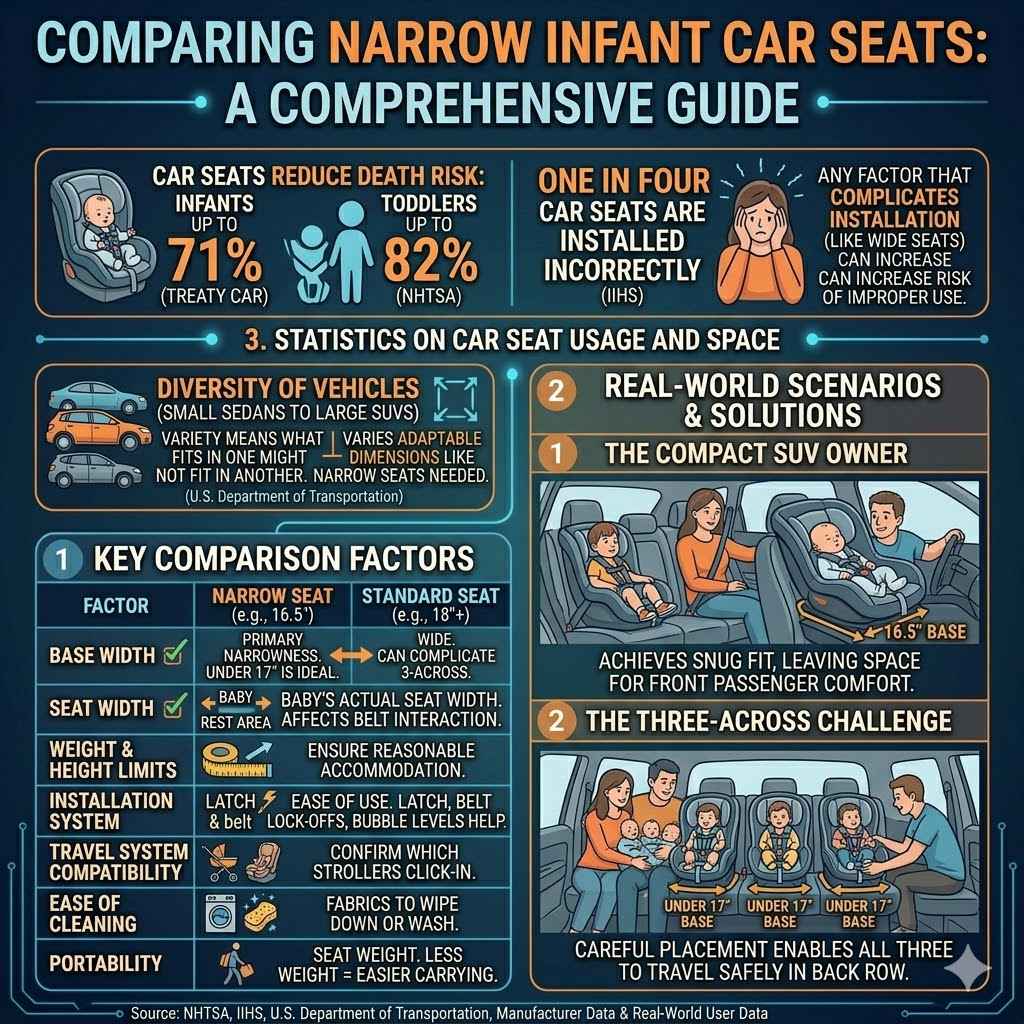
- Base Width: This is the primary measurement for narrowness. Look for widths under 17 inches if possible.
- Seat Width: The width of the actual seat where the baby sits. While less critical for fitting multiple seats side-by-side, it can affect how the seat interacts with vehicle belts.
- Weight and Height Limits: Ensure the seat accommodates your baby for a reasonable period.
- Installation System: Check for ease of installation using LATCH or seat belts. Features like lock-offs and bubble levels are helpful.
- Travel System Compatibility: If you plan to use a stroller, confirm which strollers the infant seat clicks into.
- Ease of Cleaning: Fabrics that are easy to wipe down or remove and wash are a huge plus.
- Portability: How heavy is the seat itself? This matters if you’ll be carrying it around often.
Prioritizing these factors will help you find a narrow seat that doesn’t compromise on essential features.
Real-World Scenarios and Solutions
Let’s look at some practical situations where a narrow infant car seat proves its worth.
Scenario 1: The Compact SUV Owner
A couple has a compact SUV and is expecting their second child. They already have a convertible car seat for their toddler. They need an infant car seat that will fit alongside the convertible seat without making the front passenger seat unusable.
By choosing a narrow infant car seat with a base width of around 16.5 inches, they found they could achieve a snug fit for both seats, leaving enough space for the front passenger to sit comfortably.
Scenario 2: The Three-Across Challenge
A family with triplets needs to install three infant car seats across the back of their minivan. Standard infant car seats are too wide. They opt for three of the narrowest infant car seats available, each with a base width under 17 inches.
Even with these slim options, fitting them perfectly snug requires careful placement and ensuring no part of one seat interferes with another. This allows all three babies to travel safely in the back row.
These examples highlight how a narrow infant car seat can solve very specific, practical problems for families.
Statistics on Car Seat Usage and Space
While specific statistics on the demand for “narrowest infant car seat” are hard to pinpoint, general car seat usage data reveals the importance of proper fit. According to the National Highway Traffic Safety Administration (NHTSA), car seats reduce the risk of death in crashes by up to 71% for infants and 82% for toddlers. This underscores the critical need for correct installation and a proper fit.
A study published by the Insurance Institute for Highway Safety (IIHS) highlighted that one in four car seats are installed incorrectly. While this isn’t directly about width, it shows that any factor that complicates installation, like trying to fit wide seats, can increase the risk of improper use. A narrower seat can simplify installation in some cases, reducing potential errors.
Another point to consider is the diversity of vehicles on the road. Data from the U.S. Department of Transportation shows a wide range of vehicle types, from small sedans to large SUVs.
This variety means that what fits perfectly in one vehicle might not fit at all in another. This variability emphasizes the need for seats with adaptable dimensions, like narrow infant car seats.
Frequently Asked Questions
Question: What is the main reason parents look for the narrowest infant car seat?
Answer: Parents often look for the narrowest infant car seat to fit multiple car seats side-by-side in their vehicle, especially for families with twins or multiple young children. It’s also important for smaller cars or vehicles with limited backseat space.
Question: Do narrow infant car seats compromise on safety?
Answer: No, reputable narrow infant car seats meet or exceed federal safety standards. Manufacturers engineer them with advanced safety features like side-impact protection and energy-absorbing foam, just like wider models.
Question: How can I tell if a car seat is narrow enough for my car?
Answer: You should check the product specifications for the car seat’s base width. Measure your car’s backseat width and compare it to the seat’s dimensions. Reading reviews from other parents with similar vehicles can also be helpful.
Question: Is it safe to have car seats touching each other in the backseat?
Answer: It can be safe for car seats to be snug next to each other, but they should not be pushing on any adjustment levers or buckles of the adjacent seat. Ensure each seat is securely installed independently.
Question: What should I do if I can’t fit all my needed car seats in my current vehicle?
Answer: If fitting all necessary car seats is a challenge, consider looking for narrower car seat options, trying different combinations of seats (e.g., infant seat + convertible seat), or exploring vehicles with a wider backseat or three-row seating.
Summary
Finding the narrowest infant car seat is often about maximizing space in your vehicle. Whether you need to fit multiple seats, own a smaller car, or simply want a snugger fit, the width of the car seat base is key. Look for models around 16-17 inches wide from trusted brands.
Always prioritize safety features and proper installation, as a narrow seat offers no less protection. Making an informed choice ensures safety and comfort for your little one.