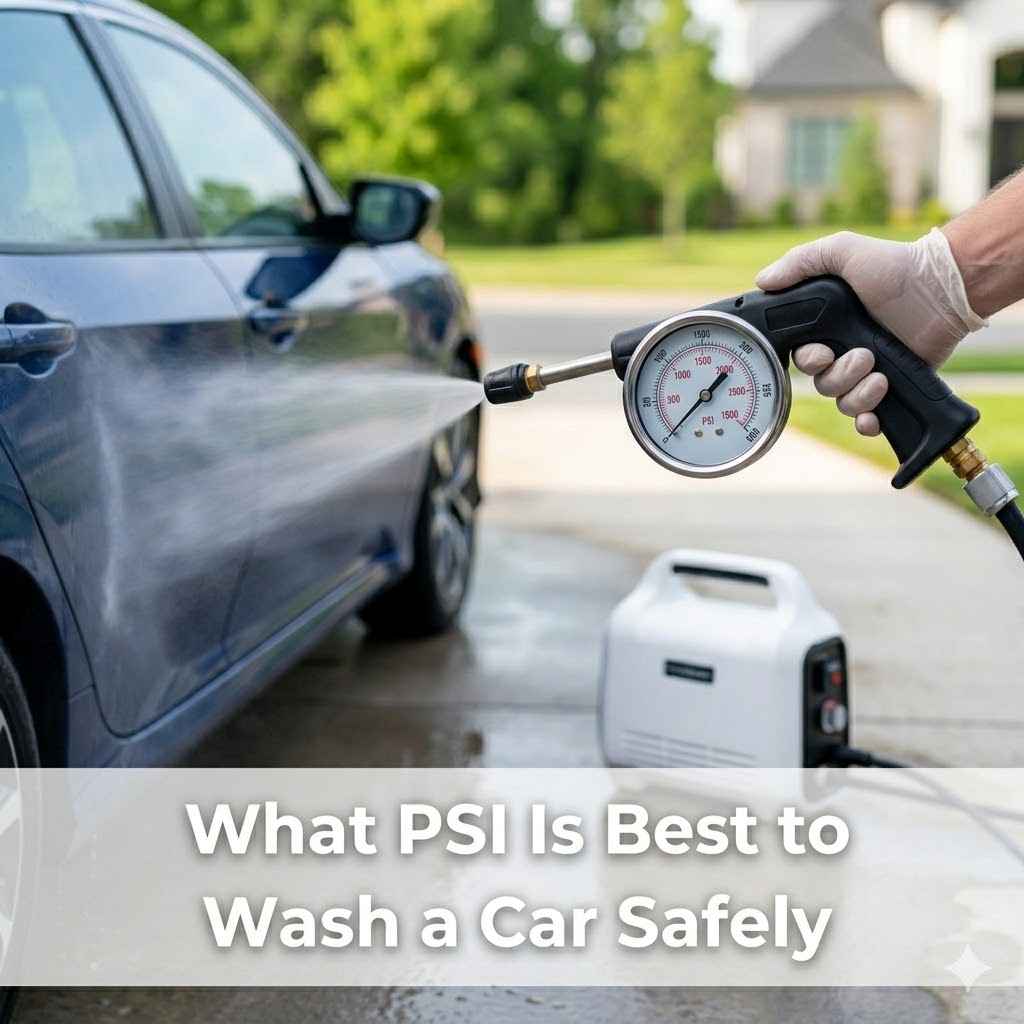
What PSI Is Best to Wash a Car Safely
Many car owners wonder, What PSI Is Best to Wash a Car Safely? It can feel a bit tricky when you first start washing your car with a pressure washer. You want a clean car, but you don’t want to damage the paint. This guide makes it super simple.
We’ll walk through exactly what you need to know step-by-step. Get ready to learn how to wash your car the right way.
Choosing the Right Pressure Washing PSI for Cars
When you’re thinking about cleaning your car, especially with a pressure washer, the pressure setting, or PSI, is super important. Too much pressure can cause harm, while too little might not get the job done. This section will help you understand why PSI matters so much for your car’s finish.
We will explore the ideal range and why it’s best for keeping your car looking great without any damage.
Understanding PSI and Paint Damage
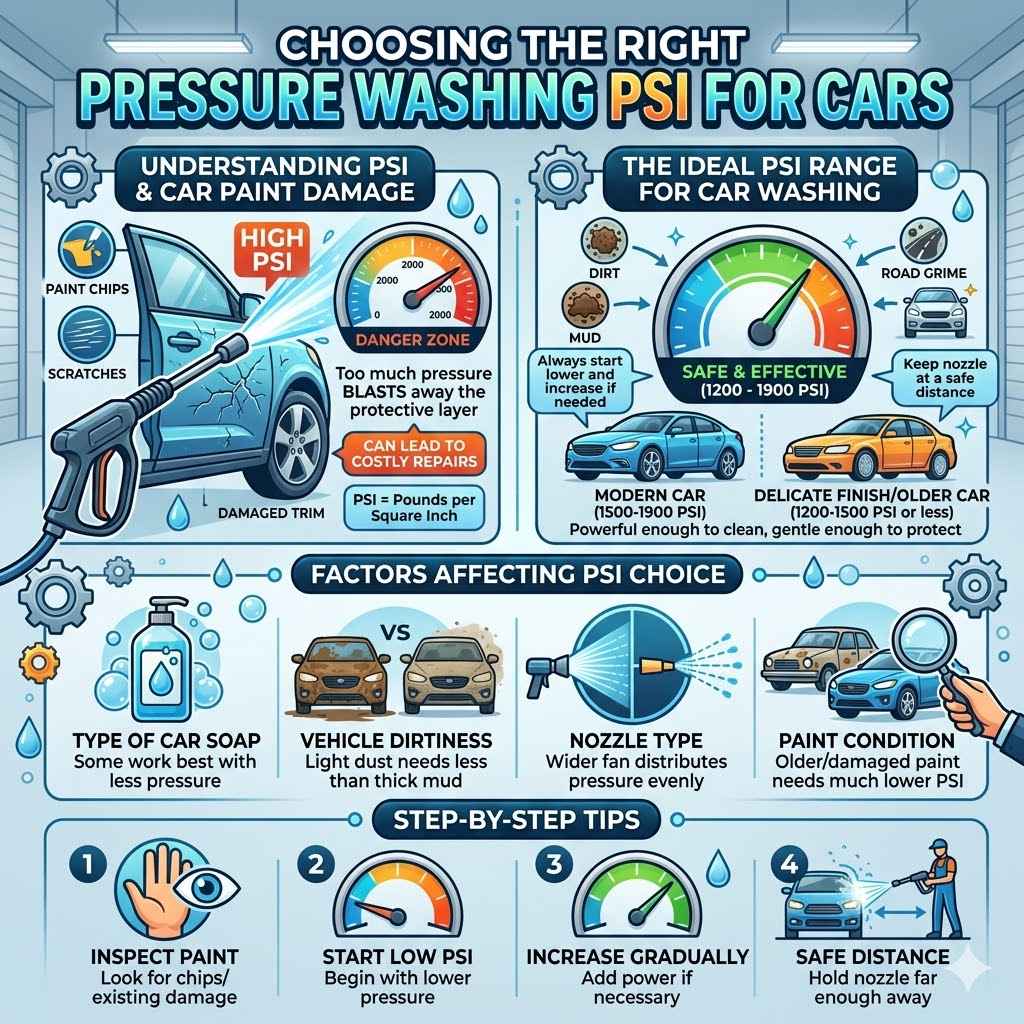
PSI stands for Pounds per Square Inch. It’s how we measure the force of water coming out of your pressure washer. Think of it like the strength of a water stream.
For car washing, this force needs to be just right. If the PSI is too high, the water can hit your car’s paint with too much power. This can chip the paint, scratch the surface, or even damage delicate trim.
It’s like using a super strong jet of water that’s more powerful than your car’s paint can handle.
The paint on your car isn’t as tough as concrete. It’s designed to look good and protect the metal underneath. When you apply too much pressure, you’re essentially blasting away at this protective layer.
This can lead to costly repairs. We want to remove dirt and grime, not the paint itself. Finding that sweet spot for PSI is key to a safe and effective car wash.
The Ideal PSI Range for Car Washing
For most car washing tasks, a PSI between 1200 and 1900 is generally considered safe and effective. This range is powerful enough to blast away mud, dirt, and road grime without being so strong that it harms your car’s paint. Some experts suggest even lower PSI for very delicate finishes or older cars.
It’s always better to start with a lower PSI and gradually increase it if needed. This approach ensures you don’t accidentally cause any damage. Think of it as a cautious method.
You can always add more power, but you can’t easily undo paint damage. Keeping the pressure washer nozzle at a good distance from the car also helps reduce the direct force.
Factors Affecting PSI Choice
Several things can influence the best PSI for your car. The type of car wash soap you use matters. Some soaps are designed to be powerful cleaners that work best with less pressure.
The dirtiness of your car is another factor. A car with light dust might need less pressure than one covered in thick mud. The nozzle type on your pressure washer also plays a role.
A wider fan spray nozzle will distribute the pressure more evenly than a narrow, pinpoint nozzle.
The condition of your car’s paint is also very important. Older cars or those with existing paint chips might require a much lower PSI. Newer cars with a strong, intact paint job can often handle the higher end of the safe PSI range.
Always inspect your car’s paint before you start washing. Look for any existing damage or weak spots. This inspection will help you decide on the safest PSI to use.
Pressure Washer Features and PSI Settings
Pressure washers come with different features that affect how you use them and the PSI they deliver. Understanding these features will help you make the best choice for your car washing needs. This part explains the controls and accessories you might find on a pressure washer.
It will also guide you on how to adjust them for a safe and effective car wash.
Adjustable PSI Settings
Many modern pressure washers have adjustable PSI settings. This is a fantastic feature for car washing. It allows you to dial in the exact pressure you need.
Look for a dial or a switch on the machine or its wand that lets you change the PSI. Some models have different spray tips, and each tip can affect the pressure.
If your pressure washer doesn’t have an adjustable PSI setting, you can often control the pressure by adjusting how close you hold the nozzle to the car. Moving the nozzle further away will reduce the effective pressure. Conversely, moving it closer will increase the pressure.
It’s a bit like using your thumb to change the spray from a garden hose.
Nozzle Types and Their Impact on PSI
The nozzle on your pressure washer is like the tip of a paintbrush. It shapes the water stream. Different nozzles create different spray patterns, which affects how the pressure is applied.
For car washing, you’ll typically want to use a wider fan nozzle. These are often colored, with green, white, or yellow being common choices for car cleaning.
- 0-Degree Nozzle (Red) This nozzle creates a very narrow, powerful jet of water. It’s like a laser beam of water. It’s far too intense for washing a car and can easily strip paint. Never use this on your car’s body.
- 15-Degree Nozzle (Yellow) This is also quite powerful but with a slightly wider spray than the red nozzle. It’s still too aggressive for most car paint and is better suited for cleaning concrete or tough stains on sturdy surfaces.
- 25-Degree Nozzle (Green) This nozzle provides a wider fan spray. It’s a good option for many cleaning tasks, including cars, but you must still be careful. The pressure is more spread out, making it less likely to cause damage.
- 40-Degree Nozzle (White) This nozzle gives the widest fan spray. It’s generally the safest option for car washing as it distributes the pressure over a larger area. This makes it ideal for rinsing soap and dirt without damaging the paint.
- Soap Nozzle (Black) This nozzle uses a very low pressure to draw soap from a detergent tank. It’s designed for applying soap, not for high-pressure washing.
Always check the manufacturer’s recommendations for your specific pressure washer and car. They can provide guidance on which nozzles are safe to use for automotive applications. Using the wrong nozzle can turn a gentle wash into a damaging event.
Understanding Water Flow (GPM)
While PSI measures the force, GPM, or Gallons Per Minute, measures the volume of water. A higher GPM means more water is being used, which can help rinse away dirt and soap more effectively. For car washing, a balance of PSI and GPM is ideal.
A pressure washer with a moderate PSI and a good GPM will clean efficiently without being overly aggressive.
Many entry-level pressure washers might have lower GPM ratings. This means they might require you to spend more time rinsing to get all the soap off. Higher-end machines often boast higher GPM, allowing for quicker and more thorough rinsing.
When comparing pressure washers, don’t just look at the PSI; consider the GPM as well for optimal cleaning performance.
Step-by-Step Safe Car Washing with a Pressure Washer
Now that you know about PSI and the tools, let’s put it all together. This section provides a clear, easy-to-follow guide for washing your car using a pressure washer. We will cover everything from preparing your car to the final rinse.
Following these steps will help you achieve a spotless finish safely and effectively.
Preparation Before You Start
Before you even turn on the pressure washer, take a few moments to prepare. First, move your car to a shaded area. Direct sunlight can dry soap and water too quickly, leaving spots on your car.
Make sure you have all your cleaning supplies ready, including your car wash soap, buckets, wash mitts, and drying towels.
Inspect your car for any loose trim, badges, or existing paint damage. If you find any, be extra careful in those areas or consider cleaning them by hand. Also, check your pressure washer.
Make sure it’s in good working order and that you have the correct nozzle attached, preferably a 40-degree white nozzle for gentle cleaning.
Pre-Rinsing the Car
The first step with the pressure washer is a thorough pre-rinse. Start from the top of the car and work your way down. Hold the nozzle about 12-18 inches away from the surface.
Use a sweeping motion to gently remove loose dirt, dust, and debris. This step is crucial because it prevents you from rubbing abrasive dirt into the paint when you start washing with a mitt.
Focus on areas that tend to collect the most dirt, like the wheel wells, rocker panels, and lower doors. Make sure to rinse all surfaces, including the glass, mirrors, and trim. This pre-rinse gets your car ready for the soap application and ensures that the washing mitt will glide smoothly over the paint without scratching.
Applying Car Wash Soap
There are a few ways to apply car wash soap with a pressure washer. Some pressure washers have a built-in detergent tank. You can also use a foam cannon, which attaches to the spray gun and creates a thick layer of foam.
For a gentle application, use the soap nozzle (usually black) on your pressure washer or a foam cannon.
If you don’t have a detergent tank or foam cannon, you can use a bucket of soapy water and a wash mitt. Apply the soap evenly across the car’s surface, starting from the top. Let the soap sit for a minute or two to break down grime, but don’t let it dry on the paint.
This step loosens the dirt, making it easier to wash away.
Washing with a Mitt
After applying the soap, it’s time to wash the car with a soft wash mitt. Use a two-bucket method: one bucket with clean soapy water and another with plain rinse water for your mitt. This prevents you from transferring dirt back onto the car.
Wash the car section by section, starting from the roof and working your way down. Rinse your mitt frequently in the clean water bucket before dipping it back into the soap bucket.
For heavily soiled areas like the wheels or lower body panels, you might need to use a separate brush or mitt. Be gentle and avoid pressing too hard. The goal is to lift the dirt off the surface, not to scrub it away aggressively.
Ensure you wash all painted surfaces, including the doors, hood, trunk, and fenders.
Rinsing the Car
Once you’ve washed the entire car, it’s time for the final rinse. Again, start from the top and work your way down. Use your pressure washer with the 40-degree (white) nozzle, keeping it about 12-18 inches away from the surface.
Sweep across the car in smooth, overlapping strokes. Ensure you rinse away all the soap residue thoroughly.
Pay close attention to all the nooks and crannies where soap can hide, like around the mirrors, door handles, and trim. A good rinse is vital to prevent water spots and soap streaks. You want to see the water sheet off the car, indicating that all soap has been removed.
If you see suds, rinse that area again.
Drying the Car
Drying is the last and a very important step. Use clean, soft microfiber drying towels. These towels are highly absorbent and won’t scratch your paint.
Gently pat or wipe the car dry. Avoid using old bath towels or rough cloths, as they can cause scratches.
Start from the top and work your way down. Ensure you dry all surfaces, including windows, mirrors, and door jambs. Proper drying prevents water spots and keeps your car looking its best.
A clean, dry car is a happy car, protected and gleaming.
When to Use Lower PSI and Other Washing Methods
Sometimes, a pressure washer might not be the best tool for every part of your car or every cleaning situation. This section discusses when you should opt for a lower PSI or even switch to different cleaning methods. We will cover sensitive areas and alternative ways to clean your car effectively and safely.
Protecting Sensitive Areas
Certain parts of your car are more delicate than others. These include rubber seals around windows and doors, antennas, emblems, and convertible tops. These areas can be easily damaged by high-pressure water.
For these parts, it’s best to use a very low PSI setting on your pressure washer, or even better, clean them by hand with a soft brush and a mild soap solution.
Soft rubber seals can be torn or dislodged by strong water jets. Emblems and badges might be glued or lightly attached, and high pressure could lift them off. Convertible tops, especially fabric ones, can be damaged by aggressive pressure.
Always be mindful of these areas and use caution. A gentle touch goes a long way in preserving your car’s components.
Hand Washing as an Alternative
For many car owners, hand washing is still the preferred method. It offers more control and is generally safer for the car’s paint. You can use a good quality car wash soap, two buckets, and a soft wash mitt.
The key to safe hand washing is using plenty of clean water and gentle strokes.
Hand washing allows you to feel the surface of the car and detect any grit or debris before you spread it around. It’s also a great way to connect with your car and notice any new scratches or dents. If you’re unsure about using a pressure washer or have a classic car with sensitive paint, hand washing is an excellent and reliable choice.
Using a Garden Hose for Light Cleaning
For very light dust or a quick rinse after a light wash, a garden hose can be sufficient. You don’t always need a powerful pressure washer. A standard garden hose with a spray nozzle set to a gentle flow can effectively rinse away light dirt without any risk of damage.
This is perfect for a quick wash-down on a hot day or to remove pollen from your car.
A gentle stream from a garden hose is enough to dislodge surface dust and keep your car looking fresh between more thorough washes. It’s a simple, accessible, and safe method for everyday car care. You can still use the two-bucket method for soap application if you are doing a more detailed wash with just a hose.
When to Seek Professional Help
If you have a vintage car, a show car with a pristine finish, or a vehicle with significant paint imperfections, it might be best to leave the washing to professionals. Professional detailers have the experience and specialized equipment to clean your car safely and effectively. They know the right products and techniques for different types of vehicles and finishes.
They can also identify and address paint issues like swirl marks, scratches, or oxidation. Sometimes, a professional detail can save you from making costly mistakes. If you’re ever in doubt about how to clean your car, a professional detailer is a great option for peace of mind and excellent results.
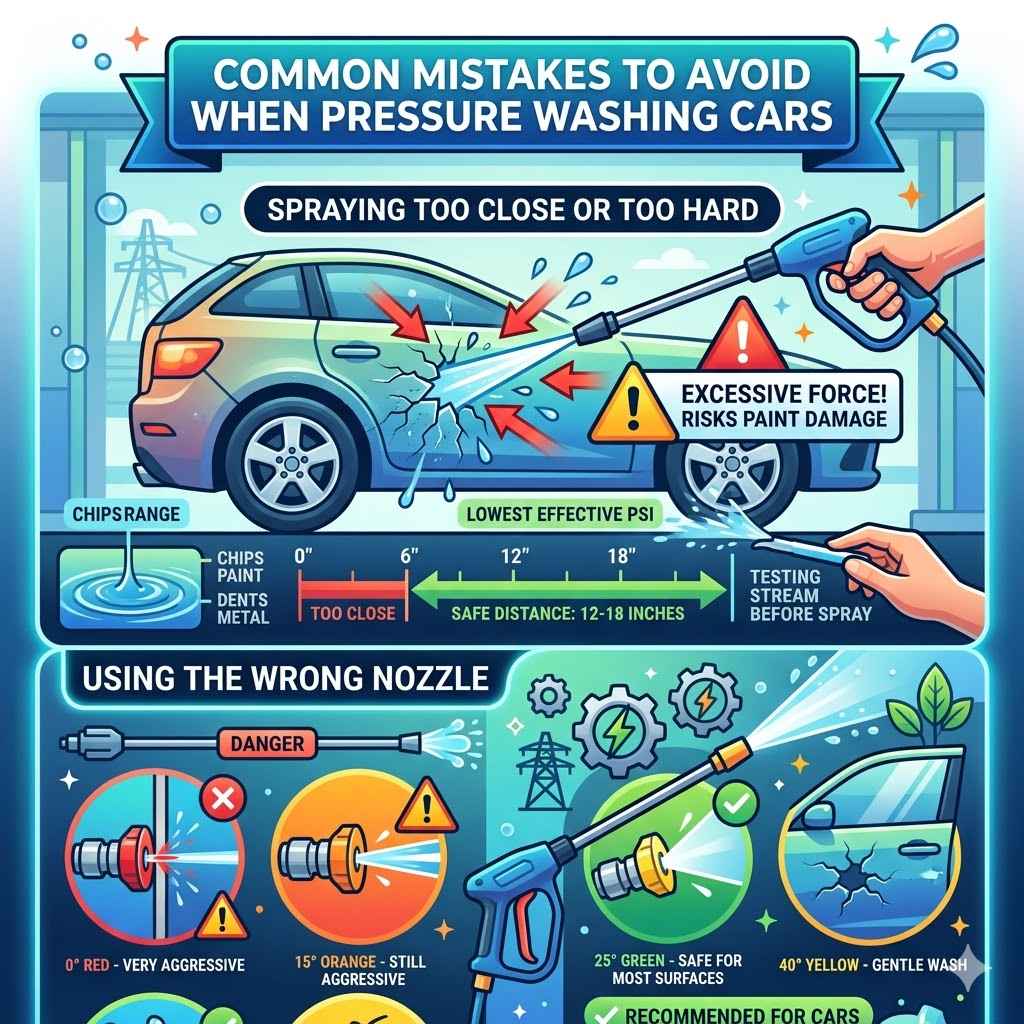
Common Mistakes to Avoid When Pressure Washing Cars
Even with the right PSI, it’s easy to make mistakes when using a pressure washer on your car. This section highlights some common errors people make. Knowing these mistakes can help you avoid them and keep your car looking its best.
We will look at what not to do to ensure a safe and effective wash.
Spraying Too Close or Too Hard
One of the biggest mistakes is holding the nozzle too close to the car’s surface or using a PSI that is too high. This creates excessive force that can easily chip paint, especially on edges and curves. Always maintain a safe distance, typically 12-18 inches, and use the lowest effective PSI.
If you see the paint start to ripple or hear a high-pitched sound, you are too close or the pressure is too high.
Remember, the goal is to lift dirt, not to blast it off with extreme force. Think of it like brushing your teeth – you use firm but gentle pressure. For car paint, the pressure needs to be even gentler.
Regularly check the distance and the feel of the water stream against your hand before pointing it at your car.
Using the Wrong Nozzle
As discussed earlier, using a nozzle that is too aggressive, like a 0-degree red nozzle or a 15-degree yellow nozzle, can cause significant damage. These nozzles concentrate the water pressure into a tiny area, leading to paint stripping or etching. Always select a wider fan nozzle, such as the 25-degree green or, ideally, the 40-degree white nozzle, for car washing.
Make it a habit to identify your nozzle before you start spraying. Each nozzle has a different color and spray pattern. If you’re unsure, consult your pressure washer’s manual.
Using the correct nozzle is as important as setting the right PSI for protecting your car’s finish.
Letting Soap Dry on the Paint
Allowing car wash soap to dry on your car’s surface can leave stubborn water spots and streaks. This happens when the soap dries too quickly, often in direct sunlight or on a hot day. Always work in the shade and rinse the soap off before it has a chance to dry.
If you notice the soap drying, rinse that section immediately.
Pre-rinsing and working in sections can help prevent this. If soap does dry, you might need to reapply a mild soap solution and gently wash it off. It’s much easier to prevent dried soap than to remove it once it has bonded with the paint.
Keep a spray bottle of water handy for quick rinses if needed.
Not Rinsing Thoroughly Enough
Incomplete rinsing is another common mistake. If you don’t rinse away all the soap and dirt, you can end up with residue that attracts more dirt or causes streaks. This can also happen if you don’t rinse out the wheel wells or undercarriage properly.
Always ensure a complete rinse from top to bottom.
Pay special attention to panel gaps, trim, and around lights. These areas can trap soap. A final sheeting rinse, where the water flows smoothly off the car, indicates a thorough job.
If you see suds or streaks, go back and rinse again. A clean rinse leads to a cleaner car and fewer problems down the line.
Frequently Asked Questions
Question: What is the safest PSI for a car wash?
Answer: For most cars, a PSI between 1200 and 1900 is considered safe. It’s always best to start lower and increase if needed, and use a wider spray nozzle.
Question: Can I use a pressure washer on my classic car?
Answer: It’s best to be very cautious with classic cars. Their paint may be older and more fragile. Consider hand washing or using a very low PSI and a wide nozzle if you must use a pressure washer.
Question: What is a foam cannon for?
Answer: A foam cannon attaches to your pressure washer or garden hose to create a thick, rich foam from car wash soap. It helps lift dirt and lubricate the surface before you wash with a mitt.
Question: Should I wash my car in direct sunlight?
Answer: No, it’s not recommended. Direct sunlight can cause soap and water to dry too quickly, leading to water spots and streaks on your car’s paint. Always wash in the shade.
Question: How far away should I hold the pressure washer nozzle?
Answer: For most car washing, hold the nozzle about 12 to 18 inches away from the car’s surface. Adjust based on the PSI and nozzle type to avoid damage.
Summary
Finding the right PSI for washing your car is key to a safe and effective clean. Aim for 1200-1900 PSI, use a wide fan nozzle, and always keep a safe distance. Start with lower settings and adjust as needed.
Careful preparation, gentle washing, and thorough rinsing will keep your car looking its best without any harm.