Why Does My Car Shake When I Turn On the AC?
Your car shakes the moment you flip on the AC, and it’s unsettling — especially if the shake fades again once you switch it back off.
That timing is actually the clue. The air conditioning compressor is belt-driven off the engine, and it only spins up when the AC is requested, which is why the vibration appears (and disappears) right on cue. On a healthy engine, that extra load is barely noticeable. On one with worn engine mounts, a tired serpentine belt, or a compressor that’s starting to fail internally, the same load shows up as a shake, a shudder at idle, or an odd noise you can hear through the vents.
None of this means you need to panic, but it also isn’t something to ignore. A shake that shows up specifically with the AC on almost always points to one of a handful of components — the compressor, the belt and pulleys that drive it, or the mounts holding the engine in place — and each has its own set of telltale signs. Here’s how to narrow it down and figure out what your car is actually trying to tell you.
Common Causes
RECOMMENDED DIAGNOSTIC TOOL
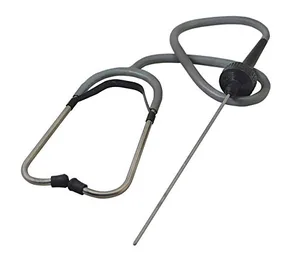 |
Lisle 52500 Mechanic’s Stethoscope – $25.33 Pinpoints exactly which noise you’re hearing under the hood — squeal, grind, or rattle — before you spend money on a guess.
|
The moment the AC clutch engages, the engine takes on an extra load — on many four-cylinder engines, that’s roughly the equivalent of turning on a second alternator’s worth of drag. A newer engine with fresh mounts and a properly tensioned belt barely registers it. An older engine already running rough, or one with mounts that have gone soft and cracked, reacts to that sudden torque hit with a shudder you can feel through the seat and steering wheel.
The compressor itself is usually the first suspect, and for good reason: it’s the one component that only comes into the picture when the AC is running. A compressor with a worn clutch bearing can wobble as it spins up, and one that’s starting to seize internally forces the belt and pulley system to work harder than they’re designed to — both show up as vibration right when the clutch kicks in. Replacing a failing compressor (or just its clutch assembly, depending on the design) usually resolves the shake for good.
Diagnosing The Problem
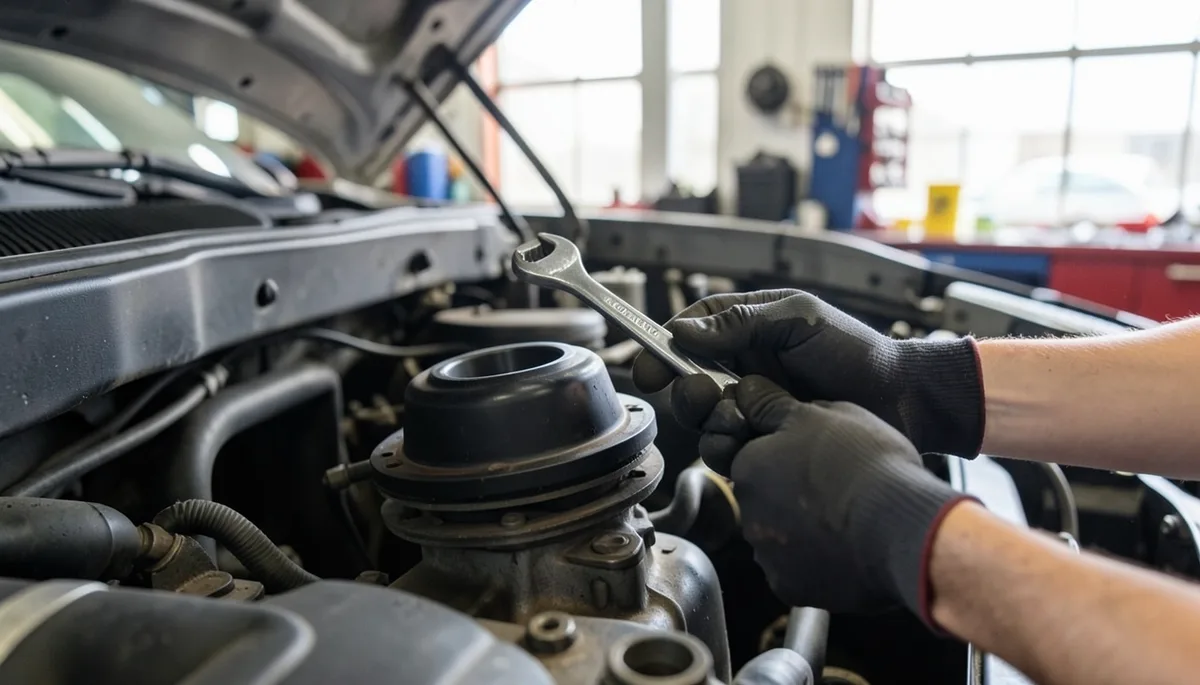
Start with a visual check under the hood. Look at the serpentine belt for cracking, glazing, or fraying — a belt that’s lost its grip will slip under the compressor’s added load instead of turning it smoothly. Check the engine and transmission mounts next; a mount with torn or collapsed rubber lets the engine rock instead of staying planted, which is one of the most common causes of a shake that only shows up under load. While you’re in there, glance at the AC hoses and fittings for oil residue (a sign of a refrigerant leak) and give the radiator and condenser fan a look for cracked blades or debris caught in the shroud.
Your ears will tell you almost as much as your eyes. A squeal right when the AC engages usually means the serpentine belt is slipping on the compressor pulley — often from a weak automatic tensioner or a glazed belt. A grinding or growling noise points to a failing bearing, most often in the compressor clutch itself or an idler pulley. A sharp clunk rather than a smooth vibration suggests a broken or badly worn mount letting the engine shift under torque. A rattle is often something looser and less serious, like a heat shield or bracket vibrating against the compressor housing. Matching the sound to the list narrows the repair before a mechanic even opens the hood.
Impact On Engine Performance
Because the compressor is belt-driven straight off the crankshaft, running the AC diverts real horsepower away from moving the car — often several horsepower on a small engine, which is enough to be noticeable at idle or when pulling away from a stop. Most modern engine computers compensate automatically by nudging the idle speed up slightly the instant the compressor clutch engages, so you shouldn’t feel more than a faint dip. If the idle air control valve or throttle body is dirty, or there’s a vacuum leak masking itself at idle, that compensation falls short and you’ll feel a distinct stumble or shake instead of a smooth transition.
Running the AC also costs real fuel — commonly cited estimates put the hit at around 5 to 25 percent worse fuel economy, with city and stop-and-go driving affected more than highway cruising, where wind resistance already dominates. Short trips see the biggest percentage drop, since the engine spends more of that trip compensating for the compressor load before settling into a rhythm. None of that is a reason to avoid the AC on a hot day, but it’s worth knowing that a car burning noticeably more fuel with the AC on, on top of shaking, is telling you something is working harder than it should.
Role Of The Ac System
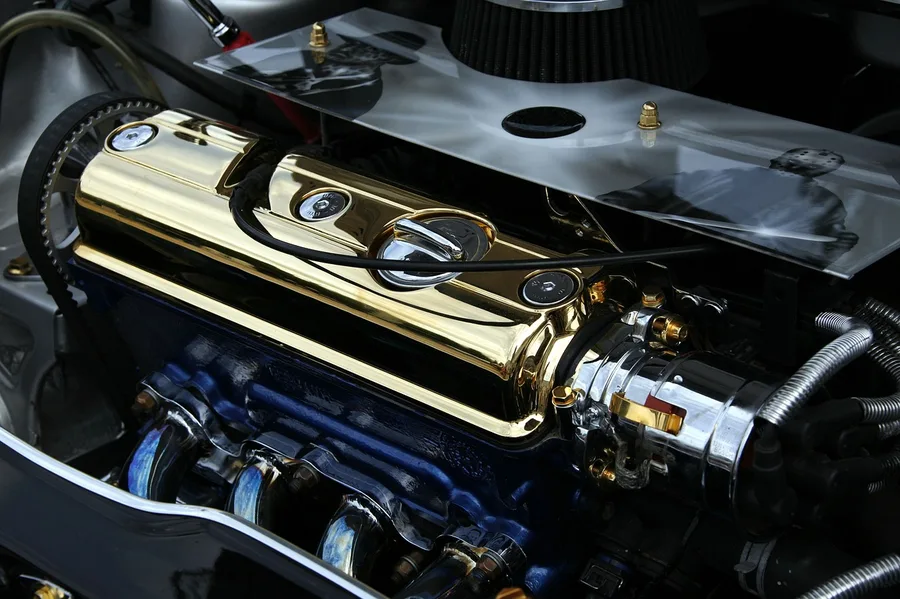
Four main components do the actual work. The compressor, driven by the serpentine belt, pressurizes refrigerant gas and pushes it through the system. That hot, high-pressure gas travels to the condenser — mounted in front of the radiator — where outside air passing through it pulls the heat out and condenses the refrigerant into a liquid. From there it passes through an expansion valve or orifice tube that drops its pressure sharply, and into the evaporator tucked inside the dashboard, where it absorbs heat from the cabin air blowing over it and turns back into a gas before the cycle repeats.
The compressor is the only one of those parts mechanically tied to the engine, which is exactly why it’s the piece most likely to cause a shake. The instant you request cold air, an electromagnetic clutch locks the compressor’s pulley to the belt, and the engine has to absorb that sudden load — comparable to how a bicycle suddenly feels heavier the moment you start pedaling up a hill. A properly running system handles that transition smoothly. A system with a failing clutch, worn pulley bearing, or an internally seizing compressor turns that same moment into the shake you’re feeling.
Solutions And Fixes
Once you’ve matched the symptom to a likely cause, the fix usually falls into one of two categories: something a shop needs to handle with the right tools, or something you can check and often correct yourself with basic hand tools and a Saturday afternoon.
Professional Repairs
A mechanic’s first move is usually a mount inspection: with the engine running and the AC on, they’ll watch (or use a pry bar with the engine off) to see how much the engine actually moves under load. Most vehicles have two to four mounts, and a worn one is often visibly torn or separated from the metal bracket it’s bonded to — replacement typically fixes the shake immediately. If the mounts check out, attention shifts to the compressor and its clutch. A shop can check clutch air gap and bearing play by hand, and depending on the vehicle, either the clutch assembly alone or the entire compressor gets replaced, along with the receiver-drier and a proper refrigerant recharge.
DIY Adjustments
Before booking a shop visit, a few things are worth checking yourself. Pull the engine air filter and hold it up to a light — if it’s caked with debris, the engine is already breathing harder than it should, and swapping in a new one (a $10–$20, five-minute job on most vehicles) removes one variable. Next, look over the serpentine belt for cracks, glazing (a shiny, glassy surface instead of a matte rubber texture), or fraying along the edges. Most vehicles use a spring-loaded automatic tensioner rather than a manually adjustable one, so if the belt itself looks worn, replacing it — rather than trying to tighten it — is the real fix, and it’s a job well within reach of anyone comfortable with basic hand tools.
Preventive Measures
A well-maintained AC system and drivetrain shouldn’t shake at all when the compressor kicks in. Staying ahead of belt wear and mount fatigue, rather than waiting for a shake to show up, is what keeps it that way.
Regular Maintenance
Most of the maintenance that prevents AC-related shaking overlaps with routine care your car needs anyway. Stick to the oil-change interval in your owner’s manual, replace the serpentine belt around the 60,000 to 100,000-mile mark (sooner if it shows cracking), and swap the engine air filter roughly every 12,000 to 15,000 miles. Check tire pressure and brake condition at the same time, since a shop visit for one is a convenient moment to glance at the belt and mounts too. Running the correct type of fuel for your engine and staying current on spark plugs keeps idle quality steady, which matters because a rough idle is exactly what an AC-load shake piggybacks on. None of this is exotic upkeep — it’s the same schedule that keeps a car running smoothly overall.
Early Detection
Catching a developing problem before it becomes a shake is cheaper than fixing the shake itself. Pay attention to whether the AC clutch is cycling on and off more rapidly than it used to, whether idle feels rougher right after you switch the AC on, or whether a faint noise you’ve been ignoring is getting louder. A dashboard warning light showing up around the same time — check engine, battery, or temperature — is worth taking seriously rather than dismissing as unrelated. Getting a second opinion from a mechanic on something minor is far cheaper than waiting until a worn belt snaps or a marginal compressor clutch bearing fails completely, and staying ahead of small issues is exactly what helps a car last well past the point most vehicles start needing major work.
When To Seek Expert Help
A few signs mean it’s time to stop troubleshooting and get the car looked at. A shake strong enough to feel in the steering wheel or seat, rather than a mild tremor, risks accelerating wear on the mounts, belt, and pulleys it’s already stressing. A burning smell from under the hood or through the vents usually means a slipping belt or an overheating clutch bearing is generating friction heat, and it can escalate quickly. Warm air blowing from the vents despite the AC being on suggests a refrigerant or compressor problem separate from — but sometimes contributing to — the vibration. Any of these is a reasonable point to stop self-diagnosing and book a shop visit.
When you’re picking who does the work, a shop that specializes in AC and driveability issues, rather than a general quick-lube chain, will usually diagnose this kind of problem faster. Ask people you trust for a recommendation, skim recent reviews rather than just the overall star rating, and look for ASE certification, which signals the technicians have passed standardized testing on the specific systems involved. A shop willing to explain what they found and why — rather than just quoting a repair — is generally the one worth returning to.
Cost Implications
The repair bill depends entirely on which component is at fault. A new serpentine belt, installed, typically runs $100 to $200. A single engine or transmission mount replacement usually falls between $200 and $650 depending on the vehicle and how hard the mount is to reach, and some cars need more than one replaced at once. An AC compressor replacement is the most expensive fix on this list — often $500 to $1,200 once you factor in the compressor itself, a new receiver-drier, and the refrigerant recharge that has to follow — but it’s also usually a one-time fix rather than something that recurs.
Catching the problem at the belt-and-mount stage, before it takes out the compressor, is what keeps the bill on the lower end of that range. A shudder that’s ignored for months can put extra strain on the compressor clutch and pulleys around it, turning what would have been a $150 belt job into a $1,000 compressor replacement. Weighed against that, a quick inspection at the first sign of vibration is one of the cheaper decisions you can make about the car.
Frequently Asked Questions
Why Does My Car Shake When The Ac Is On?
Your car might shake due to increased engine load from the AC. This can reveal issues like worn engine mounts, dirty air filters, or a failing compressor. Check for vacuum leaks or spark plug problems. Regular maintenance can help prevent these issues and ensure smooth operation.
Why Does My Ac Make My Car Stutter?
Your car stutters when using the AC due to increased engine load. The AC compressor demands more power, affecting engine performance. Check for worn-out belts, low refrigerant, or faulty components. Regular maintenance can prevent stuttering and ensure efficient AC operation.
Why Does My Car Jerk When I Turn The Ac On?
Your car jerks when the AC is on due to increased engine load, causing power fluctuations. Check the idle control valve, AC compressor, and engine mounts.
Why Does My Car Rattle When I Turn On Ac?
A rattling noise when turning on the AC may be due to a loose compressor or damaged fan. Check for worn-out belts or debris in the AC system. Addressing these issues promptly can prevent further damage and ensure smooth operation.
Regular maintenance helps keep the AC system in good condition.
Conclusion
A shake that shows up only when the AC is running is one of the more diagnosable vibrations a car can throw at you, precisely because the timing points straight at the compressor, its belt, or the mounts absorbing the load. Working through mounts, belt condition, and the specific noise you’re hearing will usually get you to the cause well before you set foot in a shop.
Left alone, a minor shake tends to get more expensive rather than less, as the same worn belt or soft mount keeps stressing the parts around it. Caught early, it’s typically a modest repair rather than a major one — which is really just another argument for paying attention the next time your car does something new the moment you turn the AC on.
Products related to this article
Sponsored / affiliate links. As an Amazon Associate I earn from qualifying purchases. I may earn additional commission from eligible campaigns.