Where Does Coolant Go in a Car Explained
Many car owners wonder about the coolant system. Questions like “Where Does Coolant Go in a Car? Explained” are common for new drivers.
It can seem a bit confusing at first. But learning about your car’s coolant is important for keeping it running smoothly. Don’t worry, this guide will break it down simply, step by step.
We’ll explore the different parts of the cooling system and what they do.
The Car’s Cooling System Explained
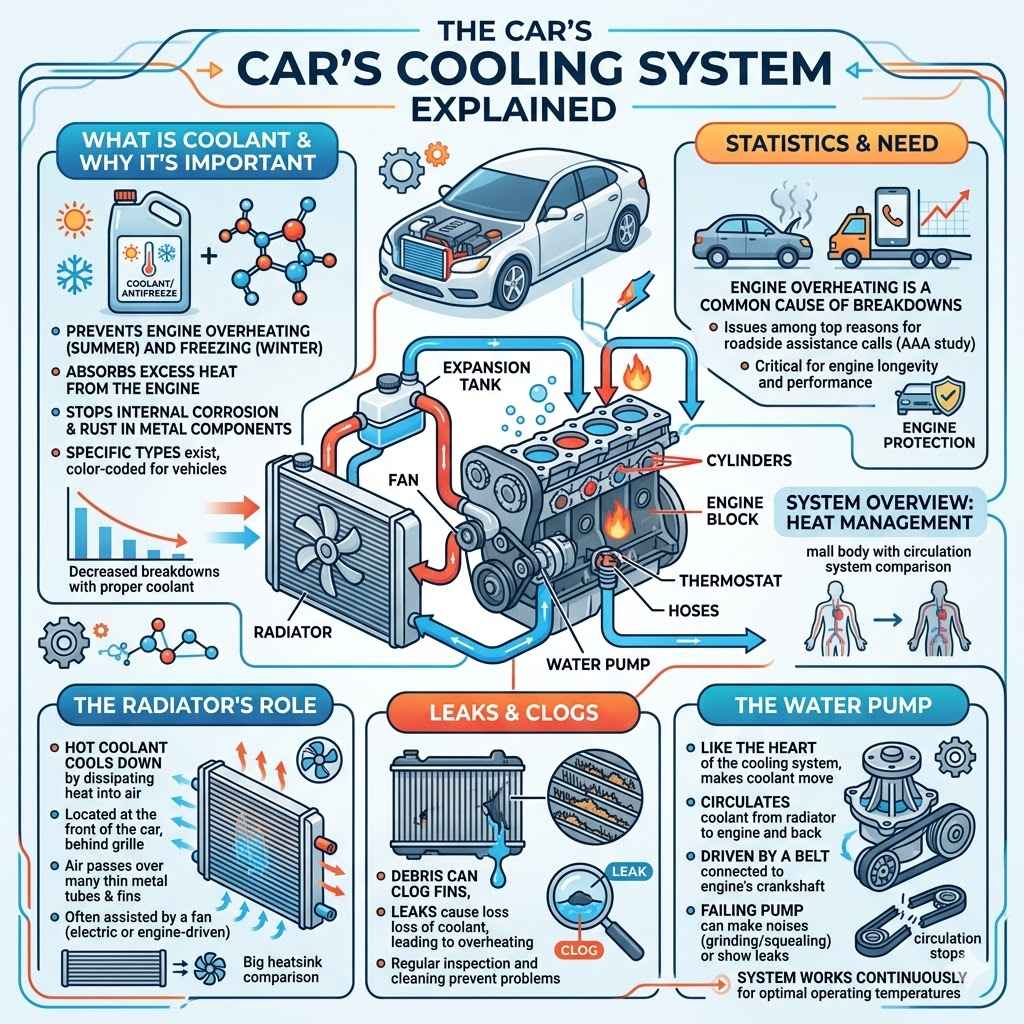
The cooling system in your car is like the body’s circulation system. Its main job is to keep the engine from getting too hot. Engines create a lot of heat when they run.
If this heat isn’t managed, parts can get damaged, and the engine can stop working. The cooling system uses a special liquid, called coolant or antifreeze, to absorb this heat and move it away from the engine.
This process is vital for engine longevity and performance. Without effective cooling, an engine can suffer severe damage, leading to costly repairs or even complete failure. The system works continuously while the engine is running, ensuring optimal operating temperatures are maintained under various driving conditions.
What Is Coolant and Why Is It Important
Coolant, often called antifreeze, is a mixture of water and chemicals. Its primary role is to prevent the engine from overheating and freezing. In the summer, it absorbs excess heat from the engine.
In the winter, it stops the water in the system from freezing and damaging engine parts.
The specific chemicals in coolant also help prevent corrosion and rust within the engine’s metal components. This protection is crucial for the long-term health of the cooling system and the engine itself. Different types of coolants exist, often color-coded, and using the correct type for your vehicle is essential for optimal performance and protection.
Statistics show that engine overheating is a common cause of breakdowns. A study by AAA found that engine cooling system issues are among the top reasons for roadside assistance calls. This highlights the critical need for a properly functioning cooling system and sufficient coolant levels.
The Radiator’s Role
The radiator is a key component where the hot coolant cools down. It’s usually located at the front of your car, behind the grille. The radiator has many thin metal tubes and fins.
As the hot coolant flows through these tubes, air passes over the fins.
This airflow helps to dissipate the heat from the coolant into the surrounding air. Think of it like a big heatsink for your engine. A fan, either electric or driven by the engine, often helps push air through the radiator, especially when the car is moving slowly or stopped.
A clean and efficient radiator is vital. Debris can clog the fins, reducing its ability to cool. Leaks in the radiator can also cause a loss of coolant, leading to overheating.
Regular inspection and cleaning of the radiator can prevent many problems.
The Water Pump
The water pump is what makes the coolant move throughout the system. It’s like the heart of the cooling system. This pump circulates the coolant from the radiator to the engine and back again.
Without the water pump, the coolant would just sit there, and the engine would quickly overheat. The pump is usually driven by a belt connected to the engine’s crankshaft. If this belt breaks or the pump itself fails, coolant circulation stops, and the engine temperature will rise rapidly.
A failing water pump can make noise, like grinding or squealing. Sometimes, you might see coolant leaks around the pump’s seal. It’s important to address these signs promptly to avoid serious engine damage.
Where Does Coolant Go in a Car Explained The Flow
Understanding the path coolant takes is fundamental. It’s not just a single location; coolant circulates through a network of passages. This constant movement is what enables effective temperature regulation.
The system is designed as a closed loop, meaning the coolant is reused, but it also needs to be checked and topped up.
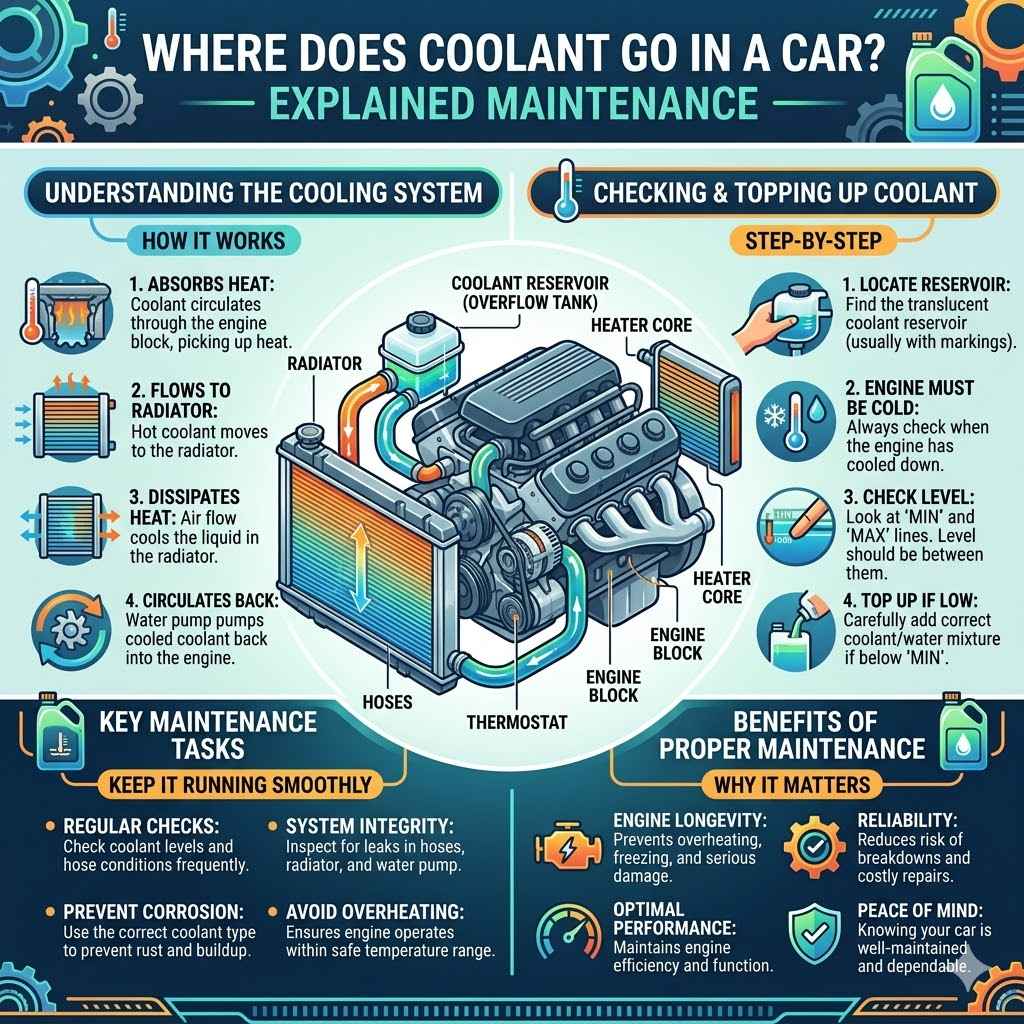
The journey begins when the engine starts to heat up. Heat transfers from the engine block and cylinder head into the coolant flowing through internal passages. This warmed coolant is then pumped away from the engine to be cooled.
The journey through the radiator is where it sheds this heat before returning to the engine, ready to absorb more.
This continuous cycle prevents the engine from reaching critical temperatures that could cause damage. The efficiency of this flow directly impacts engine performance and lifespan. Factors like blockages in the passages or a malfunctioning pump can disrupt this vital flow.
Engine Block and Cylinder Head Passages
Inside your engine, there are special channels or passages. These are often called water jackets. The coolant flows through these jackets, which surround the hottest parts of the engine, like the cylinders and the cylinder head.
This is where the coolant first picks up the heat generated by combustion.
These passages are designed to maximize contact between the coolant and the hot metal. This allows for efficient heat transfer. Imagine the coolant acting like a sponge, soaking up the engine’s warmth.
The design of these internal passages is complex, ensuring every critical area receives adequate cooling.
Any obstruction within these passages, such as rust or debris, can lead to localized hot spots. These hot spots can cause premature wear and tear on engine components. Keeping these passages clear is a primary function of a healthy cooling system.
The Thermostat’s Role in Coolant Flow
The thermostat is like a valve that controls when coolant flows to the radiator. When the engine is cold, the thermostat stays closed. This keeps the coolant circulating only within the engine block.
This helps the engine warm up faster, which is better for fuel efficiency and reduces wear.
Once the engine reaches its optimal operating temperature, the thermostat opens. This allows the hot coolant to flow from the engine to the radiator to be cooled. When the engine cools down again, the thermostat closes, repeating the cycle.
It’s a clever way to manage engine temperature.
A faulty thermostat can cause problems. If it gets stuck closed, the coolant won’t reach the radiator, and the engine will overheat. If it gets stuck open, the engine might take too long to warm up, leading to poor performance and increased emissions.
Checking the thermostat is part of diagnosing cooling system issues.
Hoses Connecting the System
Rubber hoses are essential for connecting the different parts of the cooling system. The main hoses connect the engine to the radiator, the water pump to the engine, and often the heater core. They are made of durable rubber designed to withstand high temperatures and pressure.
There are typically two main radiator hoses: an upper hose and a lower hose. The upper hose carries hot coolant from the engine to the top of the radiator. The lower hose brings the cooled coolant back from the bottom of the radiator to the water pump and then into the engine.
These hoses need to be inspected regularly for cracks, swelling, or leaks. A burst hose can cause a sudden loss of all coolant, leading to rapid engine overheating. Replacing worn-out hoses is a preventative maintenance task that can save a lot of trouble.
Where Does Coolant Go in a Car Explained The Reservoir
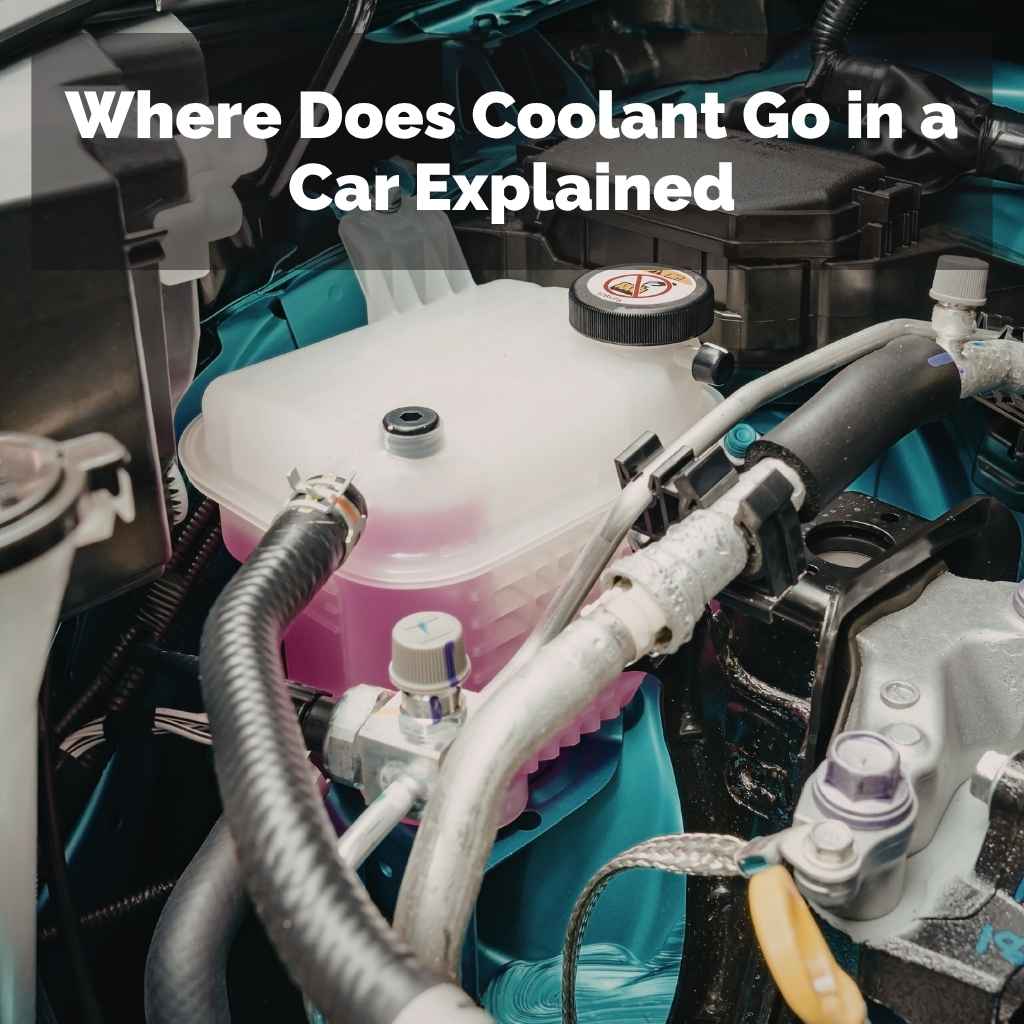
You’ve likely seen a translucent plastic tank connected to the cooling system. This is the coolant reservoir, also known as the expansion tank. It serves a very important purpose in managing coolant levels and pressure within the system.
It’s not just an overflow container; it’s an active part of the cooling process.
When coolant heats up, it expands. This expansion increases the pressure inside the cooling system. The reservoir provides a safe place for this expanded coolant to go.
As the system cools down, the coolant contracts, and it’s drawn back into the main system from the reservoir. This keeps the system full and ready to work.
Checking the coolant level in the reservoir is a quick and easy way to monitor the overall coolant in your car. Most reservoirs have “min” and “max” lines to help you see if the level is correct. Always check the coolant level when the engine is cold.
The Expansion Tank and Its Function
The expansion tank is designed to accommodate the volume changes in coolant as it heats and cools. It’s typically made of durable plastic. A small hose connects it to the main cooling system, usually near the radiator cap or the top hose.
When the engine heats up, the coolant expands. This hot coolant flows through the small hose into the expansion tank. This prevents excessive pressure buildup in the radiator and hoses, which could cause them to burst.
It also helps to keep air out of the system.
When the engine cools, the coolant contracts. The pressure inside the system drops. This creates a vacuum effect, which draws coolant from the expansion tank back into the main cooling system.
This ensures that the system remains full of coolant, ready for the next cycle.
Coolant Leaks and Where to Find Them
Coolant leaks are a common problem. They can happen in many places within the cooling system. Common leak points include the radiator itself, the water pump seal, hose connections, and the thermostat housing.
Sometimes, leaks can also occur from internal engine gaskets.
If you see puddles of colored liquid (usually green, orange, pink, or yellow) under your car, it’s likely a coolant leak. The location of the puddle can give you a clue about where the leak is coming from. For example, a leak near the front of the car might be the radiator or a hose.
A small, slow leak can sometimes be harder to find. You might notice a sweet smell when the engine is hot, or you might see a white residue on engine components. It’s important to fix leaks promptly, as even a small leak can lead to a significant loss of coolant and engine overheating.
The Heater Core
The heater core is like a mini radiator located inside your car’s dashboard. It uses hot coolant from the engine to warm the air that comes out of your vents. When you turn on your car’s heater, hot coolant flows through the heater core.
A fan blows air across the heater core, warming the air before it enters the cabin. So, the coolant not only cools the engine but also provides heat for your comfort in colder weather. This is why a coolant leak can sometimes lead to a lack of heat inside the car.
If you smell a sweet odor inside your car, especially when the heater is on, or notice a foggy windshield, it could indicate a leak in the heater core. Repairing a heater core can be a more involved job, often requiring removal of parts of the dashboard.
Where Does Coolant Go in a Car Explained Maintenance
Proper maintenance of your car’s cooling system is essential for its longevity and reliability. This involves regular checks of coolant levels, hose conditions, and the overall system’s integrity. Neglecting these simple tasks can lead to significant problems down the road, including expensive repairs.
Regular maintenance ensures that the coolant is at the correct level, free from contamination, and that all components are functioning as they should. This proactive approach helps prevent overheating, freezing, and corrosion, all of which can damage your engine. Making these checks a routine part of your car care can save you a lot of hassle.
Understanding where the coolant goes and how the system works empowers you to take better care of your vehicle. This knowledge is key to preventing common issues and ensuring your car runs smoothly for years to come.
Checking and Topping Up Coolant
Checking your coolant level is a straightforward task. Locate the translucent coolant reservoir when the engine is cold. Observe the level against the “min” and “max” markings.
If the level is below “min,” you need to add coolant.
To top up, use a 50/50 mixture of the correct type of coolant for your car and distilled water. Never use plain tap water, as it can cause mineral buildup and corrosion. Slowly pour the mixture into the reservoir until it reaches the “max” line.
Do not overfill.
If you find yourself constantly needing to add coolant, it’s a sign of a leak somewhere in the system that needs to be investigated and repaired by a mechanic.
Flushing and Replacing Coolant
Over time, coolant can degrade and become less effective. It can also accumulate rust and other contaminants. This is why it’s recommended to flush and replace the coolant periodically, usually every 2-5 years, depending on your car’s make and model and the type of coolant used.
A coolant flush involves draining the old coolant from the system, then running a cleaning solution through it to remove any sludge or debris. After flushing, the system is refilled with a fresh 50/50 mixture of the correct coolant and distilled water. This process helps to maintain the cooling system’s efficiency and prevent corrosion.
This service is often performed by mechanics, but it can also be a DIY task for those comfortable with basic car maintenance. Always follow the manufacturer’s recommendations for coolant replacement intervals and the correct type of coolant.
Signs of a Cooling System Problem
There are several signs that your cooling system might be having a problem. The most obvious is the temperature gauge on your dashboard rising into the red zone, indicating overheating. You might also notice steam coming from under the hood.
Other signs include unusual noises from the engine bay, such as whining or grinding, which could indicate a failing water pump. You might also smell a sweet, syrupy odor, which is characteristic of leaking coolant. Puddles of colored liquid under your car are a clear indicator of a leak.
If you experience any of these symptoms, it’s important to have your car checked by a qualified mechanic as soon as possible to prevent more serious damage.
Frequently Asked Questions
Question: What happens if I don’t have enough coolant?
Answer: If you don’t have enough coolant, your engine can overheat. This can cause serious damage to engine components, leading to expensive repairs. It can also cause the car to break down.
Question: Can I use water instead of coolant?
Answer: While water can temporarily cool an engine, it’s not recommended for long-term use. Coolant has additives that prevent freezing, boiling, and corrosion. Plain water can freeze and damage your engine in cold weather, and it boils at a lower temperature than coolant.
Question: How often should I check my coolant level?
Answer: It’s a good idea to check your coolant level at least once a month, especially before long trips. You should also check it if you notice any signs of a problem, like the temperature gauge rising.
Question: What are the different colors of coolant?
Answer: Coolant comes in various colors, such as green, orange, red, pink, and yellow. These colors are usually indicators of the type of chemicals used in the coolant. It’s important to use the specific type recommended by your car’s manufacturer, as mixing different types can cause problems.
Question: Where does the coolant go when the engine is running hot?
Answer: When the engine gets hot, the coolant expands and flows into the coolant reservoir or expansion tank. This prevents the system from becoming over-pressurized. As the engine cools, the coolant is drawn back into the main system from the reservoir.
Summary
Your car’s coolant flows through engine passages, the water pump, radiator, and reservoir. It circulates to absorb engine heat and then releases it, preventing overheating. The thermostat controls this flow, and hoses connect everything.
Regular checks and maintenance are key to a healthy cooling system.