Top Rated 5 Air Compressor for Painting Car
For car painting, start with the job size. A bumper or single panel can work with modest airflow; a full side, hood, or trunk needs steadier delivery; a whole-vehicle respray pushes you into higher CFM, larger tanks, and often 240V power. Too little airflow causes pressure drop, sputtering, and dry spray.
Air compressor fit table


| Paint job | Minimum practical CFM | Tank size | Voltage | Compressor type | Failure mode if undersized |
|---|---|---|---|---|---|
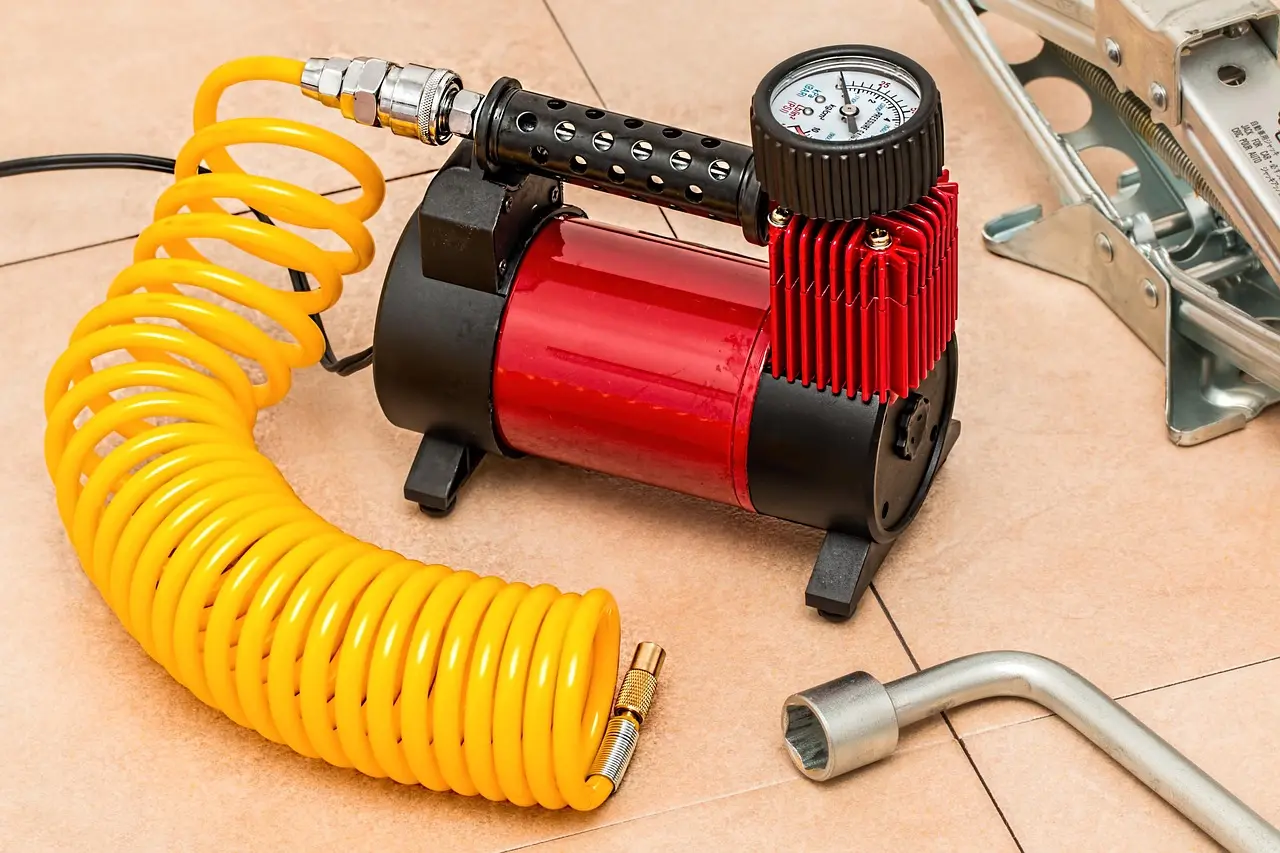
| Spot repair, trim, small touch-up | 4–7 CFM | 6-gallon or 8-gallon | 120V | Portable oil-free or small oil-lubricated | Short cycling, pressure swings, and patchy atomization |
| Bumper or one door | 7–10 CFM | 13-gallon or 20-gallon | 120V or 240V | Dual-piston or compact belt-driven | Recovery lag between passes, so the fan shape thins out |
| Full side, hood, or trunk | 10–15 CFM at 40 PSI | 20-gallon to 60-gallon | 240V preferred for longer runs | Belt-driven, often two-stage | Pressure drop on long passes, then orange peel and dry spray |
| Full-vehicle respray | 15 CFM or more at 40 PSI | 60-gallon | 240V | Two-stage, belt-driven | Constant refill lag that ruins consistency across panels |
The useful number is sustained airflow, not the biggest pressure headline on the box. A tank can hold air, but it cannot replace a pump that refills fast enough while you keep the gun moving.
What size compressor do you need?
For touch-up work, a small compressor can be enough if the gun demand is low and the spray time is short. For a whole door, hood, or fender, step up to a unit that can hold pressure through a longer pass without forcing you to stop and wait.
Touch-up, bumper, and single-panel work
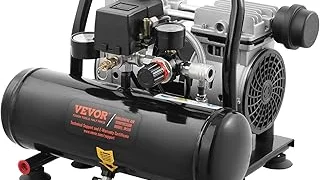
A 6-gallon or 8-gallon compressor can work for spot repairs, trim, and very small panels. It is not the right choice for a long, continuous pass across a full side panel, because the tank empties quickly and recovery lag shows up in the spray pattern.
Say your job is a bumper cover with a small HVLP gun and short trigger pulls. A compact unit can get through it if the gun demand stays modest and the line is dry. The same compressor becomes frustrating on a door shell, where the refill cycle starts to matter.
Full side, hood, or trunk spraying
A 13-gallon or 20-gallon compressor is the middle ground for hobby spraying. It can support a door, hood, or trunk better than a pancake-style unit, but you still need to check the CFM rating at the pressure your gun actually asks for.
That is where many buyers go wrong. They see a higher PSI number and assume the compressor will keep up, but a spray gun needs sustained airflow more than tank pressure alone.
Full-vehicle respray expectations
A full-vehicle respray is where the 60-gallon class makes sense. AirCompressorsGuides says a 60-gallon compressor or higher may be preferred for car painting jobs, and the big reason is runtime buffer. You get longer spray windows before pressure falls off.
For example, the DEWALT DXCM601 is listed at about 13.4 CFM with a 60-gallon tank and a 240V requirement, and it is described as a good fit for full-vehicle garage resprays. The Quincy QT-54 is also a 60-gallon, belt-driven 2-stage compressor, with about 15.4 CFM at 40 PSI.
What does an HVLP gun actually need?
An HVLP spray gun needs enough airflow to keep a steady fan shape and atomize paint evenly. For full panels, that usually means much more than a small compressor can sustain. CFM matters more than raw tank pressure because the gun is fed by airflow, not by stored pressure alone.
CFM demand and the 90 PSI benchmark
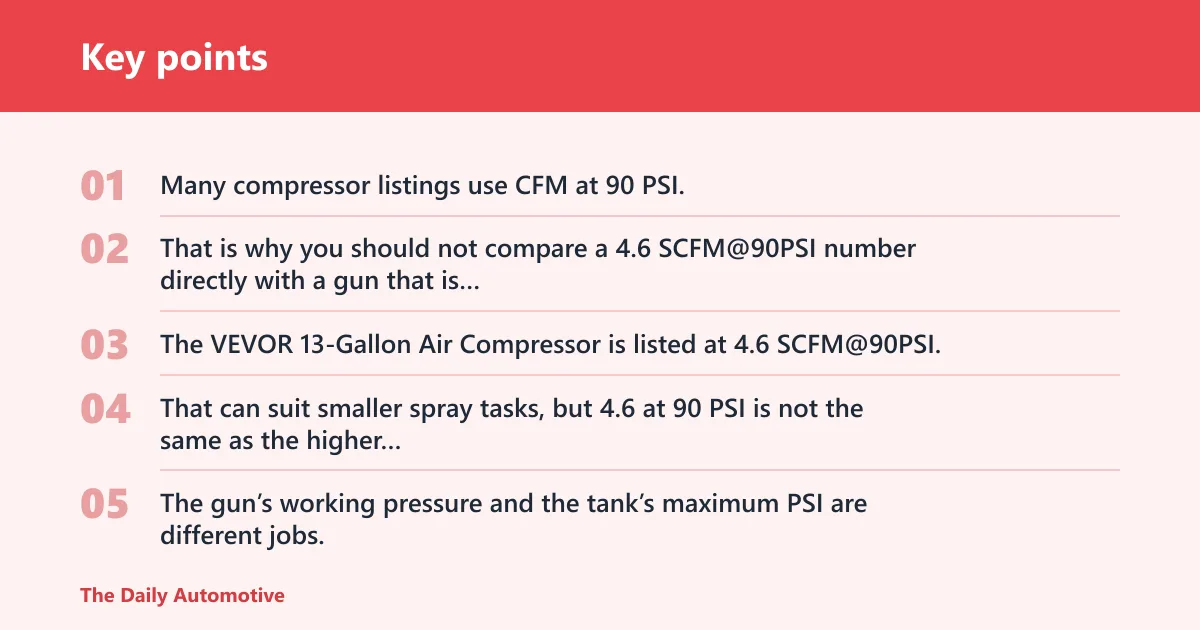
Many compressor listings use CFM at 90 PSI, but spray-gun selection often depends on airflow at a lower working pressure. That is why you should not compare a 4.6 SCFM@90PSI number directly with a gun that is rated for a different pressure point without reading both figures carefully.
The VEVOR 13-Gallon Air Compressor is listed at 4.6 SCFM@90PSI, and Autoian also lists it at 66 dB. That can suit smaller spray tasks, but 4.6 at 90 PSI is not the same as the higher sustained output needed for larger car panels.
Working pressure versus tank pressure
The gun’s working pressure and the tank’s maximum PSI are different jobs. Tank pressure can be 115 PSI, 125 PSI, 150 PSI, or even 175 PSI, but that number only shows how much the tank can hold before the pump cuts out. It does not guarantee spray consistency.
For example, a compressor with a 175 PSI max pressure can still be a poor paint choice if its airflow drops too fast under load. Airflow stability is what keeps the gun from sputtering on long passes.
Full-panel versus spot repair fit
Spot repairs usually tolerate less airflow because the trigger is on for less time. Full-panel work does not. Once you move to a full door or side, the gun stays open long enough that recovery lag starts to show in the finish.
A common first-timer mistake is choosing by horsepower alone and ignoring the gun’s demand. The result is a compressor that sounds busy, yet cannot keep the pattern stable across a hood or quarter panel.
Why tank size changes spray quality
Tank size acts as a runtime buffer. A larger tank does not make a weak compressor strong, but it can smooth short peaks in demand and buy time between pump cycles. That matters when you are trying to keep a paint fan even from start to finish.
6-gallon and 8-gallon limits
Six-gallon and 8-gallon units are compact and easy to move. They are also the quickest to fall behind during car painting, especially with an HVLP gun that asks for steady airflow. Their main advantage is portability, not sustained panel work.
Autoian lists the DEWALT Pancake Air Compressor at 2.6 SCFM and 78.5 dBA. That kind of output is better suited to inflation and light tool use than to full-panel paint work. Autoian also lists the California Air Tools 8 Gallon Compressor at 60 dB, which is helpful if noise matters more than output.
13-gallon and 20-gallon middle ground
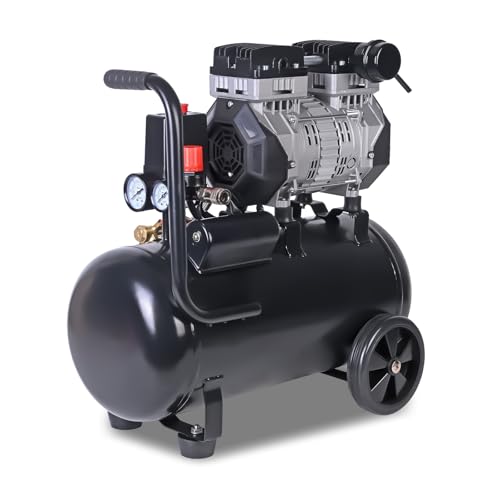
A 13-gallon or 20-gallon compressor is often the sweet spot for single panels, bumpers, and smaller home-garage projects. It gives you more buffer than a pancake or 6-gallon unit without forcing the jump to a full shop compressor.
The VEVOR 13-Gallon model is described as a 13-gallon, 2HP, oil-free quiet compressor in one listing, and Autoian rates it at 66 dB. The 20-gallon class can help with car work too, but the real question is sustained airflow at the pressure your gun needs, not tank size by itself.
60-gallon runtime buffer for longer passes
Sixty-gallon tanks are where full-car spraying becomes realistic for many DIY setups. They provide more runtime buffer, fewer pressure swings, and less waiting between passes. That is especially useful when you are spraying large panels or a full vehicle in one session.
The Quincy QT-54 fits this use case well on paper: 60-gallon ASME tank, belt-driven 2-stage design, and 15.4 CFM at 40 PSI. That combination points toward professional restoration work rather than quick touch-ups.
Quiet or powerful for your garage?
If your garage is attached to the house or close to neighbors, noise matters. Lower-decibel compressors are easier to live with, but quiet usually comes with lower output or slower recovery. You are choosing between comfort and sustained spray capacity.
How to read the noise numbers
The same source lists the MZB 6.4 Gallon Ultra Quiet at 70 dB and 5.65 CFM. It also lists the VEVOR 13-Gallon model at 66 dB, and the California Air Tools 8 Gallon Compressor at 60 dB. The same source lists the DEWALT Pancake at 78.5 dBA.
Those figures matter only when you compare them with airflow. A quiet unit that cannot hold CFM during a long pass will still hurt paint quality if the pressure falls off mid-panel.
Attached-garage and neighbor-friendly use
For evening work in a residential garage, 60 dB to 66 dB is easier to tolerate than a louder pancake-style unit. The tradeoff is that ultra-quiet compressors may be better for intermittent work than for sustained full-panel spraying.
Suppose you are spraying a door in a two-car garage after work. A quieter unit may keep the project practical without waking the house, but it still has to meet the gun’s airflow demand or the finish will show it.
Pump type and power choices
Pump design affects maintenance, noise, and how well the unit handles longer paint sessions. Oil-free compressors are usually lower maintenance. Oil-lubricated, belt-driven, and two-stage designs are usually better suited to longer or heavier-duty painting jobs.
Oil-free versus oil-lubricated maintenance
Oil-free compressors are popular for home garages because they are simpler to maintain and easier to move. That convenience matters for occasional paint work. It does not automatically make the unit better for bigger spraying jobs.
Oil-lubricated compressors tend to fit better when sustained airflow matters more than low upkeep. For automotive painting, that often means better pressure stability during longer passes.
Dual-piston, belt-driven, and two-stage designs
Dual-piston and belt-driven compressors are commonly used when you need more output and better duty-cycle behavior. A belt-driven 2-stage design is especially relevant for larger jobs because it is built for steadier delivery under load.
The Quincy QT-54 is a clear example of that setup: 60-gallon, belt-driven 2-stage, 15.4 CFM at 40 PSI. That is the kind of compressor that belongs in a longer-session paint plan, not just a tool cart.
Electrical setup: 120V versus 240V
Smaller compressors often run on 120V, which is convenient for residential garages. Larger 60-gallon units often need 240V, and that can mean a circuit upgrade before you ever spray a panel. Plan for that before you buy.
If your garage only has basic 120V service, check the panel capacity and the outlet plan before choosing a larger unit.
Choose portable compressors if…
Choose a portable compressor if you are doing touch-ups, trim, or one panel at a time, and you need to move the unit often. Choose a shop-style compressor if you want longer spray windows, less recovery lag, and better consistency across larger panels or a full respray.
Where the named models fit
The MZB 6.4 Gallon Ultra Quiet fits smaller spray work better than whole-car work. It is listed at 5.65 CFM and 70 dB, so it leans toward quieter, lighter-duty use.
The VEVOR 13-Gallon model sits in the middle. At 4.6 SCFM@90PSI and 66 dB, it can make sense for modest jobs where noise matters, but it is still a step below the airflow you want for longer full-panel spraying.
The DEWALT Pancake Air Compressor is best left to very small tasks. Its 2.6 SCFM and 78.5 dBA make it a poor fit for sustained automotive painting, even though it is easy to carry.
The DEWALT DXCM601 and Quincy QT-54 belong in the larger-job category. The Quincy QT-54 pushes further with 15.4 CFM at 40 PSI and a belt-driven 2-stage layout.
Choose DEWALT DXCM601 if… / Choose Quincy QT-54 if…
Its 13.4 CFM at 40 PSI makes it the better fit when you want a large-tank home setup without moving into a full restoration-shop purchase.
Choose the Quincy QT-54 if you want the stronger air delivery of the two and you are aiming at professional restoration use. Its 60-gallon ASME tank, belt-driven 2-stage design, and 15.4 CFM at 40 PSI point to longer, steadier spray sessions.
Choose the DXCM601 if your garage wiring is already set for 240V and you want a known full-vehicle respray class compressor. Choose the QT-54 if your job scope is larger, your budget and space are more shop-like, and you want more output margin for bigger panels.
Buying guide for car painting
Check CFM first, then tank size, then voltage. That order matters because a compressor can have a decent pressure rating and still fail the real spray test if it cannot deliver enough air for the full pass. Horsepower is a less useful buying shortcut than many listings suggest.
Moisture control matters too. Water in the line can leave defects in the finish, so plan for drying and filtration, not just the compressor itself. Paint work wants clean, dry air.
- Match the compressor to the size of the panel you plan to spray.
- Check the gun’s airflow requirement at the working pressure you will actually use.
- Confirm the compressor’s CFM at the same pressure point, especially 40 PSI or 90 PSI.
- Pick a tank size that gives you enough runtime buffer for the whole pass.
- Verify your garage power, especially if the unit needs 240V.
- Plan for moisture control so water does not reach the gun.
Follow the vehicle and product manual. If you are working around fuel, coolant, or electrical components, ventilate the area, avoid sparks, and disconnect the battery as the manual directs.
Frequently asked questions
What size air compressor do I need to paint a car?
For full panels, a common recommendation is about 10–15 CFM at 40 PSI and a larger tank, often around 20 gallons or more. For a whole-vehicle respray, a 60-gallon compressor is the safer choice. Smaller jobs can work with less, but airflow stability matters more than tank pressure alone.
Can you paint a car with a 6-gallon air compressor?
Yes, but only for very small jobs such as touch-ups or short spot repairs. A 6-gallon compressor usually lacks the runtime buffer for full panels, and pressure drops can show up fast. It is a portability-first choice, not a full-car painting choice.
What CFM is needed for an HVLP spray gun?
Many HVLP guns need enough sustained airflow to hold a stable spray fan, and that often means 4–7 CFM for small work and 10–15 CFM or more for larger panels. Always check the gun’s listed working pressure and compare it with the compressor at the same pressure point.
Is a 20-gallon compressor enough for car painting?
It can be enough for a bumper, single panel, or smaller home-garage project if the CFM rating is strong enough. For full side panels or a full respray, a 20-gallon tank may still run out of buffer too quickly. The gun’s airflow demand decides the real limit.
What is the best air compressor for painting cars at home?
The best home setup is usually the one that matches your garage power, noise limits, and paint-job size. For smaller work, a quiet 13-gallon or 20-gallon unit can make sense. For full-vehicle spraying, a 60-gallon 240V compressor is the more realistic choice.
Do I need an oil-free compressor for automotive painting?
No. Oil-free compressors are convenient and lower maintenance, but they are not required for automotive painting. Oil-lubricated, belt-driven, and two-stage designs can be better when you need steadier airflow for longer spray sessions. The better choice depends on job size, noise, and upkeep preferences.
Products related to this article
Sponsored / affiliate links. As an Amazon Associate I earn from qualifying purchases. I may earn additional commission from eligible campaigns.