Ancel OBD2 Scanner Review: Is It Worth It for DIY Diagnostics?
Ancel is worth it for DIY diagnostics if you buy the right tier: basic code readers for check-engine faults, midrange units for ABS/SRS/live data, and only higher-end models for bi-directional tests and service resets. Buy too little, and you miss the cause of the fault; buy too much, and you pay for menus you will never use. This guide compares Ancel scanner tiers by the faults they can read, reset, and verify, so you can match the tool to your car and repair goals.
Verdict
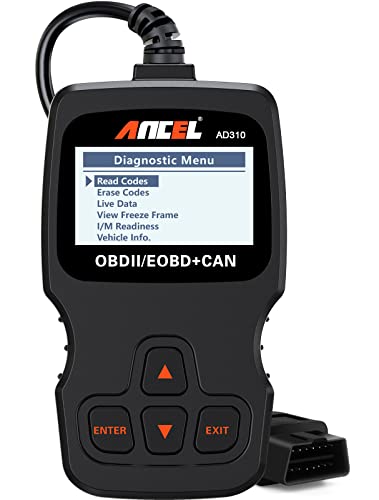
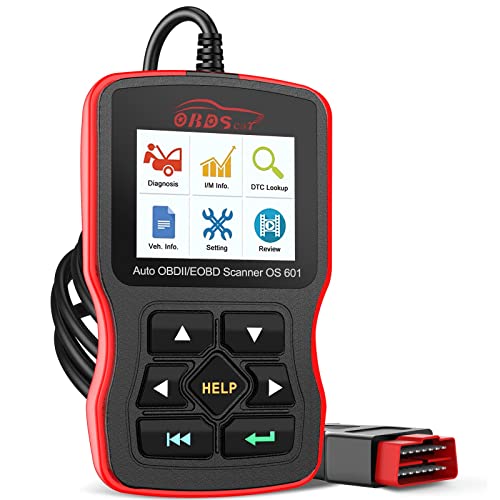
For a simple home garage, the AD310 fits the “read, clear, confirm” job well. It reads and clears engine trouble codes, supports common OBD2 protocols, and stays compact enough to keep in the glove box. The tradeoff is depth: if you need ABS, SRS, transmission access, bidirectional control, or service resets, this class of reader is not enough, even if the menu looks busy.
Specs at a glance
| Model | What it covers | Best fit | One honest drawback |
|---|---|---|---|
| ANCEL AD310 | Reads and clears engine fault codes; supports common OBD2 protocols | Check-engine light, emissions checks, basic DIY scans | Not a full-system scanner |
| ANCEL AD530 | OBD-II/EOBD+CAN support, reads and clears trouble codes, live data monitoring, I/M readiness test, freeze frame data, O2 sensor test, EVAP system tests, graphical data display | Home diagnostics with more fault detail | Still not the same as full-module diagnosis |
| ANCEL X7 | All system diagnostic, immobilizer key programming, full-system diagnostic coverage | Deeper module access and advanced vehicle systems | More tool than many DIY owners need |
| ANCEL DS600 BT | 3000+ active tests, full system diagnosis, bidirectional control, 106+ car brands, 34 reset functions | High-depth diagnostic work | Expensive and far beyond basic code reading |
| ANCEL BD200 | Bluetooth OBD2 scanner; reading and clearing trouble codes; turning off check engine light | Phone-based code reading | Limited compared with full-system tools |
| ANCEL Echo | Bluetooth 5.0, all-system scan tool, pre-check emissions status, compatible with all OBD2 cars | Wireless scan use and emissions checks | App dependence may not suit every buyer |
Compatibility is broad at the OBD2 level, but it is not magic. Most OBD2 scanners work on 1996 and newer gasoline vehicles sold for the U.S. market, while some regions use EOBD or other variants; Japanese-market coverage can depend on JOBD support. Ancel’s lineup also includes JOBD-capable models such as the JP700 for Toyota, Nissan, Honda, Mazda, Subaru, and other vehicles after 2002.
Who is it?
Ancel is for DIY owners who want a faster answer than the parts-store code reader can give. If you want ABS, SRS, transmission, or service reset coverage, you need a higher tier and a higher budget.
Basic code readers
The AD310 and BD200 class fits drivers who want simple fault reading, code clearing, and a way to turn off a check engine light after the fix is confirmed. They are small, easy to store, and useful when you want to avoid an unnecessary shop visit for an emissions-related issue. They are not the right pick if you expect module-by-module diagnosis.
Home mechanics needing live data
The AD530 class is a better match if you want live data, freeze frame, O2 sensor checks, and EVAP system tests without moving into a full professional scan tool. That makes sense for a home mechanic chasing an intermittent misfire, fuel trim oddity, or emissions fault. It is still a step below a true all-system scanner.
Owners who need deeper module access
X7, DS600 BT, and Echo sit higher in the lineup. They are for buyers who need more than generic OBD2 service modes, including full-system access or bidirectional functions on supported vehicles. For those needs, the question is not whether Ancel is useful. It is whether the specific model reaches the module depth your car requires.
Pros and cons
Pros
- Reads and clears common OBD2 trouble codes.
- Basic live data and freeze frame support help confirm the fault.
- Compact, plug-in use suits driveway work.
- Some models add update support or lifetime updates, depending on the listing.
Cons
- Lower-tier Ancel scanners do not read every module.
- ABS, SRS, and transmission coverage depends on the model, not the brand name.
- Bidirectional control is limited to higher-end units.
- Some buyers expect service functions that only full-system tools provide.
What works
For the right tier, Ancel handles the basics well. On AD530-level tools, the feature set goes further with O2 sensor testing, EVAP testing, and graphical data display.
Check engine codes and emissions checks
This is the strongest fit for the lower end of the lineup. A check engine light tied to an EVAP leak, oxygen sensor fault, or loose gas cap is the classic use case. Say your sedan flashes a P0455 after a fill-up. A code reader can confirm the fault and help you verify whether the repair cleared the monitor afterward.
Live data, freeze frame, and readiness monitors
Live data matters when the fault is intermittent or the warning light is not enough. Freeze frame shows the operating snapshot captured when the code set, and readiness monitors tell you whether the vehicle has completed self-checks. Those are the features that separate a simple “read it once” tool from one that helps you verify the repair.
Reset functions and model-specific depth
Model depth is where the lineup splits. AD530 adds service-oriented OBD-II features, while X7 moves into full-system coverage and immobilizer key programming. DS600 BT goes far deeper with 3000+ active tests, full system diagnosis for 106+ car brands, 34 reset functions, and bidirectional control. That is the difference between a code reader and an advanced diagnostic platform.
Suppose a crossover shows an ABS warning after a battery replacement. A basic engine-only reader will not help. A higher-tier Ancel with ABS coverage can read the module, while a full-system unit is the safer choice when multiple warning lights appear at once or one code seems to trigger several others.
What does not work?
Ancel is not a substitute for full-system diagnosis on every car. If the fault lives in a module outside the scanner’s coverage, you will still see a dead end. That is the most common buying mistake: choosing an engine-code reader for a problem that actually sits in ABS, SRS, transmission, immobilizer, or a body module.
When basic OBD2 is not enough
That helps with engine management. It does not automatically access airbag systems, anti-lock brakes, or transmission modules.
Unsupported modules and advanced service limits
Do not assume every Ancel scanner can do every reset. Oil reset, steering angle, battery registration, throttle adaptation, and key programming are model-specific. If the listing does not state the function clearly, check the manufacturer’s listing for your model before buying.
Common buying mistakes
A common first-timer mistake is buying Bluetooth convenience when the real problem is module depth. Another is expecting a phone app reader to handle all-system diagnostics on a vehicle that needs a dedicated scan tool. A third is ignoring regional protocol support, especially on Japanese cars where JOBD support can matter after 2002.
- Identify the warning light or symptom first.
- Check whether the fault is engine-only or module-based.
- Match the scanner tier to that fault, not to the brand name.
- Confirm region and protocol support before you buy.
- Check whether you need reset functions or just code reading.
Ancel fit check matrix
| Symptom type | Minimum scanner tier needed | Models that are enough vs overkill | Yes or no recommendation | Brief why |
|---|---|---|---|---|
| Check engine light | Basic OBD2 code reader | Enough: AD310, BD200. Overkill: X7, DS600 BT | Yes | Engine codes and clear functions are the core job here. |
| EVAP code | Basic reader with live data helps | Enough: AD310 for code reading; AD530 if you want EVAP testing. Overkill: DS600 BT | Yes | EVAP faults are usually read through OBD2 service modes. |
| ABS light | ABS-capable scanner | Enough: higher-tier Ancel model with module support. Overkill: simple engine reader | No | Basic engine-only readers do not cover ABS modules. |
| SRS airbag light | SRS-capable scanner | Enough: full-system Ancel model. Overkill: AD310, BD200 | No | Airbag faults need module access, not just generic OBD2. |
| Transmission code | Transmission-capable scanner | Enough: all-system model. Overkill: basic code readers | No | Transmission faults often sit outside generic engine codes. |
| Battery voltage check | Live data scanner or battery tester | Enough: AD530 for live data; DS600 BT for deeper diagnosis. Overkill: AD310 | Yes | Live data can show charging behavior; some models add battery-related tools. |
| Oil reset | Service-reset capable scanner | Enough: model with oil reset. Overkill: AD310 | No | Oil reset is not a standard engine-code feature. |
| Japanese-car compatibility | OBD2 plus JOBD where required | Enough: JP700 for JOBD-supported Japanese vehicles after 2002. Overkill: engine-only reader if JOBD is needed | Yes | JOBD support matters on some Japanese-market cars. |
| Intermittent misfire | Live data and freeze frame | Enough: AD530. Overkill: AD310 alone | Yes | Freeze frame and live data help identify the conditions that set the code. |
| No-start with immobilizer light | Immobilizer-capable scanner | Enough: X7. Overkill: AD310, BD200 | No | Immobilizer diagnosis is outside basic OBD2 reading. |
| Pre-emissions check before inspection | I/M readiness scanner | Enough: AD310, AD530, Echo. Overkill: full-system tool if all you need is readiness | Yes | I/M readiness is built for this job. |
Alternatives
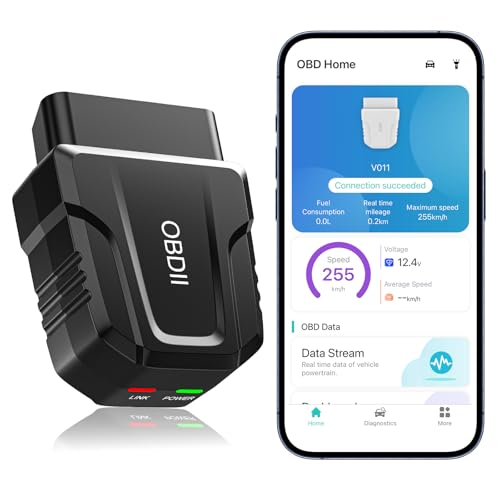
The UMEIJA Bluetooth OBD2 scanner is the cheaper app-based alternative if your main goal is reading and clearing check engine codes from a phone. It suits drivers who want a small, low-cost reader for everyday faults. The tradeoff is the same one that applies to most budget Bluetooth tools: you need to verify the app experience and understand that basic engine-code coverage is not the same as full-system diagnosis.

The Innova 5210 sits higher on the feature list than a barebones code reader because it adds live data, oil reset, smog readiness, and a battery tester. That makes it useful for owners who want a step up from a simple check-engine tool without jumping straight to a professional scan platform. The drawback is price and scope: it is still not the same thing as a dedicated full-system scanner.
Should you buy it?
Buy an Ancel scanner if you want the right amount of diagnostic depth for your car and your repair habits. If you mainly need engine codes, emissions checks, and basic live data, the lower tiers make sense. If you need ABS, SRS, transmission, bidirectional control, or immobilizer work, move up the lineup or look at a dedicated all-system tool.
Buy the AD310 if you want a simple, compact code reader for check-engine faults. Buy AD530-level hardware if you want freeze frame, live data, and EVAP checks. Buy X7, DS600 BT, or a comparable full-system unit only if your vehicle and fault list actually justify it.
Frequently asked questions
Is an Ancel OBD2 scanner worth it for DIY car diagnostics?
Yes, if you match the model to the fault. The value drops fast if you buy an engine-only reader for ABS, SRS, transmission, or immobilizer work.
Which Ancel scanner is best for reading and clearing check engine codes?
The AD310 class is the cleanest match for check-engine reading and clearing. It is built for the basic OBD2 job and is enough for common engine faults and emissions checks. If you also want live data, freeze frame, and EVAP testing, move up to a model with those features, such as AD530.
Does Ancel support ABS, SRS, and transmission codes?
Some higher-tier Ancel scanners do, but not all of them. Basic OBD2 readers usually focus on engine and emissions faults only. ABS, SRS, and transmission support depend on the specific model and listing, so check the manufacturer’s details before you buy rather than assuming the whole brand line shares the same depth.
What Ancel model has live data and freeze frame?
AD530-level scanners include live data monitoring and freeze frame data, along with OBD-II/EOBD+CAN support and EVAP testing. Those features help when the code is intermittent or you want to verify a repair. Basic readers may show a few live values, but they do not always go this deep.
Does Ancel have bidirectional or full system scanners?
Yes. X7 is also positioned for all-system diagnostic coverage and immobilizer key programming. Those functions are far beyond the scope of a simple code reader.
Which cars are supported by Ancel scanners?
Support depends on the protocol. Ancel also lists broad coverage on some models, such as 106+ car brands for DS600 BT, but you should still confirm your exact year, make, and market.
How does Ancel compare with BlueDriver or other Bluetooth scanners?
Bluetooth scanners can be a better fit if you want app-based convenience and a phone-first workflow. That can make sense for basic code reading and live data. Ancel’s advantage is that the lineup stretches from cheap code readers to deeper dedicated tools, so you can pick a tier instead of committing to one phone app style.
Products related to this article
Sponsored / affiliate links. As an Amazon Associate I earn from qualifying purchases. I may earn additional commission from eligible campaigns.