Where Is Throttle Valve Located: Essential Guide
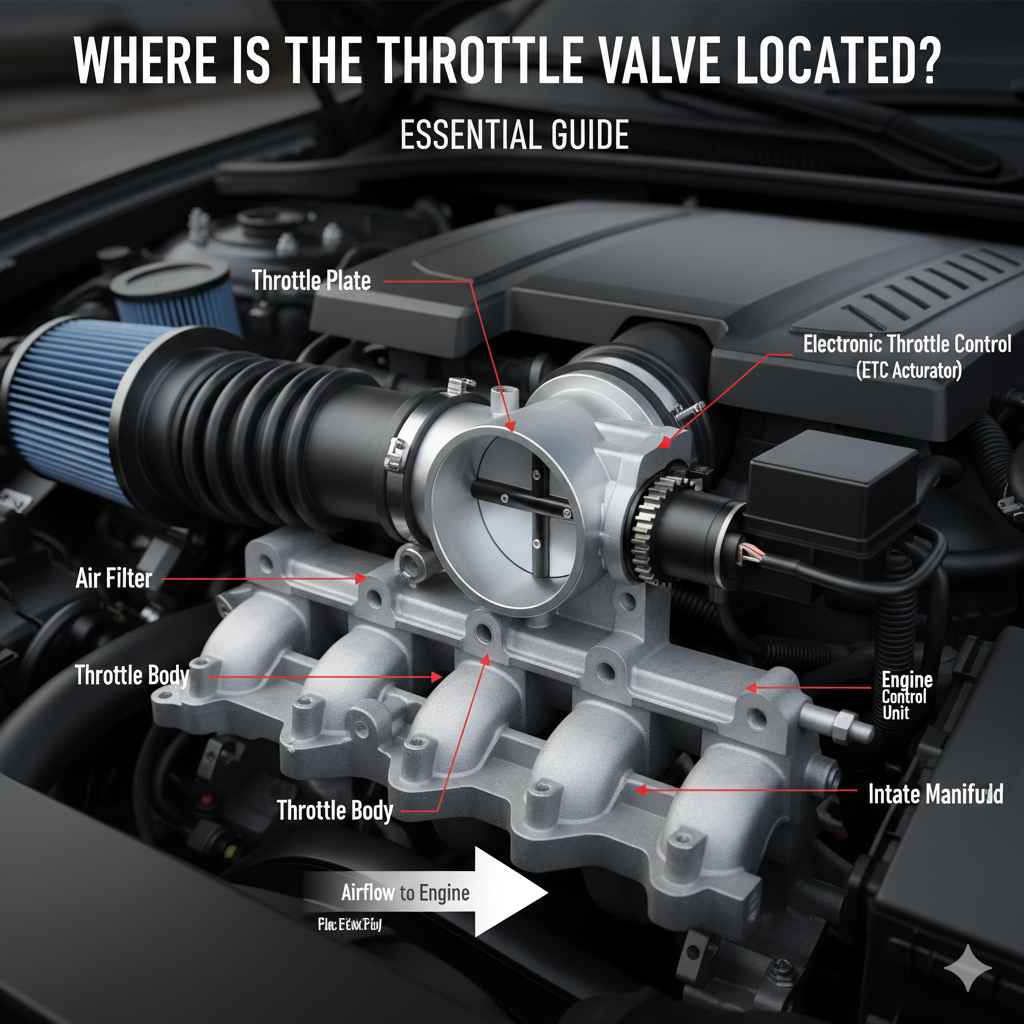
The throttle valve, crucial for controlling engine speed, is typically found within the throttle body, connected to the accelerator pedal. Its exact location varies by vehicle, but it’s generally near the intake manifold. This guide will help you pinpoint it and understand its function.
Is your car’s engine acting sluggish, or are you curious about a vital engine part? Many drivers wonder about the throttle valve and where it lives within their vehicle. It’s a common question, especially when trying to understand car performance or troubleshoot an issue. Don’t worry, understanding this component is simpler than you might think! This guide will walk you through exactly what the throttle valve is, why it’s important, and most importantly, where to find it on most cars. We’ll make it easy and clear, so you can feel confident about your vehicle.
Understanding the Throttle Valve: Your Engine’s Gas Pedal Link
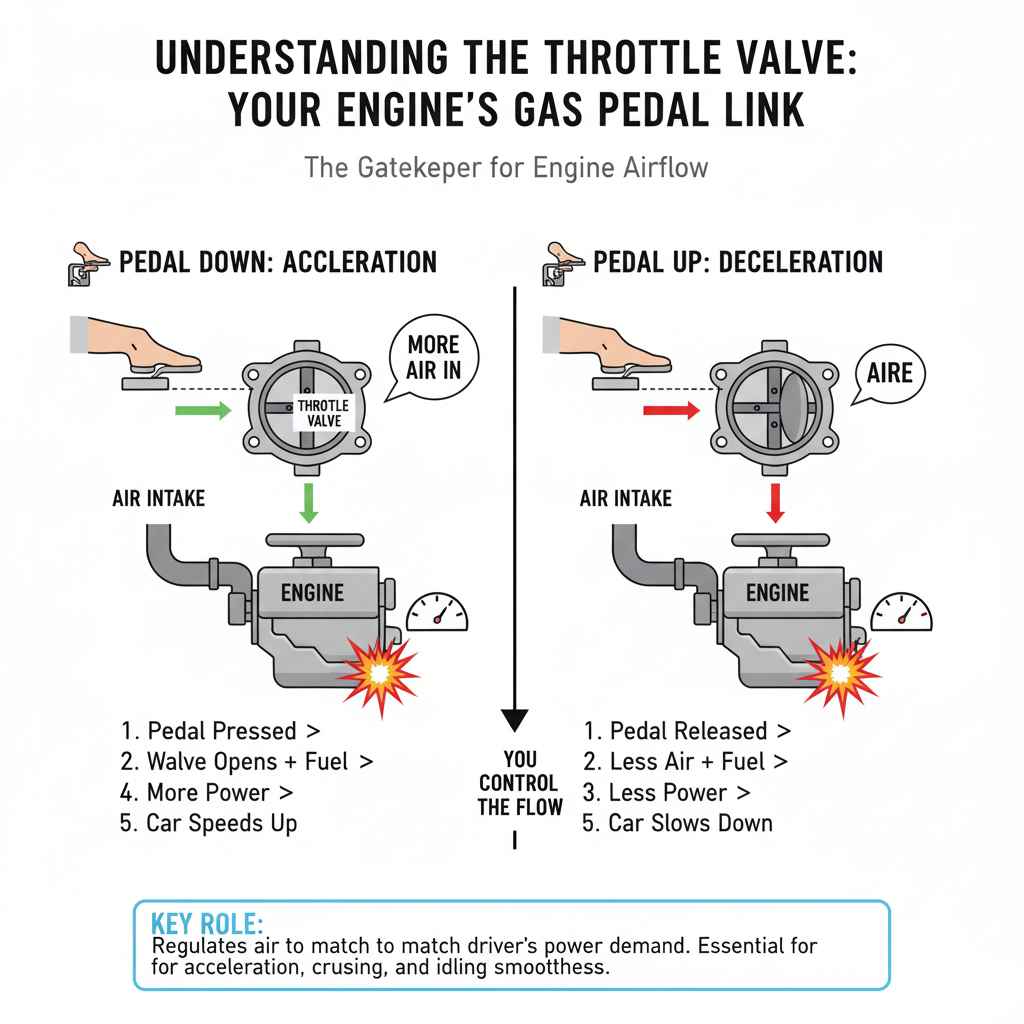
Think of the throttle valve as the gatekeeper for the air entering your engine. When you press your car’s gas pedal, you’re essentially telling this valve to open up and let more air in. More air, combined with fuel, means your engine generates more power, making your car speed up. Conversely, when you ease off the pedal, the throttle valve closes, restricting airflow and slowing your engine down.
This clever little component is a key player in how your car responds to your input. Without it, your engine wouldn’t know how much energy to produce. Its smooth operation is directly linked to how your car feels when you accelerate, cruise, or even idle. Because it’s so central to engine operation, knowing where it is can be helpful for basic checks or understanding mechanic explanations.
The Role of the Throttle Valve in Engine Performance
The throttle valve’s primary job is to regulate the volume of air that flows into the engine’s intake manifold. This airflow is critical because it’s measured by the car’s computer (ECU – Engine Control Unit) to determine the correct amount of fuel to inject. It’s a delicate balance: too much air without enough fuel, and the engine runs lean (which can cause damage); too much fuel without enough air, and the engine runs rich (leading to poor fuel economy and emissions issues).
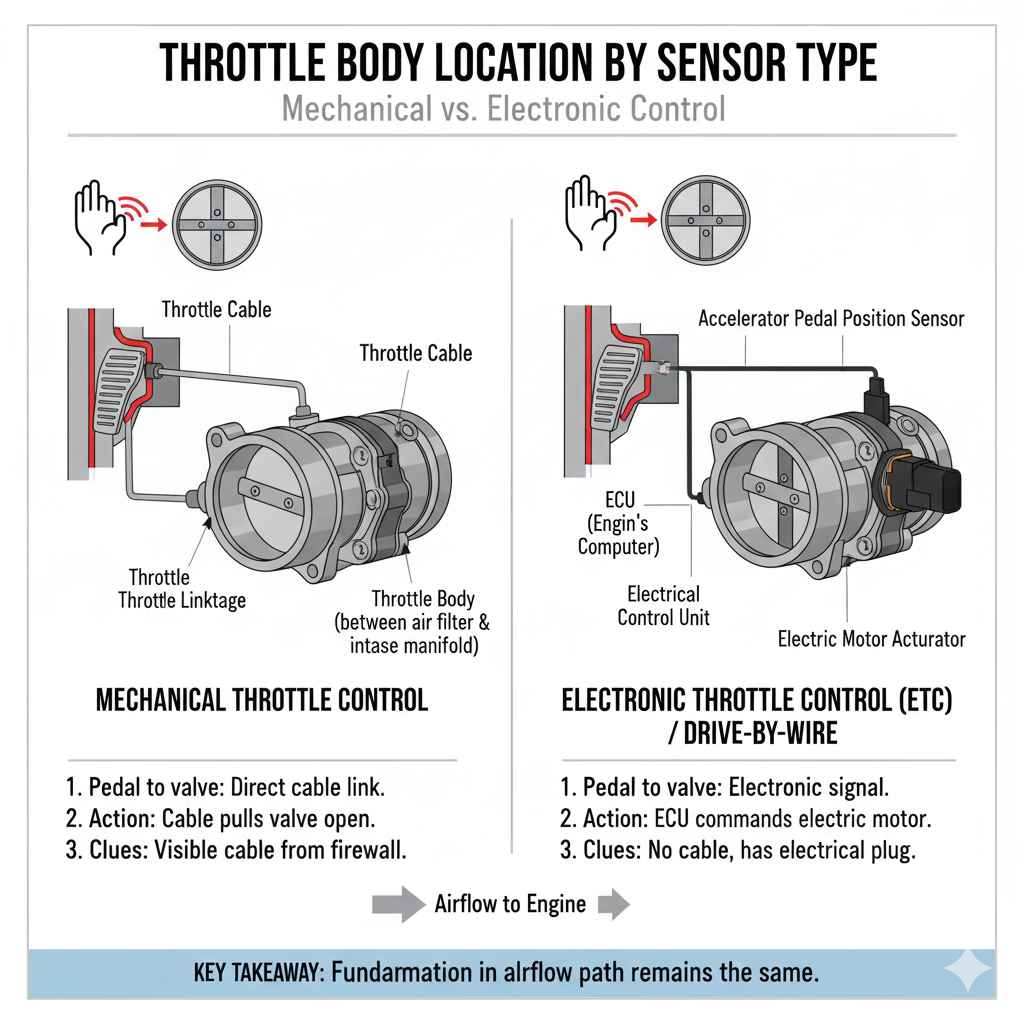
For those with older vehicles, you might be familiar with the term “throttle body” which houses the throttle valve and its associated components. Modern cars often have electronic throttle control (ETC), also known as “drive-by-wire,” where a sensor on the gas pedal tells an electric motor to open or close the throttle valve. Older systems used a mechanical linkage, a cable connecting the pedal directly to the valve.
Where Is The Throttle Valve Located? Finding It On Your Car
The throttle valve itself is a flat disc that rotates on a spindle inside a housing. This housing is called the throttle body. So, when people ask where the throttle valve is located, they are usually referring to the location of the throttle body assembly.
The throttle body is almost always found in the engine bay, positioned between the air intake system (where air enters the engine, often after the air filter) and the intake manifold (which distributes the air-fuel mixture to the engine cylinders).
Pinpointing the Throttle Body: Step-by-Step
Let’s break down how you can generally locate the throttle body on your car:
- Open the Hood: Park your car on a level surface, engage the parking brake, and open the hood. Make sure the engine is cool for safety.
- Locate the Air Intake System: Follow the large hose or tube that carries air from the air filter box towards the engine. This is the main air intake duct.
- Identify the Throttle Body: The throttle body is typically a metallic component (often aluminum) that this air intake duct connects to. It will usually be mounted directly onto the intake manifold. You might see a connection for a vacuum hose or an electrical connector if your car has an electronic throttle control system.
- Look for the Accelerator Cable/Sensor: If your car has a cable-driven throttle, you’ll see a throttle cable running from the firewall (where the pedals are located) to the throttle body. In electronic throttle systems, you’ll see an electrical connector on the side of the throttle body.
On many vehicles, the throttle body is a fairly prominent component in the engine bay. It’s the junction where the processed air from the air filter assembly meets the engine’s intake system.
Throttle Valve Location on Specific Vehicle Types
While the general principle remains the same, the precise layout can differ significantly between car makes, models, and engine types. Here’s a look at common placements:
Front-Wheel Drive (FWD) Vehicles:
In most FWD cars, especially those with transverse (sideways) engine mounting, the throttle body is usually located towards the front of the engine bay, often easily accessible when you open the hood. It’s typically connected to the air intake system that starts near the front of the car and leads into the engine.
Rear-Wheel Drive (RWD) Vehicles:
RWD vehicles, particularly those with traditional longitudinal (front-to-back) engine layouts, might place the throttle body in a slightly different spot. It’s still between the air intake and the intake manifold, but its exact positioning can vary. Sometimes it’s more towards the firewall or on the side of the engine, depending on packaging constraints.
Older Vehicles and Carburetors:
For those driving classic cars or vehicles with older technology, the concept is similar, but the component might be different. Instead of a distinct “throttle body,” the throttle valve is integrated into the carburetor itself. If you have a carburetor, you’ll be looking for that unit, which typically sits atop or near the engine, directly feeding the intake manifold. The throttle valve would be inside this carb unit.
Where is the throttle valve located on a float-type carburetor?
In a float-type carburetor, the throttle valve is located within the carburetor’s main body. It’s a butterfly valve (a disc on a shaft) positioned in the carburetor’s throat (the main air passage). When you press the accelerator, this valve opens, allowing more air (and a corresponding fuel mist mixed by the carburetor) to enter the engine. The carburetor unit itself is usually mounted on top of the engine’s intake manifold.
Visual Cues to Help You Identify the Throttle Body
Don’t be discouraged if you’re not immediately sure what you’re looking at. Here are some visual hints:
- Size and Shape: It’s usually a cylindrical or boxy metal component, typically made of aluminum.
- Connections: It will have a large intake hose connected to one side and will be bolted directly to the intake manifold on the other.
- Cables or Wires: Look for a throttle cable (if mechanical) or a prominent electrical connector (if electronic).
- Location Relative to Air Filter: Follow the path of air from the air filter box; the throttle body is a major stop along that path before the engine intake.
What Does the Throttle Valve Look Like?
The throttle valve itself is quite simple in design. It’s essentially a flat, circular metal plate, often referred to as a “butterfly valve.” This disc is mounted on a rotating shaft that passes through the throttle body.
When the shaft is rotated, the butterfly valve moves from a closed position (horizontal, blocking most air) to an open position (nearly vertical, allowing maximum airflow). The precise angle of the valve is controlled by your accelerator pedal input, either directly via a cable or indirectly through an electronic signal.
Inside the Throttle Body: Key Components
Beyond the throttle valve, the throttle body often contains other important parts:
- Throttle Valve (Butterfly Valve): The main component that controls airflow.
- Throttle Shaft: The rod on which the butterfly valve is mounted, allowing it to rotate.
- Throttle Position Sensor (TPS): (On most modern vehicles) This sensor monitors the exact angle of the throttle valve and sends this information to the ECU.
- Idle Air Control (IAC) Valve: (On older systems) This component bypasses the throttle plate to allow a small amount of air into the engine for idling, allowing the throttle plate to close completely. Modern systems often manage idle air through the main throttle plate and ECU.
- Electric Motor: (On electronic throttle control systems) This motor, controlled by the ECU, is what physically moves the throttle shaft and valve.
Why Is Knowing the Throttle Valve Location Important?
As a car owner, understanding the location of key components like the throttle valve can empower you in several ways:
- Basic Troubleshooting: If your car is idling roughly or hesitating on acceleration, knowing the throttle body’s location can help you visually inspect it for obvious issues like dirt buildup or disconnected hoses.
- Maintenance: Many drivers clean their throttle body as part of routine maintenance to improve engine performance and fuel economy. Knowing where it is makes this task much less daunting.
- Communicating with Technicians: When you can point to or describe the location of a part, you can have a more productive conversation with your mechanic, leading to more accurate diagnoses and potentially faster repairs.
- DIY Confidence: For those venturing into DIY car care, knowing component locations is fundamental. It builds confidence and makes you more comfortable working on your vehicle.
Common Throttle Valve Issues and Symptoms
While the throttle valve itself is a fairly robust part, the throttle body assembly can develop problems. Recognizing these issues can save you time and money:
- Dirty Throttle Plate: Carbon deposits can build up on the throttle plate and bore, restricting airflow and causing rough idling, stalling, or poor acceleration.
- Faulty Throttle Position Sensor (TPS): If the TPS malfunctions, the ECU won’t get accurate information about pedal position, leading to erratic acceleration, shifting problems, or illuminated check engine lights.
- Electronic Throttle Control (ETC) Malfunctions: In drive-by-wire systems, motor failures or sensor issues can cause the throttle to feel unresponsive, create limp-home modes, or trigger warning lights.
- Vacuum Leaks: Leaks around the throttle body gasket or connected hoses can disrupt the air-fuel mixture, leading to rough idling and performance problems.
The symptoms often include:
- Hesitation or stumbling during acceleration
- Rough or unstable idle
- Stalling
- Poor fuel economy
- Illuminated Check Engine Light
How to Clean a Throttle Body (Beginner-Friendly Steps)
Cleaning the throttle body can often resolve many common performance issues. Here’s a simplified guide. Always consult your vehicle’s specific repair manual for detailed instructions and safety precautions.
Tools and Materials You’ll Need:
- New throttle body gasket (recommended)
- Throttle body cleaner spray (specifically designed for this purpose)
- Clean rags or shop towels
- Screwdriver set or socket wrench set
- Protective gloves and eyewear
Step-by-Step Cleaning Process:
- Safety First: Ensure the engine is completely cool. Disconnect the negative terminal of your car battery to prevent any electrical issues.
- Locate and Access: As detailed earlier, find your throttle body. You’ll need to disconnect the air intake hose from it. There might be clamps or bolts holding it in place.
- Disconnect Connections: If you have an electronic throttle body, carefully disconnect the electrical connector. Do NOT force it; look for a release tab. If you have a mechanical throttle, you might need to unhook the throttle cable, though often you can work around it.
- Remove the Throttle Body (Recommended for Thorough Cleaning): For the most effective cleaning, it’s best to remove the throttle body. This usually involves unbolting it from the intake manifold. Make sure to have your new gasket ready.
- Clean the Throttle Valve and Bore: Spray the throttle body cleaner onto a rag and wipe the throttle plate and the inside walls of the throttle body. If you choose not to remove it, you can spray cleaner directly (use sparingly and avoid spraying into the intake manifold’s internal passages). Gently move the throttle plate (if it moves freely or with assistance from the electric motor in ETC systems – see your manual on how to hold it open safely) to clean both sides of the valve and the edges.
- Wipe Away Grime: Use clean rags to wipe away all loosened carbon deposits and cleaner residue.
- Reassemble: If removed, remount the throttle body with the new gasket. Reconnect the air intake hose, electrical connectors, and throttle cable (if applicable).
- Reconnect Battery: Reconnect the negative battery terminal.
- Start the Engine: Start your car. It might run a little rough initially as the computer relearns idle parameters. Allow it to idle for a few minutes. Some vehicles require a “throttle relearn procedure,” which involves specific steps to re-calibrate the throttle position sensor and idle control. Consult your owner’s manual or a reliable online resource for your specific car.
Remember, if you’re unsure about any step, it’s always best to seek professional help. For more in-depth information on throttle body cleaning and maintenance, you might find helpful resources on sites like the National Highway Traffic Safety Administration (NHTSA), which provides vital safety information for vehicle components.
Throttle Body Location by Sensor Type
Understanding the type of throttle control system your car uses can also hint at its location and the presence of certain sensors.
Mechanical Throttle Control
How it Works: In older vehicles, a physical cable directly connects your accelerator pedal to the throttle valve. When you press the pedal, the cable pulls the throttle linkage, opening the valve.
Location Clues: You’ll see a throttle cable running from the firewall (where the pedals are mounted) to the throttle body. The throttle body itself is still located between the air intake and the intake manifold.
Electronic Throttle Control (ETC) / Drive-by-Wire
How it Works: Modern vehicles use sensors on the accelerator pedal that send an electronic signal to the car’s computer (ECU). The ECU then commands an electric motor on the throttle body to open or close the throttle valve.
Location Clues: You won’t see a physical cable. Instead, there will be a prominent electrical connector plugged into the side of the throttle body. The assembly might also appear more complex due to the integrated electric motor.
Regardless of the system, the throttle body’s fundamental position in the airflow path remains the same: connecting the air intake system to the engine’s intake manifold.
Comparing Throttle Bodies: Different Designs
Throttle bodies come in various sizes and configurations depending on the vehicle’s engine. They can be single, dual, or even quad bore (referring to the number of air passages), though single and dual bore are most common for passenger cars.
| Throttle Body Type | Description | Typical Vehicle Application | Key Features |
|---|---|---|---|
| Single Bore | Has one opening for air passage. | Smaller engines, economy cars, older vehicles. | Simpler design, less airflow capacity. |
| Dual Bore | Has two parallel openings for air passage. | Most modern passenger cars, V6 and V8 engines. | Increased airflow, better performance for larger engines. |
| Electronic Throttle Body (ETB) | Features an electric motor to control the throttle plate. | Most vehicles manufactured after ~2000. | Precise control, enables advanced features like cruise control and traction control integration. |
| Cable-Actuated Throttle Body | Operated by a physical cable from the accelerator pedal. | Older vehicles, some performance applications. | Direct feel, less complex electronics. |
The design of the throttle body is tailored to the engine’s requirements for air volume and the system used to control it, but its location relative to the air intake and intake manifold is consistent.
Frequently Asked Questions (FAQ) about Throttle Valve Location
Lets’ answer some common questions you might have:
Q1: Can I see the throttle valve directly without removing the throttle body?
A: Sometimes, yes. You can often see the throttle valve (the butterfly plate) inside the throttle body’s bore when the air intake hose is removed and the throttle plate is visible. However, you can only see one side of it unless you can safely hold it open.